KORENA
BoisFinished piecesFournituresDépôtsJournal

Recevoir les nouveautés

Chaque plateau est unique. Une fois vendu, il est parti. Nous vous écrivons lors de la publication de nouvelles pièces : arrivages, essences et pièces adaptées à un projet.

Quelques e-mails par mois. Aucun spam, désabonnement à tout moment.

KORENA, bois massif haut de gamme

Une pièce à la fois.

Du bois massif haut de gamme vérifié, vendu pièce par pièce. Chaque plateau est photographié, mesuré et expédié depuis le dépôt partenaire avec un passeport du bois.

Boutique

  • Voir les produits
  • Archives des pièces vendues
  • Suivre une commande

Découvrir

  • Journal
  • Guides des essences
  • Glossaire
  • Comparer
  • Auteurs

Aide

  • À propos
  • Fonctionnement
  • Devenir dépôt partenaire
  • Rechercher un plateau
  • Assistance
  • Modèles de documents
  • Presse

Acheter

  • Conditions de vente
  • Droit de rétractation
  • Retours et garantie
  • Expédition et livraison

Confiance

  • Politique de confidentialité
  • Politique relative aux cookies
  • Provenance du bois et EUDR
  • Accessibilité

Mentions légales

  • Mentions légales
  • Utilisation acceptable
  • Propriété intellectuelle et contenus

© 2026 KORENA. Tous droits réservés.

Exploité par Martial Labs Ltd. (BG, EIK 207453941). KORENA est un nom commercial de Martial Labs Ltd.

Nous respectons votre vie privée

Nous utilisons des cookies essentiels au fonctionnement du site. Avec votre accord, nous utilisons aussi des cookies pour les statistiques, le contenu personnalisé et la publicité. Vous pouvez modifier votre choix à tout moment sur la page des préférences de consentement. Consultez notre politique relative aux cookies et notre politique de confidentialité.

  1. Accueil
  2. /
  3. Essences
  4. /
  5. European Beech

Fagus sylvatica

European Beech

The workshop workhorse. Pale, dense, fine-textured hardwood with straight grain, and the wood that bends.

  • Cultivé et récolté en Europe.
  • Groupe botanique. Les résineux sont des conifères, les feuillus sont des arbres à feuilles larges.
  • Famille botanique à laquelle appartient l’essence.
Être informé du prochain arrivageEssence de référence. Aucun plateau en stock pour le moment.
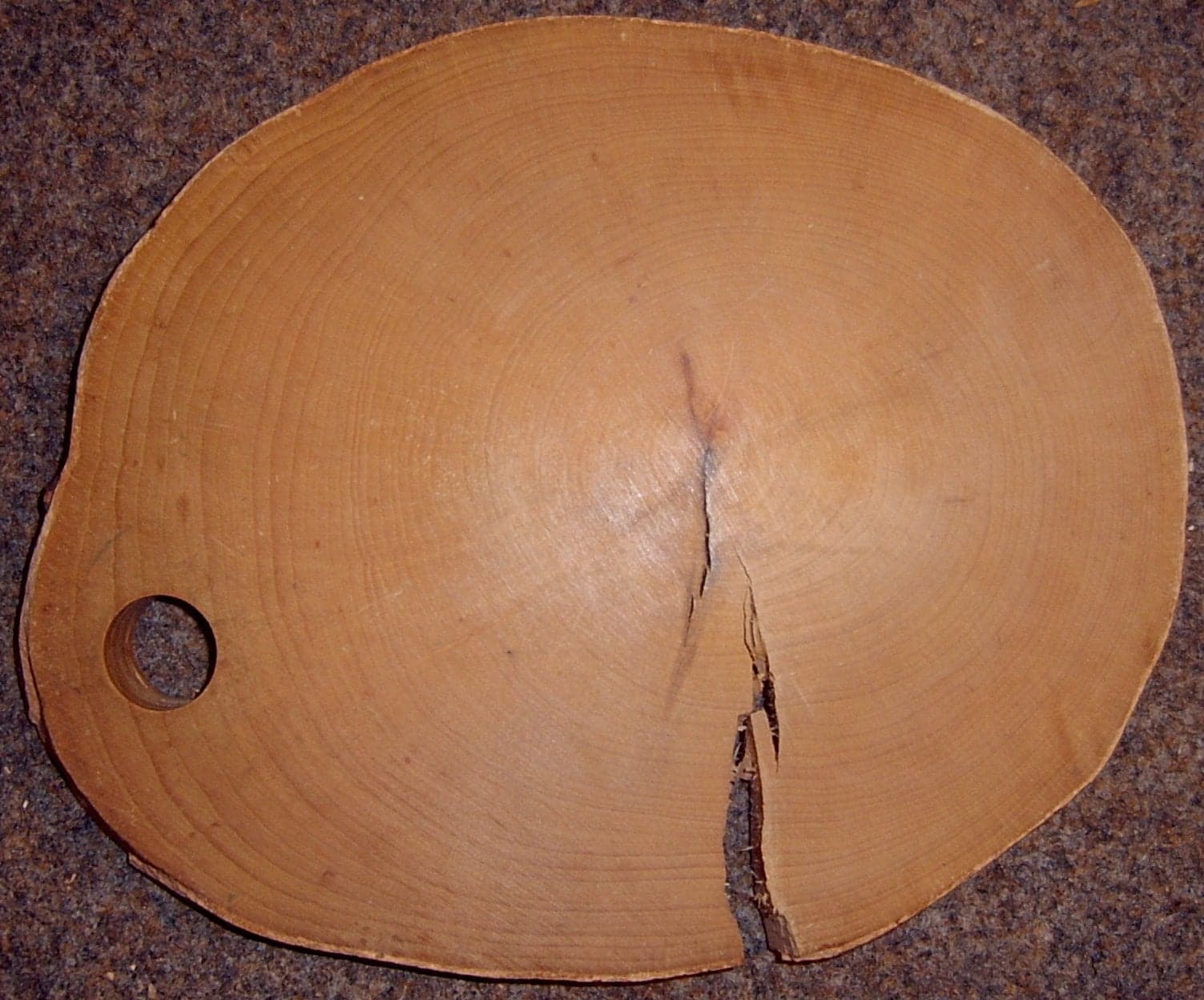
Fil du European Beech
  • Adaptation au projet
  • En stock
  • Aspect
  • Travail
  • Mouvement
  • Prix
  • Sécurité et origine
  • Questions fréquentes
  • Données techniques

Convient-il à votre projet ?

Idéal pour

  • Steam-bent chair frames and curved components
  • Workbenches, jigs, and shop fixtures
  • Chopping boards, butcher blocks, and kitchen utensils
  • Interior joinery and cabinet carcasses
  • Turned legs, handles, and tool components
  • Children's furniture and toys

Aucun plateau en European Beech dans la sélection actuelle

Essences similaires en stock

Aucun plateau en European Beech pour le moment. Ces essences conviennent aux mêmes projets et sont disponibles.
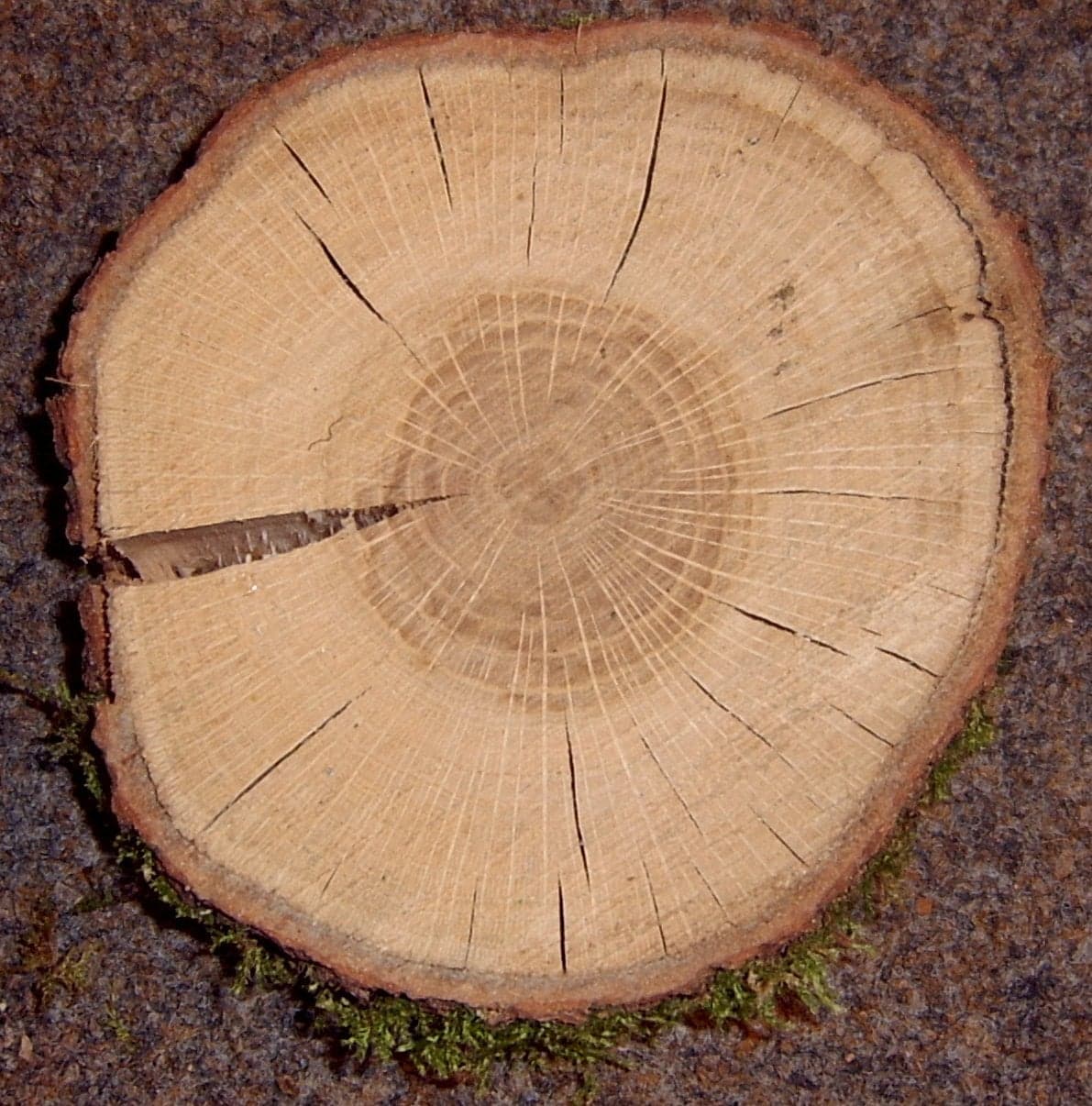
  • Fil du European Oak

    European Oak

    Quercus robur

    6 plateaux

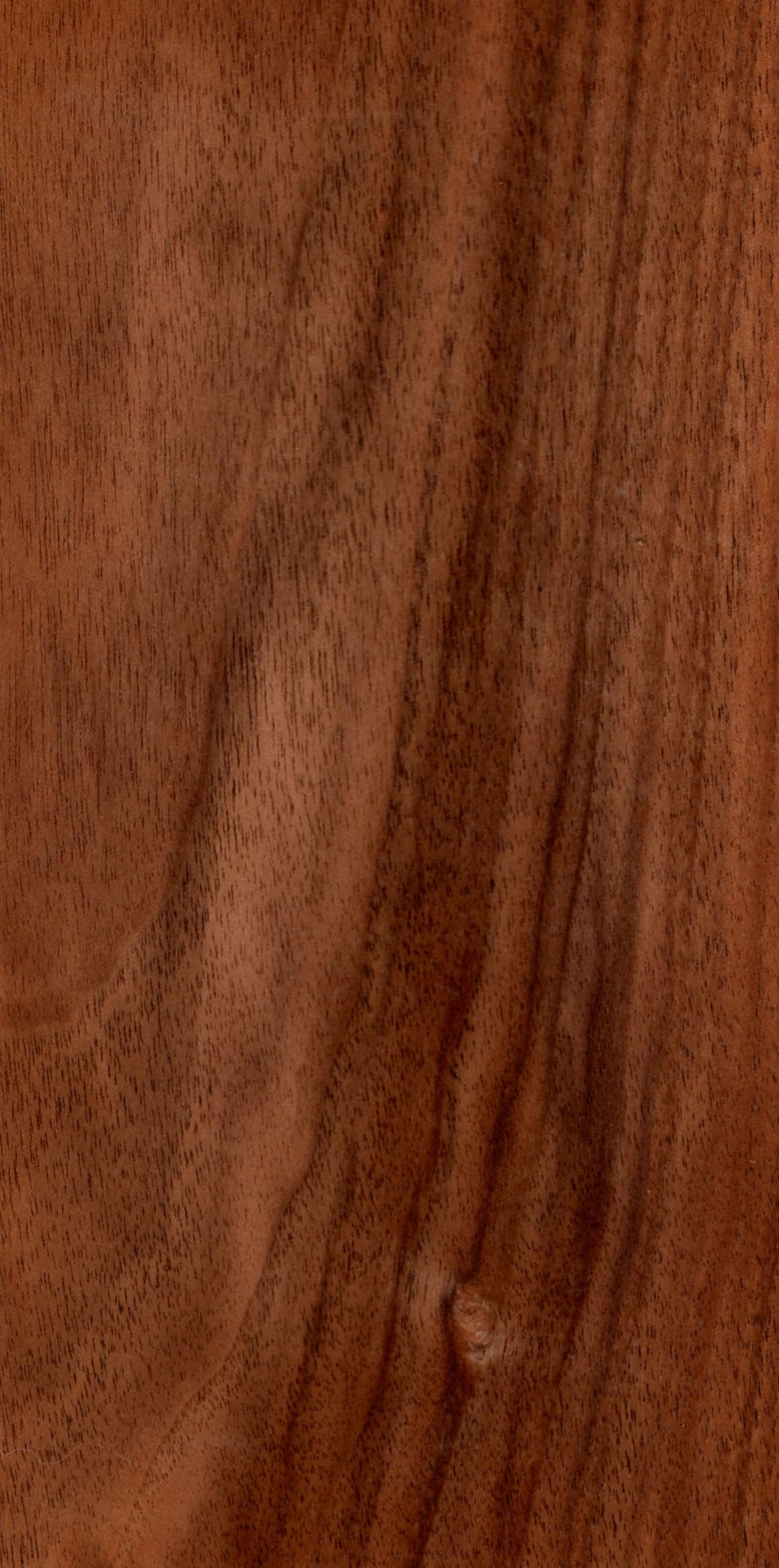
  • Fil du European Walnut

    European Walnut

    Juglans regia

    9 plateaux

  • Fil du Saman

    Saman

    Samanea saman

    4 plateaux

Soyez informé des arrivages en European Beech

Nous vous envoyons un e-mail lorsque de nouveaux plateaux en European Beech arrivent chez KORENA. Chaque plateau est unique, mieux vaut donc être prévenu rapidement.

Quelques e-mails par mois. Aucun spam, désabonnement à tout moment.

Aspect du bois

Son aspect

A clean, light surface in cream to pale pinkish-brown, often with a subtle salmon cast when freshly cut. Grain is straight; texture is fine and even with small, tight rays that show as faint flecks on the quarter. Steamed beech goes warmer and pinker, that familiar Thonet tone. Visually quiet rather than dramatic, which is why it pairs well with bolder species and finishes.

  • Cream to pale pinkish-brown when air-dried
  • Warmer salmon-pink tone after steaming
  • Fine ray fleck on quarter-sawn faces
  • Yellows gradually under UV exposure
  • Cool, neutral surface under water-based finishes; warmer under oils
  • Straight grain, fine even texture.

Travail du bois

Son travail en atelier

Works well across the bench. Saws, planes, and sands cleanly; turns and carves crisply. Glues reliably. Screws need pilot holes, it is dense and can split near edges. Where beech really earns its keep is steam bending: it is the benchmark species for it, and the reason Thonet's bentwood chairs are still made from it more than 150 years on.

Finition

Sands to a smooth, almost glassy surface and takes finishes evenly thanks to the fine texture. Stains apply uniformly without much blotching. Oils and hardwax oils keep the pale tone; water-based finishes hold the cool cast best, while oil-based products will warm it noticeably. Beech yellows over time under UV, worth flagging to clients who want it to stay pale.

Séchage

This is where beech demands respect. Volumetric shrinkage of 17–19% puts it among the more movement-prone European hardwoods, and the gap between radial and tangential shrinkage drives cupping and checking if it is rushed. Slow, controlled kiln schedules and proper acclimatisation in the workshop are non-negotiable. Once stable and used in interior conditions, it behaves, but it will react to swings in humidity, so avoid wide unbroken panels in rooms that are not climate-stable.

De combien va-t-il bouger ?

Le bois gonfle et se rétracte en largeur selon que l’air devient plus humide ou plus sec. Estimez le mouvement saisonnier d’un plateau en European Beech avant de concevoir les fixations.

Débit
Lieu d’utilisation

Mouvement saisonnier attendu

environ 13,4 mm

Important. Utilisez des taquets ou des équerres à trous oblongs, laissez du jeu aux extrémités des alèses et laissez le plateau s’acclimater avant l’assemblage.

Modèle de retrait linéaire : largeur × (retrait ÷ 28 % de point de saturation des fibres) × variation saisonnière d’humidité. Utilise un retrait tangentiel de 11,75 % pour le European Beech. Il s’agit d’une estimation de conception, pas d’une garantie.

Son prix

Sécurité et origine

  • Cultivé et récolté en Europe.
  • Statut sur la Liste rouge de l’UICN : évaluation mondiale de la conservation de cette essence.
  • Food-contact safe and a long-standing choice for chopping boards, butcher blocks, spoons, and kitchen utensils. The flip side: beech dust is a documented respiratory sensitiser and is classified by IARC as a Group 1 hardwood dust. Use proper extraction, a fitted P3/FFP3 mask, and keep the shop clean, especially during sanding.

Lire le guide completNotes détaillées sur la figure, l’évolution de la couleur, le travail et la stabilité.+

What European Beech actually is#

Fagus sylvatica is the workshop timber of Europe. It is dense at 710 kg per cubic metre, hard at 6,460 N, stiff at 13.0 GPa, fine textured, straight grained, cheap and everywhere.

It is also, by the numbers, the least dimensionally stable wood in this catalogue. Volumetric shrinkage of 17.0 percent ties it with hornbeam for the highest figure here, and its tangential to radial differential of 11.0 against 5.0 percent is the widest of any species listed.

Both facts are true at once, and understanding how they coexist is the whole of working with beech well.

The bending wood#

Fine even texture, straight grain and high stiffness are exactly the properties that make a timber bend rather than break.

Under steam, beech compresses on the inside of a curve without buckling and stretches on the outside without splitting, more reliably than oak or ash. Michael Thonet built an entire furniture industry on that single property in the nineteenth century, and the bentwood chair remains the most produced furniture design in history.

If a project involves a curve, beech is the first thing to reach for in this catalogue.

The movement problem

Questions des acheteurs

Questions fréquentes des acheteurs

Why does beech move so much?

+

Volumetric shrinkage of 17.0 percent is the joint highest in this catalogue, and tangential shrinkage of 11.0 percent against 5.0 percent radial is a differential of better than two to one. That combination makes beech notoriously unstable in changing humidity. It is why beech is superb for steam bent chair parts and workshop fixtures in a controlled environment, and a poor choice for a wide tabletop in a room with underfloor heating.

Why is beech the classic steam bending wood?

+

Fine even texture, straight grain and high stiffness at 13.0 GPa let it compress on the inside of a bend without buckling and stretch on the outside without splitting. Thonet built an entire furniture industry on that property. It bends more reliably than oak or ash and holds the curve once dry.

Is beech good for kitchen worktops and chopping boards?

+

It is rated food safe and its fine closed texture is easier to keep clean than open pored oak, which is why it is traditional for butcher blocks and worktops. The caveat is movement: beech responds strongly to the wet and dry cycling a kitchen imposes. Keep it oiled, avoid standing water, and expect more seasonal change than in maple.

Propriétés mécaniques

Données techniques

Valeurs de référence publiées. Lorsque les sources divergent, la plage est indiquée et la valeur courante sert aux échelles ci-dessus.

Densité (kg/m³)Masse par mètre cube à environ 12 % d’humidité. Un bois plus lourd est généralement plus dur et plus résistant.680–780 kg/m³valeur courante 710 kg/m³
Dureté Janka (N)Force nécessaire pour enfoncer à moitié une bille d’acier dans le bois. Mesure standard de la résistance à l’enfoncement.6,000–6,900 Nvaleur courante 6 460 N
MOR : module de rupture (MPa)Résistance à la flexion : charge à laquelle une poutre casse.100–130 MPa
MOE : module d’élasticité (GPa)Rigidité en flexion : fléchissement d’une étagère ou d’un plateau sous une charge.13.0–15.0 GPa
Retrait radialRetrait perpendiculaire aux cernes, du bois vert au bois anhydre. Les planches sur quartier travaillent dans ce sens.5.0–6.5 %

No machine-readable author provided. Lumbar~commonswiki assumed (based on copyright claims)., via Wikimedia Commons

  • Stair treads and interior flooring in stable rooms
  • Atouts

    • Compatible avec les alimentsConvient aux planches, bols et surfaces en contact avec des aliments.
    • Se cintre bienNote de 5 sur 5 pour le cintrage à la vapeur. Accepte des courbes serrées.

    Native across most of Europe, from southern Sweden down to the Balkans, with strong supply from Germany, Romania, France, and the Carpathians. One of the most plentiful hardwoods on the continent, which keeps pricing honest and stock predictable.

  • IUCN Least Concern, no CITES listing, and managed under long-established European forestry regimes. Broad native range means short supply chains within the EU and lower transport footprint than imported pale hardwoods. Decay class 5, perishable, so this is an interior-only timber; do not specify it for anything that will see weather or ground contact.

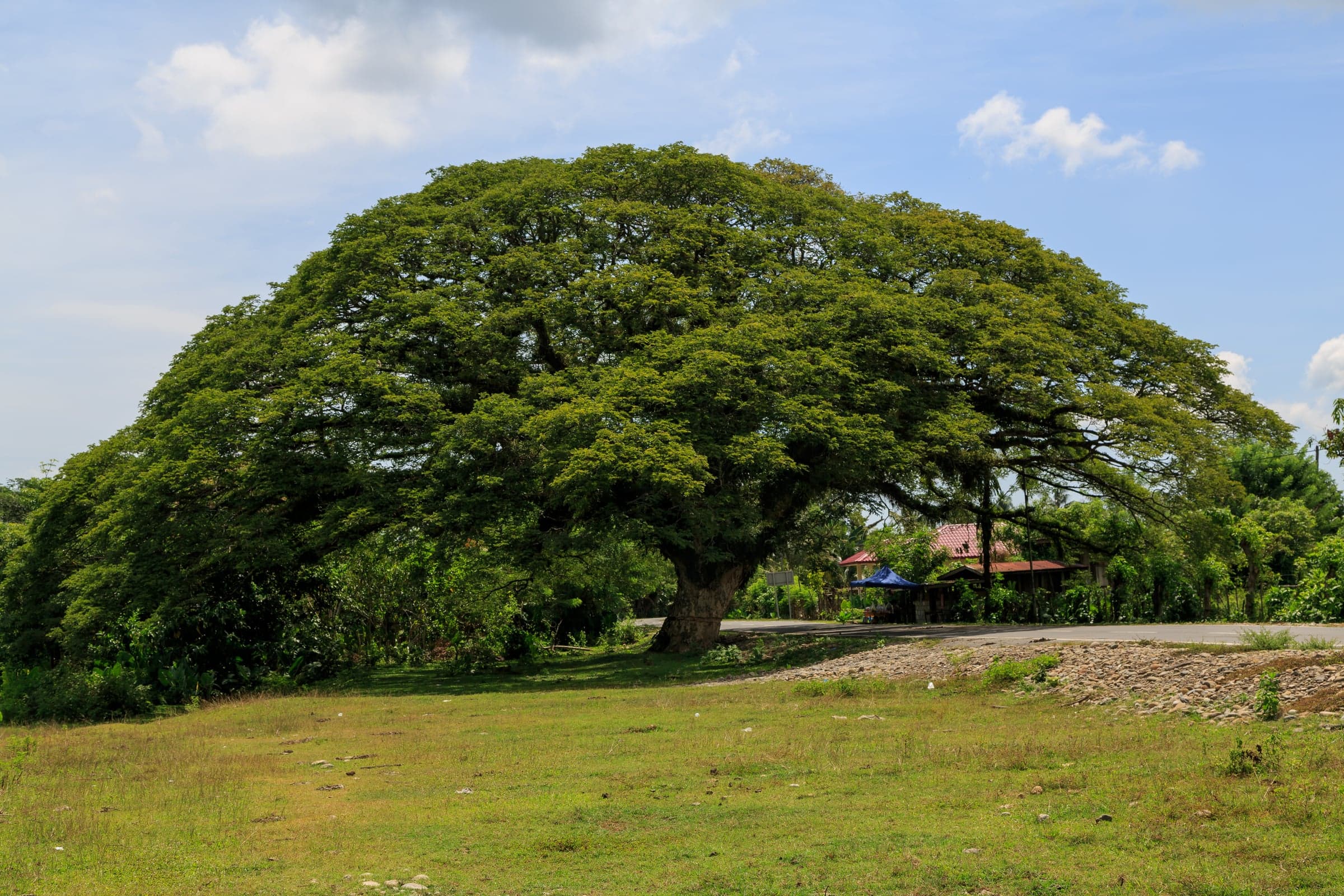
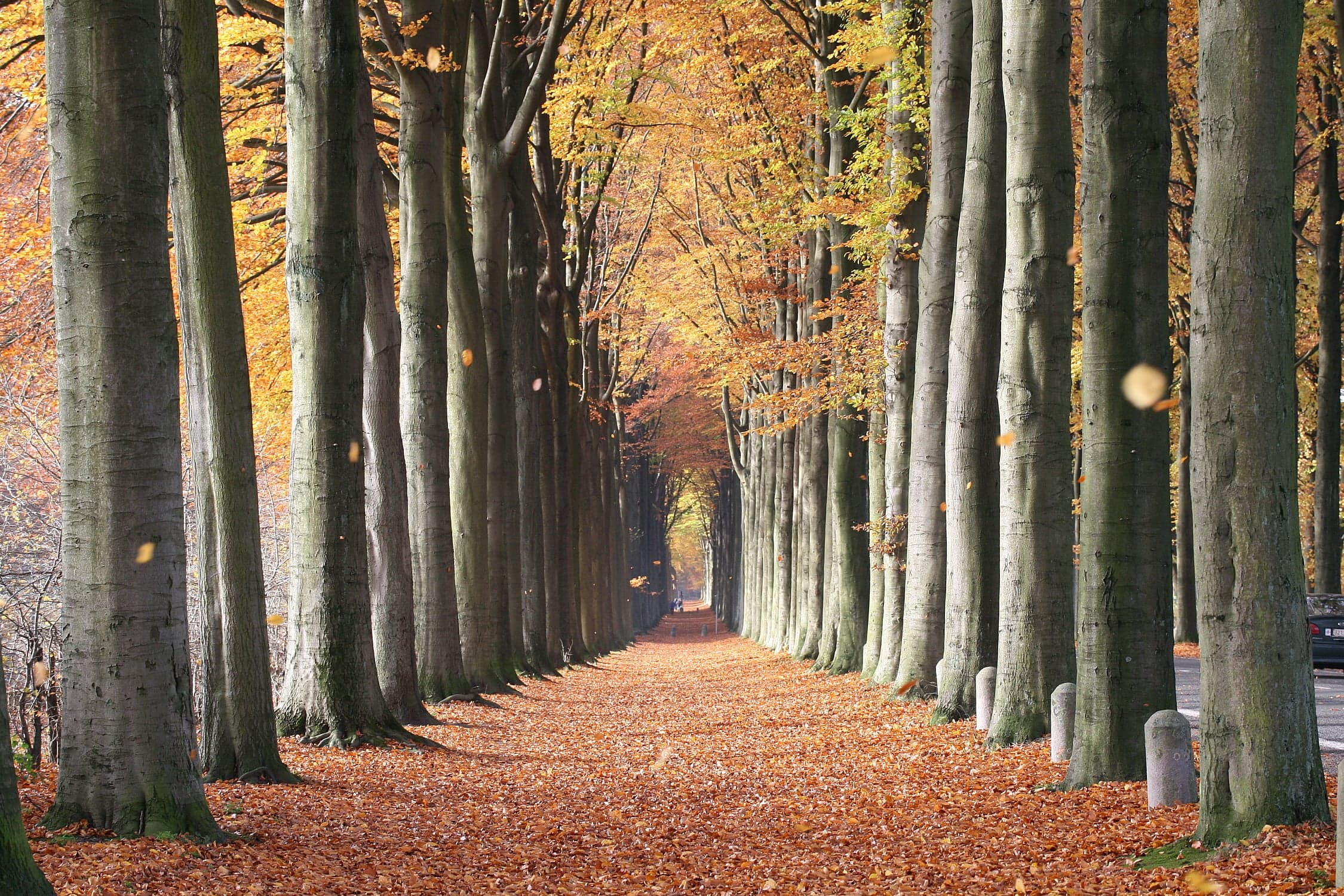
  • Arbre European Beech

    Jean-Pol GRANDMONT, via Wikimedia Commons

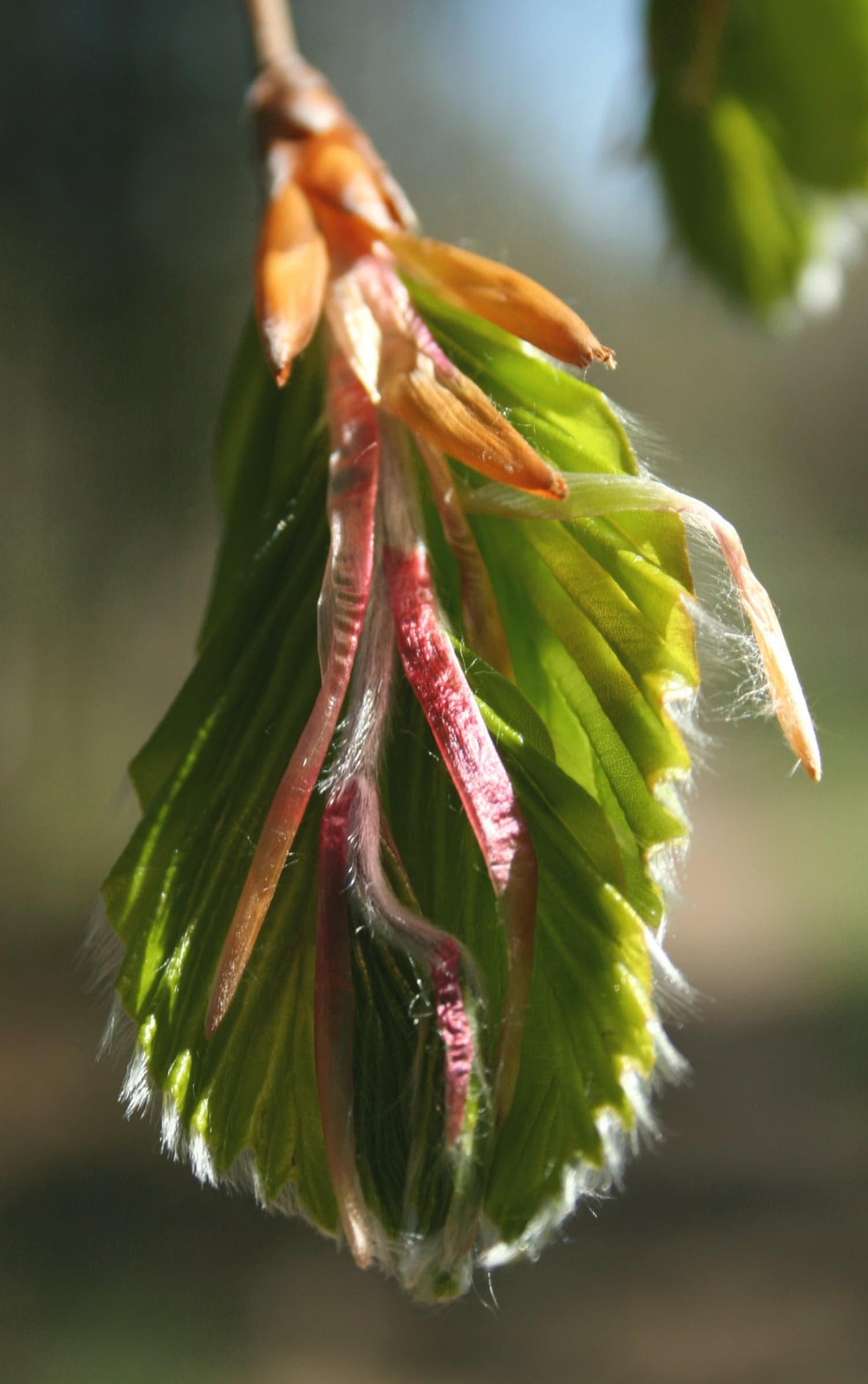
    European Beech: Feuille
    Feuille
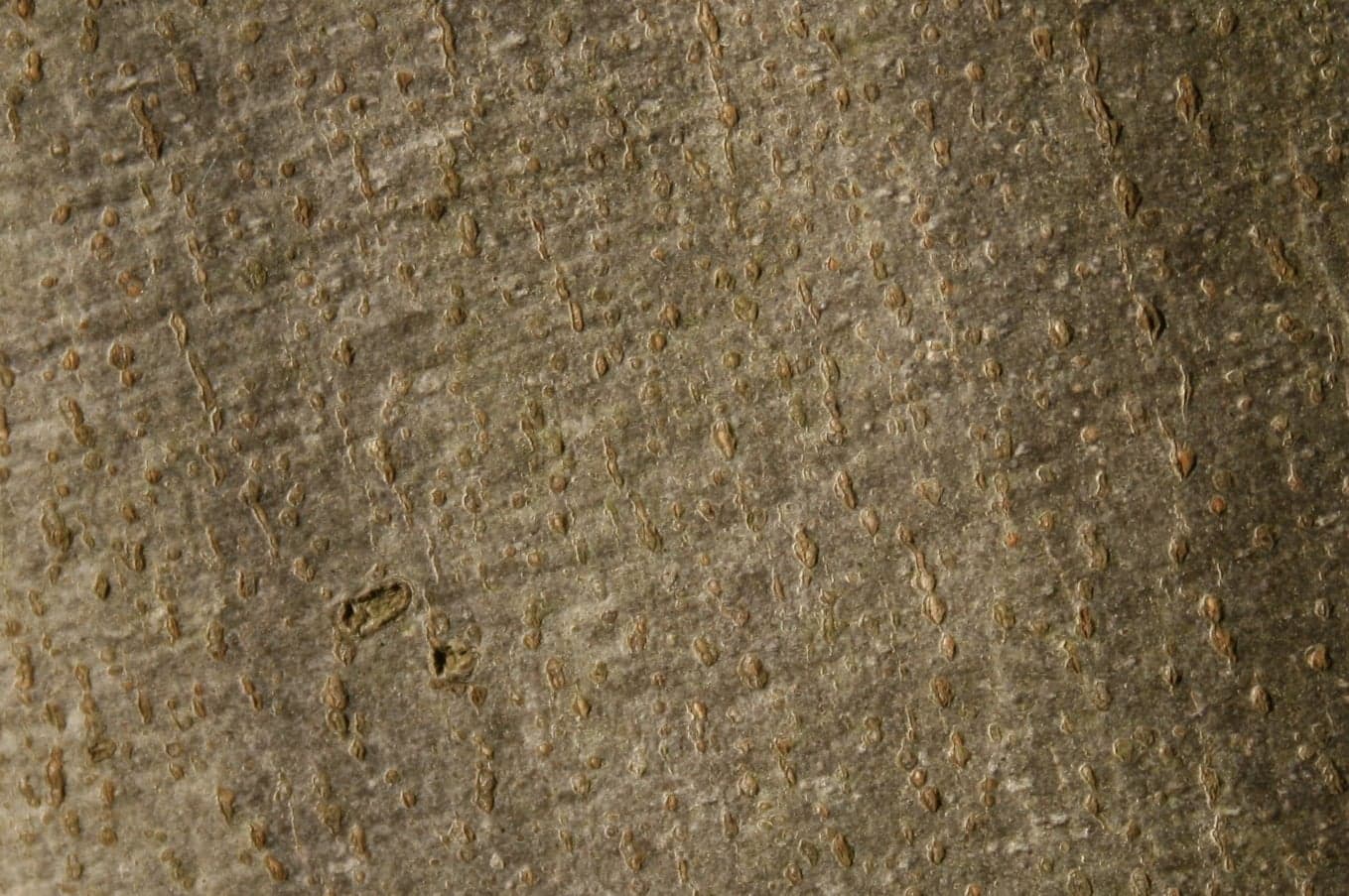
    European Beech: Écorce
    Écorce
    #

    The same responsiveness that lets beech bend makes it react to humidity.

    At 11.0 percent tangential against 5.0 percent radial, a wide flatsawn beech board will cup hard as a room dries out. In a modern interior with underfloor heating and winter humidity dropping below 30 percent, a beech tabletop that was flat in September will not be flat in February.

    This is not a defect and it is not avoidable by better drying. It is what the species does.

    The practical consequences are specific. Beech is excellent where movement is either restrained or irrelevant: bent components, chair frames, workshop benches and jigs, tool handles, drawer sides, and laminated or engineered constructions. It is a poor choice for a wide solid top in an uncontrolled environment, which is precisely the application people most often want a slab for.

    If you do build a wide beech top, quartersawn stock roughly halves the across width movement, and the top must float on slotted fasteners rather than being fixed.

    Steamed and unsteamed#

    Most European commercial beech is steamed during drying. This evens the colour to a warm pink brown and relieves some drying stress.

    Unsteamed beech is paler, closer to cream, and more variable in tone. Both are the same species and the colour difference is permanent, so match your stock at the outset rather than hoping to blend later.

    At the bench#

    Beech is straightforward and rewarding. It machines cleanly thanks to the fine even texture, turns very well, glues reliably and takes fastenings securely.

    At 6,460 N it blunts tooling at a decent rate but nothing exceptional. It sands to a fine surface and takes finish evenly, without the blotching that troubles pale softwoods, because the density is uniform.

    The fine texture also means it holds a crisp edge and a clean profile, which is why it is a standard for moulding planes, tool bodies and machine parts.

    Kitchen use#

    Beech is rated food safe and its closed fine texture is easier to keep clean than open pored oak, which is why it has been the traditional butcher block and worktop timber.

    The movement caveat applies with force in a kitchen, where wet and dry cycling is constant. Keep it oiled, never leave standing water on it, and accept more seasonal change than hard maple would give.

    Where beech is the right answer#

    Steam bent work above all, plus chair frames, workshop benches and fixtures, tool handles, drawer sides, turned work, kitchen worktops and butcher blocks.

    It is the wrong answer for a wide solid top in a variable environment, and wrong outdoors in any form, being decay class 5 and highly attractive to furniture beetle.

    Sourcing and EUDR#

    Not CITES listed and assessed as Least Concern. Beech is one of the most abundant hardwoods in Europe with mature certified supply across Germany, France, Austria and eastern Europe, and it is among the cheapest and best documented hardwoods available.

    What is steamed beech and how is it different?

    +

    Beech that has been steamed during drying, which evens the colour to a warm pink brown and relieves some drying stress. Unsteamed beech is paler and more variable. Steamed stock is the European commercial standard and is generally more predictable to work; the colour difference is permanent.

    Can beech be used outdoors?

    +

    No. It is rated decay class 5, perishable, and it is also highly attractive to furniture beetle. Beech is strictly an interior timber and even indoors it should not stay damp. For exterior work use oak, sweet chestnut or robinia.

    Retrait tangentielRetrait dans le sens des cernes. Les planches sur dosse et la plupart des plateaux travaillent dans ce sens.
    11.0–12.5 %
    Retrait volumiqueVariation totale de volume du bois vert au bois anhydre. Une valeur basse indique une meilleure stabilité.17.0–19.0 %
    Durabilité naturelle (EN 350)Norme européenne de résistance naturelle à la pourriture, de 1 (très durable) à 5 (périssable).Class 5 — Perishable

    Références

    • The Wood Database(consultée le 2026-05-09)
    • USDA FPL Wood Handbook FPL-GTR-190 (2010)(consultée le 2026-05-09)
    • Meier, E. — WOOD! Identifying and Using Hundreds of Woods Worldwide (2015)(consultée le 2026-05-09)

    En bref

    Les niveaux utilisent les mêmes plages pour toutes les essences répertoriées par KORENA, ce qui permet de les comparer directement. La valeur mesurée figure sous chaque niveau.
    DuretéRésistance aux chocs et à l’usureDur

    Dureté Janka : 6 460 N

    30 % plus dur que le chêne européen

    PoidsPoids d’un plateau à souleverLourd

    710 kg/m³

    StabilitéFaible mouvement au fil des saisonsTravaille beaucoup

    18,0 % de retrait volumique

    TravailSciage, rabotage, ponçage, collageFacile

    4,0 / 5 de moyenne à l’atelier

    Usage extérieurRésistance naturelle à la pourriture, EN 350Intérieur uniquement

    EN 350 classe 5

    • Sciage · Très bonQualité de la coupe et usure des lames.1 = difficile · 5 = excellent
    • Rabotage · Très bonLissage de la surface et risque d’arrachement.1 = difficile · 5 = excellent
    • Ponçage · Très bonRapidité du ponçage sans encrasser le papier.1 = difficile · 5 = excellent
    • Tournage · Excellente aptitudeQualité de coupe et de finition au tour.1 = difficile · 5 = excellent
    • Sculpture · Très bonNetteté des détails obtenus à la gouge.1 = difficile · 5 = excellent
    • Collage · Très bonFiabilité des assemblages collés.1 = difficile · 5 = excellent
    • Tenue des vis / clous · BonTenue des vis et des clous sans fendre le bois.1 = difficile · 5 = excellent
    • Cintrage à la vapeur · Excellente aptitudeAptitude à prendre une courbe après étuvage.1 = difficile · 5 = excellent

    Prix actuel du bois de European Beech en Europe, par mètre cube hors TVA. Touchez un prix pour en voir le détail.

    • Grumes de premier choix aux enchèresGrumes de qualité supérieure sélectionnées et vendues sur soumission, principalement à des fabricants de placage et de meubles. Les plateaux sont débités dans des grumes de ce type.La plupart des prix se situent entre 135 € et 232 €.Calculé à partir de 55 prix dans 2 régions.Dernières données : 24 sept. 2026
    • Grumes courantesGrands volumes de bois rond standard vendus par des propriétaires forestiers et des organismes publics, principalement pour la construction et l’industrie.La plupart des prix se situent entre 23 € et 112 €.Calculé à partir de 729 prix dans 9 régions.Dernières données : 24 sept. 2026

    Grumes de premier choix aux enchères par pays

    • Autriche · 232 € / m³Régions : Austria30 prixDernières données : 24 sept. 2026
    • Allemagne · 135 € / m³Régions : Bavaria25 prixDernières données : 24 sept. 2026

    Grumes courantes par pays

    • Italie · 87 € / m³Régions : Veneto162 prixDernières données : 23 juil. 2025
    • Roumanie · 72 € / m³Régions : Banat / Crișana, Moldavia (Romania), Transylvania et Wallachia489 prixDernières données : 24 sept. 2026
    • France · 67 € / m³Régions : Bourgogne-Franche-Comté et Grand Est / Alsace30 prixDernières données : 15 sept. 2026

    Pourquoi un plateau coûte-t-il plus cher ?

    Ces prix concernent le bois brut. Un plateau est la meilleure tranche d’une grume, séchée pendant au moins un an, puis contrôlée et mesurée individuellement. Seule une petite partie de chaque grume devient un plateau.

    Source : KORENA Timber Index · Dernières données : 24 sept. 2026

    Voir tous les prix régionaux
    Bulgarie59 €
    Bulgarie · 59 € / m³
    Régions : North-West Bulgaria et South-East Bulgaria
    48 prix
    Dernières données : 24 sept. 2026
    Adapté aux débutants
    Facile à travailler à l’établi et assez tendre pour ménager les outils.

    Attention

    • Ne convient pas à un usage extérieur sans traitementSa durabilité naturelle correspond à la classe 5 sur 5 de la norme EN 350. Gardez-le à l’intérieur ou protégez-le par une finition entretenue.
    • Travaille plus que la plupart des boisLes plateaux larges nécessitent des taquets ou des fixations à trous oblongs et un espace de mouvement. Utilisez le calculateur ci-dessous.
    • Poussière irritanteUtilisez un système d’aspiration et portez un masque lors du ponçage ou de l’usinage.

    Touchez une étiquette pour afficher les détails.