Finishing
How to oil a wooden cutting board (and how often)
Oil clean, dry wood on every face and the end grain, give it time to absorb, then wipe off the excess and check its condition each month.
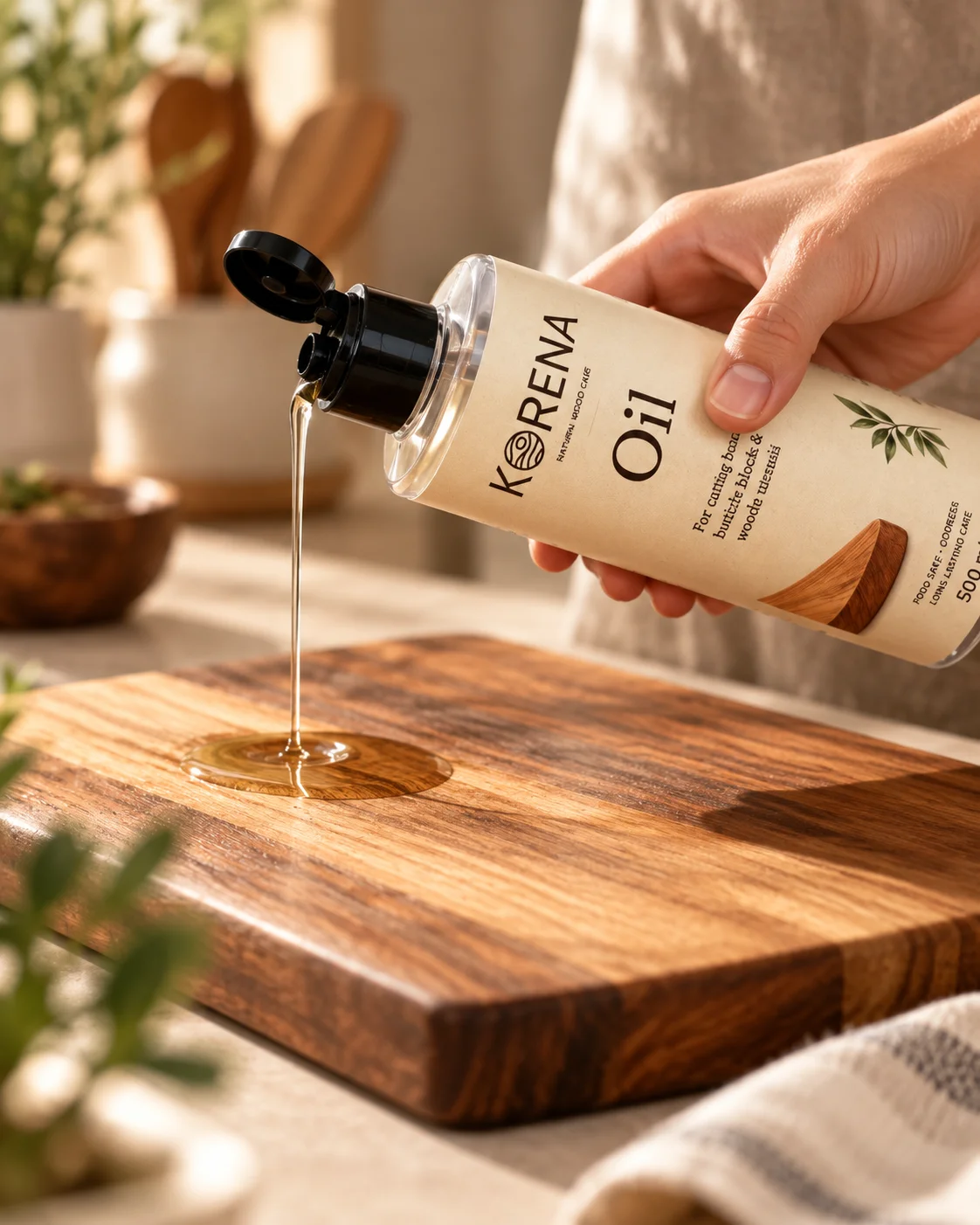
Oil a wooden cutting board on every face and the end grain after washing and drying it completely, then wipe off the excess; repeat about once a month or whenever the wood looks pale or dry. Give the oil at least 20 minutes to absorb. A new or very dry board benefits from being left overnight before wiping.
The board itself tells you more than a date in the calendar. Look at the cutting face, turn it over and inspect the edges. A pale grey patch, a dry feel or an edge that looks thirstier than the centre is a reason to oil. Treat the whole board, even when only one area first catches your eye.
What do you need before oiling?#
Set out a clean cloth, mild soap, warm water and mineral oil intended for wooden kitchenware. Keep a second clean cloth for removing the excess. Choose a place where you can turn the board over without picking up crumbs or dust. You need access to its underside as well as the face you normally cut on.
KORENA Oil is a 500 ml bottle of 100% purified white mineral oil of pharmaceutical grade (Ph. Eur.). It is clear, odourless and tasteless, with no added fragrance or colour. It suits unfinished or oiled boards, butcher blocks and wooden utensils. Do not use this routine on varnished or lacquered wood.
If you are unsure what finish your board has, check its care instructions before starting. A sealed surface needs care matched to that finish. Our explanation of a food safe finish helps put that distinction in context. For a choice between oil types, read the cutting board oil comparison.
How do you wash and dry the board?#
Wash with mild soap and warm water. Remove food from the corners and edges as well as the cutting face, then rinse and wipe away surface water. Do not leave the board sitting in the sink. Never put it in the dishwasher or leave it soaking.
Let the wood dry completely before applying oil. Dry to the touch immediately after washing is not the same as fully dry wood. Leaving it overnight gives it time; check it again before you begin. Stand it where air can reach both broad faces, away from direct heat. Oil is a care step for clean, dry wood, so do not use it to cover damp patches or food residue.
How do you oil every face and the end grain?#
Put oil on the cloth and work along the grain. Cover the top, underside and all edges. Turn the board as you work so you can see any dry area you have missed. Apply generously to dry wood, keeping the oil spread over the surface rather than collected in one puddle.
Pay attention to the end grain: the exposed ends of the wood fibres. On a board made with long strips, these are especially visible at the ends of the strips. On an end-grain board, they form the cutting face. Oil those areas carefully as part of the same pass. Handles, cut-outs and the sides of a juice groove also deserve a wipe with the oiled cloth.
Leave the oil for at least 20 minutes. For a new or very dry board, leave it overnight. Then use the second cloth to remove all excess from every face and edge. The finished surface should feel cared for without leaving a wet smear on your hand. KORENA Oil is food safe once the excess is wiped off.
How do you start a new board?#
For a new unfinished board, oil three or four times in its first week. Give each application time to absorb, preferably overnight, and wipe off the excess before the next. Cover every face and the end grain each time. Do not concentrate all the care on the cutting face.
This is a short starting routine, followed by regular maintenance. It does not mean adding oil every day indefinitely. Watch the wood between applications. If a board remains very pale despite careful treatment, use the more detailed dry-board restoration guide to check the surface before continuing.
How often should you oil by use?#
Use about once a month as a starting point, then adjust to the board's appearance. Washing and use vary between kitchens, so fixed weekly schedules can miss what is happening on the wood.
| How the board is used | What to check | When to oil |
|---|---|---|
| New, unfinished board | All faces and end grain | Three or four times in the first week |
| Used and washed daily | Pale patches and dry edges | About monthly, or sooner if pale or dry |
| Used occasionally | Both faces before its next use | About monthly, or whenever it looks dry |
| Very dry board | Pale grey areas after treatment | Follow the restoration routine, then reassess |
There is no fixed number of applications per bottle. Board size, condition and absorbency change the amount needed. Judge each treatment by coverage and absorption, then remove what remains on top.
When should you add board butter?#
After oiling and wiping, a thin layer of KORENA Butter adds a water-resistant satin finish. Work it in lightly, then buff with a clean cloth. It is food safe once buffed. A few drops of water provide a quick check later: when they stop beading, renew the thin balm layer and wipe the test water away.
If the wood also looks pale or dry, oil first. The oil and board butter comparison explains that order. Avoid olive and sunflower oil for this routine because they can go rancid. For the complete sequence, KORENA Set combines the 500 ml oil and 150 ml balm in one box; the wood care range also lists them separately.
Frequently asked questions#
How often should I oil a cutting board?#
About once a month is a useful starting point, or sooner whenever the wood looks pale or dry. For a new unfinished board, oil three or four times in the first week and wipe off the excess after each treatment.
How long should cutting board oil soak in?#
Leave mineral oil for at least 20 minutes before wiping off the excess. For a new or very dry board, leave it overnight; always start with completely dry wood and finish by wiping every face and edge.
Should I oil both sides of a cutting board?#
Yes. Work oil over both broad faces, every edge and the end grain with a clean cloth. The underside needs care too, even if you always use the same face for cutting; remove excess oil from all sides afterwards.
Can I oil a cutting board straight after washing?#
Wait until the wood is completely dry. Wiping away surface water is only the first step; let air reach both faces, then check the board again before oiling, leaving it overnight to dry when needed.
How much mineral oil do I need for a cutting board?#
Use enough to cover every face and the end grain, allowing dry areas to absorb it. There is no fixed number of applications per bottle, because board size and absorbency differ; wipe off any oil left on the surface.