European Walnut Slab Buying Guide
How to assess the colour, dimensions, moisture, thickness and price of a European walnut slab before buying it online.
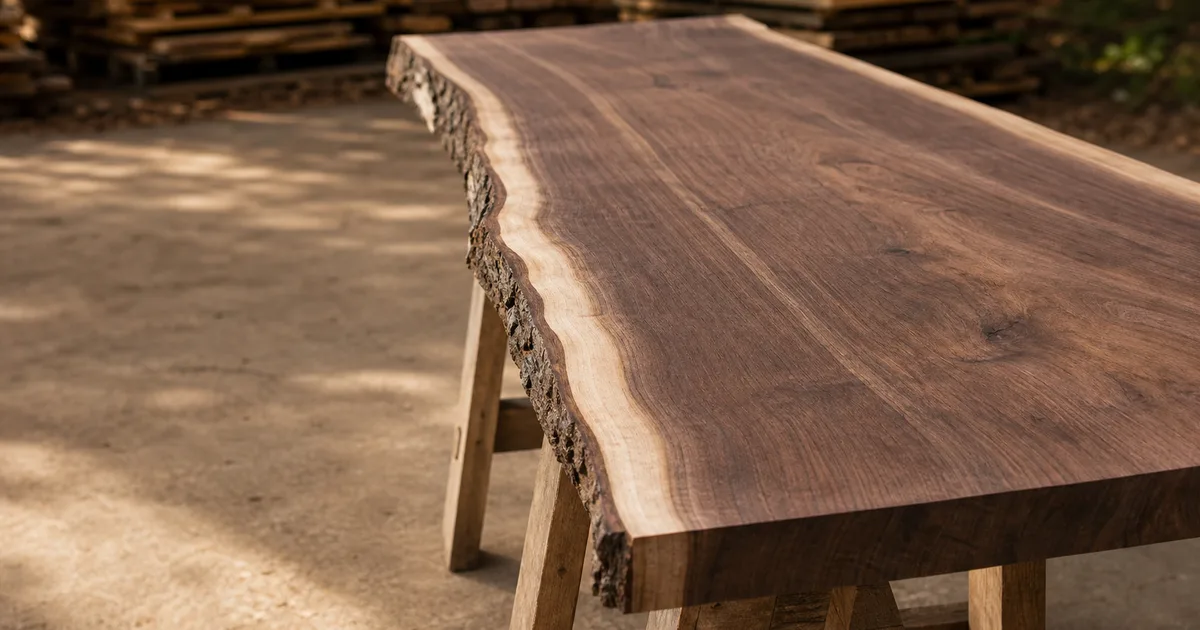
European walnut is a natural candidate for a dining table, desk or meeting table when the design calls for dark timber. The harder part is choosing a particular slab. Colour, sapwood, grain and usable width can change considerably from one piece to the next.
A good online listing should let you compare those differences before arranging delivery. Start with the photographs, then check the measured outline, dimensions, moisture and drying information. Browse the current walnut slabs in stock alongside this guide.
Why choose European walnut?#
European walnut, Juglans regia, is known for chocolate to warm-brown heartwood, a calm lustre and occasional darker streaks. It is the classic dark table species in Europe. The contrast works particularly well in simple forms where the timber face remains visually dominant.
Its moderate hardness is useful in furniture making. It cuts, planes and sands cleanly when the grain is cooperative, without the tool wear associated with much harder species. It is still a working surface rather than an indestructible one. A dining table will acquire small dents and marks through use, especially under a thin oil finish.
Walnut also allows restrained edge and leg details because its colour already carries visual weight. For identification, typical characteristics and broader working notes, see the European walnut species guide.
Walnut's look varies from piece to piece#
Heartwood and sapwood contrast is often pronounced in walnut. The heartwood may run from warm brown to deeper chocolate, while the sapwood is much paler. Some makers retain that contrast as part of the design. Others trim the sapwood away, which can reduce the finished width substantially.
Grain can be straight and quiet, or wavy around branch transitions and changes in the trunk. Dark bands may run along the length, stop abruptly or drift towards an edge. These variations affect the balance of a finished top, even when two slabs have similar headline dimensions.
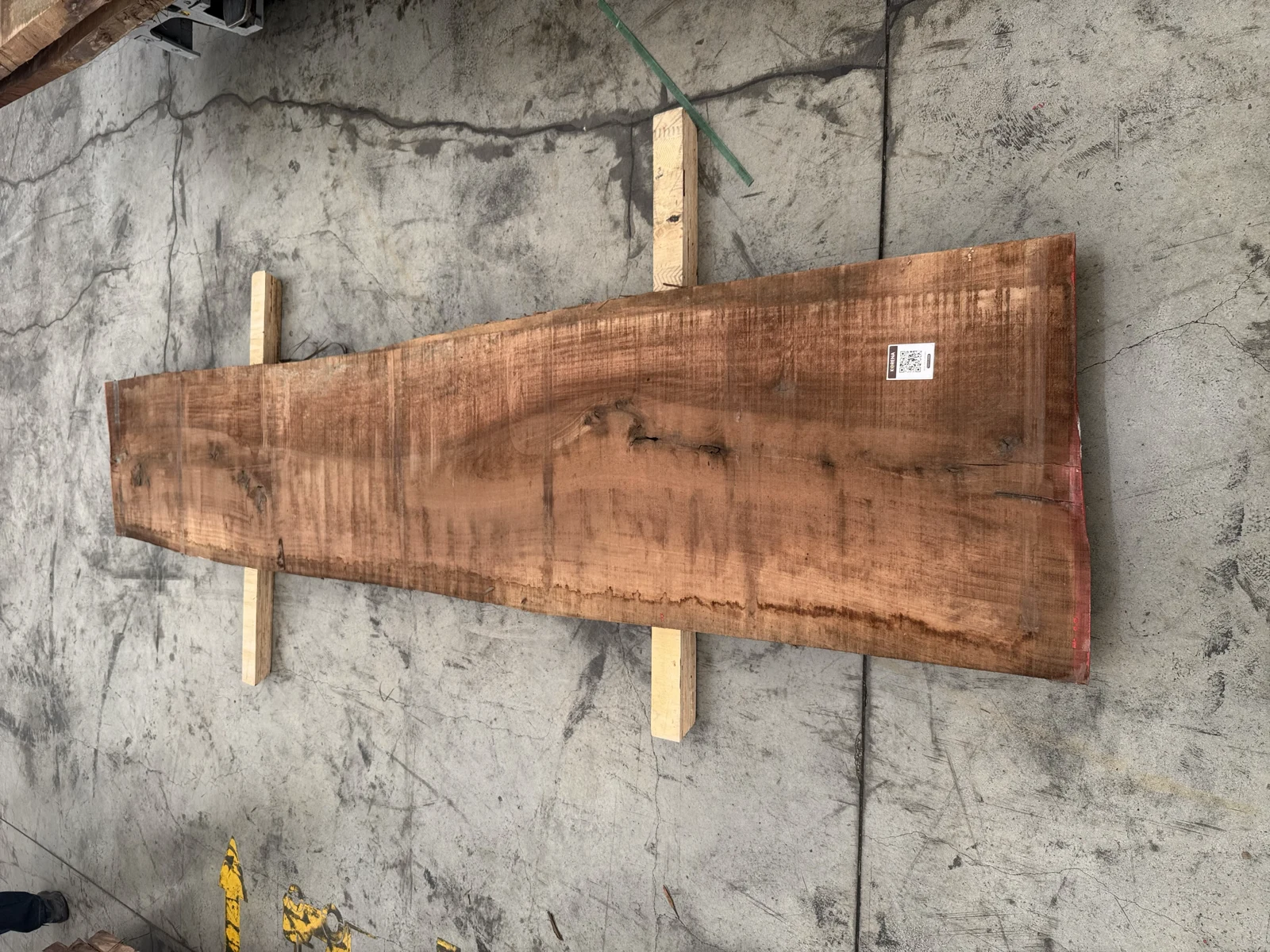
Per-piece photographs and a measured outline therefore matter more with walnut than with many pale, visually even species. Look at the complete face rather than a close crop. Check where the narrow points occur and whether the outline provides enough material for your proposed cut line.
A natural edge can be retained, softened or removed. Decide which treatment you intend before judging width. A slab advertised at 600 mm wide may not yield a rectangular 600 mm top once bark, sapwood, splits and edge shaping are considered.
Sizes that European walnut actually comes in#
European walnut trees are generally smaller than oak trees used for slab production. Long pieces are available, but very wide, clear, one-piece tops are uncommon. Waiting for an unusually broad slab can restrict the choice of colour and grain as well as increasing the price.
Current KORENA stock includes ten European walnut slabs. They run from 3.0–3.4 m long, approximately 0.5–0.65 m wide and 50 mm thick. Those dimensions suit desks, console tops, benches and narrower dining tables. They also provide useful material for paired-board construction.
Bookmatching two boards is the standard route to a wide walnut top. Two compatible slabs can be opened or arranged around a centre joint, giving a more practical overall width while retaining visual symmetry. Allow for jointing, trimming and final surfacing when calculating the finished size.
For a dining table, begin with the room, seating plan and base position. The dining-table slab size guide covers those decisions in more detail. Compare its target dimensions with the narrowest usable sections of the actual slab, not merely the maximum width.
Drying, moisture and stability#
Current walnut stock is kiln-dried, with recent moisture readings from about 6.5 to 11 percent. Walnut is comparatively well behaved once properly dried, but no solid slab is movement-free. Its condition can change during storage, transport and acclimatisation.
Check the reading shown for the individual piece and ask when it was taken if the date is unclear. Also confirm where the slab has been stored. A reading taken in a conditioned workshop and one taken in an open-sided yard may need different interpretation.
KORENA listings record the drying method and moisture reading for each slab. I measure each piece myself at the partner yards using a phone-based capture system. Each listing also shows the outline, length, thickness and widths measured at 25, 50 and 75 percent of the length. A precision badge, typically within 10 mm, states the expected dimensional tolerance.
After delivery, let the slab acclimatise in conditions reasonably close to the finished room before final machining. The appropriate time varies with the workshop, season and packaging.
Finishing European walnut#
Oil and hardwax finishes deepen walnut's colour and make dark bands more apparent. This can produce the familiar rich walnut appearance, but it may also increase the visual difference between heartwood and pale sapwood.
Test the complete finishing schedule on an offcut or an inconspicuous area. Include sanding grit, filler if used, and the intended number of coats. A quick wipe with solvent may suggest the colour shift, but it does not show the final sheen or how the sapwood will respond.
Film finishes can offer greater resistance to spills, while oils are usually easier to repair locally. The right choice depends on the table's use and the maker's preferred maintenance routine. Whatever the system, follow the finish manufacturer's preparation and curing instructions.
What does a fair walnut slab cost?#
Walnut normally carries a premium over oak per square metre. Width, colour, figure, sapwood, drying, defects and usable yield all affect the comparison. A lower-priced slab can become expensive if trimming removes a large part of the advertised area.
Current KORENA walnut slabs start at about 180 EUR net. Treat that as a catalogue starting point, not a universal rate. Prices vary by yard and by piece.
Compare candidates by approximate face area, thickness and expected finished yield. Then account for matching if the project needs two boards. A pair with similar length, tone and grain may be worth more to the project than the two cheapest individual slabs.
The KORENA Timber Index provides a daily-refreshed European hardwood price reference. For a fuller comparison method, including thickness and processing, read what a hardwood slab costs in Europe.
Picking your walnut slab#
Begin with a drawing of the finished top. Add the final length, width, straight edges, centre joint and any areas that the base must support. Place that drawing mentally over the listing's measured outline.
Check the width stations at 25, 50 and 75 percent of the slab length. They reveal waist points that a single maximum-width figure can hide. Confirm that the thickness leaves enough material for flattening and final sanding, particularly if the top must match existing furniture.
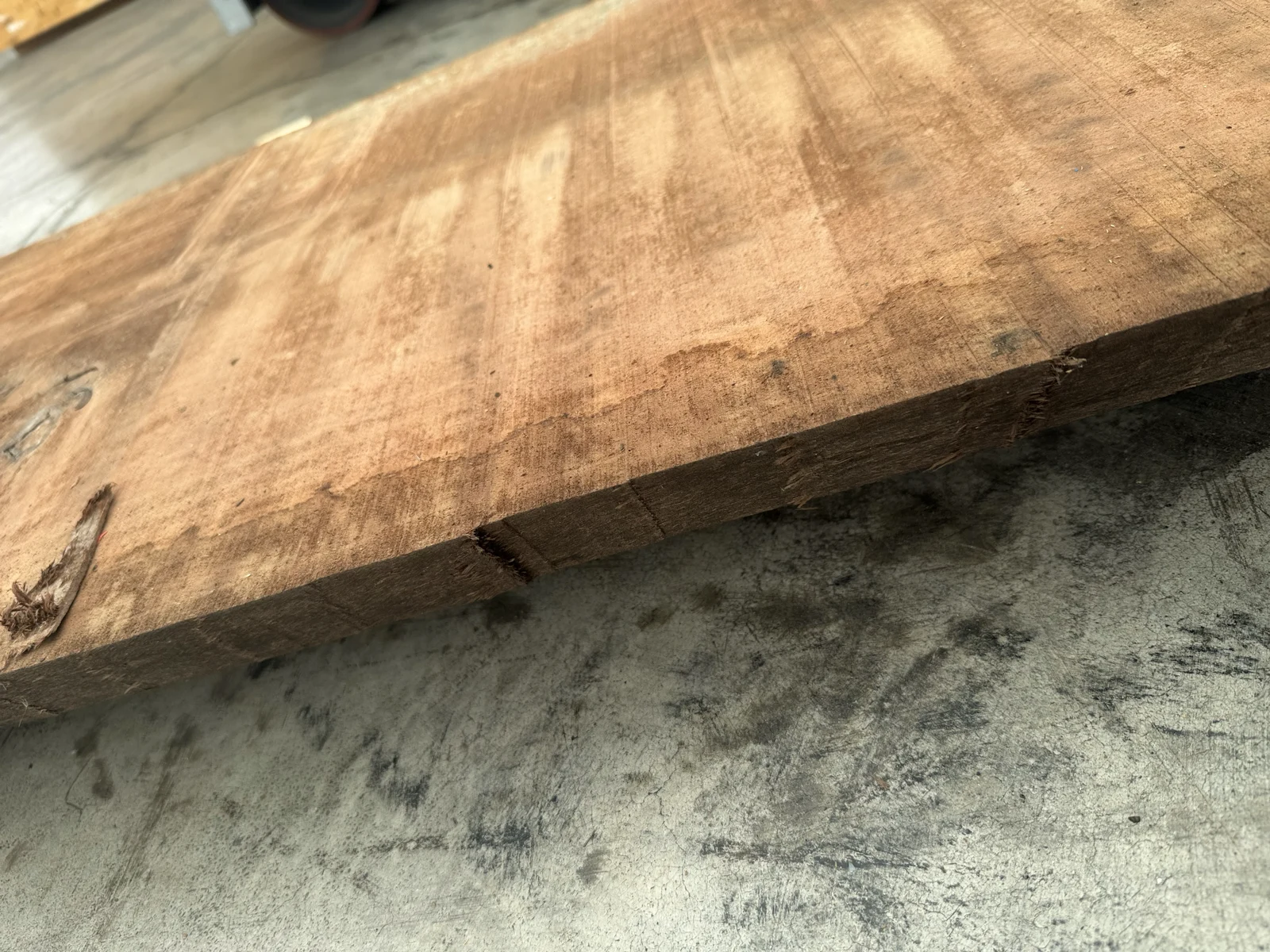
Study both faces and the ends for splits, knots, voids and grain changes. Decide which features are acceptable, which need repair and which must fall outside the cut line. Ask for another photograph if a shadow, sticker or stacking bearer obscures an important area.
Then verify the moisture reading, drying method and precision badge. Measurements within 10 mm are useful for selection, but they are not a machining schedule. Keep an allowance for trimming and final squaring.
These two current pieces show the kind of per-slab information available:
Before paying, confirm the net price, applicable tax, delivery arrangement and access at the destination. Long slabs require a realistic unloading plan. The wider purchasing process is covered in How to buy a hardwood slab in Europe.
Each KORENA piece ships with a wood passport accessed by QR at p.korena.eu. It records per-piece provenance towards EUDR due diligence. The passport supports documentation, but professional buyers should still check which obligations apply to their own role and business size.