KORENA
WoodFurnitureTools & finishesTimber yardsJournal

Be first to see new slabs

Get an email when new wood arrives.

A few emails a month. No spam, unsubscribe anytime.

KORENA

Shop solid wood, handmade furniture, tools and wood finishes on KORENA.

Shop

  • Browse products
  • Sold archive
  • Track order

Learn

  • Journal
  • Species guides
  • Glossary
  • Compare
  • Authors

Help

  • About
  • How it works
  • Become a sellerNew
  • Source a slab
  • Support
  • Document templates
  • Press

Buy

  • Terms of sale
  • Right of withdrawal
  • Returns and warranty
  • Shipping and delivery

Trust

  • Privacy policy
  • Cookie policy
  • Wood provenance and EUDR
  • Accessibility

Imprint

  • Legal notice / Imprint
  • Acceptable use
  • IP and content

© 2026 KORENA. All rights reserved.

Operated by Martial Labs Ltd. (BG, EIK 207453941). KORENA is a trading name of Martial Labs Ltd.

We respect your privacy

We use essential cookies so the site works. With your permission we'd also use cookies for analytics, personalised content, and ads. You can change your mind any time on the consent preferences page. See our cookie policy and privacy policy.

  1. Home
  2. /
  3. Species
  4. /
  5. European Larch

Larix decidua

European Larch

The one European softwood that will sit outside untreated, and the most decorative of the group. Hardest conifer KORENA lists, at the cost of fighting resin at every stage.

  • This species is recorded as commercially grown in Europe. This does not establish where an individual piece was harvested; check its origin details.
  • Botanical group. Softwoods are conifers; hardwoods are broadleaf trees.
  • The botanical family the species belongs to.
Get notified when it landsReference species. No pieces in stock right now.
  • Project fit
  • In stock
  • Looks
  • Working it
  • Movement
  • Price
  • Safety and sourcing
  • Questions
  • Technical data

Is it right for your project?

Great for

  • Tabletops
  • Exterior cladding
  • Garden furniture
  • Flooring
  • Boat and dock work

No European Larch in the current drop

Similar species in stock

No European Larch right now. These species suit the same projects and have pieces available.
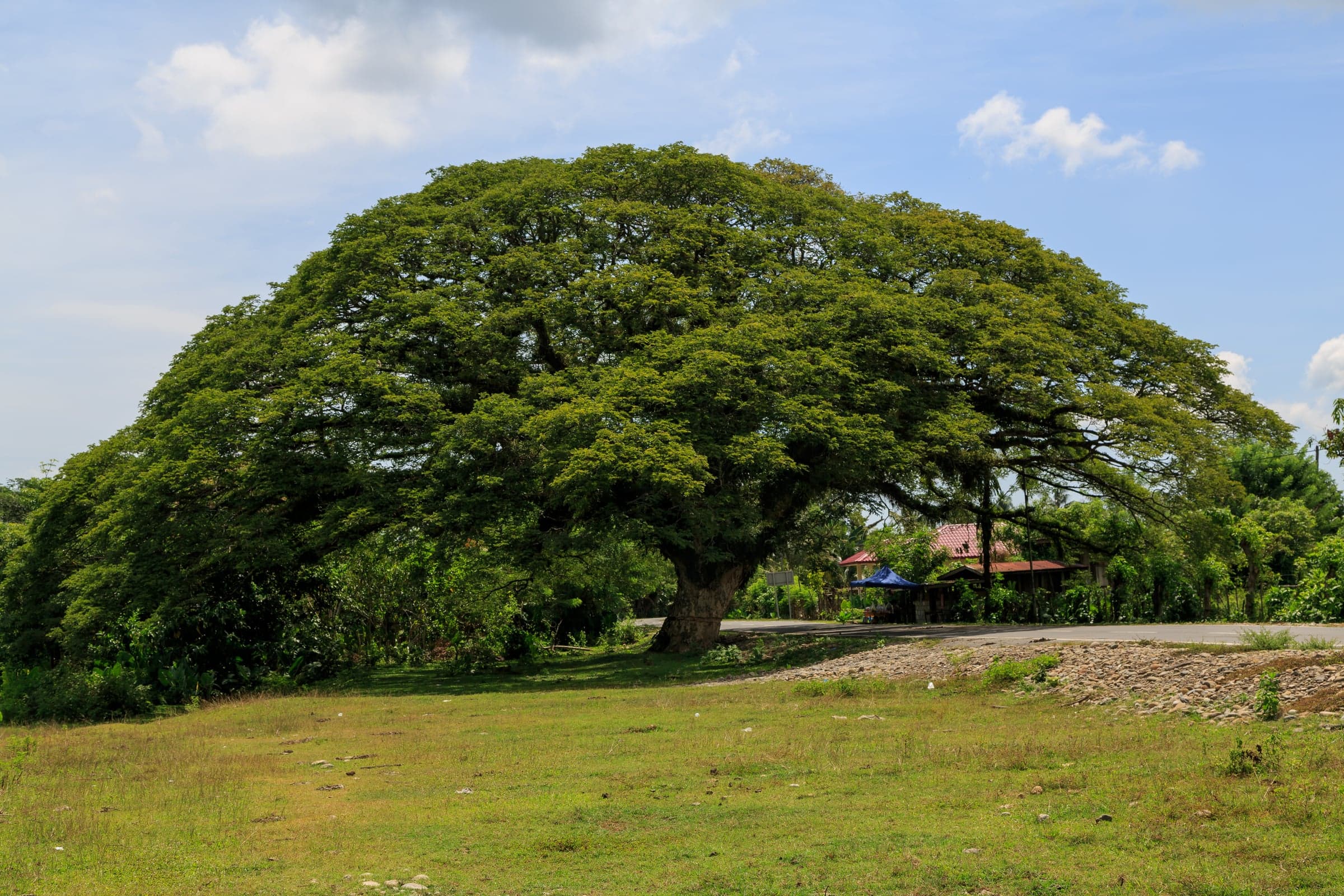
  • Saman grain

    Saman

    Samanea saman

    4 pieces

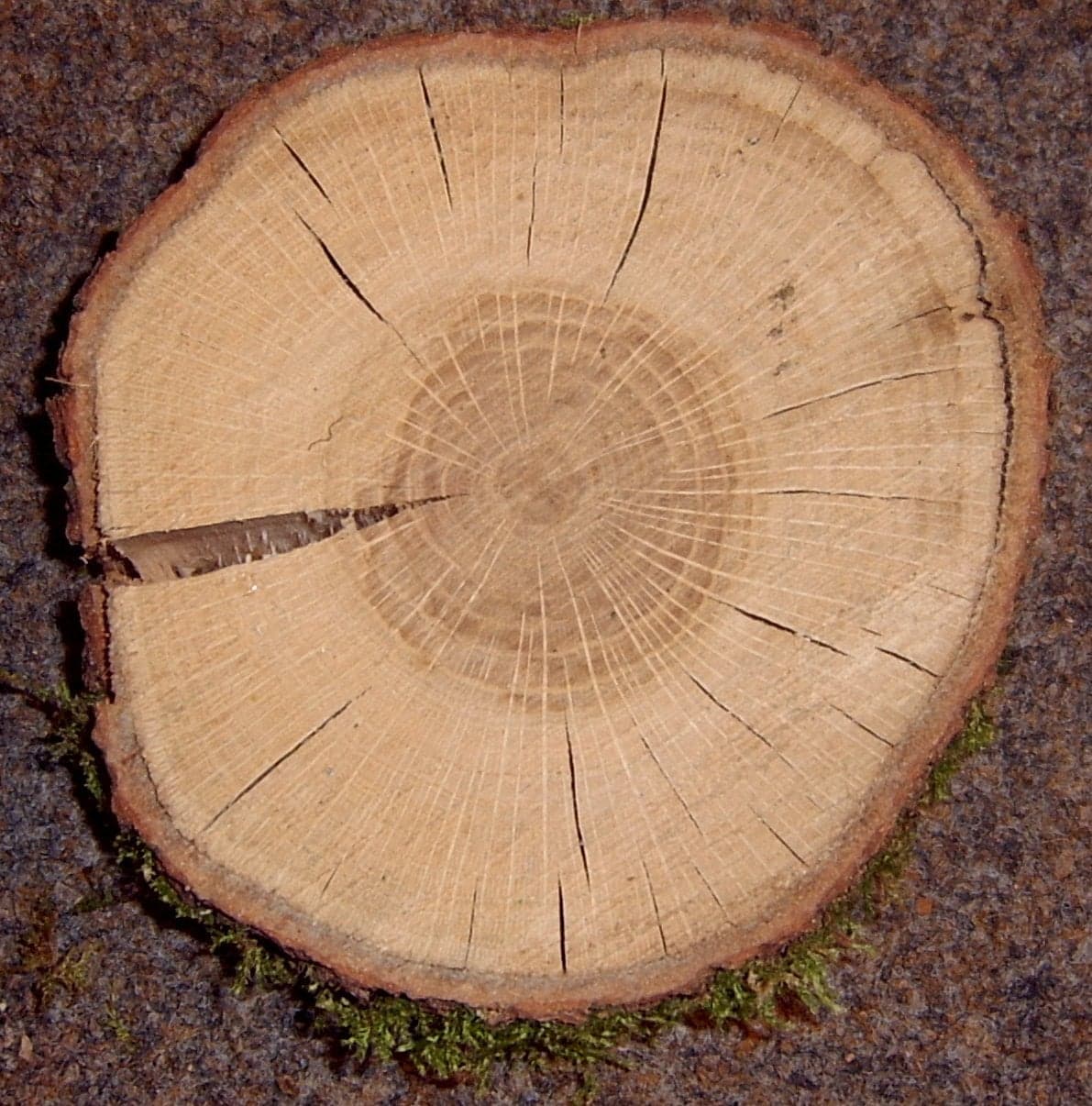
  • European Oak grain

    European Oak

    Quercus robur

    6 pieces

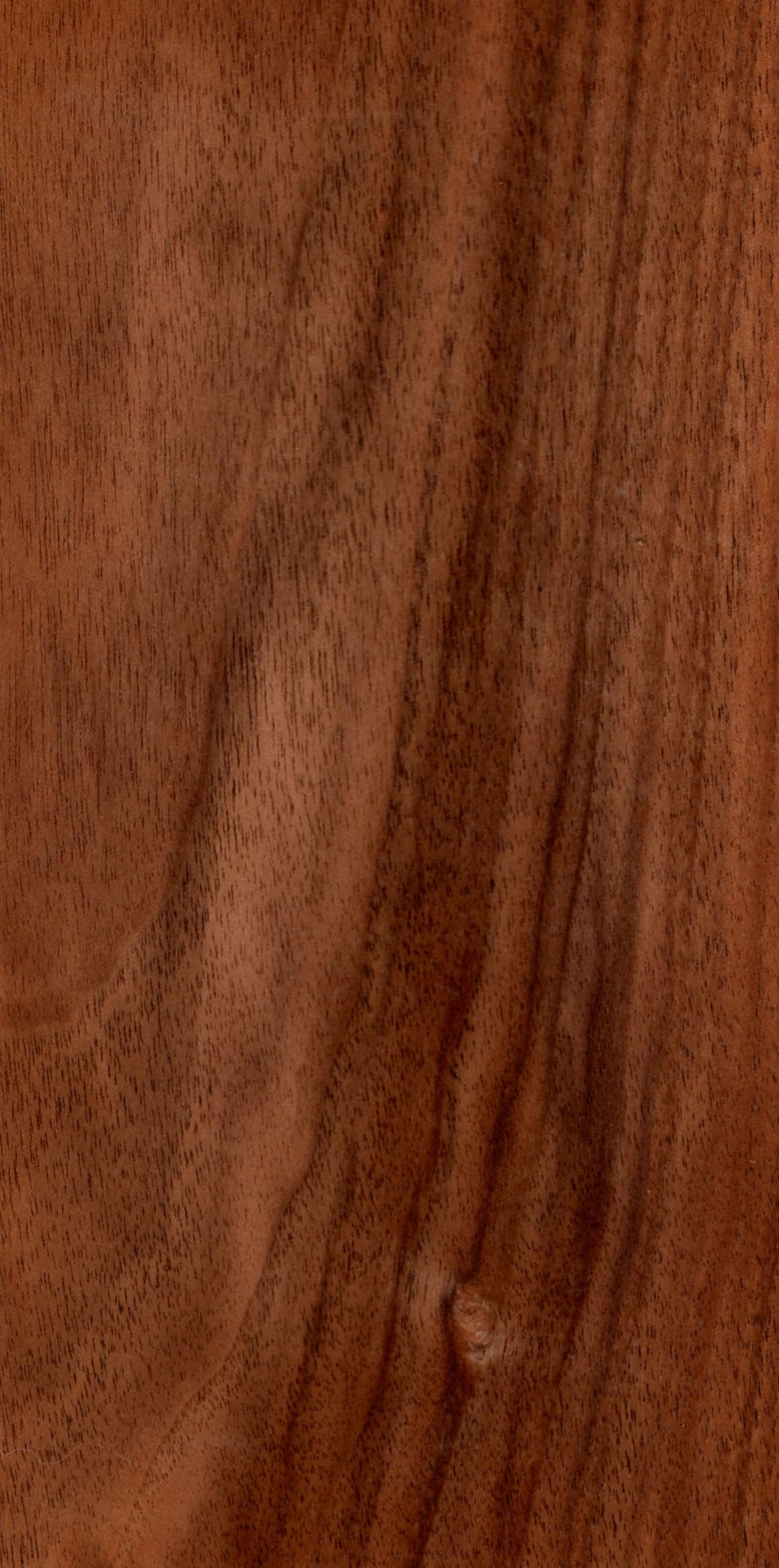
  • European Walnut grain

    European Walnut

    Juglans regia

    9 pieces

Get notified about European Larch

We email you when fresh European Larch slabs land at KORENA. Each piece is one of one, so early notice matters.

A few emails a month. No spam, unsubscribe anytime.

Wood appearance

What it looks like

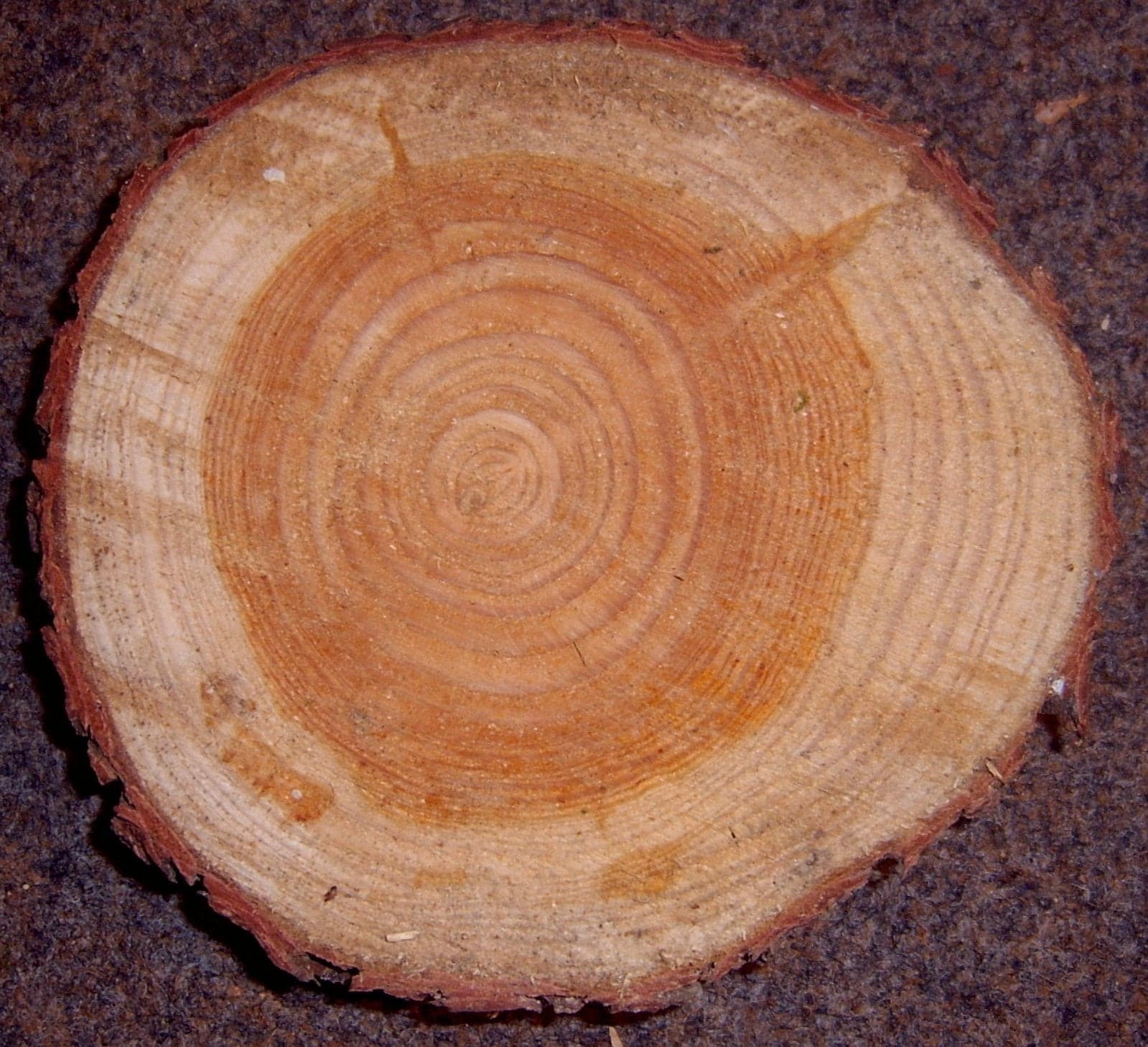
The most visually striking of the European softwoods. Heartwood runs warm honey to a deep russet brown against narrow pale sapwood, and the boundary between the two is sharp and decorative. Growth rings are strongly marked because the latewood bands are dense and dark, which gives flatsawn faces a bold cathedral figure closer to a ring-porous hardwood than to spruce.

  • Honey to russet brown heartwood, deepening with UV exposure
  • Narrow pale cream sapwood in sharp contrast
  • Strongly marked growth rings with dark dense latewood bands
  • Hard for softwood; visible growth rings.

Working with it

Working it

Most hand and machine operations give good results, and larch is stiff and strong enough to feel substantial under the tool. The complication is resin. Natural resins gum up saw blades and clog abrasives, and the problem worsens as the wood warms during a cut. Keep blades clean, take breaks in long rips, and expect to clear the sole of a plane more often than usual. The dense latewood bands can also tear out where grain rises.

Finishing

Resin is again the issue. Wipe the surface with denatured alcohol or acetone before finishing to lift surface resin, or oil finishes may stay tacky in patches. Once clean it takes oil beautifully and the colour deepens to a rich amber. For exterior work, a penetrating oil renewed annually outperforms film finishes, which crack and lift on a wood this dimensionally active outdoors.

Drying

Slower and more troublesome than spruce or fir. Larch is prone to distortion and to surface checking if dried too fast, and the high resin content means a hot kiln schedule will drive resin to the surface where it sets sticky. Air drying followed by a low temperature kiln is the standard route for slab stock. Expect around 12.5 percent volumetric shrinkage, and note that internal stress from poor drying shows up as spring and bow once the slab is ripped.

How much will it move?

Wood swells and shrinks across its width as the air gets damper and drier. Estimate the seasonal movement of a European Larch top before you design the fixings.

Cut
Where it will live

Expected seasonal movement

about 9.4 mm

Fix the top with buttons or slotted brackets, not glue or tight screws.

Linear shrinkage model: width × (shrinkage ÷ 28 % fibre saturation) × seasonal moisture swing. Uses 8.2 % tangential shrinkage for European Larch. A planning estimate, not a guarantee.

What it costs

Safety and sourcing

  • This species is recorded as commercially grown in Europe. This does not establish where an individual piece was harvested; check its origin details.
  • IUCN Red List status: the global conservation assessment for this species.
  • Species within the Larix genus have documented cases of skin irritation, hives and skin lesions, though severe reactions remain uncommon. Resin contact is the usual trigger rather than dust alone. Gloves during handling of freshly cut stock and normal extraction during machining are appropriate.

Read the full guideIn-depth notes on figure, colour change, working and stability.+

What European Larch actually is#

Larix decidua is the conifer that drops its needles. That deciduous habit is the visible oddity, but the useful consequence is in the timber: larch lays down dense, resin-rich latewood in a way that no spruce or fir does, and the result is a softwood that behaves in several respects like a light hardwood.

It is the hardest conifer in the KORENA catalogue at 3,290 N on the Janka scale, which puts it above every pine and fir here and roughly level with small-leaved lime. It is the only one rated durable enough to go outdoors untreated. And it is by some distance the most decorative, with a heartwood and sapwood contrast and a ring figure that reward flatsawing.

The trade-off is resin, and resin complicates every stage from ripping to finishing.

Reading a larch slab#

Two things drive the value of a larch slab: ring spacing and the heartwood to sapwood ratio.

Ring spacing is the durability signal. Slow-grown Alpine larch from high altitude puts down rings a millimetre or two apart, with a high proportion of dense dark latewood. That material is genuinely durable outdoors and considerably stiffer. Fast-grown lowland plantation larch can have rings five or six millimetres apart, much less latewood, and measurably worse durability. The two look related but do not perform alike. If the piece is going outside, ring count is the number to ask about.

Buyer questions

Questions buyers ask

Can European Larch be used outdoors untreated?

+

Yes, within limits. It is rated moderately durable, which is the best of the European softwoods KORENA lists and good enough for cladding, decking and garden furniture without preservative. Ground contact is a different matter and will shorten its life considerably. Slow grown Alpine stock with tight rings outperforms fast grown plantation larch noticeably.

Why do my saw blades gum up cutting larch?

+

Natural resin content, which is also what gives larch its durability. The resin softens with the heat of cutting and deposits on the blade. Clean blades with a resin solvent between operations, feed at a steady rate rather than forcing the cut, and clear plane soles regularly. It is a nuisance rather than a real obstacle.

How hard is larch compared to oak?

+

Larch is 3,290 N on the Janka scale against 4,980 N for European oak, so meaningfully softer but by a long way the hardest softwood in this catalogue. It is roughly on a par with small-leaved lime and harder than every pine and fir here. For a tabletop it is a reasonable compromise between weight and durability.

Why is my oil finish staying tacky?

Mechanical properties

Technical data

Published reference values. Where sources disagree the range is shown, with the typical value used for the scales above.

Density (kg/m³)Mass per cubic metre at about 12 % moisture. Heavier wood is usually harder and stronger.575 kg/m³
Janka hardness (N)Force needed to press a steel ball halfway into the wood. The standard measure of dent resistance.3,290 N
MOR: modulus of rupture (MPa)Bending strength: the load at which a beam breaks.90 MPa
MOE: modulus of elasticity (GPa)Bending stiffness: how much a shelf or top sags under load.11.8 GPa
Radial shrinkageShrinkage across the growth rings, green to oven-dry. Quartersawn boards move by this.4.2 %
Tangential shrinkageShrinkage along the growth rings. Flatsawn boards and most slabs move by this.8.2 %
European Larch grain

No machine-readable author provided. Lumbar~commonswiki assumed (based on copyright claims)., via Wikimedia Commons

Larix decidua is native to the Alps and Carpathians and has been planted widely across northern and central Europe. Alpine grown stock from high altitude is the most prized, because slow growth produces the tight rings and high resin content that give larch its durability.

  • Not listed in the CITES Appendices and assessed by the IUCN as Least Concern. Alpine larch is slow growing and high altitude stands are managed conservatively, so genuinely tight ringed material is limited and priced accordingly. Plantation larch from lowland northern Europe grows far faster, has wider rings, and is measurably less durable. The distinction matters if the piece is going outdoors.

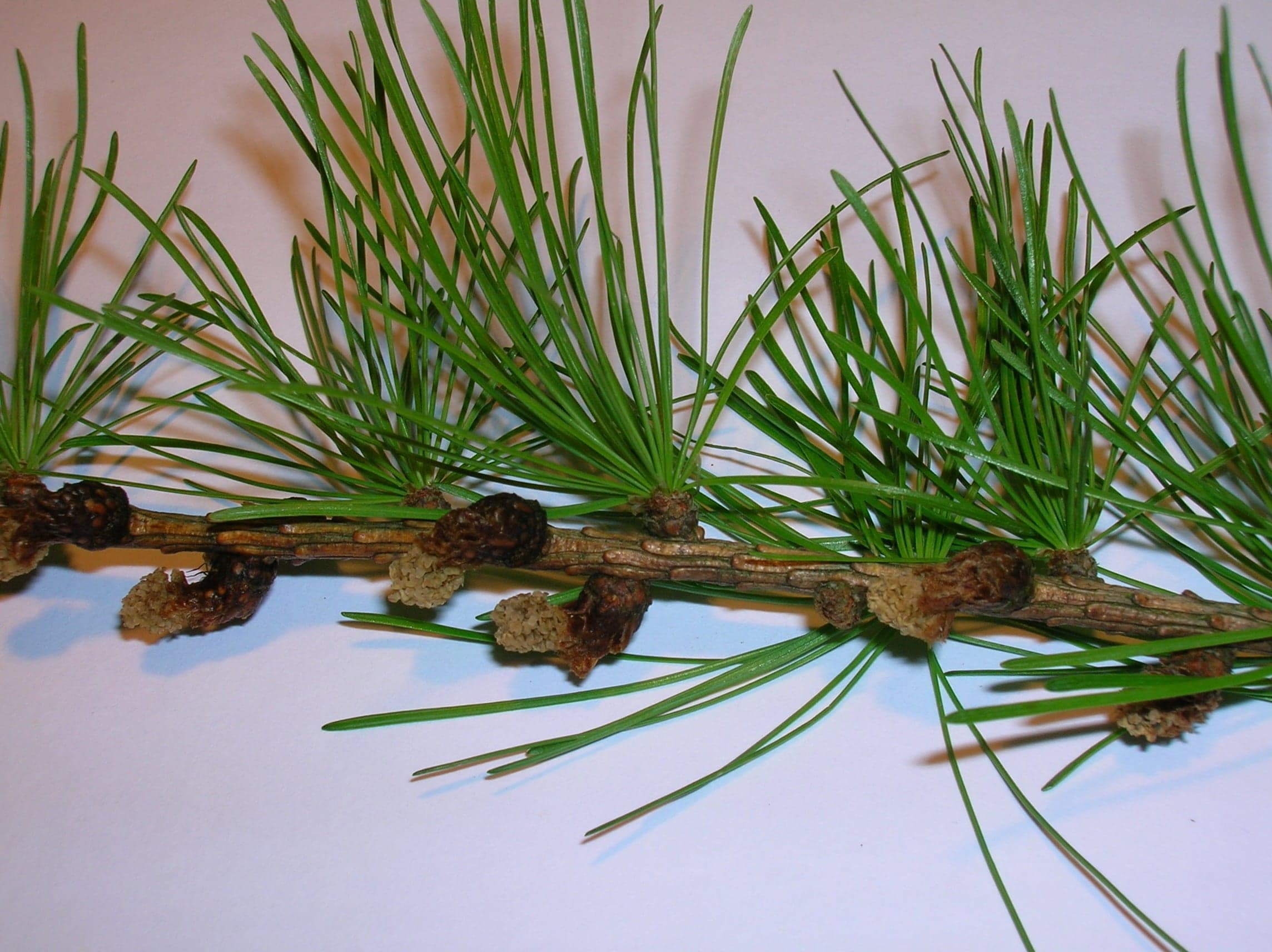
  • European Larch: Leaf
    Leaf
    European Larch: Bark
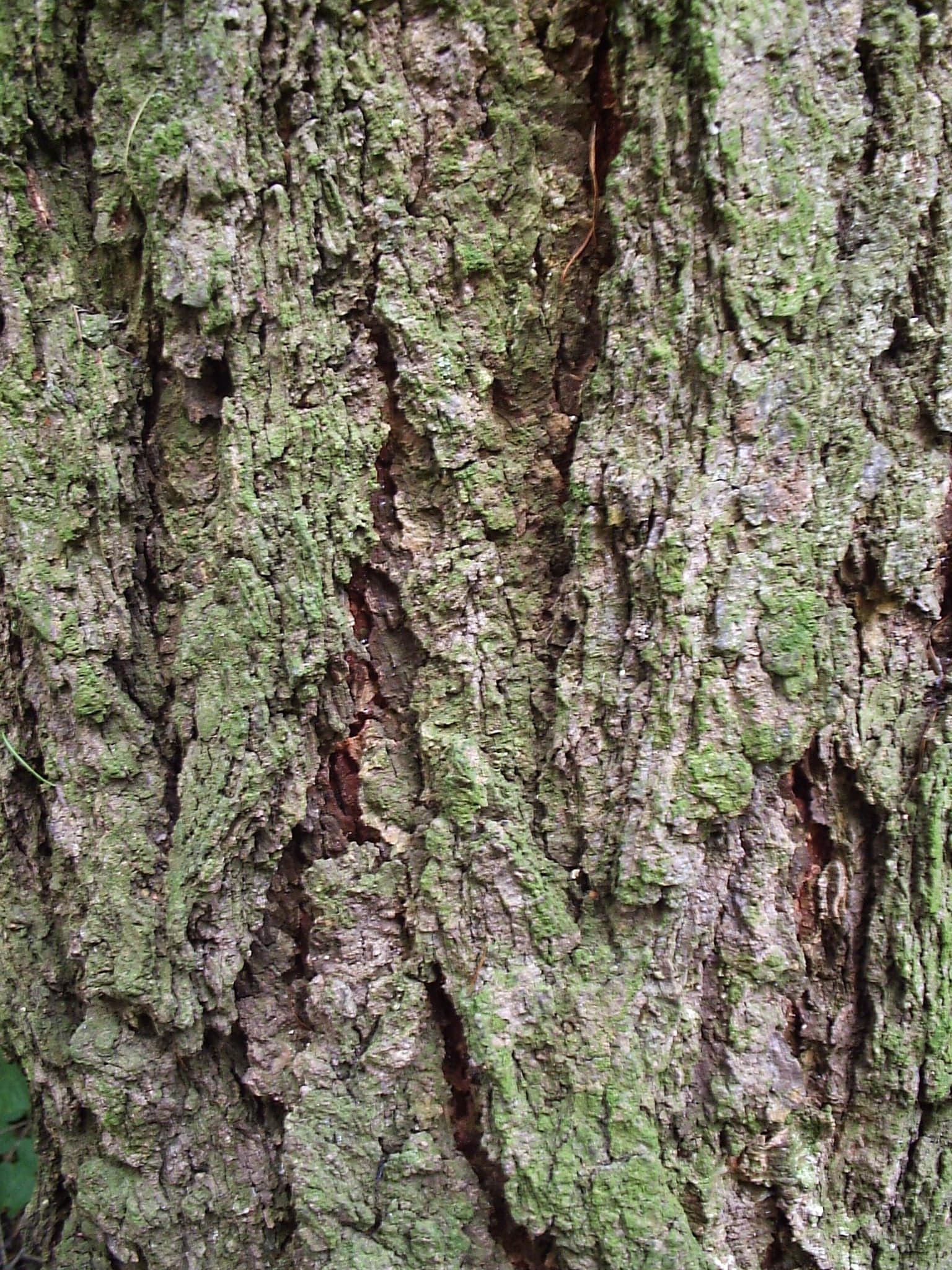
    Bark

    The sapwood band is narrow and pale, and where it runs along an edge it gives a strong light stripe against the russet heartwood. Some makers treat that as the feature of the board. It is worth knowing that the sapwood carries none of the heartwood durability, so on an exterior piece a sapwood edge is the part that will fail first.

    Look also for resin pockets and for shakes. Larch is more prone than spruce to ring shake, a separation along a growth ring that may not be visible on a rough surface and opens up after machining. On a measured KORENA slab, defects of that size are mapped in the outline.

    At the bench#

    Larch is satisfying to work. It is stiff, it cuts cleanly, and it has enough density to take a crisp edge and hold a sharp arris, which the softer conifers do not.

    Resin is the running battle. It softens with cutting heat and deposits on blades, in gullets and on plane soles. The practical answer is unglamorous: clean blades with a resin solvent between operations, feed steadily rather than forcing, and clear the tool more often than you would with spruce. Abrasives clog quickly and are largely consumable on this species.

    The dense latewood bands introduce the other machining issue. Where grain rises, the hard band can tear out while the soft earlywood either side cuts cleanly, leaving a stepped surface. Light cuts and a scraper handle it. A helical head planer handles it better.

    Gluing is reliable once surfaces are clean, but resin on a jointed face will compromise the bond. Wipe joint faces with acetone before glue-up on anything structural.

    Drying and movement#

    This is where larch demands the most patience. It is prone to distortion and surface checking if dried quickly, and a hot kiln schedule pulls resin to the surface where it sets sticky and interferes with finishing months later.

    Air drying under cover followed by a low temperature kiln finish is the standard route for slab stock, and it is slow. Internal stress from a rushed schedule shows up the moment a slab is ripped, as the two halves spring apart or bow. Ask the yard about the schedule.

    Volumetric shrinkage is around 12.5 percent, slightly lower than spruce, with tangential at 8.2 percent against 4.2 percent radial. Outdoors, that movement is what destroys film finishes, which is why penetrating oils renewed annually outperform varnish on exterior larch.

    Where larch is the right answer#

    Anywhere a European softwood has to face weather. Cladding, decking, garden furniture, dock and boat work: larch is the species in this group that will survive it without preservative treatment, provided you use heartwood and accept that ground contact is still a losing proposition.

    Indoors it makes a genuinely good tabletop, harder than the alternatives here and far more visually interesting. It makes good flooring for the same reasons.

    It is the wrong answer where a pale, quiet surface is wanted, where the finishing schedule cannot accommodate a solvent wipe, or where the budget assumes softwood machining speeds, because everything takes longer on this species.

    Sourcing and EUDR#

    Not CITES listed and assessed as Least Concern. The supply question is not availability but grade. Alpine high altitude stands are managed conservatively and genuinely tight ringed material is limited and priced accordingly, while fast grown plantation larch from lowland northern Europe is abundant and cheap. Both are legitimately European Larch. Only one of them will last outdoors. KORENA listings record the yard and region, so the provenance behind a given slab is visible rather than assumed.

    +

    Surface resin. Wipe the slab down with denatured alcohol or acetone and let it flash off before applying finish. Larch that has been kilned hot will have more resin drawn to the surface, so this step matters more with kiln dried than air dried stock.

    Does larch really go that orange?

    +

    It deepens substantially with light exposure. Freshly machined larch is a fairly pale honey; after a few months of indirect daylight it moves to a warm russet amber, and the contrast with the pale sapwood strengthens rather than fades. If you want the fresh-cut colour held, a UV inhibiting finish slows it, but nothing stops it entirely.

    Volumetric shrinkageTotal volume change from green to oven-dry. Lower means more stable.
    12.5 %
    Natural durability (EN 350)European standard for natural decay resistance, from 1 (very durable) to 5 (perishable).Class 3 — Moderately durable

    Sources

    • The Wood Database — European Larch (Larix decidua)(accessed 2026-08-12)
    • USDA FPL Wood Handbook FPL-GTR-190 (2010)(accessed 2026-08-12)
    • Meier, E. — WOOD! Identifying and Using Hundreds of Woods Worldwide (2015)(accessed 2026-08-12)

    Watch out

    • Not for untreated outdoor useNatural durability is EN 350 class 3 of 5. Keep it indoors or under a maintained finish.
    • Dust irritatesRun extraction and wear a mask when sanding or machining.

    Tap a label for the detail.

    At a glance

    Levels use fixed bands across every species KORENA lists, so they compare directly. The measured value sits under each one.
    HardnessResistance to dents and wearFairly soft

    Janka 3,290 N

    34 % softer than European oak

    WeightHow heavy a slab is to liftMedium

    575 kg/m³

    StabilityHow little it moves with the seasonsAverage

    12.5 % volumetric shrinkage

    WorkingSawing, planing, sanding, gluingDemanding

    3.4 / 5 bench average

    Outdoor useNatural decay resistance, EN 350Covered outdoor

    EN 350 class 3

    • Sawing · GoodHow cleanly it cuts and how hard it is on blades.1 = difficult · 5 = excellent
    • Planing · Very goodHow smooth a surface it leaves and how much it tears out.1 = difficult · 5 = excellent
    • Sanding · GoodHow quickly it sands smooth without clogging the paper.1 = difficult · 5 = excellent
    • Turning · Very goodHow it cuts and finishes on the lathe.1 = difficult · 5 = excellent
    • Carving · GoodHow crisply it holds detail under a gouge.1 = difficult · 5 = excellent
    • Gluing · GoodHow reliably glue joints hold.1 = difficult · 5 = excellent
    • Screw / nail hold · Very goodHow well it holds screws and nails without splitting.1 = difficult · 5 = excellent
    • Steam bending · GoodHow well it takes curves after steaming.1 = difficult · 5 = excellent

    What European Larch timber sells for across Europe right now, per cubic metre before VAT. Tap any price for the detail.

    • Top logs at auctionSelected high-grade logs sold at submission auctions, mostly to veneer and furniture makers. Slabs are cut from logs like these.Most prices are between €191 and €301.Based on 49 prices from 2 regions.Latest data 21 Sept 2026
    • Everyday logsLarge volumes of standard roundwood sold by forest owners and state forestry, mostly for construction and industry.Most prices are between €45 and €170.Based on 284 prices from 7 regions.Latest data 4 Oct 2026

    Top logs at auction by country

    • Austria · €301 / m³Regions: Austria27 pricesLatest data 21 Sept 2026
    • Germany · €191 / m³Regions: Bavaria22 pricesLatest data 21 Sept 2026

    Everyday logs by country

    • Italy · €134 / m³Regions: Trentino-Alto Adige and Veneto72 pricesLatest data 30 Jun 2026
    • Romania · €78 / m³Regions: Banat / Crișana, Moldavia (Romania), Transylvania and Wallachia205 pricesLatest data 4 Oct 2026
    • France · €68 / m³Regions: Grand Est / Alsace7 pricesLatest data 15 Sept 2026

    Why does a slab cost more than this?

    These are prices for raw timber. A slab is the best cut of a log, dried for one year or more, then checked and measured piece by piece. Only a small part of each log becomes a slab.

    Source: KORENA Timber Index · Latest data 4 Oct 2026

    See all regional prices