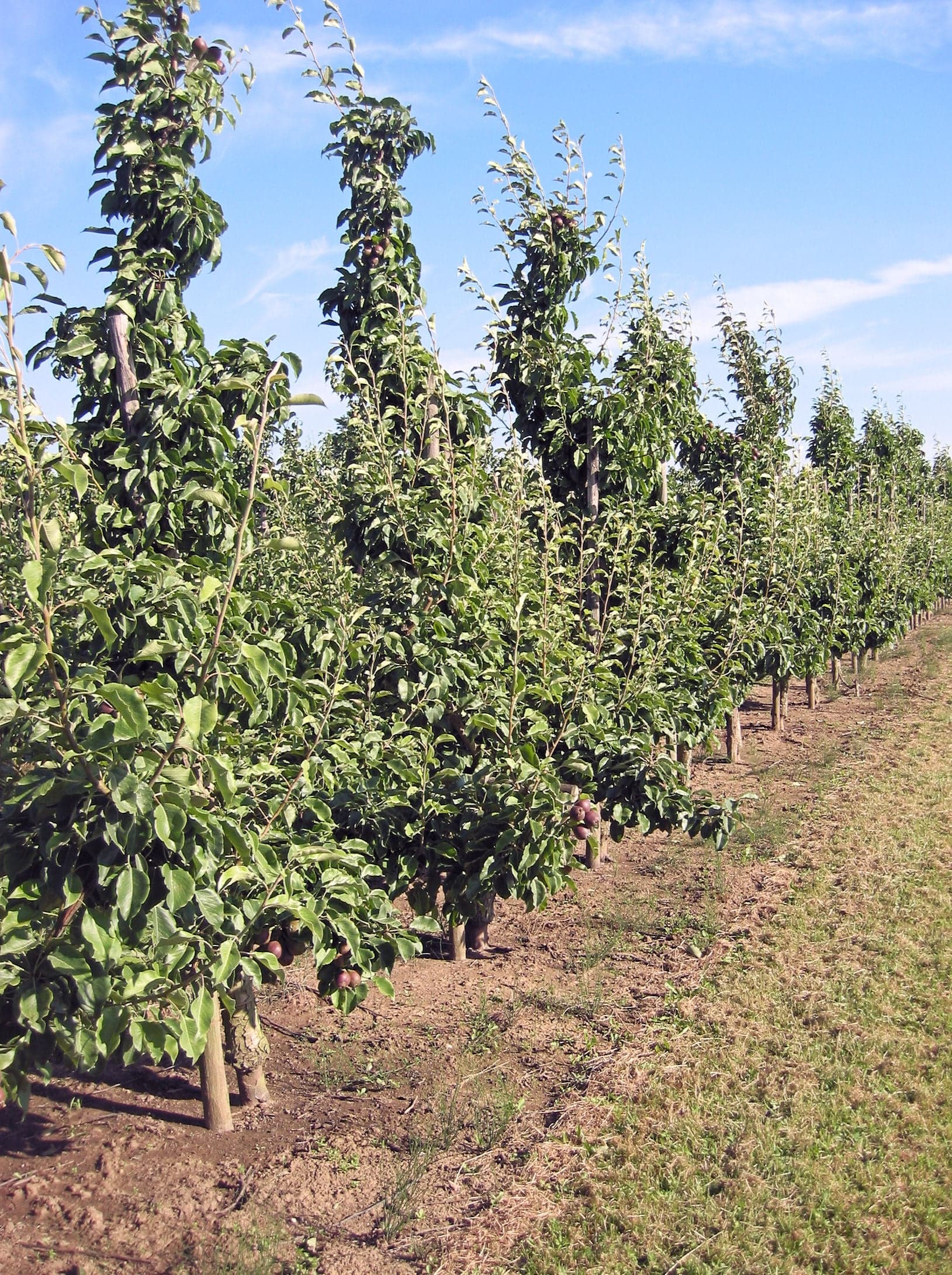
Pyrus communis
European Pear
Master-grade carving and cabinet wood with a fine even texture. Slab-size pieces are rare and prized when they appear.
- This species is recorded as commercially grown in Europe. This does not establish where an individual piece was harvested; check its origin details.
- Botanical group. Softwoods are conifers; hardwoods are broadleaf trees.
- The botanical family the species belongs to.
Get notified when it landsReference species. No pieces in stock right now.
Is it right for your project?
Great for
- Heirloom carving and sculpture
- Fine cabinetry and case pieces
- Marquetry and inlay
- Jewellery boxes and instrument cases
- Small statement tables and side tables
- Turned bowls and treen
No European Pear in the current drop
Similar species in stock
No European Pear right now. These species suit the same projects and have pieces available.



Get notified about European Pear
We email you when fresh European Pear slabs land at KORENA. Each piece is one of one, so early notice matters.
Wood appearance
What it looks like
Pale pinkish-tan to warm salmon, deepening to a soft russet with age and light. Texture is dense, even, and almost poreless under the hand. Figure is quiet, gentle ribbon and the occasional fine fleck, which is exactly why carvers and marquetry workers prize it. The grain doesn't fight you, and detail holds crisply.
- Pale pinkish-tan when fresh off the saw
- Warm salmon to soft russet with age
- Steamed pear takes a uniform pinkish hue
- Stains evenly to deep black for ebonised work
- Subtle ribbon figure; rarely dramatic
- Mild UV warming, no harsh colour shift
- Very fine even texture; subtle figure.
Working with it
Working it
Carves, turns, and planes superbly, this is a benchmark wood for fine work. Cuts cleanly across the grain without tearing, holds knife-edge detail, and turns to crisp profiles. Sands to a near-polished surface straight off the tool. Glues and screws well. Steam bending is moderate. The low stiffness helps it bend, but it can compress unevenly, so test on offcuts.
Finishing
Sands to a glass-smooth surface, one of the cleanest finishes you can pull off any European hardwood. Takes oil, wax, and shellac evenly with no blotching. Steaming produces the uniform pinkish tone historically used to imitate ebony when stained black (the piano-key trick). For natural finishes, hard-wax oil holds the warm tone; lacquer can flatten it. Expect mild warming in UV.
Drying
Honest tradeoff: tangential shrinkage is high (10.5–12%) against modest radial movement, so drying rate matters. Pear that's rushed will check, cup, and case-harden. Air-dry slowly under weight, then finish in a kiln on a gentle schedule. Once stable, it sits well indoors. Quartersawn or rift-sawn stock is the safer cut for wide panels.
How much will it move?
Wood swells and shrinks across its width as the air gets damper and drier. Estimate the seasonal movement of a European Pear top before you design the fixings.
Expected seasonal movement
about 12.9 mm
Large. Use buttons or slotted brackets, leave clearance at the ends of any breadboard, and let the slab acclimatise before assembly.
Linear shrinkage model: width × (shrinkage ÷ 28 % fibre saturation) × seasonal moisture swing. Uses 11.25 % tangential shrinkage for European Pear. A planning estimate, not a guarantee.
What it costs
Safety and sourcing
- This species is recorded as commercially grown in Europe. This does not establish where an individual piece was harvested; check its origin details.
- IUCN Red List status: the global conservation assessment for this species.
Food-contact safe, pear has a long tradition as kitchen utensil and treen wood. Not a commonly reported dust sensitiser. Standard shop dust extraction is enough.
Read the full guideIn-depth notes on figure, colour change, working and stability.
What European Pear actually is#
Pyrus communis is the fine detail wood of Europe. Its texture is exceptionally close, even and dense, with essentially no visible grain direction, and at 7,420 N Janka it is one of the hardest species in this catalogue.
That pairing is unusual. Most woods that hold fine detail are soft, like lime. Most woods that are hard have pronounced grain that fights the tool, like oak. Pear is both hard and directionless, so carved detail is crisp and then survives being handled.
It is the traditional wood for woodcut printing blocks, recorders and wind instrument parts, drawing instruments, rulers, set squares and fine inlay, and all of those uses depend on the same property.
The orchard problem#
Pear is a fruit tree. It is grown for pears, and it reaches the timber market when an orchard tree comes to the end of its productive life.
The consequences are structural. Trunks are short and often irregular. Diameters are modest. Clean wide boards are genuinely scarce, and slab sized material is uncommon enough that finding it is the main constraint rather than affording it.
Expect narrow widths, short lengths, and a good deal of character.
Steamed and unsteamed
Buyer questions
Questions buyers ask
Why is pear so highly regarded for carving and instruments?
Its texture is exceptionally fine, even and dense, with essentially no visible grain direction, so it cuts equally well in any direction and holds very crisp detail. At 7,420 N Janka it is also hard, which means carved detail survives handling. That combination of fine texture and hardness is rare and is why pear has been the traditional wood for woodcuts, recorders, rulers and instrument parts.
What is steamed pear?
Pear that has been steamed during drying, which turns the pale pinkish wood a warm rose brown and evens the colour. It is the standard European commercial treatment and the colour most people associate with the species. Unsteamed pear is paler and more variable. The change is permanent.
Why are pear boards so small?
It is an orchard tree, grown for fruit and felled at the end of its productive life rather than for timber. Trunks are short, often irregular, and rarely large. Wide clean pear is genuinely scarce and priced accordingly, and slab sized material is uncommon.
How much does it move?
Mechanical properties
Technical data
Published reference values. Where sources disagree the range is shown, with the typical value used for the scales above.
| Density (kg/m³)Mass per cubic metre at about 12 % moisture. Heavier wood is usually harder and stronger. | 650–740 kg/m³typical 700 kg/m³ |
|---|---|
| Janka hardness (N)Force needed to press a steel ball halfway into the wood. The standard measure of dent resistance. | 6,800–7,800 Ntypical 7,420 N |
| MOR: modulus of rupture (MPa)Bending strength: the load at which a beam breaks. | 75–90 MPa |
| MOE: modulus of elasticity (GPa)Bending stiffness: how much a shelf or top sags under load. | 7.0–8.5 GPa |
| Radial shrinkageShrinkage across the growth rings, green to oven-dry. Quartersawn boards move by this. | 4.0–5.0 % |
| Tangential shrinkageShrinkage along the growth rings. Flatsawn boards and most slabs move by this. |