KORENA
WoodFurnitureTools & finishesTimber yardsJournal

Be first to see new slabs

Get an email when new wood arrives.

A few emails a month. No spam, unsubscribe anytime.

KORENA

Shop solid wood, handmade furniture, tools and wood finishes on KORENA.

Shop

  • Browse products
  • Sold archive
  • Track order

Learn

  • Journal
  • Species guides
  • Glossary
  • Compare
  • Authors

Help

  • About
  • How it works
  • Become a sellerNew
  • Source a slab
  • Support
  • Document templates
  • Press

Buy

  • Terms of sale
  • Right of withdrawal
  • Returns and warranty
  • Shipping and delivery

Trust

  • Privacy policy
  • Cookie policy
  • Wood provenance and EUDR
  • Accessibility

Imprint

  • Legal notice / Imprint
  • Acceptable use
  • IP and content

© 2026 KORENA. All rights reserved.

Operated by Martial Labs Ltd. (BG, EIK 207453941). KORENA is a trading name of Martial Labs Ltd.

We respect your privacy

We use essential cookies so the site works. With your permission we'd also use cookies for analytics, personalised content, and ads. You can change your mind any time on the consent preferences page. See our cookie policy and privacy policy.

  1. Home
  2. /
  3. Species
  4. /
  5. Turkey Oak

Quercus cerris

Turkey Oak

Harder than European oak and considerably cheaper, for one reason: it is difficult to dry. Buy it already stable and it is a bargain.

  • This species is recorded as commercially grown in Europe. This does not establish where an individual piece was harvested; check its origin details.
  • Botanical group. Softwoods are conifers; hardwoods are broadleaf trees.
  • The botanical family the species belongs to.
Get notified when it landsReference species. No pieces in stock right now.
  • Project fit
  • In stock
  • Looks
  • Working it
  • Movement
  • Price
  • Safety and sourcing
  • Questions
  • Technical data

Is it right for your project?

Great for

  • Rustic tabletops
  • Flooring
  • Interior joinery
  • Cladding under cover
  • Decorative slabs

No Turkey Oak in the current drop

Similar species in stock

No Turkey Oak right now. These species suit the same projects and have pieces available.
  • European Oak grain

    European Oak

    Quercus robur

    6 pieces

  • European Walnut grain

    European Walnut

    Juglans regia

    9 pieces

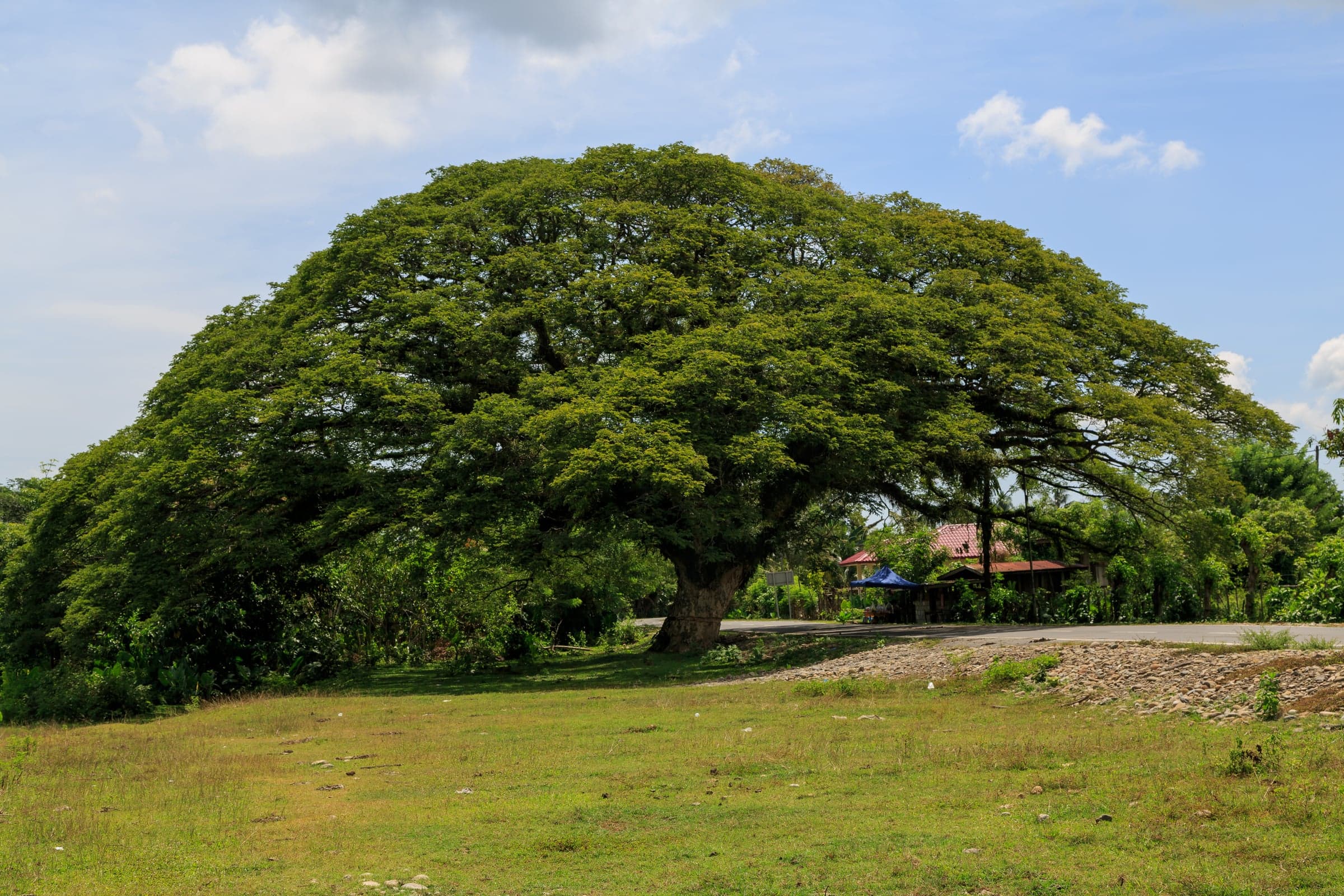
  • Saman grain

    Saman

    Samanea saman

    4 pieces

Get notified about Turkey Oak

We email you when fresh Turkey Oak slabs land at KORENA. Each piece is one of one, so early notice matters.

A few emails a month. No spam, unsubscribe anytime.

Wood appearance

What it looks like

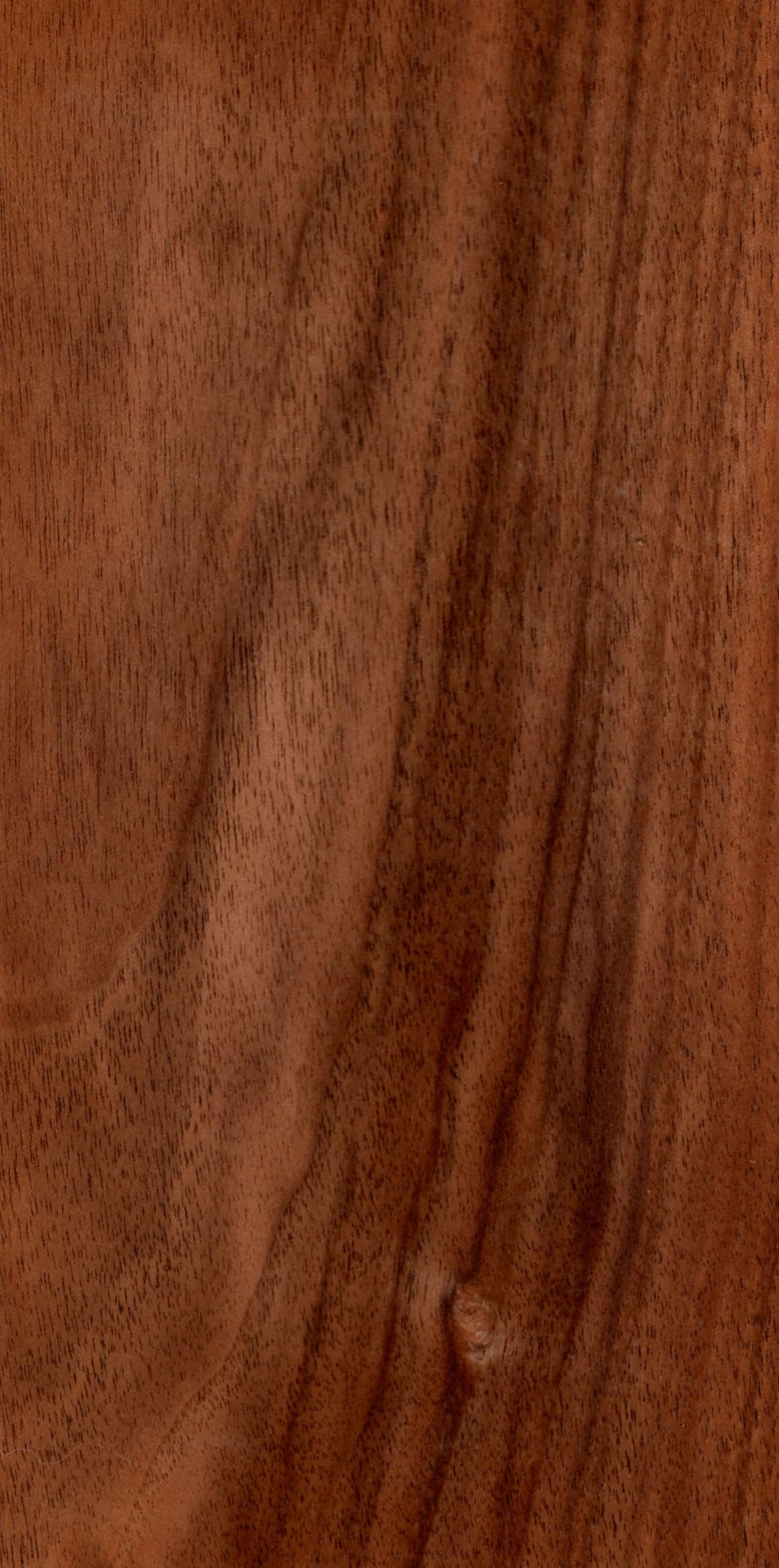
Denser and harder than either European oak, with a coarser and more open texture. Colour is a light to mid brown, generally plainer and less olive than Quercus robur, with wide rays that produce a bold but less silvery fleck on quartersawn faces. Its reputation in the trade is poor, earned by a strong tendency to check and distort in drying rather than by any weakness in the finished wood.

  • Light to mid brown, plainer than European oak
  • Coarse open texture with very wide rays
  • Bold but less silvery ray fleck on quartersawn faces
  • Straight grain, coarse open texture with very wide rays. Light to mid brown, plainer than European oak, with a bold but less silvery quartersawn fleck.

Working with it

Working it

Works similarly to the American oaks according to the source cited here. It is harder and denser than Quercus robur, so it blunts cutters faster and demands more power in the cut, but it machines cleanly once dry and stable. The very wide rays can lift on a quartersawn face if the cut is heavy. Grain filler is needed for a smooth finish given the coarse open pores.

Finishing

Takes stain and finish much as other oaks do, and the plainer colour actually accepts stain more evenly than the olive cast of European oak. The coarse open pores need filling for a smooth surface. The same tannin and iron reaction applies as in every oak, so brass or stainless fittings only and no steel wool.

Drying

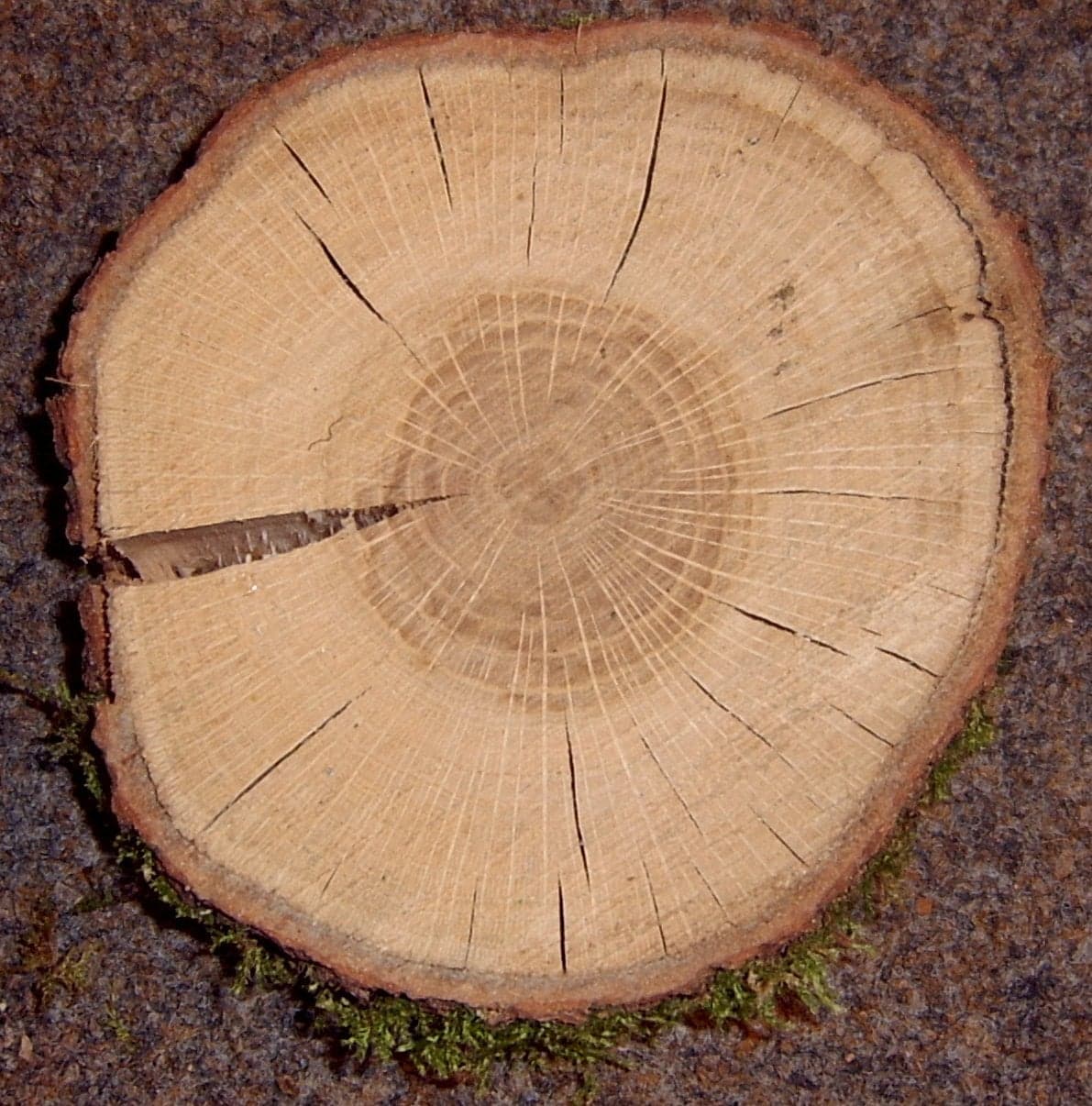
This is the species specific problem and the reason Turkey Oak is cheap. It is markedly prone to checking, honeycombing and severe distortion during drying, considerably worse than Quercus robur or petraea, and volumetric shrinkage at 16 percent is the highest of any hardwood KORENA lists. Tangential shrinkage of 10 percent against 6 percent radial compounds it. Slowly air dried stock that has already stabilised is the only version of this timber worth buying.

How much will it move?

Wood swells and shrinks across its width as the air gets damper and drier. Estimate the seasonal movement of a Turkey Oak top before you design the fixings.

Cut
Where it will live

Expected seasonal movement

about 11.4 mm

Fix the top with buttons or slotted brackets, not glue or tight screws.

Linear shrinkage model: width × (shrinkage ÷ 28 % fibre saturation) × seasonal moisture swing. Uses 10 % tangential shrinkage for Turkey Oak. A planning estimate, not a guarantee.

What it costs

Safety and sourcing

  • This species is recorded as commercially grown in Europe. This does not establish where an individual piece was harvested; check its origin details.
  • Oak is a documented sensitiser, with reactions typically including eye and skin irritation and asthma-like symptoms. Repeated exposure to oak dust carries elevated nasal cancer risk, so extraction is not optional in a production setting.

  • Quercus cerris is the oak of southeastern Europe and Asia Minor, dominant through the Balkans, Hungary, Italy and Turkey. It grows fast on poor dry soils where the northern oaks struggle, and it has been planted widely outside its range. Balkan sourced material is common and inexpensive in the EU market.

Read the full guideIn-depth notes on figure, colour change, working and stability.+

What Turkey Oak actually is#

Quercus cerris is the oak of southeastern Europe and Asia Minor. It dominates through the Balkans, Hungary, Italy and Turkey, growing fast on poor dry soils where the northern oaks struggle, and it has been planted well outside that range.

It has a poor reputation in the trade, and that reputation is worth understanding precisely, because it is only half deserved. The finished wood is not inferior. At 720 kg per cubic metre it is denser than European oak, and its modulus of rupture of 114.3 MPa is well above the 97.1 MPa of sessile oak. The problem is entirely in getting it from log to stable board.

The drying problem, which is the whole story#

Turkey Oak checks, honeycombs and distorts during drying far more readily than Quercus robur or petraea.

The numbers explain why. Volumetric shrinkage is 16 percent, the highest of any hardwood in this catalogue. Tangential shrinkage of 10 percent against 6 percent radial gives a ratio that guarantees flatsawn boards will cup hard. Combine high total movement with a wide differential and a fast schedule, and the wood tears itself apart.

A significant proportion of what is cut degrades before it becomes usable timber, and the price of the survivors carries that loss. That is why Turkey Oak is cheap.

The practical consequence for a buyer is simple and important: the risk lives in the drying, not in the service life. A slab that has already been slowly dried and has stabilised is a hard, dense, durable board at a fraction of European oak money. A slab that was rushed is firewood that has not finished failing yet.

Buyer questions

Questions buyers ask

Why is Turkey Oak so much cheaper than European Oak?

+

Not because the finished wood is weaker. It is denser and harder than Quercus robur. The discount reflects how badly it behaves in drying: it checks, honeycombs and distorts far more readily, and volumetric shrinkage at 16 percent is the highest of any hardwood in this catalogue. A large proportion of what is cut degrades before it is usable, and the price carries that loss.

Is the Janka figure reliable?

+

It is published as an estimate derived from specific gravity rather than a measured test, and KORENA records it that way in the source note on the species record. Treat 5,340 N as indicative. It places Turkey Oak above European oak at 4,980 N, which matches its higher density of 720 kg per cubic metre, but it is not a laboratory measurement.

Can I use it for a tabletop?

+

Yes, provided the slab is already properly dried and stable. Buy air dried stock that has had time to settle rather than freshly kilned material, check the measured moisture value on the listing, and let it acclimatise in the room before flattening. Once through drying it is a hard, durable surface. The risk is entirely in the drying, not the service life.

How does the figure compare with European Oak?

Mechanical properties

Technical data

Published reference values. Where sources disagree the range is shown, with the typical value used for the scales above.

Density (kg/m³)Mass per cubic metre at about 12 % moisture. Heavier wood is usually harder and stronger.720 kg/m³
Janka hardness (N)Force needed to press a steel ball halfway into the wood. The standard measure of dent resistance.5,340 N
MOR: modulus of rupture (MPa)Bending strength: the load at which a beam breaks.114 MPa
MOE: modulus of elasticity (GPa)Bending stiffness: how much a shelf or top sags under load.10.8 GPa
Radial shrinkageShrinkage across the growth rings, green to oven-dry. Quartersawn boards move by this.6.0 %
Tangential shrinkageShrinkage along the growth rings. Flatsawn boards and most slabs move by this.10.0 %
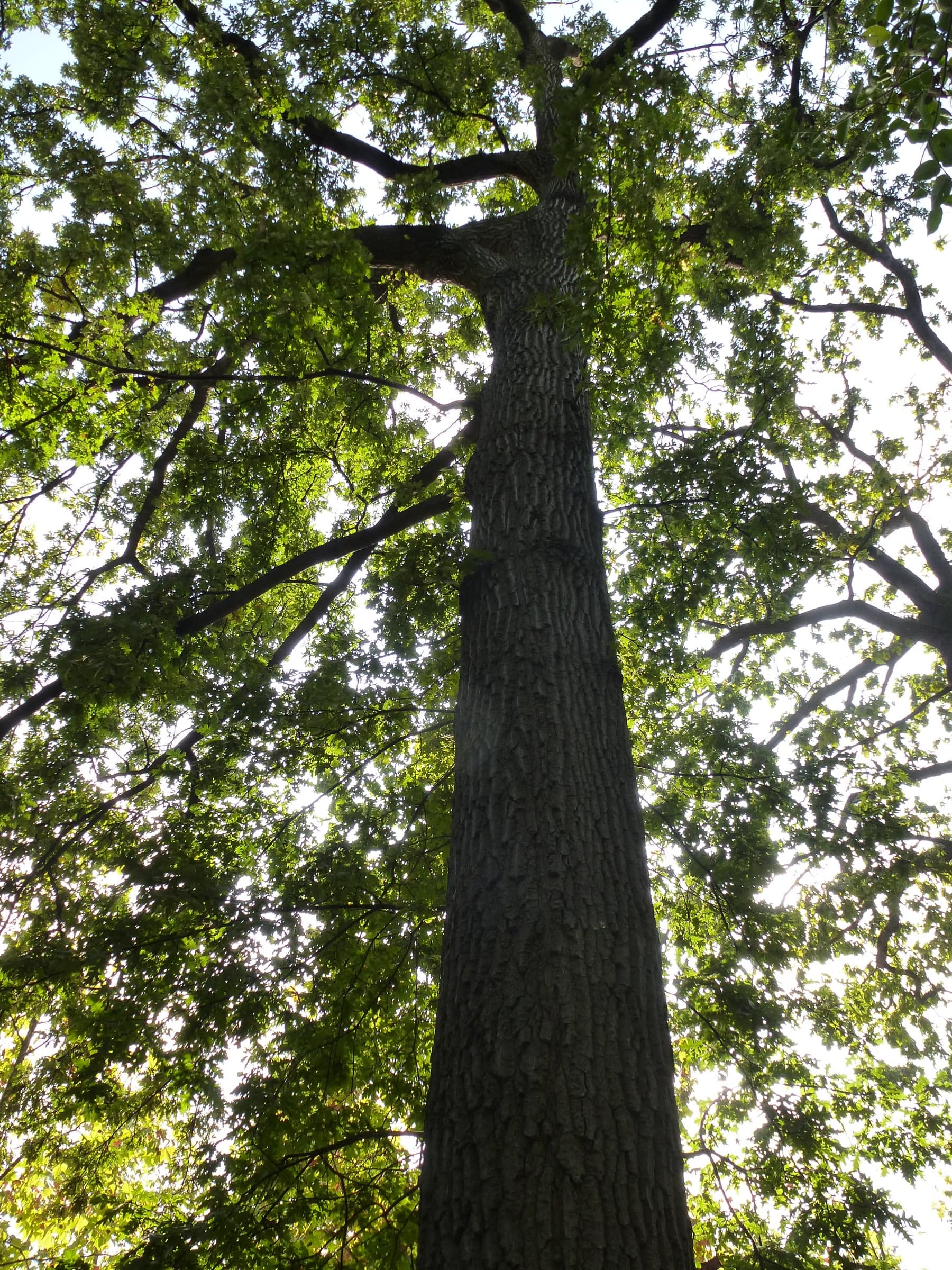
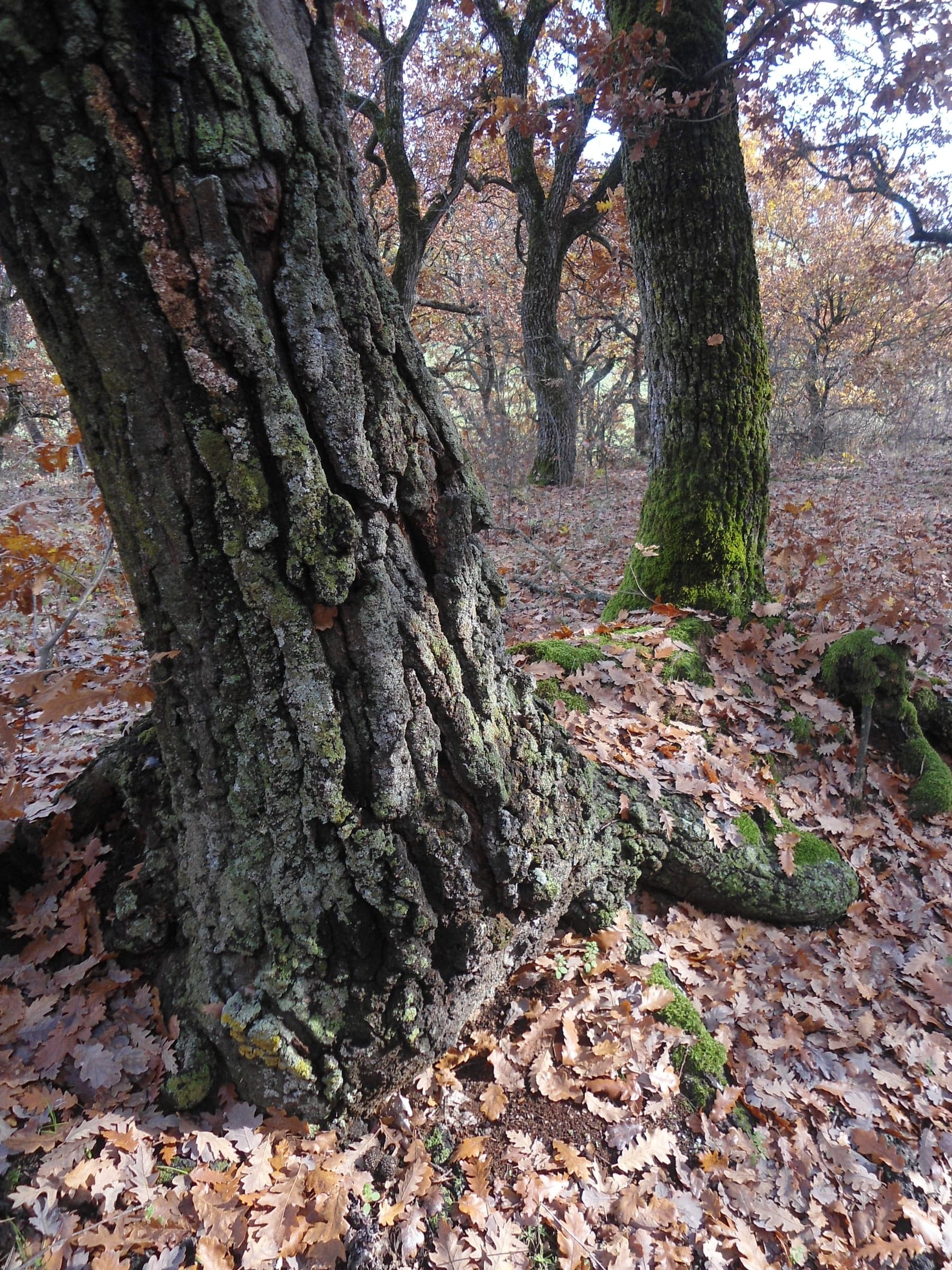
Turkey Oak tree

Salix, via Wikimedia Commons

Not listed in the CITES Appendices, and reported by the source KORENA cites as not assessed on the IUCN Red List, so no IUCN status is shown rather than one being assumed. It is abundant and fast growing across southeastern Europe and is often treated as a low value species, which makes it both inexpensive and easy to source with documentation.

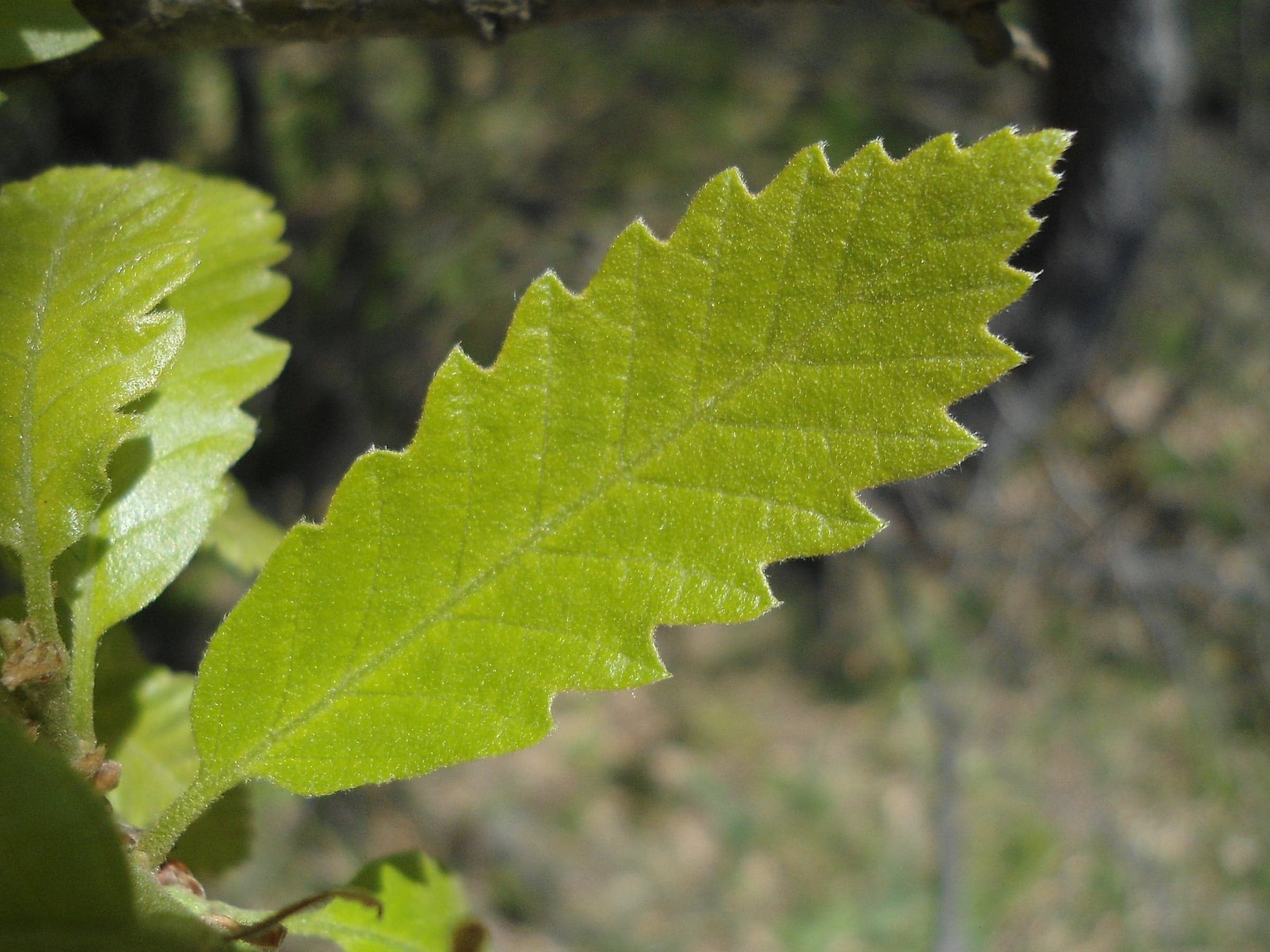
Turkey Oak: Leaf
Leaf
Turkey Oak: Bark
Bark

So buy stable stock. Prefer air dried material that has had time to settle over freshly kilned. Check the measured moisture value on the listing rather than trusting a description, and let the slab acclimatise in its final room before flattening.

Reading a Turkey Oak slab#

Colour is a light to mid brown, plainer and straighter than European oak, without the olive cast of robur. Texture is coarse and the pores are large and open.

The rays are very wide, wider than in the other oaks here, and on a quartersawn face they produce a bold fleck. It reads differently from the fine silvery ribbon of sessile oak: larger, more assertive, less lustrous. Whether that is better is a matter of taste, but they are not the same figure and one will not pass for the other.

Inspect the end grain for honeycomb, look along the length for cupping and twist, and check for surface checks. On this species those defects are common enough that they should be assumed present until ruled out.

At the bench#

The cited source describes it as working similarly to the American oaks. It is harder and denser than European oak, so it blunts cutters faster and asks more of a machine, but a dry stable board machines cleanly.

The very wide rays can lift on a quartersawn face under a heavy cut. Lighter passes and sharp tooling handle it.

As with all oak, the coarse open pores need a grain filler if a smooth surface is the goal, and the tannin content means iron contact produces blue black staining. Brass or stainless fittings only, no steel wool, and no steel clamp bars left on damp work.

A note on the hardness figure#

The Janka value shown for this species, 5,340 N, is published as an estimate derived from specific gravity rather than a measured laboratory test, and KORENA records that qualification in the source note on the species record rather than presenting the number bare.

Treat it as indicative. It places Turkey Oak above European oak, which is consistent with its higher density, but it is not the same class of evidence as a measured value.

Finishing#

It takes stain and finish much as other oaks do, and the plainer, less olive colour actually accepts stain more evenly than European oak, which can go muddy under a warm tone.

Grain filler for a smooth surface, standard oak finishing otherwise.

Where Turkey Oak is the right answer#

Rustic tabletops, flooring, interior joinery, cladding under cover, and decorative slabs where a hard dense oak is wanted and the budget will not carry European oak. At decay class 2 it is durable, so protected exterior use is reasonable.

It is the wrong answer if you are buying unseasoned or freshly kilned stock, if the project cannot absorb the risk of movement, or if the classic silvery quartersawn fleck of European oak is specifically what the design calls for.

Sourcing and EUDR#

Not listed in the CITES Appendices, and reported by the cited source as not assessed on the IUCN Red List, so no IUCN status is displayed rather than one being inferred.

It is abundant and fast growing across southeastern Europe and is often treated as a low value species locally, which makes it both inexpensive and straightforward to source with proper documentation. Balkan sourced material is common in the EU market, and KORENA listings record the originating yard and region.

+

Plainer overall. The colour is a straighter light to mid brown without the olive cast of Quercus robur, and while the rays are very wide, the quartersawn fleck reads bolder but less silvery. If you want the classic silvery ray fleck, sessile oak delivers it better.

Does it stain black on contact with iron?

+

Yes, exactly as every oak does. Tannins react with iron to form a blue black stain. Use brass or stainless fittings, keep steel wool away, and do not leave steel clamp bars in contact with a damp glue-up.

Volumetric shrinkageTotal volume change from green to oven-dry. Lower means more stable.
16.0 %
Natural durability (EN 350)European standard for natural decay resistance, from 1 (very durable) to 5 (perishable).Class 2 — Durable

Sources

  • The Wood Database — Turkey Oak (Quercus cerris). Janka value published as estimated from specific gravity, not measured.(accessed 2026-08-12)
  • Meier, E. — WOOD! Identifying and Using Hundreds of Woods Worldwide (2015)(accessed 2026-08-12)

Strengths

  • Outdoor-durableEN 350 class 2 of 5: resists decay outdoors without treatment.
  • Food-safeFine for boards, bowls and surfaces that touch food.

Watch out

  • Moves more than mostWide tops need buttons or slotted fixings and room to move. Use the movement calculator below.
  • Dust irritatesRun extraction and wear a mask when sanding or machining.

Tap a label for the detail.

At a glance

Levels use fixed bands across every species KORENA lists, so they compare directly. The measured value sits under each one.
HardnessResistance to dents and wearMedium-hard

Janka 5,340 N

7 % harder than European oak

WeightHow heavy a slab is to liftVery heavy

720 kg/m³

StabilityHow little it moves with the seasonsMoves a lot

16.0 % volumetric shrinkage

WorkingSawing, planing, sanding, gluingModerate

3.7 / 5 bench average

Outdoor useNatural decay resistance, EN 350Outdoor

EN 350 class 2

  • Sawing · Very goodHow cleanly it cuts and how hard it is on blades.1 = difficult · 5 = excellent
  • Planing · GoodHow smooth a surface it leaves and how much it tears out.1 = difficult · 5 = excellent
  • Sanding · Very goodHow quickly it sands smooth without clogging the paper.1 = difficult · 5 = excellent
  • Turning · Very goodHow it cuts and finishes on the lathe.1 = difficult · 5 = excellent
  • Carving · GoodHow crisply it holds detail under a gouge.1 = difficult · 5 = excellent
  • Gluing · Very goodHow reliably glue joints hold.1 = difficult · 5 = excellent
  • Screw / nail hold · Very goodHow well it holds screws and nails without splitting.1 = difficult · 5 = excellent
  • Steam bending · GoodHow well it takes curves after steaming.1 = difficult · 5 = excellent

What Turkey Oak timber sells for across Europe right now, per cubic metre before VAT. Tap any price for the detail.

  • Everyday logsLarge volumes of standard roundwood sold by forest owners and state forestry, mostly for construction and industry.Most prices are between €30 and €110.Based on 23,271 prices from 7 regions.Latest data 4 Oct 2026

Everyday logs by country

  • Romania · €76 / m³Regions: Banat / Crișana, Dobrogea, Moldavia (Romania), Transylvania and Wallachia23,158 pricesLatest data 4 Oct 2026
  • Bulgaria · €51 / m³Regions: North-West Bulgaria and South-East Bulgaria113 pricesLatest data 4 Oct 2026

Why does a slab cost more than this?

These are prices for raw timber. A slab is the best cut of a log, dried for one year or more, then checked and measured piece by piece. Only a small part of each log becomes a slab.

Source: KORENA Timber Index · Latest data 4 Oct 2026

See all regional prices