KORENA
HoutFinished piecesBenodigdhedenPartnerwervenArtikelen

Blijf op de hoogte

Elk boomstamblad is uniek. Zodra het verkocht is, is het weg. We mailen u wanneer nieuwe stukken online komen: nieuwe voorraad, nieuwe houtsoorten en planken die bij een projectomschrijving passen.

Enkele e-mails per maand. Geen spam, op elk moment afmelden.

KORENA, hoogwaardig hardhout

Eén stuk tegelijk.

Geverifieerd hoogwaardig hardhout, per stuk verkocht. Elk boomstamblad wordt gefotografeerd, gemeten en met een houtpaspoort verzonden vanaf de partnerwerf.

Winkel

  • Producten bekijken
  • Verkocht archief
  • Bestelling volgen

Ontdekken

  • Artikelen
  • Houtsoortengidsen
  • Woordenlijst
  • Vergelijken
  • Auteurs

Hulp

  • Over ons
  • Zo werkt het
  • Partnerwerf worden
  • Boomstamblad aanvragen
  • Klantenservice
  • Documentsjablonen
  • Pers

Kopen

  • Verkoopvoorwaarden
  • Herroepingsrecht
  • Retourneren en garantie
  • Verzending en bezorging

Vertrouwen

  • Privacybeleid
  • Cookiebeleid
  • Herkomst van hout en EUDR
  • Toegankelijkheid

Colofon

  • Juridische kennisgeving / colofon
  • Aanvaardbaar gebruik
  • Intellectueel eigendom en content

© 2026 KORENA. Alle rechten voorbehouden.

Uitgevoerd door Martial Labs Ltd. (BG, EIK 207453941). KORENA is een handelsnaam van Martial Labs Ltd.

We respecteren je privacy

We gebruiken essentiële cookies om de site te laten werken. Met jouw toestemming gebruiken we ook cookies voor analyse, gepersonaliseerde inhoud en advertenties. Je kunt je keuze op elk moment wijzigen op de pagina toestemmingsvoorkeuren. Bekijk ons cookiebeleid en privacybeleid.

  1. Startpagina
  2. /
  3. Houtsoorten
  4. /
  5. Black Walnut

Juglans nigra

Black Walnut

American Black Walnut is the chocolate-brown hardwood that built mid-century furniture. Imported into European yards as kiln-dried slabs, it works cleanly and finishes to a deep, warm tone that ages well.

  • Buiten Europa geteeld en via Europese partnerwerven geïmporteerd.
  • Botanische groep. Naaldhout komt van coniferen en loofhout van loofbomen.
  • De botanische familie waartoe de houtsoort behoort.
Ontvang bericht zodra het binnenkomtReferentiehoutsoort. Momenteel geen stukken op voorraad.
  • Geschiktheid voor projecten
  • Op voorraad
  • Uiterlijk
  • Bewerking
  • Werking
  • Prijs
  • Veiligheid en herkomst
  • Vragen
  • Technische gegevens

Is dit geschikt voor uw project?

Zeer geschikt voor

  • Live-edge dining and conference tables
  • Mid-century-style casework and credenzas
  • Dark-toned kitchen islands and breakfast bars
  • Desks and writing tables with figured tops
  • Gunstocks, knife scales and high-end tool handles
  • Turned bowls and hollow forms

Geen Black Walnut in de huidige uitgifte

Vergelijkbare houtsoorten op voorraad

Momenteel is er geen Black Walnut. Deze houtsoorten zijn geschikt voor dezelfde projecten en zijn wel beschikbaar.
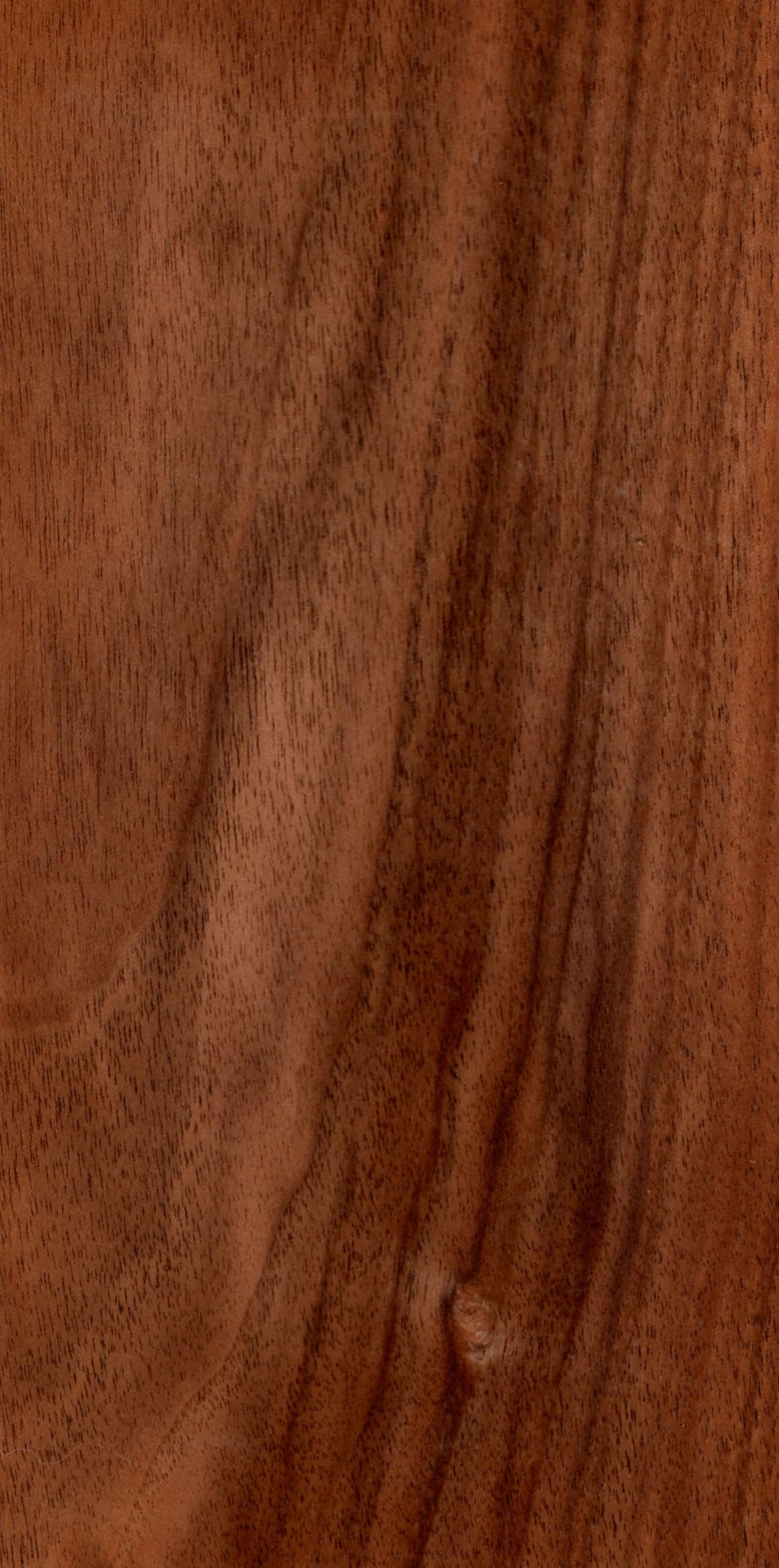
  • Nerf van European Walnut

    European Walnut

    Juglans regia

    9 stukken

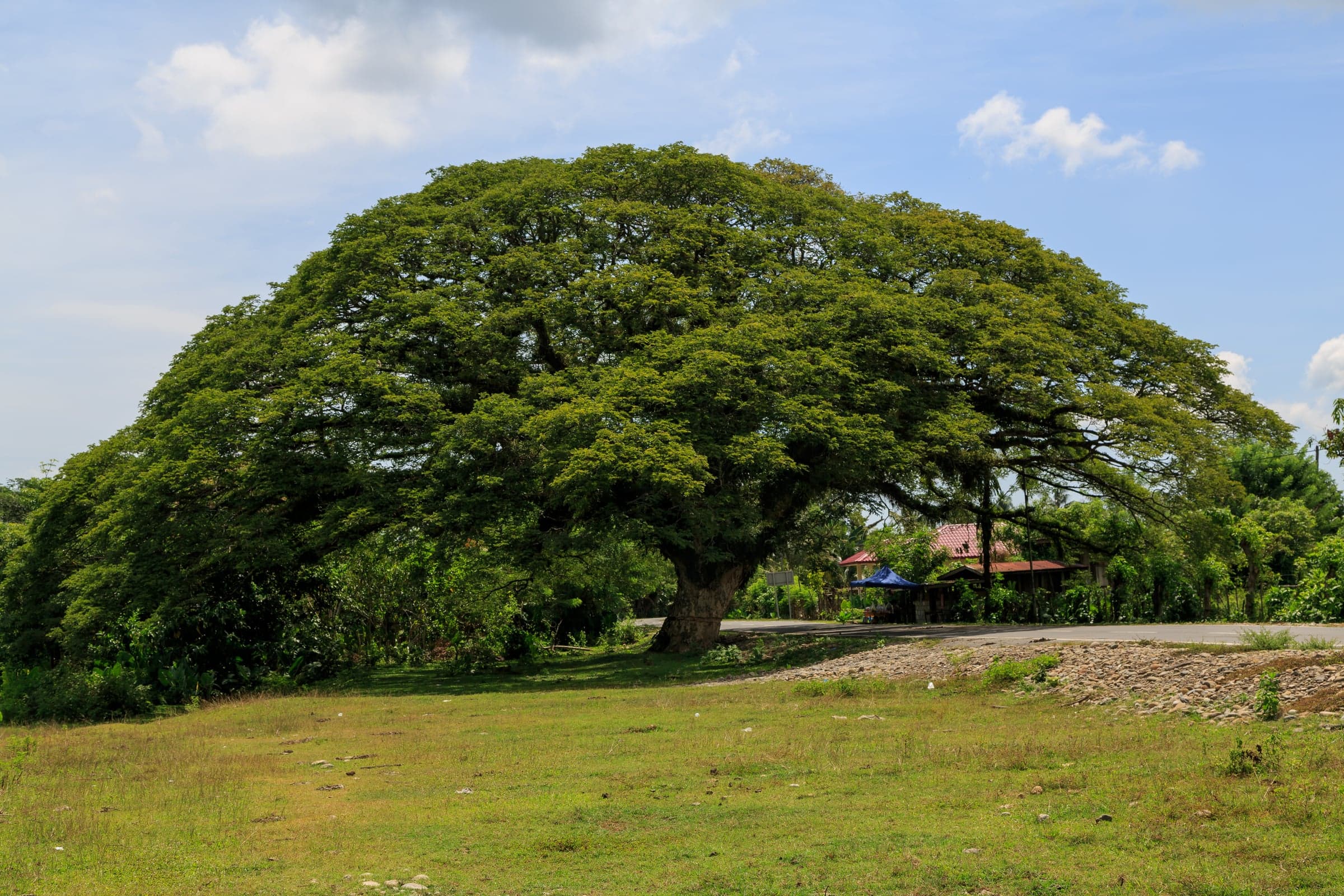
  • Nerf van Saman

    Saman

    Samanea saman

    4 stukken

  • Nerf van European Oak

    European Oak

    Quercus robur

    6 stukken

Bericht ontvangen over Black Walnut

We sturen u een e-mail wanneer nieuwe boomstambladen van Black Walnut bij KORENA binnenkomen. Elk stuk is uniek, dus tijdig bericht is belangrijk.

Enkele e-mails per maand. Geen spam, op elk moment afmelden.

Uiterlijk van het hout

Hoe het eruitziet

Heartwood ranges from chocolate brown to a purplish or greyish brown, often with darker streaks. Sapwood is pale cream, usually steamed at the mill to even out the contrast, but you'll still see some on wide slabs. Grain is generally straight, though figured boards (curl, crotch, burl) turn up regularly and command a premium. Medium, even texture takes detail well.

  • Chocolate to purplish-brown heartwood
  • Pale cream sapwood, often steamed for uniformity
  • Darker streaks and figure on wider boards
  • Lightens slightly under UV over the first year
  • Deepens and warms under oil finishes
  • Generally straight; can be irregular or wavy. Medium texture.

Bewerking

Bewerking

Easy across the board. Sawing, planing, sanding, turning and carving all rate 4 out of 5. Glues and screws without complaint. Steam bending is the one weak spot (3/5), workable for gentle curves, not the species you'd choose for tight bentwood seating. Sharp tooling keeps the surface clean; dull blades will burnish rather than tear.

Afwerking

Finishes beautifully with very little fuss. Hard wax oil and Danish oil deepen the brown without muddying the grain; a thin shellac seal coat helps if you're spraying lacquer over oily patches. Sanded to 180–220 it feels silky in the hand. Black walnut lightens slightly with UV exposure over the first year, the opposite of cherry, so a UV-inhibiting topcoat helps on pieces near windows.

Drogen

Slabs arrive kiln-dried to roughly 8–10% MC. Movement in service is moderate, radial 5.0–6.0%, tangential 7.5–8.5%, so wide tops still want a breathable build (breadboard ends, slot-screwed cleats, or fixed-and-floating fasteners). Acclimatise to your shop for two to three weeks before final flattening.

Hoeveel zal het werken?

Hout zwelt en krimpt over de breedte wanneer de lucht vochtiger en droger wordt. Schat de seizoenswerking van een blad van Black Walnut voordat u de bevestigingen ontwerpt.

Zaagwijze
Waar het komt te staan

Verwachte seizoenswerking

ongeveer 9,1 mm

Bevestig het blad met bladwervels of sleufbeugels, niet met lijm of strak aangedraaide schroeven.

Lineair krimpmodel: breedte × (krimp ÷ 28 % vezelverzadiging) × seizoensverschil in vochtgehalte. Gebruikt 8 % tangentiële krimp voor Black Walnut. Dit is een planningsschatting, geen garantie.

Wat het kost

Veiligheid en herkomst

  • Buiten Europa geteeld en via Europese partnerwerven geïmporteerd.
  • Status op de Rode Lijst van IUCN: de wereldwijde beoordeling van de beschermingsstatus van deze houtsoort.
  • Walnut dust contains juglone and is a known respiratory and skin sensitiser. Run a dust extractor at the source and wear a P3/FFP3 mask when sanding. Juglone-laden offcuts and shavings are toxic to horses and to some plants (tomatoes, apples), so don't compost or use as bedding. Cured finished surfaces are food-contact safe.

Lees de volledige gidsUitgebreide informatie over tekening, kleurverandering, bewerking en stabiliteit.+

What Black Walnut actually is#

Juglans nigra is the darkest wood in this catalogue and the North American counterpart to European walnut. Where Juglans regia is a lighter grey brown full of streaking, black walnut is a deeper, more uniform chocolate.

The other significant difference is commercial rather than botanical. Black walnut is grown as a forestry species across eastern North America, so it comes in larger, straighter, more consistent sizes than European walnut, much of which is salvaged from orchards and gardens. If you need matched material across several wide boards, black walnut is the easier species to source.

The steaming question, which matters more than most people realise#

A large proportion of commercial black walnut is steamed during kiln drying.

Steaming drives colour out of the dark heartwood and into the pale sapwood. The result is a board that reads more uniformly brown, with the sapwood muddied to a dull tan rather than staying cream. For a factory producing matched furniture components, that uniformity is the point.

For a live edge slab it is usually the opposite of what you want. The sharp contrast between pale cream sapwood and near black heartwood is one of the most striking features this species offers, and steaming destroys it.

Unsteamed black walnut keeps that contrast. It is worth asking which you are being offered, because the difference is permanent and not visible from a description alone.

Vragen van kopers

Vragen van kopers

How is Black Walnut different from European Walnut?

+

Black walnut, Juglans nigra, is darker and more uniformly chocolate brown, where European walnut runs lighter grey brown with more streaking and marbling. Black walnut is slightly softer at 4,490 N against 5,410 N but slightly stiffer at 11.0 GPa. Black walnut also comes in larger, more consistent sizes because it is grown as a forestry species rather than an orchard tree.

Is Black Walnut steamed, and does it matter?

+

Much commercial American black walnut is steamed during drying, which drives colour from the dark heartwood into the pale sapwood and makes the board look more uniformly brown. Unsteamed walnut keeps a sharp contrast between cream sapwood and dark heartwood. For a live edge slab where the sapwood line is a feature, unsteamed is usually what you want, and it is worth asking.

Does Black Walnut fade?

+

Yes. Like European walnut it lightens with light exposure rather than darkening, mellowing from deep chocolate toward a warmer, lighter brown. This is the opposite of what oak and cherry do. A UV inhibiting finish slows it without stopping it.

Is walnut dust dangerous?

+

Mechanische eigenschappen

Technische gegevens

Gepubliceerde referentiewaarden. Als bronnen uiteenlopen, wordt het bereik getoond en wordt de gebruikelijke waarde gebruikt voor de bovenstaande schalen.

Dichtheid (kg/m³)Massa per kubieke meter bij ongeveer 12 % vochtgehalte. Zwaarder hout is meestal harder en sterker.560–660 kg/m³gebruikelijk 610 kg/m³
Janka-hardheid (N)De kracht die nodig is om een stalen kogel tot de helft in het hout te drukken. Dit is de standaardmaat voor weerstand tegen deuken.4,100–4,900 Ngebruikelijk 4.490 N
MOR: breukmodulus (MPa)Buigsterkte: de belasting waarbij een balk breekt.100–110 MPa
MOE: elasticiteitsmodulus (GPa)Buigstijfheid: hoeveel een plank of blad onder belasting doorbuigt.11.0–12.0 GPa
Radiale krimpKrimp dwars op de groeiringen, van vers tot ovendroog. Kwartiers gezaagde planken werken volgens deze waarde.5.0–6.0 %
Tangentiële krimp
  • Hand-carved sculpture and relief panels
  • Food-safe serving boards and charcuterie platters
  • Sterke punten

    • Duurzaam buitenKlasse 2 van 5 volgens EN 350: bestand tegen aantasting buiten zonder behandeling.
    • VoedselveiligGeschikt voor planken, kommen en oppervlakken die met voedsel in aanraking komen.

    Native to the eastern United States, not Europe. KORENA sources kiln-dried slabs through established North American timber channels and lands them in EU yards already at furniture moisture content. Expect FAS or better grading on slab stock, with provenance tied to a specific US mill or broker.

  • IUCN Least Concern, no CITES listing. Decay class 2 (durable) but this is an indoor wood, the value is in the colour and workability, not outdoor performance. As a North American import, the supplier chain-of-custody back to the mill travels with the slab. EUDR due diligence is in preparation and becomes mandatory for large operators from 30 December 2026, and KORENA is building each slab passport to carry the provenance evidence a buyer will need.

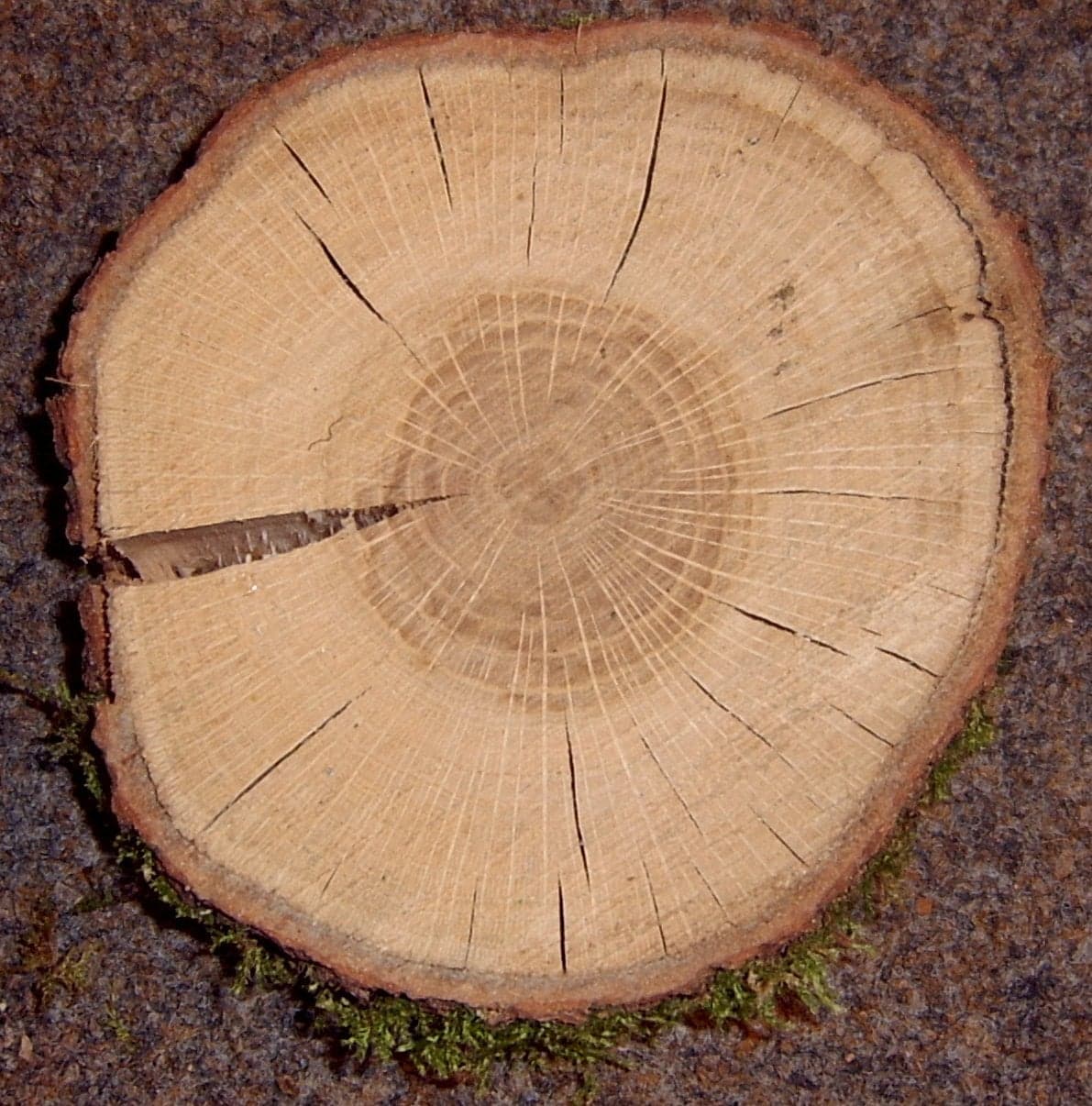
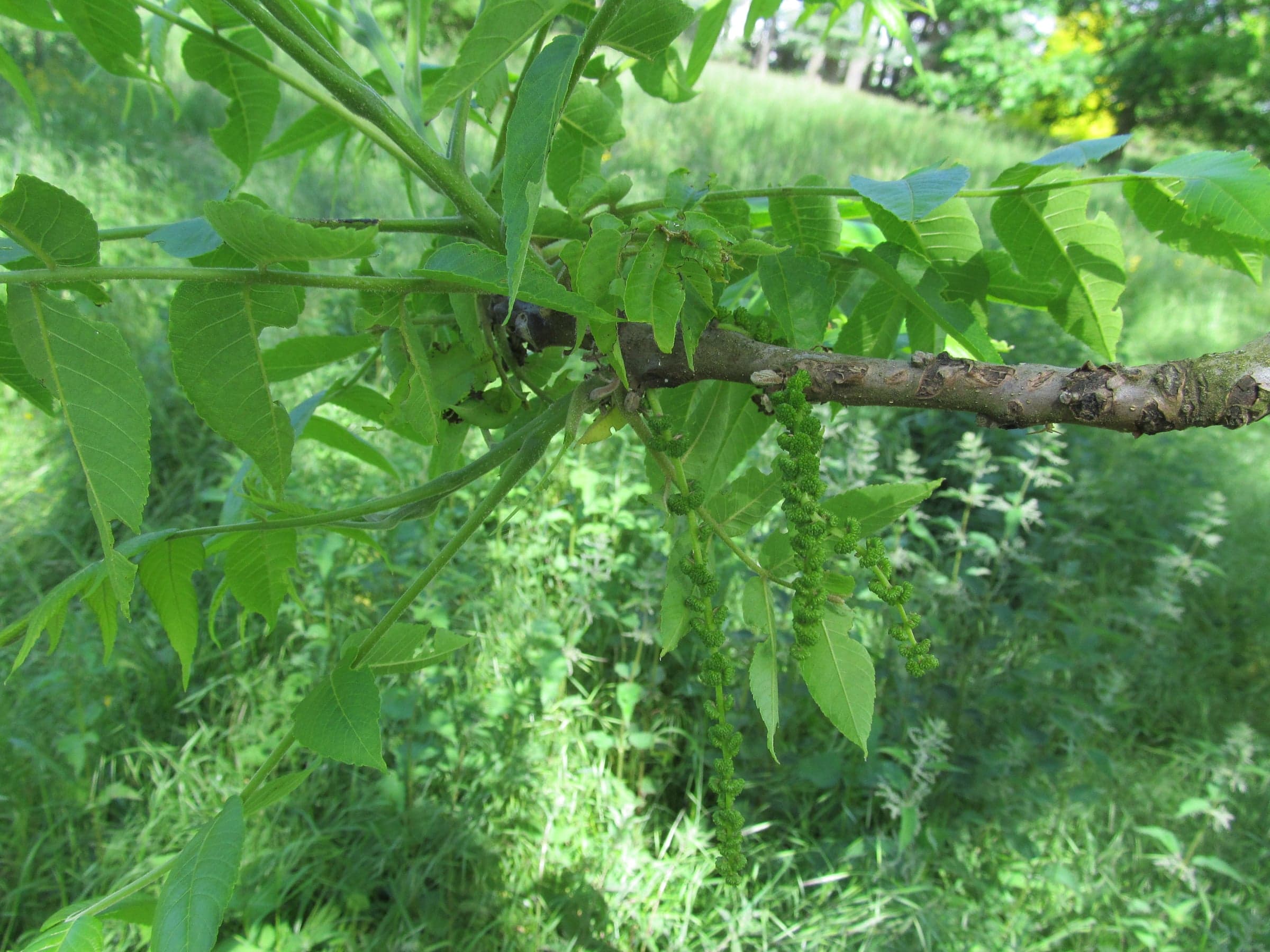
  • Black Walnut: Blad
    Blad
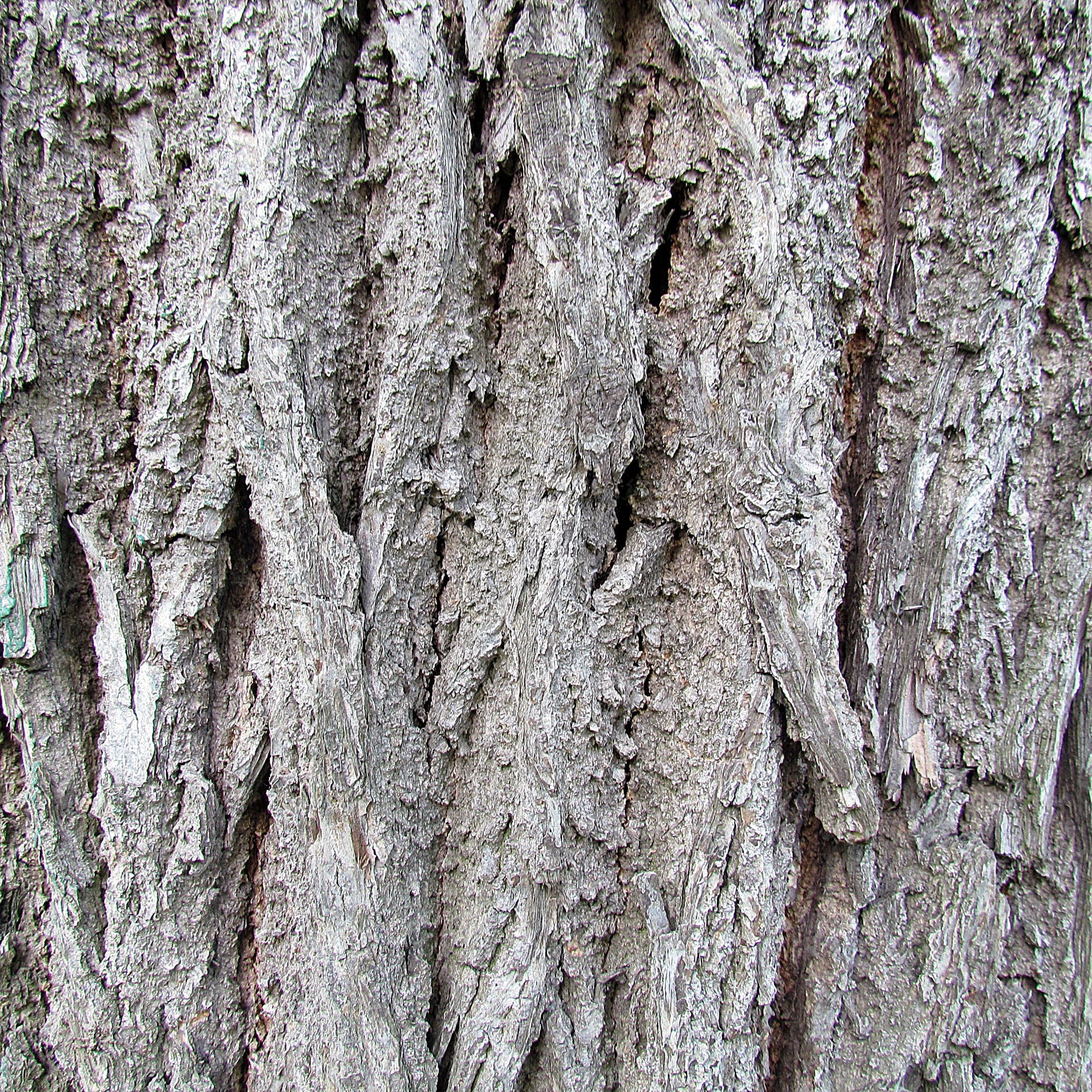
    Black Walnut: Schors
    Schors

    Reading a Black Walnut slab#

    Heartwood runs mid to dark chocolate brown, sometimes with purple or grey undertones when freshly cut. Sapwood is pale cream and, if unsteamed, sharply demarcated.

    Grain is usually straight, which makes plain black walnut easier to machine than figured European walnut. Crotch, burl and curly figure occurs and is priced accordingly.

    Check whether the sapwood has been steamed by looking at the transition: a sharp line means unsteamed, a blurred or muddy gradient means steamed.

    The fading direction#

    Black walnut lightens with light exposure. It does not darken.

    This is the opposite of oak, cherry and most other furniture timbers, and it consistently surprises people. A slab chosen for its deep near black colour on the day it was surfaced will mellow over the following years toward a warmer, lighter brown, and the contrast with the sapwood will soften as it does.

    Plan for the wood the piece will become rather than the wood it is on the bench.

    At the bench#

    At 4,490 N it is softer than European walnut and noticeably easier on tooling than oak or ash. It machines cleanly, turns and carves well, glues reliably and finishes beautifully.

    Straight grained stock gives very little trouble. Figured crotch and burl material tears out and wants light cuts, sharp tooling and a scraper for the final surface.

    Oil finishes suit it particularly well and deepen the colour, though bear the fading in mind: an oil that looks perfect on day one is sitting on wood that will lighten underneath it.

    The juglone issue#

    Black walnut contains juglone and is a documented sensitiser. Skin and respiratory irritation are reported and some woodworkers sensitise over repeated exposure, so extraction and a mask are worth the habit.

    Juglone is toxic to many plants, so shavings should not go into mulch or compost. They must never be used as animal bedding, and walnut shavings are specifically associated with laminitis in horses.

    Durability and stability#

    Decay class 2 makes black walnut genuinely durable, better than European walnut at class 3 and on a par with oak. That is unusual for a furniture hardwood and is part of why it was used for gunstocks and exterior joinery.

    Volumetric shrinkage of 11.0 percent is low for this catalogue, with tangential at 7.5 against radial at 5.0 percent. A comparatively narrow differential means it behaves well in wide flatsawn tops.

    Where Black Walnut is the right answer#

    Fine furniture, wide tabletops, cabinetry, turned and carved work, and any piece where a dark timber is the design intent and consistency across boards matters.

    It is the wrong answer where a European supply chain is required, and where the lightening over time would undermine the design.

    Sourcing and EUDR#

    Not CITES listed and assessed as Least Concern. It is native to eastern North America, so European buyers are generally importing, with the longer documentation chain and higher transport carbon that implies. European grown Juglans nigra exists in small quantities. Where a dark European alternative is acceptable, Juglans regia covers similar ground with a shorter chain.

    It contains juglone and is a documented sensitiser, with skin and respiratory irritation reported and sensitisation developing in some woodworkers over time. Run extraction and wear a mask. Walnut shavings are also toxic to many plants and must never be used as animal bedding, particularly for horses.

    How durable is it?

    +

    Decay class 2, which is genuinely durable and better than most furniture hardwoods, including European walnut at class 3. It has been used for exterior joinery and gunstocks partly for that reason. It is still not a species to put in ground contact.

    Krimp langs de groeiringen. Dosse gezaagde planken en de meeste boomstambladen werken volgens deze waarde.
    7.5–8.5 %
    Volumetrische krimpTotale volumeverandering van vers tot ovendroog. Een lagere waarde betekent stabieler hout.11.0–12.5 %
    Natuurlijke duurzaamheid (EN 350)Europese norm voor natuurlijke weerstand tegen aantasting, van 1 (zeer duurzaam) tot 5 (niet duurzaam).Class 2 — Durable

    Bronnen

    • The Wood Database(geraadpleegd op 2026-05-09)
    • USDA FPL Wood Handbook FPL-GTR-190 (2010)(geraadpleegd op 2026-05-09)
    • Meier, E. — WOOD! Identifying and Using Hundreds of Woods Worldwide (2015)(geraadpleegd op 2026-05-09)

    In het kort

    De niveaus gebruiken vaste schalen voor elke houtsoort die KORENA aanbiedt, zodat u ze rechtstreeks kunt vergelijken. Onder elk niveau staat de gemeten waarde.
    HardheidWeerstand tegen deuken en slijtageMiddelhard

    Janka-hardheid 4.490 N

    10 % zachter dan Europese eik

    GewichtHoe zwaar een boomstamblad is om op te tillenGemiddeld

    610 kg/m³

    StabiliteitHoe weinig het hout met de seizoenen werktGemiddeld

    11,8 % volumetrische krimp

    BewerkingZagen, schaven, schuren en lijmenGemakkelijk

    4,0 / 5 gemiddeld bij bewerking

    BuitengebruikNatuurlijke weerstand tegen aantasting, EN 350Buiten

    EN 350-klasse 2

    • Zagen · Zeer goedHoe zuiver het zaagt en hoe zwaar het zaagbladen belast.1 = moeilijk · 5 = uitstekend
    • Schaven · Zeer goedHoe glad het geschaafde oppervlak wordt en hoeveel uitbreken er optreedt.1 = moeilijk · 5 = uitstekend
    • Schuren · Zeer goedHoe snel het glad schuurt zonder het schuurpapier te verstoppen.1 = moeilijk · 5 = uitstekend
    • Draaien · Zeer goedHoe het zich op de draaibank laat snijden en afwerken.1 = moeilijk · 5 = uitstekend
    • Snijden · Zeer goedHoe scherp details onder een guts blijven.1 = moeilijk · 5 = uitstekend
    • Lijmen · Zeer goedHoe betrouwbaar lijmverbindingen houden.1 = moeilijk · 5 = uitstekend
    • Houvast van schroef / spijker · Zeer goedHoe goed het schroeven en spijkers vasthoudt zonder te splijten.1 = moeilijk · 5 = uitstekend
    • Stoombuigen · GoedHoe goed het na stomen in gebogen vormen kan worden gebracht.1 = moeilijk · 5 = uitstekend

    Wat hout van Black Walnut momenteel in Europa kost per kubieke meter, exclusief btw. Tik op een prijs voor de details.

    • Topstammen op een veilingGeselecteerde stammen van hoge kwaliteit die op inschrijvingsveilingen worden verkocht, vooral aan fineerproducenten en meubelmakers. Uit zulke stammen worden boomstambladen gezaagd.De meeste prijzen liggen tussen € 1.330 en € 1.330.Gebaseerd op 30 prijzen uit 1 regio.Meest recente gegevens: 24 sep 2026

    Waarom kost een boomstamblad meer?

    Dit zijn prijzen voor onbewerkt hout. Een boomstamblad is de beste zaagsnede uit een stam, wordt minstens een jaar gedroogd en daarna stuk voor stuk gecontroleerd en opgemeten. Slechts een klein deel van elke stam wordt een boomstamblad.

    Bron: KORENA Timber Index · Meest recente gegevens: 24 sep 2026

    Bekijk alle regionale prijzen
    Geschikt voor beginners
    Gemakkelijk te bewerken en niet zo hard dat het gereedschap zwaar belast.

    Let op

    • Irriterend stofGebruik stofafzuiging en draag een masker tijdens het schuren of machinaal bewerken.

    Tik op een label voor de details.