KORENA
HolzMöbelWerkstattPartnerJournal

Entdecke neue Bohlen als Erstes

Erhalte eine E-Mail, wenn neues Holz eintrifft.

Ein paar E-Mails pro Monat. Kein Spam, jederzeit abmeldbar.

KORENA

Entdecke Massivholz, handgefertigte Möbel, Werkzeuge und Produkte zur Holzbehandlung auf KORENA.

Einkaufen

  • Produkte ansehen
  • Archiv verkaufter Bohlen
  • Bestellung verfolgen

Lernen

  • KORENA-Journal
  • Holzartenführer
  • Glossar
  • Pflanzenpässe und Befallsgebiete
  • Vergleichen
  • Autoren

Hilfe

  • Über uns
  • So funktioniert es
  • Verkäufer werdenNeu
  • Bohle anfragen
  • Kundenservice
  • Dokumentvorlagen
  • Presse

Kaufen

  • Verkaufsbedingungen
  • Widerrufsrecht
  • Rückgaben und Gewährleistung
  • Versand und Lieferung

Vertrauen

  • Datenschutzerklärung
  • Cookie-Richtlinie
  • Holzherkunft und EUDR
  • Barrierefreiheit

Impressum

  • Rechtlicher Hinweis / Impressum
  • Zulässige Nutzung
  • Geistiges Eigentum und Inhalte

© 2026 KORENA. Alle Rechte vorbehalten.

Betrieben von der Martial Labs Ltd. (BG, EIK 207453941). KORENA ist ein Handelsname der Martial Labs Ltd.

Wir respektieren Ihre Privatsphäre

Wir verwenden notwendige Cookies, damit die Website funktioniert. Mit Ihrer Einwilligung würden wir auch Cookies für Analyse, personalisierte Inhalte und Werbung verwenden. Sie können Ihre Entscheidung jederzeit auf der Seite Einwilligungseinstellungen ändern. Sehen Sie unsere Cookie-Richtlinie und Datenschutzerklärung.

  1. Startseite
  2. /
  3. Holzarten
  4. /
  5. Europäische Esche

Fraxinus excelsior

Europäische Esche

Pale, ring-porous hardwood with bold grain and the best steam-bending behaviour in Europe. Strong and tough, but strictly interior use.

  • This species is recorded as commercially grown in Europe. This does not establish where an individual piece was harvested; check its origin details.
  • Botanische Gruppe. Nadelhölzer sind Koniferen, Laubhölzer stammen von Laubbäumen.
  • Die botanische Familie, zu der die Holzart gehört.
Benachrichtigen, wenn verfügbarReferenzholzart. Derzeit keine Stücke auf Lager.
  • Projekteignung
  • Auf Lager
  • Aussehen
  • Verarbeitung
  • Quellen und Schwinden
  • Preis
  • Sicherheit und Herkunft
  • Fragen
  • Technische Daten

Passt es zu Ihrem Projekt?

Ideal für

  • Steam-bent chair frames and stools
  • Dining tables and desks for interior use
  • Cabinetry doors and drawer fronts
  • Tool handles, sports equipment and shop fittings
  • Wall panelling and architectural millwork
  • Turned components and lighter-toned table legs

Kein Europäische Esche im aktuellen Drop

Ähnliche Holzarten auf Lager

Derzeit kein Europäische Esche. Diese Holzarten eignen sich für dieselben Projekte und sind verfügbar.
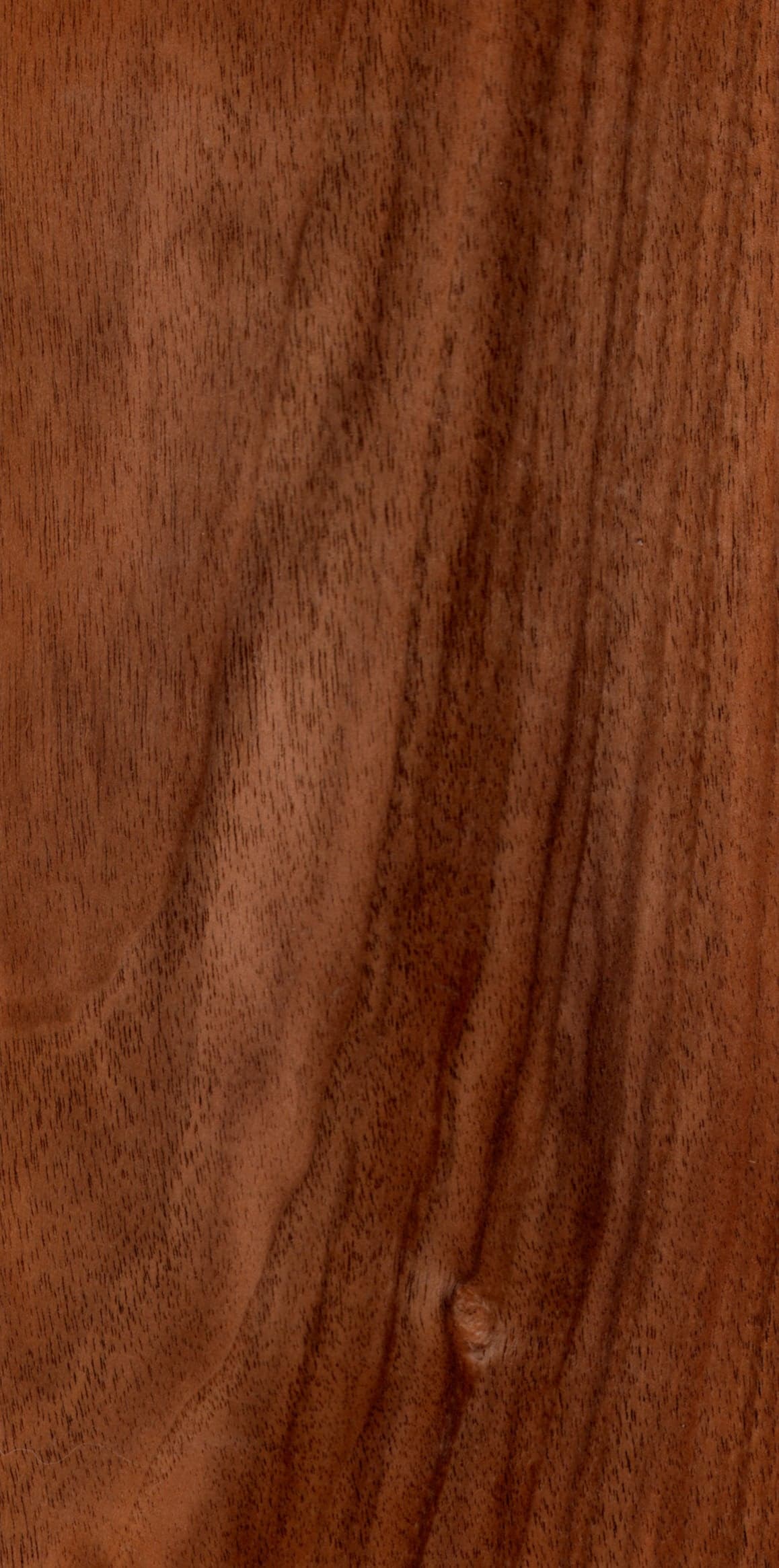
  • Europäischer Nussbaum: Holzmaserung

    Europäischer Nussbaum

    Juglans regia

    12 Stücke

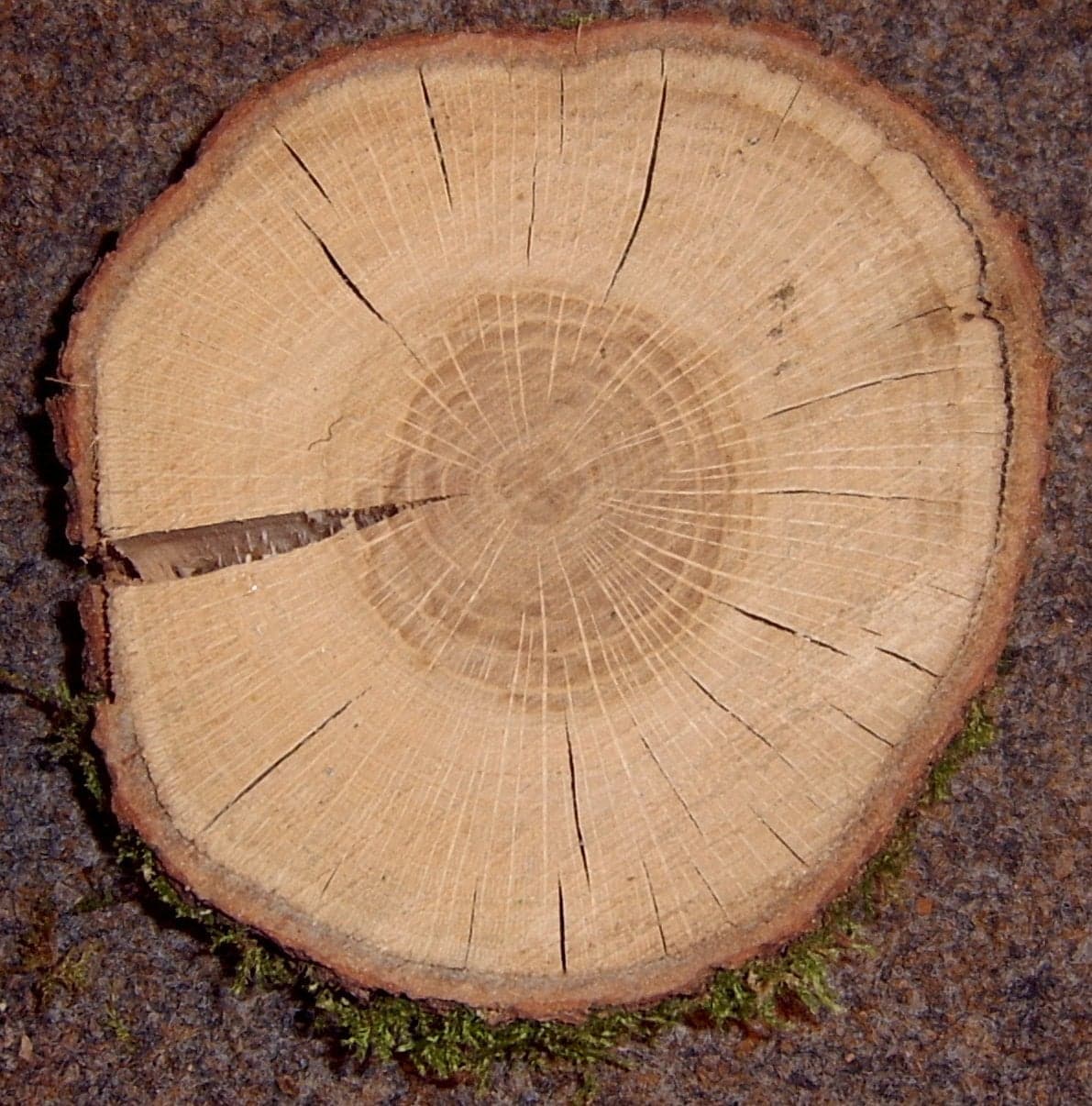
  • Europäische Eiche: Holzmaserung

    Europäische Eiche

    Quercus robur

    6 Stücke

  • Saman: Holzmaserung

    Saman

    Samanea saman

    4 Stücke

Benachrichtigung zu Europäische Esche

Wir benachrichtigen Sie per E-Mail, wenn neue Europäische Esche-Bohlen bei KORENA eintreffen. Jedes Stück ist ein Unikat, deshalb zählt eine frühe Nachricht.

Ein paar E-Mails pro Monat. Kein Spam, jederzeit abmeldbar.

Holzbild

So sieht es aus

A pale hardwood with a creamy-white sapwood that blends into a light brown heartwood. Grain is straight and the texture coarse and uneven, with strong contrast between earlywood and latewood pores. Growth rings read clearly across a flat-sawn face, giving ash a bold, graphic look that suits modern furniture as much as traditional joinery. A lighter, more open-grained alternative to European oak, and a far cleaner, paler option than walnut.

  • Creamy white to pale straw sapwood
  • Light brown to olive-tinged heartwood
  • Bold dark latewood lines against pale earlywood
  • Mellows to a warmer honey tone with UV exposure
  • Bleaches well for very pale, Nordic-style surfaces
  • Gerader Faserverlauf, grobe, ungleichmäßige Textur.

Arbeiten mit dieser Holzart

Verarbeitung

Works well with both hand and machine tools. Glues, screws and finishes predictably. Pre-drilling is sensible near edges given the density. Ash is one of the great steam-bending species, chair frames, tool handles and sports goods have relied on it for centuries, and it holds curves reliably once set. Sharp tooling matters: the coarse texture can tear out around knots and interlocked patches if blades are dull.

Finish

Takes oils, hardwax, water-based and solvent finishes well. The open ring-porous structure benefits from grain filler if you want a glass-smooth surface, otherwise the texture stays visible and tactile. Stains evenly, but the porous earlywood drinks pigment faster than the dense latewood, which can exaggerate ring contrast. Test on offcuts before committing. Bleaches cleanly for very pale Scandinavian looks.

Trocknung

Dries at a moderate rate with a moderate risk of checking and minor distortion. Tangential shrinkage is roughly 1.6 times radial, so quarter-sawn stock stays flatter in service. Acclimatise to the workshop for at least two weeks before machining, and condition again before final assembly in heated interiors.

Wie stark arbeitet es?

Holz quillt und schwindet in der Breite, wenn die Luft feuchter und trockener wird. Schätzen Sie das saisonale Arbeiten einer Europäische Esche-Platte, bevor Sie die Befestigung planen.

Einschnitt
Einsatzort

Erwartetes saisonales Arbeiten

etwa 9,7 mm

Platte mit Tischplattenhaltern oder Langlochwinkeln befestigen, nicht verleimen oder fest verschrauben.

Lineares Schwindmodell: Breite × (Schwindmaß ÷ 28 % Fasersättigung) × saisonale Feuchteschwankung. Verwendet 8,5 % Schwindmaß in Tangentialrichtung für Europäische Esche. Eine Planungsschätzung, keine Garantie.

Was es kostet

Sicherheit und Herkunft

  • This species is recorded as commercially grown in Europe. This does not establish where an individual piece was harvested; check its origin details.
  • Status auf der Roten Liste der IUCN: die weltweite Schutzbewertung dieser Art.
  • Ash dust is a documented respiratory and skin sensitiser. Repeated exposure can trigger asthma-like symptoms and dermatitis in sensitive individuals. Use a P2/P3 mask, dust extraction at the tool, and long sleeves when sanding or routing. The wood itself is food-contact safe once cured and finished appropriately.

Den vollständigen Leitfaden lesenAusführliche Hinweise zu Maserung, Farbveränderung, Verarbeitung und Formstabilität.+

What European Ash actually is#

Fraxinus excelsior is the tough one. At 6,580 N on the Janka scale it is harder than European oak by a third, and it combines that hardness with an elasticity that lets it absorb impact and spring back rather than splitting.

That combination is why ash became the handle wood of Europe. Hammer and axe handles, oars, hurleys, tennis racquets, cart frames and early aircraft structures were all ash, and the reason is a property that no single number captures: shock resistance.

The dieback situation#

Ash is the only species in this catalogue carrying an elevated IUCN status. It is assessed as Near Threatened, and the cause is Hymenoscyphus fraxineus, the fungus behind ash dieback, which has spread across Europe since the 1990s and killed a very large proportion of the standing population.

For a buyer today the effect is counterintuitive. Salvage felling has pushed volumes up and prices down, so ash is currently good value and widely available. The uncertainty is in the coming decades rather than this year.

The disease affects the living tree. Sound timber cut from an affected tree is sound timber, and there is no quality penalty in buying salvage ash provided it was converted and dried properly rather than left standing dead and allowed to spalt.

Reading an ash slab

Käuferfragen

Häufige Fragen von Käufern

Is ash affected by ash dieback, and does that matter for slabs?

+

Yes. Hymenoscyphus fraxineus has spread across Europe since the 1990s and the IUCN now assesses Fraxinus excelsior as Near Threatened, the only species in this catalogue with an elevated status. For buyers the practical effect is a lot of salvage felling: volumes are currently high and prices soft, but supply over the coming decades is uncertain. The disease affects the living tree, not the quality of sound timber cut from it.

Why is ash used for tool handles?

+

Shock resistance. Ash combines high hardness at 6,580 N with elasticity, so it absorbs impact and returns rather than splitting or shattering. That combination is why it has been the standard timber for hammer and axe handles, oars, hurleys and sports equipment for centuries, and why it steam bends so well.

Can ash be used outdoors?

+

No, not untreated. It is rated decay class 5, perishable, which is the lowest durability of any hardwood in this catalogue and a surprise given how tough it is mechanically. Strength and durability are unrelated properties. For exterior work choose oak, robinia or sweet chestnut.

What is olive ash?

Mechanische Eigenschaften

Technische Daten

Veröffentlichte Referenzwerte. Wo Quellen abweichen, steht die Spanne; der typische Wert wird für die Stufen oben verwendet.

Dichte (kg/m³)Masse pro Kubikmeter bei etwa 12 % Holzfeuchte. Schwereres Holz ist meist härter und fester.620–740 kg/m³typisch 680 kg/m³
Janka-Härte (N)Kraft, um eine Stahlkugel zur Hälfte ins Holz zu drücken. Das Standardmaß für Eindruckfestigkeit.6,200–7,000 Ntypisch 6.580 N
MOR: Biegebruchmodul (MPa)Biegefestigkeit: die Last, bei der ein Balken bricht.105–130 MPa
MOE: Elastizitätsmodul (GPa)Biegesteifigkeit: wie stark ein Regalboden oder eine Platte unter Last durchhängt.11.5–13.5 GPa
Radiales SchwindenSchwindmaß quer zu den Jahrringen, von frisch bis darrtrocken. Riftbretter arbeiten in diesem Maß.4.5–6.0 %
Tangentiales SchwindenSchwindmaß entlang der Jahrringe. Fladerbretter und die meisten Bohlen arbeiten in diesem Maß.
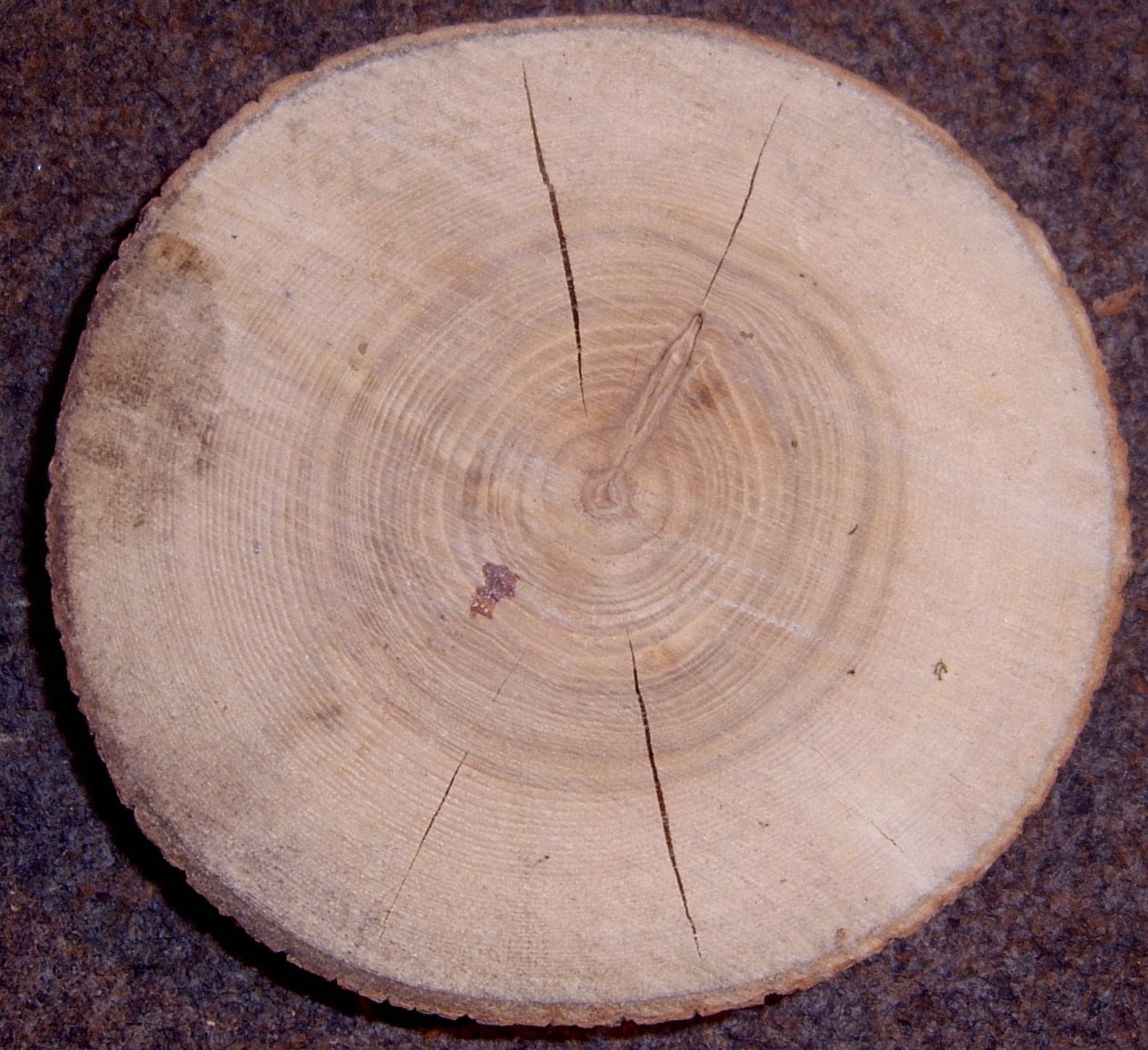
Europäische Esche: Holzmaserung

No machine-readable author provided. Lumbar~commonswiki assumed (based on copyright claims)., via Wikimedia Commons

Stärken

  • LebensmittelechtGeeignet für Bretter, Schalen und Flächen mit Lebensmittelkontakt.
  • Gut biegbarMit 5 von 5 fürs Dampfbiegen bewertet. Nimmt enge Radien an.

Native across Europe from Ireland east to the Volga, north into southern Scandinavia and south into the Mediterranean uplands. Grows in mixed broadleaf forests on moist, fertile soils, often alongside oak and beech. KORENA sources from managed European forests where stand health allows responsible harvesting.

  • European Ash is reassessed as Near Threatened on the IUCN Red List because of ash dieback (Hymenoscyphus fraxineus), a fungal disease moving across Europe since the 1990s and killing a significant share of standing ash. Paradoxically this means salvage and sanitation harvests are common, and well-managed sourcing can use timber that would otherwise be lost. KORENA sources ash from forests with documented health assessments and chain-of-custody. EUDR due diligence is in preparation and becomes mandatory for large operators from 30 December 2026, and the slab passport is built to carry the legality and dieback context. No CITES listing.

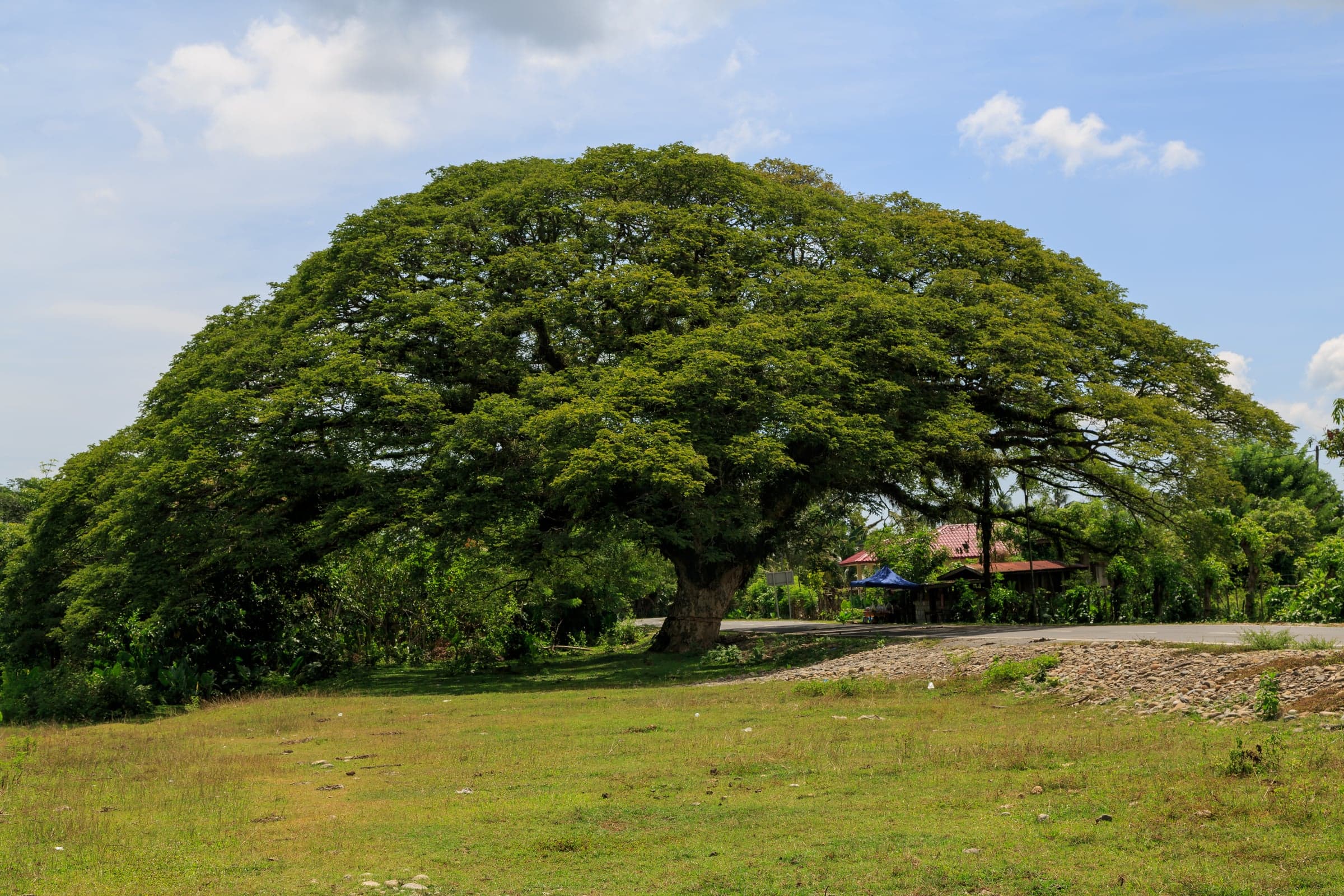
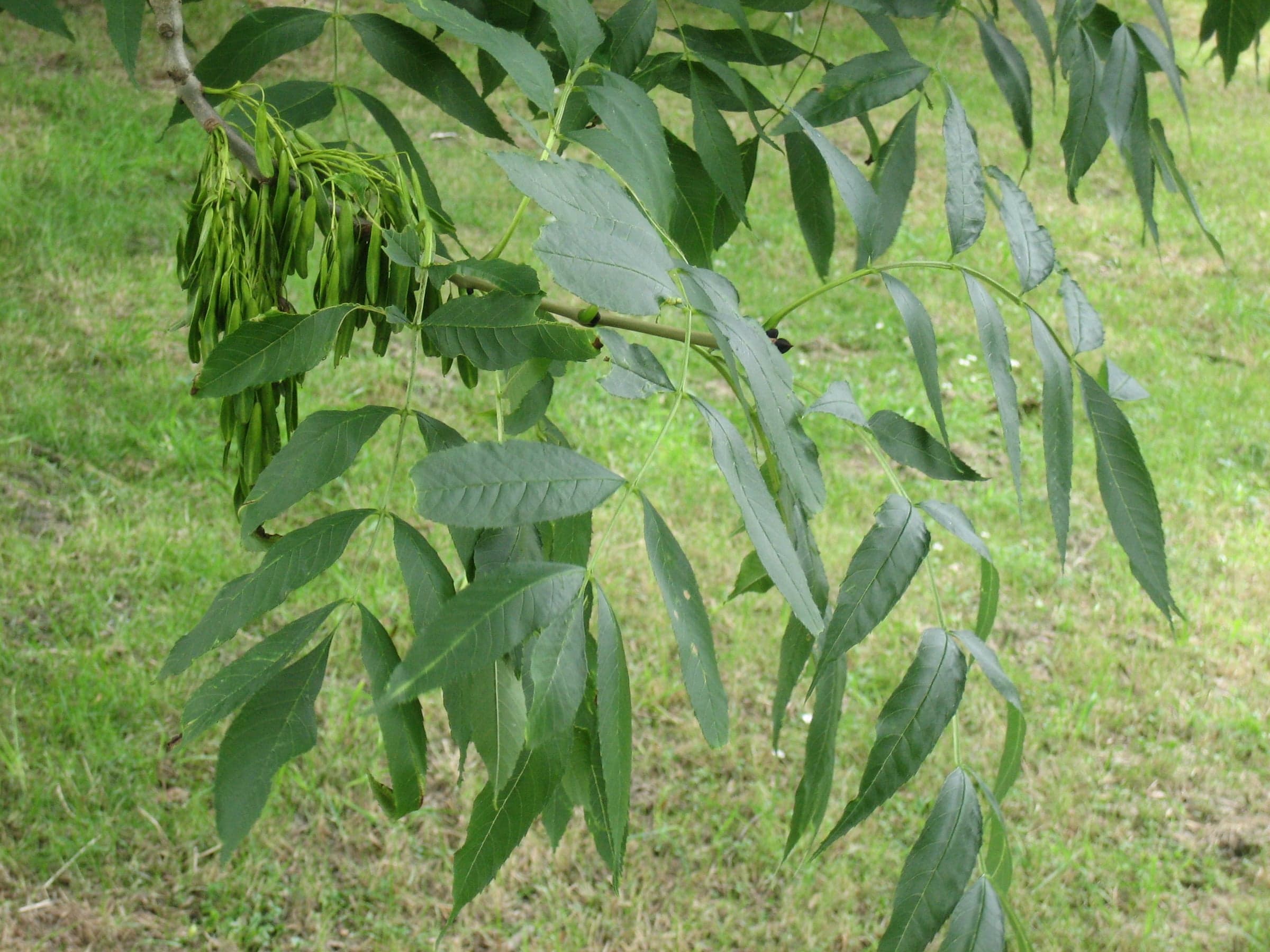
  • Europäische Esche: Baum

    No machine-readable author provided. MPF assumed (based on copyright claims)., via Wikimedia Commons

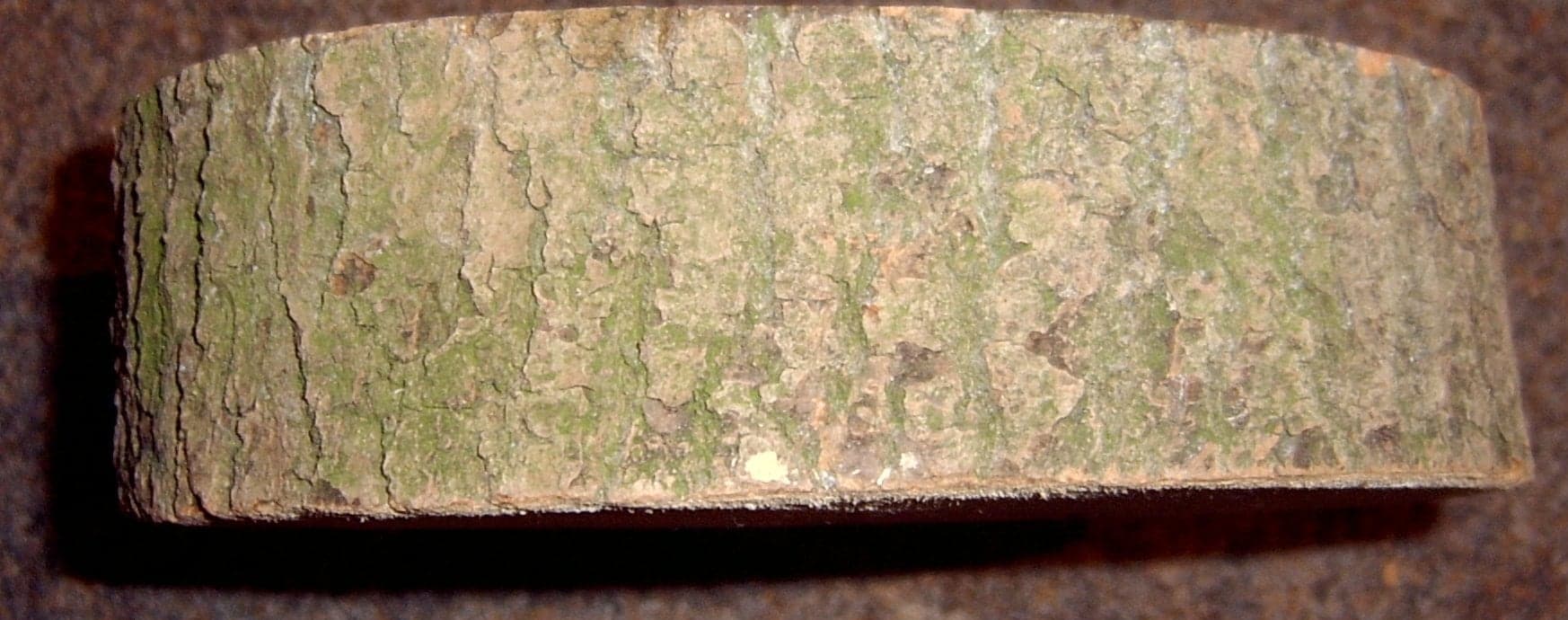
    Europäische Esche: Rinde
    Rinde
    #

    Most ash is pale, near white to light biscuit, with a coarse ring porous texture that reads similarly to oak but without the ray fleck.

    The exception is olive ash: darker brown and olive streaked heartwood that develops in some older trees, giving dramatic contrast against the pale background. It is the same species rather than a different one, and because most ash is uniformly pale, olive ash carries a premium and is sought for tabletops.

    The grain is usually straight, which is part of why it bends and machines so predictably.

    The durability trap#

    Ash is mechanically formidable and biologically feeble. It is rated decay class 5, perishable, the lowest durability of any hardwood here.

    That surprises people, because toughness feels like it should mean longevity. It does not. Strength and decay resistance are unrelated properties, governed by different things: cell wall structure on one hand, extractive chemistry on the other. Ash has excellent structure and almost no protective extractives.

    Untreated ash outdoors will fail quickly. For exterior work, oak at decay class 2, sweet chestnut at 2, or robinia at 1 are the species in this catalogue that belong there.

    At the bench#

    Ash works cleanly with hand and machine tools and finishes well. It steam bends excellently, as its history suggests, and it glues and takes fastenings reliably.

    At 6,580 N it is hard, so tooling blunts faster than on oak and the wood asks for power in the cut. The coarse open pores need filling for a smooth surface.

    The straight grain means less tear-out than oak, which makes wide ash surfaces comparatively easy to machine flat.

    Movement#

    Volumetric shrinkage of 14.5 percent is high and the tangential to radial differential of 7.5 against 4.5 percent is wide, so flatsawn boards cup.

    Ash also has a working reputation for moving more in service than its figures predict. Whether that is the wood or the fact that ash is often used in thin sections is arguable, but the practical response is the same: acclimatise fully, let tops float on slotted fasteners, and do not fix a wide ash panel rigidly.

    Where ash is the right answer#

    Anywhere impact and flex matter. Chair frames, steam bent components, tool handles, sports equipment, and tabletops where the pale colour or the olive figure is wanted. It is currently among the best value hardwoods in Europe.

    It is the wrong answer outdoors in any form, and wrong where dimensional stability is the governing requirement.

    Sourcing and EUDR#

    Not CITES listed. Assessed as Near Threatened by the IUCN, which is worth stating plainly to buyers rather than leaving in a data table, and the reason is disease rather than over-harvesting. European supply is currently abundant through salvage felling and documentation is straightforward.

    +

    The darker streaked heartwood that develops in some older ash trees, producing brown and olive figuring against the pale background. It is the same species, not a separate one, and it is prized for tabletops because the contrast is dramatic. Most ash is uniformly pale, so olive ash commands a premium.

    How much does it move?

    +

    Volumetric shrinkage of 14.5 percent is on the high side, with tangential at 7.5 percent against radial at 4.5 percent. That is a wide differential, so flatsawn boards cup. Ash also has a reputation for moving in service more than the numbers alone suggest, so let a slab acclimatise fully and allow a top to float.

    7.5–9.5 %
    Volumetrisches SchwindenGesamte Volumenänderung von frisch bis darrtrocken. Niedriger heißt formstabiler.14.5–16.0 %
    Natürliche Dauerhaftigkeit (EN 350)Europäische Norm für natürliche Dauerhaftigkeit, von 1 (sehr dauerhaft) bis 5 (nicht dauerhaft).Class 5 — Perishable

    Quellen

    • The Wood Database(abgerufen am 2026-05-09)
    • USDA FPL Wood Handbook FPL-GTR-190 (2010)(abgerufen am 2026-05-09)
    • Meier, E. — WOOD! Identifying and Using Hundreds of Woods Worldwide (2015)(abgerufen am 2026-05-09)

    Auf einen Blick

    Die Stufen verwenden feste Grenzen für alle Holzarten bei KORENA und sind daher direkt vergleichbar. Der gemessene Wert steht unter jeder Stufe.
    HärteWiderstand gegen Dellen und AbnutzungHart

    Janka-Härte 6.580 N

    32 % härter als Europäische Eiche

    GewichtWie schwer eine Bohle zu heben istSchwer

    680 kg/m³

    StabilitätWie wenig es mit den Jahreszeiten arbeitetArbeitet stark

    15,3 % Volumenschwindung

    BearbeitungSägen, Hobeln, Schleifen, LeimenLeicht

    4,0 / 5 Werkbank-Durchschnitt

    AußeneinsatzNatürliche Fäulnisresistenz, EN 350Nur innen

    EN 350 Klasse 5

    • Sägen · Sehr gutWie sauber es schneidet und wie stark es Sägeblätter beansprucht.1 = schwierig · 5 = ausgezeichnet
    • Hobeln · Sehr gutWie glatt die Oberfläche wird und wie stark es ausreißt.1 = schwierig · 5 = ausgezeichnet
    • Schleifen · Sehr gutWie schnell es glatt schleift, ohne das Papier zuzusetzen.1 = schwierig · 5 = ausgezeichnet
    • Drechseln · Sehr gutWie es sich an der Drechselbank schneiden und finishen lässt.1 = schwierig · 5 = ausgezeichnet
    • Schnitzen · Sehr gutWie scharf es Details unter dem Hohleisen hält.1 = schwierig · 5 = ausgezeichnet
    • Verleimen · Sehr gutWie zuverlässig Leimverbindungen halten.1 = schwierig · 5 = ausgezeichnet
    • Schraub- / Nagelhalt · Sehr gutWie gut es Schrauben und Nägel hält, ohne zu spalten.1 = schwierig · 5 = ausgezeichnet
    • Dampfbiegen · AusgezeichnetWie gut es nach dem Dämpfen Rundungen annimmt.1 = schwierig · 5 = ausgezeichnet

    Was Europäische Esche als Rohholz in Europa gerade kostet, je Kubikmeter netto. Tippen Sie auf einen Preis für Details.

    • Wertholz auf SubmissionAusgewählte hochwertige Stämme, auf Submissionen vor allem an Furnier- und Möbelhersteller versteigert. Aus solchen Stämmen werden Bohlen geschnitten.Die meisten Preise liegen zwischen 203 € und 321 €.Auf Basis von 183 Preisen aus 2 Regionen.Letzte Daten 14. Nov. 2026
    • Standard-RundholzGroße Mengen Standard-Rundholz von Waldbesitzern und Staatsforsten, überwiegend für Bau und Industrie.Die meisten Preise liegen zwischen 45 € und 416 €.Auf Basis von 3.658 Preisen aus 7 Regionen.Letzte Daten 14. Nov. 2026

    Wertholz auf Submission nach Land

    • Österreich · 321 € / m³Regionen: Austria61 PreiseLetzte Daten 14. Nov. 2026
    • Deutschland · 250 € / m³Regionen: Bayern122 PreiseLetzte Daten 14. Nov. 2026

    Standard-Rundholz nach Land

    • Frankreich · 167 € / m³Regionen: Bourgogne-Franche-Comté und Grand Est / Alsace124 PreiseLetzte Daten 15. Okt. 2026
    • Rumänien · 102 € / m³Regionen: Banat / Crișana, Moldavia (Romania), Transylvania und Wallachia3.443 PreiseLetzte Daten 14. Nov. 2026
    • Bulgarien · 66 € / m³Regionen: North-West Bulgaria91 PreiseLetzte Daten 14. Nov. 2026

    Warum kostet eine Bohle mehr?

    Das sind Preise für Rohholz. Eine Bohle ist der beste Teil eines Stamms, ein Jahr oder länger getrocknet, dann Stück für Stück geprüft und vermessen. Nur ein kleiner Teil jedes Stamms wird zur Bohle.

    Quelle: KORENA Timber Index · Letzte Daten 14. Nov. 2026

    Alle Regionalpreise
    Einsteigerfreundlich
    Leicht zu bearbeiten und nicht so hart, dass es Werkzeuge strapaziert.

    Achtung

    • Nicht unbehandelt für außenDie natürliche Dauerhaftigkeit ist EN 350 Klasse 5 von 5. Innen verwenden oder unter gepflegter Oberfläche.
    • Arbeitet stärker als die meistenBreite Platten brauchen Tischplattenhalter oder Langlochbefestigung und Raum zum Arbeiten. Nutzen Sie den Rechner unten.
    • Staub reiztBeim Schleifen und Maschinenarbeiten Absaugung und Maske verwenden.

    Für Details auf ein Etikett tippen.