KORENA
HolzMöbelWerkstattPartnerJournal

Entdecke neue Bohlen als Erstes

Erhalte eine E-Mail, wenn neues Holz eintrifft.

Ein paar E-Mails pro Monat. Kein Spam, jederzeit abmeldbar.

KORENA

Entdecke Massivholz, handgefertigte Möbel, Werkzeuge und Produkte zur Holzbehandlung auf KORENA.

Einkaufen

  • Produkte ansehen
  • Archiv verkaufter Bohlen
  • Bestellung verfolgen

Lernen

  • KORENA-Journal
  • Holzartenführer
  • Glossar
  • Pflanzenpässe und Befallsgebiete
  • Vergleichen
  • Autoren

Hilfe

  • Über uns
  • So funktioniert es
  • Verkäufer werdenNeu
  • Bohle anfragen
  • Kundenservice
  • Dokumentvorlagen
  • Presse

Kaufen

  • Verkaufsbedingungen
  • Widerrufsrecht
  • Rückgaben und Gewährleistung
  • Versand und Lieferung

Vertrauen

  • Datenschutzerklärung
  • Cookie-Richtlinie
  • Holzherkunft und EUDR
  • Barrierefreiheit

Impressum

  • Rechtlicher Hinweis / Impressum
  • Zulässige Nutzung
  • Geistiges Eigentum und Inhalte

© 2026 KORENA. Alle Rechte vorbehalten.

Betrieben von der Martial Labs Ltd. (BG, EIK 207453941). KORENA ist ein Handelsname der Martial Labs Ltd.

Wir respektieren Ihre Privatsphäre

Wir verwenden notwendige Cookies, damit die Website funktioniert. Mit Ihrer Einwilligung würden wir auch Cookies für Analyse, personalisierte Inhalte und Werbung verwenden. Sie können Ihre Entscheidung jederzeit auf der Seite Einwilligungseinstellungen ändern. Sehen Sie unsere Cookie-Richtlinie und Datenschutzerklärung.

  1. Startseite
  2. /
  3. Holzarten
  4. /
  5. Hainbuche

Carpinus betulus

Hainbuche

Pale, ruthlessly dense, and famously hard. The wood old joiners reached for when they needed plane bodies, mallet heads, and water-mill cogs that would not give up.

  • This species is recorded as commercially grown in Europe. This does not establish where an individual piece was harvested; check its origin details.
  • Botanische Gruppe. Nadelhölzer sind Koniferen, Laubhölzer stammen von Laubbäumen.
  • Die botanische Familie, zu der die Holzart gehört.
Benachrichtigen, wenn verfügbarReferenzholzart. Derzeit keine Stücke auf Lager.
  • Projekteignung
  • Auf Lager
  • Aussehen
  • Verarbeitung
  • Quellen und Schwinden
  • Preis
  • Sicherheit und Herkunft
  • Fragen
  • Technische Daten

Passt es zu Ihrem Projekt?

Ideal für

  • Plane bodies and mallet heads
  • Tool handles and chisel handles
  • Turned work, bowls, finials, pepper mills, fine spindles
  • Joinery accents, wedges, splines, drawbore pins, dovetail keys
  • High-wear surfaces, chopping boards, butcher blocks, jig faces
  • Gear teeth, cogs, and replacement parts in restored mills

Kein Hainbuche im aktuellen Drop

Ähnliche Holzarten auf Lager

Derzeit kein Hainbuche. Diese Holzarten eignen sich für dieselben Projekte und sind verfügbar.
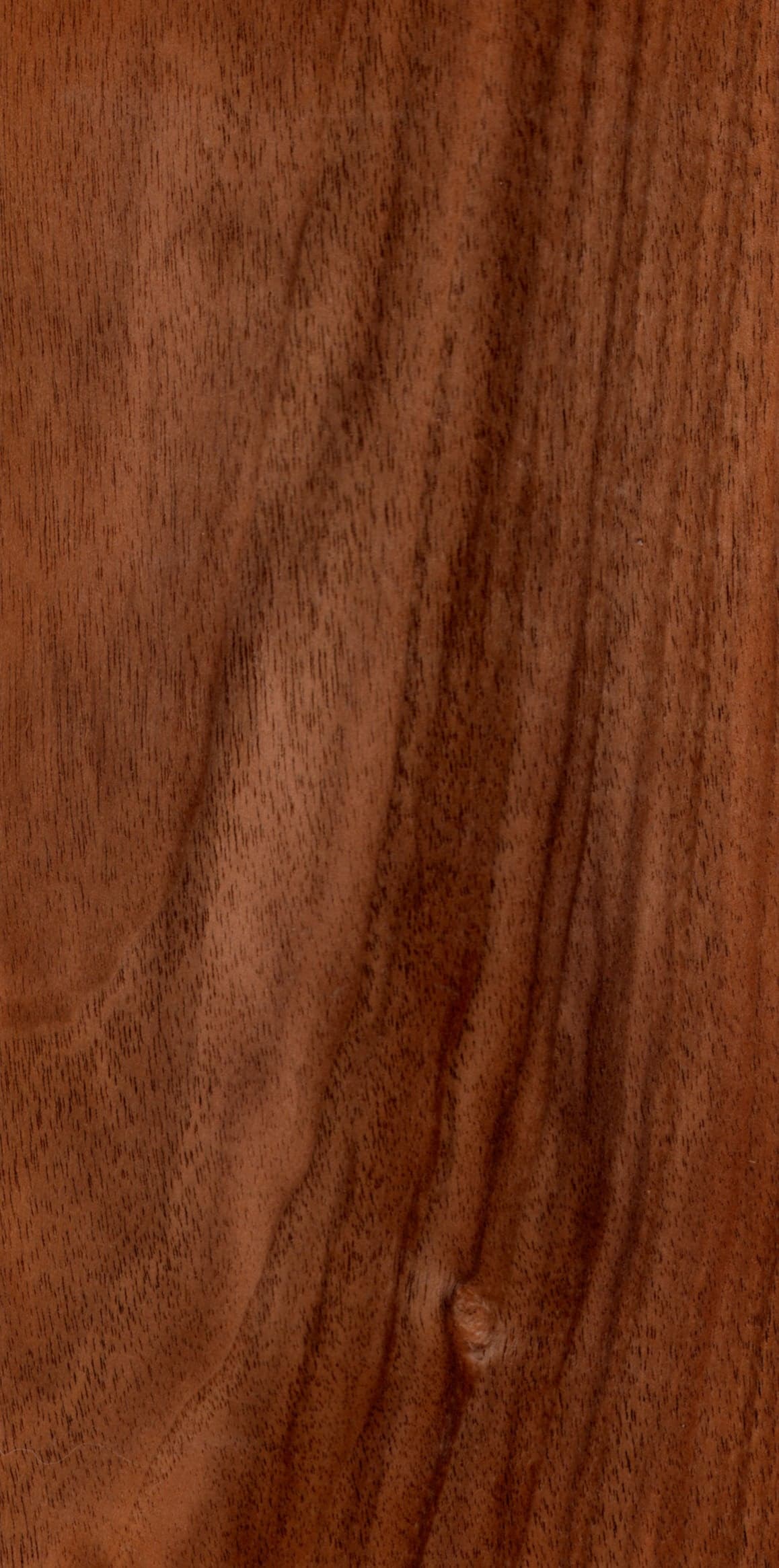
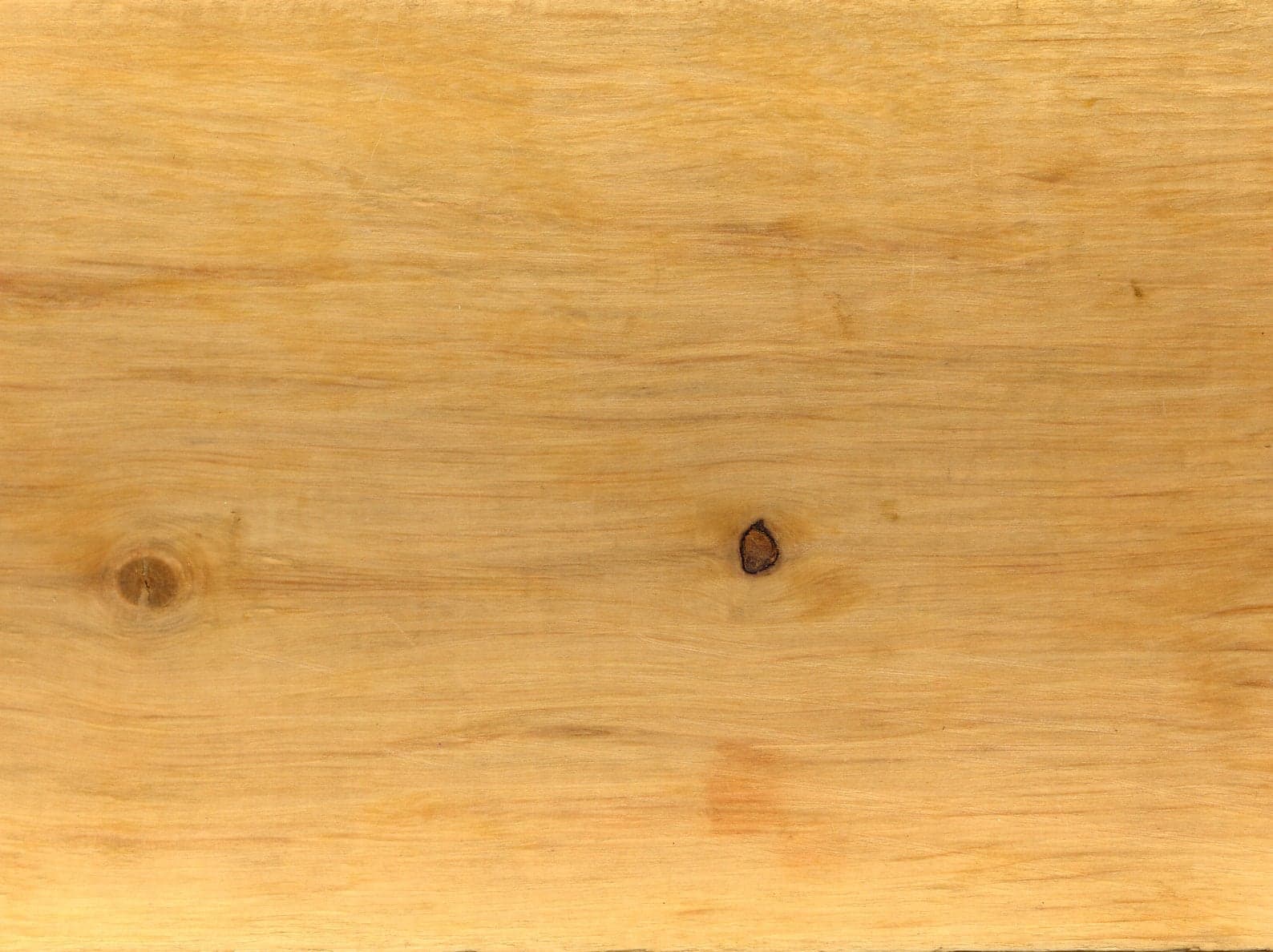
  • Europäischer Nussbaum: Holzmaserung

    Europäischer Nussbaum

    Juglans regia

    12 Stücke

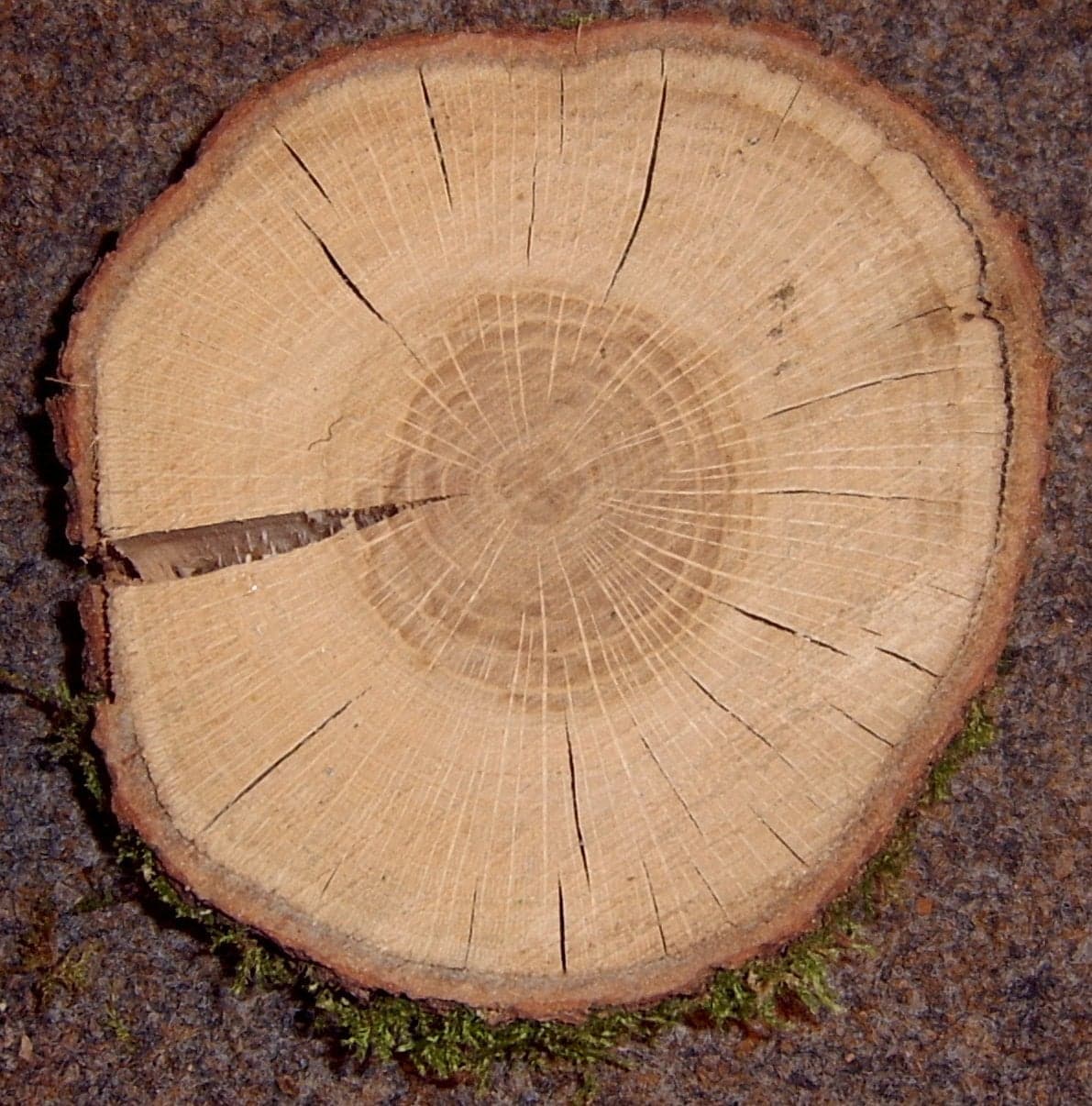
  • Europäische Eiche: Holzmaserung

    Europäische Eiche

    Quercus robur

    6 Stücke

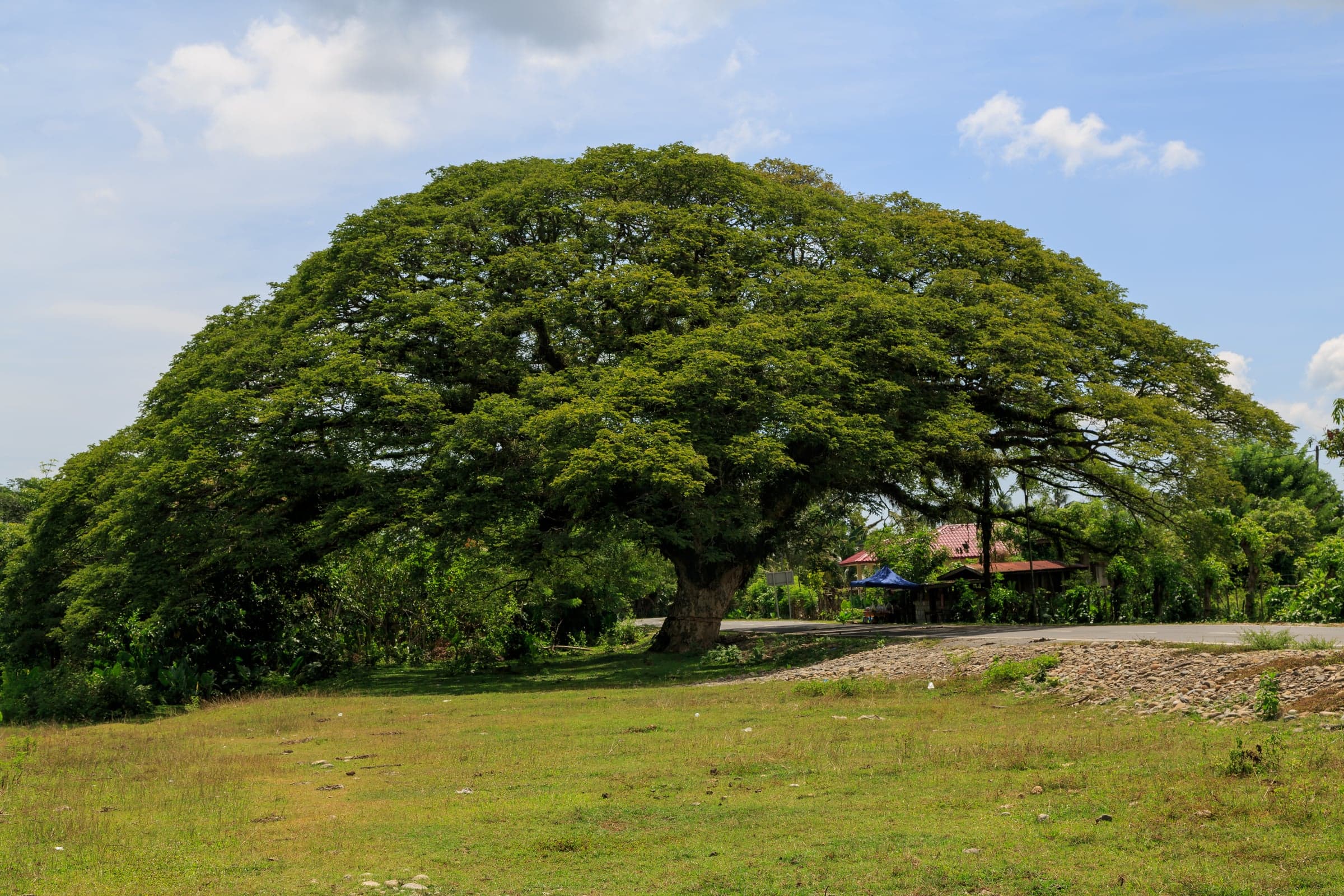
  • Saman: Holzmaserung

    Saman

    Samanea saman

    4 Stücke

Benachrichtigung zu Hainbuche

Wir benachrichtigen Sie per E-Mail, wenn neue Hainbuche-Bohlen bei KORENA eintreffen. Jedes Stück ist ein Unikat, deshalb zählt eine frühe Nachricht.

Ein paar E-Mails pro Monat. Kein Spam, jederzeit abmeldbar.

Holzbild

So sieht es aus

Creamy white to pale straw, sometimes drifting to light grey-brown with age. Grain is irregular and often interlocked; texture is fine and even. Almost no figure, no drama, its character is in the surface itself, which polishes to a hard, near-ceramic feel that softer pale woods cannot match.

  • Creamy white to pale straw when fresh
  • Drifts to light grey-brown with age and UV
  • Occasional grey streaking on slower-grown stock
  • Almost figureless, reads as a clean, even pale ground
  • Polishes to a hard, near-ceramic surface sheen
  • Unregelmäßige Maserung, feine gleichmäßige Textur.

Arbeiten mit dieser Holzart

Verarbeitung

A specialist wood. Density and interlocked grain blunt edges fast. Expect to sharpen often and feed slowly. Planing tears out unless irons are keen and the cut is light; a scraper or sander often finishes better than a plane. Drilling and routing demand sharp carbide. The reward is on the lathe, where it turns to a fine, crisp surface and holds detail other woods crush. Glues and screws well once pre-bored. Steam-bends reasonably for such a dense species.

Finish

Sands to a glassy surface if you stay patient and step through the grits. Takes hard waxes, oils, and lacquers cleanly. Stains can blotch on the interlocked patches. Test first. Burnishes beautifully on the lathe; many turners leave it bare or oil-only.

Trocknung

Dries slowly and moves a lot, tangential shrinkage of 11 to 13 percent puts it among the most mobile European hardwoods. Prone to distortion, surface checks, and case-hardening if rushed. Air-dry under weight, then finish in a kiln on a gentle schedule. Acclimatise in the workshop for several weeks before machining, and design for movement in any wider piece.

Wie stark arbeitet es?

Holz quillt und schwindet in der Breite, wenn die Luft feuchter und trockener wird. Schätzen Sie das saisonale Arbeiten einer Hainbuche-Platte, bevor Sie die Befestigung planen.

Einschnitt
Einsatzort

Erwartetes saisonales Arbeiten

etwa 13,7 mm

Groß. Tischplattenhalter oder Langlochwinkel verwenden, an den Enden von Hirnleisten Spiel lassen und die Bohle vor der Montage akklimatisieren.

Lineares Schwindmodell: Breite × (Schwindmaß ÷ 28 % Fasersättigung) × saisonale Feuchteschwankung. Verwendet 12 % Schwindmaß in Tangentialrichtung für Hainbuche. Eine Planungsschätzung, keine Garantie.

Was es kostet

Sicherheit und Herkunft

  • This species is recorded as commercially grown in Europe. This does not establish where an individual piece was harvested; check its origin details.
  • Status auf der Roten Liste der IUCN: die weltweite Schutzbewertung dieser Art.
  • Food-contact safe once finished, which is why it has a long history in kitchen tools and chopping blocks. The dust is a known skin irritant and can sensitise on repeated exposure. Wear long sleeves, run good extraction, and mask up when sanding.

Den vollständigen Leitfaden lesenAusführliche Hinweise zu Maserung, Farbveränderung, Verarbeitung und Formstabilität.+

What Hornbeam actually is#

Carpinus betulus is the wear wood. At 735 kg per cubic metre and 7,260 N Janka it is the second hardest measured species in this catalogue, behind only robinia, and it has a fine even texture with no strong grain direction.

That combination, hardness without a pronounced grain to split along, is what made it the traditional wood for things that get hit, rubbed and worn: plane soles, mallet heads, gear teeth in windmill and watermill machinery, butchers blocks, and cogs.

It is not a decorative wood and it was never used as one.

Reading a hornbeam slab#

Colour is pale, near white to light cream, sometimes with grey streaking. Figure is minimal. The texture is fine and even and the surface has a slight natural lustre.

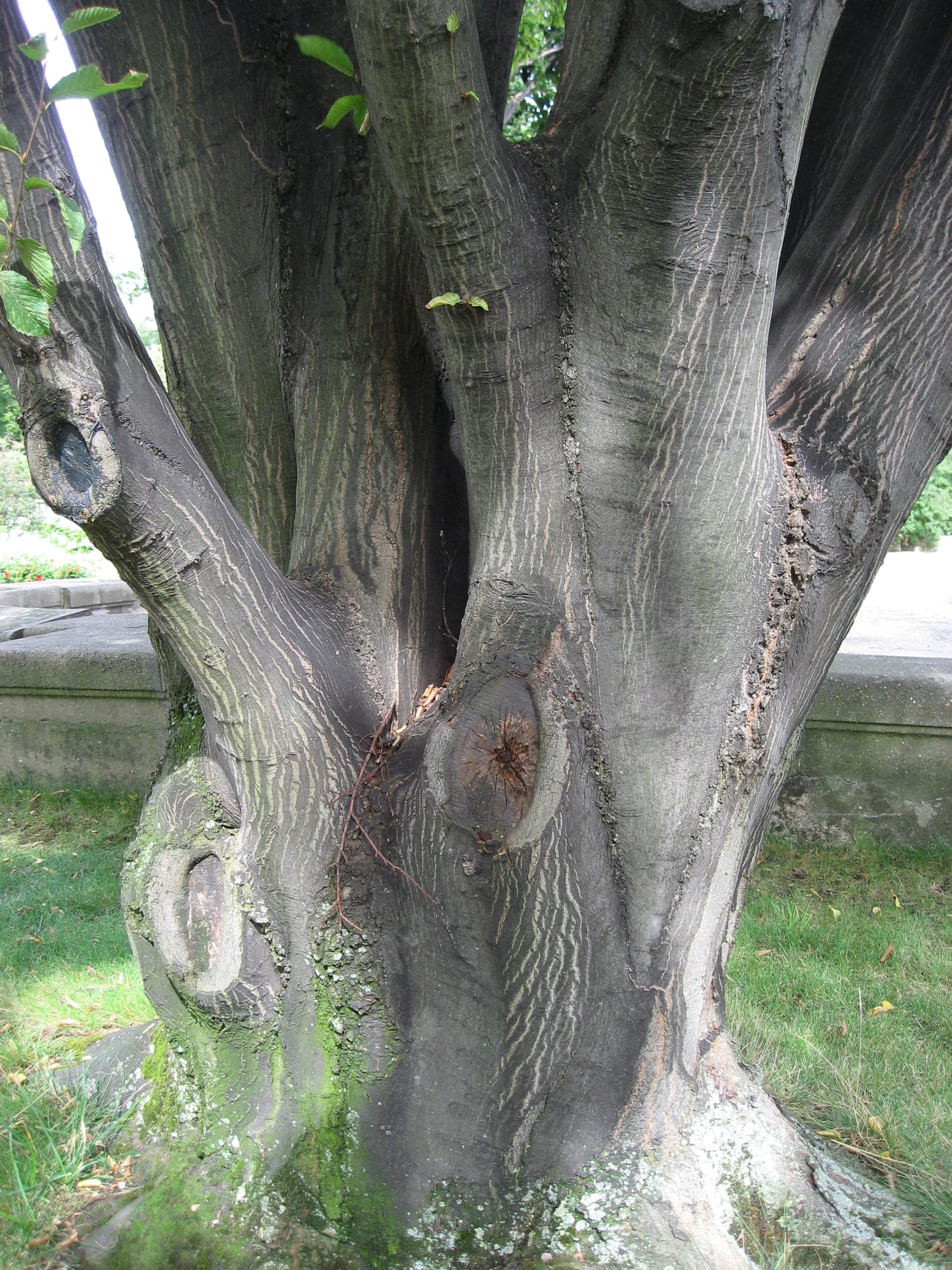
The characteristic feature of the tree is fluting: the trunk grows with pronounced longitudinal ridges rather than round, which is why hornbeam logs look twisted and why converting them to wide clean boards is awkward. Expect irregular widths and a good deal of waste.

Grain is frequently interlocked, following the fluting.

The movement problem#

Käuferfragen

Häufige Fragen von Käufern

Why is Hornbeam used for tool parts and machinery?

+

It is exceptionally hard at 7,260 N, second only to robinia among measured species here, with a fine even texture and no pronounced grain direction. That combination resists wear without splitting, which is why it was the traditional wood for plane soles, mallet heads, gear teeth in mill machinery, and butchers blocks.

How much does it move?

+

A great deal. Volumetric shrinkage of 17.0 percent ties with beech for the highest in this catalogue, and tangential shrinkage of 11.0 percent against 5.5 percent radial is a very wide differential. Hornbeam is not a wood for wide solid tops in a variable environment. It is a wood for small dense components.

Is it hard to work?

+

Yes. The density and interlocked grain blunt tooling quickly and cause tear-out, and it is heavy going by hand. The fine texture that makes it wear so well is the same thing that makes it resist cutting. Sharp carbide tooling and light cuts are the practical answer.

Can it be used outdoors?

+

No. Despite its hardness it is rated decay class 5, perishable, and it will rot readily if exposed. Hardness and durability are unrelated properties. For exterior work use robinia, oak or sweet chestnut.

Mechanische Eigenschaften

Technische Daten

Veröffentlichte Referenzwerte. Wo Quellen abweichen, steht die Spanne; der typische Wert wird für die Stufen oben verwendet.

Dichte (kg/m³)Masse pro Kubikmeter bei etwa 12 % Holzfeuchte. Schwereres Holz ist meist härter und fester.700–820 kg/m³typisch 735 kg/m³
Janka-Härte (N)Kraft, um eine Stahlkugel zur Hälfte ins Holz zu drücken. Das Standardmaß für Eindruckfestigkeit.6,900–7,700 Ntypisch 7.260 N
MOR: Biegebruchmodul (MPa)Biegefestigkeit: die Last, bei der ein Balken bricht.110–130 MPa
MOE: Elastizitätsmodul (GPa)Biegesteifigkeit: wie stark ein Regalboden oder eine Platte unter Last durchhängt.12.0–14.0 GPa
Radiales SchwindenSchwindmaß quer zu den Jahrringen, von frisch bis darrtrocken. Riftbretter arbeiten in diesem Maß.5.5–7.0 %
Tangentiales SchwindenSchwindmaß entlang der Jahrringe. Fladerbretter und die meisten Bohlen arbeiten in diesem Maß.
Hainbuche: Holzmaserung

Beentree, via Wikimedia Commons

  • Piano and harpsichord action parts
  • Inlay and contrast bandings against dark woods
  • Stärken

    • LebensmittelechtGeeignet für Bretter, Schalen und Flächen mit Lebensmittelkontakt.
    • Gut biegbarMit 4 von 5 fürs Dampfbiegen bewertet. Nimmt enge Radien an.

    Achtung

    Native to central and eastern Europe. Slow-growing, often coppiced, and recognisable in the forest by its fluted, muscle-like trunk, the reason for the folk names ironwood and musclewood.

  • Native, abundant across central and eastern European forests, and listed Least Concern by the IUCN with no CITES restriction. Often a by-product of broadleaf woodland and hedgerow management, so volumes are smaller and more local than oak or beech but the supply is genuinely sustainable.

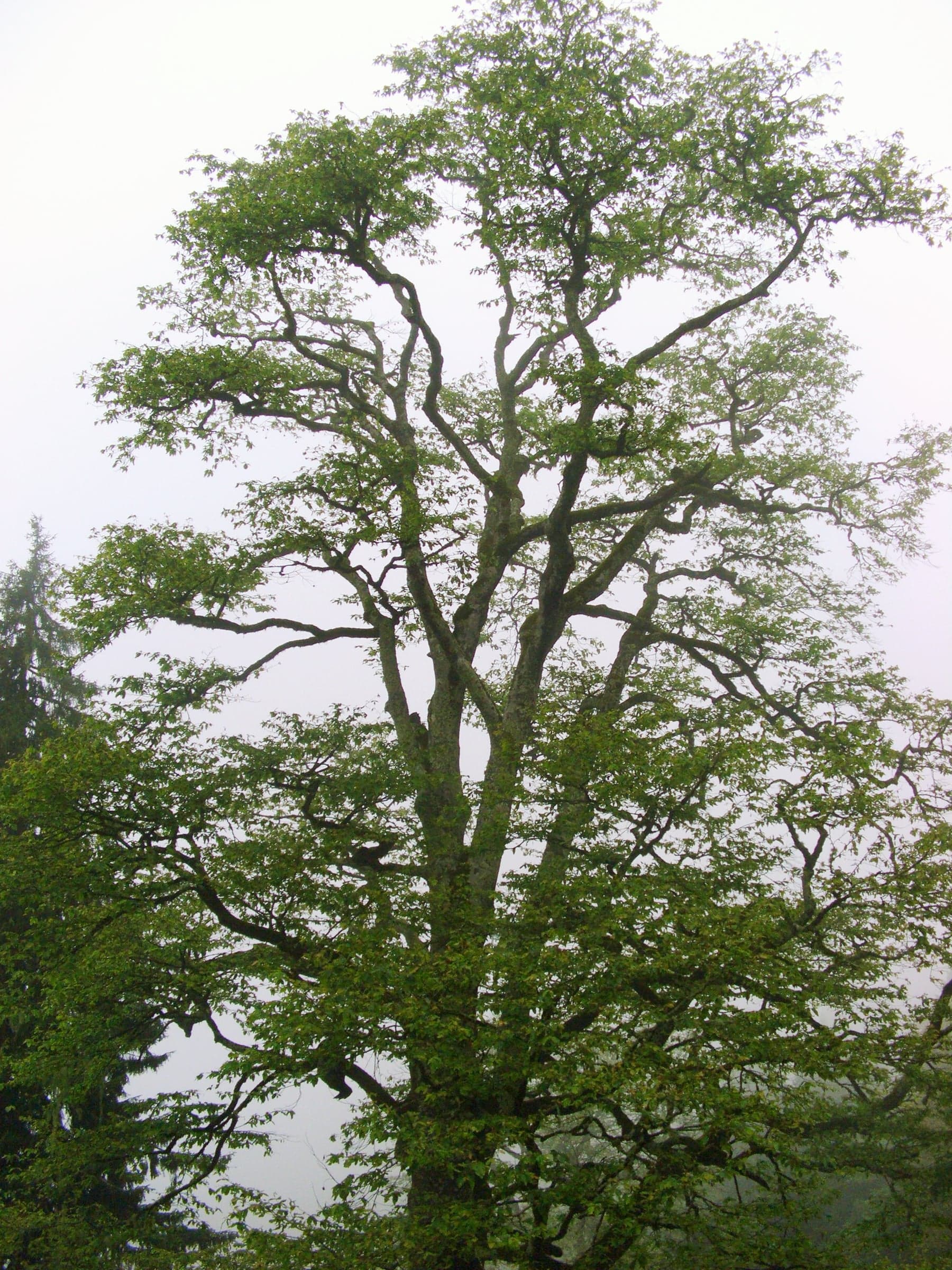
  • Hainbuche: Baum

    Dr. Zeynel Cebeci, via Wikimedia Commons

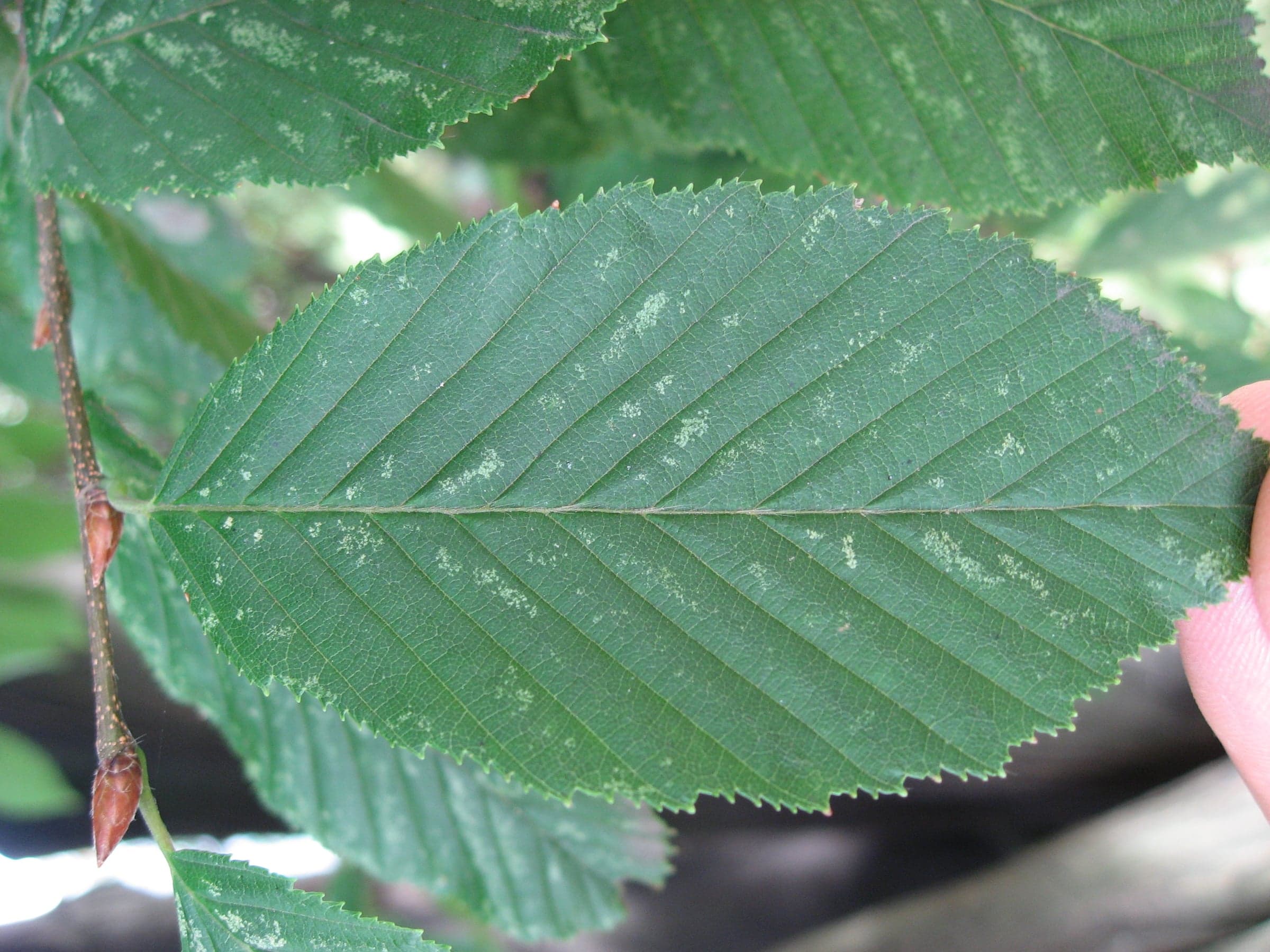
    Hainbuche: Blatt
    Blatt
    Hainbuche: Rinde
    Rinde

    Hornbeam ties with beech for the highest volumetric shrinkage in this catalogue at 17.0 percent, and its tangential to radial differential of 11.0 against 5.5 percent is very wide.

    This is a wood that reacts strongly to humidity. A wide solid hornbeam top in a room with underfloor heating will not stay flat.

    That is entirely consistent with its traditional applications. Plane soles, mallet heads and gear teeth are small dense components where movement is restrained by geometry or simply does not matter at that scale. Nobody historically made wide hornbeam tabletops, and the reason was not fashion.

    If you are buying a hornbeam slab, buy it for a workbench top, a butchers block, or small components, and let it float rather than fixing it.

    At the bench#

    Hornbeam is hard work. The density blunts tooling quickly, the interlocked grain tears out, and hand tools make slow progress.

    The fine texture that gives such good wear resistance is exactly what resists cutting. Sharp carbide tooling, light cuts, and a scraper or high angle plane for the final surface are the practical approach.

    It turns very well and holds crisp detail, and it takes a burnished finish straight off the tool. It glues reliably. Pilot every fastening.

    The durability trap#

    Hornbeam is decay class 5, perishable, despite being one of the hardest woods here.

    This catches people out repeatedly, and it is the same trap ash sets. Hardness and decay resistance are unrelated: one is about cell wall structure, the other about extractive chemistry. Hornbeam has excellent structure and essentially no protective extractives.

    Untreated hornbeam outdoors will rot. For exterior work use robinia at decay class 1, oak at 2, or sweet chestnut at 2.

    Kitchen and workshop use#

    It is rated food safe and is the traditional European butchers block timber. The fine dense texture resists knife scarring and cleans well, which is the whole reason it was chosen for that job.

    In the workshop it makes excellent bench tops, vice jaws, mallet heads and plane soles. A hornbeam bench top takes decades of abuse.

    Where Hornbeam is the right answer#

    Butchers blocks, workbench tops, tool parts, mallets, plane soles, gear and machine components, and turned work where wear resistance matters.

    It is the wrong answer for wide decorative tops, for anything outdoors, and where your tooling or your patience is limited.

    Sourcing and EUDR#

    Not CITES listed and assessed as Least Concern. Common across central Europe and widely grown as hedging and coppice. Timber sized material is less common than the tree's abundance suggests because of the fluted trunk form, so wide clean slabs carry a premium relative to the species' status.

    Telling hornbeam from beech#

    These two get confused constantly. Both are pale, dense, fine textured European hardwoods sold for similar workshop uses, and a machined board of either looks much like the other.

    The reliable difference is in the rays. Beech has broad, conspicuous rays that show clearly on a quartersawn face as distinct flecks and on the end grain as obvious lines. Hornbeam has fine, inconspicuous rays and shows no comparable fleck.

    Weight is the second check. Hornbeam is denser at 735 kg per cubic metre against beech at 710, and noticeably harder at 7,260 N against 6,460 N. In the hand the difference is subtle; under a plane it is not.

    The third is the trunk. Hornbeam grows with pronounced longitudinal fluting, so the log is ridged rather than round. Beech logs are round and regular.

    What the fluting costs you#

    That fluted trunk form is the reason hornbeam is expensive relative to how common the tree is.

    Converting a fluted log to square edged boards throws away a great deal of material, and the deeper the fluting the worse the yield. Wide clean hornbeam boards are correspondingly scarce.

    For slab work, the fluting is sometimes an asset rather than a loss. A slab cut to follow the natural ridged outline keeps a wavy live edge that is characteristic of the species and impossible to fake.

    Is it suitable for a chopping block?

    +

    It is rated food safe and it is the traditional European butchers block timber, chosen for exactly that use because the fine dense texture resists knife scarring and cleans well. The movement caveat applies in a kitchen, so keep it oiled and away from standing water.

    11.0–13.0 %
    Volumetrisches SchwindenGesamte Volumenänderung von frisch bis darrtrocken. Niedriger heißt formstabiler.17.0–19.0 %
    Natürliche Dauerhaftigkeit (EN 350)Europäische Norm für natürliche Dauerhaftigkeit, von 1 (sehr dauerhaft) bis 5 (nicht dauerhaft).Class 5 — Perishable

    Quellen

    • The Wood Database(abgerufen am 2026-05-09)
    • USDA FPL Wood Handbook FPL-GTR-190 (2010)(abgerufen am 2026-05-09)
    • Meier, E. — WOOD! Identifying and Using Hundreds of Woods Worldwide (2015)(abgerufen am 2026-05-09)

    Auf einen Blick

    Die Stufen verwenden feste Grenzen für alle Holzarten bei KORENA und sind daher direkt vergleichbar. Der gemessene Wert steht unter jeder Stufe.
    HärteWiderstand gegen Dellen und AbnutzungSehr hart

    Janka-Härte 7.260 N

    46 % härter als Europäische Eiche

    GewichtWie schwer eine Bohle zu heben istSehr schwer

    735 kg/m³

    StabilitätWie wenig es mit den Jahreszeiten arbeitetArbeitet stark

    18,0 % Volumenschwindung

    BearbeitungSägen, Hobeln, Schleifen, LeimenMäßig

    3,6 / 5 Werkbank-Durchschnitt

    AußeneinsatzNatürliche Fäulnisresistenz, EN 350Nur innen

    EN 350 Klasse 5

    • Sägen · GutWie sauber es schneidet und wie stark es Sägeblätter beansprucht.1 = schwierig · 5 = ausgezeichnet
    • Hobeln · GutWie glatt die Oberfläche wird und wie stark es ausreißt.1 = schwierig · 5 = ausgezeichnet
    • Schleifen · GutWie schnell es glatt schleift, ohne das Papier zuzusetzen.1 = schwierig · 5 = ausgezeichnet
    • Drechseln · AusgezeichnetWie es sich an der Drechselbank schneiden und finishen lässt.1 = schwierig · 5 = ausgezeichnet
    • Schnitzen · GutWie scharf es Details unter dem Hohleisen hält.1 = schwierig · 5 = ausgezeichnet
    • Verleimen · Sehr gutWie zuverlässig Leimverbindungen halten.1 = schwierig · 5 = ausgezeichnet
    • Schraub- / Nagelhalt · Sehr gutWie gut es Schrauben und Nägel hält, ohne zu spalten.1 = schwierig · 5 = ausgezeichnet
    • Dampfbiegen · Sehr gutWie gut es nach dem Dämpfen Rundungen annimmt.1 = schwierig · 5 = ausgezeichnet

    Was Hainbuche als Rohholz in Europa gerade kostet, je Kubikmeter netto. Tippen Sie auf einen Preis für Details.

    • Wertholz auf SubmissionAusgewählte hochwertige Stämme, auf Submissionen vor allem an Furnier- und Möbelhersteller versteigert. Aus solchen Stämmen werden Bohlen geschnitten.Die meisten Preise liegen zwischen 92 € und 108 €.Auf Basis von 122 Preisen aus 2 Regionen.Letzte Daten 14. Nov. 2026
    • Standard-RundholzGroße Mengen Standard-Rundholz von Waldbesitzern und Staatsforsten, überwiegend für Bau und Industrie.Die meisten Preise liegen zwischen 31 € und 117 €.Auf Basis von 3.581 Preisen aus 7 Regionen.Letzte Daten 14. Nov. 2026

    Wertholz auf Submission nach Land

    • Deutschland · 108 € / m³Regionen: Bayern61 PreiseLetzte Daten 14. Nov. 2026
    • Österreich · 92 € / m³Regionen: Austria61 PreiseLetzte Daten 14. Nov. 2026

    Standard-Rundholz nach Land

    • Rumänien · 85 € / m³Regionen: Banat / Crișana, Moldavia (Romania), Transylvania und Wallachia3.455 PreiseLetzte Daten 14. Nov. 2026
    • Frankreich · 66 € / m³Regionen: Grand Est / Alsace78 PreiseLetzte Daten 15. Okt. 2026
    • Bulgarien · 51 € / m³Regionen: North-West Bulgaria und South-East Bulgaria48 PreiseLetzte Daten 12. Nov. 2026

    Warum kostet eine Bohle mehr?

    Das sind Preise für Rohholz. Eine Bohle ist der beste Teil eines Stamms, ein Jahr oder länger getrocknet, dann Stück für Stück geprüft und vermessen. Nur ein kleiner Teil jedes Stamms wird zur Bohle.

    Quelle: KORENA Timber Index · Letzte Daten 14. Nov. 2026

    Alle Regionalpreise
    Nicht unbehandelt für außen
    Die natürliche Dauerhaftigkeit ist EN 350 Klasse 5 von 5. Innen verwenden oder unter gepflegter Oberfläche.
  • Arbeitet stärker als die meistenBreite Platten brauchen Tischplattenhalter oder Langlochbefestigung und Raum zum Arbeiten. Nutzen Sie den Rechner unten.
  • Staub reiztBeim Schleifen und Maschinenarbeiten Absaugung und Maske verwenden.
  • Beansprucht SchneidenSehr hart und dicht. Werkzeuge scharf halten und für jede Schraube vorbohren.
  • Für Details auf ein Etikett tippen.