KORENA
HolzMöbelWerkstattPartnerJournal

Entdecke neue Bohlen als Erstes

Erhalte eine E-Mail, wenn neues Holz eintrifft.

Ein paar E-Mails pro Monat. Kein Spam, jederzeit abmeldbar.

KORENA

Entdecke Massivholz, handgefertigte Möbel, Werkzeuge und Produkte zur Holzbehandlung auf KORENA.

Einkaufen

  • Produkte ansehen
  • Archiv verkaufter Bohlen
  • Bestellung verfolgen

Lernen

  • KORENA-Journal
  • Holzartenführer
  • Glossar
  • Pflanzenpässe und Befallsgebiete
  • Vergleichen
  • Autoren

Hilfe

  • Über uns
  • So funktioniert es
  • Verkäufer werdenNeu
  • Bohle anfragen
  • Kundenservice
  • Dokumentvorlagen
  • Presse

Kaufen

  • Verkaufsbedingungen
  • Widerrufsrecht
  • Rückgaben und Gewährleistung
  • Versand und Lieferung

Vertrauen

  • Datenschutzerklärung
  • Cookie-Richtlinie
  • Holzherkunft und EUDR
  • Barrierefreiheit

Impressum

  • Rechtlicher Hinweis / Impressum
  • Zulässige Nutzung
  • Geistiges Eigentum und Inhalte

© 2026 KORENA. Alle Rechte vorbehalten.

Betrieben von der Martial Labs Ltd. (BG, EIK 207453941). KORENA ist ein Handelsname der Martial Labs Ltd.

Wir respektieren Ihre Privatsphäre

Wir verwenden notwendige Cookies, damit die Website funktioniert. Mit Ihrer Einwilligung würden wir auch Cookies für Analyse, personalisierte Inhalte und Werbung verwenden. Sie können Ihre Entscheidung jederzeit auf der Seite Einwilligungseinstellungen ändern. Sehen Sie unsere Cookie-Richtlinie und Datenschutzerklärung.

  1. Startseite
  2. /
  3. Holzarten
  4. /
  5. Rotbuche

Fagus sylvatica

Rotbuche

The workshop workhorse. Pale, dense, fine-textured hardwood with straight grain, and the wood that bends.

  • This species is recorded as commercially grown in Europe. This does not establish where an individual piece was harvested; check its origin details.
  • Botanische Gruppe. Nadelhölzer sind Koniferen, Laubhölzer stammen von Laubbäumen.
  • Die botanische Familie, zu der die Holzart gehört.
Benachrichtigen, wenn verfügbarReferenzholzart. Derzeit keine Stücke auf Lager.
  • Projekteignung
  • Auf Lager
  • Aussehen
  • Verarbeitung
  • Quellen und Schwinden
  • Preis
  • Sicherheit und Herkunft
  • Fragen
  • Technische Daten

Passt es zu Ihrem Projekt?

Ideal für

  • Steam-bent chair frames and curved components
  • Workbenches, jigs, and shop fixtures
  • Chopping boards, butcher blocks, and kitchen utensils
  • Interior joinery and cabinet carcasses
  • Turned legs, handles, and tool components
  • Children's furniture and toys

Kein Rotbuche im aktuellen Drop

Ähnliche Holzarten auf Lager

Derzeit kein Rotbuche. Diese Holzarten eignen sich für dieselben Projekte und sind verfügbar.
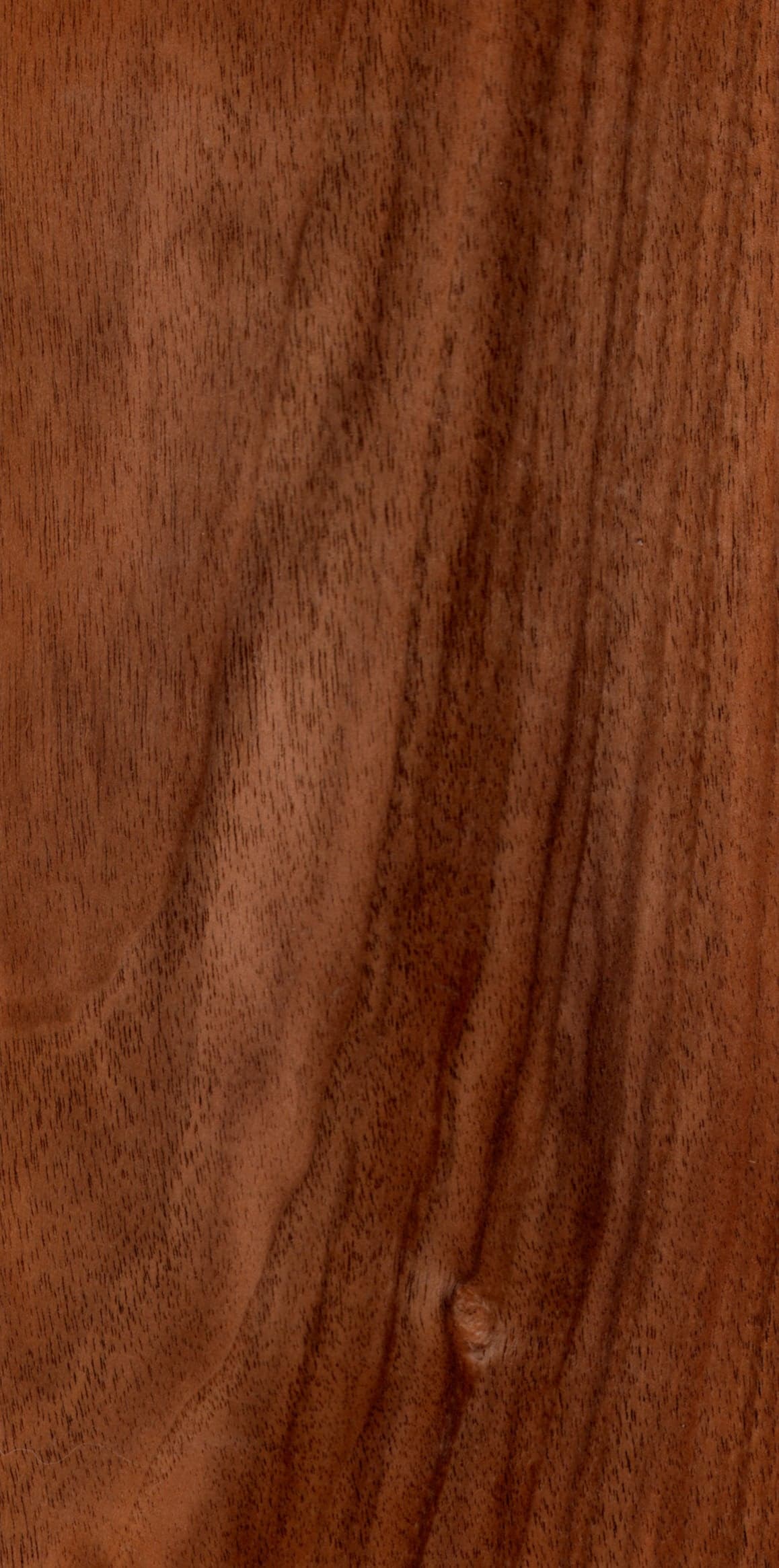
  • Europäischer Nussbaum: Holzmaserung

    Europäischer Nussbaum

    Juglans regia

    12 Stücke

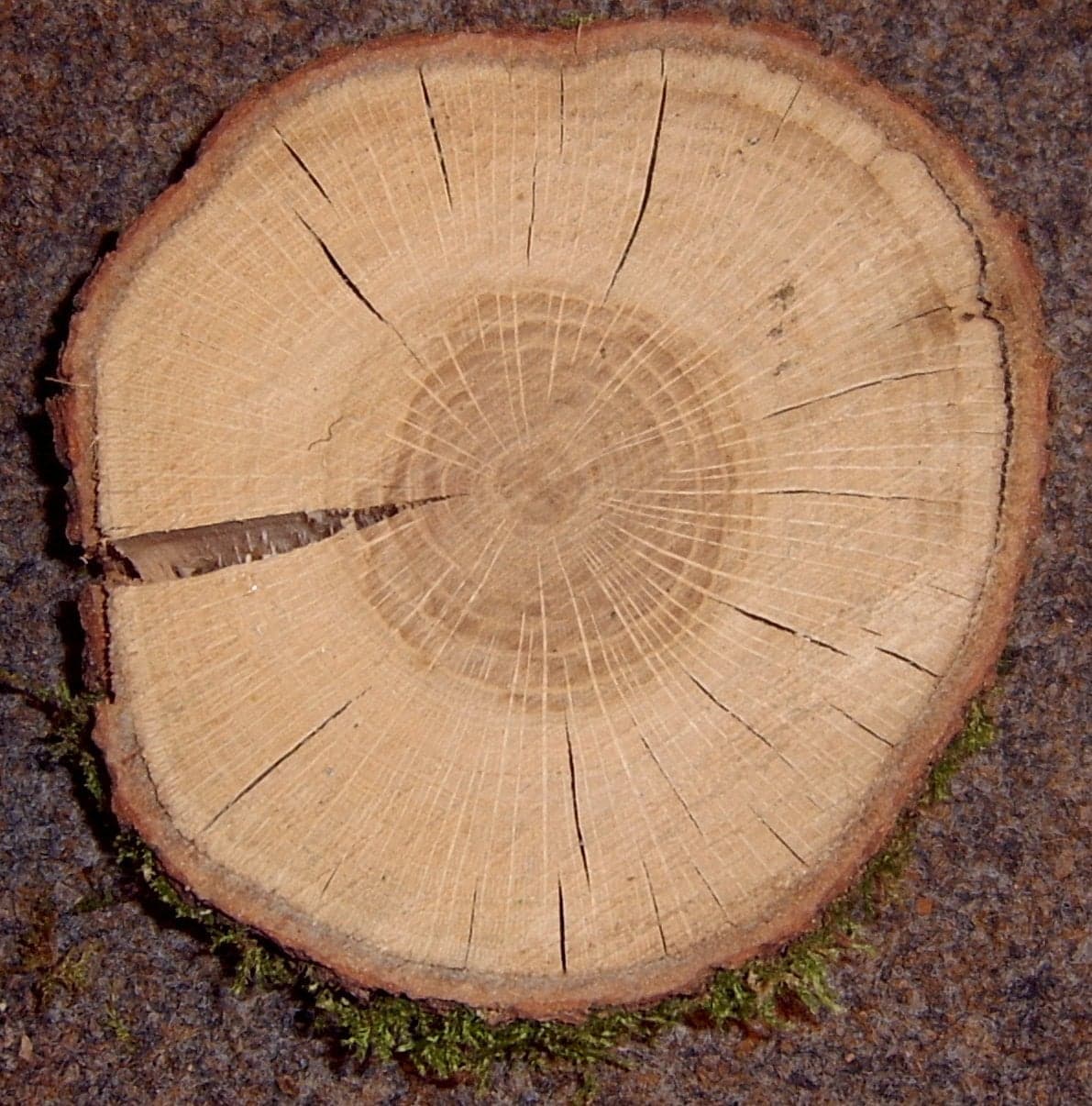
  • Europäische Eiche: Holzmaserung

    Europäische Eiche

    Quercus robur

    6 Stücke

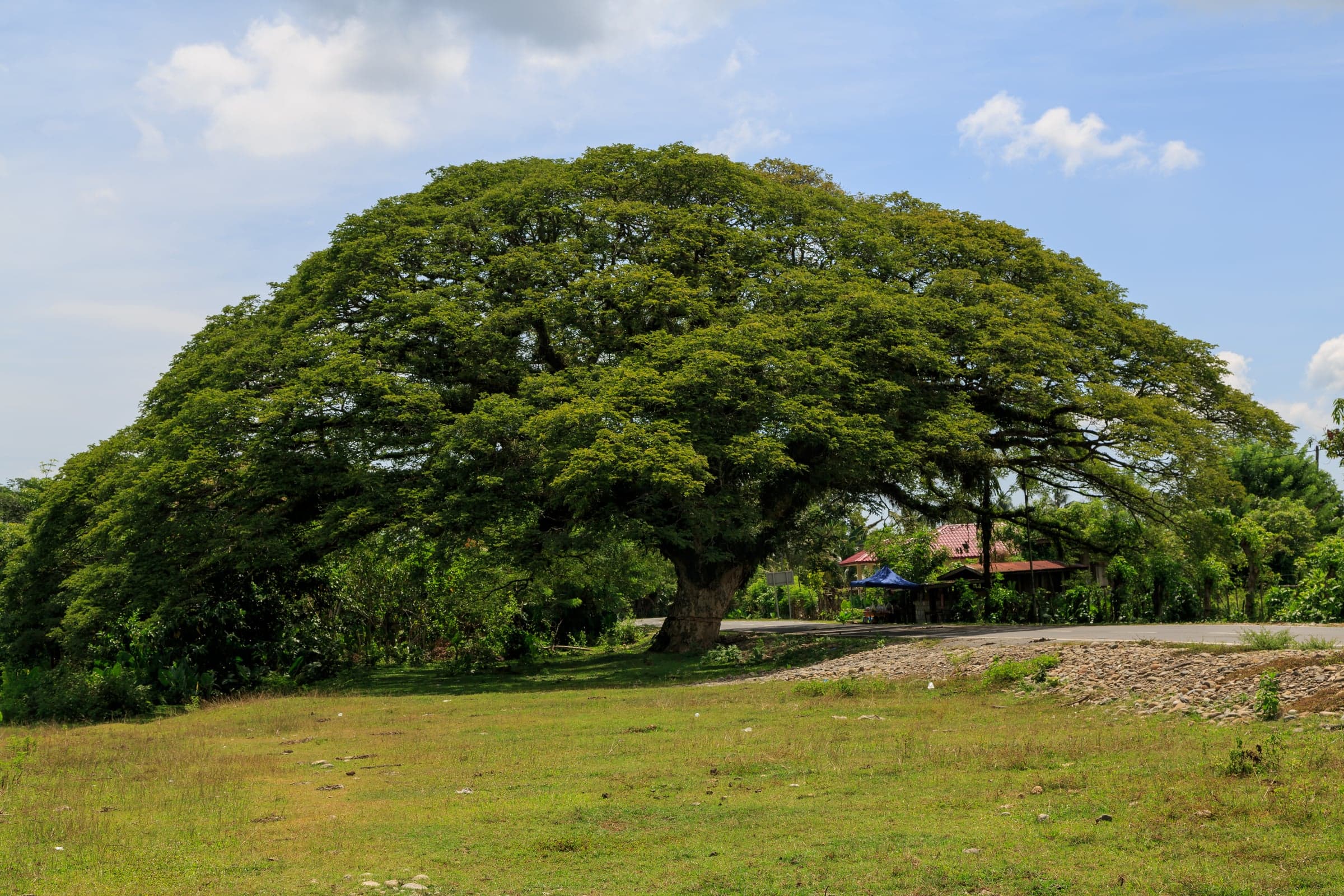
  • Saman: Holzmaserung

    Saman

    Samanea saman

    4 Stücke

Benachrichtigung zu Rotbuche

Wir benachrichtigen Sie per E-Mail, wenn neue Rotbuche-Bohlen bei KORENA eintreffen. Jedes Stück ist ein Unikat, deshalb zählt eine frühe Nachricht.

Ein paar E-Mails pro Monat. Kein Spam, jederzeit abmeldbar.

Holzbild

So sieht es aus

A clean, light surface in cream to pale pinkish-brown, often with a subtle salmon cast when freshly cut. Grain is straight; texture is fine and even with small, tight rays that show as faint flecks on the quarter. Steamed beech goes warmer and pinker, that familiar Thonet tone. Visually quiet rather than dramatic, which is why it pairs well with bolder species and finishes.

  • Cream to pale pinkish-brown when air-dried
  • Warmer salmon-pink tone after steaming
  • Fine ray fleck on quarter-sawn faces
  • Yellows gradually under UV exposure
  • Cool, neutral surface under water-based finishes; warmer under oils
  • Gerader Faserverlauf, feine gleichmäßige Textur.

Arbeiten mit dieser Holzart

Verarbeitung

Works well across the bench. Saws, planes, and sands cleanly; turns and carves crisply. Glues reliably. Screws need pilot holes, it is dense and can split near edges. Where beech really earns its keep is steam bending: it is the benchmark species for it, and the reason Thonet's bentwood chairs are still made from it more than 150 years on.

Finish

Sands to a smooth, almost glassy surface and takes finishes evenly thanks to the fine texture. Stains apply uniformly without much blotching. Oils and hardwax oils keep the pale tone; water-based finishes hold the cool cast best, while oil-based products will warm it noticeably. Beech yellows over time under UV, worth flagging to clients who want it to stay pale.

Trocknung

This is where beech demands respect. Volumetric shrinkage of 17–19% puts it among the more movement-prone European hardwoods, and the gap between radial and tangential shrinkage drives cupping and checking if it is rushed. Slow, controlled kiln schedules and proper acclimatisation in the workshop are non-negotiable. Once stable and used in interior conditions, it behaves, but it will react to swings in humidity, so avoid wide unbroken panels in rooms that are not climate-stable.

Wie stark arbeitet es?

Holz quillt und schwindet in der Breite, wenn die Luft feuchter und trockener wird. Schätzen Sie das saisonale Arbeiten einer Rotbuche-Platte, bevor Sie die Befestigung planen.

Einschnitt
Einsatzort

Erwartetes saisonales Arbeiten

etwa 13,4 mm

Groß. Tischplattenhalter oder Langlochwinkel verwenden, an den Enden von Hirnleisten Spiel lassen und die Bohle vor der Montage akklimatisieren.

Lineares Schwindmodell: Breite × (Schwindmaß ÷ 28 % Fasersättigung) × saisonale Feuchteschwankung. Verwendet 11,75 % Schwindmaß in Tangentialrichtung für Rotbuche. Eine Planungsschätzung, keine Garantie.

Was es kostet

Sicherheit und Herkunft

  • This species is recorded as commercially grown in Europe. This does not establish where an individual piece was harvested; check its origin details.
  • Status auf der Roten Liste der IUCN: die weltweite Schutzbewertung dieser Art.
  • Food-contact safe and a long-standing choice for chopping boards, butcher blocks, spoons, and kitchen utensils. The flip side: beech dust is a documented respiratory sensitiser and is classified by IARC as a Group 1 hardwood dust. Use proper extraction, a fitted P3/FFP3 mask, and keep the shop clean, especially during sanding.

Den vollständigen Leitfaden lesenAusführliche Hinweise zu Maserung, Farbveränderung, Verarbeitung und Formstabilität.+

What European Beech actually is#

Fagus sylvatica is the workshop timber of Europe. It is dense at 710 kg per cubic metre, hard at 6,460 N, stiff at 13.0 GPa, fine textured, straight grained, cheap and everywhere.

It is also, by the numbers, the least dimensionally stable wood in this catalogue. Volumetric shrinkage of 17.0 percent ties it with hornbeam for the highest figure here, and its tangential to radial differential of 11.0 against 5.0 percent is the widest of any species listed.

Both facts are true at once, and understanding how they coexist is the whole of working with beech well.

The bending wood#

Fine even texture, straight grain and high stiffness are exactly the properties that make a timber bend rather than break.

Under steam, beech compresses on the inside of a curve without buckling and stretches on the outside without splitting, more reliably than oak or ash. Michael Thonet built an entire furniture industry on that single property in the nineteenth century, and the bentwood chair remains the most produced furniture design in history.

If a project involves a curve, beech is the first thing to reach for in this catalogue.

The movement problem

Käuferfragen

Häufige Fragen von Käufern

Why does beech move so much?

+

Volumetric shrinkage of 17.0 percent is the joint highest in this catalogue, and tangential shrinkage of 11.0 percent against 5.0 percent radial is a differential of better than two to one. That combination makes beech notoriously unstable in changing humidity. It is why beech is superb for steam bent chair parts and workshop fixtures in a controlled environment, and a poor choice for a wide tabletop in a room with underfloor heating.

Why is beech the classic steam bending wood?

+

Fine even texture, straight grain and high stiffness at 13.0 GPa let it compress on the inside of a bend without buckling and stretch on the outside without splitting. Thonet built an entire furniture industry on that property. It bends more reliably than oak or ash and holds the curve once dry.

Is beech good for kitchen worktops and chopping boards?

+

It is rated food safe and its fine closed texture is easier to keep clean than open pored oak, which is why it is traditional for butcher blocks and worktops. The caveat is movement: beech responds strongly to the wet and dry cycling a kitchen imposes. Keep it oiled, avoid standing water, and expect more seasonal change than in maple.

Mechanische Eigenschaften

Technische Daten

Veröffentlichte Referenzwerte. Wo Quellen abweichen, steht die Spanne; der typische Wert wird für die Stufen oben verwendet.

Dichte (kg/m³)Masse pro Kubikmeter bei etwa 12 % Holzfeuchte. Schwereres Holz ist meist härter und fester.680–780 kg/m³typisch 710 kg/m³
Janka-Härte (N)Kraft, um eine Stahlkugel zur Hälfte ins Holz zu drücken. Das Standardmaß für Eindruckfestigkeit.6,000–6,900 Ntypisch 6.460 N
MOR: Biegebruchmodul (MPa)Biegefestigkeit: die Last, bei der ein Balken bricht.100–130 MPa
MOE: Elastizitätsmodul (GPa)Biegesteifigkeit: wie stark ein Regalboden oder eine Platte unter Last durchhängt.13.0–15.0 GPa
Radiales SchwindenSchwindmaß quer zu den Jahrringen, von frisch bis darrtrocken. Riftbretter arbeiten in diesem Maß.5.0–6.5 %
Tangentiales SchwindenSchwindmaß entlang der Jahrringe. Fladerbretter und die meisten Bohlen arbeiten in diesem Maß.
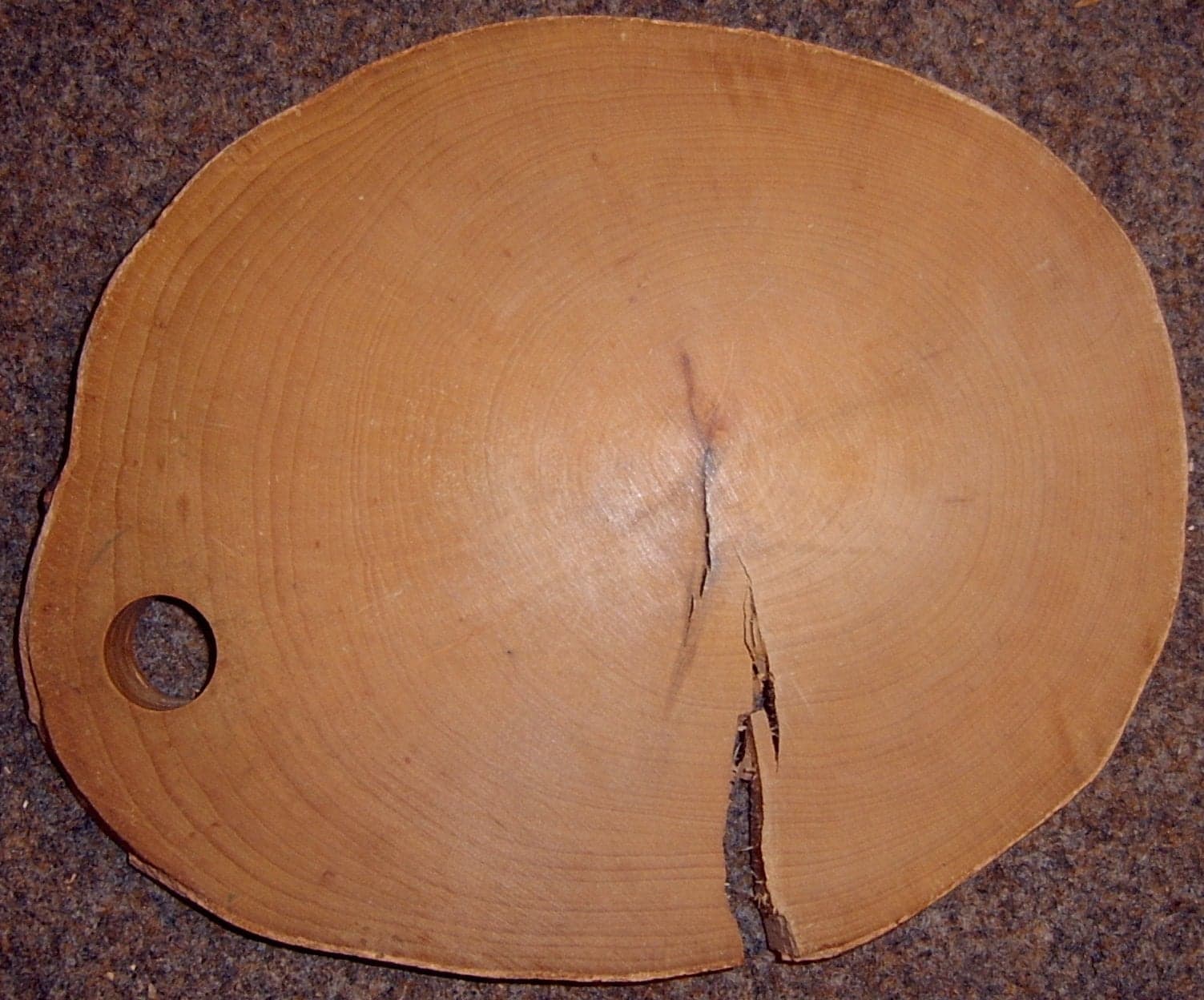
Rotbuche: Holzmaserung

No machine-readable author provided. Lumbar~commonswiki assumed (based on copyright claims)., via Wikimedia Commons

  • Stair treads and interior flooring in stable rooms
  • Stärken

    • LebensmittelechtGeeignet für Bretter, Schalen und Flächen mit Lebensmittelkontakt.
    • Gut biegbarMit 5 von 5 fürs Dampfbiegen bewertet. Nimmt enge Radien an.

    Native across most of Europe, from southern Sweden down to the Balkans, with strong supply from Germany, Romania, France, and the Carpathians. One of the most plentiful hardwoods on the continent, which keeps pricing honest and stock predictable.

  • IUCN Least Concern, no CITES listing, and managed under long-established European forestry regimes. Broad native range means short supply chains within the EU and lower transport footprint than imported pale hardwoods. Decay class 5, perishable, so this is an interior-only timber; do not specify it for anything that will see weather or ground contact.

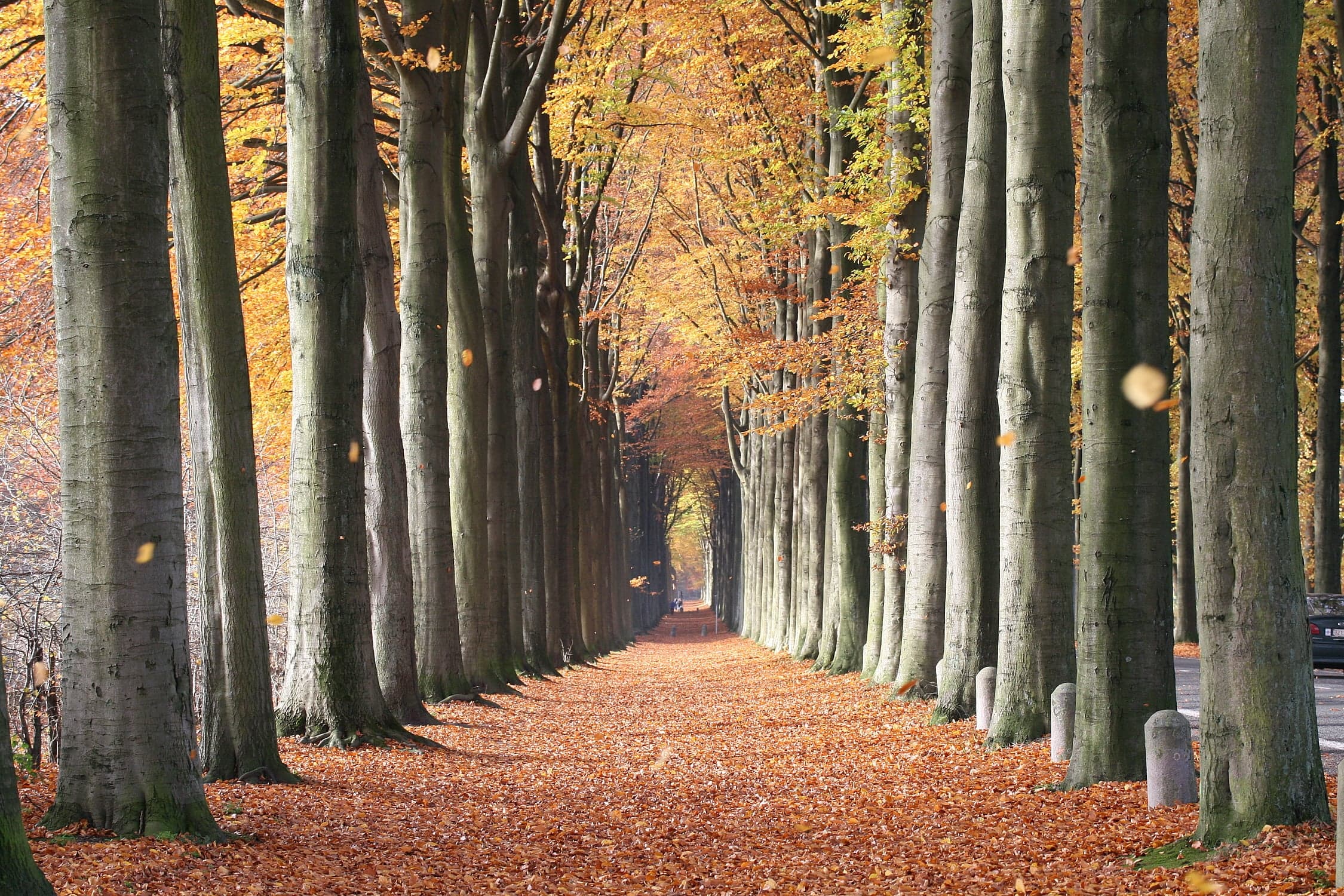
  • Rotbuche: Baum

    Jean-Pol GRANDMONT, via Wikimedia Commons

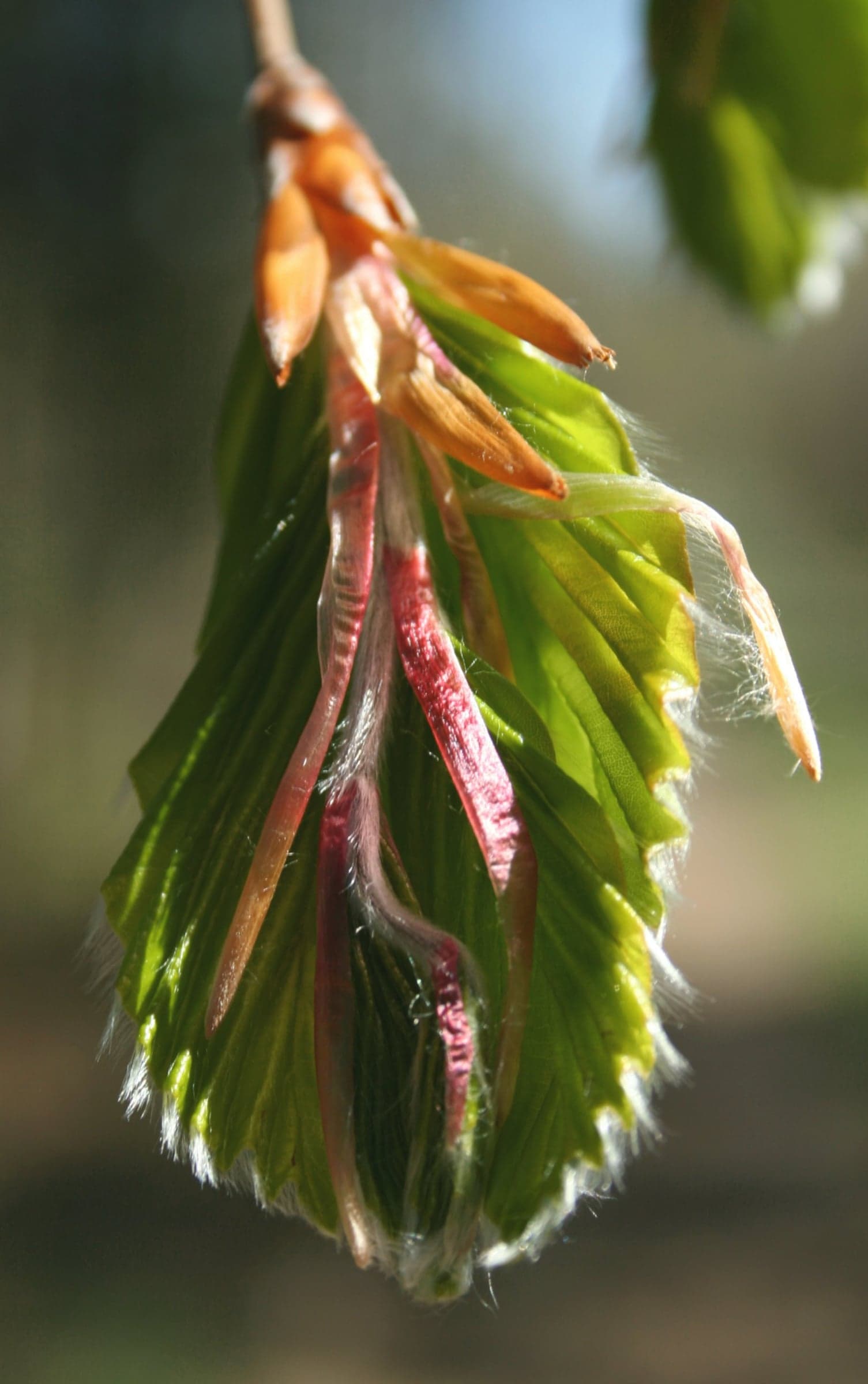
    Rotbuche: Blatt
    Blatt
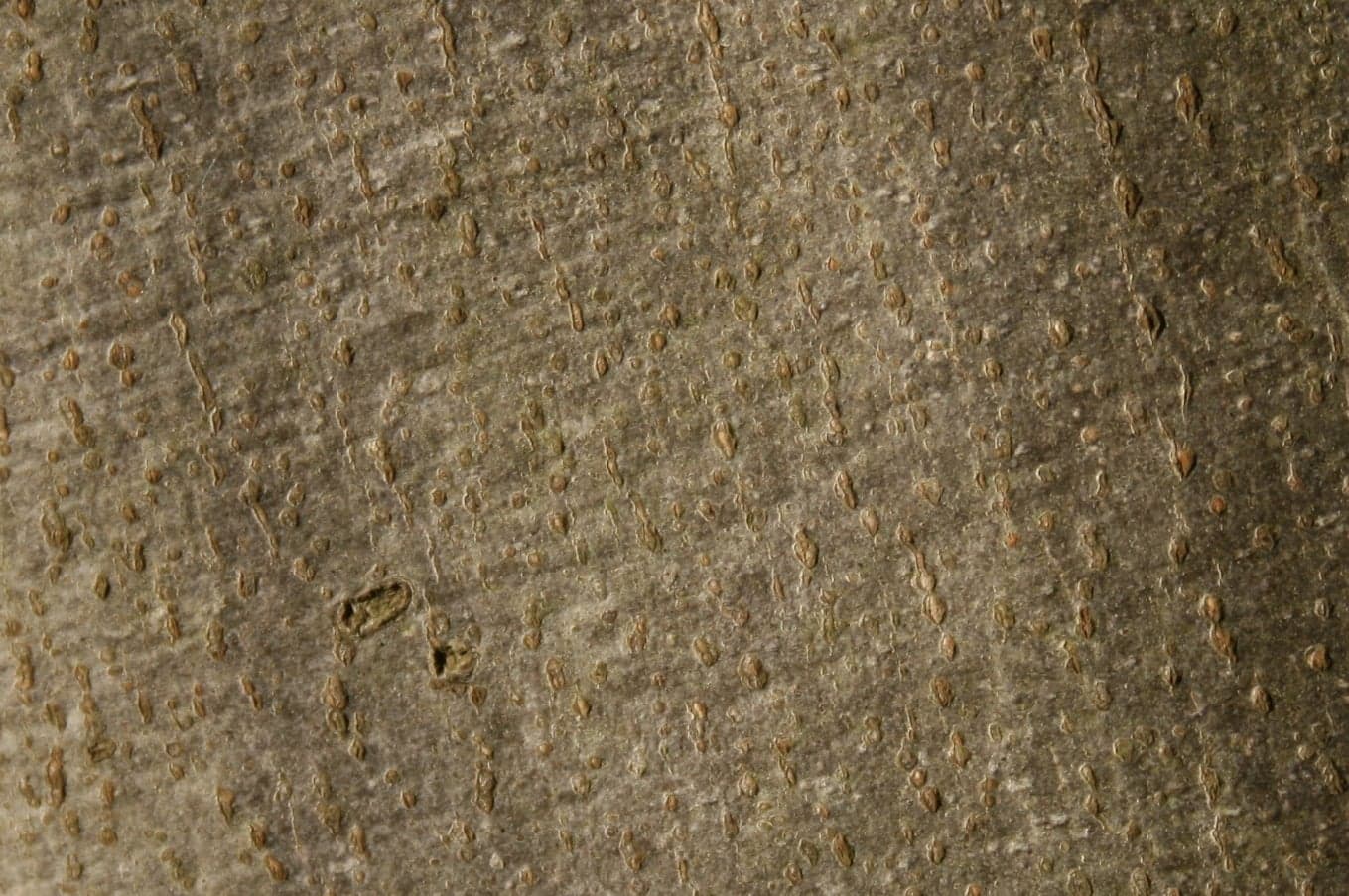
    Rotbuche: Rinde
    Rinde
    #

    The same responsiveness that lets beech bend makes it react to humidity.

    At 11.0 percent tangential against 5.0 percent radial, a wide flatsawn beech board will cup hard as a room dries out. In a modern interior with underfloor heating and winter humidity dropping below 30 percent, a beech tabletop that was flat in September will not be flat in February.

    This is not a defect and it is not avoidable by better drying. It is what the species does.

    The practical consequences are specific. Beech is excellent where movement is either restrained or irrelevant: bent components, chair frames, workshop benches and jigs, tool handles, drawer sides, and laminated or engineered constructions. It is a poor choice for a wide solid top in an uncontrolled environment, which is precisely the application people most often want a slab for.

    If you do build a wide beech top, quartersawn stock roughly halves the across width movement, and the top must float on slotted fasteners rather than being fixed.

    Steamed and unsteamed#

    Most European commercial beech is steamed during drying. This evens the colour to a warm pink brown and relieves some drying stress.

    Unsteamed beech is paler, closer to cream, and more variable in tone. Both are the same species and the colour difference is permanent, so match your stock at the outset rather than hoping to blend later.

    At the bench#

    Beech is straightforward and rewarding. It machines cleanly thanks to the fine even texture, turns very well, glues reliably and takes fastenings securely.

    At 6,460 N it blunts tooling at a decent rate but nothing exceptional. It sands to a fine surface and takes finish evenly, without the blotching that troubles pale softwoods, because the density is uniform.

    The fine texture also means it holds a crisp edge and a clean profile, which is why it is a standard for moulding planes, tool bodies and machine parts.

    Kitchen use#

    Beech is rated food safe and its closed fine texture is easier to keep clean than open pored oak, which is why it has been the traditional butcher block and worktop timber.

    The movement caveat applies with force in a kitchen, where wet and dry cycling is constant. Keep it oiled, never leave standing water on it, and accept more seasonal change than hard maple would give.

    Where beech is the right answer#

    Steam bent work above all, plus chair frames, workshop benches and fixtures, tool handles, drawer sides, turned work, kitchen worktops and butcher blocks.

    It is the wrong answer for a wide solid top in a variable environment, and wrong outdoors in any form, being decay class 5 and highly attractive to furniture beetle.

    Sourcing and EUDR#

    Not CITES listed and assessed as Least Concern. Beech is one of the most abundant hardwoods in Europe with mature certified supply across Germany, France, Austria and eastern Europe, and it is among the cheapest and best documented hardwoods available.

    What is steamed beech and how is it different?

    +

    Beech that has been steamed during drying, which evens the colour to a warm pink brown and relieves some drying stress. Unsteamed beech is paler and more variable. Steamed stock is the European commercial standard and is generally more predictable to work; the colour difference is permanent.

    Can beech be used outdoors?

    +

    No. It is rated decay class 5, perishable, and it is also highly attractive to furniture beetle. Beech is strictly an interior timber and even indoors it should not stay damp. For exterior work use oak, sweet chestnut or robinia.

    11.0–12.5 %
    Volumetrisches SchwindenGesamte Volumenänderung von frisch bis darrtrocken. Niedriger heißt formstabiler.17.0–19.0 %
    Natürliche Dauerhaftigkeit (EN 350)Europäische Norm für natürliche Dauerhaftigkeit, von 1 (sehr dauerhaft) bis 5 (nicht dauerhaft).Class 5 — Perishable

    Quellen

    • The Wood Database(abgerufen am 2026-05-09)
    • USDA FPL Wood Handbook FPL-GTR-190 (2010)(abgerufen am 2026-05-09)
    • Meier, E. — WOOD! Identifying and Using Hundreds of Woods Worldwide (2015)(abgerufen am 2026-05-09)

    Auf einen Blick

    Die Stufen verwenden feste Grenzen für alle Holzarten bei KORENA und sind daher direkt vergleichbar. Der gemessene Wert steht unter jeder Stufe.
    HärteWiderstand gegen Dellen und AbnutzungHart

    Janka-Härte 6.460 N

    30 % härter als Europäische Eiche

    GewichtWie schwer eine Bohle zu heben istSchwer

    710 kg/m³

    StabilitätWie wenig es mit den Jahreszeiten arbeitetArbeitet stark

    18,0 % Volumenschwindung

    BearbeitungSägen, Hobeln, Schleifen, LeimenLeicht

    4,0 / 5 Werkbank-Durchschnitt

    AußeneinsatzNatürliche Fäulnisresistenz, EN 350Nur innen

    EN 350 Klasse 5

    • Sägen · Sehr gutWie sauber es schneidet und wie stark es Sägeblätter beansprucht.1 = schwierig · 5 = ausgezeichnet
    • Hobeln · Sehr gutWie glatt die Oberfläche wird und wie stark es ausreißt.1 = schwierig · 5 = ausgezeichnet
    • Schleifen · Sehr gutWie schnell es glatt schleift, ohne das Papier zuzusetzen.1 = schwierig · 5 = ausgezeichnet
    • Drechseln · AusgezeichnetWie es sich an der Drechselbank schneiden und finishen lässt.1 = schwierig · 5 = ausgezeichnet
    • Schnitzen · Sehr gutWie scharf es Details unter dem Hohleisen hält.1 = schwierig · 5 = ausgezeichnet
    • Verleimen · Sehr gutWie zuverlässig Leimverbindungen halten.1 = schwierig · 5 = ausgezeichnet
    • Schraub- / Nagelhalt · GutWie gut es Schrauben und Nägel hält, ohne zu spalten.1 = schwierig · 5 = ausgezeichnet
    • Dampfbiegen · AusgezeichnetWie gut es nach dem Dämpfen Rundungen annimmt.1 = schwierig · 5 = ausgezeichnet

    Was Rotbuche als Rohholz in Europa gerade kostet, je Kubikmeter netto. Tippen Sie auf einen Preis für Details.

    • Wertholz auf SubmissionAusgewählte hochwertige Stämme, auf Submissionen vor allem an Furnier- und Möbelhersteller versteigert. Aus solchen Stämmen werden Bohlen geschnitten.Die meisten Preise liegen zwischen 135 € und 232 €.Auf Basis von 122 Preisen aus 2 Regionen.Letzte Daten 14. Nov. 2026
    • Standard-RundholzGroße Mengen Standard-Rundholz von Waldbesitzern und Staatsforsten, überwiegend für Bau und Industrie.Die meisten Preise liegen zwischen 23 € und 104 €.Auf Basis von 2.298 Preisen aus 9 Regionen.Letzte Daten 14. Nov. 2026

    Wertholz auf Submission nach Land

    • Österreich · 232 € / m³Regionen: Austria61 PreiseLetzte Daten 14. Nov. 2026
    • Deutschland · 135 € / m³Regionen: Bayern61 PreiseLetzte Daten 14. Nov. 2026

    Standard-Rundholz nach Land

    • Italien · 87 € / m³Regionen: Veneto468 PreiseLetzte Daten 23. Juli 2025
    • Rumänien · 67 € / m³Regionen: Banat / Crișana, Moldavia (Romania), Transylvania und Wallachia1.372 PreiseLetzte Daten 14. Nov. 2026
    • Bulgarien · 62 € / m³Regionen: North-West Bulgaria und South-East Bulgaria230 PreiseLetzte Daten 14. Nov. 2026

    Warum kostet eine Bohle mehr?

    Das sind Preise für Rohholz. Eine Bohle ist der beste Teil eines Stamms, ein Jahr oder länger getrocknet, dann Stück für Stück geprüft und vermessen. Nur ein kleiner Teil jedes Stamms wird zur Bohle.

    Quelle: KORENA Timber Index · Letzte Daten 14. Nov. 2026

    Alle Regionalpreise
    Frankreich57 €
    Frankreich · 57 € / m³
    Regionen: Bourgogne-Franche-Comté und Grand Est / Alsace
    228 Preise
    Letzte Daten 15. Okt. 2026
    Einsteigerfreundlich
    Leicht zu bearbeiten und nicht so hart, dass es Werkzeuge strapaziert.

    Achtung

    • Nicht unbehandelt für außenDie natürliche Dauerhaftigkeit ist EN 350 Klasse 5 von 5. Innen verwenden oder unter gepflegter Oberfläche.
    • Arbeitet stärker als die meistenBreite Platten brauchen Tischplattenhalter oder Langlochbefestigung und Raum zum Arbeiten. Nutzen Sie den Rechner unten.
    • Staub reiztBeim Schleifen und Maschinenarbeiten Absaugung und Maske verwenden.

    Für Details auf ein Etikett tippen.