KORENA
HolzMöbelWerkstattPartnerJournal

Entdecke neue Bohlen als Erstes

Erhalte eine E-Mail, wenn neues Holz eintrifft.

Ein paar E-Mails pro Monat. Kein Spam, jederzeit abmeldbar.

KORENA

Entdecke Massivholz, handgefertigte Möbel, Werkzeuge und Produkte zur Holzbehandlung auf KORENA.

Einkaufen

  • Produkte ansehen
  • Archiv verkaufter Bohlen
  • Bestellung verfolgen

Lernen

  • KORENA-Journal
  • Holzartenführer
  • Glossar
  • Pflanzenpässe und Befallsgebiete
  • Vergleichen
  • Autoren

Hilfe

  • Über uns
  • So funktioniert es
  • Verkäufer werdenNeu
  • Bohle anfragen
  • Kundenservice
  • Dokumentvorlagen
  • Presse

Kaufen

  • Verkaufsbedingungen
  • Widerrufsrecht
  • Rückgaben und Gewährleistung
  • Versand und Lieferung

Vertrauen

  • Datenschutzerklärung
  • Cookie-Richtlinie
  • Holzherkunft und EUDR
  • Barrierefreiheit

Impressum

  • Rechtlicher Hinweis / Impressum
  • Zulässige Nutzung
  • Geistiges Eigentum und Inhalte

© 2026 KORENA. Alle Rechte vorbehalten.

Betrieben von der Martial Labs Ltd. (BG, EIK 207453941). KORENA ist ein Handelsname der Martial Labs Ltd.

Wir respektieren Ihre Privatsphäre

Wir verwenden notwendige Cookies, damit die Website funktioniert. Mit Ihrer Einwilligung würden wir auch Cookies für Analyse, personalisierte Inhalte und Werbung verwenden. Sie können Ihre Entscheidung jederzeit auf der Seite Einwilligungseinstellungen ändern. Sehen Sie unsere Cookie-Richtlinie und Datenschutzerklärung.

  1. Startseite
  2. /
  3. Holzarten
  4. /
  5. Waldkiefer

Pinus sylvestris

Waldkiefer

The most widely distributed pine on earth and the most forgiving wood in this catalogue to build with. Soft, knotty, and it ambers into something far better than it starts as.

  • This species is recorded as commercially grown in Europe. This does not establish where an individual piece was harvested; check its origin details.
  • Botanische Gruppe. Nadelhölzer sind Koniferen, Laubhölzer stammen von Laubbäumen.
  • Die botanische Familie, zu der die Holzart gehört.
Benachrichtigen, wenn verfügbarReferenzholzart. Derzeit keine Stücke auf Lager.
  • Projekteignung
  • Auf Lager
  • Aussehen
  • Verarbeitung
  • Quellen und Schwinden
  • Preis
  • Sicherheit und Herkunft
  • Fragen
  • Technische Daten

Passt es zu Ihrem Projekt?

Ideal für

  • Farmhouse tables
  • Painted and waxed furniture
  • Flooring
  • Panelling
  • Carcass and shelving work

Kein Waldkiefer im aktuellen Drop

Ähnliche Holzarten auf Lager

Derzeit kein Waldkiefer. Diese Holzarten eignen sich für dieselben Projekte und sind verfügbar.
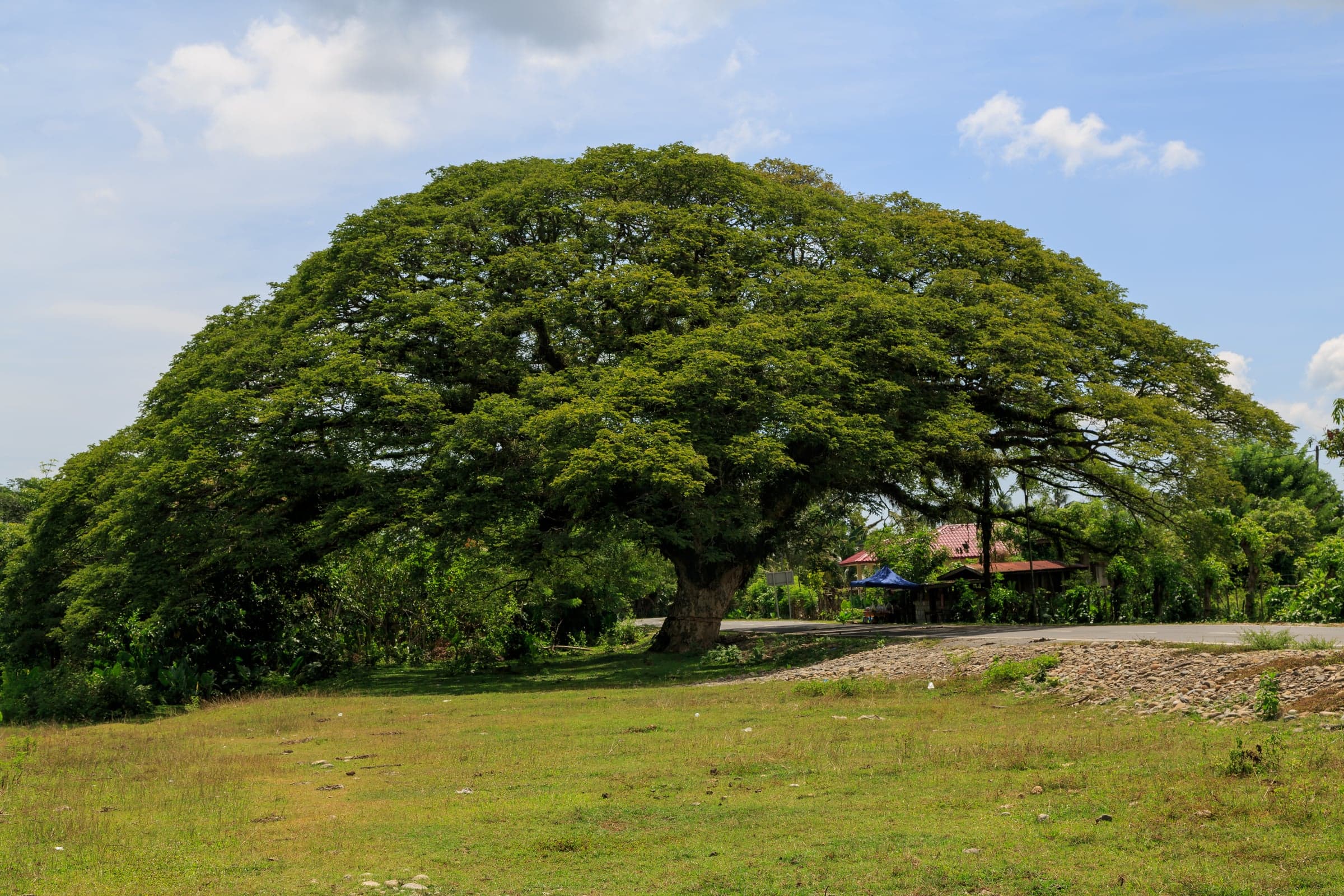
  • Saman: Holzmaserung

    Saman

    Samanea saman

    4 Stücke

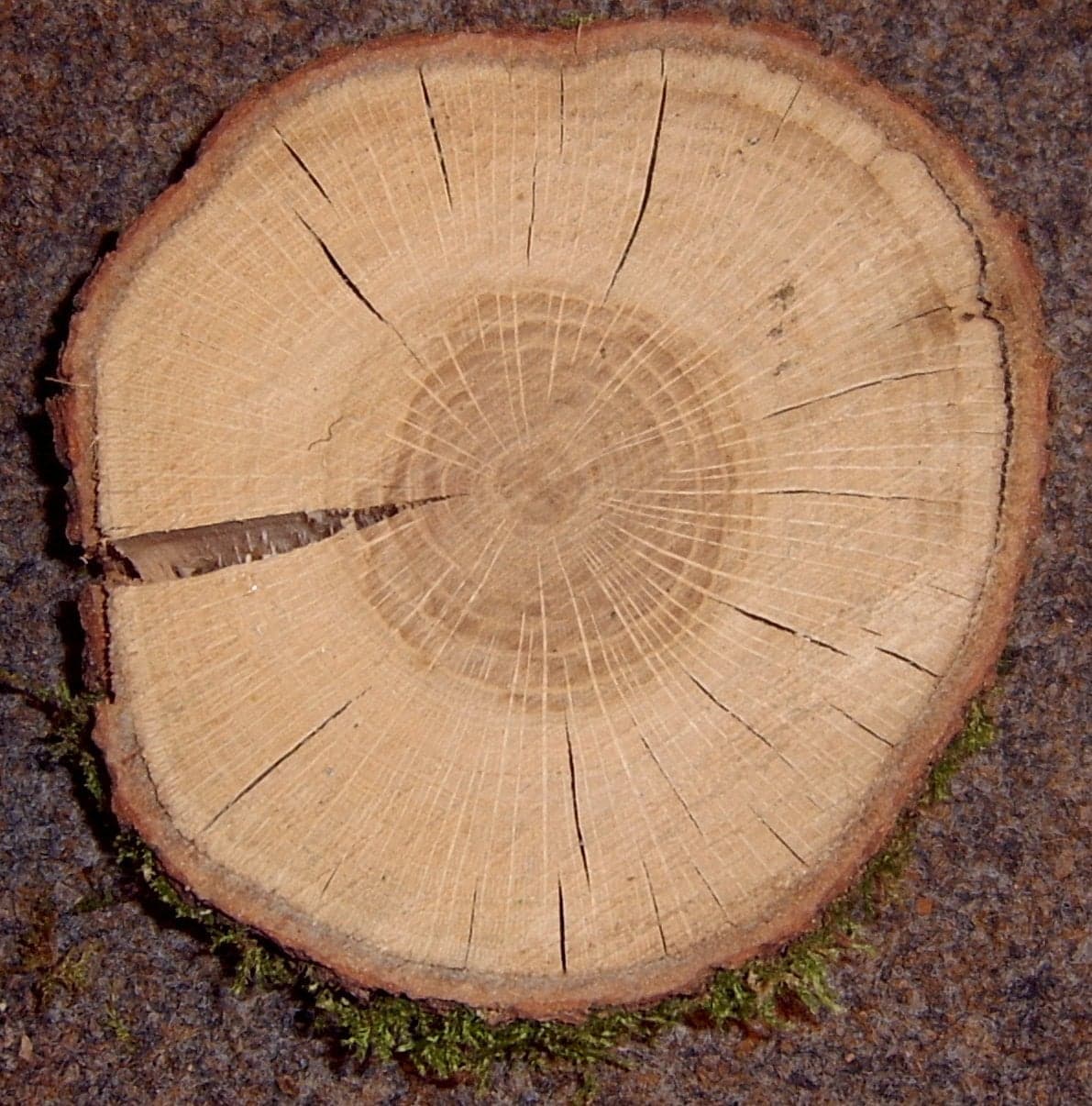
  • Europäische Eiche: Holzmaserung

    Europäische Eiche

    Quercus robur

    6 Stücke

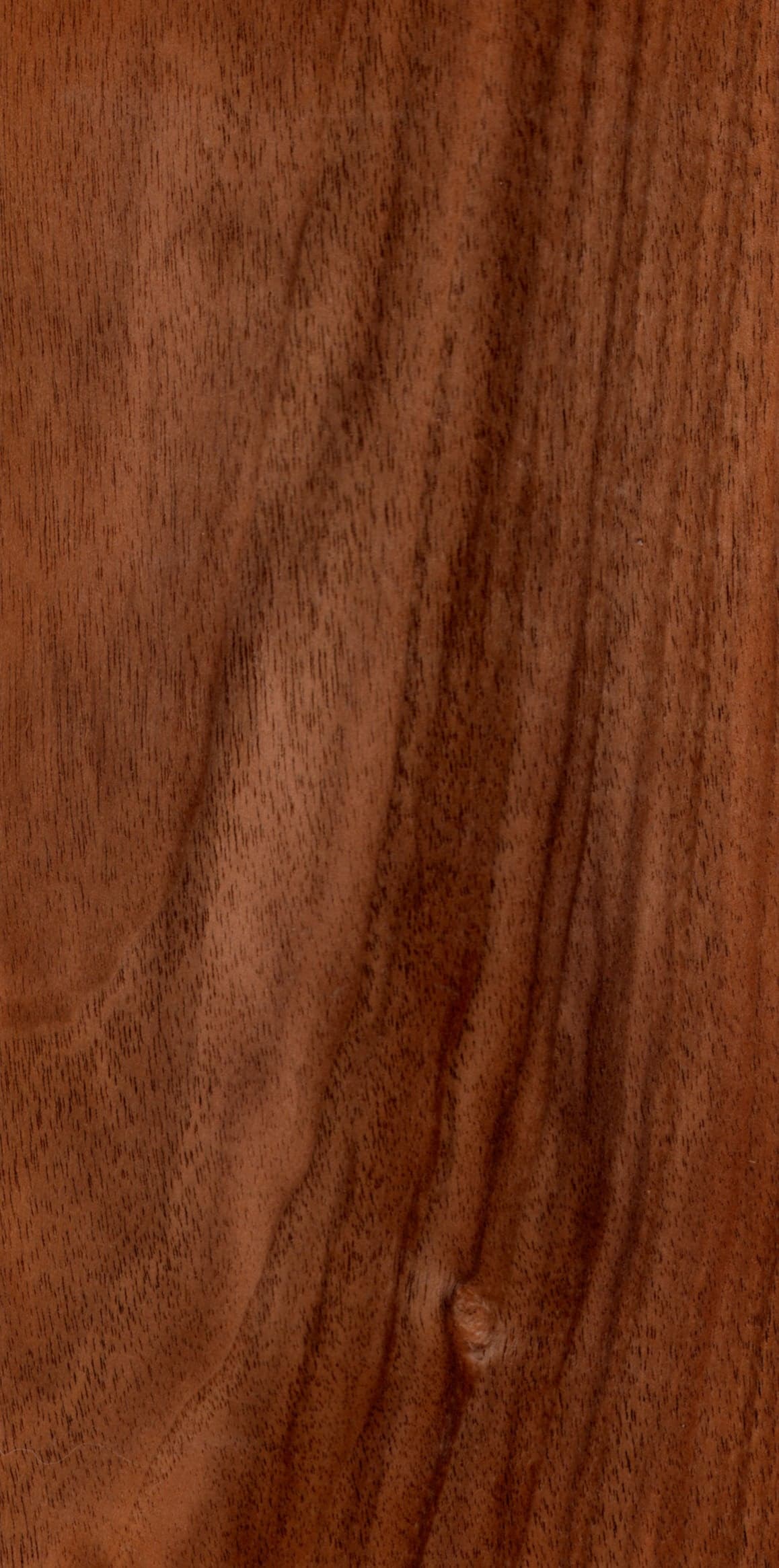
  • Europäischer Nussbaum: Holzmaserung

    Europäischer Nussbaum

    Juglans regia

    12 Stücke

Benachrichtigung zu Waldkiefer

Wir benachrichtigen Sie per E-Mail, wenn neue Waldkiefer-Bohlen bei KORENA eintreffen. Jedes Stück ist ein Unikat, deshalb zählt eine frühe Nachricht.

Ein paar E-Mails pro Monat. Kein Spam, jederzeit abmeldbar.

Holzbild

So sieht es aus

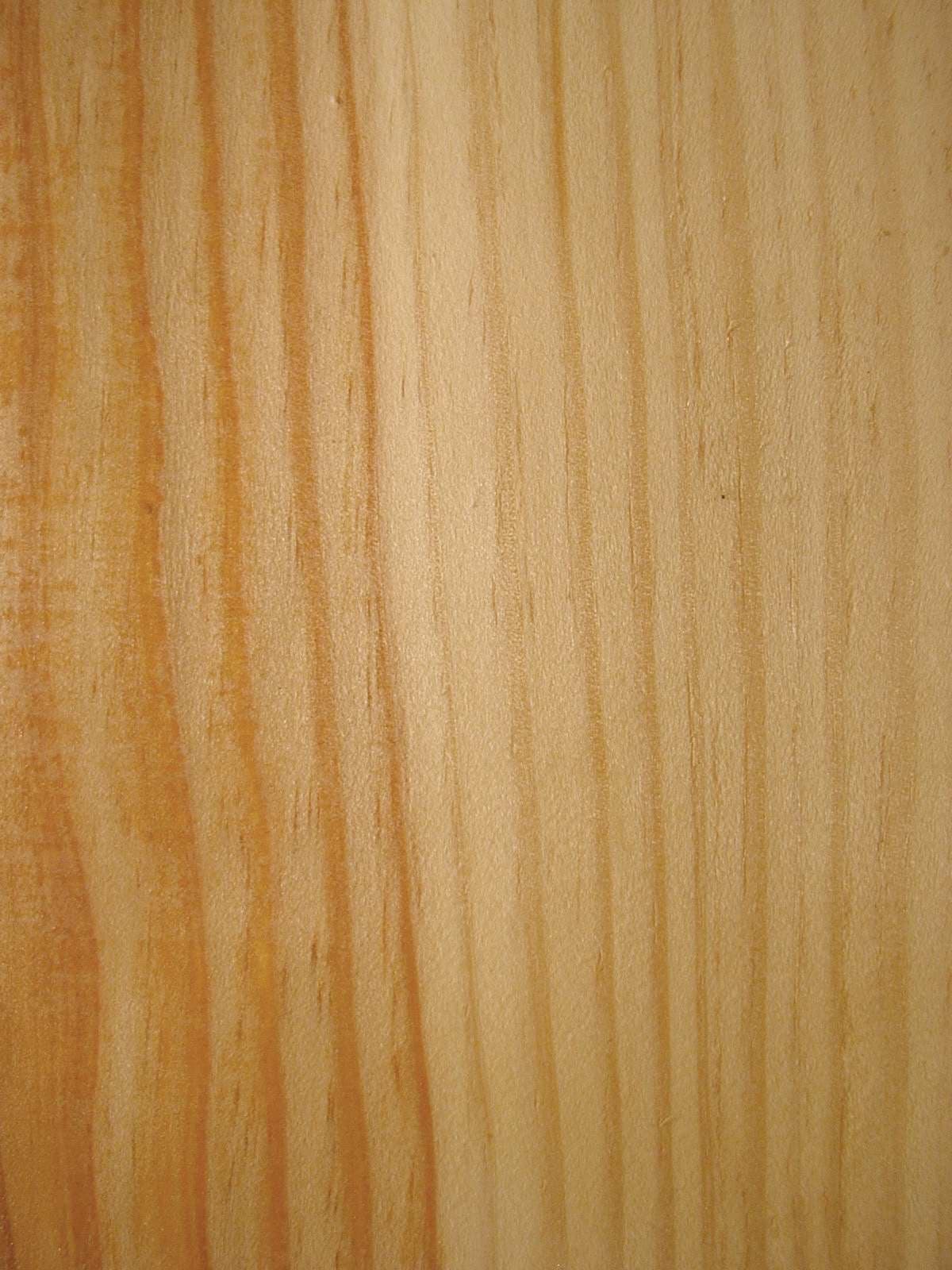
Pale yellow to light reddish brown heartwood that darkens considerably with age and light, against a wide band of near white sapwood. The ring figure is pronounced and the knots are a defining feature rather than an incidental one, since Scots Pine is naturally knotty and much of its character in furniture comes from that. Older slow grown stock develops a deep amber colour that is the reason antique pine looks nothing like new pine.

  • Pale yellow to light reddish brown heartwood
  • Wide near white sapwood band
  • Darkens markedly with age and UV toward deep amber
  • Gerader Verlauf, mittlerer Harzgehalt.

Arbeiten mit dieser Holzart

Verarbeitung

Easy with both hand and machine tools and it glues and finishes well, which together make it one of the most forgiving woods to build in. Resin is present but less troublesome than in larch or maritime pine. Knots are the real machining consideration: they are hard, often loose, and can tear or spit out under a planer. Around large knots, take light cuts and consider hand work.

Finish

Takes finish well and takes wax exceptionally, which is the traditional treatment and still the best one for the look most people want from pine. Pigment stains blotch on pine as they do on spruce, so use a conditioner or choose a dye. Resin around knots should be sealed with shellac before painting or it will bleed through the film. The natural ambering with age is substantial and generally considered the point.

Trocknung

Dries fairly quickly and easily with a low tendency to distort, one of its practical virtues. Blue stain from fungus develops fast in warm damp conditions on freshly felled logs and unseasoned boards, so stock that has sat before processing may carry grey blue discolouration through the sapwood. It does not weaken the wood. Volumetric shrinkage is around 13.6 percent, on the higher side for this group.

Wie stark arbeitet es?

Holz quillt und schwindet in der Breite, wenn die Luft feuchter und trockener wird. Schätzen Sie das saisonale Arbeiten einer Waldkiefer-Platte, bevor Sie die Befestigung planen.

Einschnitt
Einsatzort

Erwartetes saisonales Arbeiten

etwa 9,5 mm

Platte mit Tischplattenhaltern oder Langlochwinkeln befestigen, nicht verleimen oder fest verschrauben.

Lineares Schwindmodell: Breite × (Schwindmaß ÷ 28 % Fasersättigung) × saisonale Feuchteschwankung. Verwendet 8,3 % Schwindmaß in Tangentialrichtung für Waldkiefer. Eine Planungsschätzung, keine Garantie.

Was es kostet

Sicherheit und Herkunft

  • This species is recorded as commercially grown in Europe. This does not establish where an individual piece was harvested; check its origin details.
  • Status auf der Roten Liste der IUCN: die weltweite Schutzbewertung dieser Art.
  • Working with pine has been reported to cause allergic skin reactions and asthma-like symptoms in some people. Resin contact sensitises some individuals over time. Normal extraction, a P2 mask for extended sanding, and gloves when handling resinous stock are appropriate.

Den vollständigen Leitfaden lesenAusführliche Hinweise zu Maserung, Farbveränderung, Verarbeitung und Formstabilität.+

What Scots Pine actually is#

Pinus sylvestris has the largest natural range of any pine species anywhere, stretching from the west of Scotland and the Iberian mountains across the whole of Eurasia to the Pacific coast. It is sold under several names that confuse buyers comparing quotes: redwood in the British trade, deal in older usage, and simply pine almost everywhere. They are the same species.

Its ubiquity has the same effect on its reputation as spruce suffers from. This is the wood of construction studs and cheap furniture, and that association hides the fact that Scots Pine is one of the most pleasant woods to build in that exists, and that it ages into a colour no finish can imitate.

Reading a Scots Pine slab#

Fresh Scots Pine is pale, a light yellow heartwood against a wide near-white sapwood band. What you are actually buying is what that will become. The species ambers dramatically under light and time, moving to a deep honey brown over years and decades. Stripped antique pine holds a colour that new pine stained to match will never quite reach, because the change is oxidation and resin migration through the whole thickness rather than pigment on the surface.

Knots are the second thing to read, and on this species they are not a defect to be tolerated so much as the material's defining texture. Scots Pine is naturally knotty. The question is whether the knots on a given slab are sound and tight, or loose and ringed with checking. Sound knots are a feature. Loose knots will eventually fall out and need filling or plugging.

Käuferfragen

Häufige Fragen von Käufern

Why does old pine furniture look so different from new pine?

+

Scots Pine ambers dramatically with age and light exposure. A freshly machined board is pale yellow; the same board after decades of daylight and wax is a deep honey brown. That colour is not a stain, it is oxidation and resin change through the wood, which is why stripped antique pine keeps its colour while new pine stained to match does not age the same way.

Is Scots Pine hard enough for flooring?

+

At 2,420 N Janka it is soft for a floor and will dent, which is precisely the look traditional pine flooring has. It has been used for floors across northern Europe for centuries on that understanding. If dents are unacceptable, oak or ash are the right answer; if a floor that records its use is wanted, pine does it honestly.

What causes the grey blue staining in the sapwood?

+

Blue stain fungus, which colonises freshly felled pine in warm damp conditions. It discolours the sapwood without weakening it structurally. Some makers avoid it and some feature it. It is a cosmetic grade issue, and any KORENA listing showing it will show it in the slab photography rather than describing it away.

Mechanische Eigenschaften

Technische Daten

Veröffentlichte Referenzwerte. Wo Quellen abweichen, steht die Spanne; der typische Wert wird für die Stufen oben verwendet.

Dichte (kg/m³)Masse pro Kubikmeter bei etwa 12 % Holzfeuchte. Schwereres Holz ist meist härter und fester.550 kg/m³
Janka-Härte (N)Kraft, um eine Stahlkugel zur Hälfte ins Holz zu drücken. Das Standardmaß für Eindruckfestigkeit.2,420 N
MOR: Biegebruchmodul (MPa)Biegefestigkeit: die Last, bei der ein Balken bricht.83 MPa
MOE: Elastizitätsmodul (GPa)Biegesteifigkeit: wie stark ein Regalboden oder eine Platte unter Last durchhängt.10.1 GPa
Radiales SchwindenSchwindmaß quer zu den Jahrringen, von frisch bis darrtrocken. Riftbretter arbeiten in diesem Maß.5.2 %
Tangentiales SchwindenSchwindmaß entlang der Jahrringe. Fladerbretter und die meisten Bohlen arbeiten in diesem Maß.8.3 %
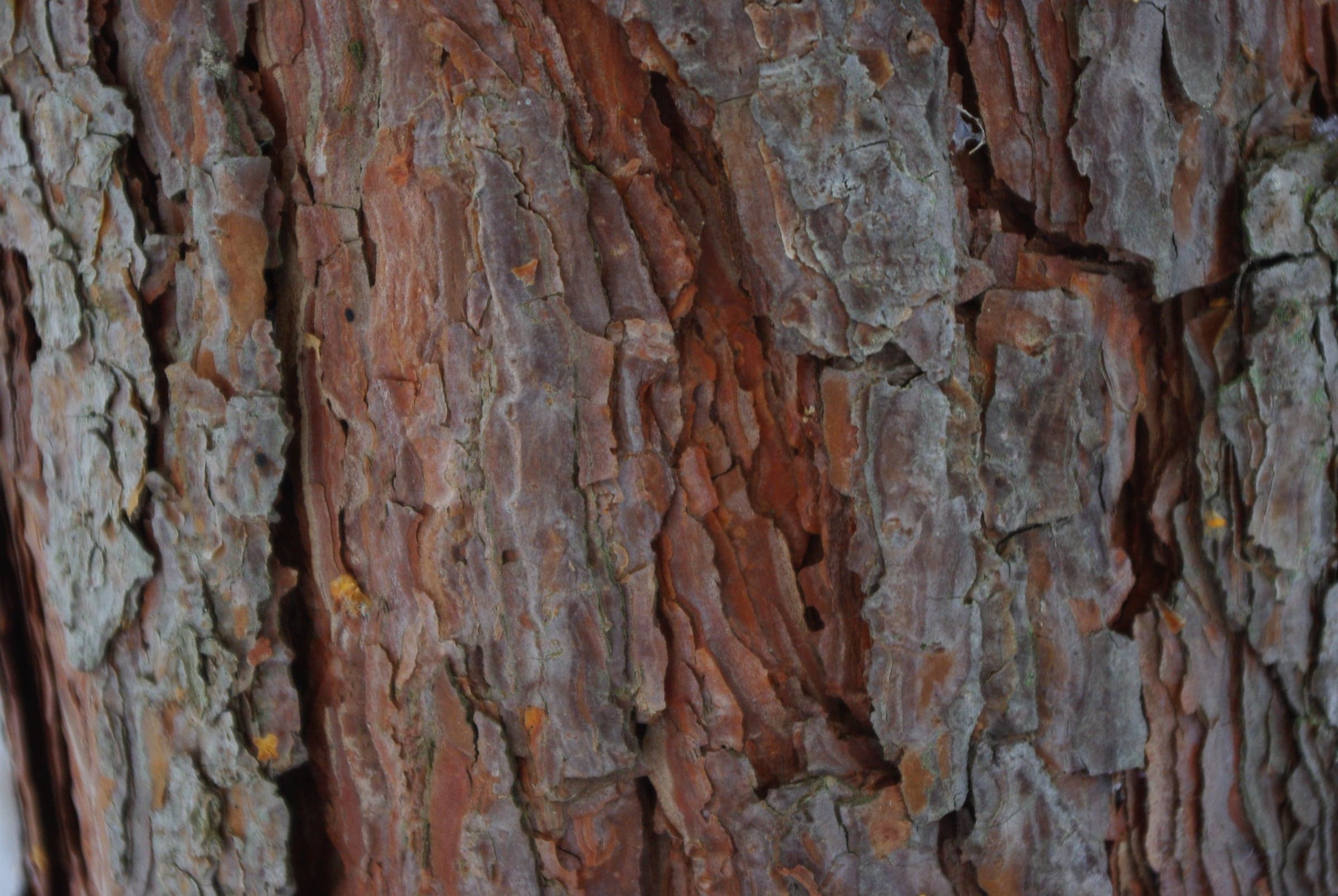
Waldkiefer: Holzmaserung

Wikimedia Commons contributor, via Wikimedia Commons

Pinus sylvestris has the widest natural range of any pine on earth, running from Scotland and Iberia across Eurasia to the Pacific. European slab stock comes mostly from Scandinavia, the Baltics and Poland, where certified managed forestry is the norm and EUDR documentation is well established.

  • Not listed in the CITES Appendices and assessed by the IUCN as Least Concern. It is among the most abundant and best certified timbers in Europe, with mature FSC and PEFC supply chains through Scandinavia and the Baltics. Of all the species KORENA lists, this is one of the simplest to document for EUDR purposes.

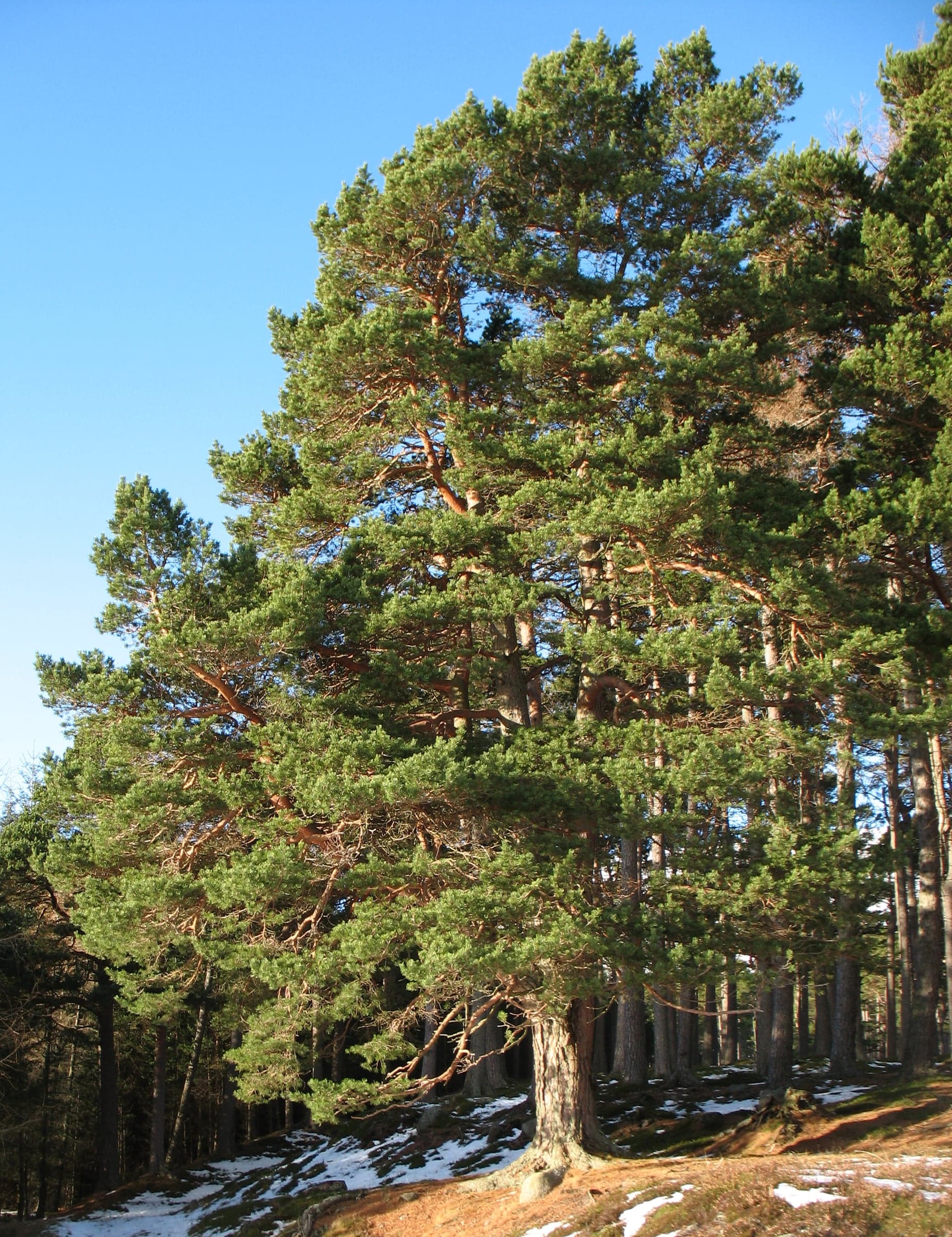
  • Waldkiefer: Baum

    Hello, I am Bruce on Flickr, via Wikimedia Commons

    Waldkiefer: Rinde
    Rinde

    Ring spacing separates slow-grown northern stock, which is denser, more stable and considerably more attractive, from fast-grown material with wide soft bands. Baltic and Scandinavian slabs from higher latitudes tend toward the former.

    Blue stain shows as a grey-blue cast through the sapwood. It is a fungus that colonises freshly felled logs in warm damp conditions and it does not weaken the wood. Whether it is a flaw or a feature depends entirely on the piece.

    At the bench#

    This is the easiest wood in the catalogue to work. It cuts cleanly with hand and machine tools, it glues reliably, it takes fastenings well for a softwood, and it finishes without argument. For a first slab project, or for a maker working without a well equipped shop, it removes most of the ways a build can go wrong.

    The knots are where care is needed. They are much harder than the surrounding wood, frequently contain resin, and can tear out or spit under a planer knife. Take light cuts approaching a large knot, and be prepared to finish that area by hand or with a scraper. A helical cutterhead makes a substantial difference on knotty stock.

    Resin is present but far less troublesome than in larch or maritime pine. Blades will need occasional cleaning rather than constant attention.

    For gluing, ordinary PVA at moderate clamping pressure is sufficient. Avoid crushing the fibres by over-clamping, which starves the joint.

    Drying and movement#

    Scots Pine dries quickly and easily with a low tendency to distort, which is another reason it dominates commodity production. Slab stock in thick sections still benefits from air drying to around 20 percent followed by a controlled kiln finish.

    Volumetric shrinkage at roughly 13.6 percent is on the higher side for this group, with tangential movement at 8.3 percent against 5.2 percent radial. The ratio between the two is better than spruce or fir, which means flatsawn pine cups less aggressively than flatsawn spruce of the same width. It still moves, and a wide top should float rather than be fixed rigidly.

    Finishing, and the one trap#

    Pine takes wax exceptionally well, and wax over bare or lightly oiled pine is the traditional treatment that produces the look most people actually want from this wood. It also takes oils and modern hardwax finishes without difficulty.

    Pigment stains blotch, for the same reason they blotch on spruce: the density difference between earlywood and latewood makes absorption uneven. A conditioner or a dye rather than a pigment stain solves it.

    The trap is paint. Resin in and around knots stays mobile for years and will migrate straight through most primers, appearing as brown rings on a white surface months after the job looked finished. Seal every knot with shellac before priming. This is old advice and it is still the correct advice, because shellac remains the best barrier available for resin bleed.

    Where Scots Pine is the right answer#

    Farmhouse tables, painted and waxed furniture, panelling, carcass work, shelving, and traditional flooring where dents are understood as part of the character rather than a failure. It is the right answer whenever the budget is real, the shop is modest, or the piece is meant to look better in twenty years than it does on day one.

    It is the wrong answer for a surface that must stay unmarked, for exterior use without treatment, and for anything where a stained colour needs to stay exactly as applied.

    Sourcing and EUDR#

    Not CITES listed and assessed as Least Concern. Scots Pine has some of the most mature certified supply chains of any timber in Europe, with well established FSC and PEFC coverage through Scandinavia, the Baltics and Poland. Of everything in the KORENA catalogue, this is among the most straightforward species to document to EUDR standard, which is worth weighing if the paperwork burden on a project matters as much as the material.

    How do I stop resin bleeding through paint around knots?

    +

    Seal the knots with shellac before priming. Resin in and around knots stays mobile and will migrate through most primers and paints, showing as brown rings months later. Shellac is the traditional barrier for exactly this reason and it still works better than modern alternatives.

    Is Scots Pine the same as redwood or deal?

    +

    Yes. Redwood is the British trade name for Pinus sylvestris, and deal is an older term for pine boards of a particular size that came to be used loosely for the species. All three names refer to the same wood, which causes regular confusion when buyers compare quotes.

    Volumetrisches SchwindenGesamte Volumenänderung von frisch bis darrtrocken. Niedriger heißt formstabiler.13.6 %
    Natürliche Dauerhaftigkeit (EN 350)Europäische Norm für natürliche Dauerhaftigkeit, von 1 (sehr dauerhaft) bis 5 (nicht dauerhaft).Class 4 — Slightly durable

    Quellen

    • The Wood Database — Scots Pine (Pinus sylvestris)(abgerufen am 2026-08-12)
    • USDA FPL Wood Handbook FPL-GTR-190 (2010)(abgerufen am 2026-08-12)
    • Meier, E. — WOOD! Identifying and Using Hundreds of Woods Worldwide (2015)(abgerufen am 2026-08-12)

    Stärken

    • EinsteigerfreundlichLeicht zu bearbeiten und nicht so hart, dass es Werkzeuge strapaziert.

    Achtung

    • Nicht unbehandelt für außenDie natürliche Dauerhaftigkeit ist EN 350 Klasse 4 von 5. Innen verwenden oder unter gepflegter Oberfläche.
    • Arbeitet stärker als die meistenBreite Platten brauchen Tischplattenhalter oder Langlochbefestigung und Raum zum Arbeiten. Nutzen Sie den Rechner unten.
    • Staub reiztBeim Schleifen und Maschinenarbeiten Absaugung und Maske verwenden.

    Für Details auf ein Etikett tippen.

    Auf einen Blick

    Die Stufen verwenden feste Grenzen für alle Holzarten bei KORENA und sind daher direkt vergleichbar. Der gemessene Wert steht unter jeder Stufe.
    HärteWiderstand gegen Dellen und AbnutzungWeich

    Janka-Härte 2.420 N

    51 % weicher als Europäische Eiche

    GewichtWie schwer eine Bohle zu heben istMittel

    550 kg/m³

    StabilitätWie wenig es mit den Jahreszeiten arbeitetLebhaft

    13,6 % Volumenschwindung

    BearbeitungSägen, Hobeln, Schleifen, LeimenLeicht

    4,0 / 5 Werkbank-Durchschnitt

    AußeneinsatzNatürliche Fäulnisresistenz, EN 350Nur innen

    EN 350 Klasse 4

    • Sägen · Sehr gutWie sauber es schneidet und wie stark es Sägeblätter beansprucht.1 = schwierig · 5 = ausgezeichnet
    • Hobeln · Sehr gutWie glatt die Oberfläche wird und wie stark es ausreißt.1 = schwierig · 5 = ausgezeichnet
    • Schleifen · Sehr gutWie schnell es glatt schleift, ohne das Papier zuzusetzen.1 = schwierig · 5 = ausgezeichnet
    • Drechseln · Sehr gutWie es sich an der Drechselbank schneiden und finishen lässt.1 = schwierig · 5 = ausgezeichnet
    • Schnitzen · GutWie scharf es Details unter dem Hohleisen hält.1 = schwierig · 5 = ausgezeichnet
    • Verleimen · AusgezeichnetWie zuverlässig Leimverbindungen halten.1 = schwierig · 5 = ausgezeichnet
    • Schraub- / Nagelhalt · Sehr gutWie gut es Schrauben und Nägel hält, ohne zu spalten.1 = schwierig · 5 = ausgezeichnet
    • Dampfbiegen · GutWie gut es nach dem Dämpfen Rundungen annimmt.1 = schwierig · 5 = ausgezeichnet

    Was Waldkiefer als Rohholz in Europa gerade kostet, je Kubikmeter netto. Tippen Sie auf einen Preis für Details.

    • Wertholz auf SubmissionAusgewählte hochwertige Stämme, auf Submissionen vor allem an Furnier- und Möbelhersteller versteigert. Aus solchen Stämmen werden Bohlen geschnitten.Die meisten Preise liegen zwischen 108 € und 163 €.Auf Basis von 71 Preisen aus 2 Regionen.Letzte Daten 21. Sept. 2026
    • Standard-RundholzGroße Mengen Standard-Rundholz von Waldbesitzern und Staatsforsten, überwiegend für Bau und Industrie.Die meisten Preise liegen zwischen 24 € und 101 €.Auf Basis von 356 Preisen aus 9 Regionen.Letzte Daten 14. Nov. 2026

    Wertholz auf Submission nach Land

    • Deutschland · 153 € / m³Regionen: Bayern44 PreiseLetzte Daten 21. Sept. 2026
    • Österreich · 108 € / m³Regionen: Austria27 PreiseLetzte Daten 21. Sept. 2026

    Standard-Rundholz nach Land

    • Schweden · 74 € / m³Regionen: Sweden Central11 PreiseLetzte Daten 30. Sept. 2026
    • Bulgarien · 68 € / m³Regionen: North-West Bulgaria und South-East Bulgaria83 PreiseLetzte Daten 14. Nov. 2026
    • Frankreich · 60 € / m³Regionen: Bourgogne-Franche-Comté und Grand Est / Alsace162 PreiseLetzte Daten 14. Nov. 2026

    Warum kostet eine Bohle mehr?

    Das sind Preise für Rohholz. Eine Bohle ist der beste Teil eines Stamms, ein Jahr oder länger getrocknet, dann Stück für Stück geprüft und vermessen. Nur ein kleiner Teil jedes Stamms wird zur Bohle.

    Quelle: KORENA Timber Index · Letzte Daten 14. Nov. 2026

    Alle Regionalpreise
    Rumänien54 €
    Rumänien · 54 € / m³
    Regionen: Moldavia (Romania) und Transylvania
    94 Preise
    Letzte Daten 14. Nov. 2026
  • Finnland · 52 € / m³Regionen: Southern Finland (Etelä-Suomi)3 PreiseLetzte Daten 1. Nov. 2026
  • Norwegen · 50 € / m³Regionen: Norway (national)3 PreiseLetzte Daten 1. Nov. 2026