KORENA
HolzMöbelWerkstattPartnerJournal

Entdecke neue Bohlen als Erstes

Erhalte eine E-Mail, wenn neues Holz eintrifft.

Ein paar E-Mails pro Monat. Kein Spam, jederzeit abmeldbar.

KORENA

Entdecke Massivholz, handgefertigte Möbel, Werkzeuge und Produkte zur Holzbehandlung auf KORENA.

Einkaufen

  • Produkte ansehen
  • Archiv verkaufter Bohlen
  • Bestellung verfolgen

Lernen

  • KORENA-Journal
  • Holzartenführer
  • Glossar
  • Pflanzenpässe und Befallsgebiete
  • Vergleichen
  • Autoren

Hilfe

  • Über uns
  • So funktioniert es
  • Verkäufer werdenNeu
  • Bohle anfragen
  • Kundenservice
  • Dokumentvorlagen
  • Presse

Kaufen

  • Verkaufsbedingungen
  • Widerrufsrecht
  • Rückgaben und Gewährleistung
  • Versand und Lieferung

Vertrauen

  • Datenschutzerklärung
  • Cookie-Richtlinie
  • Holzherkunft und EUDR
  • Barrierefreiheit

Impressum

  • Rechtlicher Hinweis / Impressum
  • Zulässige Nutzung
  • Geistiges Eigentum und Inhalte

© 2026 KORENA. Alle Rechte vorbehalten.

Betrieben von der Martial Labs Ltd. (BG, EIK 207453941). KORENA ist ein Handelsname der Martial Labs Ltd.

Wir respektieren Ihre Privatsphäre

Wir verwenden notwendige Cookies, damit die Website funktioniert. Mit Ihrer Einwilligung würden wir auch Cookies für Analyse, personalisierte Inhalte und Werbung verwenden. Sie können Ihre Entscheidung jederzeit auf der Seite Einwilligungseinstellungen ändern. Sehen Sie unsere Cookie-Richtlinie und Datenschutzerklärung.

  1. Startseite
  2. /
  3. Holzarten
  4. /
  5. Roteiche

Quercus rubra

Roteiche

Harder than European oak and cheaper, with pores open enough to blow air through. An interior wood, and only an interior wood.

  • This species record does not establish where an individual piece was grown or harvested. Check the origin details of the piece you are considering.
  • Botanische Gruppe. Nadelhölzer sind Koniferen, Laubhölzer stammen von Laubbäumen.
  • Die botanische Familie, zu der die Holzart gehört.
Benachrichtigen, wenn verfügbarReferenzholzart. Derzeit keine Stücke auf Lager.
  • Projekteignung
  • Auf Lager
  • Aussehen
  • Verarbeitung
  • Quellen und Schwinden
  • Preis
  • Sicherheit und Herkunft
  • Fragen
  • Technische Daten

Passt es zu Ihrem Projekt?

Ideal für

  • Interior furniture
  • Flooring
  • Cabinetry
  • Painted and stained joinery
  • Shelving

Kein Roteiche im aktuellen Drop

Ähnliche Holzarten auf Lager

Derzeit kein Roteiche. Diese Holzarten eignen sich für dieselben Projekte und sind verfügbar.
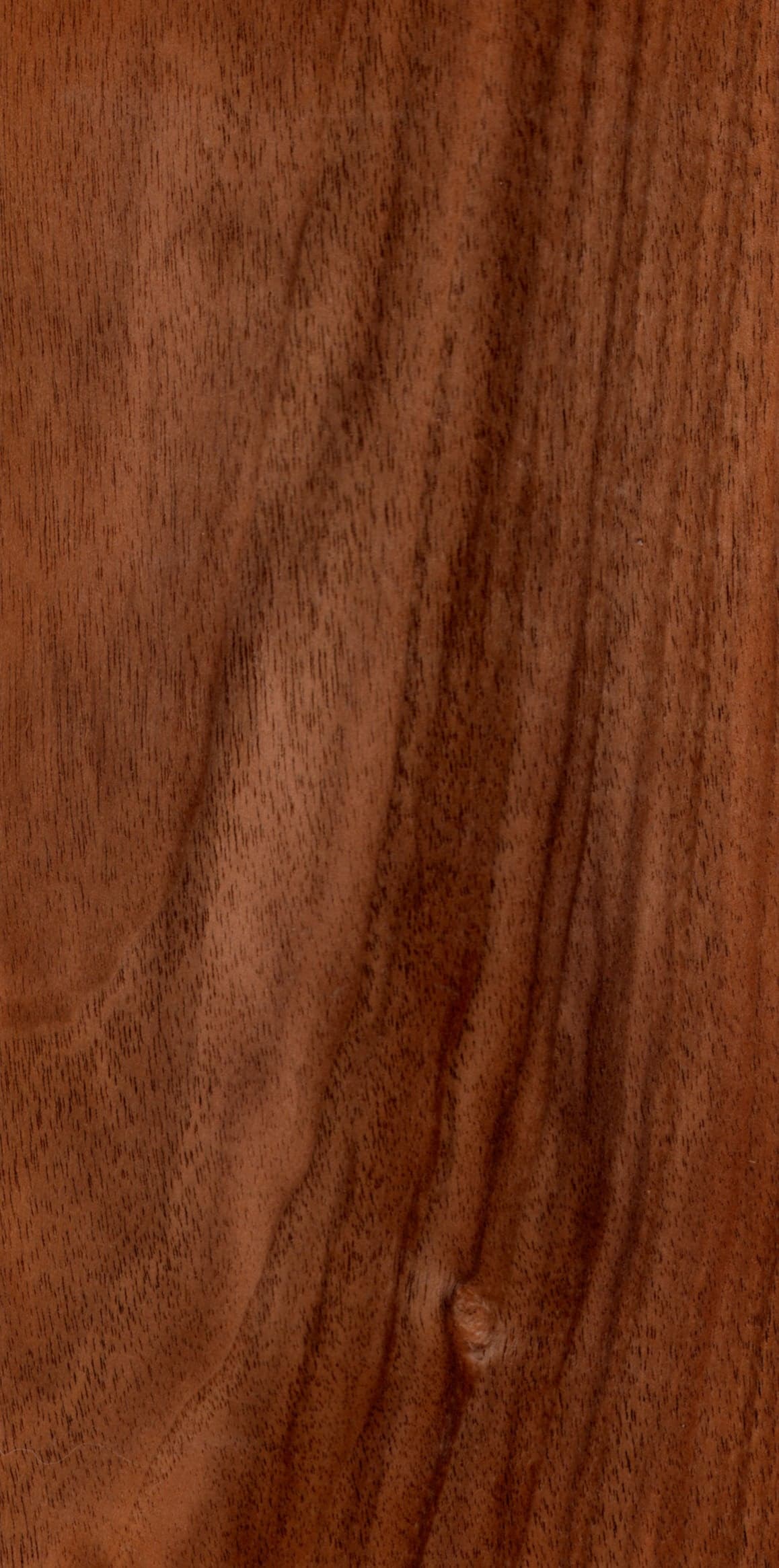
  • Europäischer Nussbaum: Holzmaserung

    Europäischer Nussbaum

    Juglans regia

    12 Stücke

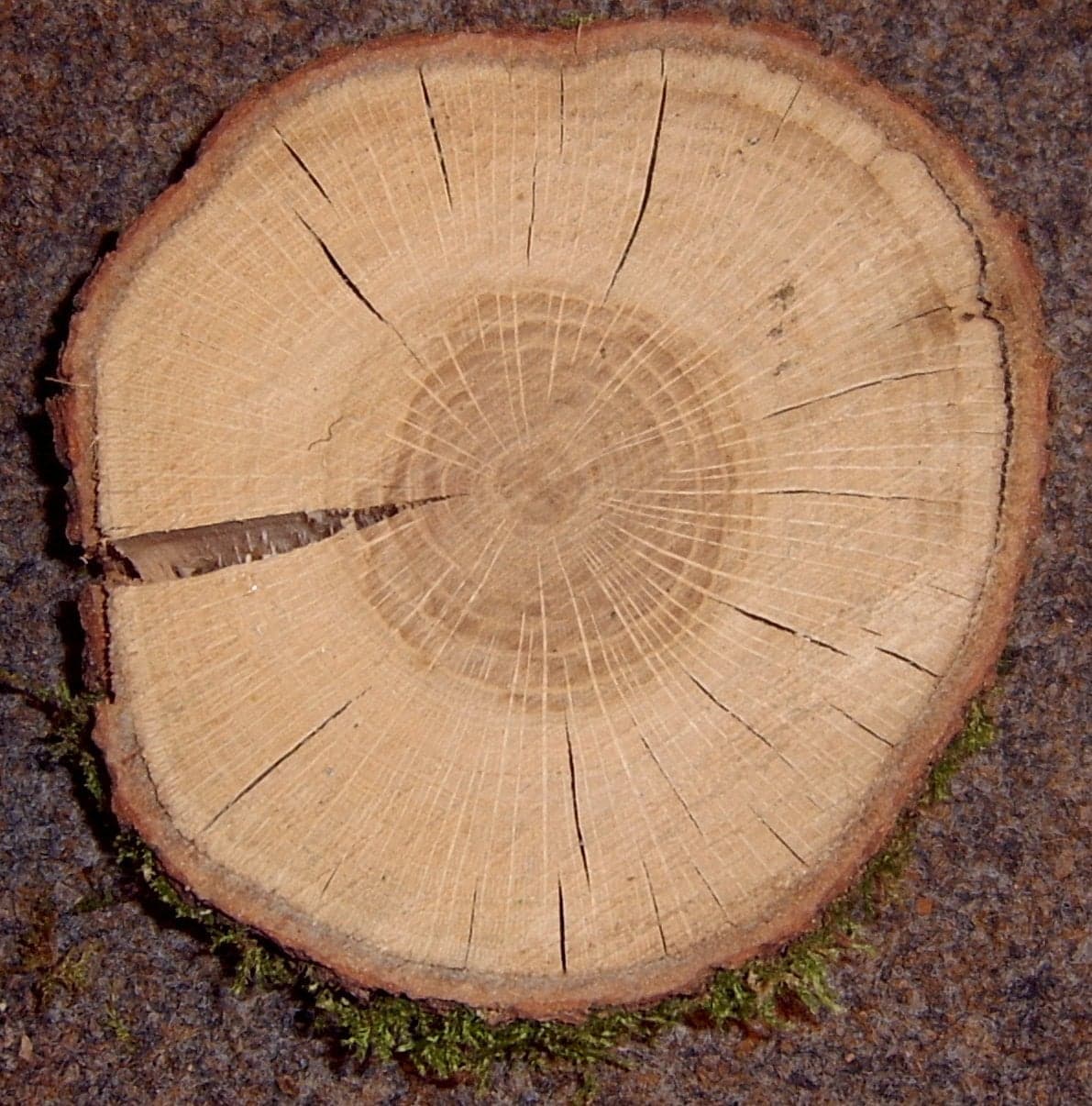
  • Europäische Eiche: Holzmaserung

    Europäische Eiche

    Quercus robur

    6 Stücke

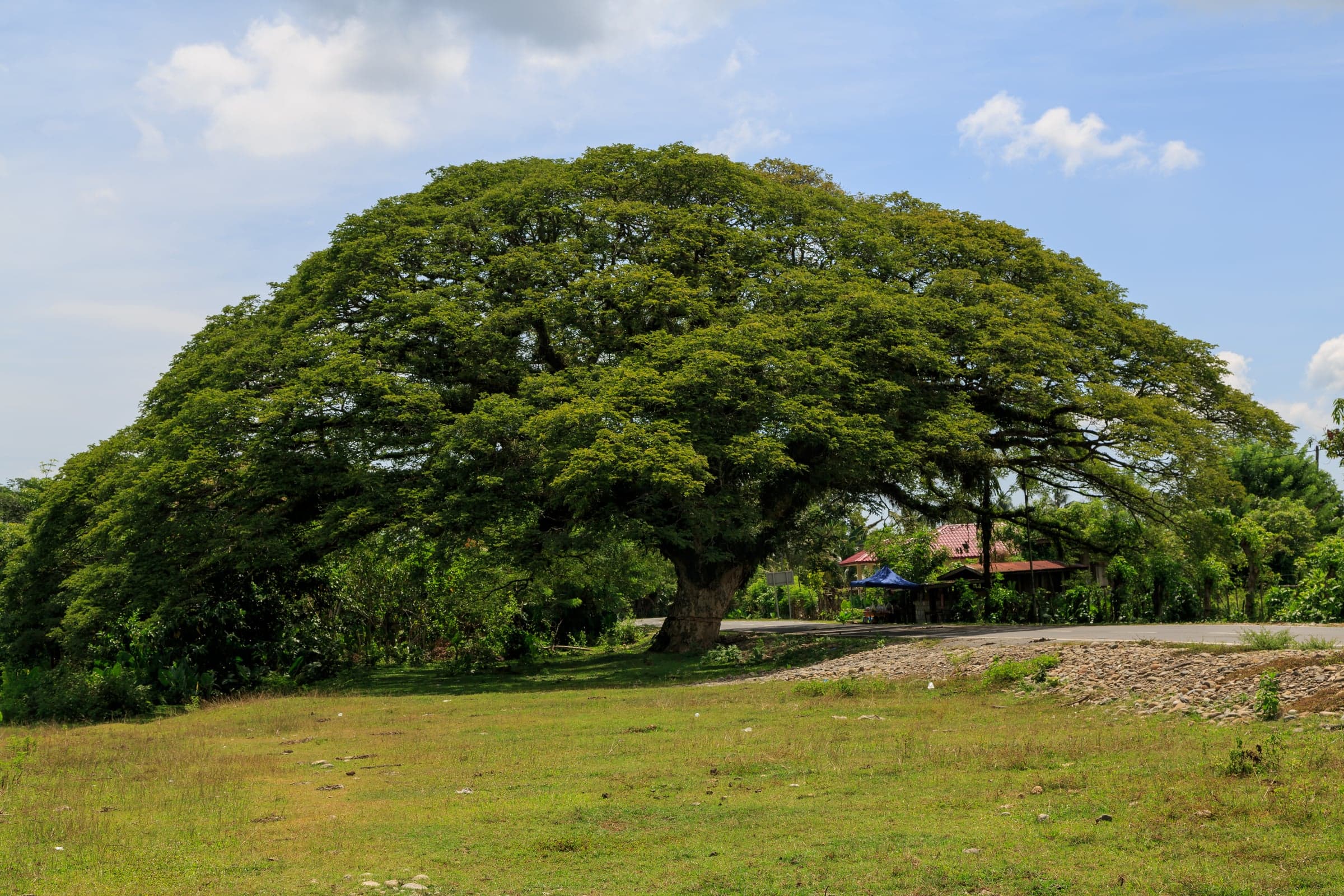
  • Saman: Holzmaserung

    Saman

    Samanea saman

    4 Stücke

Benachrichtigung zu Roteiche

Wir benachrichtigen Sie per E-Mail, wenn neue Roteiche-Bohlen bei KORENA eintreffen. Jedes Stück ist ein Unikat, deshalb zählt eine frühe Nachricht.

Ein paar E-Mails pro Monat. Kein Spam, jederzeit abmeldbar.

Holzbild

So sieht es aus

Light to mid brown with a distinct reddish or pinkish cast that separates it clearly from the European oaks. Grain is straight and the texture coarse, with very large open pores in the earlywood. Those pores are the defining practical fact about this wood: they run continuously along the grain and are open enough that the species will not hold liquid, which is why red oak was never used for barrels.

  • Light to mid brown with a reddish or pinkish cast
  • Very large open pores in the earlywood
  • Ray fleck present on quartersawn faces but finer than white oak

Arbeiten mit dieser Holzart

Verarbeitung

Produces good results with hand and machine tools and it glues and finishes well. It blunts cutters moderately as all oaks do. The dimensional stability is described in the cited source as mediocre, so it moves more than its numbers alone suggest. The very large open pores require substantial grain filling for any smooth finish, more than European oak needs.

Finish

Takes stain and finish well and is frequently stained to imitate more expensive species, which it does convincingly. The large open pores need heavy grain filling for a smooth surface. The reddish cast can fight a warm stain and go orange, so test on an offcut. Tannins react with iron exactly as in the European oaks, so brass or stainless fittings only.

Trocknung

Dries reasonably but shares the oak family requirement for a slow schedule, and it is prone to checking and honeycomb if pushed. Volumetric shrinkage of 13.7 percent with tangential at 8.6 against radial at 4.0 percent gives a wide ratio, so flatsawn boards cup. The cited source specifically notes mediocre dimensional stability in service, which is worth weighing against European oak for anything that must stay flat.

Wie stark arbeitet es?

Holz quillt und schwindet in der Breite, wenn die Luft feuchter und trockener wird. Schätzen Sie das saisonale Arbeiten einer Roteiche-Platte, bevor Sie die Befestigung planen.

Einschnitt
Einsatzort

Erwartetes saisonales Arbeiten

etwa 9,8 mm

Platte mit Tischplattenhaltern oder Langlochwinkeln befestigen, nicht verleimen oder fest verschrauben.

Lineares Schwindmodell: Breite × (Schwindmaß ÷ 28 % Fasersättigung) × saisonale Feuchteschwankung. Verwendet 8,6 % Schwindmaß in Tangentialrichtung für Roteiche. Eine Planungsschätzung, keine Garantie.

Was es kostet

Sicherheit und Herkunft

  • This species record does not establish where an individual piece was grown or harvested. Check the origin details of the piece you are considering.
  • Status auf der Roten Liste der IUCN: die weltweite Schutzbewertung dieser Art.
  • Oak is a documented sensitiser and reactions usually include eye and skin irritation. Severe reactions are rare. Repeated exposure to oak dust carries elevated nasal cancer risk, so extraction is not optional in a production setting.

Den vollständigen Leitfaden lesenAusführliche Hinweise zu Maserung, Farbveränderung, Verarbeitung und Formstabilität.+

What Red Oak actually is#

Quercus rubra is the most commercially important hardwood in the United States and has been planted across Europe since the eighteenth century. European grown material is now common enough in the EU market that buying it does not necessarily mean importing from North America, which matters for both documentation and carbon.

It is harder than European oak, stiffer than European oak, and cheaper than European oak. It is also, in one specific and consequential way, a fundamentally different material.

The pores, which decide everything#

In white oak and the European oaks, the large earlywood pores are plugged with tyloses, balloon like ingrowths that seal the vessels. In red oak they are not. The pores run open and continuous along the grain.

The old demonstration is to take a short length of red oak, dip one end in soapy water and blow through the other. Bubbles come out. You cannot do that with white oak.

Everything practical about this species follows from that:

It was never used for barrels, because it will not hold liquid. It is rated non-durable to perishable with poor insect resistance, so it has no business outdoors. It is recorded in this catalogue as not food safe, unlike the European oaks, because open pores hold moisture and residue that a closed grain wood does not. And it needs far more grain filler than European oak to reach a smooth finish.

Käuferfragen

Häufige Fragen von Käufern

Why is Red Oak not suitable for outdoor use or barrels?

+

Its earlywood pores are very large and run continuously along the grain, so the wood behaves like a bundle of straws. Liquid passes straight through it, which is why white oak was always the cooperage timber and red oak never was. Combined with a decay rating of non-durable to perishable and poor insect resistance, it should be treated as an interior wood only.

Is Red Oak harder than European Oak?

+

Yes, measurably. It is 5,430 N on the Janka scale against 4,980 N for European oak, and its elastic modulus of 12.14 GPa is higher too. Hardness is not the reason to prefer European oak; durability, stability and colour are.

Is it safe for a cutting board?

+

KORENA records it as not food safe, and that is a deliberate distinction from the European oaks. The very large open pores hold moisture and food residue in a way closed grain species do not, and the wood is rated non-durable. For food contact choose hard maple or a similarly dense closed grain species.

How do I tell it from European Oak?

+

Mechanische Eigenschaften

Technische Daten

Veröffentlichte Referenzwerte. Wo Quellen abweichen, steht die Spanne; der typische Wert wird für die Stufen oben verwendet.

Dichte (kg/m³)Masse pro Kubikmeter bei etwa 12 % Holzfeuchte. Schwereres Holz ist meist härter und fester.700 kg/m³
Janka-Härte (N)Kraft, um eine Stahlkugel zur Hälfte ins Holz zu drücken. Das Standardmaß für Eindruckfestigkeit.5,430 N
MOR: Biegebruchmodul (MPa)Biegefestigkeit: die Last, bei der ein Balken bricht.99 MPa
MOE: Elastizitätsmodul (GPa)Biegesteifigkeit: wie stark ein Regalboden oder eine Platte unter Last durchhängt.12.1 GPa
Radiales SchwindenSchwindmaß quer zu den Jahrringen, von frisch bis darrtrocken. Riftbretter arbeiten in diesem Maß.4.0 %
Tangentiales SchwindenSchwindmaß entlang der Jahrringe. Fladerbretter und die meisten Bohlen arbeiten in diesem Maß.8.6 %
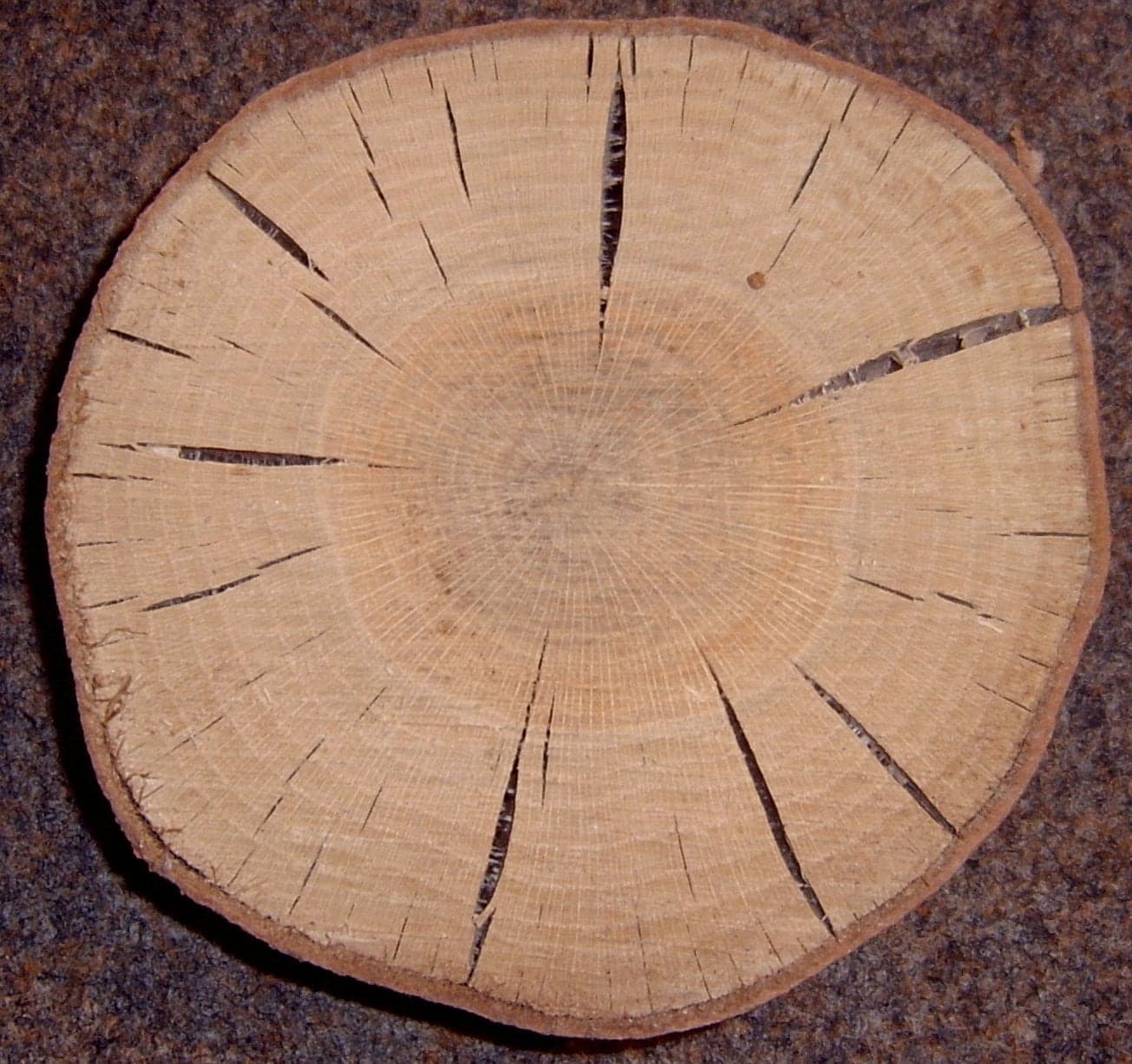
Roteiche: Holzmaserung

No machine-readable author provided. Lumbar~commonswiki assumed (based on copyright claims)., via Wikimedia Commons

Quercus rubra is native to eastern North America and is the most commercially important hardwood in the United States. It has also been planted widely across Europe since the eighteenth century and European grown material is increasingly common in the EU market, which shortens the supply chain considerably compared with imported American stock.

  • Not listed in the CITES Appendices and assessed by the IUCN as Least Concern. It is abundant and among the most heavily harvested hardwoods in North America. For EUDR purposes, European grown Quercus rubra offers a considerably shorter and simpler supply chain than imported American material, and it is increasingly available.

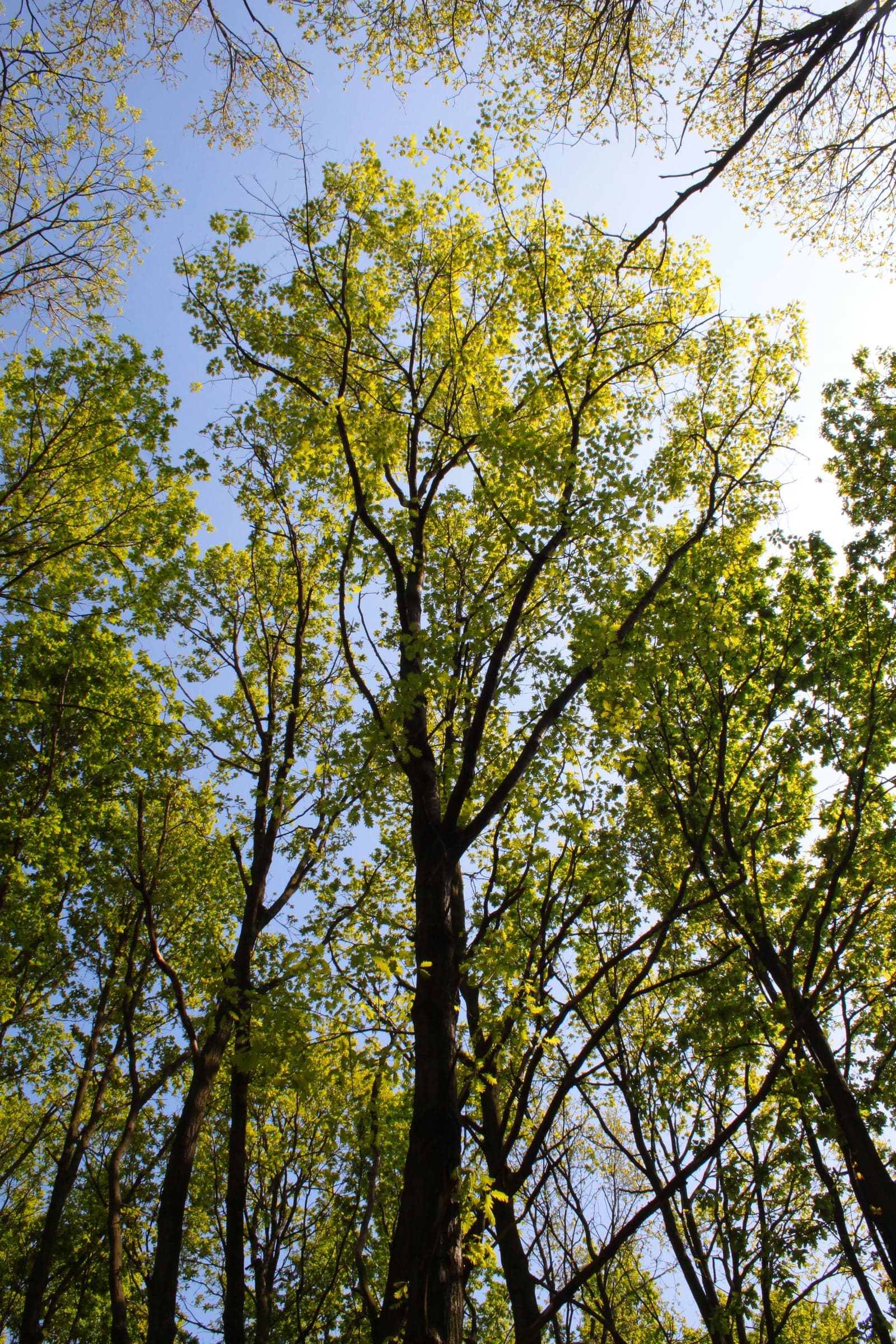
  • Roteiche: Baum

    Crusier, via Wikimedia Commons

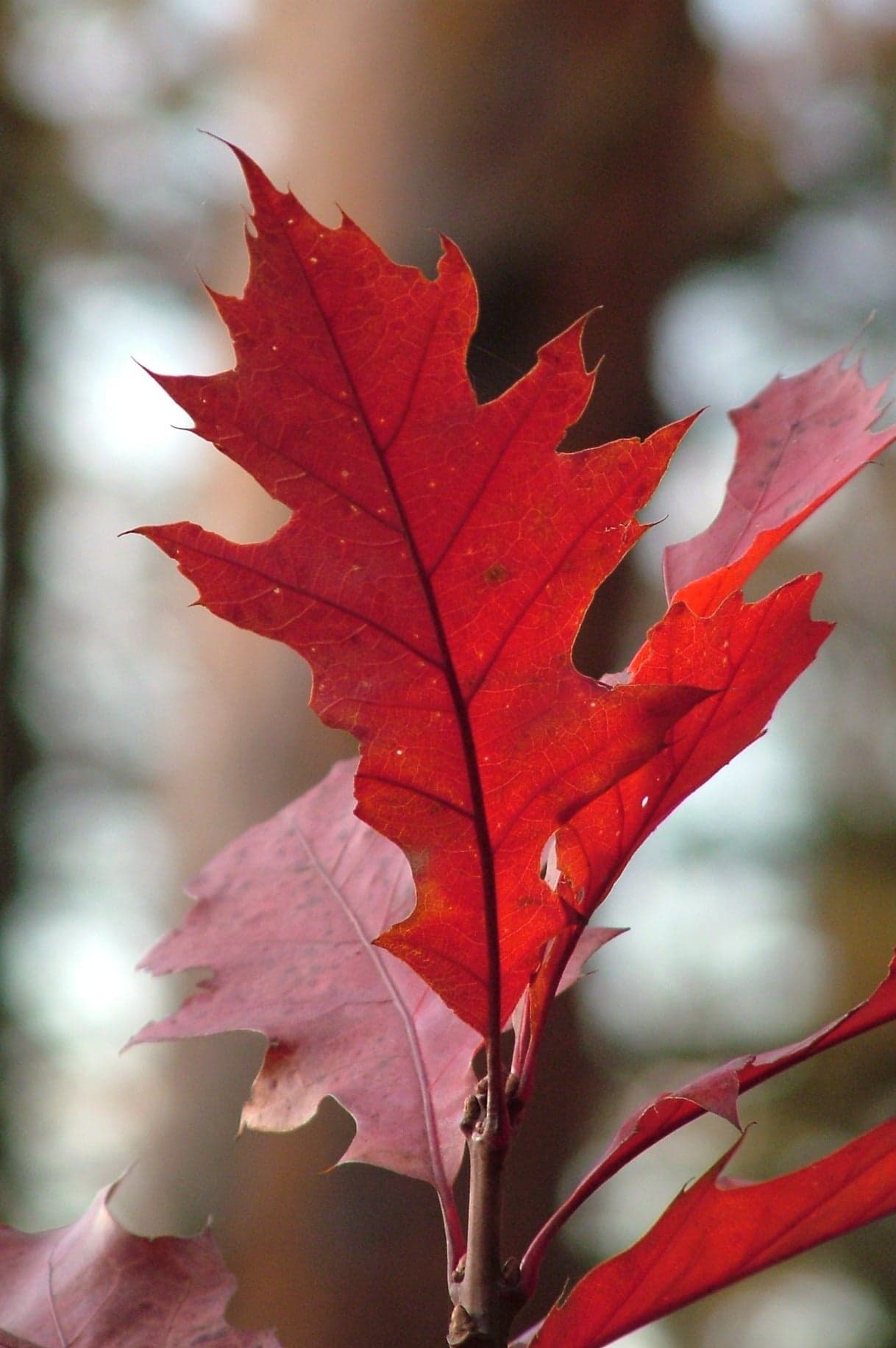
    Roteiche: Blatt
    Blatt

    None of that makes it a bad wood. It makes it an interior wood, and within that boundary it is an excellent and economical one.

    Reading a Red Oak slab#

    The colour is the quick identifier: a distinct pink or reddish cast through the light to mid brown, clearly different from the tan and olive of European oak.

    The reliable identifier is the end grain under a lens. Open earlywood pores mean red oak; pores plugged with tyloses mean white or European oak. If a supplier's label and the end grain disagree, believe the end grain.

    Ray fleck appears on quartersawn faces but is finer and less dramatic than in white oak or sessile oak. Buyers hoping for bold silvery fleck should look elsewhere.

    At the bench#

    It produces good results with hand and machine tools, glues well, and finishes well. It blunts cutters moderately, like all oaks.

    The cited source describes its dimensional stability as mediocre, and that word is worth taking seriously. Volumetric shrinkage of 13.7 percent is not extreme, but the tangential to radial ratio of 8.6 against 4.0 percent is wide, and red oak has a reputation for moving more in service than its figures predict. For a wide top that must stay flat, European oak quartersawn is the safer specification.

    Grain filling is more work here than on European oak. Those large open pores swallow filler and often need two applications for a genuinely smooth surface. Many makers simply leave the texture, which suits the wood.

    Finishing, and one trap#

    Red oak takes stain and finish readily and is very commonly stained to imitate more expensive species, which it does convincingly.

    The trap is its own colour. The natural pink cast fights warm stains and can push a finish orange, particularly with amber toned oils. Test on an offcut from the same slab before committing, and consider a cooler toned stain to counteract it.

    The tannin and iron reaction applies here as in every oak. Steel screws, steel wool and steel clamp bars all produce blue black staining on contact with damp oak. Use brass or stainless throughout.

    Where Red Oak is the right answer#

    Interior furniture, flooring, cabinetry, shelving and joinery that will be stained or painted. It is hard at 5,430 N, stiff at 12.14 GPa, widely available and inexpensive relative to European oak.

    It is the wrong answer outdoors in any form, for food contact surfaces, for cooperage or anything holding liquid, and for a wide panel where dimensional stability is the governing requirement.

    Sourcing and EUDR#

    Not listed in the CITES Appendices and assessed by the IUCN as Least Concern. The species is abundant and heavily harvested across eastern North America.

    The EUDR consideration is the same one that applies to Douglas Fir in this catalogue: European grown plantation material offers a much shorter and simpler documentation path than imported North American stock, along with lower transport carbon. It is increasingly available. KORENA listings record the partner yard and region, so which one you are buying is visible on the passport.

    Colour is the quick check: red oak carries a distinct pink or red cast where European oak runs tan to olive brown. The reliable check is the end grain. Look at the large earlywood pores with a lens; in red oak they are open, in white and European oak they are plugged with tyloses, which is exactly why one holds liquid and the other does not.

    Is European grown Red Oak different from American?

    +

    It is the same species and the working properties are comparable. The meaningful difference is the supply chain. European grown material has a much shorter and simpler documentation path under EUDR and lower transport carbon than imported American stock, and it is increasingly available in the EU market.

    Volumetrisches SchwindenGesamte Volumenänderung von frisch bis darrtrocken. Niedriger heißt formstabiler.13.7 %
    Natürliche Dauerhaftigkeit (EN 350)Europäische Norm für natürliche Dauerhaftigkeit, von 1 (sehr dauerhaft) bis 5 (nicht dauerhaft).Class 5 — Perishable

    Quellen

    • The Wood Database — Red Oak (Quercus rubra)(abgerufen am 2026-08-12)
    • USDA FPL Wood Handbook FPL-GTR-190 (2010)(abgerufen am 2026-08-12)
    • Meier, E. — WOOD! Identifying and Using Hundreds of Woods Worldwide (2015)(abgerufen am 2026-08-12)

    Stärken

    • Gut biegbarMit 4 von 5 fürs Dampfbiegen bewertet. Nimmt enge Radien an.

    Achtung

    • Nicht unbehandelt für außenDie natürliche Dauerhaftigkeit ist EN 350 Klasse 5 von 5. Innen verwenden oder unter gepflegter Oberfläche.
    • Arbeitet stärker als die meistenBreite Platten brauchen Tischplattenhalter oder Langlochbefestigung und Raum zum Arbeiten. Nutzen Sie den Rechner unten.
    • Staub reiztBeim Schleifen und Maschinenarbeiten Absaugung und Maske verwenden.
    • Kein Holz für LebensmittelkontaktFür Schneidebretter und Servierware eine andere Holzart wählen.

    Für Details auf ein Etikett tippen.

    Auf einen Blick

    Die Stufen verwenden feste Grenzen für alle Holzarten bei KORENA und sind daher direkt vergleichbar. Der gemessene Wert steht unter jeder Stufe.
    HärteWiderstand gegen Dellen und AbnutzungMittelhart

    Janka-Härte 5.430 N

    9 % härter als Europäische Eiche

    GewichtWie schwer eine Bohle zu heben istSchwer

    700 kg/m³

    StabilitätWie wenig es mit den Jahreszeiten arbeitetLebhaft

    13,7 % Volumenschwindung

    BearbeitungSägen, Hobeln, Schleifen, LeimenMäßig

    3,9 / 5 Werkbank-Durchschnitt

    AußeneinsatzNatürliche Fäulnisresistenz, EN 350Nur innen

    EN 350 Klasse 5

    • Sägen · Sehr gutWie sauber es schneidet und wie stark es Sägeblätter beansprucht.1 = schwierig · 5 = ausgezeichnet
    • Hobeln · Sehr gutWie glatt die Oberfläche wird und wie stark es ausreißt.1 = schwierig · 5 = ausgezeichnet
    • Schleifen · Sehr gutWie schnell es glatt schleift, ohne das Papier zuzusetzen.1 = schwierig · 5 = ausgezeichnet
    • Drechseln · Sehr gutWie es sich an der Drechselbank schneiden und finishen lässt.1 = schwierig · 5 = ausgezeichnet
    • Schnitzen · GutWie scharf es Details unter dem Hohleisen hält.1 = schwierig · 5 = ausgezeichnet
    • Verleimen · Sehr gutWie zuverlässig Leimverbindungen halten.1 = schwierig · 5 = ausgezeichnet
    • Schraub- / Nagelhalt · Sehr gutWie gut es Schrauben und Nägel hält, ohne zu spalten.1 = schwierig · 5 = ausgezeichnet
    • Dampfbiegen · Sehr gutWie gut es nach dem Dämpfen Rundungen annimmt.1 = schwierig · 5 = ausgezeichnet

    Für Roteiche gibt es noch keine Marktreferenz. Jedes KORENA Stück wird einzeln vom Partner-Holzplatz bepreist.