KORENA
HolzMöbelWerkstattPartnerJournal

Entdecke neue Bohlen als Erstes

Erhalte eine E-Mail, wenn neues Holz eintrifft.

Ein paar E-Mails pro Monat. Kein Spam, jederzeit abmeldbar.

KORENA

Entdecke Massivholz, handgefertigte Möbel, Werkzeuge und Produkte zur Holzbehandlung auf KORENA.

Einkaufen

  • Produkte ansehen
  • Archiv verkaufter Bohlen
  • Bestellung verfolgen

Lernen

  • KORENA-Journal
  • Holzartenführer
  • Glossar
  • Pflanzenpässe und Befallsgebiete
  • Vergleichen
  • Autoren

Hilfe

  • Über uns
  • So funktioniert es
  • Verkäufer werdenNeu
  • Bohle anfragen
  • Kundenservice
  • Dokumentvorlagen
  • Presse

Kaufen

  • Verkaufsbedingungen
  • Widerrufsrecht
  • Rückgaben und Gewährleistung
  • Versand und Lieferung

Vertrauen

  • Datenschutzerklärung
  • Cookie-Richtlinie
  • Holzherkunft und EUDR
  • Barrierefreiheit

Impressum

  • Rechtlicher Hinweis / Impressum
  • Zulässige Nutzung
  • Geistiges Eigentum und Inhalte

© 2026 KORENA. Alle Rechte vorbehalten.

Betrieben von der Martial Labs Ltd. (BG, EIK 207453941). KORENA ist ein Handelsname der Martial Labs Ltd.

Wir respektieren Ihre Privatsphäre

Wir verwenden notwendige Cookies, damit die Website funktioniert. Mit Ihrer Einwilligung würden wir auch Cookies für Analyse, personalisierte Inhalte und Werbung verwenden. Sie können Ihre Entscheidung jederzeit auf der Seite Einwilligungseinstellungen ändern. Sehen Sie unsere Cookie-Richtlinie und Datenschutzerklärung.

  1. Startseite
  2. /
  3. Holzarten
  4. /
  5. Strandkiefer

Pinus pinaster

Strandkiefer

The pine of the Atlantic coast and the Landes. The most resinous and least stable wood KORENA lists, with a bold coarse figure that suits rustic work.

  • This species is recorded as commercially grown in Europe. This does not establish where an individual piece was harvested; check its origin details.
  • Botanische Gruppe. Nadelhölzer sind Koniferen, Laubhölzer stammen von Laubbäumen.
  • Die botanische Familie, zu der die Holzart gehört.
Benachrichtigen, wenn verfügbarReferenzholzart. Derzeit keine Stücke auf Lager.
  • Projekteignung
  • Auf Lager
  • Aussehen
  • Verarbeitung
  • Quellen und Schwinden
  • Preis
  • Sicherheit und Herkunft
  • Fragen
  • Technische Daten

Passt es zu Ihrem Projekt?

Ideal für

  • Rustic tabletops
  • Panelling
  • Carcass work
  • Painted furniture
  • Shelving

Kein Strandkiefer im aktuellen Drop

Ähnliche Holzarten auf Lager

Derzeit kein Strandkiefer. Diese Holzarten eignen sich für dieselben Projekte und sind verfügbar.
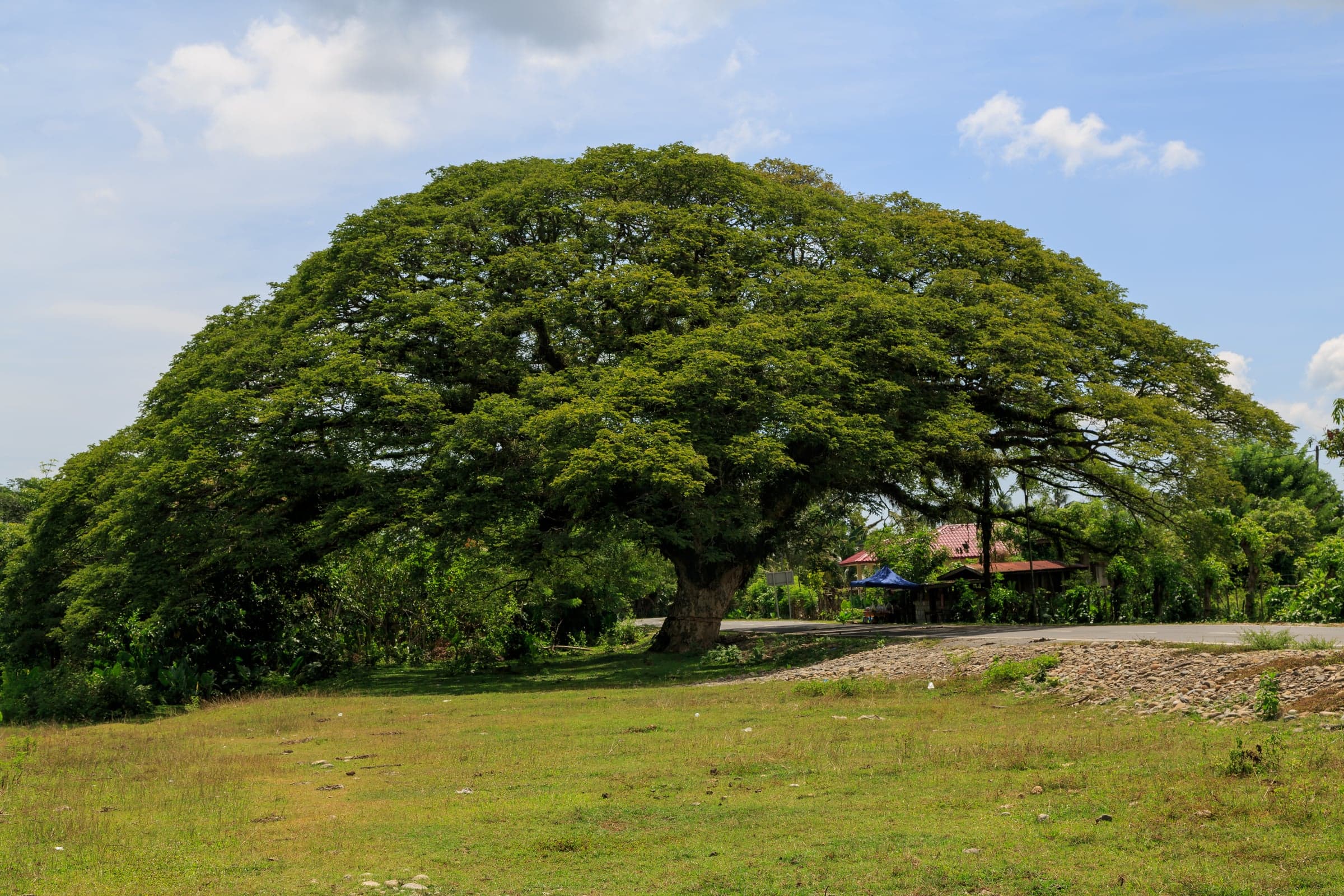
  • Saman: Holzmaserung

    Saman

    Samanea saman

    4 Stücke

  • Europäische Eiche: Holzmaserung

    Europäische Eiche

    Quercus robur

    6 Stücke

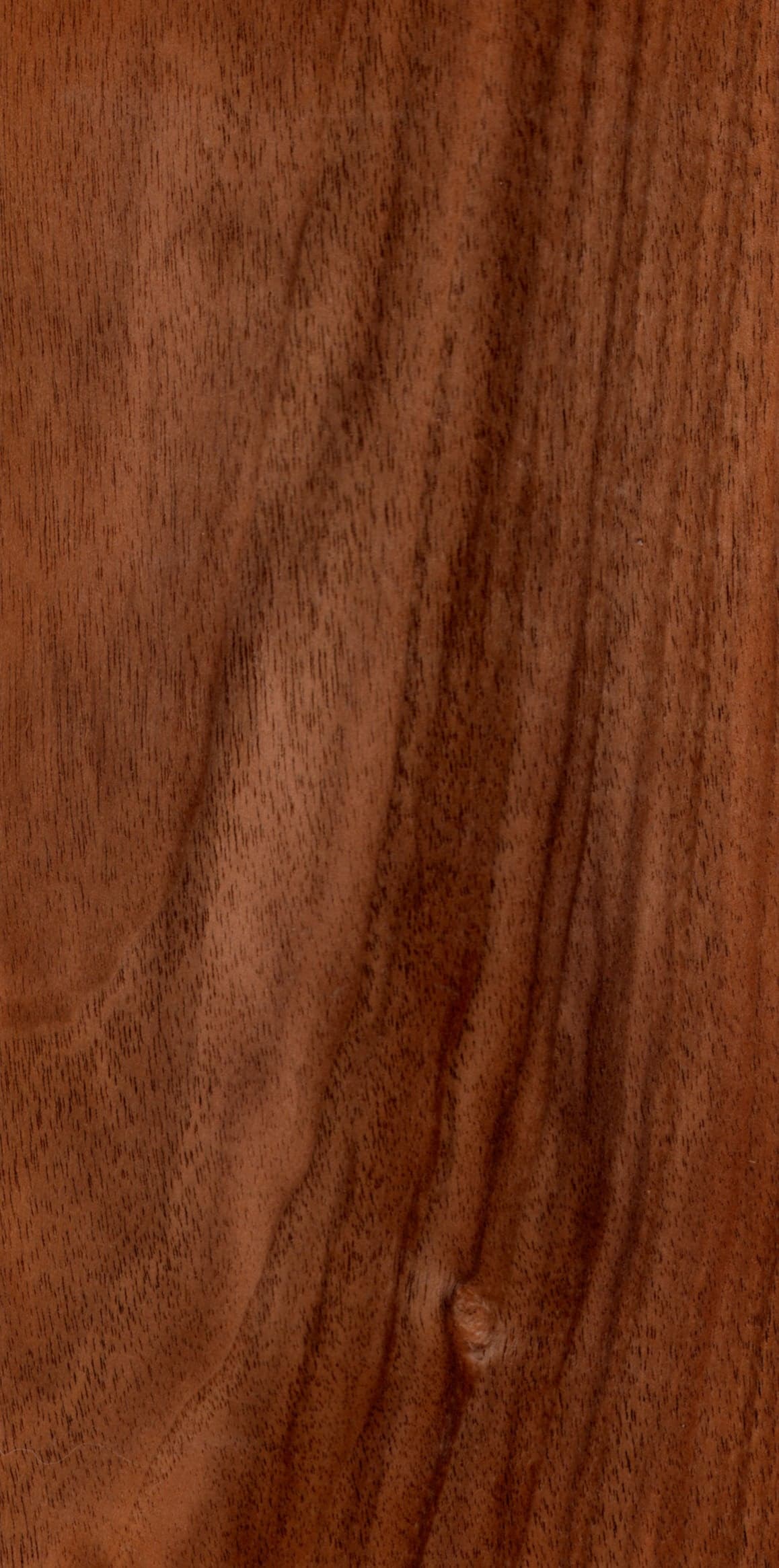
  • Europäischer Nussbaum: Holzmaserung

    Europäischer Nussbaum

    Juglans regia

    12 Stücke

Benachrichtigung zu Strandkiefer

Wir benachrichtigen Sie per E-Mail, wenn neue Strandkiefer-Bohlen bei KORENA eintreffen. Jedes Stück ist ein Unikat, deshalb zählt eine frühe Nachricht.

Ein paar E-Mails pro Monat. Kein Spam, jederzeit abmeldbar.

Holzbild

So sieht es aus

Pale yellow to reddish brown heartwood against wide pale sapwood, with very wide growth rings reflecting fast coastal growth. The ring contrast is strong, giving a bold and slightly coarse figure. It is the most resinous species KORENA lists, which is both its historical value, as the tree was tapped for turpentine for centuries, and its main working difficulty.

  • Pale yellow to reddish brown heartwood
  • Wide pale sapwood band
  • Wide growth rings with strong earlywood to latewood contrast

Arbeiten mit dieser Holzart

Verarbeitung

Works fairly well with most tools, but the resin gums up tools and clogs sandpaper more than in any other species here. Abrasives should be treated as consumable. The wide, soft earlywood bands between hard latewood bands mean the surface can wash out under sanding, leaving a rippled face, so scraping is preferable to heavy abrasive work. Sharp cutters are essential.

Finish

Wipe down with denatured alcohol or acetone before finishing to lift surface resin, otherwise oil finishes may stay tacky in patches. Once clean it takes oil and wax well. Pigment stains blotch severely because of the extreme density contrast between earlywood and latewood, so a dye or a clear finish is much safer. Seal knots with shellac before any painted finish.

Trocknung

Dries reasonably quickly but is prone to distortion given the wide rings and often spiral grain of fast grown coastal stock. A hot kiln schedule drives resin to the surface where it sets sticky and interferes with finishing later. Air drying followed by a low temperature kiln finish is the sensible route. Volumetric shrinkage at around 14.4 percent is the highest of any species KORENA lists, so movement in service is substantial.

Wie stark arbeitet es?

Holz quillt und schwindet in der Breite, wenn die Luft feuchter und trockener wird. Schätzen Sie das saisonale Arbeiten einer Strandkiefer-Platte, bevor Sie die Befestigung planen.

Einschnitt
Einsatzort

Erwartetes saisonales Arbeiten

etwa 10,3 mm

Platte mit Tischplattenhaltern oder Langlochwinkeln befestigen, nicht verleimen oder fest verschrauben.

Lineares Schwindmodell: Breite × (Schwindmaß ÷ 28 % Fasersättigung) × saisonale Feuchteschwankung. Verwendet 9 % Schwindmaß in Tangentialrichtung für Strandkiefer. Eine Planungsschätzung, keine Garantie.

Was es kostet

Sicherheit und Herkunft

  • This species is recorded as commercially grown in Europe. This does not establish where an individual piece was harvested; check its origin details.
  • Status auf der Roten Liste der IUCN: die weltweite Schutzbewertung dieser Art.
  • Working with pine has been reported to cause allergic skin reactions and asthma-like symptoms in some people. Because this species carries more resin than the others here, skin contact sensitisation is a more realistic risk over repeated exposure. Gloves when handling and good extraction while machining are worth the habit.

Den vollständigen Leitfaden lesenAusführliche Hinweise zu Maserung, Farbveränderung, Verarbeitung und Formstabilität.+

What Maritime Pine actually is#

Pinus pinaster is the pine of the western Mediterranean and the Atlantic seaboard of Iberia and France. The Landes forest in southwest France, planted on former dunes and marsh from the nineteenth century onward, is the largest planted pine forest in western Europe and the principal commercial source of this timber.

For centuries the tree was more valuable standing than felled, because it was tapped for resin to produce turpentine and rosin. That history is the single most useful fact about the wood, because the resin that made it commercially important is also what makes it the most demanding species in this catalogue to machine and finish.

Reading a Maritime Pine slab#

Fast coastal growth produces very wide growth rings, and the contrast between the soft pale earlywood and the hard dark latewood is extreme. The result is a bold, coarse figure with a lot of visual movement, quite different from the fine even texture of spruce or fir.

That coarseness is the honest character of the wood and suits rustic work well. It does not suit a design asking for a quiet, uniform surface.

Colour runs pale yellow to reddish brown in the heartwood against a wide pale sapwood band. Spiral grain is common in fast grown coastal stock and is worth checking for, because it is the main cause of the distortion this species is prone to.

Käuferfragen

Häufige Fragen von Käufern

Why is Maritime Pine so much stickier to work than other pines?

+

It carries more resin than any other species KORENA lists, which is why it was tapped commercially for turpentine and rosin for centuries. The resin softens with cutting heat and deposits on blades, in saw gullets and across abrasives. Clean blades with a resin solvent between operations and expect sandpaper to load quickly.

How much will it move?

+

More than anything else in this catalogue. Volumetric shrinkage is around 14.4 percent, the highest figure KORENA lists, with tangential movement at 9.0 percent against 4.5 percent radial. A wide flatsawn top will change noticeably between seasons, so it must float on slotted fasteners and should acclimatise in its final room before flattening.

Why does the surface look rippled after sanding?

+

The earlywood bands are much softer than the latewood bands and abrasives cut them away faster, leaving a washboard surface. This is worse in Maritime Pine than other pines because the rings are wide and the contrast extreme. Use a card scraper or a sharp plane for the final surface rather than sanding it flat.

Is it strong enough for a table?

Mechanische Eigenschaften

Technische Daten

Veröffentlichte Referenzwerte. Wo Quellen abweichen, steht die Spanne; der typische Wert wird für die Stufen oben verwendet.

Dichte (kg/m³)Masse pro Kubikmeter bei etwa 12 % Holzfeuchte. Schwereres Holz ist meist härter und fester.500 kg/m³
Janka-Härte (N)Kraft, um eine Stahlkugel zur Hälfte ins Holz zu drücken. Das Standardmaß für Eindruckfestigkeit.1,740 N
MOR: Biegebruchmodul (MPa)Biegefestigkeit: die Last, bei der ein Balken bricht.73 MPa
MOE: Elastizitätsmodul (GPa)Biegesteifigkeit: wie stark ein Regalboden oder eine Platte unter Last durchhängt.8.5 GPa
Radiales SchwindenSchwindmaß quer zu den Jahrringen, von frisch bis darrtrocken. Riftbretter arbeiten in diesem Maß.4.5 %
Tangentiales SchwindenSchwindmaß entlang der Jahrringe. Fladerbretter und die meisten Bohlen arbeiten in diesem Maß.9.0 %
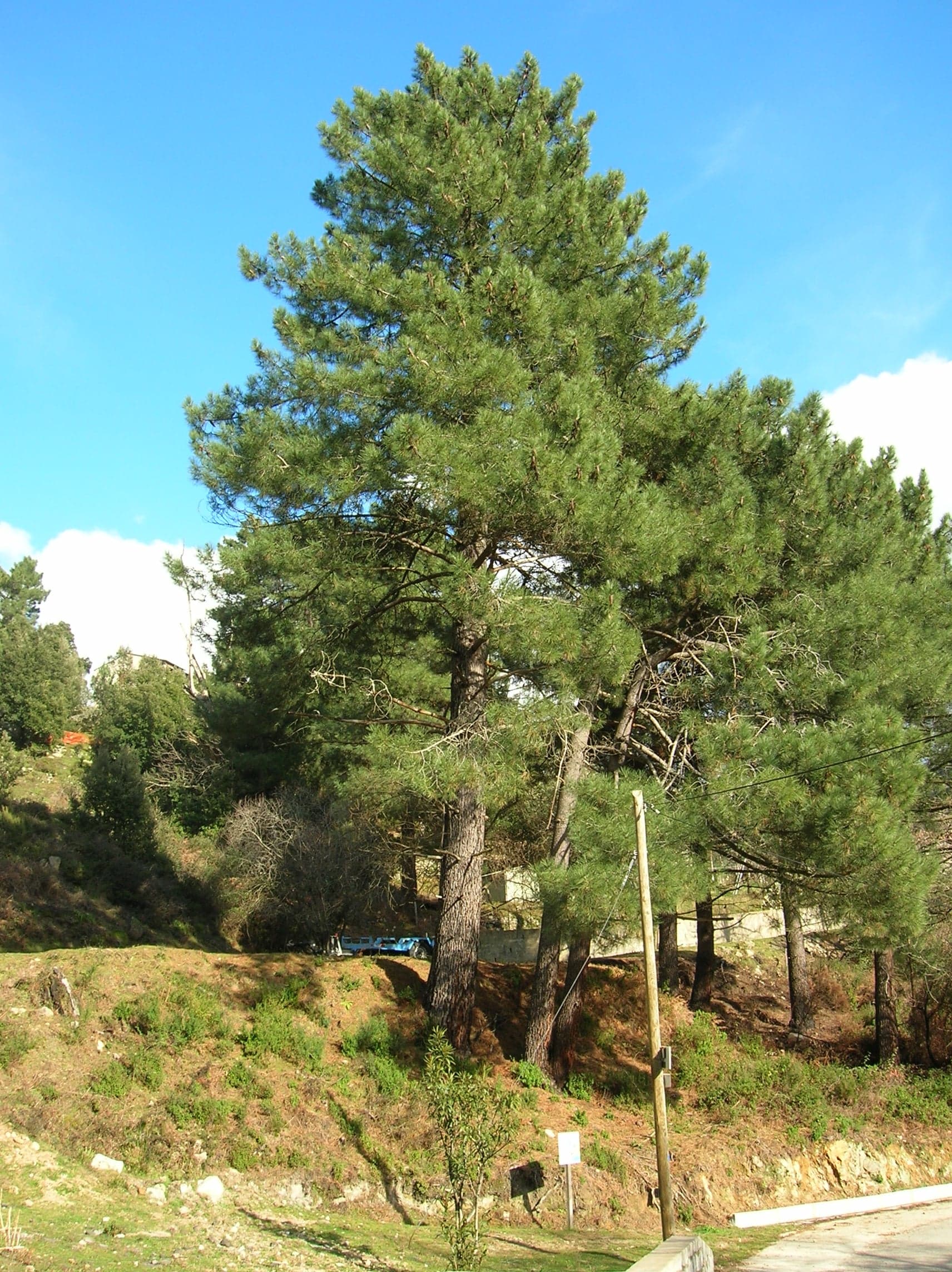
Strandkiefer: Baum

Laurent Gallet, via Wikimedia Commons

Pinus pinaster is the pine of the western Mediterranean and the Atlantic coast of Iberia and France. The Landes forest in southwest France is the largest planted pine forest in western Europe and the main commercial source. Portuguese and Spanish material is also common in the EU market.

  • Not listed in the CITES Appendices and assessed by the IUCN as Least Concern. The Landes plantations are intensively managed and certified supply is readily available, which makes documentation straightforward. Fire is the significant risk to supply in this species range, and large burn events periodically push salvage volumes into the market.

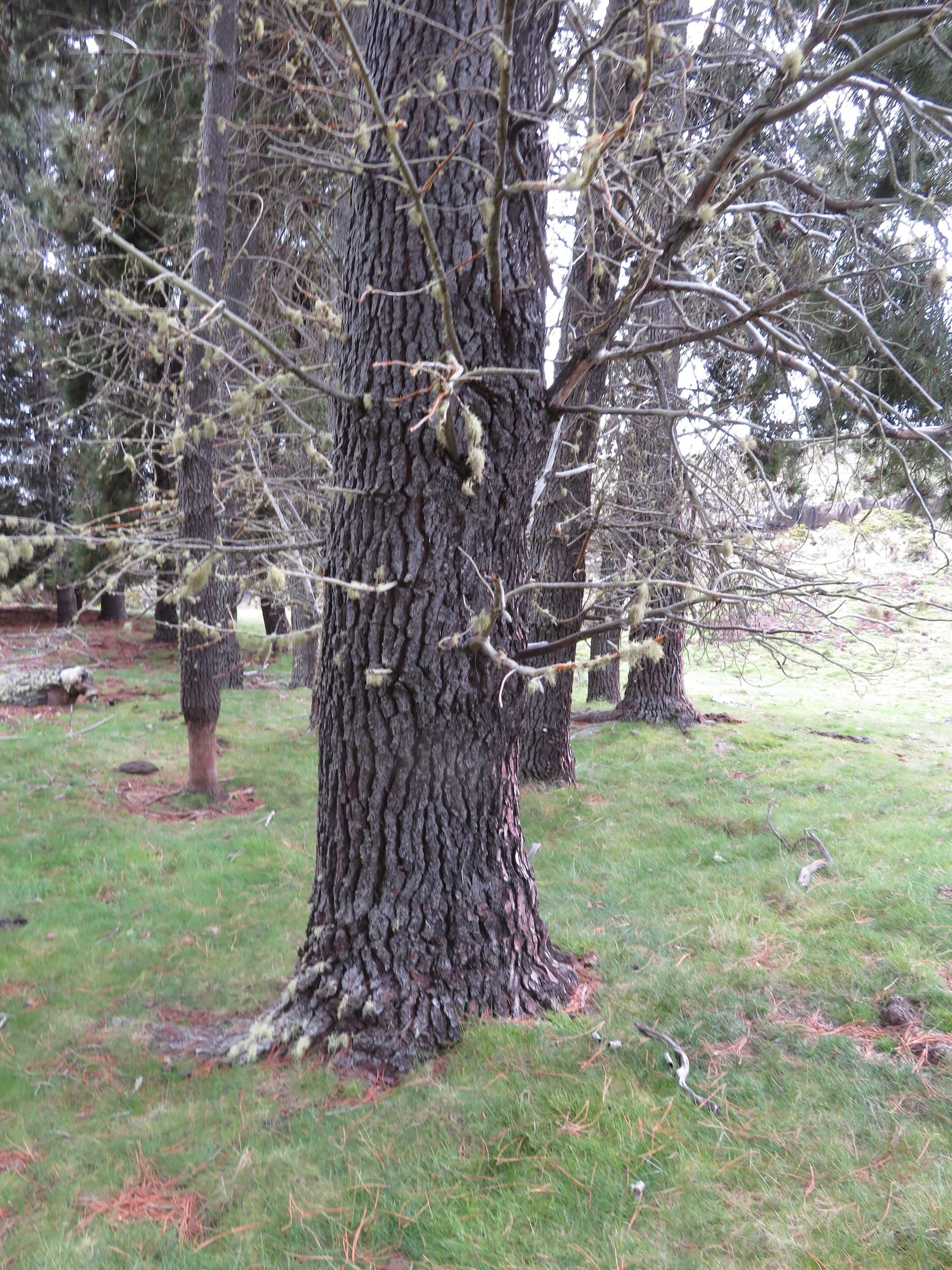
  • Strandkiefer: Rinde
    Rinde

    At the bench, and the resin problem#

    Maritime Pine works fairly well with most tools, and then the resin asserts itself.

    It gums blades faster than larch, which is saying something. It loads abrasives so quickly that sandpaper should be budgeted as a consumable rather than a tool. Saw gullets pack. Plane soles need clearing. None of this is difficult, but all of it is constant, and a schedule built on pine machining speeds will run over.

    There is a second, subtler machining problem. Because the earlywood bands are wide and much softer than the latewood, abrasives cut the soft bands away faster than the hard ones. Sand a Maritime Pine face flat and you get a washboard: a rippled surface that catches light unevenly. The fix is to produce the final surface with a sharp plane or a card scraper and use abrasives only lightly, if at all.

    Drying and movement#

    This species moves more than anything else KORENA lists. Volumetric shrinkage is around 14.4 percent, with tangential movement at 9.0 percent against 4.5 percent radial, a ratio of two to one that guarantees flatsawn boards will want to cup.

    It also dries with a tendency to distort, driven by the wide rings and frequent spiral grain of fast grown stock. A hot kiln schedule compounds the problem by drawing resin to the surface, where it sets sticky and sabotages the finish months later.

    Air drying under cover followed by a low temperature kiln finish is the route that works. Ask the yard what schedule was used, and let any slab acclimatise in its final room for a couple of weeks before final flattening. On a KORENA listing the drying method and measured moisture are recorded, so this is checkable rather than a matter of trust.

    Finishing#

    Start with a solvent wipe. Denatured alcohol or acetone across the surface, allowed to flash off, lifts the mobile surface resin. Skip this and an oil finish will cure unevenly and stay tacky in patches, which is a fault that only appears after the work is otherwise done.

    Once clean it takes oil and wax well. Pigment stains blotch severely here, worse than on any other pine, because the density contrast is so extreme. Use a dye or leave it clear. Seal knots with shellac before any painted finish.

    Where Maritime Pine is the right answer#

    Rustic tabletops, panelling, carcass work and shelving where the bold coarse figure is wanted and the movement can be designed around. It is inexpensive, widely available and honest about what it is.

    It is the wrong answer for fine work, for anything requiring dimensional precision across a wide panel, for a surface that must stay unmarked at 1,740 N Janka, and for any project where the finishing schedule cannot absorb the extra solvent and cleaning steps.

    Sourcing and EUDR#

    Not CITES listed and assessed as Least Concern. The Landes plantations are intensively managed with good certification coverage, so documentation is straightforward and supply is reliable. The one thing to be aware of is fire. Large burn events in southwest France and Iberia periodically push significant salvage volumes into the market, and salvage material is legitimate but should be identified as such rather than discovered on arrival.

    +

    At 1,740 N Janka it is soft, close to Norway Spruce and well below Scots Pine at 2,420 N. It makes a rustic tabletop that will dent and record use. For a surface expected to stay unmarked, choose a hardwood.

    Is my oil finish going to stay tacky?

    +

    It will if you skip the solvent wipe. Clean the surface with denatured alcohol or acetone and let it flash off before applying any oil, and be more thorough about it than you would with Scots Pine. Kiln dried stock that was pushed hot carries the most surface resin.

    Volumetrisches SchwindenGesamte Volumenänderung von frisch bis darrtrocken. Niedriger heißt formstabiler.14.4 %
    Natürliche Dauerhaftigkeit (EN 350)Europäische Norm für natürliche Dauerhaftigkeit, von 1 (sehr dauerhaft) bis 5 (nicht dauerhaft).Class 4 — Slightly durable

    Quellen

    • The Wood Database — Maritime Pine (Pinus pinaster)(abgerufen am 2026-08-12)
    • USDA FPL Wood Handbook FPL-GTR-190 (2010)(abgerufen am 2026-08-12)
    • Meier, E. — WOOD! Identifying and Using Hundreds of Woods Worldwide (2015)(abgerufen am 2026-08-12)

    Achtung

    • Nicht unbehandelt für außenDie natürliche Dauerhaftigkeit ist EN 350 Klasse 4 von 5. Innen verwenden oder unter gepflegter Oberfläche.
    • Arbeitet stärker als die meistenBreite Platten brauchen Tischplattenhalter oder Langlochbefestigung und Raum zum Arbeiten. Nutzen Sie den Rechner unten.
    • Staub reiztBeim Schleifen und Maschinenarbeiten Absaugung und Maske verwenden.

    Für Details auf ein Etikett tippen.

    Auf einen Blick

    Die Stufen verwenden feste Grenzen für alle Holzarten bei KORENA und sind daher direkt vergleichbar. Der gemessene Wert steht unter jeder Stufe.
    HärteWiderstand gegen Dellen und AbnutzungWeich

    Janka-Härte 1.740 N

    65 % weicher als Europäische Eiche

    GewichtWie schwer eine Bohle zu heben istLeicht

    500 kg/m³

    StabilitätWie wenig es mit den Jahreszeiten arbeitetLebhaft

    14,4 % Volumenschwindung

    BearbeitungSägen, Hobeln, Schleifen, LeimenAnspruchsvoll

    3,1 / 5 Werkbank-Durchschnitt

    AußeneinsatzNatürliche Fäulnisresistenz, EN 350Nur innen

    EN 350 Klasse 4

    • Sägen · GutWie sauber es schneidet und wie stark es Sägeblätter beansprucht.1 = schwierig · 5 = ausgezeichnet
    • Hobeln · GutWie glatt die Oberfläche wird und wie stark es ausreißt.1 = schwierig · 5 = ausgezeichnet
    • Schleifen · MäßigWie schnell es glatt schleift, ohne das Papier zuzusetzen.1 = schwierig · 5 = ausgezeichnet
    • Drechseln · GutWie es sich an der Drechselbank schneiden und finishen lässt.1 = schwierig · 5 = ausgezeichnet
    • Schnitzen · GutWie scharf es Details unter dem Hohleisen hält.1 = schwierig · 5 = ausgezeichnet
    • Verleimen · Sehr gutWie zuverlässig Leimverbindungen halten.1 = schwierig · 5 = ausgezeichnet
    • Schraub- / Nagelhalt · Sehr gutWie gut es Schrauben und Nägel hält, ohne zu spalten.1 = schwierig · 5 = ausgezeichnet
    • Dampfbiegen · GutWie gut es nach dem Dämpfen Rundungen annimmt.1 = schwierig · 5 = ausgezeichnet

    Was Strandkiefer als Rohholz in Europa gerade kostet, je Kubikmeter netto. Tippen Sie auf einen Preis für Details.

    • Standard-RundholzGroße Mengen Standard-Rundholz von Waldbesitzern und Staatsforsten, überwiegend für Bau und Industrie.Die meisten Preise liegen zwischen 32 € und 90 €.Auf Basis von 81 Preisen aus 2 Regionen.Letzte Daten 15. Okt. 2026

    Warum kostet eine Bohle mehr?

    Das sind Preise für Rohholz. Eine Bohle ist der beste Teil eines Stamms, ein Jahr oder länger getrocknet, dann Stück für Stück geprüft und vermessen. Nur ein kleiner Teil jedes Stamms wird zur Bohle.

    Quelle: KORENA Timber Index · Letzte Daten 15. Okt. 2026

    Alle Regionalpreise