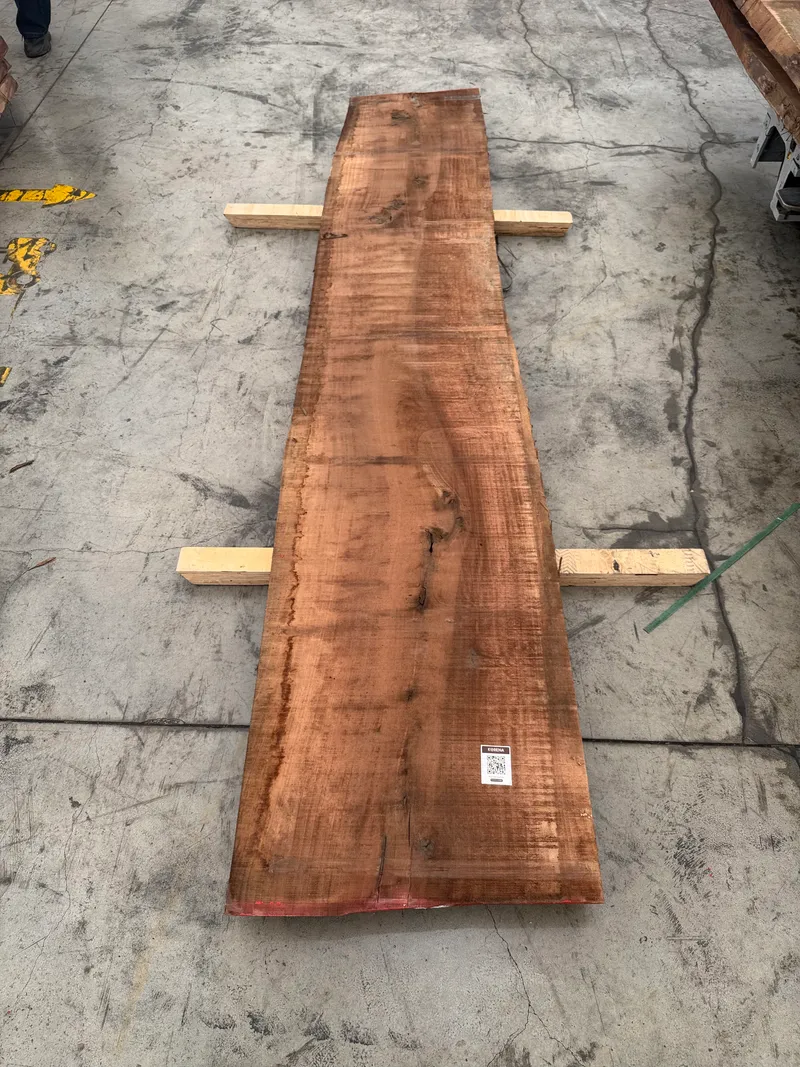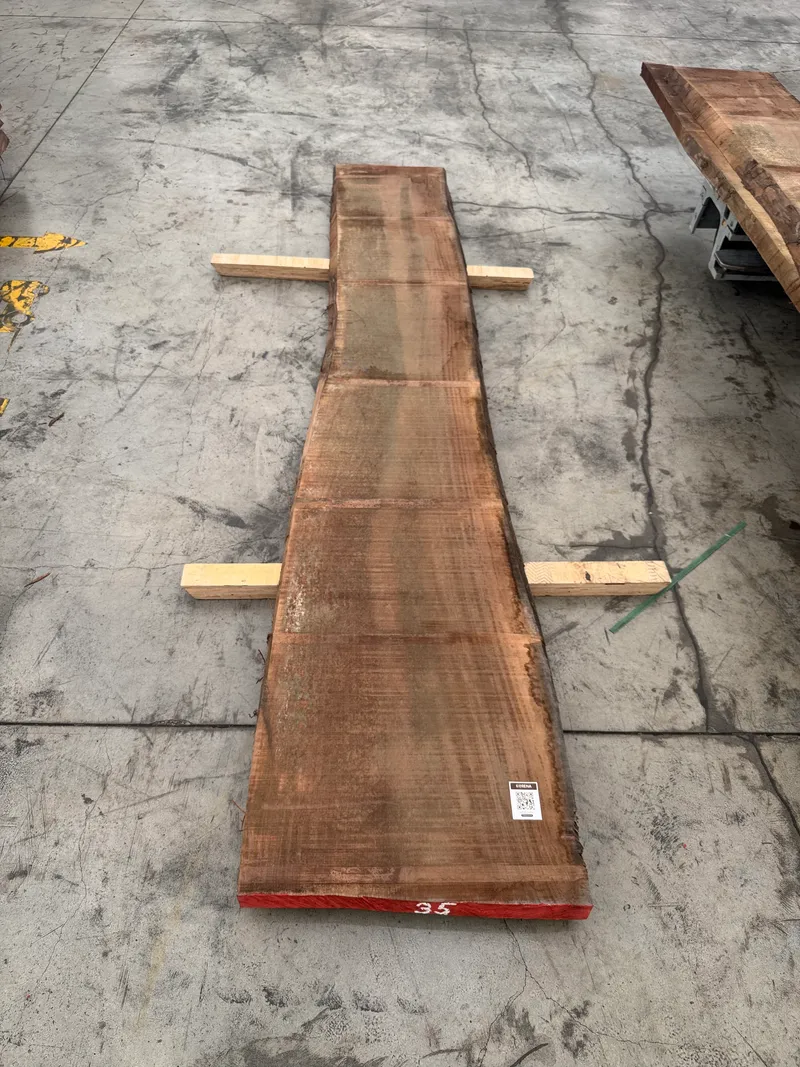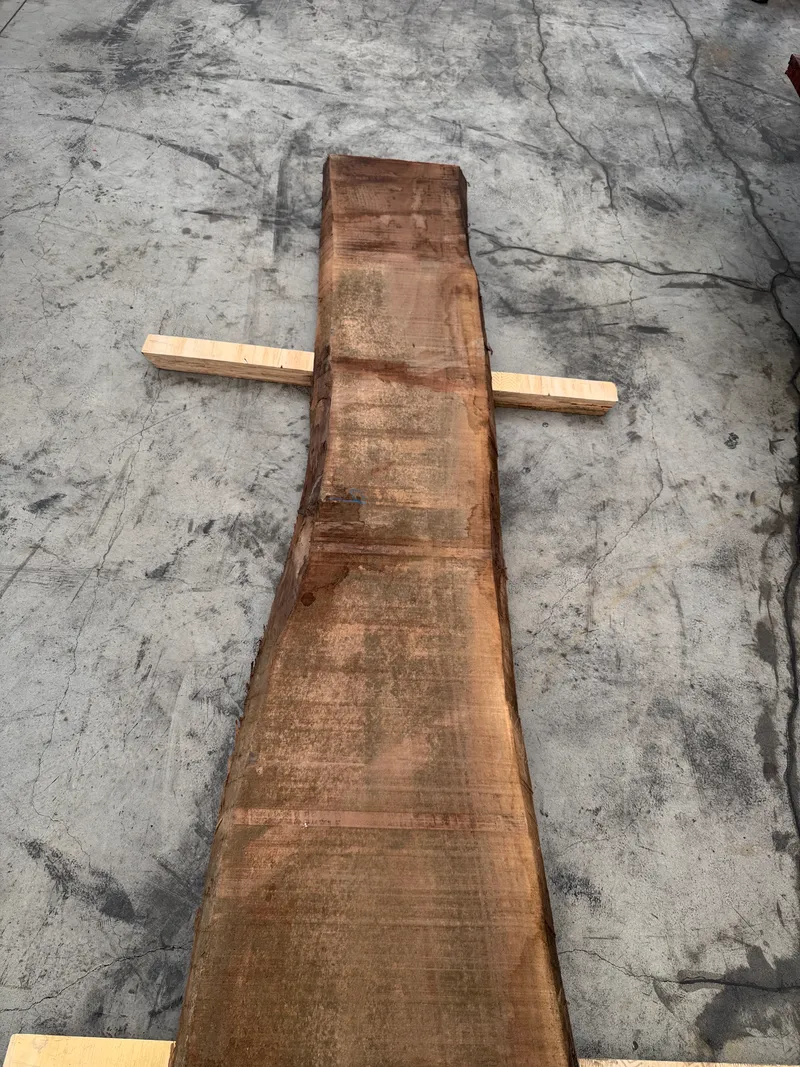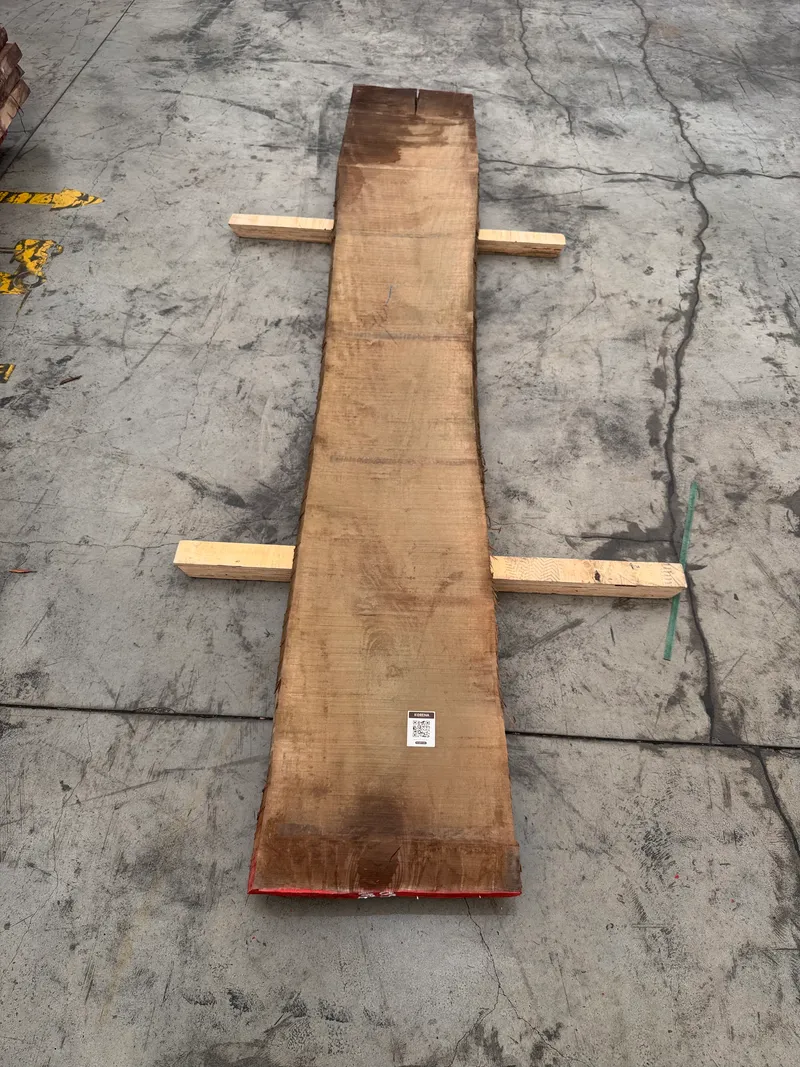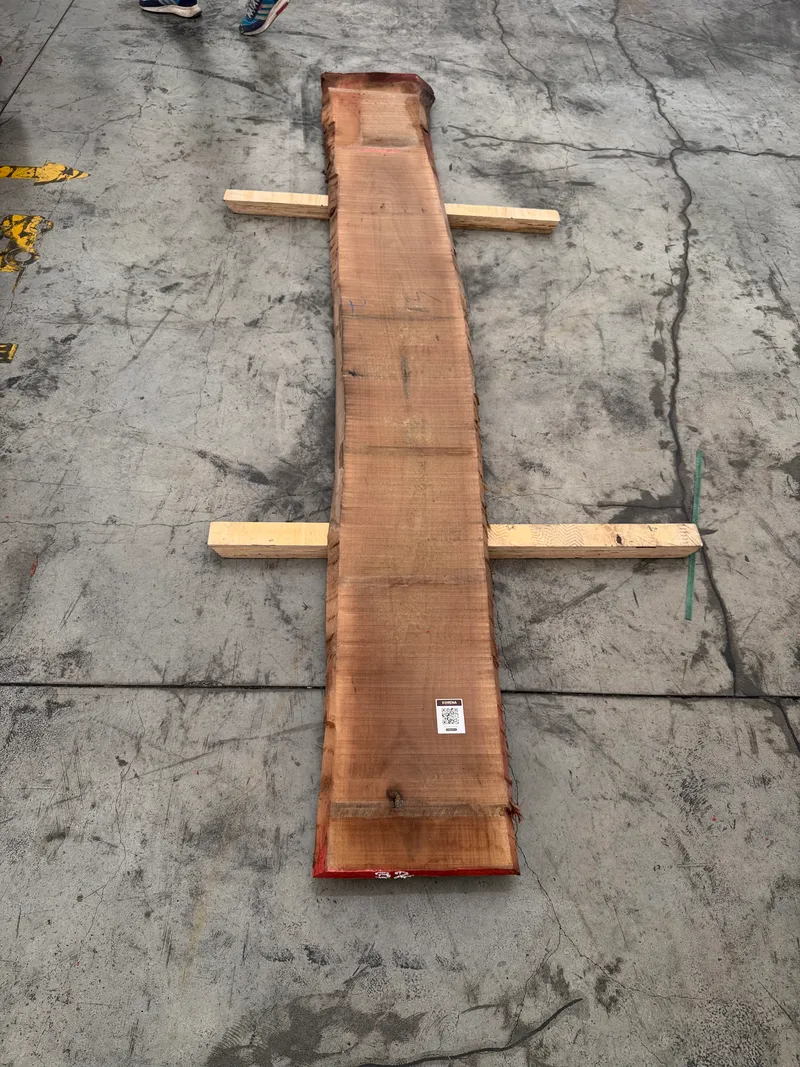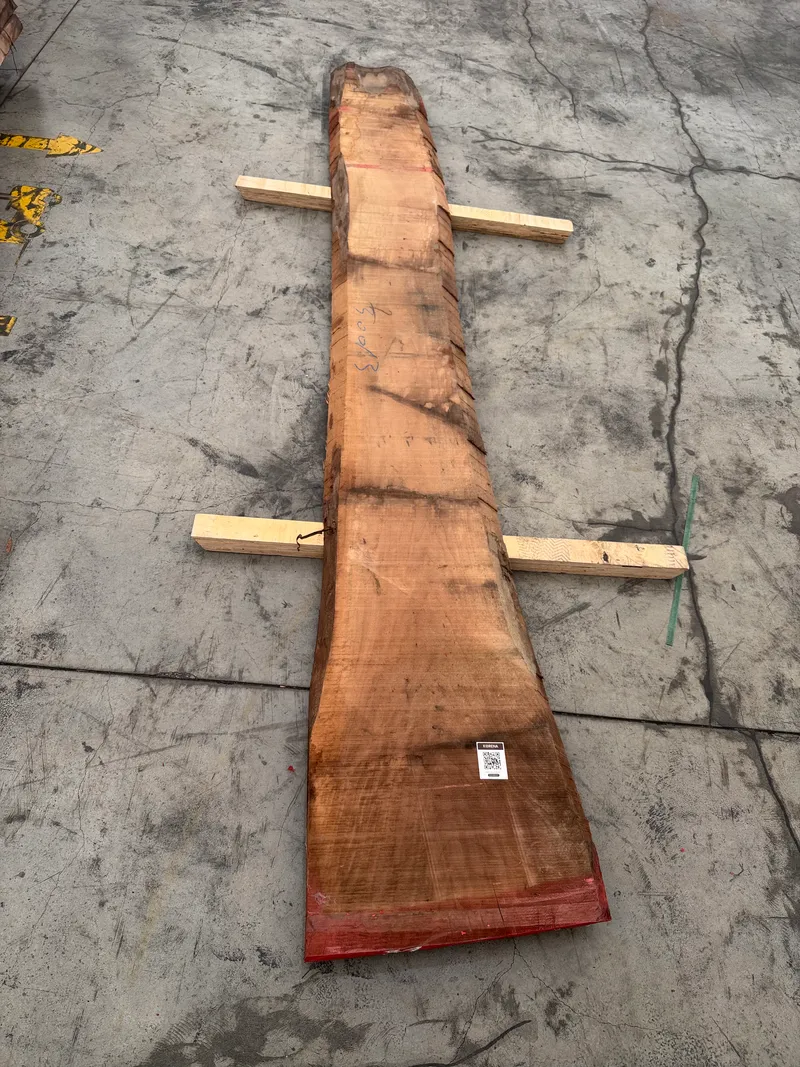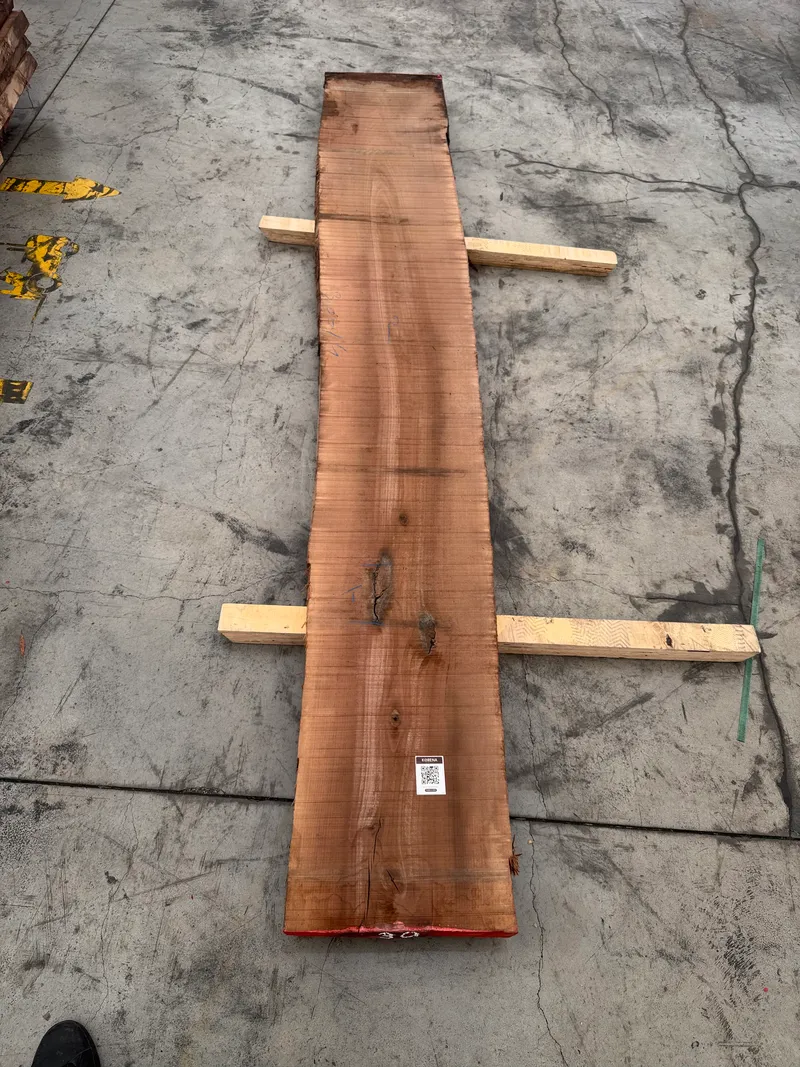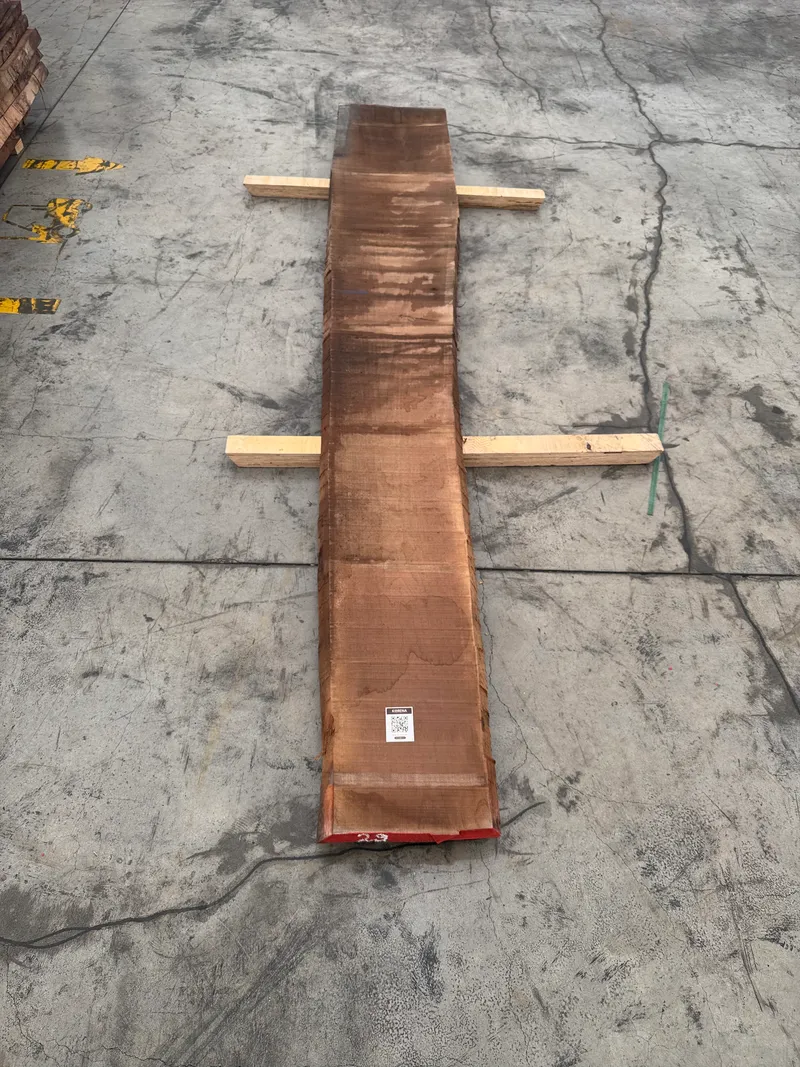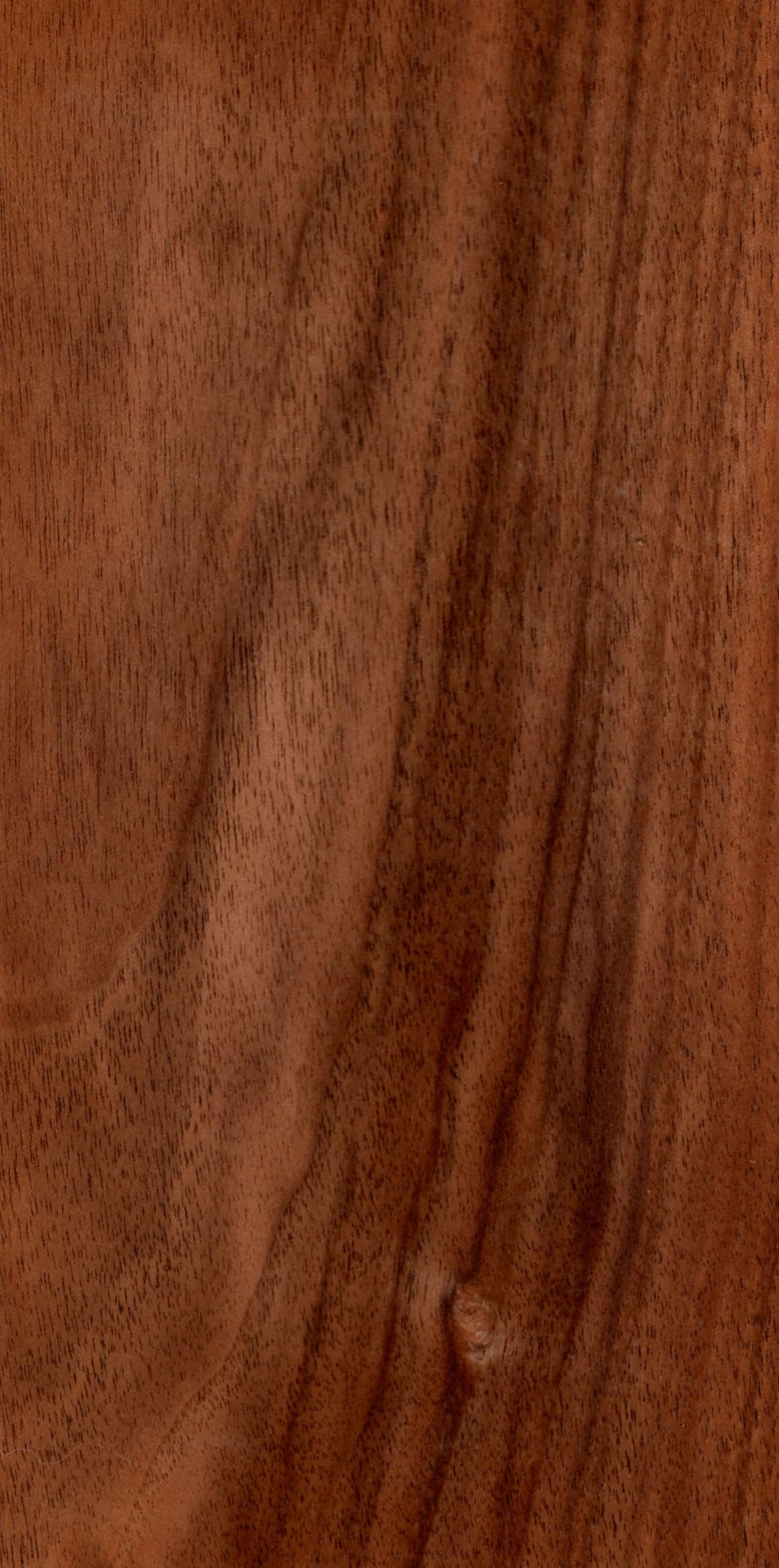
Juglans regia
Warm chocolate-brown hardwood with straight to wavy grain. Works cleanly, finishes beautifully, and reads as the maker's wood across European studios.
Wood appearance
Grain runs mostly straight, with wavy or curly figure where branches and crotches meet. Texture is coarse and uneven, and at around 640 kg/m³ it feels solid in the hand without being heavy on the bench.
Working with it
Saws, planes, sands, and turns at 4/5, a cooperative wood on hand and machine tools. Wavy or curly sections want sharp irons and a light cut to avoid tear-out; steam-bending is workable but middling at 3/5.
Takes oils, hardwax, and shellac without fuss, a thinned oil coat deepens the brown and lifts any figure. Sands to a fine surface; avoid heavy stain, the natural colour does the work.
Dries at a moderate rate with a tendency to check and honeycomb if pushed. Most EU yards air-dry then finish in the kiln; ask for moisture content and any sticker stain before you commit.
Wood swells and shrinks across its width as the air gets damper and drier. Estimate the seasonal movement of a European Walnut top before you design the fixings.
Expected seasonal movement
about 6.3 mm
Fix the top with buttons or slotted brackets, not glue or tight screws.
Linear shrinkage model: width × (shrinkage ÷ 28 % fibre saturation) × seasonal moisture swing. Uses 7.75 % tangential shrinkage for European Walnut. A planning estimate, not a guarantee.
What European Walnut timber sells for across Europe right now, per cubic metre before VAT. Tap any price for the detail.
Dust contains juglone and can irritate skin and airways. Wear a mask and run extraction; finished surfaces are food-contact safe.
Juglans regia grows across central and southern Europe, France, Italy, the Balkans, and into Anatolia. EU yards source it from managed orchards and woodland thinnings, with French and Italian stock the most common at trade.
Native to Europe, IUCN Least Concern, and not CITES-listed. Supply is steady from orchard thinnings and managed woodland, though wide single-board slabs in the 80 cm+ range move fast.
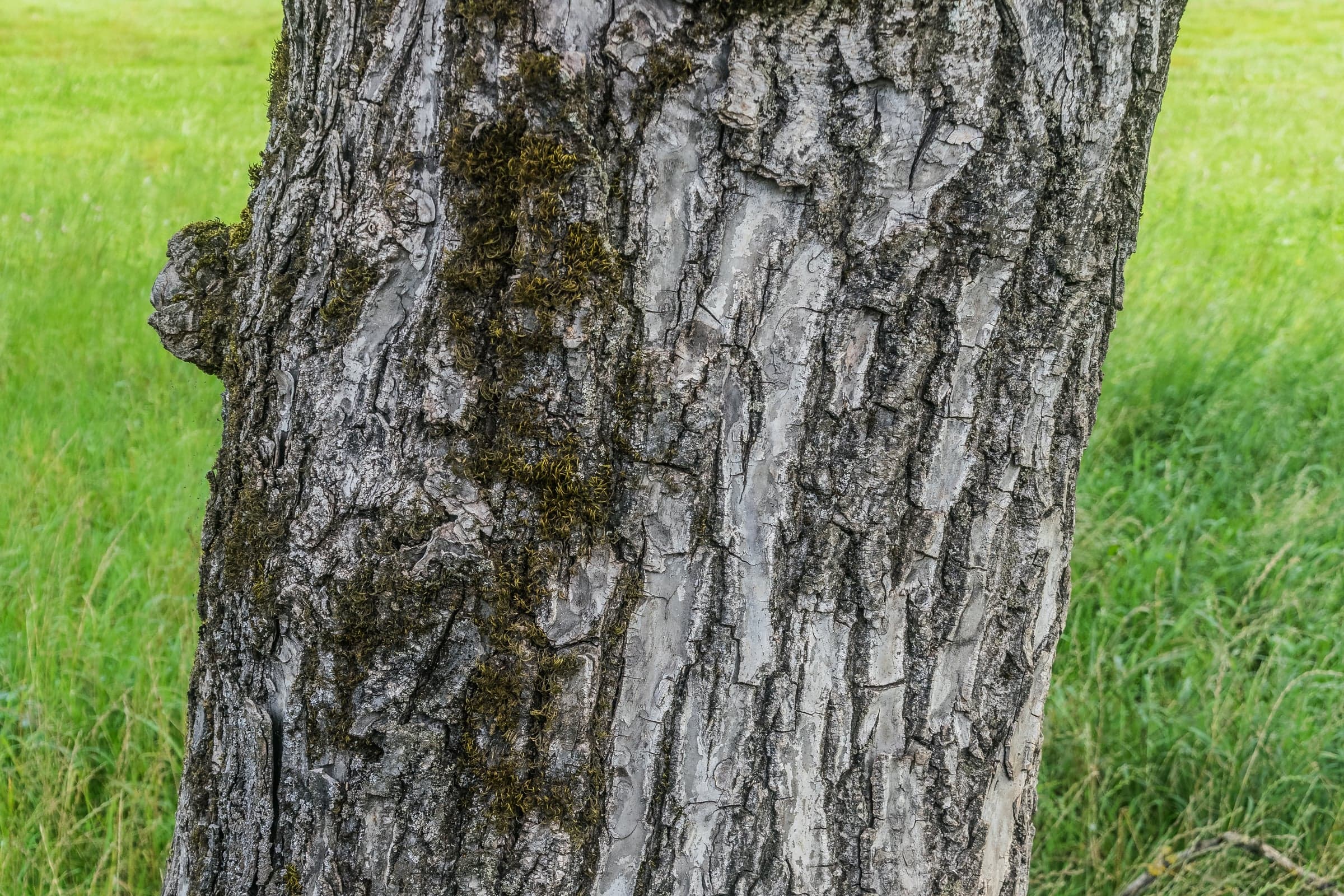
Juglans regia is the premium furniture timber of Europe and has been for four centuries. It combines a colour and figure nothing else here matches with genuinely good working properties and better than average stability, and it is expensive because all three are true at once.
It is grown as much for nuts as for wood. A great deal of slab stock comes from orchard and garden trees felled at the end of their productive life rather than from managed forestry, which is why widths and lengths are irregular and why provenance varies more than for a plantation species.
Colour runs grey brown to mid brown, warmer and lighter than American black walnut, with pronounced streaking and marbling. Sapwood is pale cream and sharply demarcated, and on a live edge slab it is usually left in place as a feature.
Figure is where the value concentrates. Crotch sections, where a trunk divides, produce feather and flame patterns. Stump and root material gives burl. Curly and quilted grain occurs. A plain walnut board and a figured one from the same tree can differ in price by a factor of five.
Look for the streaking pattern, the sapwood line, and any check running from a crotch, which is where drying stress concentrates.
Almost every wood in this catalogue darkens with light. Walnut is the significant exception: it lightens.
Fresh machined walnut carries purple and grey notes that mellow over months and years toward a warmer, lighter honey brown. The dramatic contrast between dark heartwood and pale sapwood softens as the heartwood lightens.
This catches buyers out regularly. If you choose a slab for the deep, almost purple brown it shows on the day it was surfaced, you are choosing a colour that will not persist. A UV inhibiting finish slows the change but does not stop it.
Walnut is a pleasure. At 5,410 N it is hard enough to be substantial without punishing tooling, it machines cleanly, turns well, carves well, glues reliably and takes finish beautifully.
Figured stock is the exception. Crotch and burl grain tears out under a planer, and the answer is light cuts, sharp tooling and a scraper or high angle plane for the final surface. On material this expensive that patience is cheap.
It takes oil finishes particularly well, and a thinned oil coat deepens the brown and lifts the chatoyance in figured sections more effectively than a film finish.
Walnut contains juglone, and the species is a documented sensitiser. Skin and respiratory irritation are reported, and repeated exposure sensitises some people over time. Extraction and a mask matter more here than with most species.
Juglone is also allelopathic, toxic to many plants. Walnut shavings and sawdust should not go into garden mulch or compost, and they should never be used as animal bedding, particularly for horses, where walnut shavings are associated with laminitis.
Volumetric shrinkage of 11.0 percent is among the lower figures in this catalogue, with tangential at 7.0 percent against radial at 4.5 percent.
That is a comparatively narrow differential, and it means walnut behaves better in a wide flatsawn top than oak, ash or beech would. Combined with its appearance, that stability is a large part of why walnut is the premium choice rather than merely the prettiest one.
Decay class 3 makes it moderately durable, which is adequate for protected exterior joinery but not for exposure.
Fine furniture, tabletops, cabinetry, turned and carved work, gunstocks, and any piece where appearance carries the design. It is the species in this catalogue that most rewards a live edge treatment, because the sapwood contrast and the figure are the point.
It is the wrong answer where budget is the constraint and where a large volume of matched material is needed, since consistency across many boards is hard to achieve.
Not CITES listed and assessed as Least Concern. Supply is genuine but limited, and because much of it comes from orchard and garden felling rather than forestry, the chain behind a given slab is shorter and less standardised than for a commodity species. KORENA records the partner yard and region on every listing, which on this species is worth reading.
Buyer questions
Colour and figure. European walnut, Juglans regia, is lighter and warmer, running grey brown to mid brown with pronounced streaking and marbling. American black walnut, Juglans nigra, is darker and more uniformly chocolate. European is slightly harder at 5,410 N against 4,490 N but slightly less stiff. Most makers choose on appearance, and European walnut is the more variable and figured of the two.
Yes, and it moves in the opposite direction to most woods. Where oak and cherry darken with light, walnut lightens and mellows, losing some of the purple and grey notes toward a warmer honey brown. A UV inhibiting finish slows it. Buying walnut on the strength of its freshly machined colour is a common mistake.
Walnut contains juglone and is a documented sensitiser, with skin and respiratory irritation reported. Extraction and a mask matter here more than with most species. Juglone is also toxic to some plants, so walnut shavings should not go into garden mulch or animal bedding, particularly for horses.
Slow growth, limited size and high demand. Juglans regia is grown as much for nuts as for timber, trees are often felled from orchards and gardens rather than forestry, and clean wide boards are genuinely scarce. Figured material from crotches, stumps and burls commands multiples of plain stock.
Good. Volumetric shrinkage of 11.0 percent is among the lower figures in this catalogue, with tangential at 7.0 percent against radial at 4.5 percent. That relative stability, combined with its appearance, is a large part of why walnut is the premium furniture timber of Europe.
Mechanical properties
Published reference values. Where sources disagree the range is shown, with the typical value used for the scales above.
| Density (kg/m³)Mass per cubic metre at about 12 % moisture. Heavier wood is usually harder and stronger. | 590–680 kg/m³typical 640 kg/m³ |
|---|---|
| Janka hardness (N)Force needed to press a steel ball halfway into the wood. The standard measure of dent resistance. | 4,900–5,800 Ntypical 5,410 N |
| MOR: modulus of rupture (MPa)Bending strength: the load at which a beam breaks. | 100–130 MPa |
| MOE: modulus of elasticity (GPa)Bending stiffness: how much a shelf or top sags under load. | 9.0–12.0 GPa |
| Radial shrinkageShrinkage across the growth rings, green to oven-dry. Quartersawn boards move by this. | 4.5–5.5 % |
| Tangential shrinkageShrinkage along the growth rings. Flatsawn boards and most slabs move by this. | 7.0–8.5 % |
| Volumetric shrinkageTotal volume change from green to oven-dry. Lower means more stable. | 11.0–13.0 % |
| Natural durability (EN 350)European standard for natural decay resistance, from 1 (very durable) to 5 (perishable). | Class 3 — Moderately durable |
We email you when fresh European Walnut slabs land at KORENA. Each piece is one of one, so early notice matters.
Janka 5,410 N
9 % harder than European oak
Tap a label for the detail.
640 kg/m³
12.0 % volumetric shrinkage
4.0 / 5 bench average
EN 350 class 3
Why does a slab cost more than this?
These are prices for raw timber. A slab is the best cut of a log, dried for one year or more, then checked and measured piece by piece. Only a small part of each log becomes a slab.
Source: KORENA Timber Index · Latest data 4 Oct 2026
See all regional prices