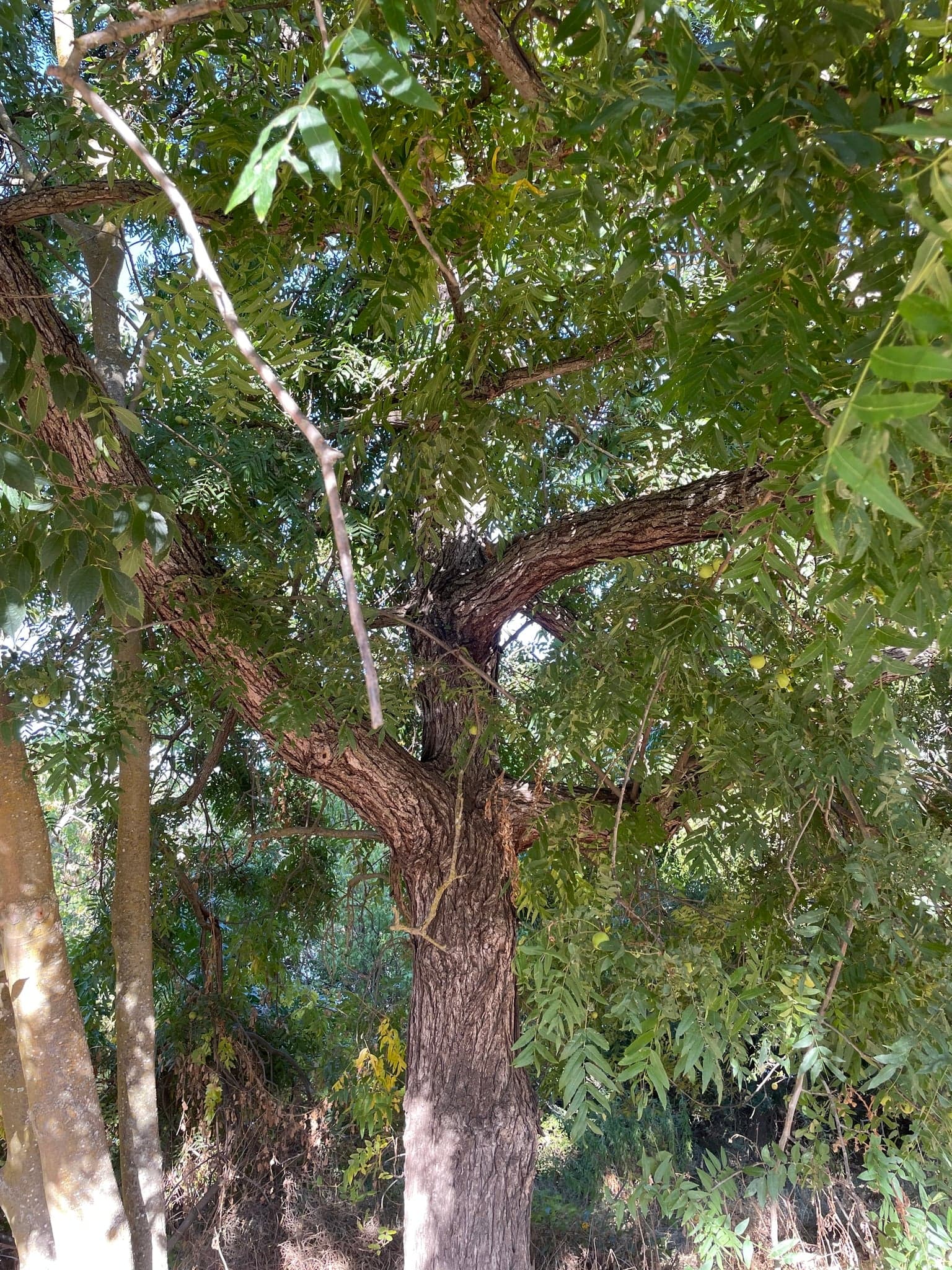
Juglans hindsii
Claro Walnut
California's figured walnut, and the wildest figure in the walnut family. Graft unions between English walnut and Hinds rootstock produce violet, gold and marbled patterns no other walnut can match.
- This species record does not establish where an individual piece was grown or harvested. Check the origin details of the piece you are considering.
- Botanical group. Softwoods are conifers; hardwoods are broadleaf trees.
- The botanical family the species belongs to.
Get notified when it landsReference species. No pieces in stock right now.
Is it right for your project?
Great for
- Heirloom dining tables
- Statement live-edge slabs
- Executive desks
- Gun stocks
- High-end cabinetry feature panels
No Claro Walnut in the current drop
Similar species in stock
No Claro Walnut right now. These species suit the same projects and have pieces available.
Get notified about Claro Walnut
We email you when fresh Claro Walnut slabs land at KORENA. Each piece is one of one, so early notice matters.
Wood appearance
What it looks like
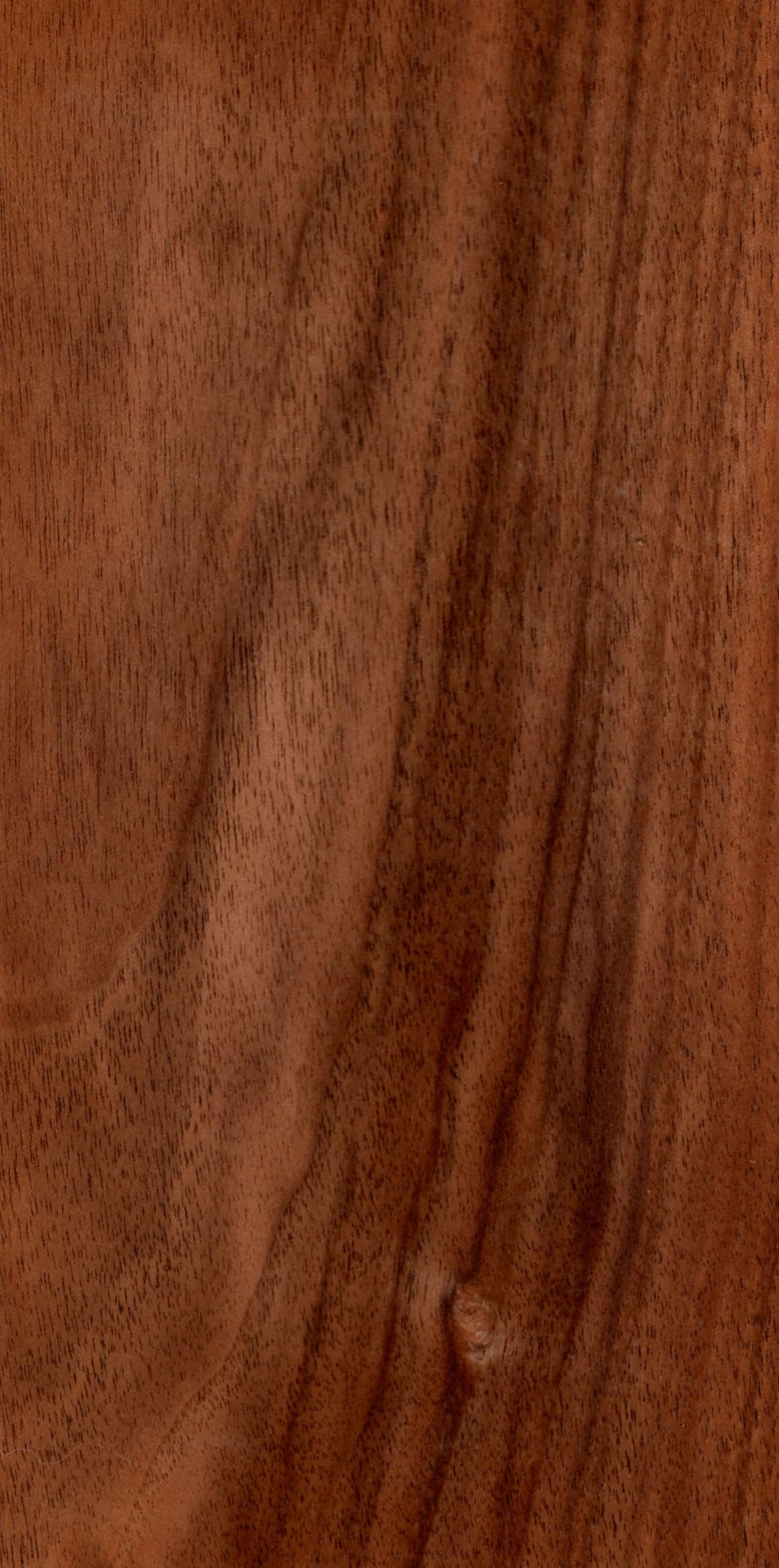
Heartwood ranges from chocolate brown to purple-grey, often streaked with violet, gold and reddish tones. Sapwood is pale cream and usually contrasts sharply. Figure is the headline: fiddleback, marbled, feathered crotch, and dense burl clusters are common in graft-figured boards. Grain is typically straight in clear sections but wild around figure. Medium texture, satin natural lustre.
- Chocolate-brown to purple-grey heartwood
- Violet, gold and reddish streaking
- Pale cream sapwood with sharp contrast
- Fiddleback, marbled and crotch figure common
- Often heavily figured; prized for slabs.
Working with it
Working it
Works well by hand and machine across sawing, planing, sanding, turning and carving. Glues and screws without drama. Wild grain around figure and burl tears out easily, back off feed rates, use sharp tooling, and finish-sand rather than hand-plane figured zones. Steam-bending is moderate at best; not the wood for tight curves. Note: published laboratory data for Claro is limited. No reliable MOR or MOE figures exist. For structural calculations, treat mechanical properties as broadly comparable to Black Walnut (Juglans nigra) and design with that proxy in mind.
Finishing
Takes oil, hardwax and lacquer cleanly. Oil finishes deepen the violet and gold tones and lift the chatoyance in fiddleback areas, worth a sample board before committing. Sand to 180–220 grit; going finer can close the surface and dull the figure. Open pores will show under high-build finishes, so grain-fill if a glass-flat surface is required.
Drying
Dries at a moderate rate. Shrinkage is moderate (radial 4.0–4.7%, tangential 6.0–7.0%, volumetric 10.2–11.2%) with a tangential-to-radial ratio around 1.5, manageable, but figured and crotch sections can check or honeycomb if pushed. Slow kiln schedules and weighted stickering are standard for slab stock. Acclimatise indoors for several weeks before machining.
How much will it move?
Wood swells and shrinks across its width as the air gets damper and drier. Estimate the seasonal movement of a Claro Walnut top before you design the fixings.
Expected seasonal movement
about 7.4 mm
Fix the top with buttons or slotted brackets, not glue or tight screws.
Linear shrinkage model: width × (shrinkage ÷ 28 % fibre saturation) × seasonal moisture swing. Uses 6.5 % tangential shrinkage for Claro Walnut. A planning estimate, not a guarantee.
What it costs
Safety and sourcing
- This species record does not establish where an individual piece was grown or harvested. Check the origin details of the piece you are considering.
- IUCN Red List status: the global conservation assessment for this species.
Walnut dust contains juglone and is a known respiratory and skin sensitiser. Use extraction at the source, wear an FFP3 mask when sanding, and keep offcuts away from horses and dogs, juglone is toxic to both. Cured finished surfaces are food-contact safe.
Read the full guideIn-depth notes on figure, colour change, working and stability.
What Claro Walnut actually is#
Juglans hindsii is the northern California black walnut, and it produces the most dramatic figure in the walnut family. Its reputation rests on something that is not really a property of the species at all.
Claro is widely used as rootstock for English walnut, Juglans regia, in Californian orchards. Where the two species are grafted together, the grain at the union becomes violently disrupted, producing marbled patterning in violet, gold, orange and near black that neither species shows on its own.
Slabs cut through or near that graft union carry figure no other walnut can match, and they are priced accordingly. Plain Claro away from the union is a good walnut; graft figured Claro is a different proposition entirely.
The missing numbers#
Density at 640 kg per cubic metre and Janka hardness at 5,030 N are sourced and displayed on the species record. Modulus of rupture and elastic modulus are not shown, and that is deliberate.
Published laboratory data for Claro is limited, and no reliable MOR or MOE figures appear in the references KORENA cites. Borrowing values from Juglans nigra or Juglans regia and presenting them as Claro would produce a page that looks complete and specifies a wood that was never tested.
The practical consequence: do not use Claro where a calculated load path depends on assumed stiffness or bending strength. For a tabletop, a cabinet or a decorative slab, which is what this species is actually for, the missing figures do not constrain the decision.
Buyer questions
Questions buyers ask
What makes Claro Walnut figure so dramatic?
Much of it comes from graft unions. Claro is widely used as rootstock for English walnut orchards, and where the two species join, the grain becomes violently disrupted, producing marbled violet, gold and dark brown patterning that neither species shows alone. Slabs cut through that union carry figure no other walnut can match.
Why are no MOR or MOE figures listed?
Published laboratory data for Claro is limited and no reliable modulus of rupture or elastic modulus values exist in the references KORENA cites. Rather than borrow figures from Juglans nigra or regia and label them Claro, those fields are left empty. Density at 640 kg per cubic metre and Janka at 5,030 N are sourced and shown.
How does it compare with Black Walnut?
Claro is harder at 5,030 N against 4,490 N and considerably more variable in colour, running from pale gold through orange brown to near black, often within a single slab. Black walnut is more uniformly chocolate. Claro is bought for figure and colour variation; black walnut for consistency.
Is walnut dust a hazard?
Mechanical properties
Technical data
Published reference values. Where sources disagree the range is shown, with the typical value used for the scales above.
| Density (kg/m³)Mass per cubic metre at about 12 % moisture. Heavier wood is usually harder and stronger. | 600–680 kg/m³typical 640 kg/m³ |
|---|---|
| Janka hardness (N)Force needed to press a steel ball halfway into the wood. The standard measure of dent resistance. | 4,700–5,400 Ntypical 5,030 N |
| Radial shrinkageShrinkage across the growth rings, green to oven-dry. Quartersawn boards move by this. | 4.0–4.7 % |
| Tangential shrinkageShrinkage along the growth rings. Flatsawn boards and most slabs move by this. | 6.0–7.0 % |
| Volumetric shrinkageTotal volume change from green to oven-dry. Lower means more stable. | 10.2–11.2 % |
| Natural durability (EN 350)European standard for natural decay resistance, from 1 (very durable) to 5 (perishable). |