Finishing
How to restore a dry, grey or cracked cutting board
Inspect the wood before treating it, clean and dry it fully, then restore dry areas with oil; cracks need a separate judgement about repair.
Restore a dry or grey cutting board by washing it, drying it completely and oiling every face and the end grain, but inspect cracks first because oil cannot repair a split or failed joint. For very dry wood, leave the oil overnight and wipe off the excess. Repeat over two or three days as needed, checking the wood between treatments.
A tired board can have several problems at once. Pale wood, a food stain, raised fibres and an opening at a glued joint need different decisions. Start with a close look in good light. Do not hide the evidence under wax before you know which problem you are treating.
Is the board dry, stained or structurally damaged?#
Turn it over and inspect every face and edge. Pale grey wood with a dry feel may need oil. A local coloured patch can be a stain and may remain after oiling. A line in the wood deserves closer inspection: is it a shallow surface mark, an opening at the end grain or a joint coming apart?
| What you see | What to do first | What oil cannot promise |
|---|---|---|
| Pale, dry-looking wood | Clean, dry and begin oiling | A particular final colour |
| A local stain | Clean and inspect after drying | Removal of the stain |
| Raised surface fibres | Consider light sanding on sound unfinished or oiled wood | Levelling without preparation |
| An open crack or separated joint | Stop and assess repair or replacement | Gluing, filling or restoring strength |
The checks glossary explains small splits in wood. A name is not a diagnosis of your board. If a line opens through the thickness, moves at a joint or traps material you cannot clean out, set the board aside for assessment rather than treating it as simple dryness.
How should you clean before restoration?#
Wash with mild soap and warm water, including edges and grooves. Rinse and wipe off surface water. Never leave the board soaking, and never put it in the dishwasher. Let it dry completely with air reaching both broad faces, away from direct heat. Leaving it overnight is a useful starting point, followed by another check.
Use that dry inspection to decide whether the surface needs preparation. Oil is not a cleaning product. It will not remove food lodged in a gap or replace washing. If the board has varnish, lacquer or an unfamiliar curing finish, check its original care instructions; this restoration routine is for unfinished or oiled wood.
When is light sanding useful?#
On a sound unfinished or oiled board, light sanding can address surface roughness and raised fibres. Use fine abrasive paper on a flat sanding block and work with the grain where its direction is visible. Keep the passes light and even. You are smoothing the surface, not trying to grind a deep stain or crack away.
Avoid hollowing one patch or rounding the board unevenly. Check the surface with your hand as you work. If deep cuts, a badly uneven face or damage need substantial material removed, ask a woodworker to assess it. That is a different job from a light refresh at home.
Remove all sanding dust before oiling. Use a clean cloth and inspect grooves and edges. If you use a damp cloth to clear the final dust, let the wood dry completely again. Preparation takes longer when you rush the drying stage and have to start it over.
How do you oil a very dry board over several days?#
Work mineral oil generously along the grain using a clean cloth. Cover the top, underside, all edges and the end grain. Let it absorb overnight, then wipe away everything left on the surface. The end grain deserves the same attention as the large cutting face; missed edges can still look pale after the centre improves.
Reassess the next day. If the wood remains pale or dry, repeat. Two or three days of oiling can be a useful restoration sequence, rather than one rushed application. Do not keep adding oil automatically if it is simply sitting on top. Give it time, remove the excess and inspect the result before deciding on another pass.
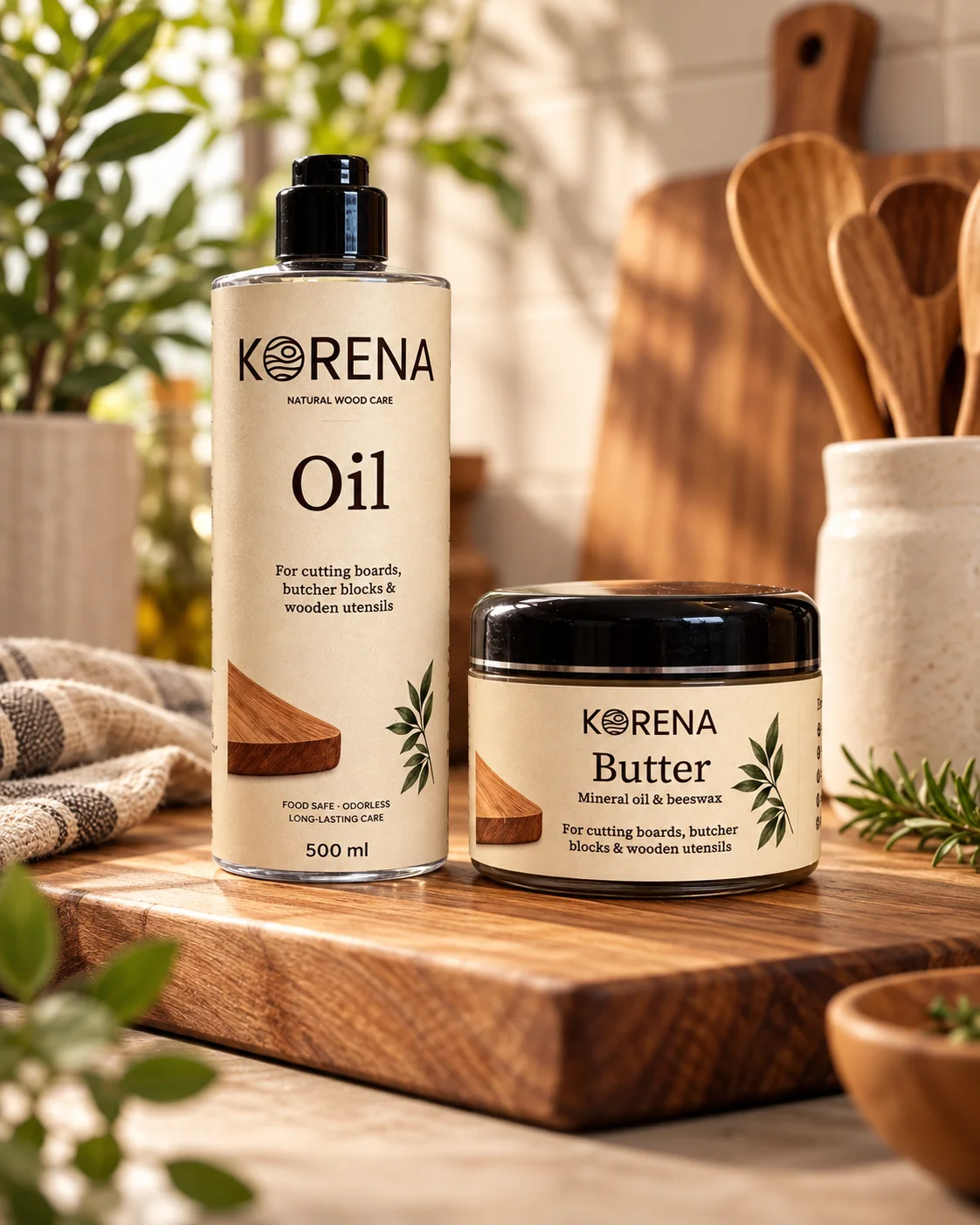
KORENA Oil contains 500 ml of 100% purified white mineral oil of pharmaceutical grade (Ph. Eur.). It is clear, odourless and tasteless, without added fragrance or colour, and does not go rancid. It is food safe once the excess is wiped off. There is no fixed number of applications per bottle; a dry board's needs depend on size and absorbency.
When can you finish with balm?#
After the last oil treatment has absorbed and you have wiped off the excess, apply a thin layer of KORENA Butter. Work it in and buff with a clean cloth. It leaves a water-resistant satin finish and is food safe once buffed. Check corners and grooves for thick residue and remove it.
KORENA Set pairs the 500 ml oil with the 150 ml balm in one box for that sequence. Balm follows the dry-wood care; it does not conceal a structural problem or turn a split into sound wood.
When is a crack beyond this routine?#
Stop using a board that has a deep open split, a loose section or a joint that separates. Ask a woodworker whether a proper repair is possible, or replace it. Do not pack an opening with board butter and call it repaired. Excessively worn boards and hard-to-clean grooves are also reasons for replacement, as USDA guidance on cutting boards explains.
Once a sound board is restored, return to regular oiling: about monthly, or whenever it looks pale or dry. Renew balm when water stops beading, wiping test drops away immediately. The wood care range provides the oil and balm for this ongoing care; neither takes the place of repairing damaged wood.
Frequently asked questions#
How do I restore a grey wooden cutting board?#
Wash with mild soap and warm water, let it dry completely, then oil all faces and the end grain. Leave very dry wood overnight and wipe off excess; inspect first, because a stain or crack may need a different approach.
Can mineral oil fix a cracked cutting board?#
Oil can care for dry wood, but it cannot glue a split or repair a separated joint. Set a deeply cracked or loose board aside for assessment by a woodworker, and replace it if it cannot be properly repaired.
Should I sand a wooden cutting board before oiling?#
Light sanding may help raised fibres on a sound unfinished or oiled board. Use fine abrasive paper with a flat block, remove all dust and let any dampened wood dry completely; deeper damage needs separate assessment.
How many times should I oil a very dry cutting board?#
Reassess after each overnight treatment and wiping. Repeating over two or three days can help very dry wood, but stop adding oil automatically if it stays on top; there is no fixed application count for a bottle.
Will oil remove stains from a wooden cutting board?#
Do not expect oil to remove a food stain or a lingering smell. Clean the board, dry it fully and inspect it first; oiling treats dryness, while a remaining stain or damaged area needs its own assessment.