KORENA
WoodFinished piecesSuppliesYardsJournal

Get notified

Every slab is one of one. When it sells, it's gone. We email you as new pieces are listed: fresh arrivals, new species, and boards matched to a project brief.

A few emails a month. No spam, unsubscribe anytime.

KORENA β€” Premium Hardwood

One piece at a time.

Verified premium hardwood, sold piece by piece. Every slab is photographed, measured, and shipped from the partner yard with a wood passport.

Shop

  • Browse products
  • Sold archive
  • Track order

Learn

  • Journal
  • Species guides
  • Glossary
  • Compare
  • Authors

Help

  • About
  • How it works
  • Become a partner yard
  • Source a slab
  • Support
  • Press

Buy

  • Terms of sale
  • Right of withdrawal
  • Returns and warranty
  • Shipping and delivery

Trust

  • Privacy policy
  • Cookie policy
  • Wood provenance and EUDR
  • Accessibility

Imprint

  • Legal notice / Imprint
  • Acceptable use
  • IP and content

Β© 2026 KORENA. All rights reserved.

Operated by Martial Labs Ltd. (BG, EIK 207453941). KORENA is a trading name of Martial Labs Ltd.

We respect your privacy

We use essential cookies so the site works. With your permission we'd also use cookies for analytics, personalised content, and ads. You can change your mind any time on the consent preferences page. See our cookie policy and privacy policy.

  1. Home
  2. /
  3. Species
  4. /
  5. European Beech

Fagus sylvatica

European Beech

The workshop workhorse. Pale, dense, fine-textured hardwood with straight grain, and the wood that bends.

Grown commercially in EuropeFamily: Fagaceae
European Beech

No machine-readable author provided. Lumbar~commonswiki assumed (based on copyright claims)., via Wikimedia Commons

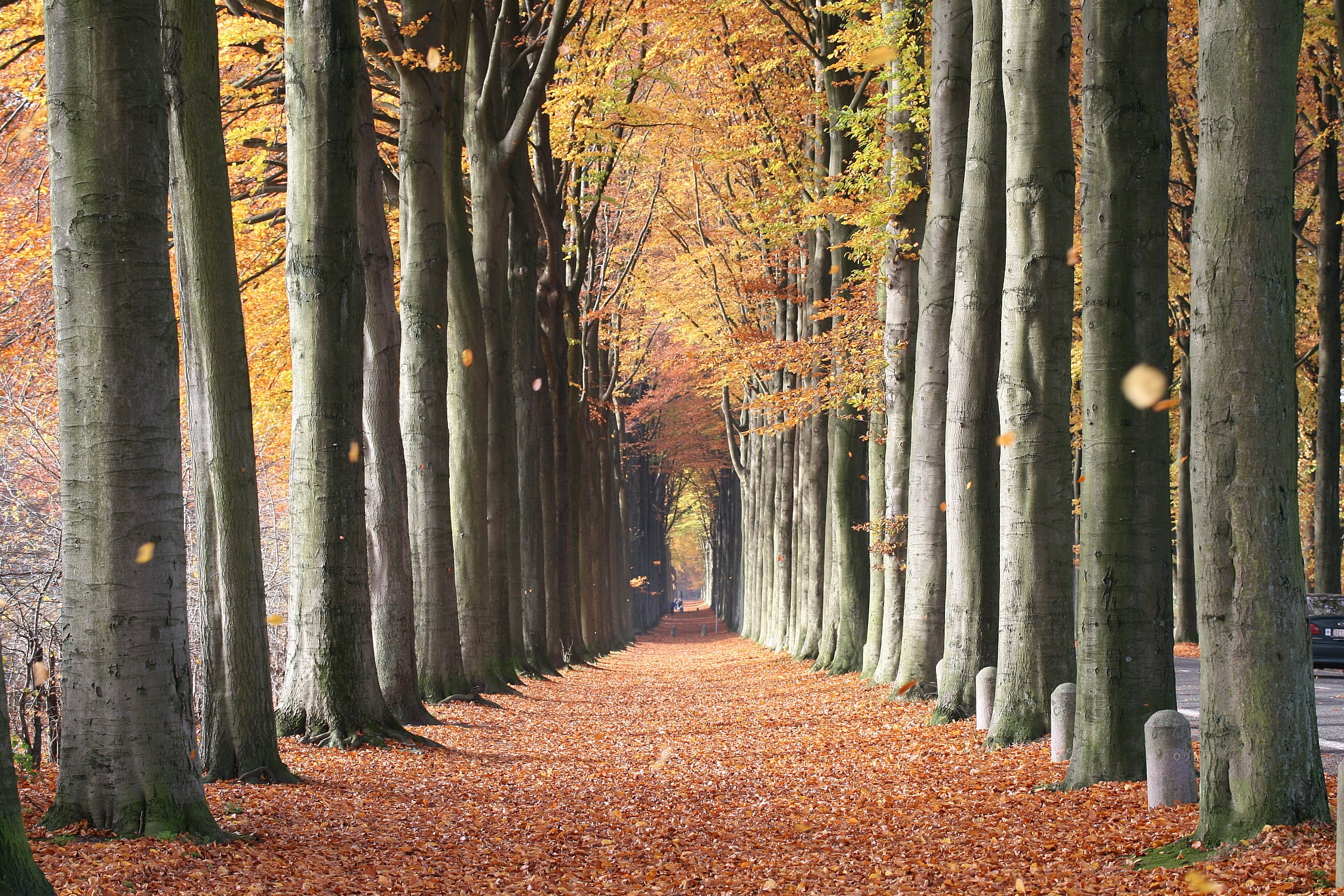
European Beech tree

Jean-Pol GRANDMONT, via Wikimedia Commons

Tree

Native across most of Europe, from southern Sweden down to the Balkans, with strong supply from Germany, Romania, France, and the Carpathians. One of the most plentiful hardwoods on the continent, which keeps pricing honest and stock predictable.

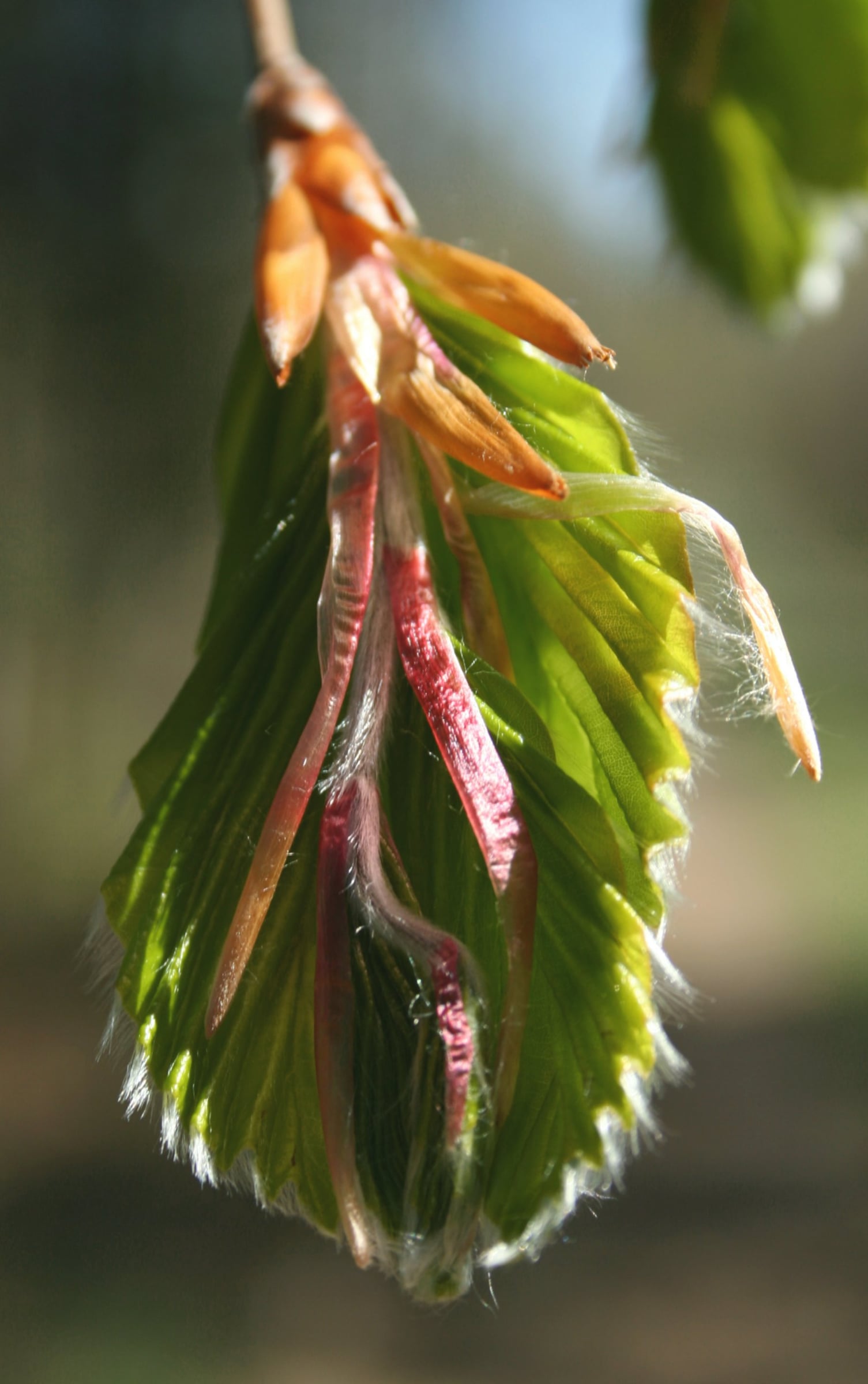
European Beech leaf
Leaf
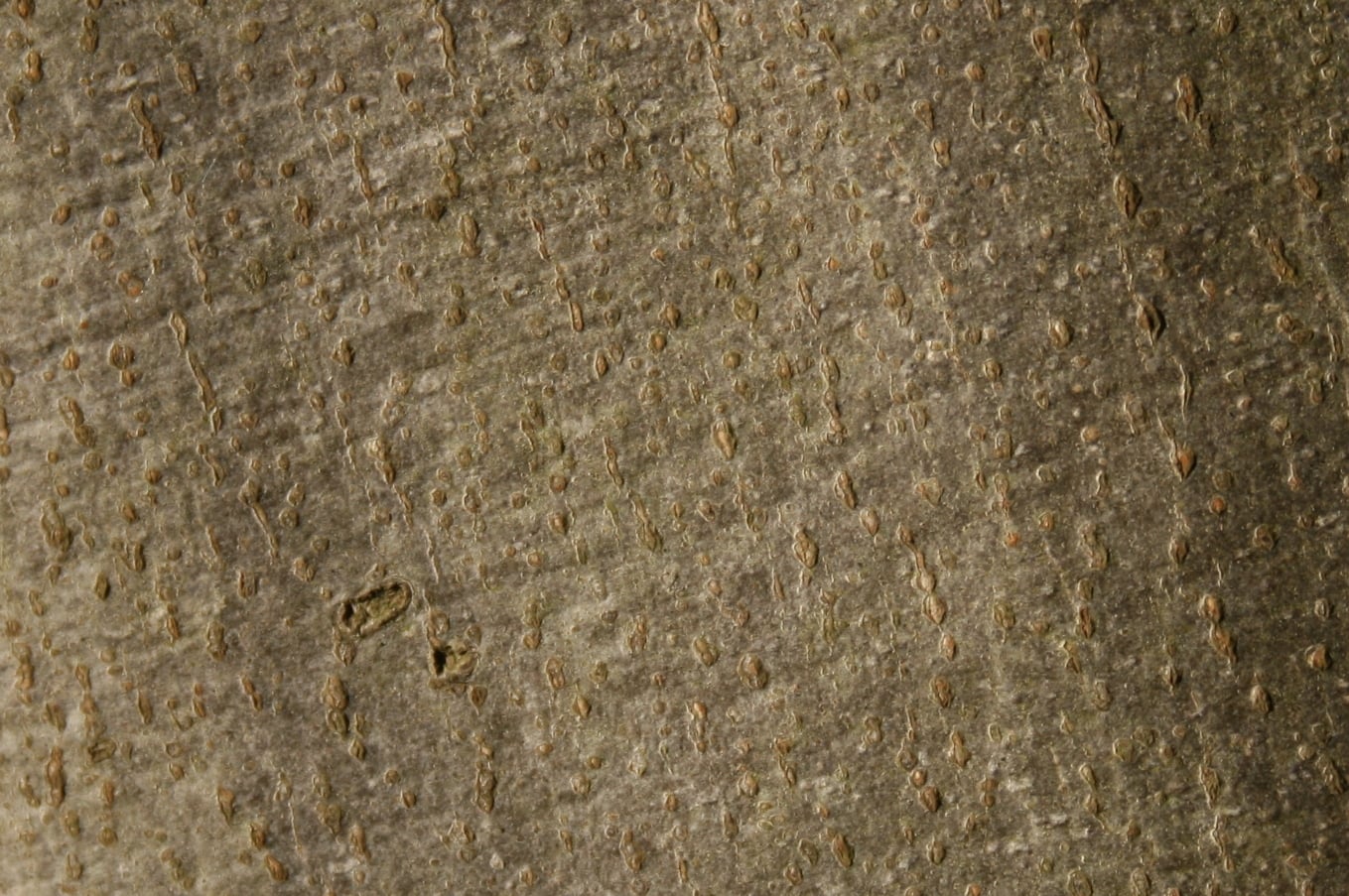
European Beech bark
Bark

Wood appearance

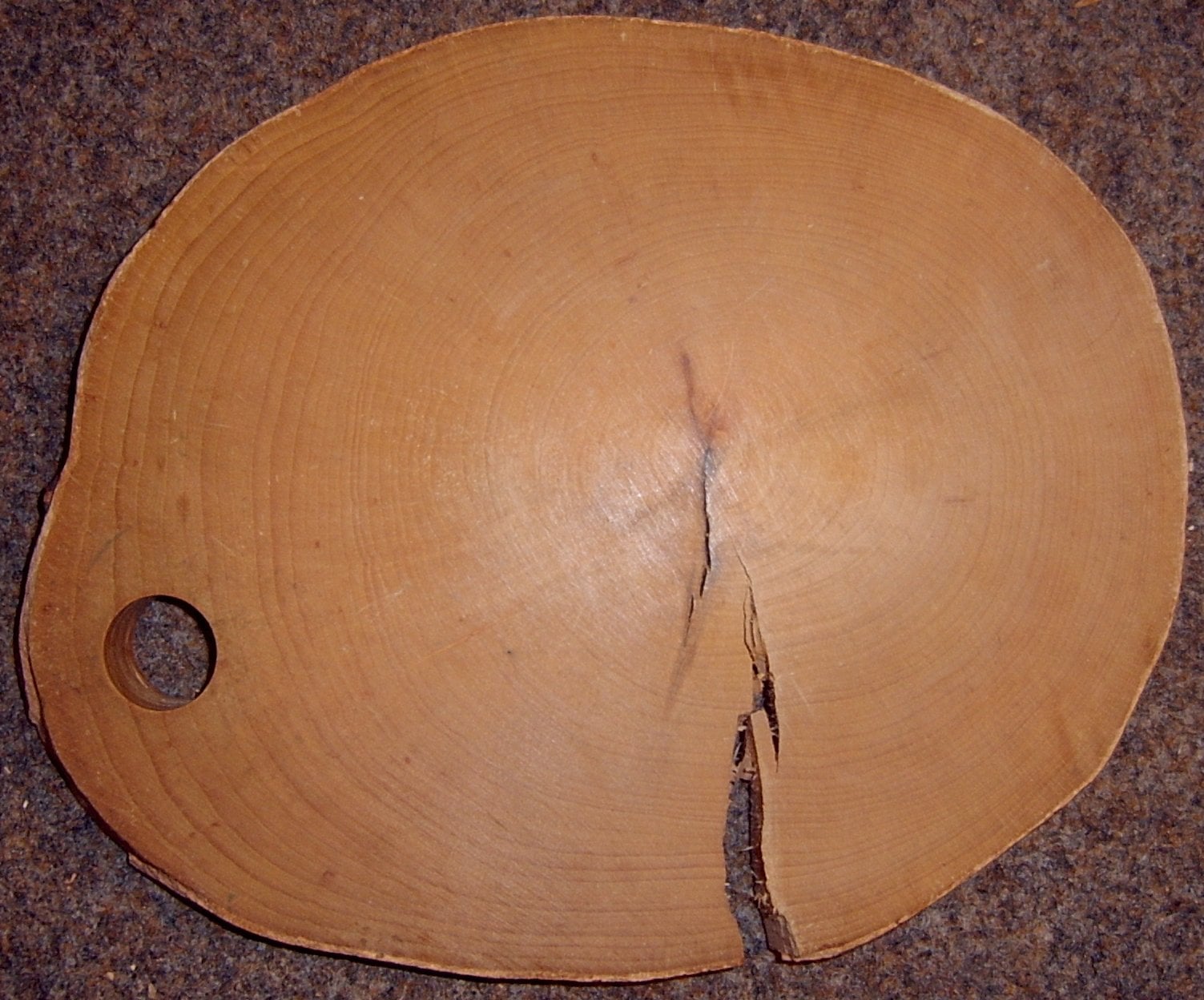
A clean, light surface in cream to pale pinkish-brown, often with a subtle salmon cast when freshly cut. Grain is straight; texture is fine and even with small, tight rays that show as faint flecks on the quarter. Steamed beech goes warmer and pinker, that familiar Thonet tone. Visually quiet rather than dramatic, which is why it pairs well with bolder species and finishes.

  • Cream to pale pinkish-brown when air-dried
  • Warmer salmon-pink tone after steaming
  • Fine ray fleck on quarter-sawn faces
  • Yellows gradually under UV exposure
  • Cool, neutral surface under water-based finishes; warmer under oils
  • Straight grain, fine even texture.
European Beech grain

No machine-readable author provided. Lumbar~commonswiki assumed (based on copyright claims)., via Wikimedia Commons

Mechanical properties

Density (kg/mΒ³)680–780 kg/mΒ³
Janka hardness (N)6,000–6,900 N
MOR: modulus of rupture (MPa)100–130 MPa
MOE: modulus of elasticity (GPa)13.0–15.0 GPa
Radial shrinkage5.0–6.5 %
Tangential shrinkage11.0–12.5 %
Volumetric shrinkage17.0–19.0 %
Natural durability (EN 350)Class 5 β€” Perishable

Working with it

1 = difficult Β· 5 = excellent

Works well across the bench. Saws, planes, and sands cleanly; turns and carves crisply. Glues reliably. Screws need pilot holes, it is dense and can split near edges. Where beech really earns its keep is steam bending: it is the benchmark species for it, and the reason Thonet's bentwood chairs are still made from it more than 150 years on.

Sawing
Planing
Sanding
Turning
Carving
Gluing
Screw / nail hold
Steam bending

Drying

This is where beech demands respect. Volumetric shrinkage of 17–19% puts it among the more movement-prone European hardwoods, and the gap between radial and tangential shrinkage drives cupping and checking if it is rushed. Slow, controlled kiln schedules and proper acclimatisation in the workshop are non-negotiable. Once stable and used in interior conditions, it behaves, but it will react to swings in humidity, so avoid wide unbroken panels in rooms that are not climate-stable.

Finishing

Sands to a smooth, almost glassy surface and takes finishes evenly thanks to the fine texture. Stains apply uniformly without much blotching. Oils and hardwax oils keep the pale tone; water-based finishes hold the cool cast best, while oil-based products will warm it noticeably. Beech yellows over time under UV, worth flagging to clients who want it to stay pale.

Durability and safety

  • Class 5 β€” Perishable
  • Food contact safe
  • Dust irritant: wear PPE

Food-contact safe and a long-standing choice for chopping boards, butcher blocks, spoons, and kitchen utensils. The flip side: beech dust is a documented respiratory sensitiser and is classified by IARC as a Group 1 hardwood dust. Use proper extraction, a fitted P3/FFP3 mask, and keep the shop clean, especially during sanding.

Best uses

  • Steam-bent chair frames and curved components
  • Workbenches, jigs, and shop fixtures
  • Chopping boards, butcher blocks, and kitchen utensils
  • Interior joinery and cabinet carcasses
  • Turned legs, handles, and tool components
  • Children's furniture and toys
  • Stair treads and interior flooring in stable rooms

Pairs and substitutes

Pairs well with

  • European Oak
  • European Walnut
  • Black Walnut
  • European Ash
  • European Cherry

Often substituted for

  • Hard Maple
  • Hornbeam
  • Sycamore Maple

Sourcing and sustainability

  • Grown commercially in Europe
  • IUCN: LC β€” Least Concern

IUCN Least Concern, no CITES listing, and managed under long-established European forestry regimes. Broad native range means short supply chains within the EU and lower transport footprint than imported pale hardwoods. Decay class 5, perishable, so this is an interior-only timber; do not specify it for anything that will see weather or ground contact.

What European Beech actually is#

Fagus sylvatica is the workshop timber of Europe. It is dense at 710 kg per cubic metre, hard at 6,460 N, stiff at 13.0 GPa, fine textured, straight grained, cheap and everywhere.

It is also, by the numbers, the least dimensionally stable wood in this catalogue. Volumetric shrinkage of 17.0 percent ties it with hornbeam for the highest figure here, and its tangential to radial differential of 11.0 against 5.0 percent is the widest of any species listed.

Both facts are true at once, and understanding how they coexist is the whole of working with beech well.

The bending wood#

Fine even texture, straight grain and high stiffness are exactly the properties that make a timber bend rather than break.

Under steam, beech compresses on the inside of a curve without buckling and stretches on the outside without splitting, more reliably than oak or ash. Michael Thonet built an entire furniture industry on that single property in the nineteenth century, and the bentwood chair remains the most produced furniture design in history.

If a project involves a curve, beech is the first thing to reach for in this catalogue.

The movement problem#

The same responsiveness that lets beech bend makes it react to humidity.

At 11.0 percent tangential against 5.0 percent radial, a wide flatsawn beech board will cup hard as a room dries out. In a modern interior with underfloor heating and winter humidity dropping below 30 percent, a beech tabletop that was flat in September will not be flat in February.

This is not a defect and it is not avoidable by better drying. It is what the species does.

The practical consequences are specific. Beech is excellent where movement is either restrained or irrelevant: bent components, chair frames, workshop benches and jigs, tool handles, drawer sides, and laminated or engineered constructions. It is a poor choice for a wide solid top in an uncontrolled environment, which is precisely the application people most often want a slab for.

If you do build a wide beech top, quartersawn stock roughly halves the across width movement, and the top must float on slotted fasteners rather than being fixed.

Steamed and unsteamed#

Most European commercial beech is steamed during drying. This evens the colour to a warm pink brown and relieves some drying stress.

Unsteamed beech is paler, closer to cream, and more variable in tone. Both are the same species and the colour difference is permanent, so match your stock at the outset rather than hoping to blend later.

At the bench#

Beech is straightforward and rewarding. It machines cleanly thanks to the fine even texture, turns very well, glues reliably and takes fastenings securely.

At 6,460 N it blunts tooling at a decent rate but nothing exceptional. It sands to a fine surface and takes finish evenly, without the blotching that troubles pale softwoods, because the density is uniform.

The fine texture also means it holds a crisp edge and a clean profile, which is why it is a standard for moulding planes, tool bodies and machine parts.

Kitchen use#

Beech is rated food safe and its closed fine texture is easier to keep clean than open pored oak, which is why it has been the traditional butcher block and worktop timber.

The movement caveat applies with force in a kitchen, where wet and dry cycling is constant. Keep it oiled, never leave standing water on it, and accept more seasonal change than hard maple would give.

Where beech is the right answer#

Steam bent work above all, plus chair frames, workshop benches and fixtures, tool handles, drawer sides, turned work, kitchen worktops and butcher blocks.

It is the wrong answer for a wide solid top in a variable environment, and wrong outdoors in any form, being decay class 5 and highly attractive to furniture beetle.

Sourcing and EUDR#

Not CITES listed and assessed as Least Concern. Beech is one of the most abundant hardwoods in Europe with mature certified supply across Germany, France, Austria and eastern Europe, and it is among the cheapest and best documented hardwoods available.
Buyer questions

Why does beech move so much?

Volumetric shrinkage of 17.0 percent is the joint highest in this catalogue, and tangential shrinkage of 11.0 percent against 5.0 percent radial is a differential of better than two to one. That combination makes beech notoriously unstable in changing humidity. It is why beech is superb for steam bent chair parts and workshop fixtures in a controlled environment, and a poor choice for a wide tabletop in a room with underfloor heating.

Why is beech the classic steam bending wood?

Fine even texture, straight grain and high stiffness at 13.0 GPa let it compress on the inside of a bend without buckling and stretch on the outside without splitting. Thonet built an entire furniture industry on that property. It bends more reliably than oak or ash and holds the curve once dry.

Is beech good for kitchen worktops and chopping boards?

It is rated food safe and its fine closed texture is easier to keep clean than open pored oak, which is why it is traditional for butcher blocks and worktops. The caveat is movement: beech responds strongly to the wet and dry cycling a kitchen imposes. Keep it oiled, avoid standing water, and expect more seasonal change than in maple.

What is steamed beech and how is it different?

Beech that has been steamed during drying, which evens the colour to a warm pink brown and relieves some drying stress. Unsteamed beech is paler and more variable. Steamed stock is the European commercial standard and is generally more predictable to work; the colour difference is permanent.

Can beech be used outdoors?

No. It is rated decay class 5, perishable, and it is also highly attractive to furniture beetle. Beech is strictly an interior timber and even indoors it should not stay damp. For exterior work use oak, sweet chestnut or robinia.

Current stock

European Beech pieces available now

Browse catalogue
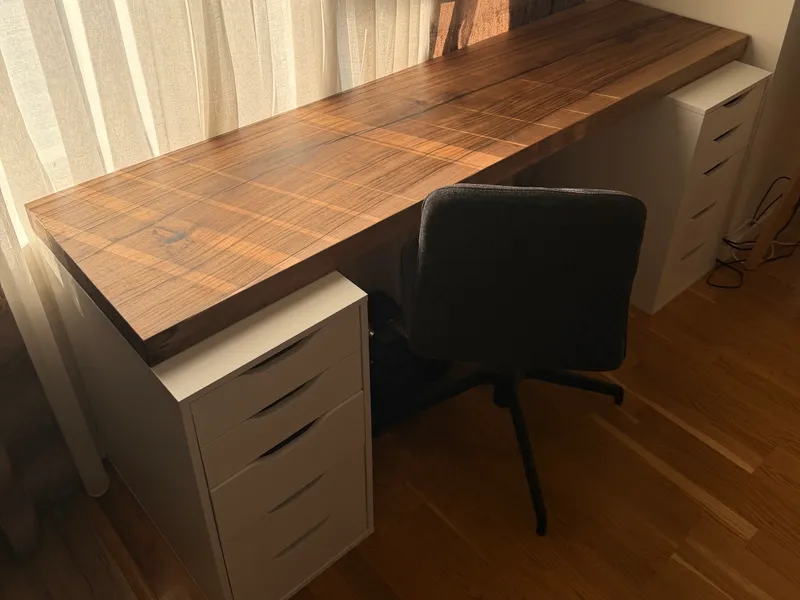
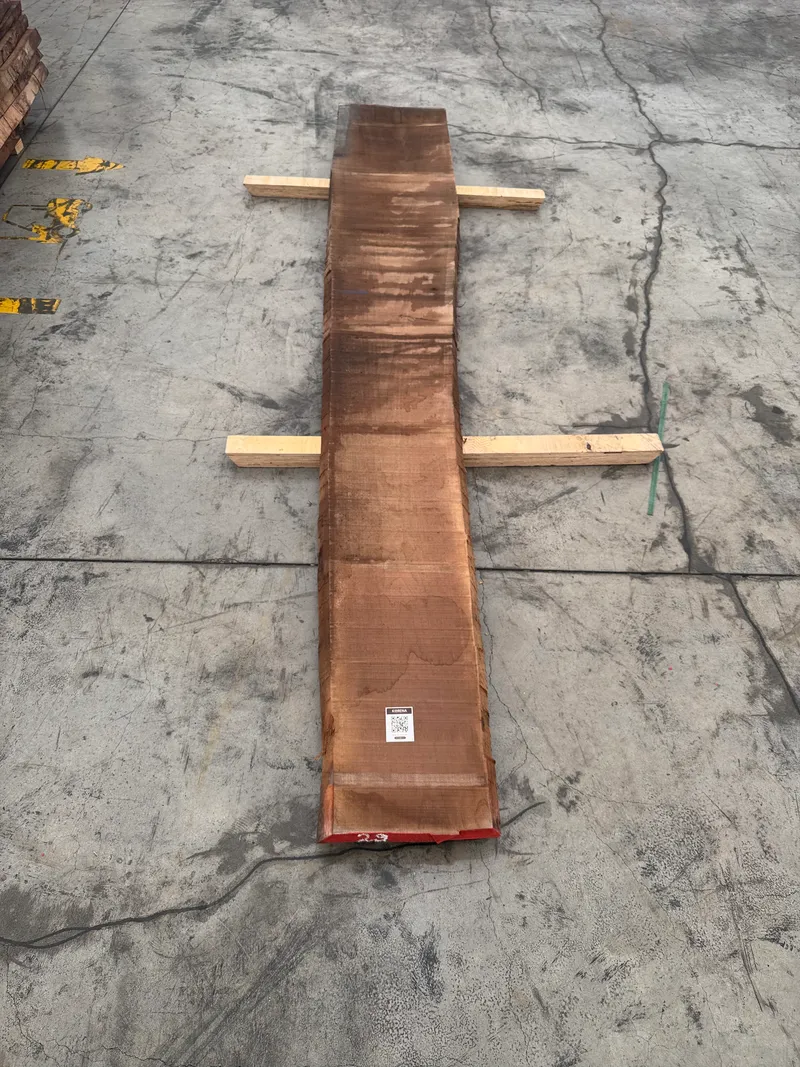
Walnut Studio Desk, 1.80 m Single-Piece Top

Walnut Studio Desk, 1.80 m Single-Piece Top

€1,298.00

Incl. 20% VAT

PrevNext

Get notified about European Beech

We email you when fresh European Beech slabs land at KORENA. Each piece is one of one, so early notice matters.

A few emails a month. No spam, unsubscribe anytime.

Sources

  • The Wood Database(accessed 2026-05-09)
  • USDA FPL Wood Handbook FPL-GTR-190 (2010)(accessed 2026-05-09)
  • Meier, E. β€” WOOD! Identifying and Using Hundreds of Woods Worldwide (2015)(accessed 2026-05-09)
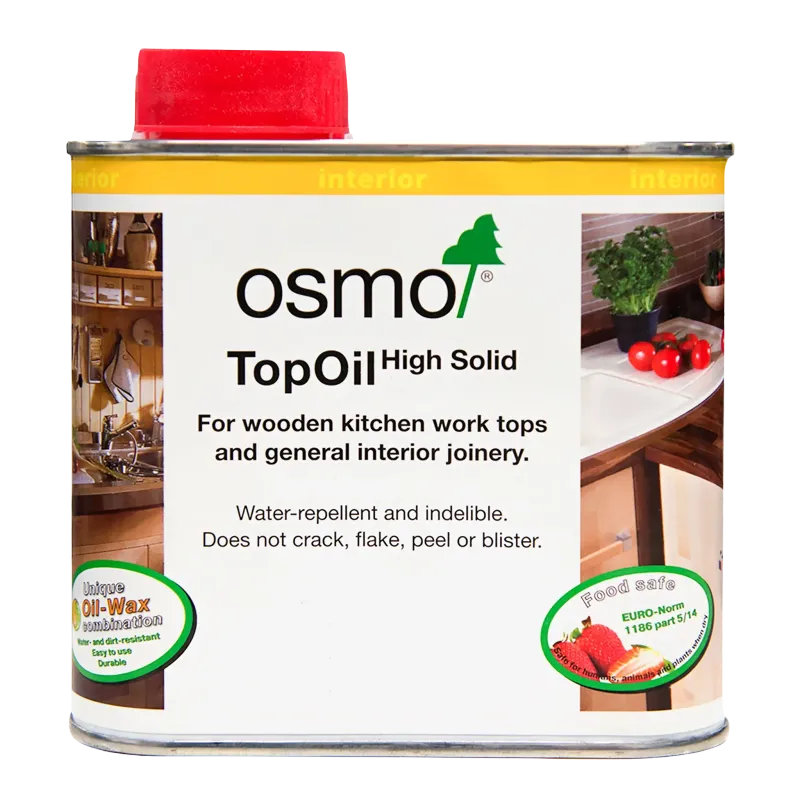
Osmo TopOil β€” Hardwax Worktop & Table Oil

Osmo TopOil β€” Hardwax Worktop & Table Oil

€31.20

Incl. 20% VAT

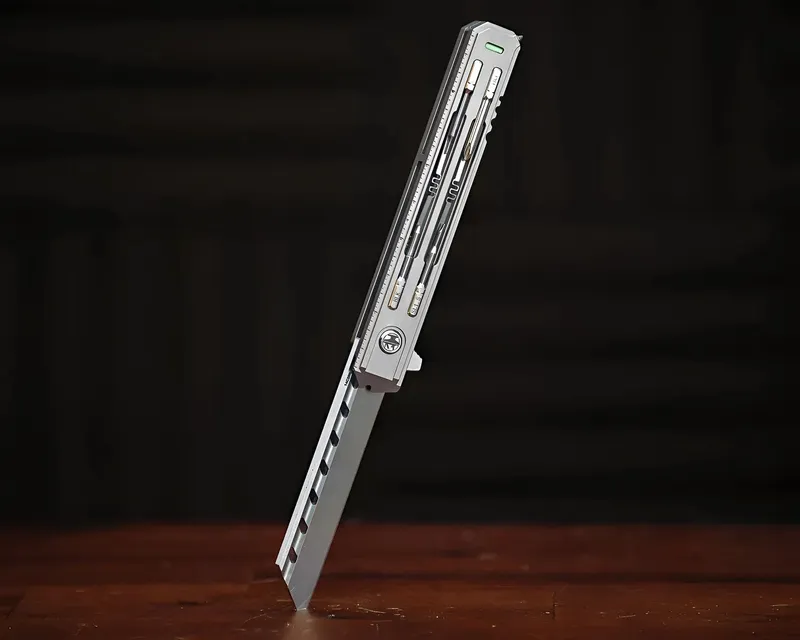
Hacksmith The Smith Blade Pro (21-in-1 Titanium Multi-Tool)

Hacksmith The Smith Blade Pro (21-in-1 Titanium Multi-Tool)

€468.00

Incl. 20% VAT

Baofeng UV-5RM Multi-Band Handheld Two-Way Radio

Baofeng UV-5RM Multi-Band Handheld Two-Way Radio

€42.00

Incl. 20% VAT

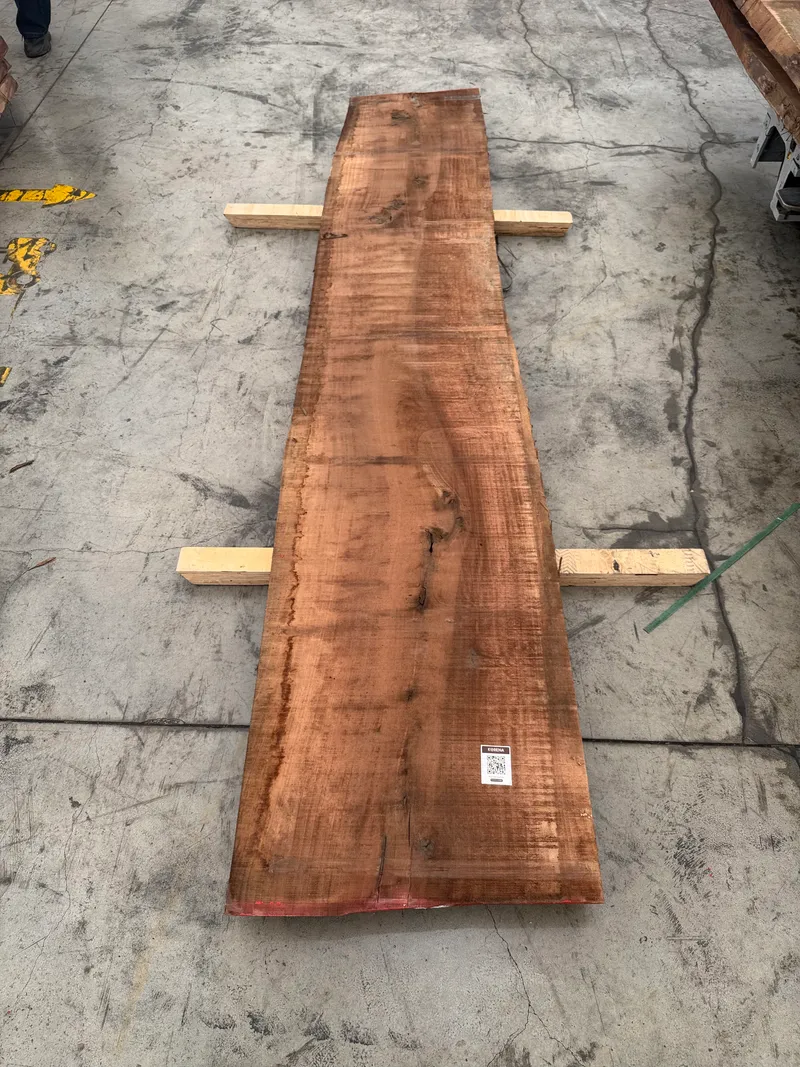
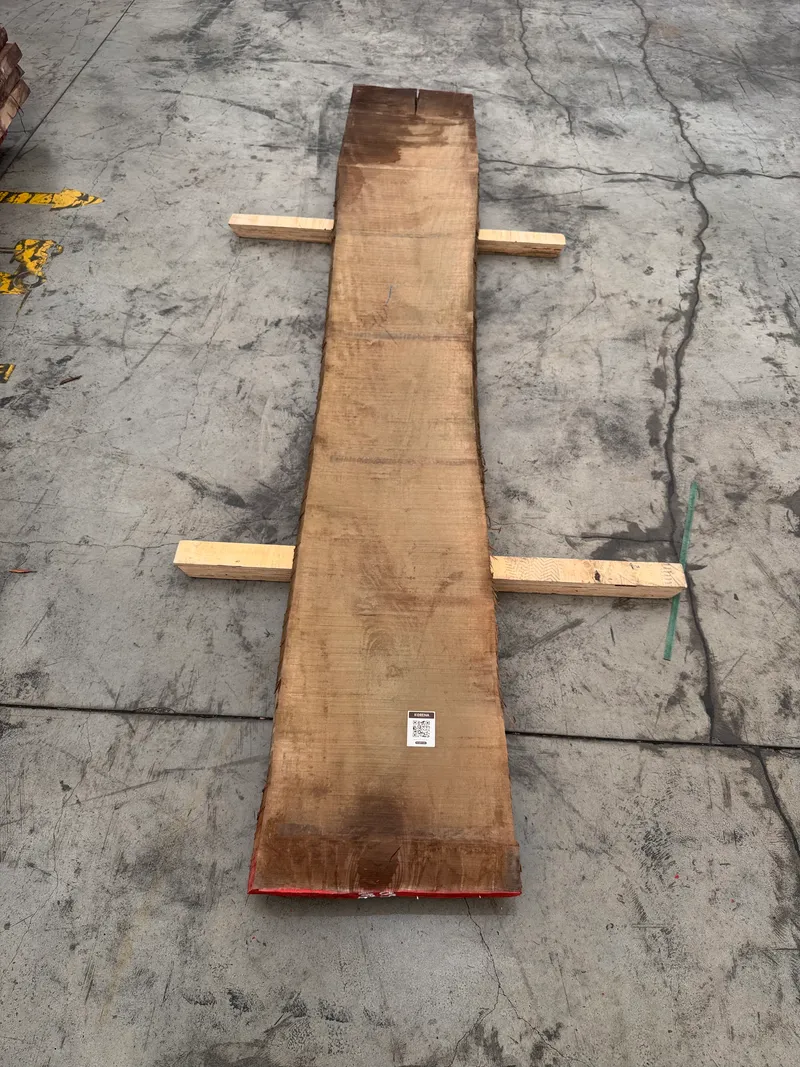
European Walnut Live-Edge Slab β€” 3.10 m, Warm Straight Grain
Verified passport3,099 Γ— 635 Γ— 50 mm
One of oneΒ·KRN-2026-00036

European Walnut Live-Edge Slab β€” 3.10 m, Warm Straight Grain

European Walnut

€312.00

Incl. 20% VAT

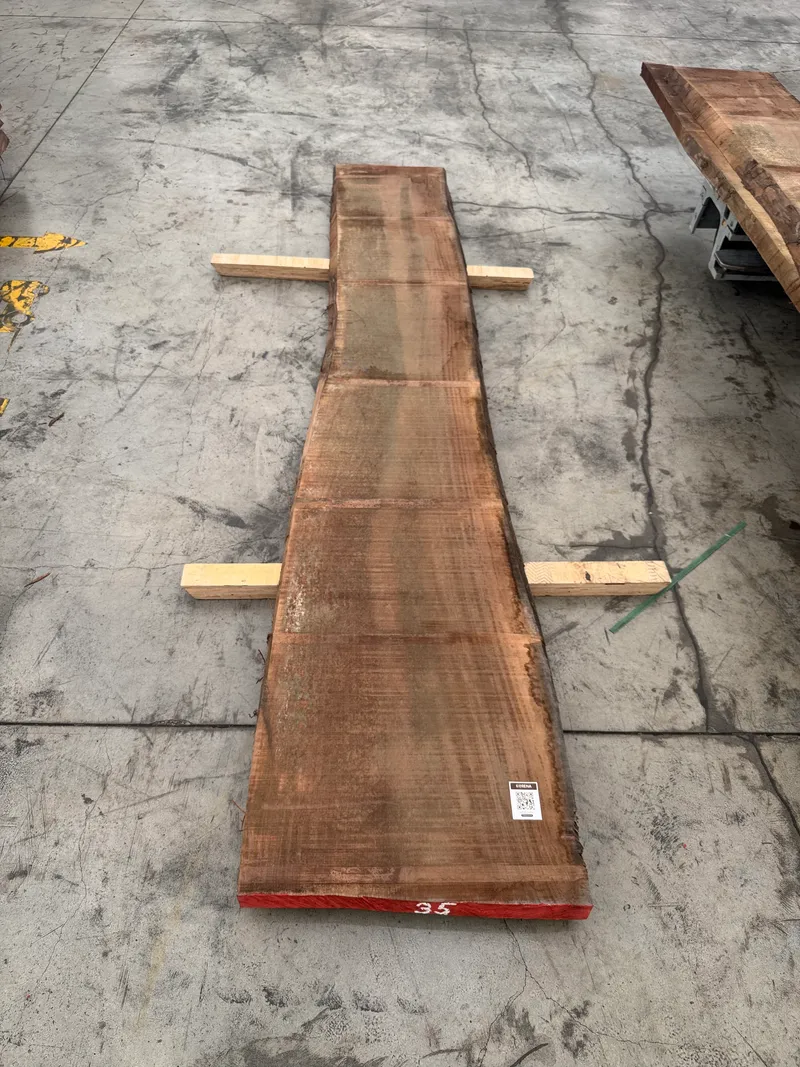
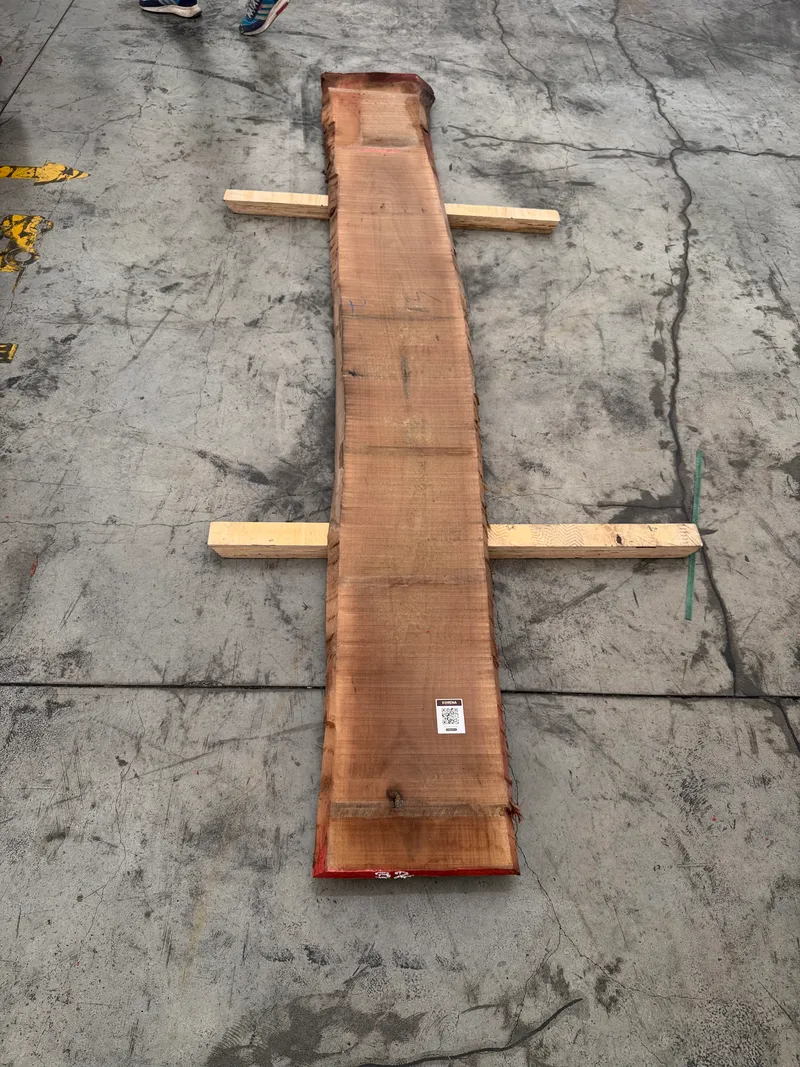
Dining Table Slab β€” 3.06 m European Walnut, Straight Grain
Verified passport3,055 Γ— 645 Γ— 50 mm
One of oneΒ·KRN-2026-00035

Dining Table Slab β€” 3.06 m European Walnut, Straight Grain

European Walnut

€264.00

Incl. 20% VAT

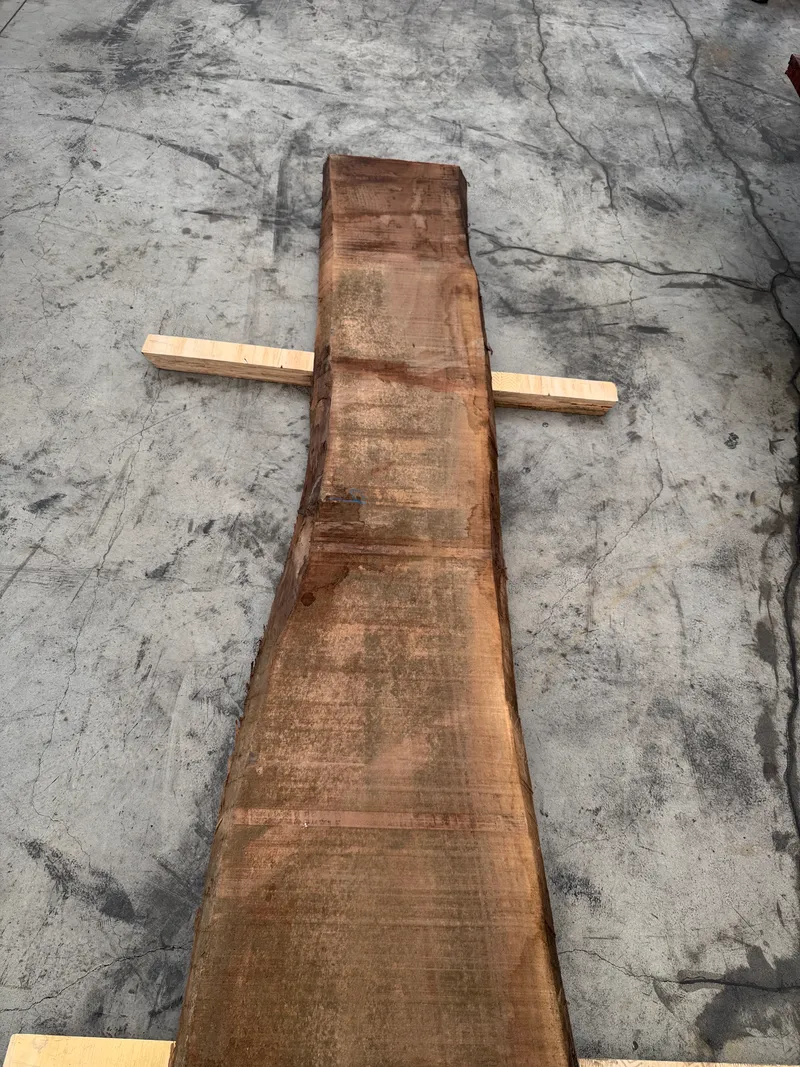
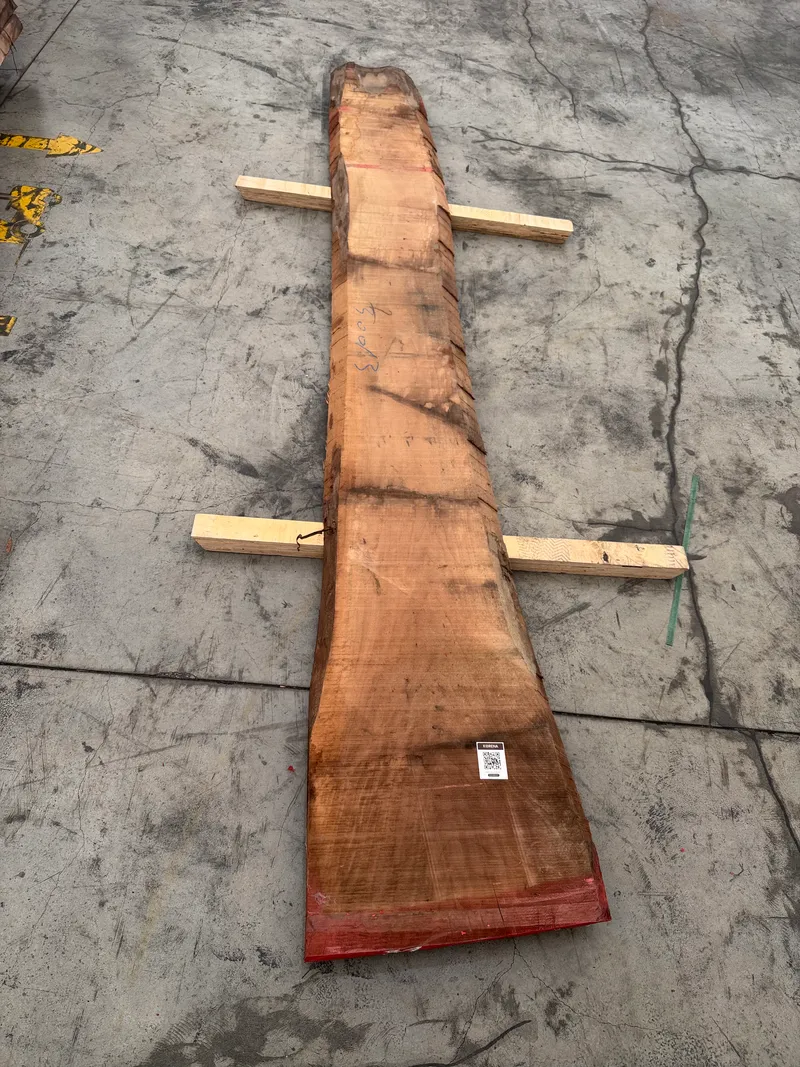
Dining Table Live-Edge Slab β€” 3.02 m, Warm European Walnut Grain
Verified passport3,024 Γ— 628 Γ— 50 mm
One of oneΒ·KRN-2026-00034

Dining Table Live-Edge Slab β€” 3.02 m, Warm European Walnut Grain

European Walnut

€252.00

Incl. 20% VAT

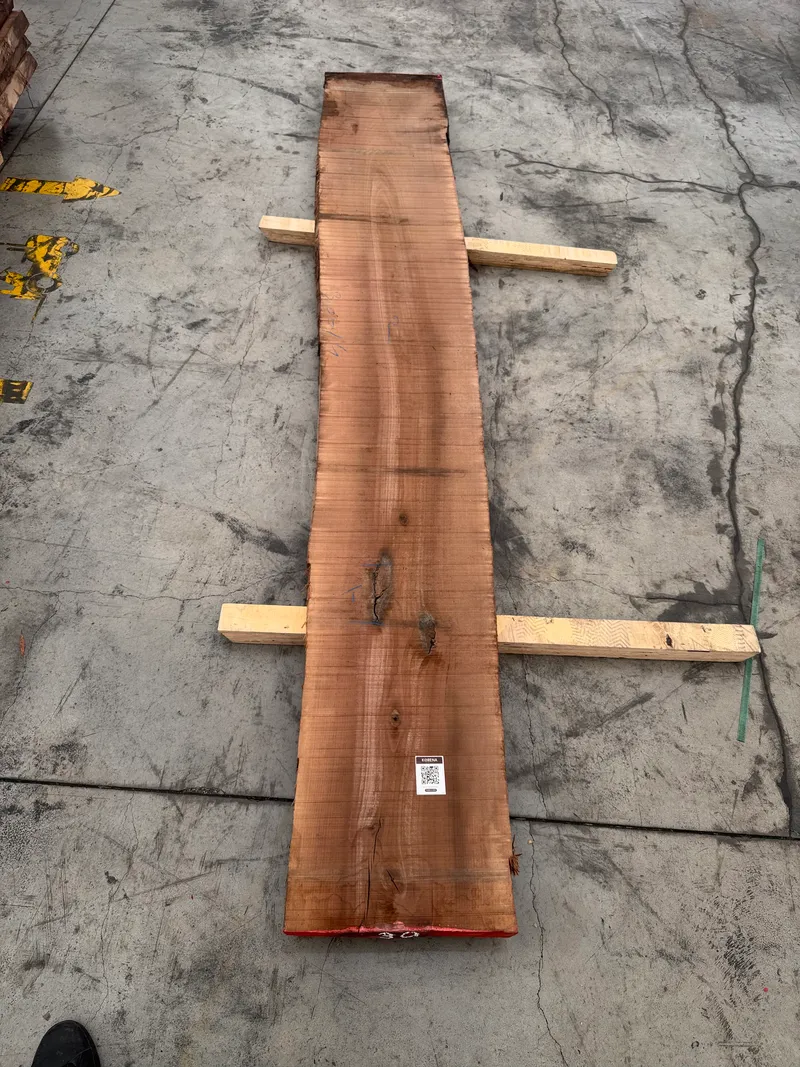
Dining Table Slab β€” 3.22 m European Walnut, Warm Straight Grain
Verified passport3,218 Γ— 515 Γ— 50 mm
One of oneΒ·KRN-2026-00033

Dining Table Slab β€” 3.22 m European Walnut, Warm Straight Grain

European Walnut

€240.00

Incl. 20% VAT

European Walnut Dining Slab β€” 3.25 m, Straight-Grain Character
Verified passport3,251 Γ— 571 Γ— 50 mm
One of oneΒ·KRN-2026-00032

European Walnut Dining Slab β€” 3.25 m, Straight-Grain Character

European Walnut

€228.00

Incl. 20% VAT

European Walnut Live-Edge Slab β€” 3.36 m, Straight Grain Dining Table Blank
Verified passport3,361 Γ— 546 Γ— 50 mm
One of oneΒ·KRN-2026-00031

European Walnut Live-Edge Slab β€” 3.36 m, Straight Grain Dining Table Blank

European Walnut

€240.00

Incl. 20% VAT

Walnut Live-Edge Dining Slab β€” 3.20 m, Warm Straight Grain
Verified passport3,196 Γ— 501 Γ— 50 mm
One of oneΒ·KRN-2026-00030

Walnut Live-Edge Dining Slab β€” 3.20 m, Warm Straight Grain

European Walnut

€240.00

Incl. 20% VAT

European Walnut Dining Slab β€” 3.24 m, Straight Grain Character
Verified passport3,238 Γ— 490 Γ— 50 mm
One of oneΒ·KRN-2026-00029

European Walnut Dining Slab β€” 3.24 m, Straight Grain Character

European Walnut

€213.84

Incl. 20% VAT