Juglans nigra
Black Walnut
American Black Walnut is the chocolate-brown hardwood that built mid-century furniture. Imported into European yards as kiln-dried slabs, it works cleanly and finishes to a deep, warm tone that ages well.
- This species record does not establish where an individual piece was grown or harvested. Check the origin details of the piece you are considering.
- Botanical group. Softwoods are conifers; hardwoods are broadleaf trees.
- The botanical family the species belongs to.
Get notified when it landsReference species. No pieces in stock right now.
Is it right for your project?
Great for
- Live-edge dining and conference tables
- Mid-century-style casework and credenzas
- Dark-toned kitchen islands and breakfast bars
- Desks and writing tables with figured tops
- Gunstocks, knife scales and high-end tool handles
- Turned bowls and hollow forms
No Black Walnut in the current drop
Similar species in stock
No Black Walnut right now. These species suit the same projects and have pieces available.
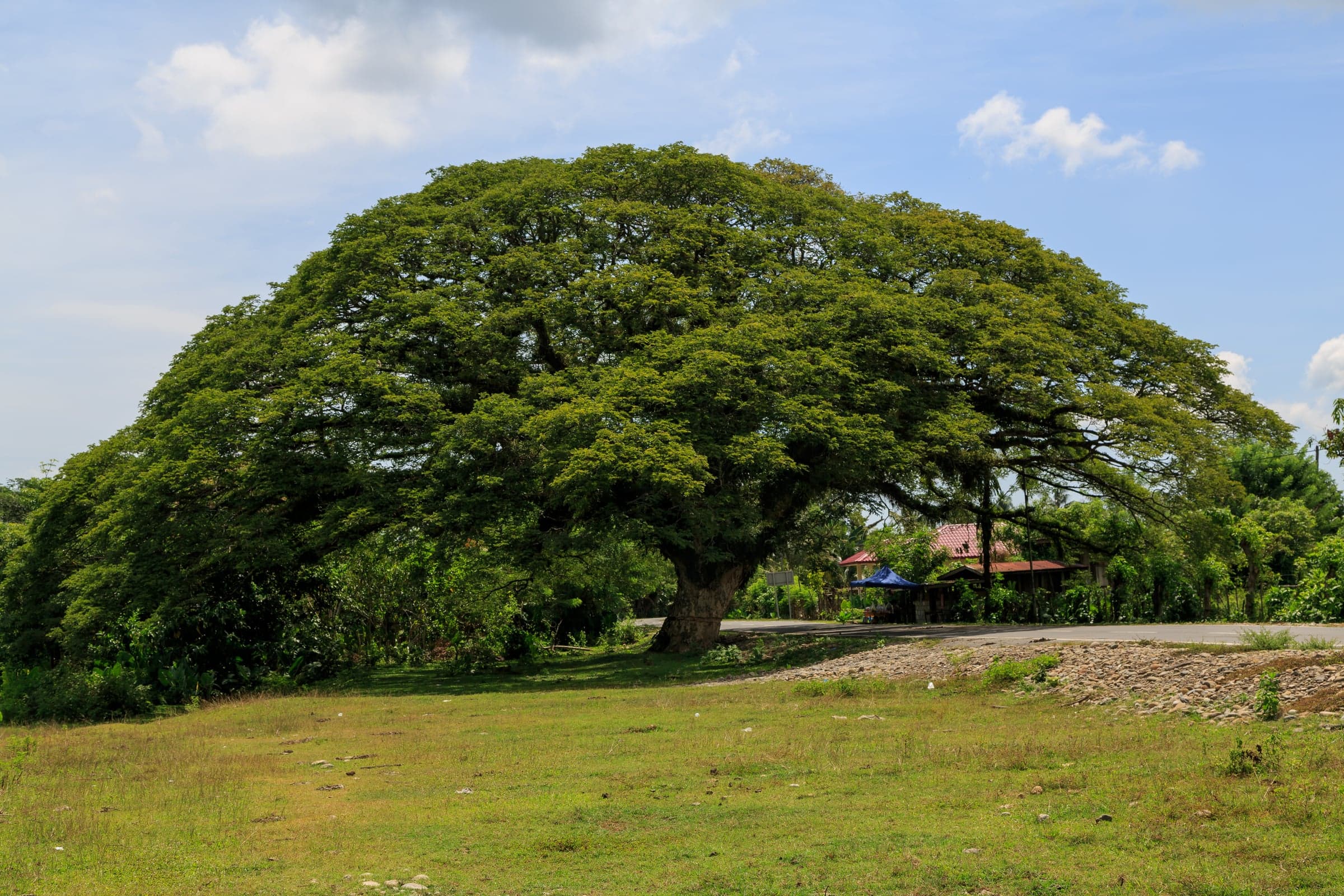
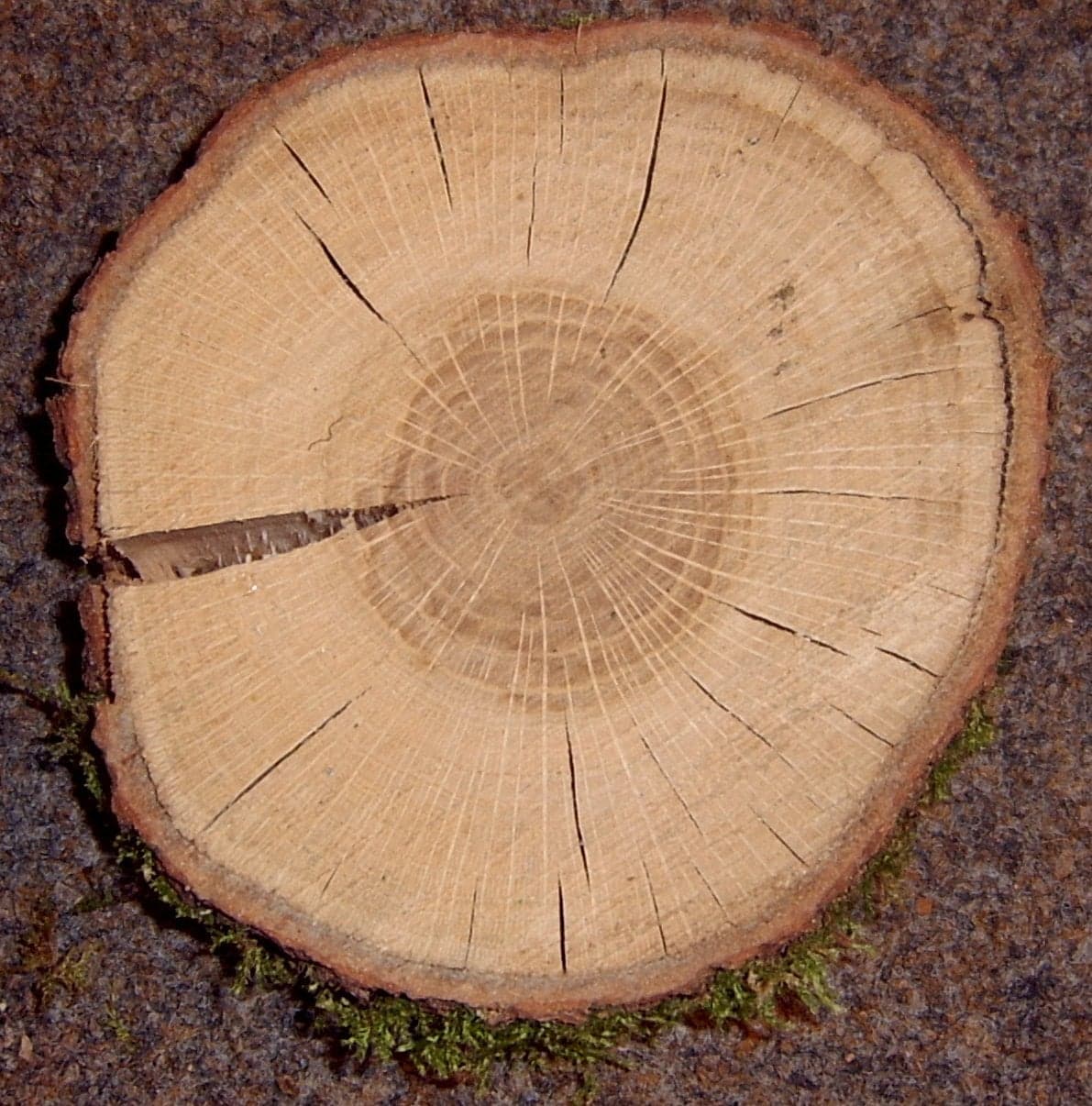
Get notified about Black Walnut
We email you when fresh Black Walnut slabs land at KORENA. Each piece is one of one, so early notice matters.
Wood appearance
What it looks like
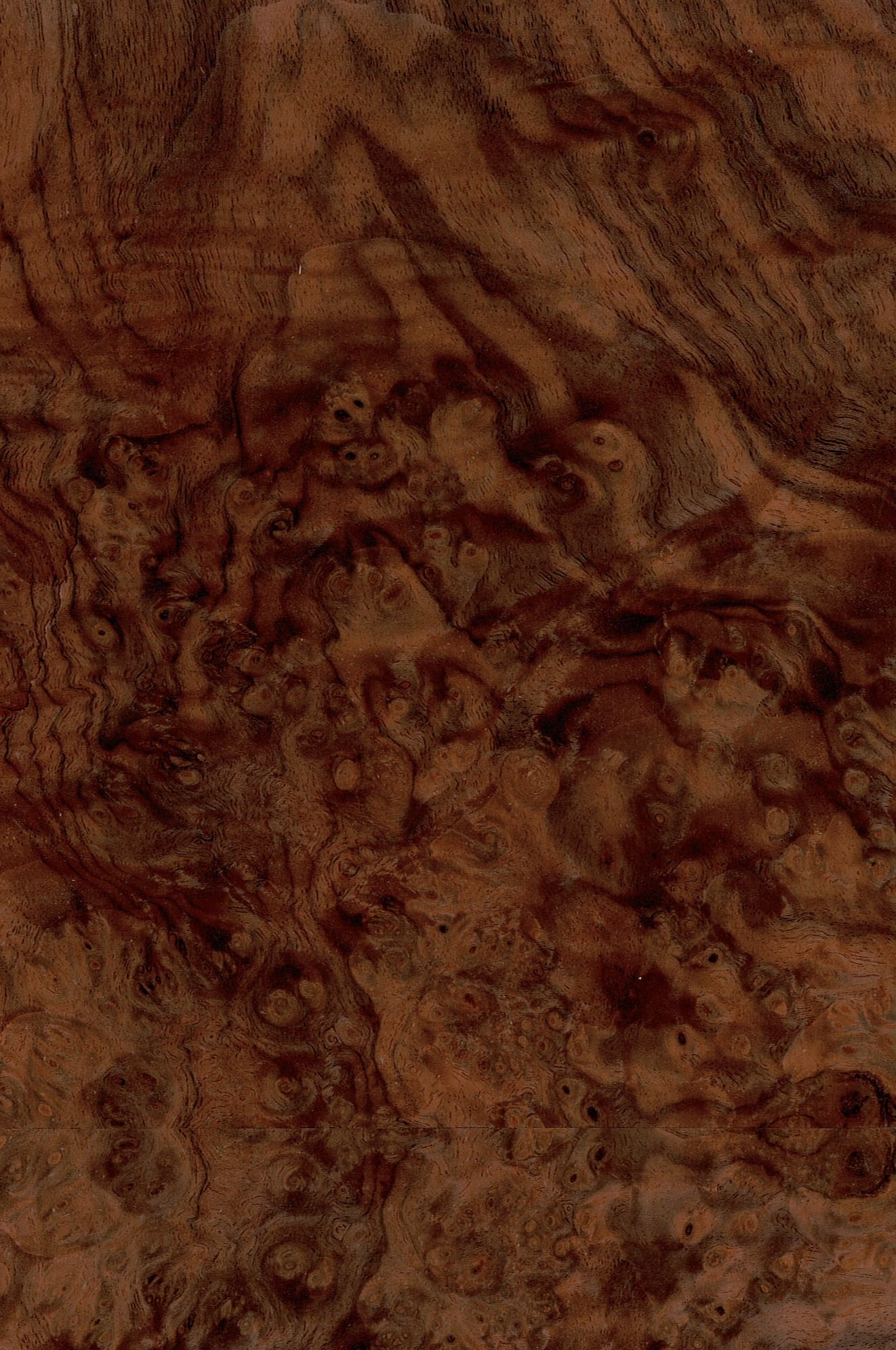
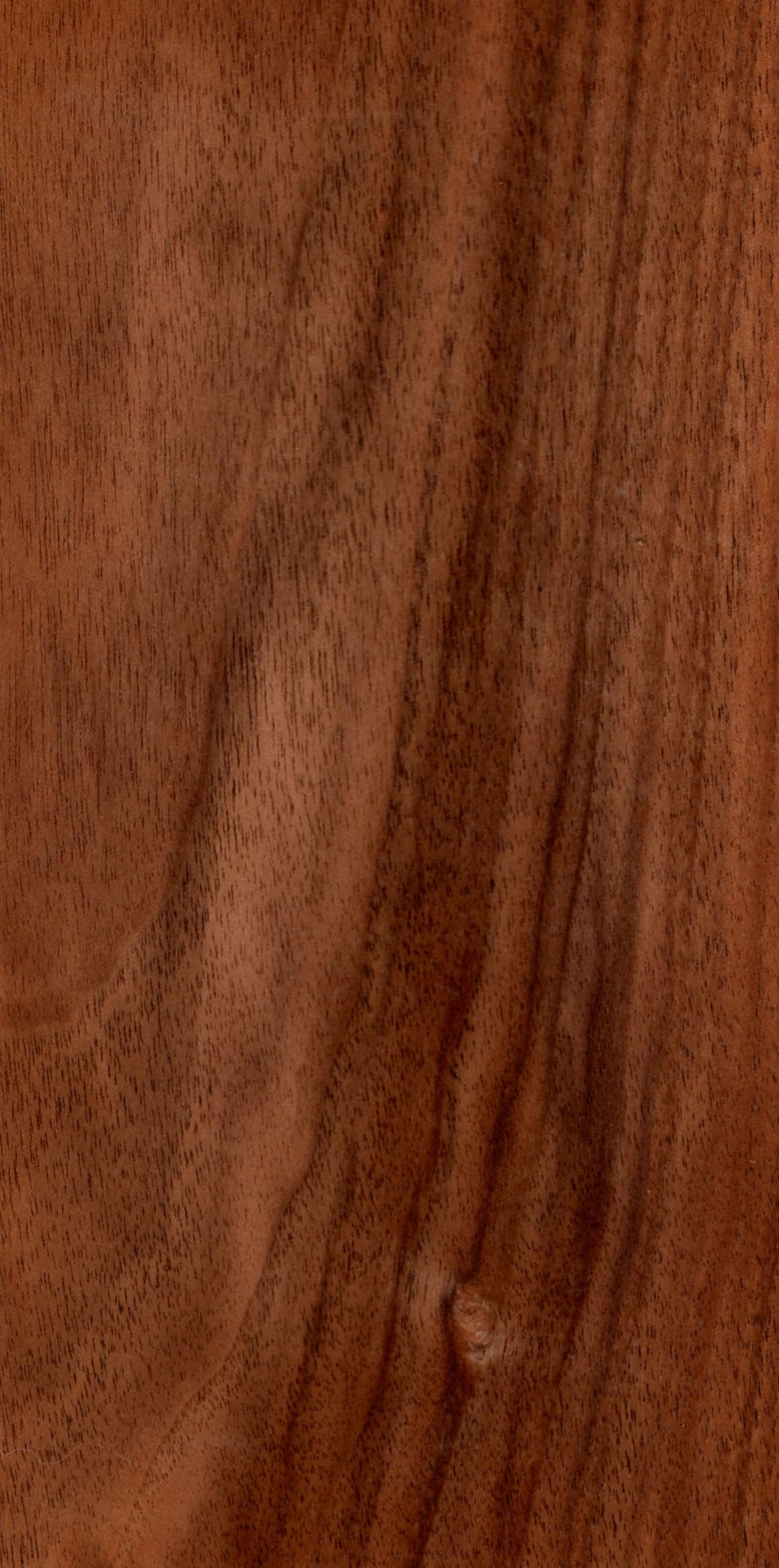
Heartwood ranges from chocolate brown to a purplish or greyish brown, often with darker streaks. Sapwood is pale cream, usually steamed at the mill to even out the contrast, but you'll still see some on wide slabs. Grain is generally straight, though figured boards (curl, crotch, burl) turn up regularly and command a premium. Medium, even texture takes detail well.
- Chocolate to purplish-brown heartwood
- Pale cream sapwood, often steamed for uniformity
- Darker streaks and figure on wider boards
- Lightens slightly under UV over the first year
- Deepens and warms under oil finishes
- Generally straight; can be irregular or wavy. Medium texture.
Working with it
Working it
Easy across the board. Sawing, planing, sanding, turning and carving all rate 4 out of 5. Glues and screws without complaint. Steam bending is the one weak spot (3/5), workable for gentle curves, not the species you'd choose for tight bentwood seating. Sharp tooling keeps the surface clean; dull blades will burnish rather than tear.
Finishing
Finishes beautifully with very little fuss. Hard wax oil and Danish oil deepen the brown without muddying the grain; a thin shellac seal coat helps if you're spraying lacquer over oily patches. Sanded to 180–220 it feels silky in the hand. Black walnut lightens slightly with UV exposure over the first year, the opposite of cherry, so a UV-inhibiting topcoat helps on pieces near windows.
Drying
Slabs arrive kiln-dried to roughly 8–10% MC. Movement in service is moderate, radial 5.0–6.0%, tangential 7.5–8.5%, so wide tops still want a breathable build (breadboard ends, slot-screwed cleats, or fixed-and-floating fasteners). Acclimatise to your shop for two to three weeks before final flattening.
How much will it move?
Wood swells and shrinks across its width as the air gets damper and drier. Estimate the seasonal movement of a Black Walnut top before you design the fixings.
Expected seasonal movement
about 9.1 mm
Fix the top with buttons or slotted brackets, not glue or tight screws.
Linear shrinkage model: width × (shrinkage ÷ 28 % fibre saturation) × seasonal moisture swing. Uses 8 % tangential shrinkage for Black Walnut. A planning estimate, not a guarantee.
What it costs
Safety and sourcing
- This species record does not establish where an individual piece was grown or harvested. Check the origin details of the piece you are considering.
- IUCN Red List status: the global conservation assessment for this species.
Walnut dust contains juglone and is a known respiratory and skin sensitiser. Run a dust extractor at the source and wear a P3/FFP3 mask when sanding. Juglone-laden offcuts and shavings are toxic to horses and to some plants (tomatoes, apples), so don't compost or use as bedding. Cured finished surfaces are food-contact safe.
Read the full guideIn-depth notes on figure, colour change, working and stability.
What Black Walnut actually is#
Juglans nigra is the darkest wood in this catalogue and the North American counterpart to European walnut. Where Juglans regia is a lighter grey brown full of streaking, black walnut is a deeper, more uniform chocolate.
The other significant difference is commercial rather than botanical. Black walnut is grown as a forestry species across eastern North America, so it comes in larger, straighter, more consistent sizes than European walnut, much of which is salvaged from orchards and gardens. If you need matched material across several wide boards, black walnut is the easier species to source.
The steaming question, which matters more than most people realise#
A large proportion of commercial black walnut is steamed during kiln drying.
Steaming drives colour out of the dark heartwood and into the pale sapwood. The result is a board that reads more uniformly brown, with the sapwood muddied to a dull tan rather than staying cream. For a factory producing matched furniture components, that uniformity is the point.
For a live edge slab it is usually the opposite of what you want. The sharp contrast between pale cream sapwood and near black heartwood is one of the most striking features this species offers, and steaming destroys it.
Unsteamed black walnut keeps that contrast. It is worth asking which you are being offered, because the difference is permanent and not visible from a description alone.
Buyer questions
Questions buyers ask
How is Black Walnut different from European Walnut?
Black walnut, Juglans nigra, is darker and more uniformly chocolate brown, where European walnut runs lighter grey brown with more streaking and marbling. Black walnut is slightly softer at 4,490 N against 5,410 N but slightly stiffer at 11.0 GPa. Black walnut also comes in larger, more consistent sizes because it is grown as a forestry species rather than an orchard tree.
Is Black Walnut steamed, and does it matter?
Much commercial American black walnut is steamed during drying, which drives colour from the dark heartwood into the pale sapwood and makes the board look more uniformly brown. Unsteamed walnut keeps a sharp contrast between cream sapwood and dark heartwood. For a live edge slab where the sapwood line is a feature, unsteamed is usually what you want, and it is worth asking.
Does Black Walnut fade?
Yes. Like European walnut it lightens with light exposure rather than darkening, mellowing from deep chocolate toward a warmer, lighter brown. This is the opposite of what oak and cherry do. A UV inhibiting finish slows it without stopping it.
Is walnut dust dangerous?
Mechanical properties
Technical data
Published reference values. Where sources disagree the range is shown, with the typical value used for the scales above.
| Density (kg/m³)Mass per cubic metre at about 12 % moisture. Heavier wood is usually harder and stronger. | 560–660 kg/m³typical 610 kg/m³ |
|---|---|
| Janka hardness (N)Force needed to press a steel ball halfway into the wood. The standard measure of dent resistance. | 4,100–4,900 Ntypical 4,490 N |
| MOR: modulus of rupture (MPa)Bending strength: the load at which a beam breaks. | 100–110 MPa |
| MOE: modulus of elasticity (GPa)Bending stiffness: how much a shelf or top sags under load. | 11.0–12.0 GPa |
| Radial shrinkageShrinkage across the growth rings, green to oven-dry. Quartersawn boards move by this. | 5.0–6.0 % |
| Tangential shrinkageShrinkage along the growth rings. Flatsawn boards and most slabs move by this. |