KORENA
WoodFurnitureTools & finishesTimber yardsJournal

Be first to see new slabs

Get an email when new wood arrives.

A few emails a month. No spam, unsubscribe anytime.

KORENA

Shop solid wood, handmade furniture, tools and wood finishes on KORENA.

Shop

  • Browse products
  • Sold archive
  • Track order

Learn

  • Journal
  • Species guides
  • Glossary
  • Compare
  • Authors

Help

  • About
  • How it works
  • Become a sellerNew
  • Source a slab
  • Support
  • Document templates
  • Press

Buy

  • Terms of sale
  • Right of withdrawal
  • Returns and warranty
  • Shipping and delivery

Trust

  • Privacy policy
  • Cookie policy
  • Wood provenance and EUDR
  • Accessibility

Imprint

  • Legal notice / Imprint
  • Acceptable use
  • IP and content

© 2026 KORENA. All rights reserved.

Operated by Martial Labs Ltd. (BG, EIK 207453941). KORENA is a trading name of Martial Labs Ltd.

We respect your privacy

We use essential cookies so the site works. With your permission we'd also use cookies for analytics, personalised content, and ads. You can change your mind any time on the consent preferences page. See our cookie policy and privacy policy.

  1. Home
  2. /
  3. Species
  4. /
  5. Douglas Fir

Pseudotsuga menziesii

Douglas Fir

Not a fir, and the stiffest softwood KORENA lists. Bold orange ring figure, structural strength, and a splinter you do not want to ignore.

  • This species record does not establish where an individual piece was grown or harvested. Check the origin details of the piece you are considering.
  • Botanical group. Softwoods are conifers; hardwoods are broadleaf trees.
  • The botanical family the species belongs to.
Get notified when it landsReference species. No pieces in stock right now.
  • Project fit
  • In stock
  • Looks
  • Working it
  • Movement
  • Price
  • Safety and sourcing
  • Questions
  • Technical data

Is it right for your project?

Great for

  • Structural beams and exposed framing
  • Tabletops
  • Flooring
  • Exterior joinery
  • Shelving with long spans

No Douglas Fir in the current drop

Similar species in stock

No Douglas Fir right now. These species suit the same projects and have pieces available.
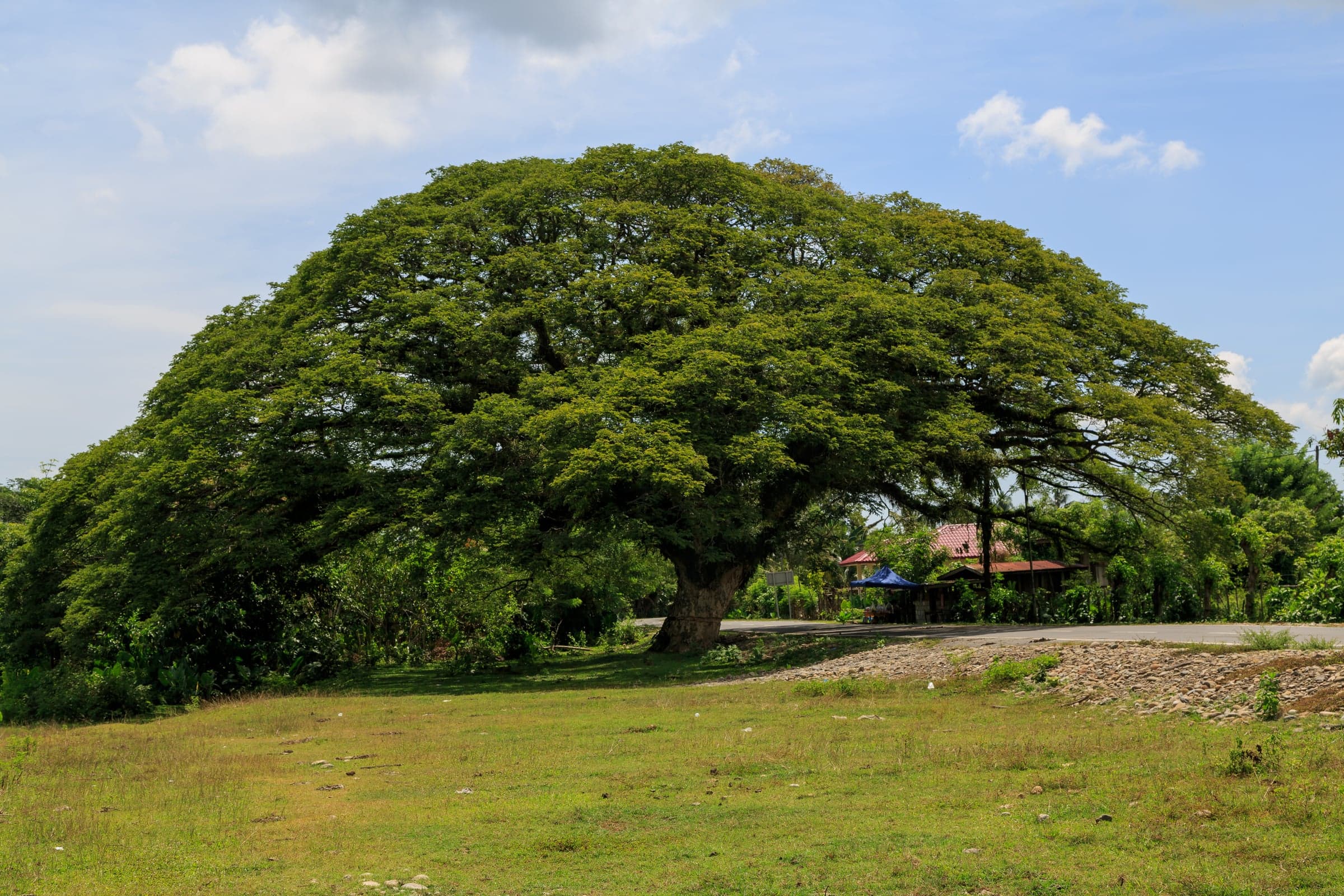
  • Saman grain

    Saman

    Samanea saman

    4 pieces

  • European Oak grain

    European Oak

    Quercus robur

    6 pieces

  • European Walnut grain

    European Walnut

    Juglans regia

    9 pieces

Get notified about Douglas Fir

We email you when fresh Douglas Fir slabs land at KORENA. Each piece is one of one, so early notice matters.

A few emails a month. No spam, unsubscribe anytime.

Wood appearance

What it looks like

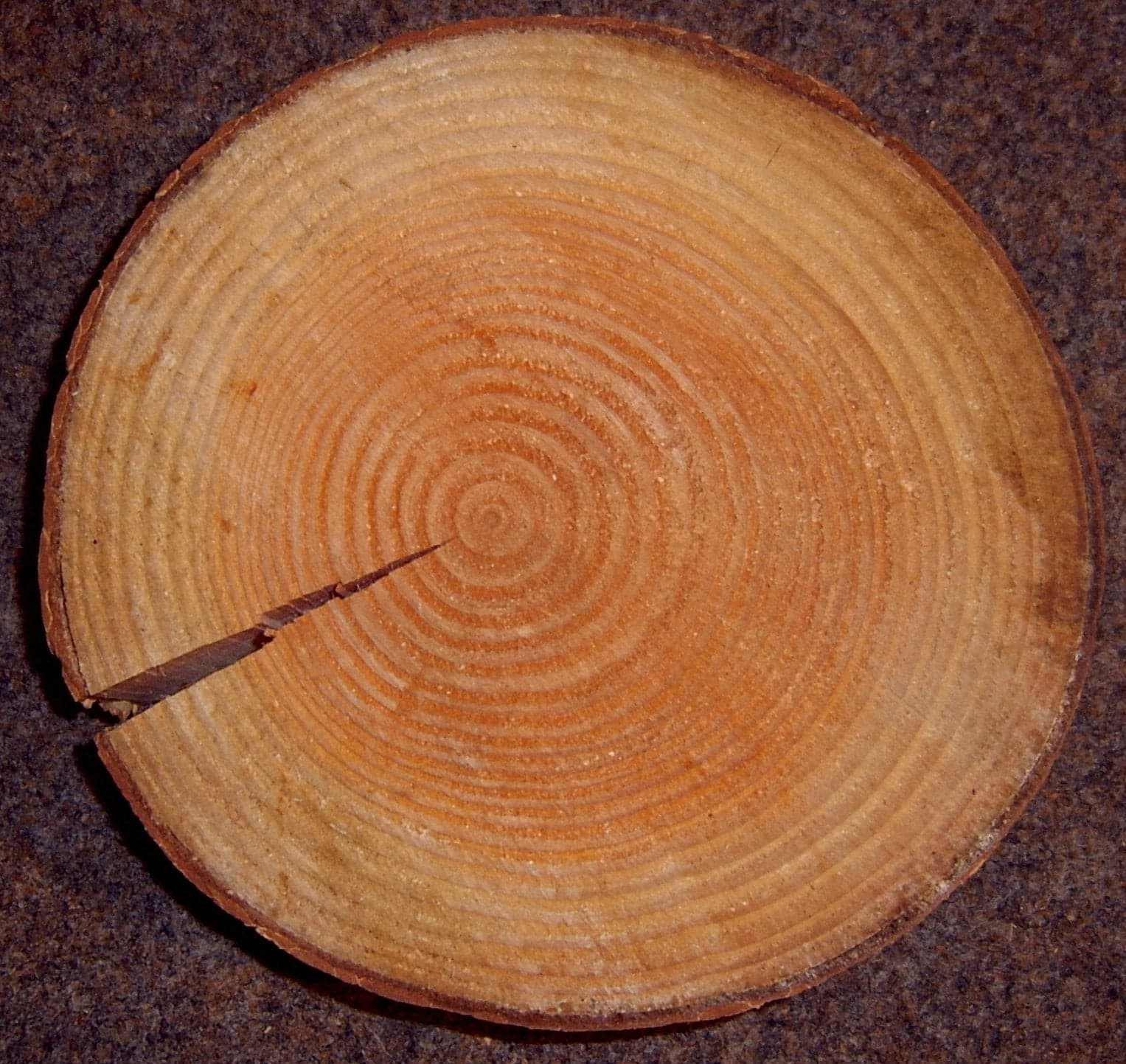
Warm reddish tan to light brown heartwood with a distinctly orange cast, against pale sapwood. The ring figure is bold and high contrast because the latewood bands are dense and dark, giving flatsawn faces a strong flame pattern. It is one of the stiffest softwoods available, which is why it dominates structural engineered timber.

  • Reddish tan to light brown with a warm orange cast
  • Bold high contrast growth ring figure
  • Pale narrow sapwood, deepens with light exposure
  • Straight grain with bold, high-contrast growth rings from dense dark latewood. Reddish tan to light brown with a warm orange cast against pale sapwood.

Working with it

Working it

Machines well but has a moderate blunting effect on cutters, noticeably more than spruce or pine. It accepts stains, glues and finishes well. The dense latewood bands are the machining challenge: they are much harder than the earlywood between them and can tear out where grain rises, leaving a ridged surface. Sharp tooling and light finishing cuts matter, and a helical head is a real advantage.

Finishing

Takes oil and clear finishes well and the colour deepens attractively toward a richer red brown. Like all species with strong density contrast between earlywood and latewood, it blotches under pigment stain, so a conditioner or dye is the safer route. Its natural colour is warm enough that most makers leave it clear.

Drying

Dries reasonably well but is prone to surface checking in thick sections if pushed, and European grown fast ring stock is more troublesome than slow grown material. Volumetric shrinkage at around 11.6 percent is the lowest in this group, which combined with a favourable tangential to radial ratio makes properly dried Douglas Fir one of the more stable softwoods in service.

How much will it move?

Wood swells and shrinks across its width as the air gets damper and drier. Estimate the seasonal movement of a Douglas Fir top before you design the fixings.

Cut
Where it will live

Expected seasonal movement

about 8.3 mm

Fix the top with buttons or slotted brackets, not glue or tight screws.

Linear shrinkage model: width × (shrinkage ÷ 28 % fibre saturation) × seasonal moisture swing. Uses 7.3 % tangential shrinkage for Douglas Fir. A planning estimate, not a guarantee.

What it costs

Safety and sourcing

  • This species record does not establish where an individual piece was grown or harvested. Check the origin details of the piece you are considering.
  • IUCN Red List status: the global conservation assessment for this species.
  • Reported to cause skin irritation, nausea, giddiness and runny nose, along with an increased likelihood of splinters becoming infected. That last point is worth taking seriously: Douglas Fir splinters are notorious for going septic. Gloves when handling rough stock and proper extraction during machining are advisable.

Read the full guideIn-depth notes on figure, colour change, working and stability.+

What Douglas Fir actually is#

Pseudotsuga menziesii is not a fir. It sits in its own genus, separate from the true firs of Abies, and the name is a historical accident that never got corrected. The distinction is not pedantry. Silver Fir is the softest wood in this catalogue at 1,420 N Janka; Douglas Fir is nearly twice as hard at 2,760 N, considerably stiffer, more durable, and much harder on cutting edges. Expecting one to behave like the other leads to bad decisions.

It is native to western North America and has been planted across Europe since the nineteenth century. That matters when buying, because European plantation stock and North American old growth are the same species performing quite differently.

Reading a Douglas Fir slab#

The colour is the immediate draw: a warm reddish tan with an orange cast that deepens under light toward a richer red brown. Against the pale narrow sapwood the contrast is clean.

The ring figure is the real signature. Douglas Fir lays down dense dark latewood bands against much softer earlywood, and on a flatsawn face that produces a bold flame pattern with high contrast, closer to a ring-porous hardwood than to the quiet figure of spruce.

That same contrast is what you must read for quality. Ring spacing separates slow grown material, with a high proportion of dense latewood, from fast grown European plantation stock with wide soft earlywood bands. The slow grown board is stronger, more durable and more attractive. The fast grown one is neither wrong nor a bargain, it is simply a different material, and for structural or exterior work the difference is not cosmetic.

Buyer questions

Questions buyers ask

Is Douglas Fir actually a fir?

+

No. Pseudotsuga menziesii is its own genus, distinct from the true firs in Abies such as Silver Fir. The name is a historical misnomer that stuck. The practical consequence is that it behaves nothing like Silver Fir: it is far stiffer, harder, more durable and considerably more difficult on cutting edges.

How stiff is it compared to other softwoods?

+

Its elastic modulus is 12.17 GPa, the highest of any softwood KORENA lists and above European Larch at 11.80 GPa. Stiffness is why it dominates structural glulam and why it is the right choice for a long shelf or an unsupported span where deflection matters more than hardness.

Can I use it outdoors?

+

It is rated moderately durable regarding decay but is susceptible to insect attack, so it sits below European Larch for exterior work. It performs well in protected exterior joinery such as windows and doors under a maintained finish. For unprotected decking or ground contact, larch is the better choice from this group.

Why do Douglas Fir splinters get infected so often?

+

Mechanical properties

Technical data

Published reference values. Where sources disagree the range is shown, with the typical value used for the scales above.

Density (kg/m³)Mass per cubic metre at about 12 % moisture. Heavier wood is usually harder and stronger.510 kg/m³
Janka hardness (N)Force needed to press a steel ball halfway into the wood. The standard measure of dent resistance.2,760 N
MOR: modulus of rupture (MPa)Bending strength: the load at which a beam breaks.86 MPa
MOE: modulus of elasticity (GPa)Bending stiffness: how much a shelf or top sags under load.12.2 GPa
Radial shrinkageShrinkage across the growth rings, green to oven-dry. Quartersawn boards move by this.4.5 %
Tangential shrinkageShrinkage along the growth rings. Flatsawn boards and most slabs move by this.7.3 %
Douglas Fir grain

No machine-readable author provided. Lumbar~commonswiki assumed (based on copyright claims)., via Wikimedia Commons

Pseudotsuga menziesii is native to western North America, from British Columbia to Mexico, and is not a European species. It has been planted extensively across Europe since the nineteenth century and much of the slab stock KORENA sees is European grown, which usually means faster growth and wider rings than old growth Pacific Northwest material.

  • Not listed in the CITES Appendices and assessed by the IUCN as Least Concern. It is not native to Europe, so European grown material is plantation stock rather than natural forest. Imported North American old growth carries a longer and more scrutinised supply chain under EUDR. European grown Douglas Fir is generally the simpler documentation path and the lower carbon one.

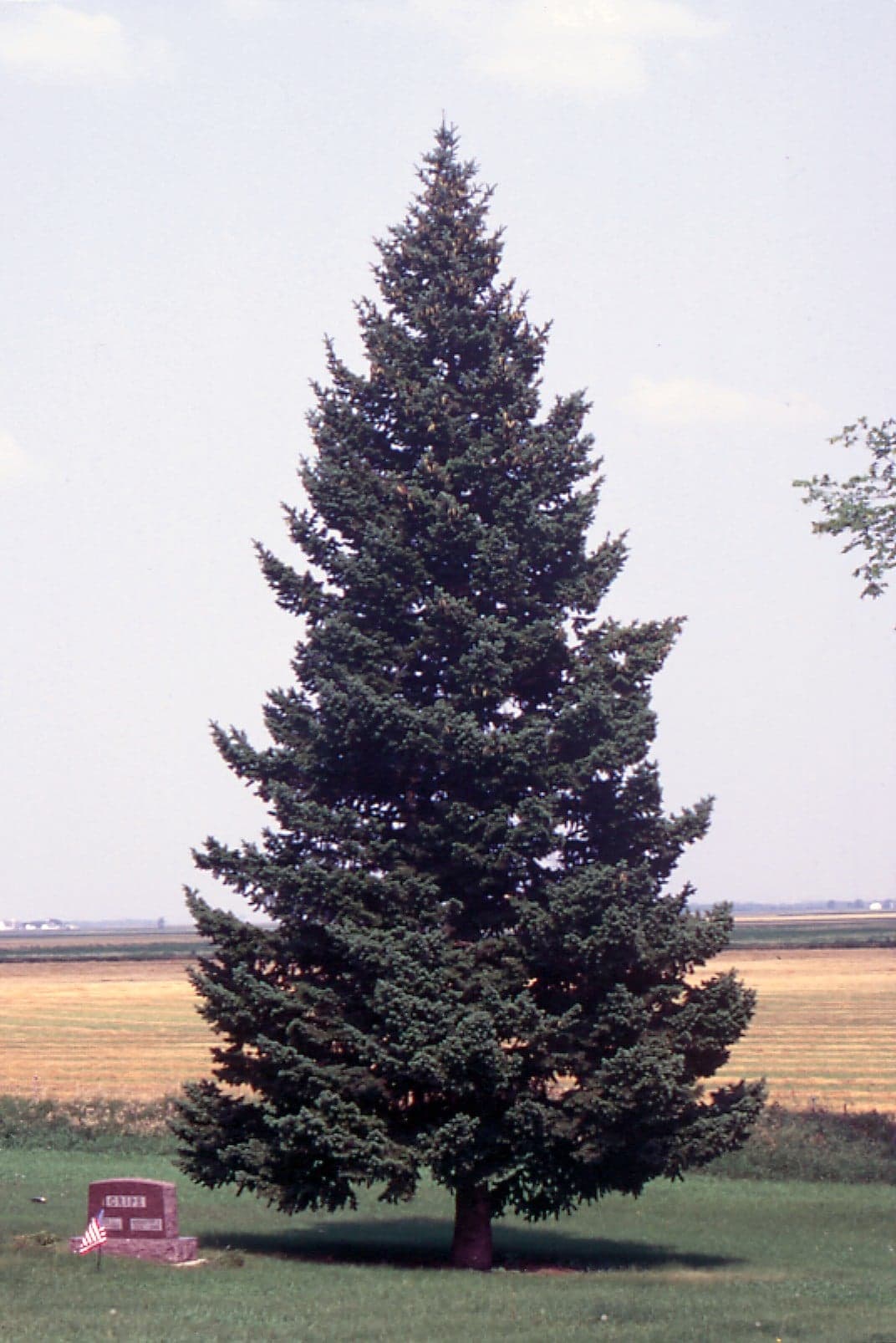
  • Douglas Fir tree

    USDA-NRCS PLANTS Database / Herman, D.E. et al. 1996. North Dakota tree handbook. USDA NRCS ND State Soil C..., via Wikimedia Commons

    At the bench#

    Douglas Fir machines well but it will dull your tooling faster than any other softwood here. Plan for sharpening more often, and accept that a marginal blade produces a markedly worse result on this species than on pine.

    The density contrast between earlywood and latewood is the specific machining challenge. Where the grain rises, a hard latewood band can tear out while the soft earlywood either side cuts cleanly, leaving a ridged or stepped surface that a scraper must fix. Light finishing cuts help. A helical cutterhead helps a great deal more, and on wide slabs it is close to essential if you want a surface that needs minimal sanding.

    Gluing and fastening are straightforward. It takes stains, glues and finishes well, and it holds screws better than the softer conifers here, though pilot holes near end grain remain sensible.

    One practical warning that is not folklore: Douglas Fir splinters carry a documented increased likelihood of becoming infected. Wear gloves handling rough sawn stock, and deal with any splinter promptly rather than leaving it to work its way out.

    Stiffness, and why it matters#

    The number that distinguishes this species is its elastic modulus, 12.17 GPa, the highest of any softwood in the KORENA catalogue and above European Larch at 11.80 GPa. Stiffness is not hardness. Hardness resists denting; stiffness resists bending.

    For a slab that must span a distance without visible sag, a long shelf, an unsupported bench top, an exposed structural beam, stiffness is the property that governs the outcome, and Douglas Fir is the correct answer in this group. It is why the species dominates structural glulam and engineered timber worldwide.

    For a dining table that must resist a dropped pan, hardness governs, and Douglas Fir at 2,760 N is still soft. Choose on the property that matches the failure you actually care about.

    Drying and movement#

    It dries reasonably but is prone to surface checking in thick sections if the schedule is pushed, and fast grown European material is more troublesome in this respect than slow grown stock.

    The payoff is stability in service. Volumetric shrinkage at around 11.6 percent is the lowest of any species in this group, and the tangential to radial ratio at 7.3 against 4.5 percent is comparatively favourable. Properly dried Douglas Fir is one of the more dimensionally reliable softwoods once it is in the room.

    Where Douglas Fir is the right answer#

    Exposed structural work, long spans, tabletops where the orange ring figure is wanted, flooring, and protected exterior joinery such as windows and doors under a maintained finish.

    It is the wrong answer for unprotected exterior work in contact with ground or standing water, where it is rated moderately durable but insect susceptible and European Larch outperforms it. It is also the wrong answer if your tooling is marginal, because this species is unforgiving of dull edges in a way pine is not.

    Sourcing and EUDR#

    Not CITES listed and assessed as Least Concern. The EUDR consideration here is different from the rest of this group because the species is not European. Imported North American old growth carries a longer supply chain with more scrutiny attached. European grown plantation material generally offers both the simpler documentation path and the lower transport carbon, at the cost of the wider rings discussed above. KORENA listings record the yard and region, so which of the two you are buying is visible on the passport rather than inferred from price.

    This is a documented characteristic of the species rather than folklore. Splinters from Douglas Fir carry an increased likelihood of becoming infected, which is why gloves when handling rough sawn stock are worth the inconvenience. Clean and treat any splinter promptly rather than leaving it.

    Is European grown different from American?

    +

    Yes, materially. European plantation Douglas Fir grows faster, producing wider rings, a lower proportion of dense latewood, and lower strength and durability than old growth Pacific Northwest stock. Both are the same species and neither is wrong, but they are not interchangeable for structural or exterior work. Ring count is the thing to look at.

    Volumetric shrinkageTotal volume change from green to oven-dry. Lower means more stable.
    11.6 %
    Natural durability (EN 350)European standard for natural decay resistance, from 1 (very durable) to 5 (perishable).Class 3 — Moderately durable

    Sources

    • The Wood Database — Douglas Fir (Pseudotsuga menziesii)(accessed 2026-08-12)
    • USDA FPL Wood Handbook FPL-GTR-190 (2010)(accessed 2026-08-12)
    • Meier, E. — WOOD! Identifying and Using Hundreds of Woods Worldwide (2015)(accessed 2026-08-12)

    Watch out

    • Not for untreated outdoor useNatural durability is EN 350 class 3 of 5. Keep it indoors or under a maintained finish.
    • Dust irritatesRun extraction and wear a mask when sanding or machining.

    Tap a label for the detail.

    At a glance

    Levels use fixed bands across every species KORENA lists, so they compare directly. The measured value sits under each one.
    HardnessResistance to dents and wearFairly soft

    Janka 2,760 N

    45 % softer than European oak

    WeightHow heavy a slab is to liftLight

    510 kg/m³

    StabilityHow little it moves with the seasonsAverage

    11.6 % volumetric shrinkage

    WorkingSawing, planing, sanding, gluingModerate

    3.7 / 5 bench average

    Outdoor useNatural decay resistance, EN 350Covered outdoor

    EN 350 class 3

    • Sawing · Very goodHow cleanly it cuts and how hard it is on blades.1 = difficult · 5 = excellent
    • Planing · Very goodHow smooth a surface it leaves and how much it tears out.1 = difficult · 5 = excellent
    • Sanding · Very goodHow quickly it sands smooth without clogging the paper.1 = difficult · 5 = excellent
    • Turning · GoodHow it cuts and finishes on the lathe.1 = difficult · 5 = excellent
    • Carving · GoodHow crisply it holds detail under a gouge.1 = difficult · 5 = excellent
    • Gluing · Very goodHow reliably glue joints hold.1 = difficult · 5 = excellent
    • Screw / nail hold · Very goodHow well it holds screws and nails without splitting.1 = difficult · 5 = excellent
    • Steam bending · GoodHow well it takes curves after steaming.1 = difficult · 5 = excellent

    What Douglas Fir timber sells for across Europe right now, per cubic metre before VAT. Tap any price for the detail.

    • Top logs at auctionSelected high-grade logs sold at submission auctions, mostly to veneer and furniture makers. Slabs are cut from logs like these.Most prices are between €197 and €203.Based on 70 prices from 1 region.Latest data 4 Oct 2026
    • Everyday logsLarge volumes of standard roundwood sold by forest owners and state forestry, mostly for construction and industry.Most prices are between €48 and €185.Based on 32 prices from 2 regions.Latest data 15 Sept 2026

    Why does a slab cost more than this?

    These are prices for raw timber. A slab is the best cut of a log, dried for one year or more, then checked and measured piece by piece. Only a small part of each log becomes a slab.

    Source: KORENA Timber Index · Latest data 4 Oct 2026

    See all regional prices