Picea abies
Norway Spruce
The most abundant conifer in Europe and the lightest slab material KORENA lists. Pale, even, easy at the bench, and soft enough that you should choose it deliberately.
- This species is recorded as commercially grown in Europe. This does not establish where an individual piece was harvested; check its origin details.
- Botanical group. Softwoods are conifers; hardwoods are broadleaf trees.
- The botanical family the species belongs to.
Get notified when it landsReference species. No pieces in stock right now.
Is it right for your project?
Great for
- Lightweight tabletops
- Wall panelling
- Shelving
- Instrument soundboards
- Interior joinery
No Norway Spruce in the current drop
Similar species in stock
No Norway Spruce right now. These species suit the same projects and have pieces available.
Get notified about Norway Spruce
We email you when fresh Norway Spruce slabs land at KORENA. Each piece is one of one, so early notice matters.
Wood appearance
What it looks like
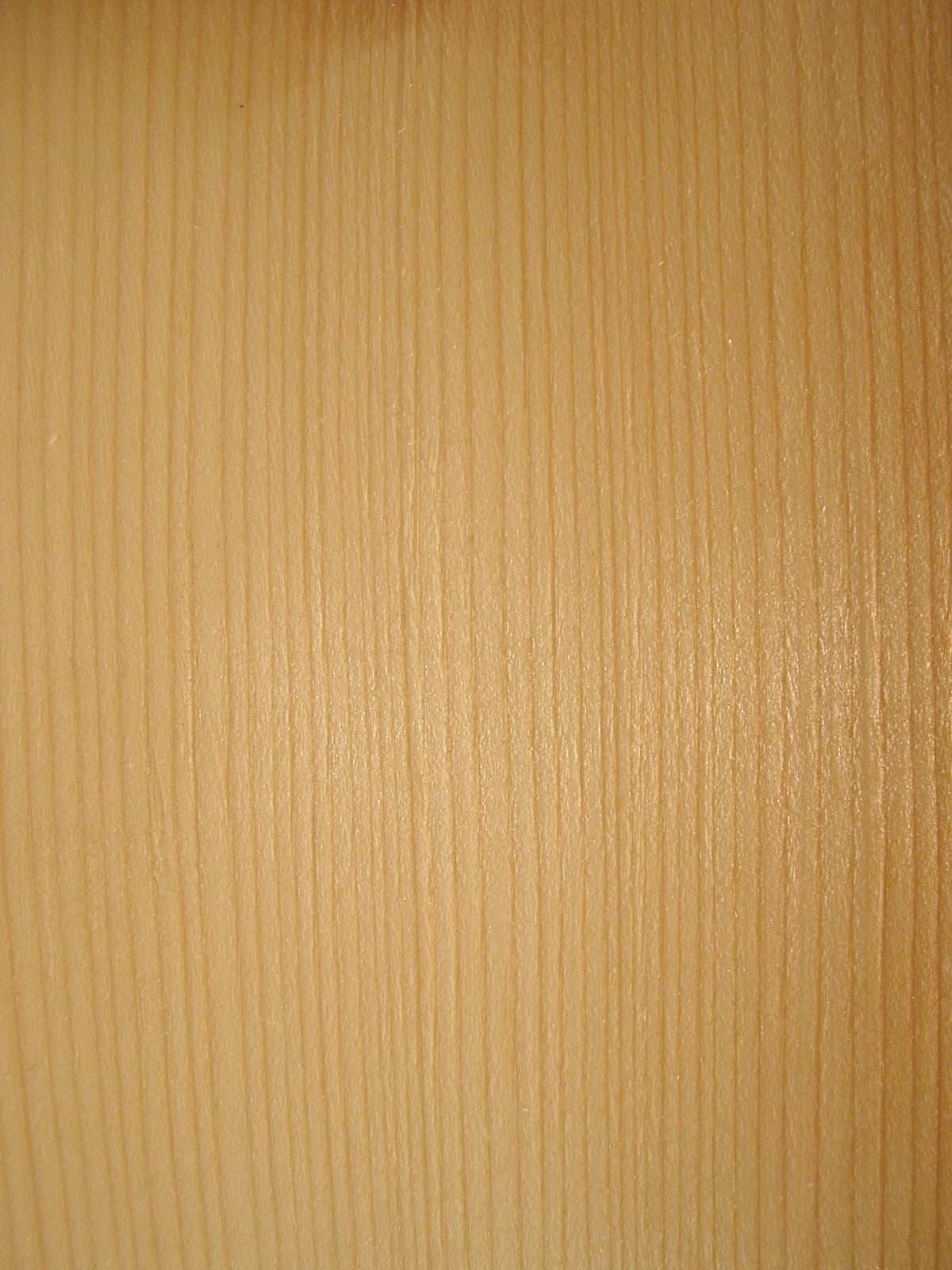
Pale cream to light yellow throughout, with almost no colour separation between heartwood and sapwood. The grain is straight and the texture fine and even. What makes a spruce slab worth looking at is rarely colour and almost always structure: tight annual rings, resin pockets that read as amber flecks, and the occasional cluster of small sound knots that a maker can either feature or cut around.
- Cream to pale yellow, darkening slightly with age and UV
- Little to no heartwood and sapwood contrast
- Resin pockets show as translucent amber marks
- Straight grain, even texture; resin canals.
Working with it
Working it
Easy in every operation as long as you stay away from knots. Spruce is soft enough that sharp tools matter more than powerful ones: dull cutters crush the earlywood rather than slicing it, leaving a fuzzy surface that no amount of sanding fully recovers. Knots are hard, resinous and prone to tearing out, so plan cuts around them rather than through them. It glues reliably and takes screws well if you pilot near edges.
Finishing
The one genuine difficulty with spruce. Its uneven density between earlywood and latewood makes it absorb stain unevenly, so pigment stains blotch badly. Use a conditioner first, or skip stain entirely. Clear oils, hardwax oils and water-based lacquers all sit well and keep the pale colour. If you want warmth, a single coat of shellac before the topcoat evens absorption without muddying the grain.
Drying
Dries quickly and with relatively little degrade, which is one reason it dominates European construction timber. Slab stock still needs patience: at 50 mm and above, resin pockets can bleed if the kiln schedule runs hot, and case hardening shows up as cupping once you machine the first face. Air drying followed by a gentle kiln finish gives the cleanest result. Expect movement in service to be modest, since volumetric shrinkage is around 12.9 percent.
How much will it move?
Wood swells and shrinks across its width as the air gets damper and drier. Estimate the seasonal movement of a Norway Spruce top before you design the fixings.
Expected seasonal movement
about 9.4 mm
Fix the top with buttons or slotted brackets, not glue or tight screws.
Linear shrinkage model: width × (shrinkage ÷ 28 % fibre saturation) × seasonal moisture swing. Uses 8.2 % tangential shrinkage for Norway Spruce. A planning estimate, not a guarantee.
What it costs
Safety and sourcing
- This species is recorded as commercially grown in Europe. This does not establish where an individual piece was harvested; check its origin details.
- IUCN Red List status: the global conservation assessment for this species.
Spruce dust has been reported to cause skin irritation and asthma-like respiratory effects, which puts it in the same bracket as most softwood dust. Extraction at the machine and a P2 mask during extended sanding are sensible. No specific toxicity beyond that is documented.
Read the full guideIn-depth notes on figure, colour change, working and stability.
What Norway Spruce actually is#
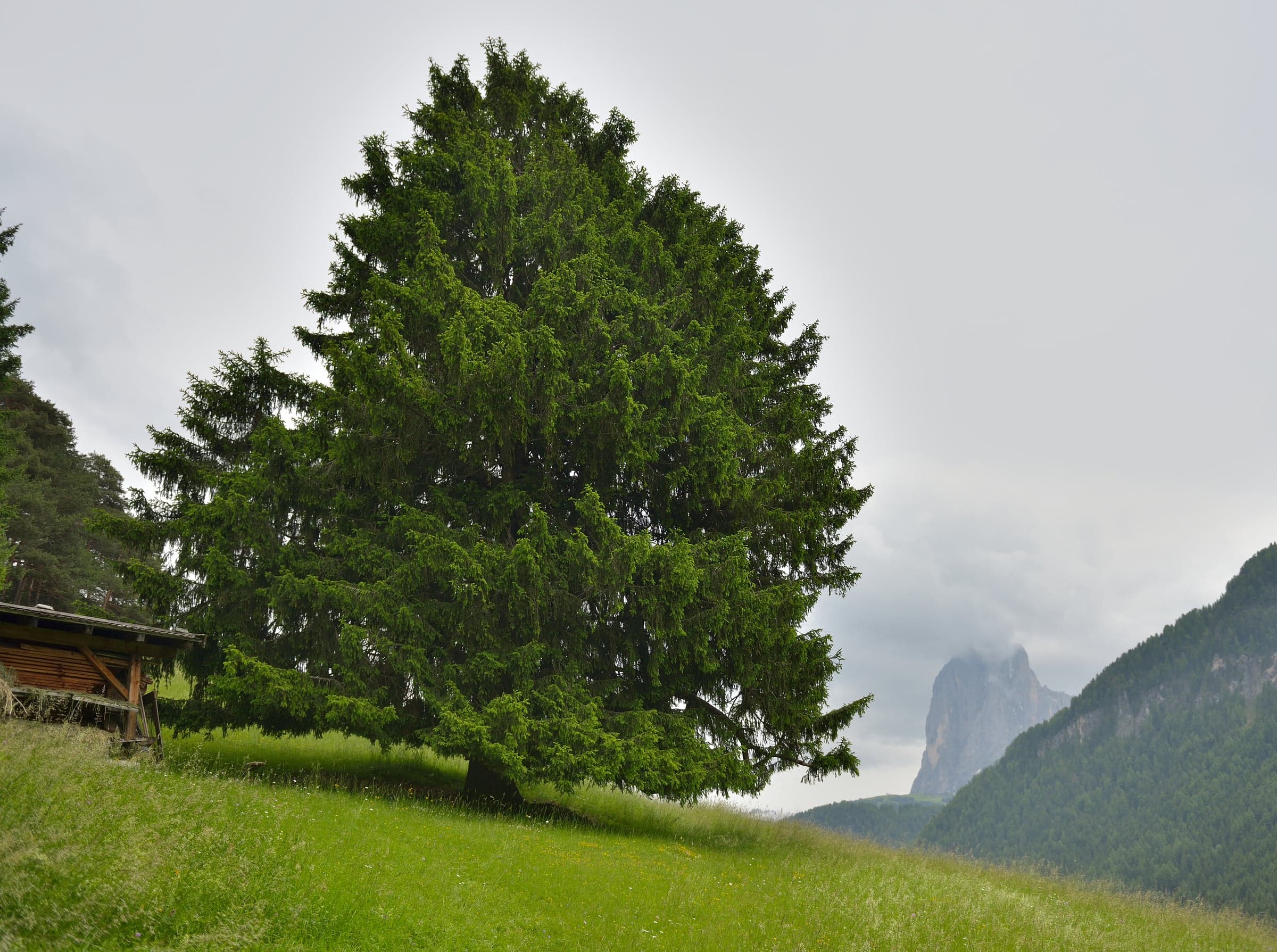
Picea abies is the default European conifer. It covers more forest area than any other species on the continent and supplies most of the structural timber used in EU construction. That ubiquity works against it when people shop for slabs, because a wood you can buy as a stud is easy to dismiss as a wood you cannot build furniture from. The dismissal is half right. Spruce is genuinely soft, and a spruce tabletop will carry the record of everything set down on it. What the reputation misses is that spruce is also stiff for its weight, dimensionally reasonable once dried, and capable of a pale, quiet surface that no hardwood can imitate.
Reading a spruce slab#
Colour tells you very little. Spruce runs cream to pale yellow with effectively no heartwood boundary, so unlike walnut or oak you cannot judge a board by its tonal range. Structure is what matters.
Look first at ring spacing. Slow-grown Alpine spruce with rings a millimetre or two apart is denser, stiffer and considerably more stable than fast-grown lowland stock with rings five millimetres apart. The difference in service is real: the tight-ringed board stays flatter and dents less.
Look next at the knots. Spruce knots are hard, resinous, and much darker than the surrounding wood. Small sound knots are a design feature and hold fine. Large knots, and especially knot clusters near an edge, are weak points that will move independently of the board around them.
Buyer questions
Questions buyers ask
Is Norway Spruce hard enough for a dining table?
It sits at 1,680 N on the Janka scale, which is soft for a tabletop that will see daily use. It works if you accept dents as part of the character, or if the top is protected by a hardwax oil that is easy to refresh. For a surface that must stay unmarked, European oak at 4,980 N or ash are better matched.
Why does my spruce slab look blotchy after staining?
Spruce has a large density difference between the pale earlywood and the darker latewood, so pigment lodges unevenly. Apply a wood conditioner or a thin shellac washcoat before staining, or leave it unstained and use a clear oil. Testing on an offcut from the same slab is the only reliable check, because blotching varies board to board.
What are the amber marks in the surface?
Resin pockets, which are normal in spruce and not a defect in the structural sense. They can weep slightly if the slab is warmed by sunlight or underfloor heating. Sealing with shellac before the topcoat locks them down. On a measured KORENA slab any pocket large enough to matter is mapped in the defect outline.
Is spruce suitable for outdoor use?
Mechanical properties
Technical data
Published reference values. Where sources disagree the range is shown, with the typical value used for the scales above.
| Density (kg/m³)Mass per cubic metre at about 12 % moisture. Heavier wood is usually harder and stronger. | 405 kg/m³ |
|---|---|
| Janka hardness (N)Force needed to press a steel ball halfway into the wood. The standard measure of dent resistance. | 1,680 N |
| MOR: modulus of rupture (MPa)Bending strength: the load at which a beam breaks. | 63 MPa |
| MOE: modulus of elasticity (GPa)Bending stiffness: how much a shelf or top sags under load. | 9.7 GPa |
| Radial shrinkageShrinkage across the growth rings, green to oven-dry. Quartersawn boards move by this. | 3.9 % |
| Tangential shrinkageShrinkage along the growth rings. Flatsawn boards and most slabs move by this. | 8.2 % |