Abies alba
Silver Fir
Spruce without the resin. The softest species in the KORENA catalogue, and the best softwood here for a painted finish.
- This species is recorded as commercially grown in Europe. This does not establish where an individual piece was harvested; check its origin details.
- Botanical group. Softwoods are conifers; hardwoods are broadleaf trees.
- The botanical family the species belongs to.
Get notified when it landsReference species. No pieces in stock right now.
Is it right for your project?
Great for
- Wall and ceiling panelling
- Painted furniture
- Lightweight carcass work
- Shelving
- Interior joinery
No Silver Fir in the current drop
Similar species in stock
No Silver Fir right now. These species suit the same projects and have pieces available.
Get notified about Silver Fir
We email you when fresh Silver Fir slabs land at KORENA. Each piece is one of one, so early notice matters.
Wood appearance
What it looks like
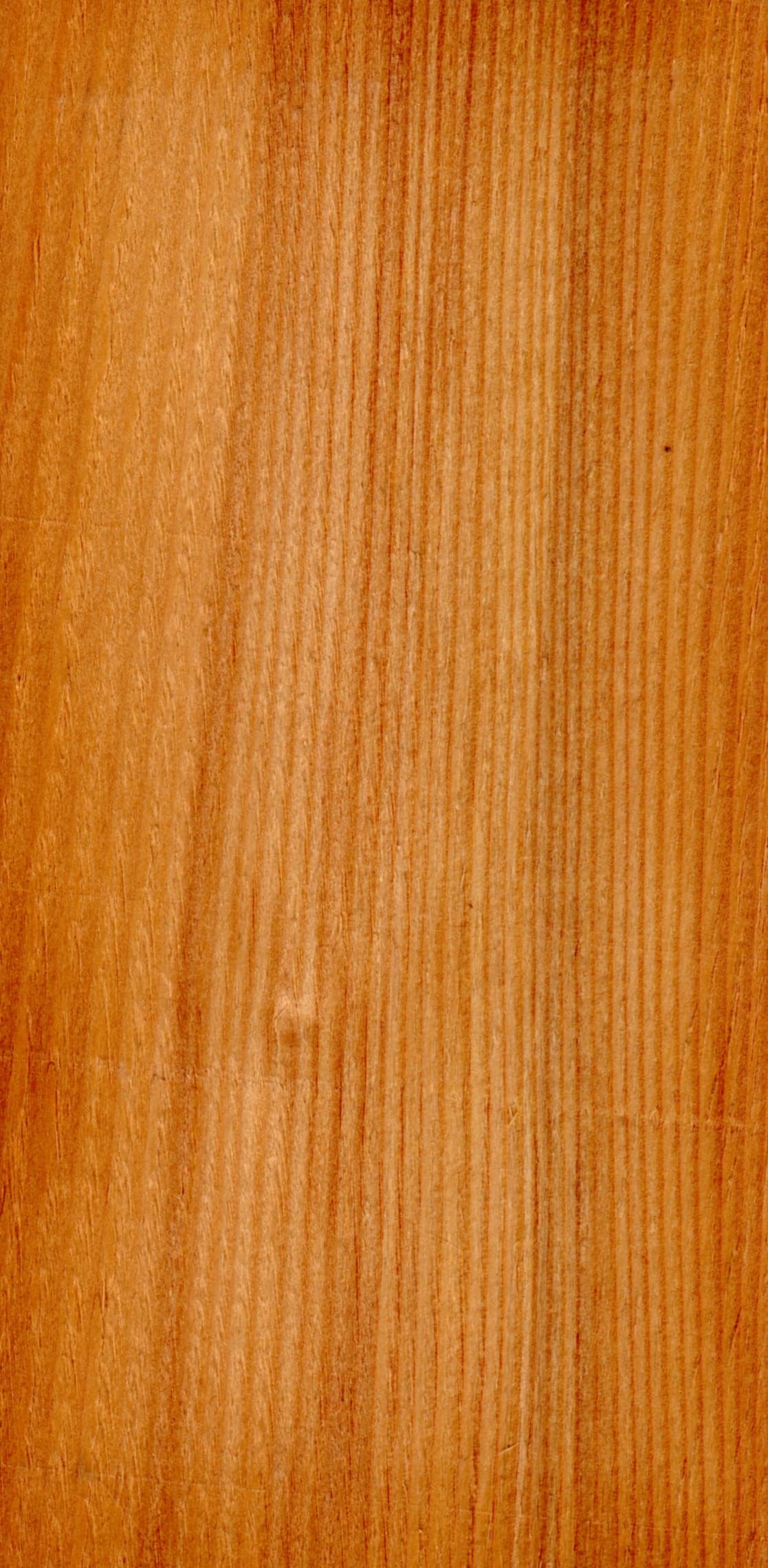
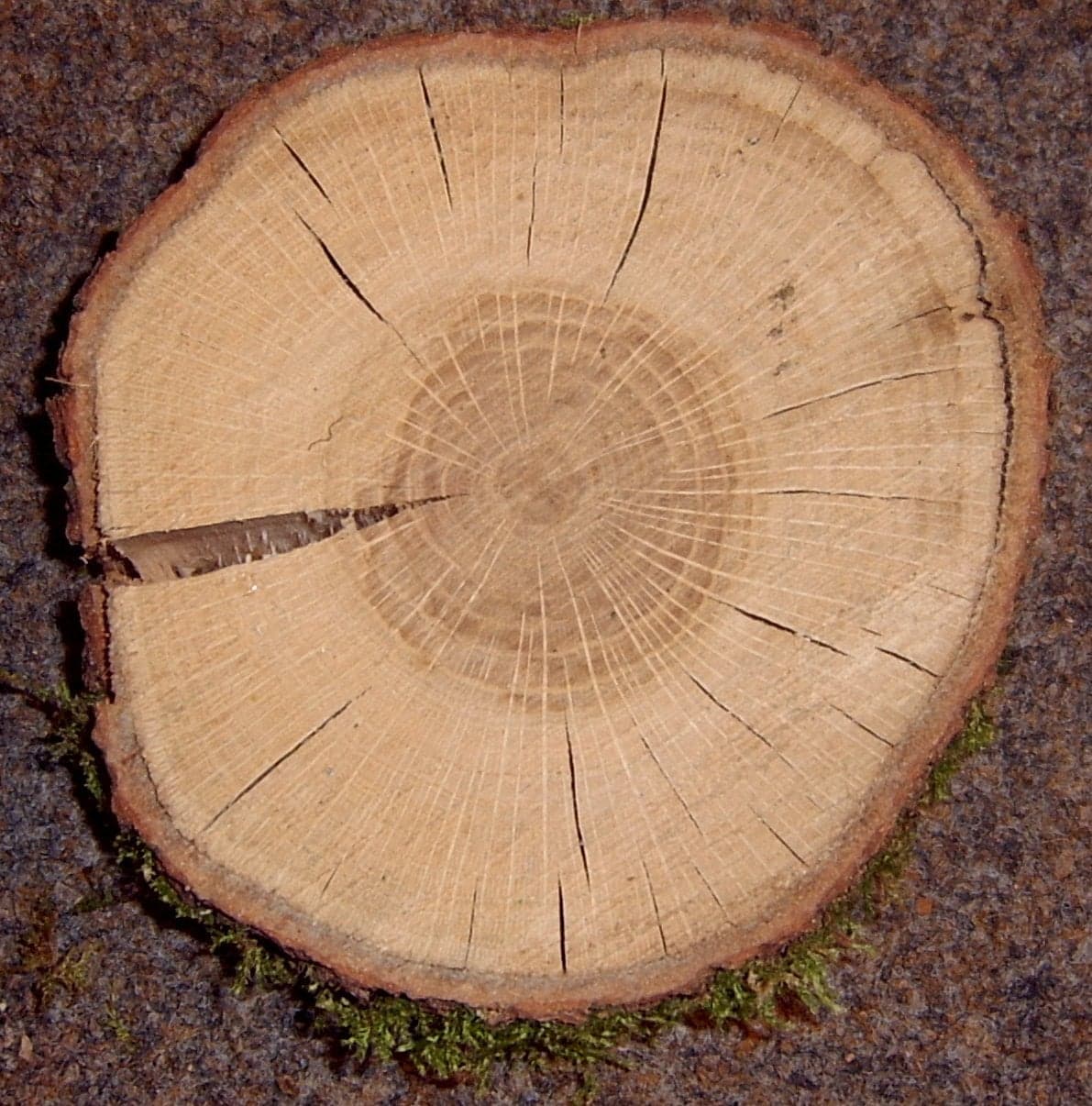
Very close to Norway Spruce in appearance and routinely sold interchangeably with it. Silver Fir is a shade duller and greyer, entirely without the resin pockets that mark spruce, because the species has no resin canals in its wood. Grain is straight, texture fine and even, and the overall impression is flatter and quieter than spruce.
- Near white to pale grey-brown, duller than spruce
- No visible heartwood boundary
- No resin pockets, the clearest way to tell it from spruce
- Pale, straight grain; almost no resin canals.
Working with it
Working it
Generally easy with both hand and machine tools, and it glues, stains and finishes better than spruce because the absence of resin canals makes absorption more even. The same softness caveat applies: sharp cutters are essential or the earlywood crushes and fuzzes. It holds detail poorly under carving tools, so it is not a carving wood despite being soft.
Finishing
Takes stain and finish noticeably better than spruce, though it is still a softwood with uneven density and a conditioner remains sensible before pigment stain. It is one of the better softwood choices for a painted finish, since the fine even texture needs little grain filling. Clear finishes leave it looking pale and slightly cool.
Drying
Dries readily and without much degrade, and because there are no resin canals there is no resin bleed to manage, which is a genuine advantage over spruce in thick sections. Wet pockets of bacterially infected wood, sometimes called wetwood, occur in older trees and dry slowly and unevenly. A yard that has kilned the stock properly will have caught these. Movement in service is moderate at around 12.8 percent volumetric.
How much will it move?
Wood swells and shrinks across its width as the air gets damper and drier. Estimate the seasonal movement of a Silver Fir top before you design the fixings.
Expected seasonal movement
about 9.9 mm
Fix the top with buttons or slotted brackets, not glue or tight screws.
Linear shrinkage model: width × (shrinkage ÷ 28 % fibre saturation) × seasonal moisture swing. Uses 8.7 % tangential shrinkage for Silver Fir. A planning estimate, not a guarantee.
What it costs
Safety and sourcing
- This species is recorded as commercially grown in Europe. This does not establish where an individual piece was harvested; check its origin details.
- IUCN Red List status: the global conservation assessment for this species.
Species in the Abies genus have been reported to cause skin irritation, though severe reactions are uncommon. Standard dust extraction and a P2 mask for extended machining cover it.
Read the full guideIn-depth notes on figure, colour change, working and stability.
What Silver Fir actually is#
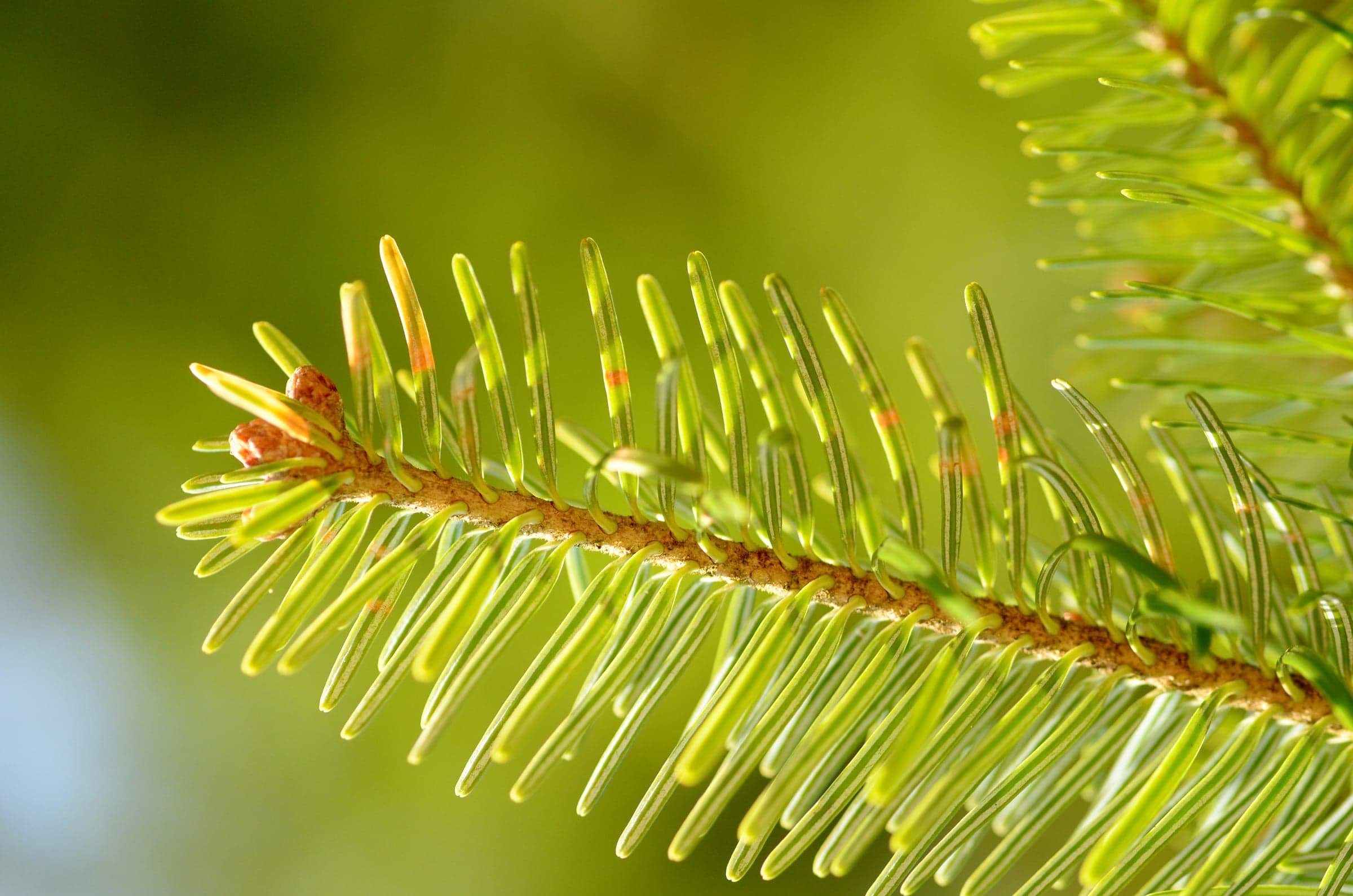
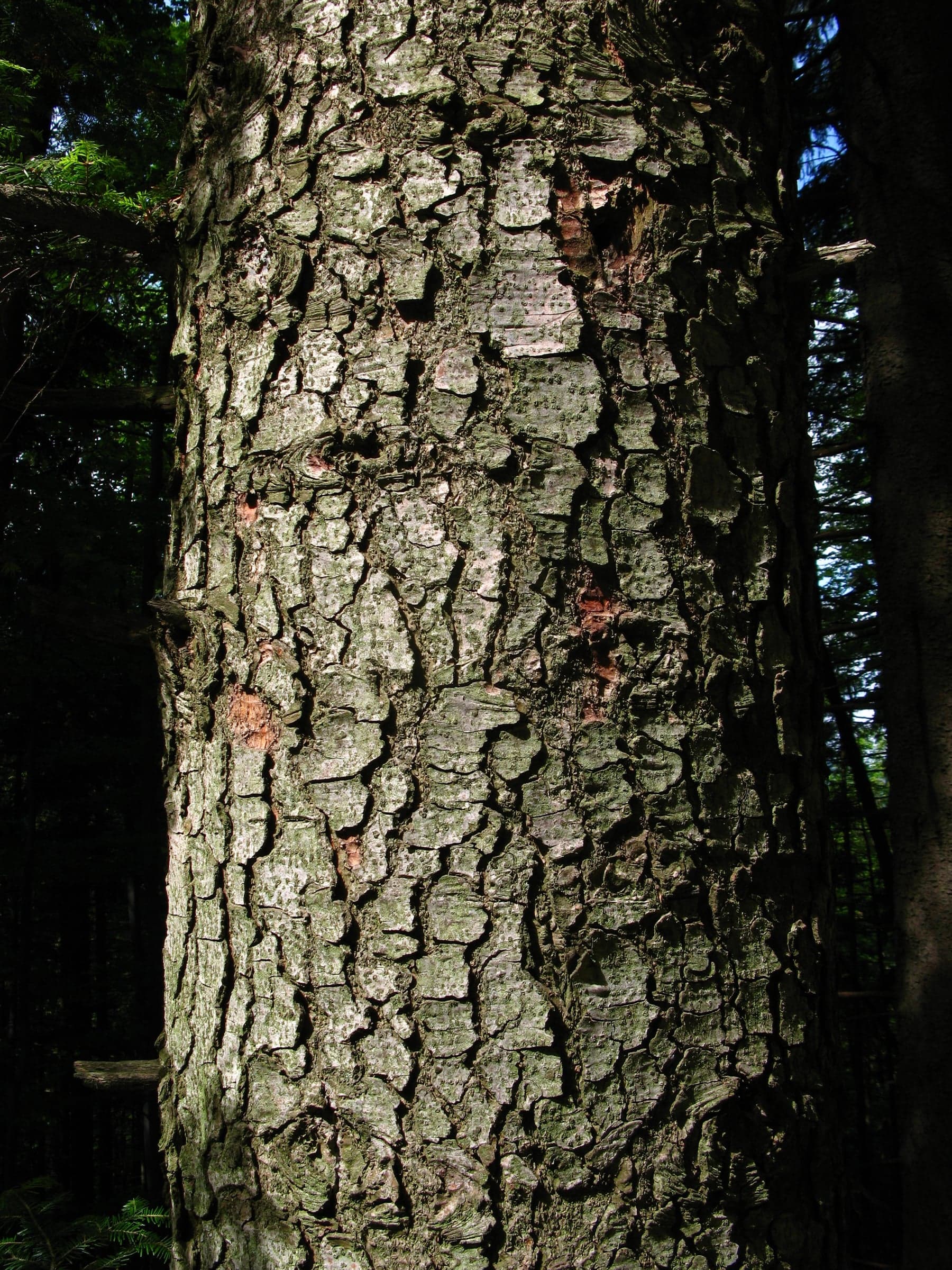
Abies alba is the tree most people have looked at without knowing it. It is a major component of central European mountain forest, it is the traditional Christmas tree across much of the continent, and its timber is sold through the trade as whitewood alongside Norway Spruce with little distinction drawn between them. For most construction purposes that conflation is harmless. For slab work it is worth separating, because the one structural difference between the two species changes how the wood behaves.
Silver Fir has no resin canals. Spruce does. Everything that follows from that, the absence of resin pockets, the cleaner behaviour under paint, the more even stain absorption, the lack of bleed in thick sections, is the reason to choose fir over spruce rather than treat them as the same board.
Reading a Silver Fir slab#
Colour range is narrow: near white through to a pale grey-brown, with no heartwood boundary to speak of. Against spruce it reads flatter and cooler, a fraction duller, and without the amber flecking that gives spruce its visual interest.
Because colour gives you so little, judge the slab on ring structure and defects. Tight rings from slow mountain growth mean a denser, stiffer, more stable board. Knots are the usual limiting factor, and fir knots are somewhat less hard and less prone to tear-out than spruce knots, which makes them slightly easier to machine through when you have no choice.
Buyer questions
Questions buyers ask
How do I tell Silver Fir from Norway Spruce?
Look for resin pockets. Spruce has resin canals and shows amber pockets and streaks; Silver Fir has none at all, so a clean pale board with no resin marks is almost certainly fir. Fir also reads slightly greyer and duller. The two are close enough that they are frequently sold interchangeably as whitewood.
Is Silver Fir better than spruce for painted work?
Yes, generally. The fine even texture needs little grain filling and the absence of resin canals means no bleed-through under paint. Spruce resin pockets can telegraph through a painted finish months later unless sealed with shellac first.
Can I use Silver Fir outdoors?
Not untreated. It is rated non-durable to perishable with little resistance to insect attack, which is the lowest durability in this group. European larch or Douglas fir are the appropriate choices for exposure.
Is it hard enough for a desk top?
At 1,420 N Janka it is the softest species KORENA lists, softer even than spruce. A desk top in fir will mark under a pen pressed through paper. It works for a light-use surface finished in a refreshable hardwax oil, but for daily writing use a harder species.
Mechanical properties
Technical data
Published reference values. Where sources disagree the range is shown, with the typical value used for the scales above.
| Density (kg/m³)Mass per cubic metre at about 12 % moisture. Heavier wood is usually harder and stronger. | 415 kg/m³ |
|---|---|
| Janka hardness (N)Force needed to press a steel ball halfway into the wood. The standard measure of dent resistance. | 1,420 N |
| MOR: modulus of rupture (MPa)Bending strength: the load at which a beam breaks. | 66 MPa |
| MOE: modulus of elasticity (GPa)Bending stiffness: how much a shelf or top sags under load. | 8.3 GPa |
| Radial shrinkageShrinkage across the growth rings, green to oven-dry. Quartersawn boards move by this. | 4.0 % |
| Tangential shrinkageShrinkage along the growth rings. Flatsawn boards and most slabs move by this. | 8.7 % |