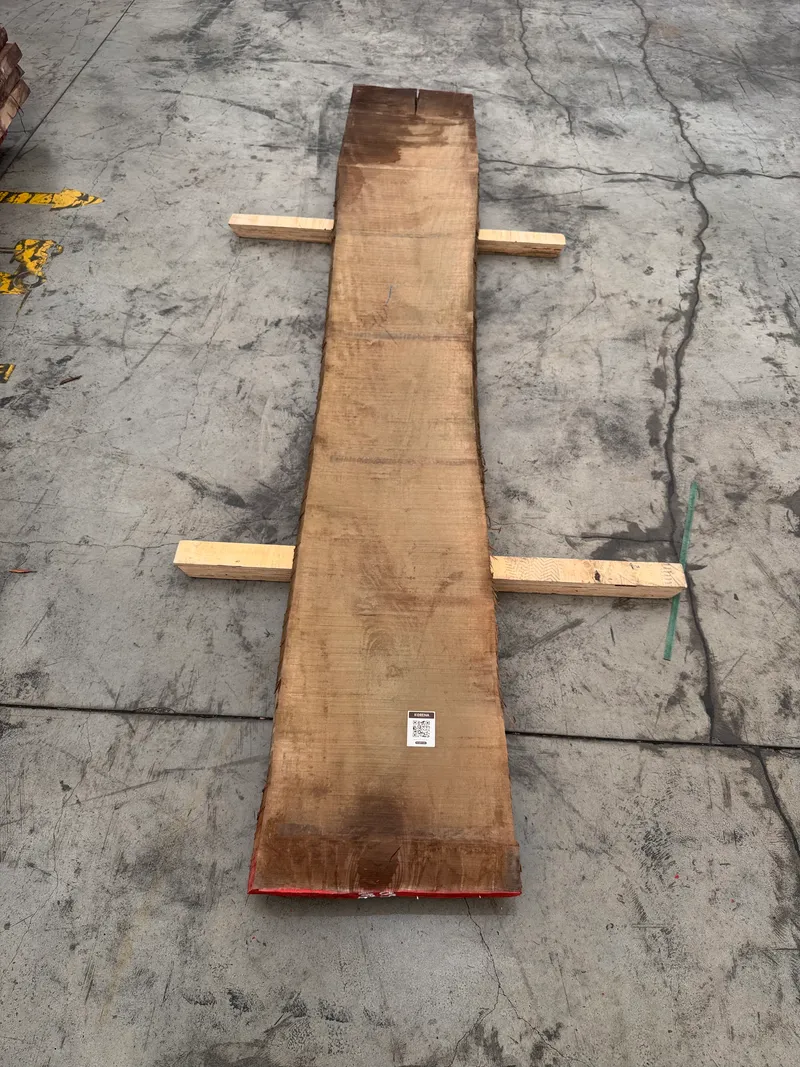
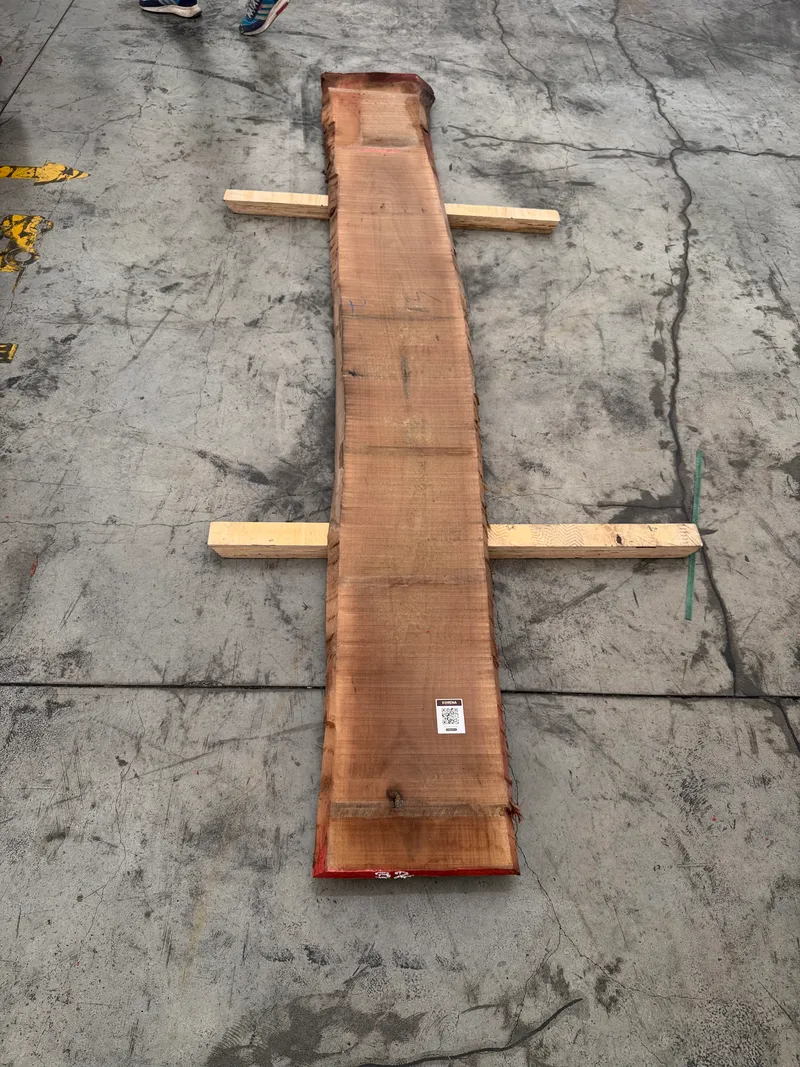
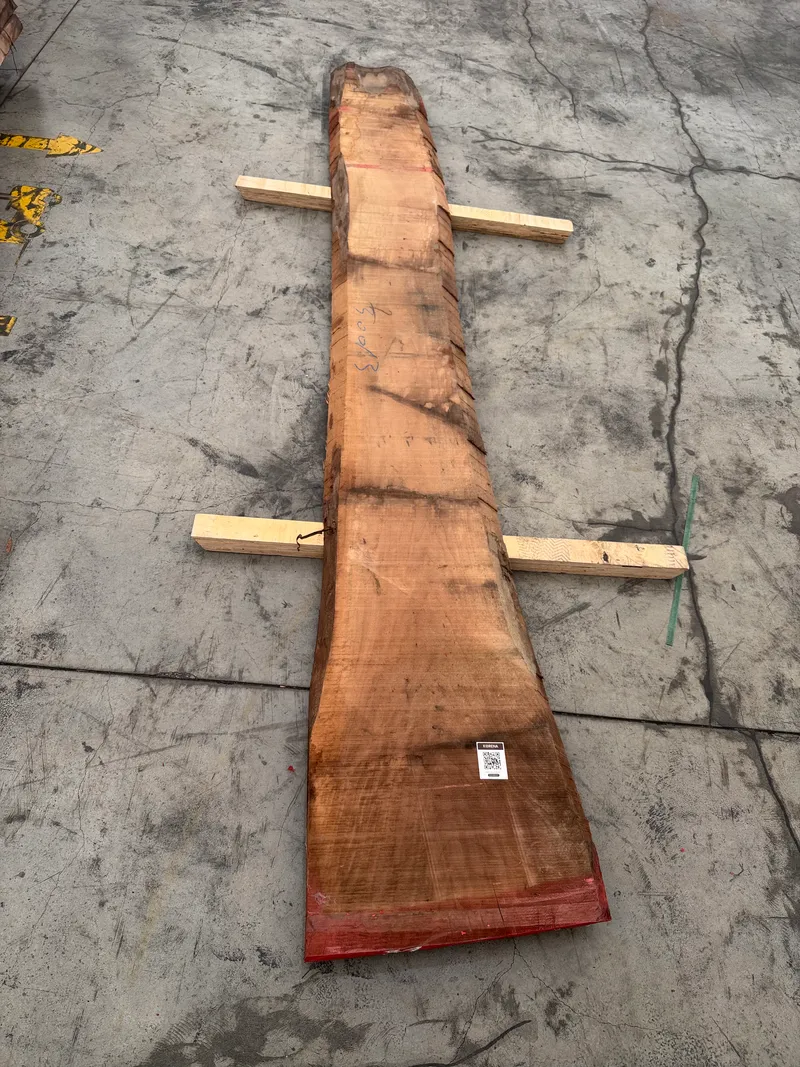
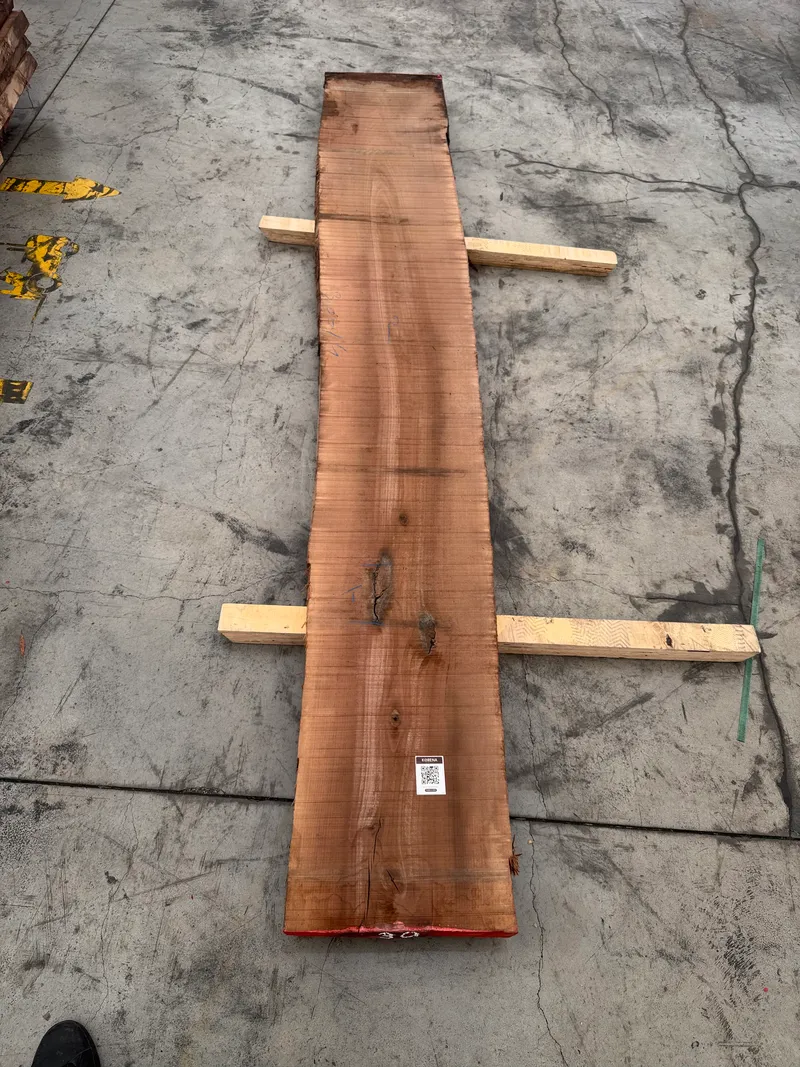
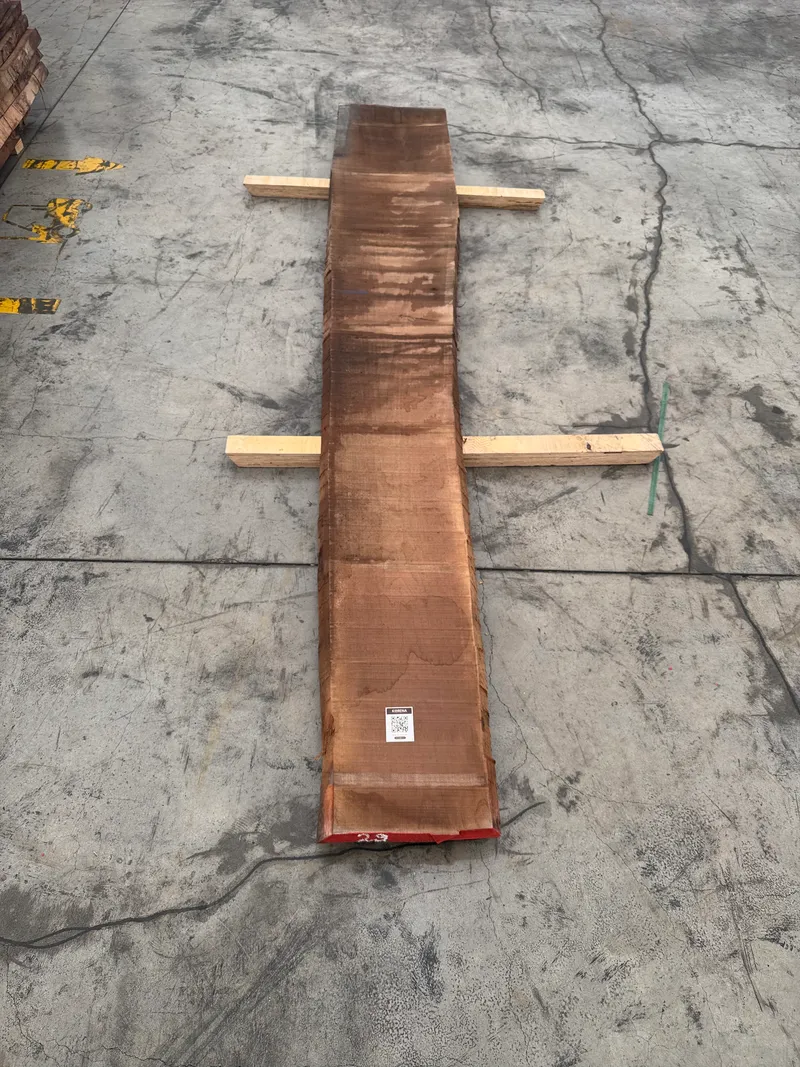
Platanus × acerifolia
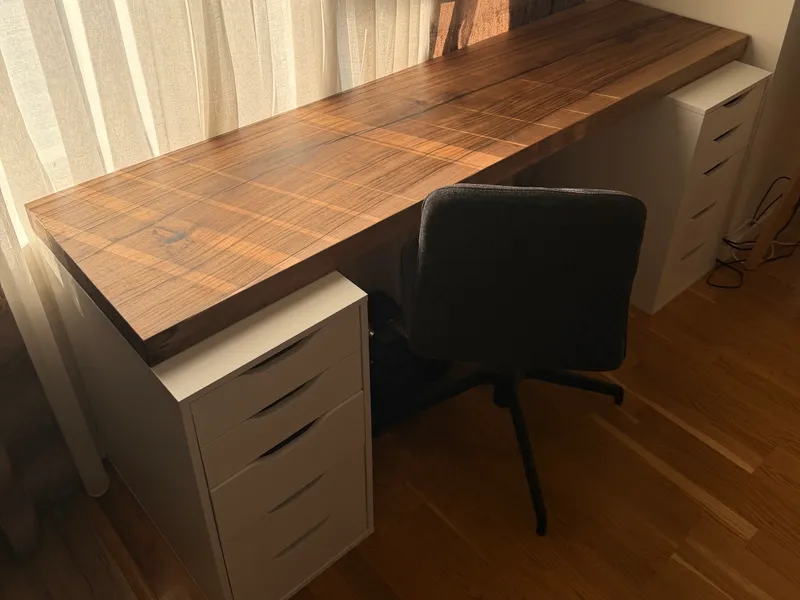
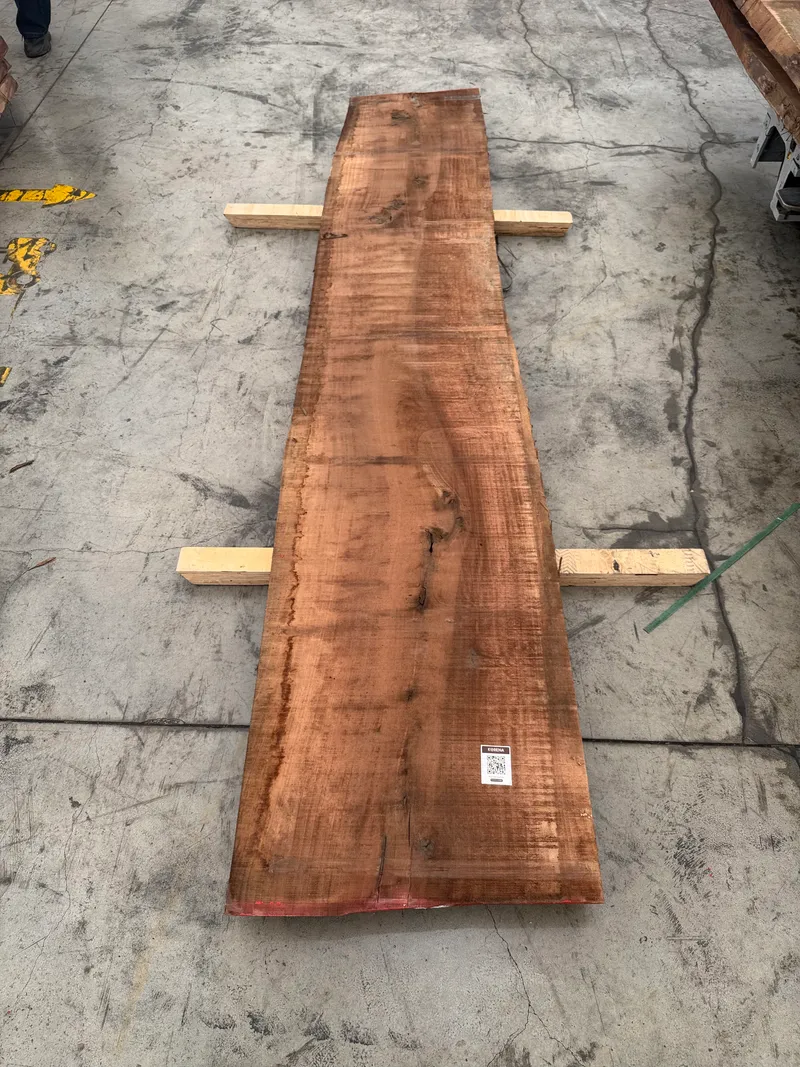
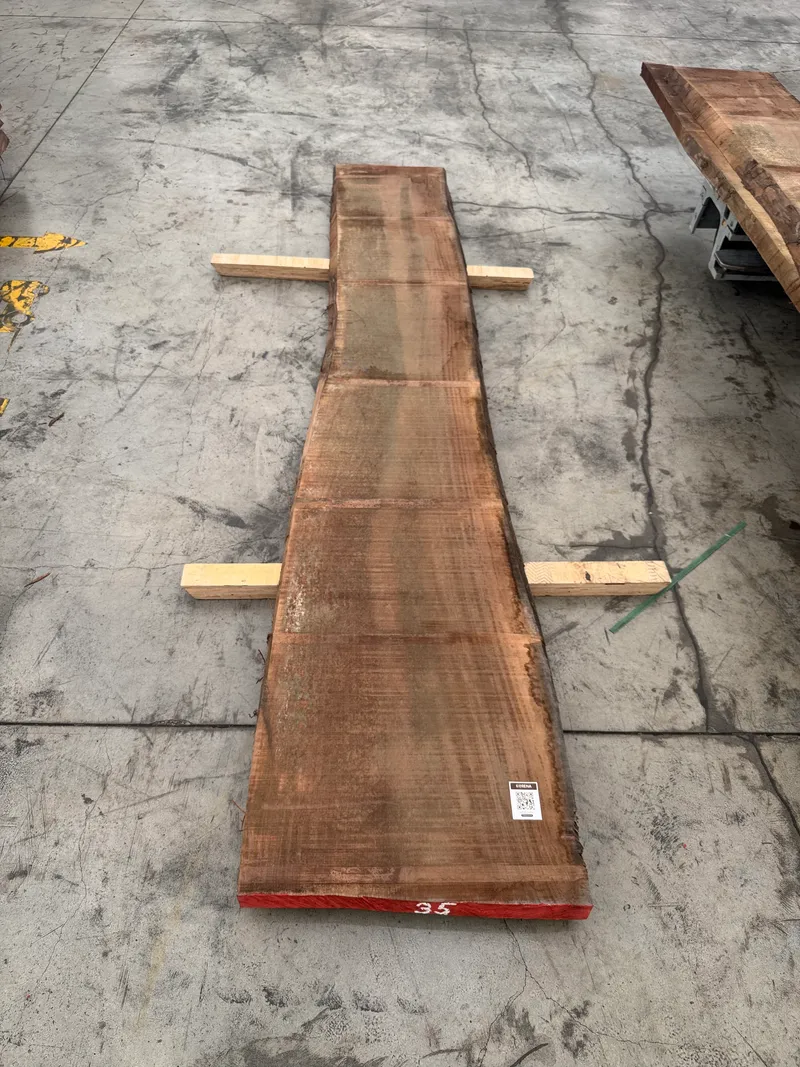
Quartersawn London Plane reveals lacewood: large medullary rays catch the light in dense, scaly flecks. The slab's signature, and its whole reason for being on this list.
Tree
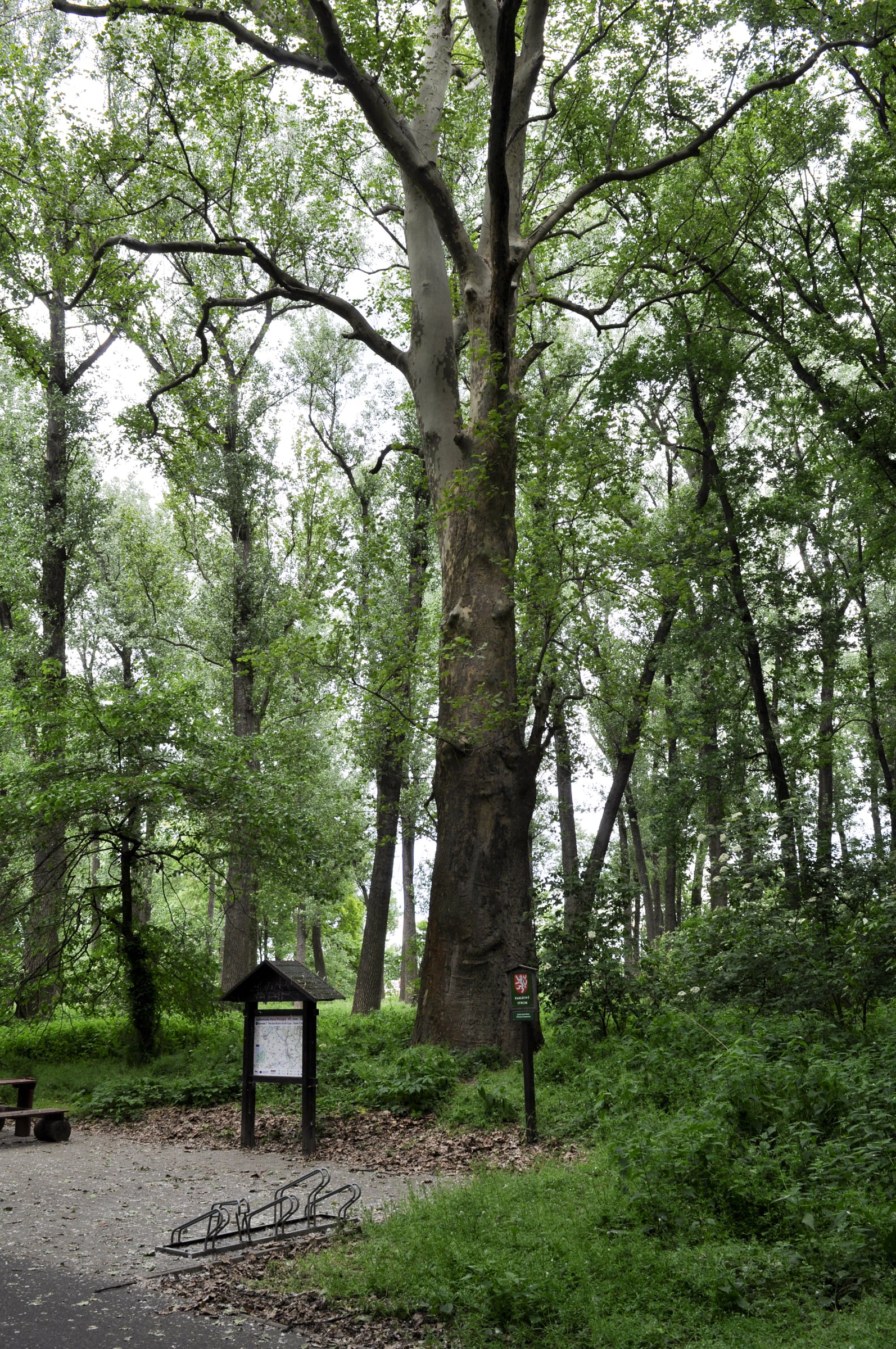
Platanus × acerifolia is the hybrid planted along avenues and squares across Europe, Paris, Milan, Sofia, every London street. KORENA sources it from urban forestry: trees removed for safety, age, or development, then milled rather than chipped. The provenance is local, traceable, and tells a story buyers respond to.


Wood appearance
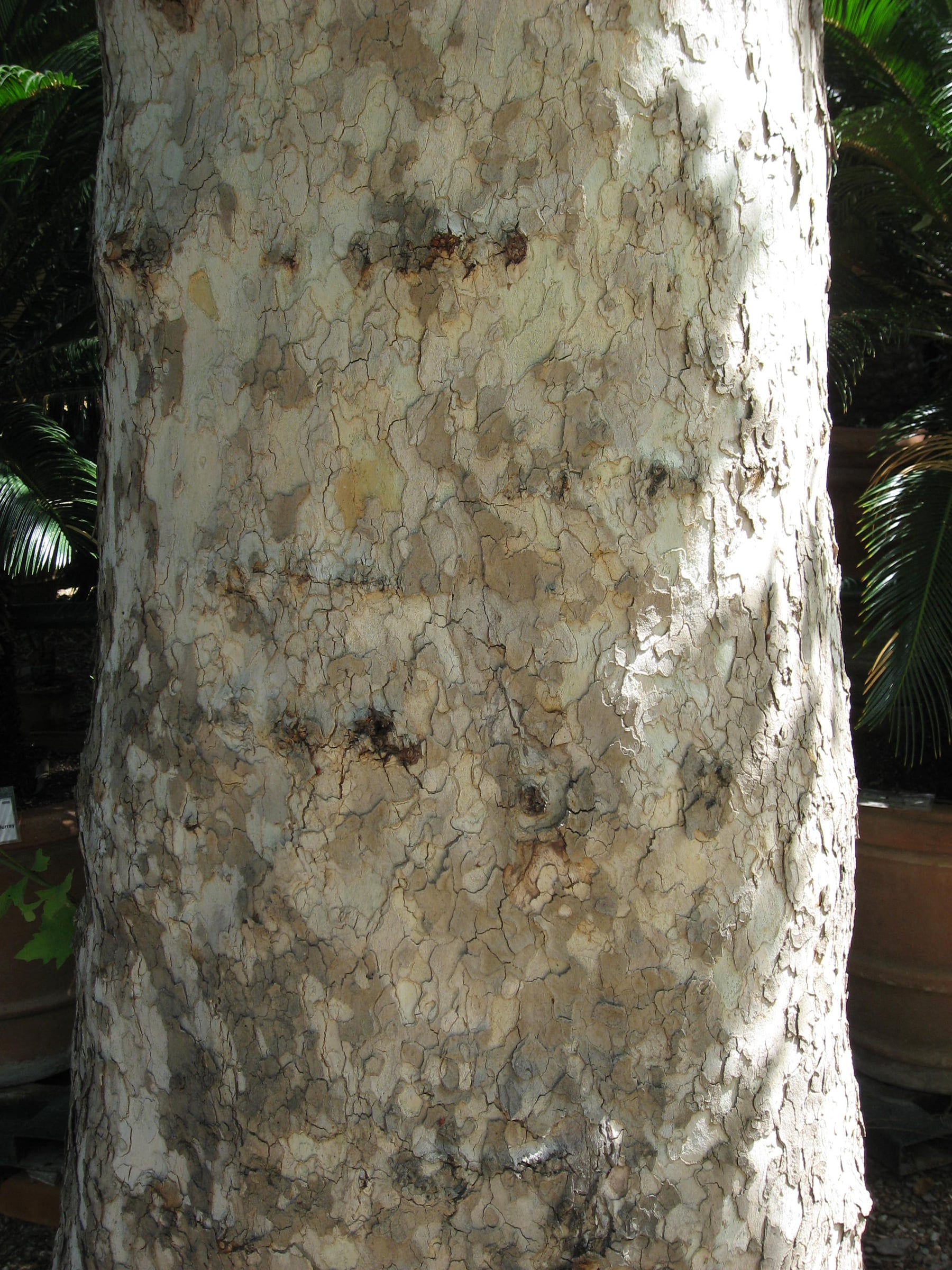
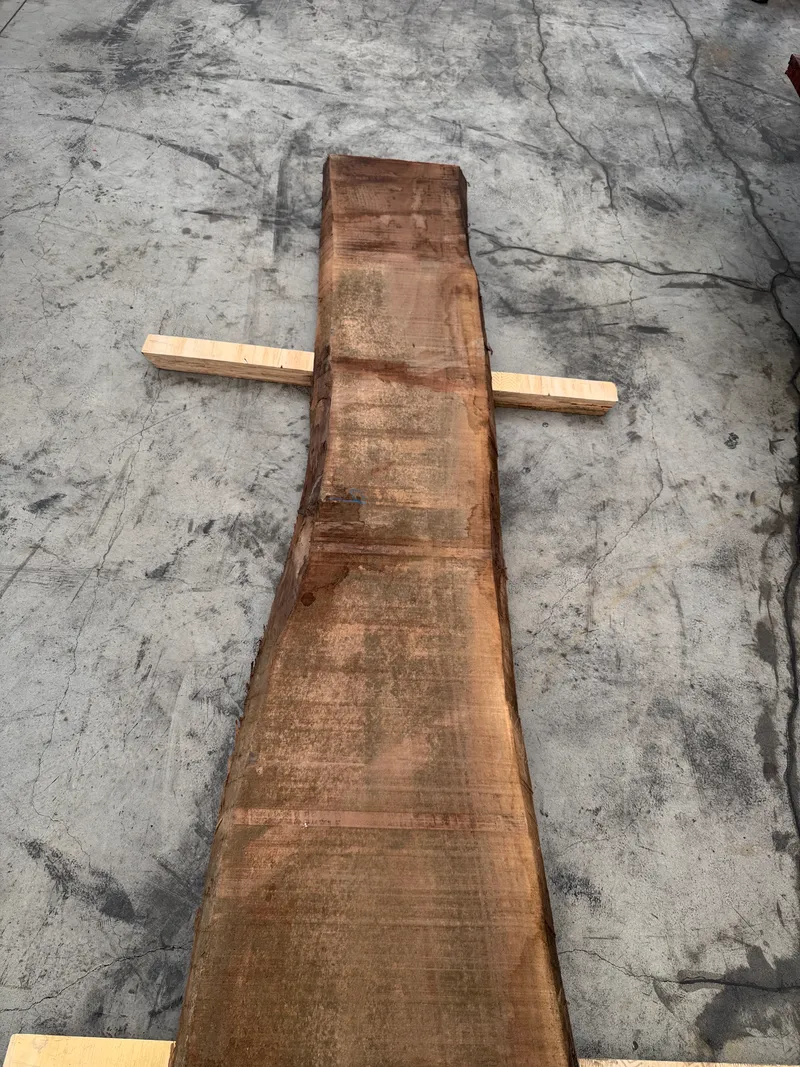
Straight grain, fine-to-medium texture, pinkish-brown heartwood that warms with age. Flatsawn faces are quiet and clean. Quartersawn is where it earns its name in the trade, lacewood, with broad ray flecks that read almost like snakeskin under finish. Two faces of the same board can look like two different woods.
Mechanical properties
| Density (kg/m³) | 500–620 kg/m³ |
|---|---|
| Janka hardness (N) | 3,800–4,600 N |
| MOR: modulus of rupture (MPa) | 70–80 MPa |
| MOE: modulus of elasticity (GPa) | 8.0–10.0 GPa |
| Radial shrinkage | 5.5–6.5 % |
| Tangential shrinkage | 9.5–11.0 % |
| Volumetric shrinkage | 15.0–17.0 % |
| Natural durability (EN 350) | Class 5 — Perishable |
Working with it
1 = difficult · 5 = excellent
Saws, sands, turns, and carves well. Planing is the one to watch: the medullary rays that make quartersawn faces beautiful also tear out under dull blades. Sharp tools, light cuts, and a finish scraper or 220-grit pass to clean up. Glues and screws without drama.
Drying
Tangential shrinkage is high (around 10%) and roughly twice the radial figure, so cup and distortion are real risks. Dries best slowly, well-stickered, with weight on top. Once stable it holds shape indoors, but it's not a wood to rush through a kiln.
Finishing
Takes oil and hardwax oil cleanly. The lacewood figure deepens dramatically under any clear finish. Test on an offcut before committing, because the contrast jumps. Stains can muddy the rays; we'd avoid them. Sand to 180–220 and stop.
Durability and safety
Not commonly flagged as a dust irritant or sensitiser. Standard shop dust extraction is enough. Food-contact safe once finished, fine for boards and serving pieces.
Best uses
Pairs and substitutes
Pairs well with
Often substituted for
Sourcing and sustainability
Decay class 5 (perishable), interior use only; it won't last outdoors. The hybrid is not IUCN-evaluated and carries no CITES listing. Sourcing is the strong story here: urban trees that would otherwise be chipped, given a second life as furniture. EUDR due diligence is in preparation and becomes mandatory for large operators from 30 December 2026, and the passport behind each slab QR is built to carry its provenance.
Platanus x acerifolia is bought for one thing: lacewood.
The species has exceptionally large rays, the ribbons of cells that run radially through a trunk. In most timbers the rays are small enough to be barely visible, and in oak they show as the familiar silvery fleck on quartersawn faces. In London Plane they are so large that a quartersawn face is covered in a dense, regular flecked pattern across the entire surface.
That figure is called lacewood, and it exists only on the quarter. A flatsawn London Plane board is comparatively plain, a light reddish brown with modest figure. The same log cut differently is one of the most distinctive decorative surfaces in European timber.
If you are buying this species, you are buying quartersawn stock, and if you are offered flatsawn plane at a lacewood price, the cut is the thing to check.
Three species get called sycamore in different places and they are not related.
London Plane is Platanus x acerifolia, a hybrid plane. American sycamore is Platanus occidentalis, its close relative and also a source of lacewood. European Sycamore is Acer pseudoplatanus, a maple, and has nothing to do with either.
They look different, work differently and cost differently. Buy on the botanical name.
London Plane is the classic European street tree, planted through the nineteenth and twentieth centuries for its tolerance of air pollution and its willingness to be pruned hard.
Almost all timber reaching the market comes from municipal felling rather than forestry, which shapes what is available. Sizes can be generous, because street trees grow large. But the wood frequently carries inclusions, bark pockets and irregular grain from decades of pruning wounds, and metal is a genuine risk in urban timber.
That last point matters practically: a nail or a cable fragment embedded in an urban log will destroy a bandsaw blade. Reputable yards scan for metal, and it is worth asking.
Volumetric shrinkage of 15.0 percent is high, and the tangential to radial differential of 9.5 against 5.5 percent is wide. Flatsawn London Plane cups noticeably.
This turns out to matter less than it might, because the reason to buy the species is the quartersawn figure, and quartersawn stock is substantially more stable across its width. The figure and the stability arrive together.
It also dries with a tendency to distort and is susceptible to fungal staining if not dried promptly, so stock that sat before conversion may carry grey discolouration.
At 4,180 N it is moderately soft and easy on tooling.
The large rays are the machining consideration. On a quartersawn face they can lift or flake under a heavy cut, taking chunks out of the very figure you are working to expose. Light cuts, sharp tooling and a scraper for the final surface.
It glues and finishes well and turns reasonably. It sands to a good surface, though care is needed not to round over the ray flecks.
Lacewood looks best under a clear finish that lets the ray contrast do the work. An oil finish deepens the reddish brown background and increases the contrast with the pale flecks.
Stain tends to muddy the figure, since the rays and the background absorb differently and the effect is to reduce rather than enhance the pattern.
Decorative panels, veneer, cabinet fronts, box work, turned pieces and any application where quartersawn lacewood figure is the design. It is a feature timber rather than a structural one.
It is the wrong answer outdoors at decay class 5, for anything structural, and for a wide flatsawn surface that must stay flat.
Not CITES listed and reported as Not Evaluated by the IUCN. Because supply comes largely from urban municipal felling rather than forestry, chains are short and local but non-standardised. KORENA records the yard and region on every listing.
Buyer questions
Lacewood is quartersawn London Plane. The species has exceptionally large rays, and cutting on the quarter exposes them as a dense flecked pattern across the whole surface that looks like lace. It is one of the most distinctive figures available from any European species, and it exists only on the quartersawn face. Flatsawn plane is comparatively plain.
No, and the naming is a mess. London Plane is Platanus x acerifolia, a plane tree. American sycamore is Platanus occidentalis, its close relative. European Sycamore is Acer pseudoplatanus, a maple, and unrelated to both. All three are sometimes called sycamore somewhere. Check the botanical name.
Not very. Volumetric shrinkage of 15.0 percent is high and tangential shrinkage of 9.5 percent against radial at 5.5 percent is a wide differential, so flatsawn boards cup. Since the reason to buy this species is the quartersawn lacewood figure, and quartersawn stock is much more stable, the figure and the stability come together.
No. It is rated decay class 5, perishable, with poor insect resistance. London Plane is an interior decorative timber only.
Largely from urban felling. London Plane is the classic city street tree across Europe, planted for its tolerance of pollution and hard pruning, and most timber reaching the market comes from municipal removals rather than forestry. Sizes can be large but the wood often contains inclusions and irregularities from pruning wounds.
Current stock
We email you when fresh London Plane slabs land at KORENA. Each piece is one of one, so early notice matters.
Sources