Christian Ferrer / Wikimedia Commons · CC BY-SA 3.0 · resized/cropped for display
Pinus halepensis
The pine of dry Mediterranean coasts. Irregular, resinous and awkward to machine, with the lowest measured shrinkage of anything KORENA lists.
Tap a label for the detail.
No Aleppo Pine right now. These species suit the same projects and have pieces available.
We email you when fresh Aleppo Pine slabs land at KORENA. Each piece is one of one, so early notice matters.
Wood appearance
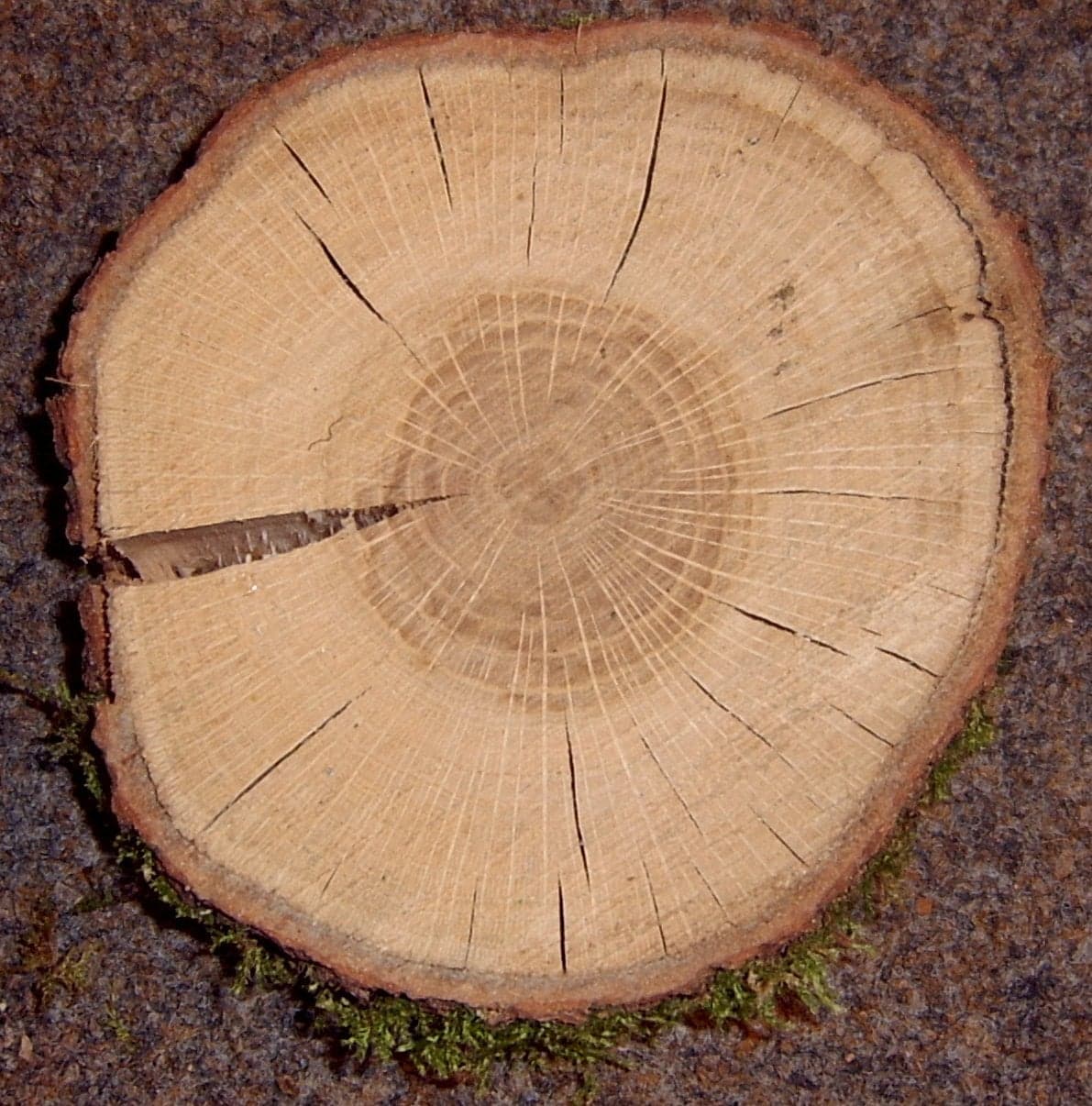
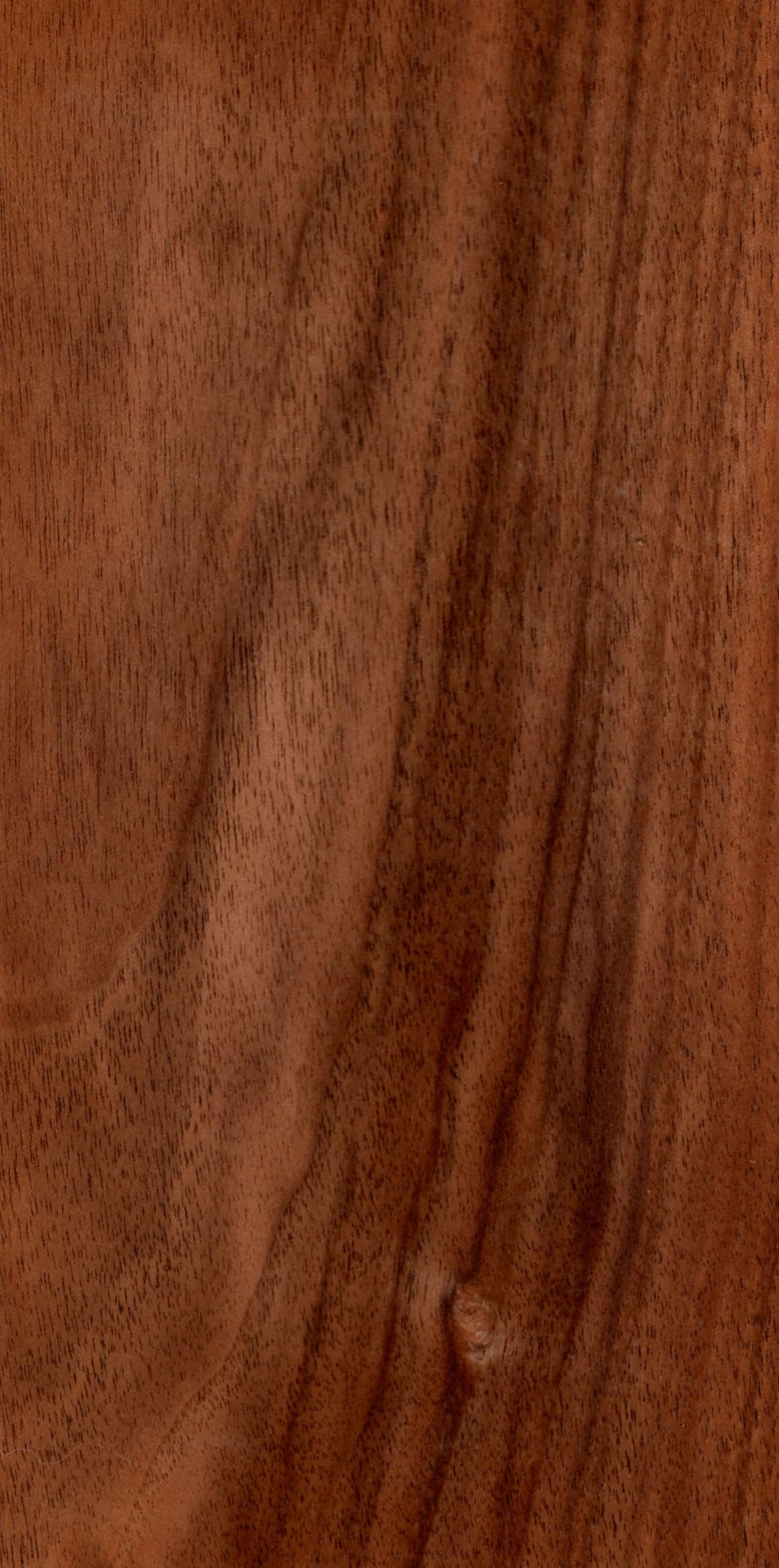
Pale yellow to light brown, often with an orange tint in the heartwood, against wide pale sapwood. Growth is fast and irregular where conditions are dry, so ring width varies noticeably within a single board and the grain is frequently wavy rather than straight. Knots are common. It reads as a rougher, more variable wood than the northern pines.
Working with it
Resinous and variable. The wavy and irregular grain typical of drought grown stock causes tear-out where the grain direction reverses, which it does often. Light cuts, sharp tooling and a scraper for the final surface are the practical answer. Resin loads blades and abrasives as it does in the other Mediterranean pines. It glues acceptably once surfaces are clean of resin.
Wipe with denatured alcohol or acetone before finishing to lift surface resin. Pigment stains blotch, as in all the pines, so a dye or a clear finish is safer. Seal knots with shellac before painting. The orange tint in the heartwood deepens with light exposure.
Prone to distortion because the grain is irregular and ring width uneven, so expect more spring and bow on ripping than in a northern pine. Measured shrinkage from the cited study is comparatively low at around 8.3 percent volumetric, with radial at 3.8 and tangential at 4.8 percent, and the unusually narrow gap between those two figures suggests good dimensional behaviour once dry. Those values come from Algerian material and regional variation in this species is wide.
Wood swells and shrinks across its width as the air gets damper and drier. Estimate the seasonal movement of a Aleppo Pine top before you design the fixings.
Expected seasonal movement
about 5.4 mm
Fix the top with buttons or slotted brackets, not glue or tight screws.
Linear shrinkage model: width × (shrinkage ÷ 28 % fibre saturation) × seasonal moisture swing. Uses 4.76 % tangential shrinkage for Aleppo Pine. A planning estimate, not a guarantee.
Working with pine has been reported to cause allergic skin reactions and asthma-like symptoms in some people. This species is resinous, so skin contact sensitisation over repeated exposure is a realistic risk. Gloves and good extraction are appropriate.
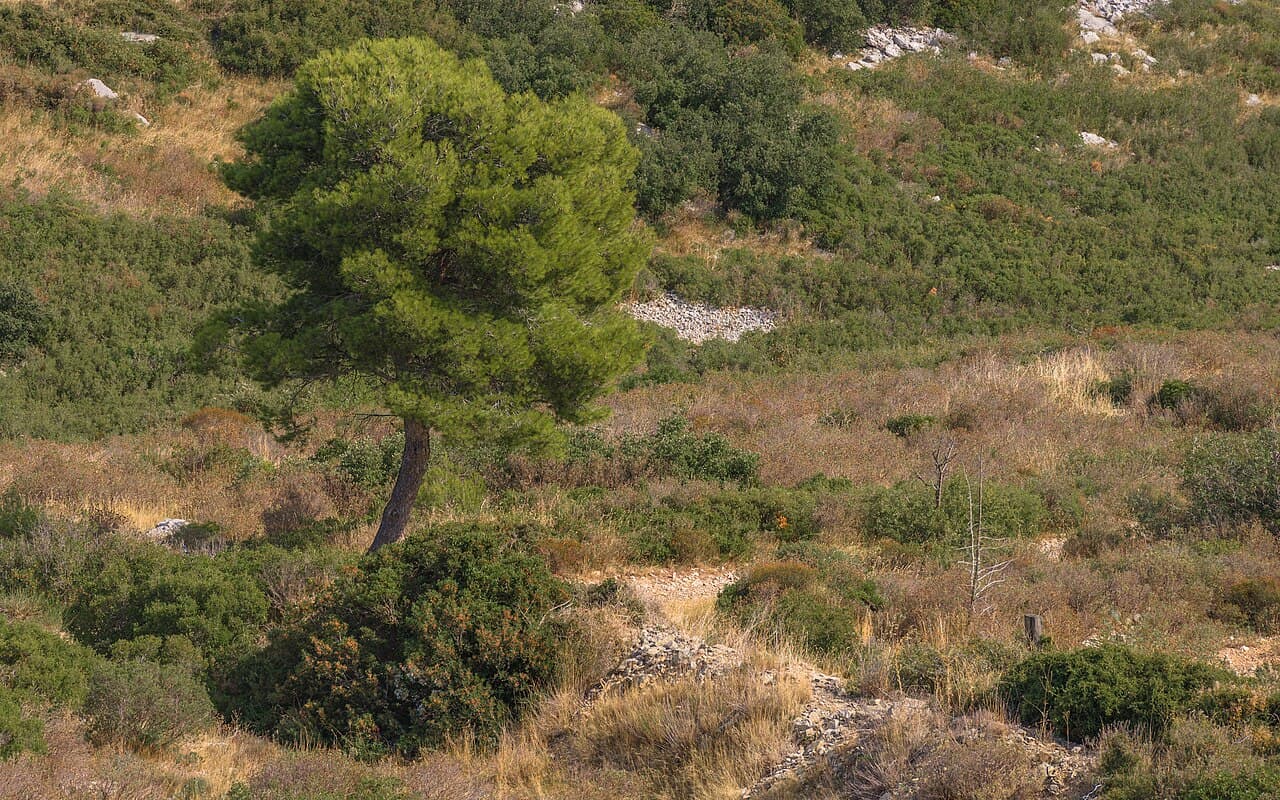
Pinus halepensis is the characteristic pine of the Mediterranean basin, growing from Spain and southern France across Italy, Greece and the Balkans to North Africa and the Levant. It tolerates drought and poor limestone soils better than any other pine here, which is why it dominates dry coastal landscapes and is planted heavily for erosion control.
Not listed in the CITES Appendices. Aleppo Pine is abundant across the Mediterranean and widely planted for erosion control on degraded land, so supply is not constrained. Fire is the dominant pressure on these forests, and large burn events regularly push salvage material into regional markets. The species is fire adapted and regenerates readily, but salvage stock should be identified as such.
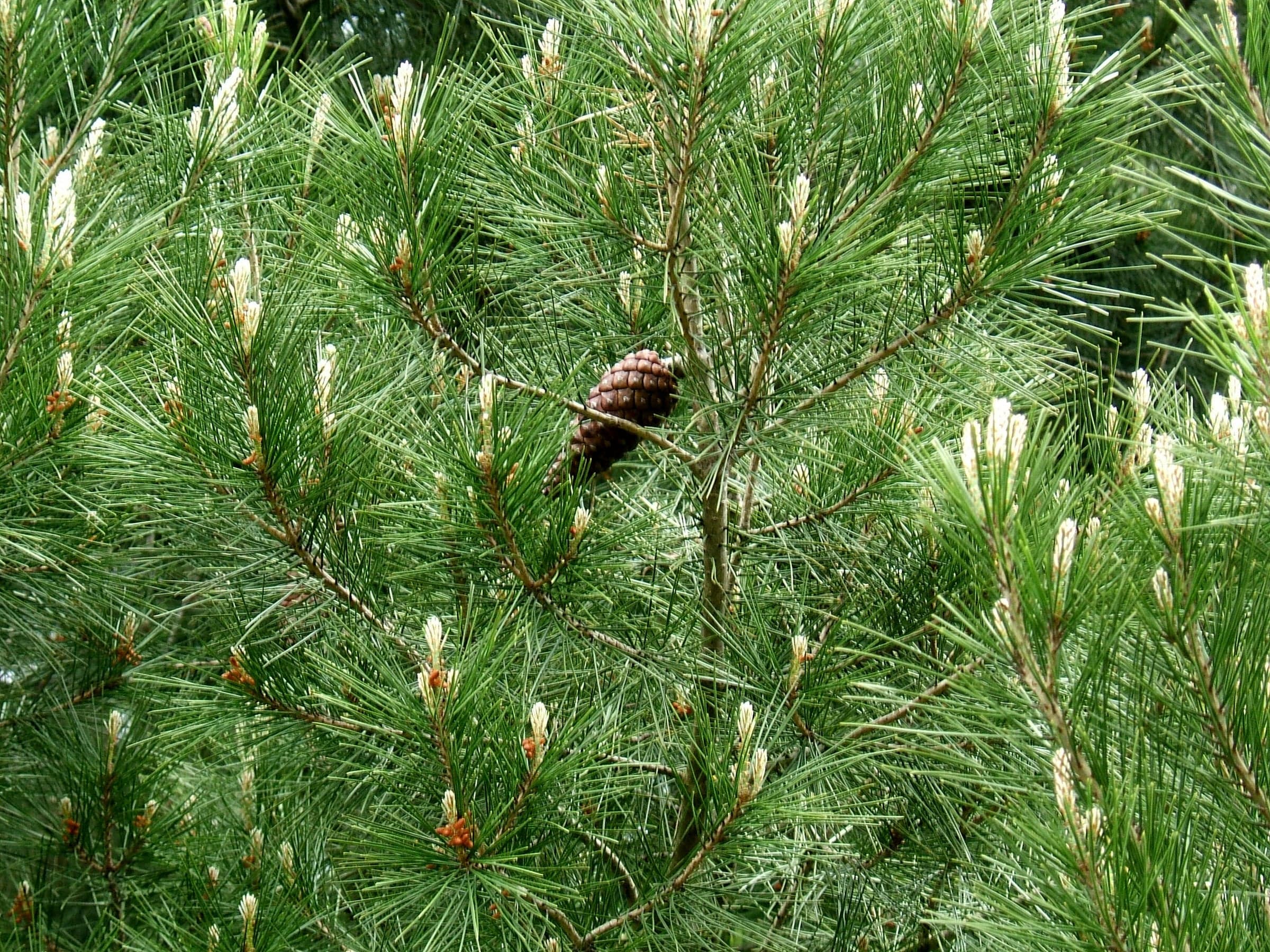
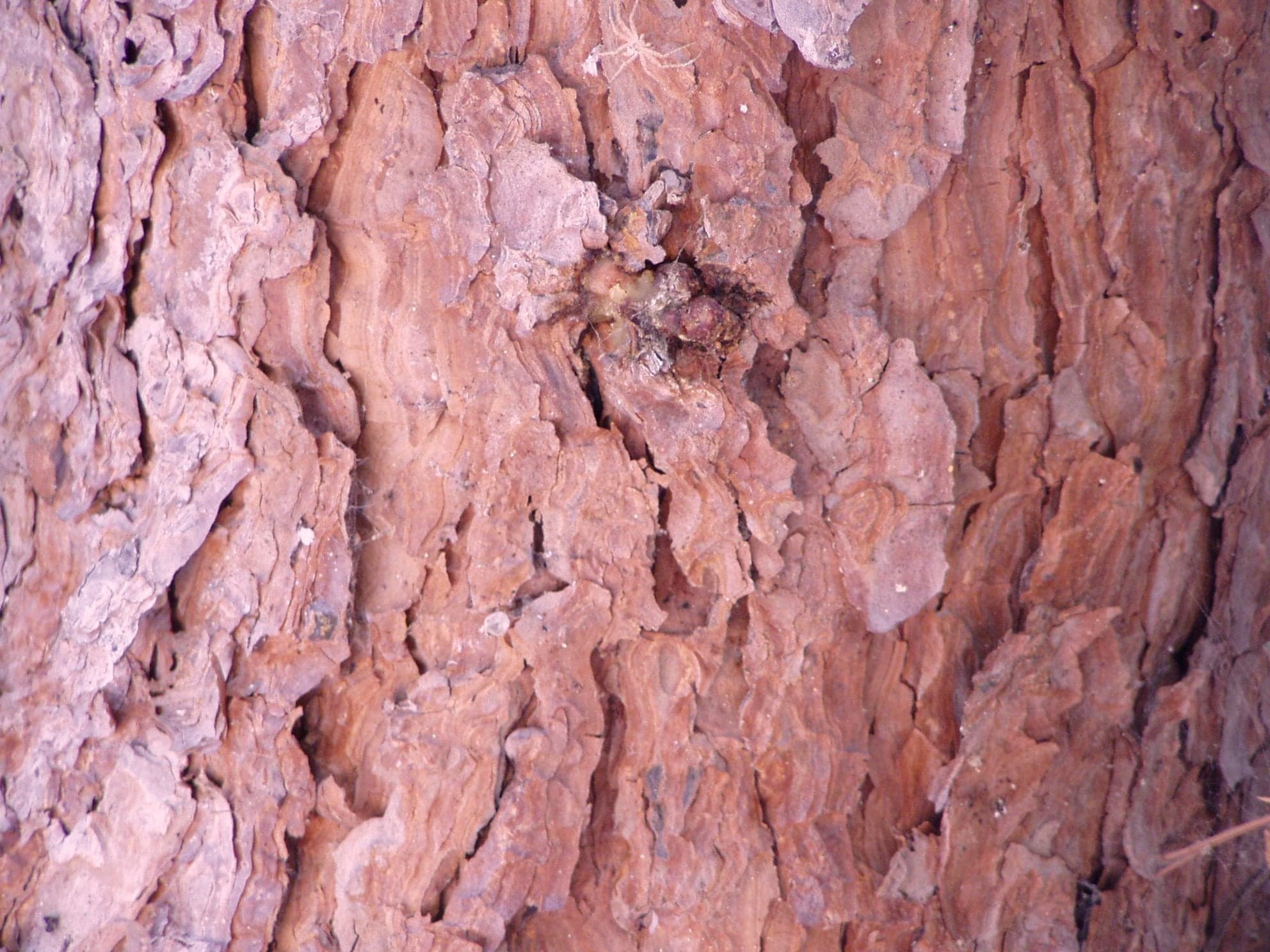
Pinus halepensis is the pine you have seen on every dry Mediterranean hillside, from Spain and southern France across Italy, Greece and the Balkans to North Africa and the Levant. It tolerates drought and thin limestone soils better than any other pine in this catalogue, which is why it dominates degraded coastal landscapes and is planted heavily for erosion control.
That toughness in the field translates into an awkward timber. Growing under water stress produces irregular ring width, frequently wavy grain, and a lot of knots. It is a rougher and more variable wood than the northern pines, and it should be chosen for what it looks like rather than in spite of it.
This species has partial data, and the gaps are worth explaining.
Density is listed at 540 kg per cubic metre, which sits between Maritime Pine at 500 and Scots Pine at 550. Modulus of rupture and shrinkage are also listed. All of these come from a single peer-reviewed study of Algerian material, cited on the species record.
There is no Janka hardness value and no elastic modulus. The general reference works do not publish a Janka figure for this species, and the study that measured stiffness did so under EN 310, a panel testing standard whose results are not comparable to the clear-wood values published for the other species here. Presenting 17.5 GPa next to Scots Pine at 10.08 GPa would imply a stiffness ranking that the test basis does not support, so the field is left empty rather than filled misleadingly.
There is also no durability rating, which matters practically: it means there is no sourced basis for recommending this wood outdoors.
The cited study measured volumetric shrinkage at around 8.3 percent, radial at 3.8 percent and tangential at 4.8 percent. That volumetric figure is the lowest in the entire KORENA catalogue, well below Maritime Pine at 14.4 percent.
More important than the headline number is the gap between radial and tangential. Cupping in a flatsawn board is driven by the difference between those two, and most species here run a ratio close to two to one. Aleppo Pine at 3.8 against 4.8 is far closer to one to one, which predicts unusually good behaviour across a wide flatsawn face.
Two caveats. The values come from Algerian material and this species varies widely across a very large range. And low shrinkage does not compensate for irregular grain, which causes its own distortion on drying regardless of how little the wood shrinks overall.
Expect tear-out. The wavy and irregular grain reverses direction within a single pass more often than in a northern pine, and a heavy cut will lift fibres wherever it does.
The working method that suits this wood is light cuts, sharp tooling, and a final surface produced with a card scraper or a high angle plane rather than by machining flat in one go. A helical cutterhead earns its cost here.
Resin loads blades and abrasives at roughly the level of Maritime Pine, which is to say constantly. Clean blades between operations and treat sandpaper as consumable. Wipe joint faces with acetone before glue-up, because resin on a jointed surface will compromise the bond.
Solvent wipe first, as with the other resinous Mediterranean pines: denatured alcohol or acetone, allowed to flash off, before any oil goes on. Skipping it produces patchy curing that only becomes visible after the work is finished.
Pigment stains blotch, so use a dye or leave it clear. Seal every knot with shellac before a painted finish. The orange tint in the heartwood deepens with light exposure.
Rustic furniture, panelling, carcass work, shelving and decorative slabs where the irregular figure and knot pattern are wanted, and where the excellent flatsawn stability is useful.
It is the wrong answer for fine work, for anything requiring a calculated load path given the missing stiffness data, and for exterior use, where no durability rating exists to support the decision.
Not listed in the CITES Appendices. Supply is not constrained: the species is abundant across the Mediterranean and planted extensively on degraded land. Fire is the dominant pressure on these forests, and large burn events regularly push salvage volumes into regional markets. Aleppo Pine is fire adapted and regenerates readily, so salvage material is legitimate, but it should be identified rather than discovered. KORENA listings record the originating yard and region.
Buyer questions
KORENA publishes a figure only where a cited source supports it. The general reference works do not carry a Janka value for Pinus halepensis, and the one peer-reviewed dataset available covers density, bending strength and shrinkage but not hardness. Rather than borrow a number from another Mediterranean pine, the field is left empty. Density is listed at 540 kg per cubic metre, which places it between Maritime Pine and Scots Pine.
Better than its rough appearance suggests. The cited study measured volumetric shrinkage at around 8.3 percent, the lowest figure in this catalogue, with radial at 3.8 and tangential at 4.8 percent. That narrow gap between radial and tangential is what governs cupping, and it is unusually favourable. The caveat is that these values come from Algerian material and this species varies widely across its range.
Drought driven growth produces irregular ring width and frequently wavy grain, so the grain direction reverses within a single pass more often than in a northern pine. Take light cuts, keep tooling sharp, and produce the final surface with a scraper or a high angle plane rather than trying to machine it flat in one go.
The cited study reports 116.4 MPa modulus of rupture for clear wood specimens under DIN 52186, which is higher than Scots Pine at 83.3 MPa and worth treating with appropriate care. It was measured on defect free samples of Algerian material, and the same paper notes that defects reduce mechanical properties by roughly 11 to 15 percent. Real boards have knots.
No durability rating is established for this species in the sources KORENA cites, so there is no honest basis for recommending it outdoors. Mediterranean pines generally are not durable untreated. European Larch is the species in this catalogue with a sourced durability rating suitable for exterior use.
Mechanical properties
Published reference values. Where sources disagree the range is shown, with the typical value used for the scales above.
| Density (kg/m³)Mass per cubic metre at about 12 % moisture. Heavier wood is usually harder and stronger. | 500–580 kg/m³typical 540 kg/m³ |
|---|---|
| MOR: modulus of rupture (MPa)Bending strength: the load at which a beam breaks. | 116 MPa |
| Radial shrinkageShrinkage across the growth rings, green to oven-dry. Quartersawn boards move by this. | 3.8 % |
| Tangential shrinkageShrinkage along the growth rings. Flatsawn boards and most slabs move by this. | 4.8 % |
| Volumetric shrinkageTotal volume change from green to oven-dry. Lower means more stable. | 8.3 % |
540 kg/m³
8.3 % volumetric shrinkage
3.1 / 5 bench average
No market reference for Aleppo Pine yet. Every KORENA piece is priced individually by its partner yard.