KORENA
BoisFinished piecesFournituresDépôtsJournal

Recevoir les nouveautés

Chaque plateau est unique. Une fois vendu, il est parti. Nous vous écrivons lors de la publication de nouvelles pièces : arrivages, essences et pièces adaptées à un projet.

Quelques e-mails par mois. Aucun spam, désabonnement à tout moment.

KORENA, bois massif haut de gamme

Une pièce à la fois.

Du bois massif haut de gamme vérifié, vendu pièce par pièce. Chaque plateau est photographié, mesuré et expédié depuis le dépôt partenaire avec un passeport du bois.

Boutique

  • Voir les produits
  • Archives des pièces vendues
  • Suivre une commande

Découvrir

  • Journal
  • Guides des essences
  • Glossaire
  • Comparer
  • Auteurs

Aide

  • À propos
  • Fonctionnement
  • Devenir dépôt partenaire
  • Rechercher un plateau
  • Assistance
  • Modèles de documents
  • Presse

Acheter

  • Conditions de vente
  • Droit de rétractation
  • Retours et garantie
  • Expédition et livraison

Confiance

  • Politique de confidentialité
  • Politique relative aux cookies
  • Provenance du bois et EUDR
  • Accessibilité

Mentions légales

  • Mentions légales
  • Utilisation acceptable
  • Propriété intellectuelle et contenus

© 2026 KORENA. Tous droits réservés.

Exploité par Martial Labs Ltd. (BG, EIK 207453941). KORENA est un nom commercial de Martial Labs Ltd.

Nous respectons votre vie privée

Nous utilisons des cookies essentiels au fonctionnement du site. Avec votre accord, nous utilisons aussi des cookies pour les statistiques, le contenu personnalisé et la publicité. Vous pouvez modifier votre choix à tout moment sur la page des préférences de consentement. Consultez notre politique relative aux cookies et notre politique de confidentialité.

  1. Accueil
  2. /
  3. Essences
  4. /
  5. Aleppo Pine

Pinus halepensis

Aleppo Pine

The pine of dry Mediterranean coasts. Irregular, resinous and awkward to machine, with the lowest measured shrinkage of anything KORENA lists.

  • Cultivé et récolté en Europe.
  • Groupe botanique. Les résineux sont des conifères, les feuillus sont des arbres à feuilles larges.
  • Famille botanique à laquelle appartient l’essence.
Être informé du prochain arrivageEssence de référence. Aucun plateau en stock pour le moment.
  • Adaptation au projet
  • En stock
  • Aspect
  • Travail
  • Mouvement
  • Prix
  • Sécurité et origine
  • Questions fréquentes
  • Données techniques

Convient-il à votre projet ?

Idéal pour

  • Rustic furniture
  • Panelling
  • Carcass work
  • Shelving
  • Decorative slabs

Atouts

  • Très stableFaible mouvement saisonnier. Convient aux plateaux larges et aux assemblages serrés.

Attention

  • Poussière irritanteUtilisez un système d’aspiration et portez un masque lors du ponçage ou de l’usinage.

Touchez une étiquette pour afficher les détails.

Aucun plateau en Aleppo Pine dans la sélection actuelle

Essences similaires en stock

Aucun plateau en Aleppo Pine pour le moment. Ces essences conviennent aux mêmes projets et sont disponibles.

  • Fil du European Oak

    European Oak

    Quercus robur

    6 plateaux

  • Fil du European Walnut

    European Walnut

    Juglans regia

    9 plateaux

  • Fil du Saman

    Saman

    Samanea saman

    4 plateaux

Soyez informé des arrivages en Aleppo Pine

Nous vous envoyons un e-mail lorsque de nouveaux plateaux en Aleppo Pine arrivent chez KORENA. Chaque plateau est unique, mieux vaut donc être prévenu rapidement.

Quelques e-mails par mois. Aucun spam, désabonnement à tout moment.

Aspect du bois

Son aspect

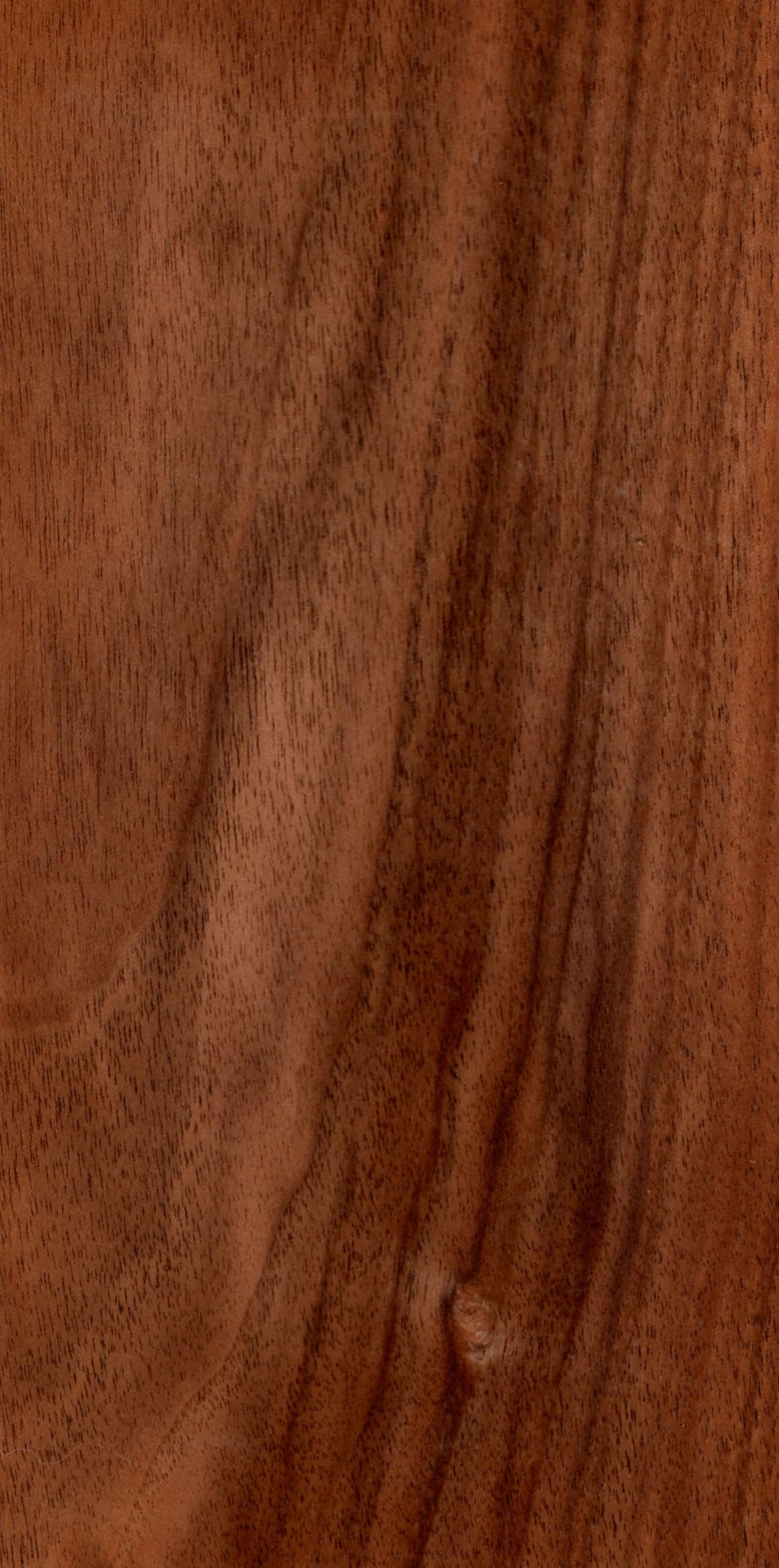
Pale yellow to light brown, often with an orange tint in the heartwood, against wide pale sapwood. Growth is fast and irregular where conditions are dry, so ring width varies noticeably within a single board and the grain is frequently wavy rather than straight. Knots are common. It reads as a rougher, more variable wood than the northern pines.

  • Pale yellow to light brown with an orange tint
  • Wide and irregular growth rings reflecting drought driven growth
  • Frequently wavy grain rather than straight
  • Straight grain with irregular ring width from drought-driven growth; frequently wavy. Coarse texture, pale yellow to light brown with an orange tint against wide pale sapwood.

Travail du bois

Son travail en atelier

  • Sciage · BonQualité de la coupe et usure des lames.1 = difficile · 5 = excellent

Resinous and variable. The wavy and irregular grain typical of drought grown stock causes tear-out where the grain direction reverses, which it does often. Light cuts, sharp tooling and a scraper for the final surface are the practical answer. Resin loads blades and abrasives as it does in the other Mediterranean pines. It glues acceptably once surfaces are clean of resin.

Finition

Wipe with denatured alcohol or acetone before finishing to lift surface resin. Pigment stains blotch, as in all the pines, so a dye or a clear finish is safer. Seal knots with shellac before painting. The orange tint in the heartwood deepens with light exposure.

Séchage

Prone to distortion because the grain is irregular and ring width uneven, so expect more spring and bow on ripping than in a northern pine. Measured shrinkage from the cited study is comparatively low at around 8.3 percent volumetric, with radial at 3.8 and tangential at 4.8 percent, and the unusually narrow gap between those two figures suggests good dimensional behaviour once dry. Those values come from Algerian material and regional variation in this species is wide.

De combien va-t-il bouger ?

Le bois gonfle et se rétracte en largeur selon que l’air devient plus humide ou plus sec. Estimez le mouvement saisonnier d’un plateau en Aleppo Pine avant de concevoir les fixations.

Débit
Lieu d’utilisation

Mouvement saisonnier attendu

environ 5,4 mm

Fixez le plateau avec des taquets ou des équerres à trous oblongs, sans colle ni vis trop serrées.

Modèle de retrait linéaire : largeur × (retrait ÷ 28 % de point de saturation des fibres) × variation saisonnière d’humidité. Utilise un retrait tangentiel de 4,76 % pour le Aleppo Pine. Il s’agit d’une estimation de conception, pas d’une garantie.

Son prix

Aucune référence de marché n’est encore disponible pour le Aleppo Pine. Chaque plateau KORENA est tarifé individuellement par son dépôt partenaire.

Sécurité et origine

  • Cultivé et récolté en Europe.
  • Working with pine has been reported to cause allergic skin reactions and asthma-like symptoms in some people. This species is resinous, so skin contact sensitisation over repeated exposure is a realistic risk. Gloves and good extraction are appropriate.

  • Pinus halepensis is the characteristic pine of the Mediterranean basin, growing from Spain and southern France across Italy, Greece and the Balkans to North Africa and the Levant. It tolerates drought and poor limestone soils better than any other pine here, which is why it dominates dry coastal landscapes and is planted heavily for erosion control.

  • Not listed in the CITES Appendices. Aleppo Pine is abundant across the Mediterranean and widely planted for erosion control on degraded land, so supply is not constrained. Fire is the dominant pressure on these forests, and large burn events regularly push salvage material into regional markets. The species is fire adapted and regenerates readily, but salvage stock should be identified as such.

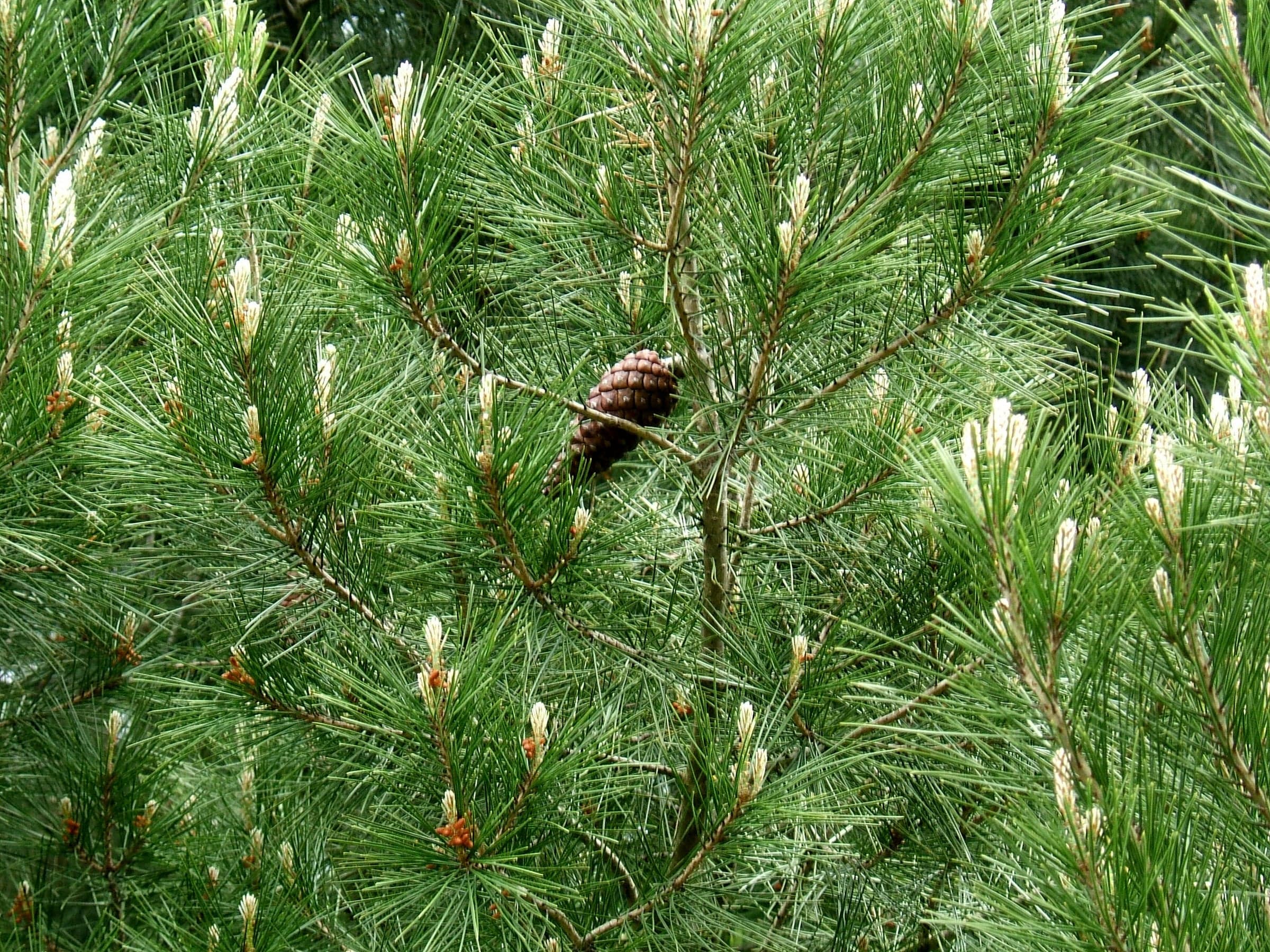
Aleppo Pine: Feuille
Feuille
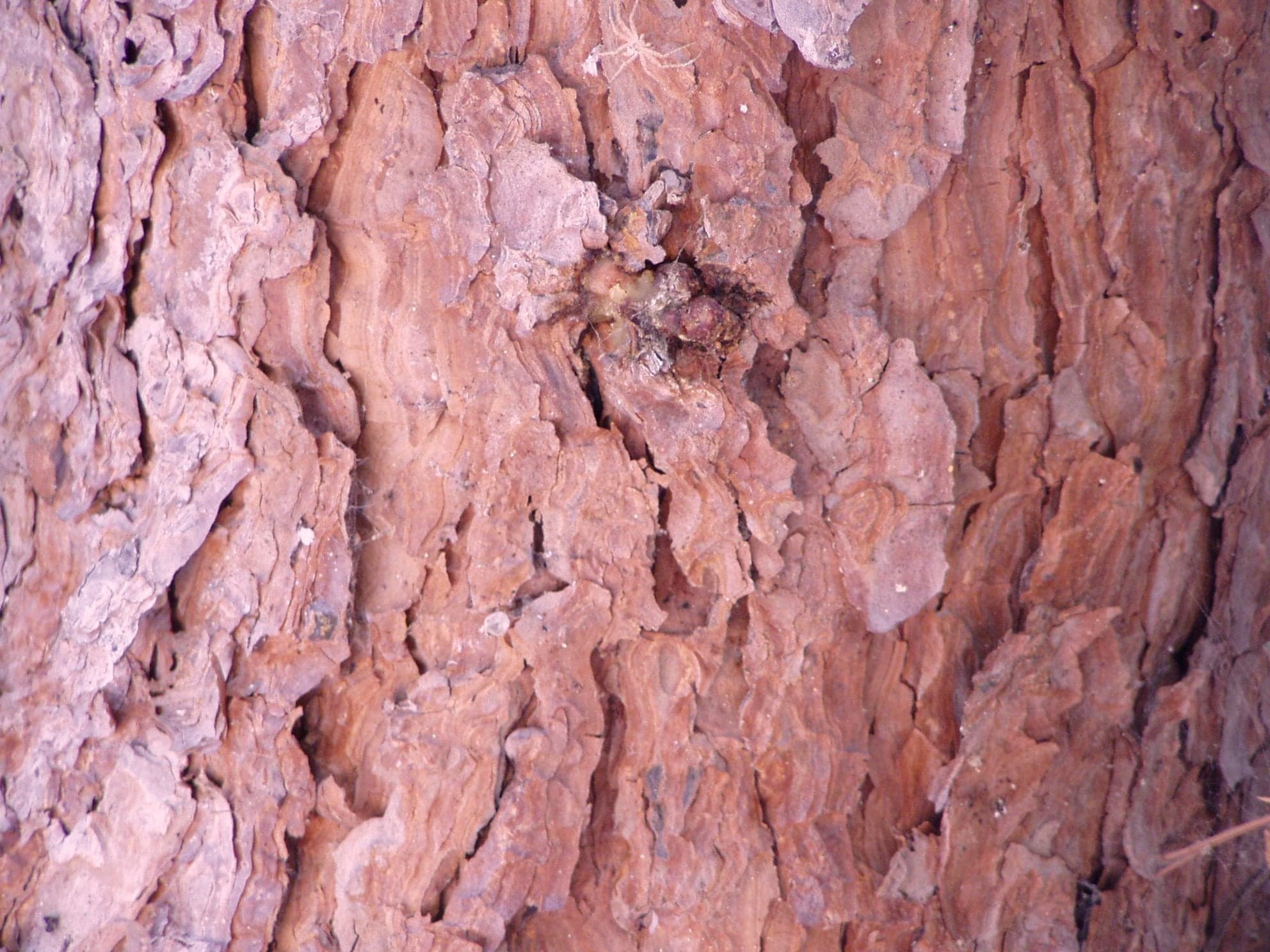
Aleppo Pine: Écorce
Écorce
Lire le guide completNotes détaillées sur la figure, l’évolution de la couleur, le travail et la stabilité.+

What Aleppo Pine actually is#

Pinus halepensis is the pine you have seen on every dry Mediterranean hillside, from Spain and southern France across Italy, Greece and the Balkans to North Africa and the Levant. It tolerates drought and thin limestone soils better than any other pine in this catalogue, which is why it dominates degraded coastal landscapes and is planted heavily for erosion control.

That toughness in the field translates into an awkward timber. Growing under water stress produces irregular ring width, frequently wavy grain, and a lot of knots. It is a rougher and more variable wood than the northern pines, and it should be chosen for what it looks like rather than in spite of it.

What the numbers do and do not cover#

This species has partial data, and the gaps are worth explaining.

Density is listed at 540 kg per cubic metre, which sits between Maritime Pine at 500 and Scots Pine at 550. Modulus of rupture and shrinkage are also listed. All of these come from a single peer-reviewed study of Algerian material, cited on the species record.

There is no Janka hardness value and no elastic modulus. The general reference works do not publish a Janka figure for this species, and the study that measured stiffness did so under EN 310, a panel testing standard whose results are not comparable to the clear-wood values published for the other species here. Presenting 17.5 GPa next to Scots Pine at 10.08 GPa would imply a stiffness ranking that the test basis does not support, so the field is left empty rather than filled misleadingly.

There is also no durability rating, which matters practically: it means there is no sourced basis for recommending this wood outdoors.

The shrinkage figure is the interesting one#

The cited study measured volumetric shrinkage at around 8.3 percent, radial at 3.8 percent and tangential at 4.8 percent. That volumetric figure is the lowest in the entire KORENA catalogue, well below Maritime Pine at 14.4 percent.

More important than the headline number is the gap between radial and tangential. Cupping in a flatsawn board is driven by the difference between those two, and most species here run a ratio close to two to one. Aleppo Pine at 3.8 against 4.8 is far closer to one to one, which predicts unusually good behaviour across a wide flatsawn face.

Two caveats. The values come from Algerian material and this species varies widely across a very large range. And low shrinkage does not compensate for irregular grain, which causes its own distortion on drying regardless of how little the wood shrinks overall.

At the bench#

Expect tear-out. The wavy and irregular grain reverses direction within a single pass more often than in a northern pine, and a heavy cut will lift fibres wherever it does.

The working method that suits this wood is light cuts, sharp tooling, and a final surface produced with a card scraper or a high angle plane rather than by machining flat in one go. A helical cutterhead earns its cost here.

Resin loads blades and abrasives at roughly the level of Maritime Pine, which is to say constantly. Clean blades between operations and treat sandpaper as consumable. Wipe joint faces with acetone before glue-up, because resin on a jointed surface will compromise the bond.

Finishing#

Solvent wipe first, as with the other resinous Mediterranean pines: denatured alcohol or acetone, allowed to flash off, before any oil goes on. Skipping it produces patchy curing that only becomes visible after the work is finished.

Pigment stains blotch, so use a dye or leave it clear. Seal every knot with shellac before a painted finish. The orange tint in the heartwood deepens with light exposure.

Where Aleppo Pine is the right answer#

Rustic furniture, panelling, carcass work, shelving and decorative slabs where the irregular figure and knot pattern are wanted, and where the excellent flatsawn stability is useful.

It is the wrong answer for fine work, for anything requiring a calculated load path given the missing stiffness data, and for exterior use, where no durability rating exists to support the decision.

Sourcing and EUDR#

Not listed in the CITES Appendices. Supply is not constrained: the species is abundant across the Mediterranean and planted extensively on degraded land. Fire is the dominant pressure on these forests, and large burn events regularly push salvage volumes into regional markets. Aleppo Pine is fire adapted and regenerates readily, so salvage material is legitimate, but it should be identified rather than discovered. KORENA listings record the originating yard and region.
Questions des acheteurs

Questions fréquentes des acheteurs

Why is there no Janka hardness listed for Aleppo Pine?

+

KORENA publishes a figure only where a cited source supports it. The general reference works do not carry a Janka value for Pinus halepensis, and the one peer-reviewed dataset available covers density, bending strength and shrinkage but not hardness. Rather than borrow a number from another Mediterranean pine, the field is left empty. Density is listed at 540 kg per cubic metre, which places it between Maritime Pine and Scots Pine.

How stable is it?

+

Better than its rough appearance suggests. The cited study measured volumetric shrinkage at around 8.3 percent, the lowest figure in this catalogue, with radial at 3.8 and tangential at 4.8 percent. That narrow gap between radial and tangential is what governs cupping, and it is unusually favourable. The caveat is that these values come from Algerian material and this species varies widely across its range.

Why does it tear out so much when I plane it?

+

Drought driven growth produces irregular ring width and frequently wavy grain, so the grain direction reverses within a single pass more often than in a northern pine. Take light cuts, keep tooling sharp, and produce the final surface with a scraper or a high angle plane rather than trying to machine it flat in one go.

Is the bending strength figure really that high?

+

The cited study reports 116.4 MPa modulus of rupture for clear wood specimens under DIN 52186, which is higher than Scots Pine at 83.3 MPa and worth treating with appropriate care. It was measured on defect free samples of Algerian material, and the same paper notes that defects reduce mechanical properties by roughly 11 to 15 percent. Real boards have knots.

Can it be used outdoors?

+

No durability rating is established for this species in the sources KORENA cites, so there is no honest basis for recommending it outdoors. Mediterranean pines generally are not durable untreated. European Larch is the species in this catalogue with a sourced durability rating suitable for exterior use.

Propriétés mécaniques

Données techniques

Valeurs de référence publiées. Lorsque les sources divergent, la plage est indiquée et la valeur courante sert aux échelles ci-dessus.

Densité (kg/m³)Masse par mètre cube à environ 12 % d’humidité. Un bois plus lourd est généralement plus dur et plus résistant.500–580 kg/m³valeur courante 540 kg/m³
MOR : module de rupture (MPa)Résistance à la flexion : charge à laquelle une poutre casse.116 MPa
Retrait radialRetrait perpendiculaire aux cernes, du bois vert au bois anhydre. Les planches sur quartier travaillent dans ce sens.3.8 %
Retrait tangentielRetrait dans le sens des cernes. Les planches sur dosse et la plupart des plateaux travaillent dans ce sens.4.8 %
Retrait volumiqueVariation totale de volume du bois vert au bois anhydre. Une valeur basse indique une meilleure stabilité.8.3 %

Références

  • Bourahla et al. — The physicomechanical and thermal properties of Algerian Aleppo pine (Pinus halepensis) wood, iForest 15: 106-111 (2022). Clear-wood specimens; density per NF B51-005, bending per DIN-52186, shrinkage per NF B51-006.(consultée le 2026-08-12)

En bref

Les niveaux utilisent les mêmes plages pour toutes les essences répertoriées par KORENA, ce qui permet de les comparer directement. La valeur mesurée figure sous chaque niveau.
PoidsPoids d’un plateau à souleverLéger

540 kg/m³

StabilitéFaible mouvement au fil des saisonsTrès stable

8,3 % de retrait volumique

TravailSciage, rabotage, ponçage, collageExigeant

3,1 / 5 de moyenne à l’atelier

Rabotage · Bon
Lissage de la surface et risque d’arrachement.
1 = difficile · 5 = excellent
  • Ponçage · PassableRapidité du ponçage sans encrasser le papier.1 = difficile · 5 = excellent
  • Tournage · BonQualité de coupe et de finition au tour.1 = difficile · 5 = excellent
  • Sculpture · BonNetteté des détails obtenus à la gouge.1 = difficile · 5 = excellent
  • Collage · Très bonFiabilité des assemblages collés.1 = difficile · 5 = excellent
  • Tenue des vis / clous · Très bonTenue des vis et des clous sans fendre le bois.1 = difficile · 5 = excellent
  • Cintrage à la vapeur · BonAptitude à prendre une courbe après étuvage.1 = difficile · 5 = excellent