KORENA
BoisFinished piecesFournituresDépôtsJournal

Recevoir les nouveautés

Chaque plateau est unique. Une fois vendu, il est parti. Nous vous écrivons lors de la publication de nouvelles pièces : arrivages, essences et pièces adaptées à un projet.

Quelques e-mails par mois. Aucun spam, désabonnement à tout moment.

KORENA, bois massif haut de gamme

Une pièce à la fois.

Du bois massif haut de gamme vérifié, vendu pièce par pièce. Chaque plateau est photographié, mesuré et expédié depuis le dépôt partenaire avec un passeport du bois.

Boutique

  • Voir les produits
  • Archives des pièces vendues
  • Suivre une commande

Découvrir

  • Journal
  • Guides des essences
  • Glossaire
  • Comparer
  • Auteurs

Aide

  • À propos
  • Fonctionnement
  • Devenir dépôt partenaire
  • Rechercher un plateau
  • Assistance
  • Modèles de documents
  • Presse

Acheter

  • Conditions de vente
  • Droit de rétractation
  • Retours et garantie
  • Expédition et livraison

Confiance

  • Politique de confidentialité
  • Politique relative aux cookies
  • Provenance du bois et EUDR
  • Accessibilité

Mentions légales

  • Mentions légales
  • Utilisation acceptable
  • Propriété intellectuelle et contenus

© 2026 KORENA. Tous droits réservés.

Exploité par Martial Labs Ltd. (BG, EIK 207453941). KORENA est un nom commercial de Martial Labs Ltd.

Nous respectons votre vie privée

Nous utilisons des cookies essentiels au fonctionnement du site. Avec votre accord, nous utilisons aussi des cookies pour les statistiques, le contenu personnalisé et la publicité. Vous pouvez modifier votre choix à tout moment sur la page des préférences de consentement. Consultez notre politique relative aux cookies et notre politique de confidentialité.

  1. Accueil
  2. /
  3. Essences
  4. /
  5. European Cherry

Prunus avium

European Cherry

A refined cabinet wood with fine, even grain that ages from pinkish-tan to a deep reddish-brown.

  • Cultivé et récolté en Europe.
  • Groupe botanique. Les résineux sont des conifères, les feuillus sont des arbres à feuilles larges.
  • Famille botanique à laquelle appartient l’essence.
Être informé du prochain arrivageEssence de référence. Aucun plateau en stock pour le moment.
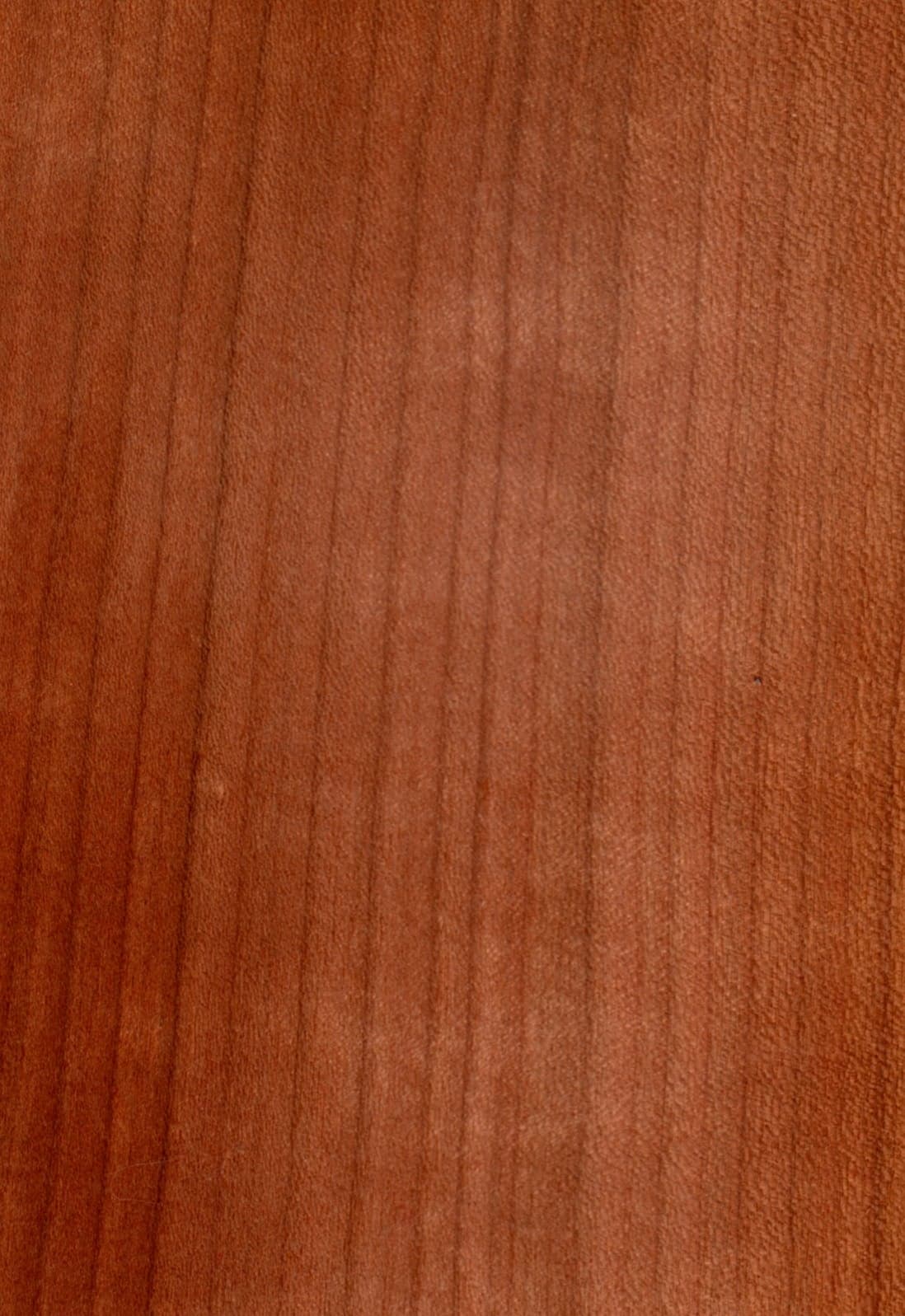
Fil du European Cherry
  • Adaptation au projet
  • En stock
  • Aspect
  • Travail
  • Mouvement
  • Prix
  • Sécurité et origine
  • Questions fréquentes
  • Données techniques

Convient-il à votre projet ?

Idéal pour

  • Fine cabinetry and built-ins
  • Dining and occasional tables
  • Chairs and bench seats
  • Boxes, trays, and small casework
  • Turned bowls and handles
  • Interior architectural joinery
  • Musical instrument parts

Aucun plateau en European Cherry dans la sélection actuelle

Essences similaires en stock

Aucun plateau en European Cherry pour le moment. Ces essences conviennent aux mêmes projets et sont disponibles.
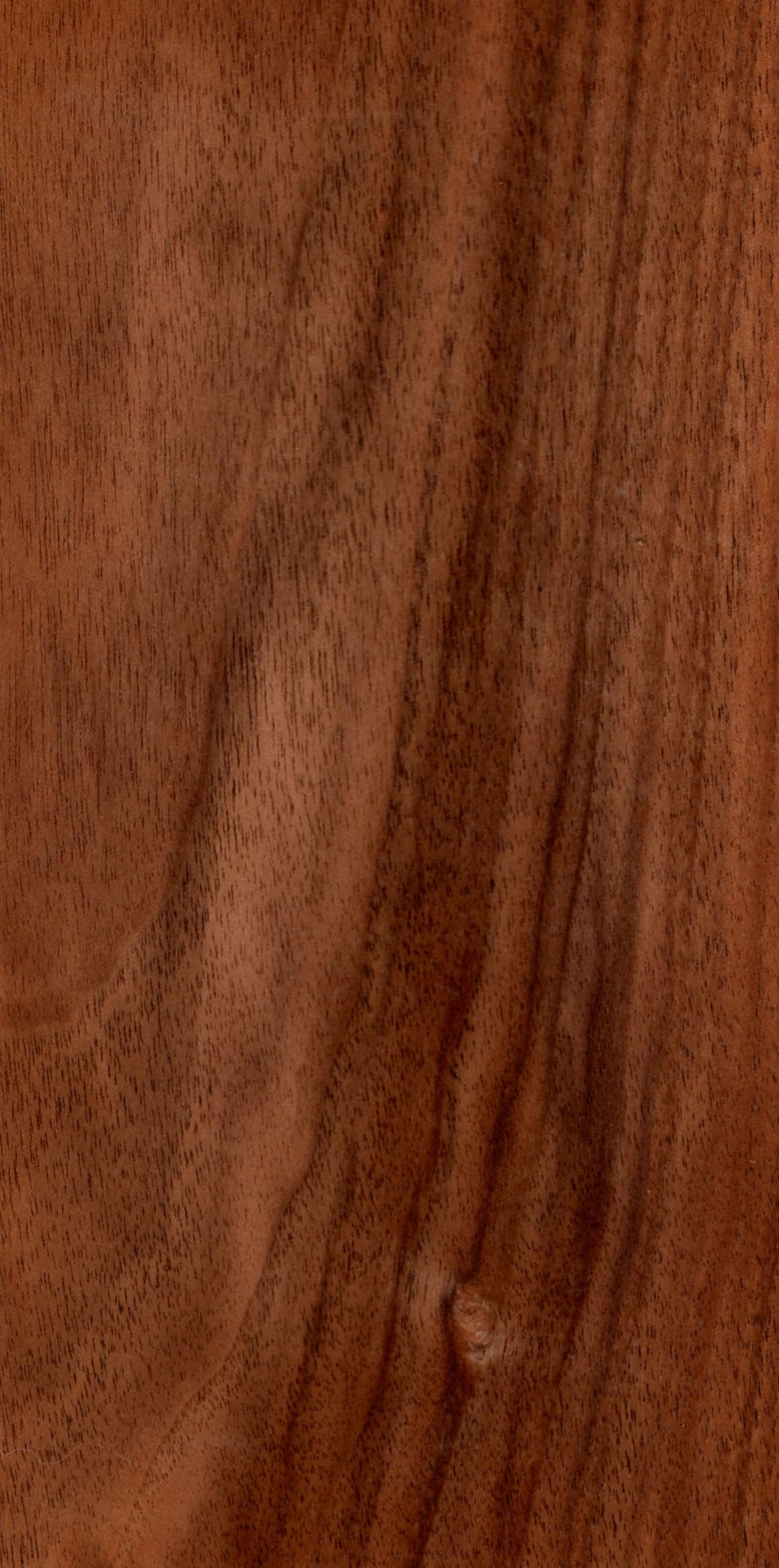
  • Fil du European Walnut

    European Walnut

    Juglans regia

    9 plateaux

  • Fil du European Oak

    European Oak

    Quercus robur

    6 plateaux

  • Fil du Saman

    Saman

    Samanea saman

    4 plateaux

Soyez informé des arrivages en European Cherry

Nous vous envoyons un e-mail lorsque de nouveaux plateaux en European Cherry arrivent chez KORENA. Chaque plateau est unique, mieux vaut donc être prévenu rapidement.

Quelques e-mails par mois. Aucun spam, désabonnement à tout moment.

Aspect du bois

Son aspect

Fine, straight grain with a smooth, even texture. Heartwood opens pinkish-tan to warm salmon, with a paler cream sapwood that is usually distinct. Figure is generally quiet, occasional gum streaks, small pin knots, and the odd ribbon or curl. The headline trait is its colour shift: under light and over a few months, the wood deepens through honey to a rich reddish-brown, and continues to mature for years. Boards stored unevenly will tan unevenly, so rotate stock during storage.

  • Fresh heartwood: pinkish-tan to warm salmon
  • Pale cream sapwood, usually distinct from heartwood
  • Ages through honey to deep reddish-brown over months and years
  • Light exposure drives the colour shift, uneven storage gives uneven tan
  • Occasional gum streaks and small pin knots
  • Quiet figure overall, with the odd ribbon or curl
  • Fine, straight grain.

Travail du bois

Son travail en atelier

Easy to work with hand and machine tools. Planes and sands cleanly with sharp edges; gum pockets can clog cutters, so check stock before milling. Glues and screws well. Steam-bending is moderate, workable for gentle curves, less reliable for tight radii. Turns and carves predictably.

Finition

Sands to a glassy surface at 180–220 grit. Takes oil, hardwax, shellac, and water-based finishes cleanly. A thin seal coat of dewaxed shellac or sanding sealer evens out any blotch on flat-sawn faces before topcoats. Avoid heavy stains, they fight the wood's own colour development. For commissions, expose offcuts to daylight alongside the finished piece so clients can see how the colour will move.

Séchage

Dries fairly quickly but is prone to warp, cup, and surface checking if rushed. Sticker carefully and weight the top of the stack. End-seal green stock. Once at EMC, it is stable in service with moderate tangential movement.

De combien va-t-il bouger ?

Le bois gonfle et se rétracte en largeur selon que l’air devient plus humide ou plus sec. Estimez le mouvement saisonnier d’un plateau en European Cherry avant de concevoir les fixations.

Débit
Lieu d’utilisation

Mouvement saisonnier attendu

environ 9,1 mm

Fixez le plateau avec des taquets ou des équerres à trous oblongs, sans colle ni vis trop serrées.

Modèle de retrait linéaire : largeur × (retrait ÷ 28 % de point de saturation des fibres) × variation saisonnière d’humidité. Utilise un retrait tangentiel de 8 % pour le European Cherry. Il s’agit d’une estimation de conception, pas d’une garantie.

Son prix

Sécurité et origine

  • Cultivé et récolté en Europe.
  • Statut sur la Liste rouge de l’UICN : évaluation mondiale de la conservation de cette essence.
  • Not commonly flagged as a dust sensitiser, and considered food-contact safe once finished appropriately. Standard fine-dust extraction and a mask are still sensible at the sander.

Lire le guide completNotes détaillées sur la figure, l’évolution de la couleur, le travail et la stabilité.+

What European Cherry actually is#

Prunus avium is bought for a colour it does not yet have.

Fresh cherry is a pale pinkish tan, unremarkable and easily mistaken for a lesser wood. Within six months of light exposure it deepens substantially, and within a year it reaches the rich reddish brown that people actually mean when they say cherry. The change continues, more slowly, for years.

This single behaviour governs almost every decision about buying, finishing and using the species.

Working with the darkening rather than against it#

Three practical consequences follow.

First, do not choose a slab on its current colour. What you see on the bench is a stage, not the result. Two boards that look different today may match in a year, and two that match today may not.

Second, uneven light exposure prints permanently. A rug on a cherry floor, a lamp base on a cherry table, a stack of books left in one place: each leaves a lighter patch as the surrounding wood darkens around it. The patch does eventually even out if the object is moved, but it takes months. The sensible approach is to let a new piece darken evenly for the first few months before putting anything on it permanently.

Third, a UV inhibiting finish slows the process but does not stop it, and it will not preserve the pale fresh colour indefinitely. If you want pale, choose a different species.

Questions des acheteurs

Questions fréquentes des acheteurs

How much does cherry darken?

+

A great deal, and quickly. Fresh cherry is pale pinkish tan and within a year of light exposure it deepens to a rich reddish brown. Most of the change happens in the first six months. This is why cherry furniture looks nothing like cherry lumber, and why buying on the freshly machined colour misleads.

Why does my cherry have patchy colour after finishing?

+

Two causes. Cherry blotches badly under pigment stain because of its fine uneven density, so use a dye, a gel stain or a washcoat. The other is uneven light exposure: anything covering part of a surface, a rug, a lamp base, a stack of books, will leave a permanently lighter patch as the rest darkens around it. Let a piece darken evenly before placing objects on it.

How is European Cherry different from American Black Cherry?

+

European cherry, Prunus avium, is harder at 5,120 N against 4,226 N and slightly denser. American black cherry, Prunus serotina, is available in larger and more consistent sizes because it is grown as a forestry species. Colour and figure are similar and both darken dramatically. European cherry tends to have more gum pockets.

What are the small dark flecks in the wood?

Propriétés mécaniques

Données techniques

Valeurs de référence publiées. Lorsque les sources divergent, la plage est indiquée et la valeur courante sert aux échelles ci-dessus.

Densité (kg/m³)Masse par mètre cube à environ 12 % d’humidité. Un bois plus lourd est généralement plus dur et plus résistant.550–650 kg/m³valeur courante 600 kg/m³
Dureté Janka (N)Force nécessaire pour enfoncer à moitié une bille d’acier dans le bois. Mesure standard de la résistance à l’enfoncement.4,700–5,500 Nvaleur courante 5 120 N
MOR : module de rupture (MPa)Résistance à la flexion : charge à laquelle une poutre casse.95–110 MPa
MOE : module d’élasticité (GPa)Rigidité en flexion : fléchissement d’une étagère ou d’un plateau sous une charge.9.5–11.0 GPa
Retrait radialRetrait perpendiculaire aux cernes, du bois vert au bois anhydre. Les planches sur quartier travaillent dans ce sens.4.5–5.5 %

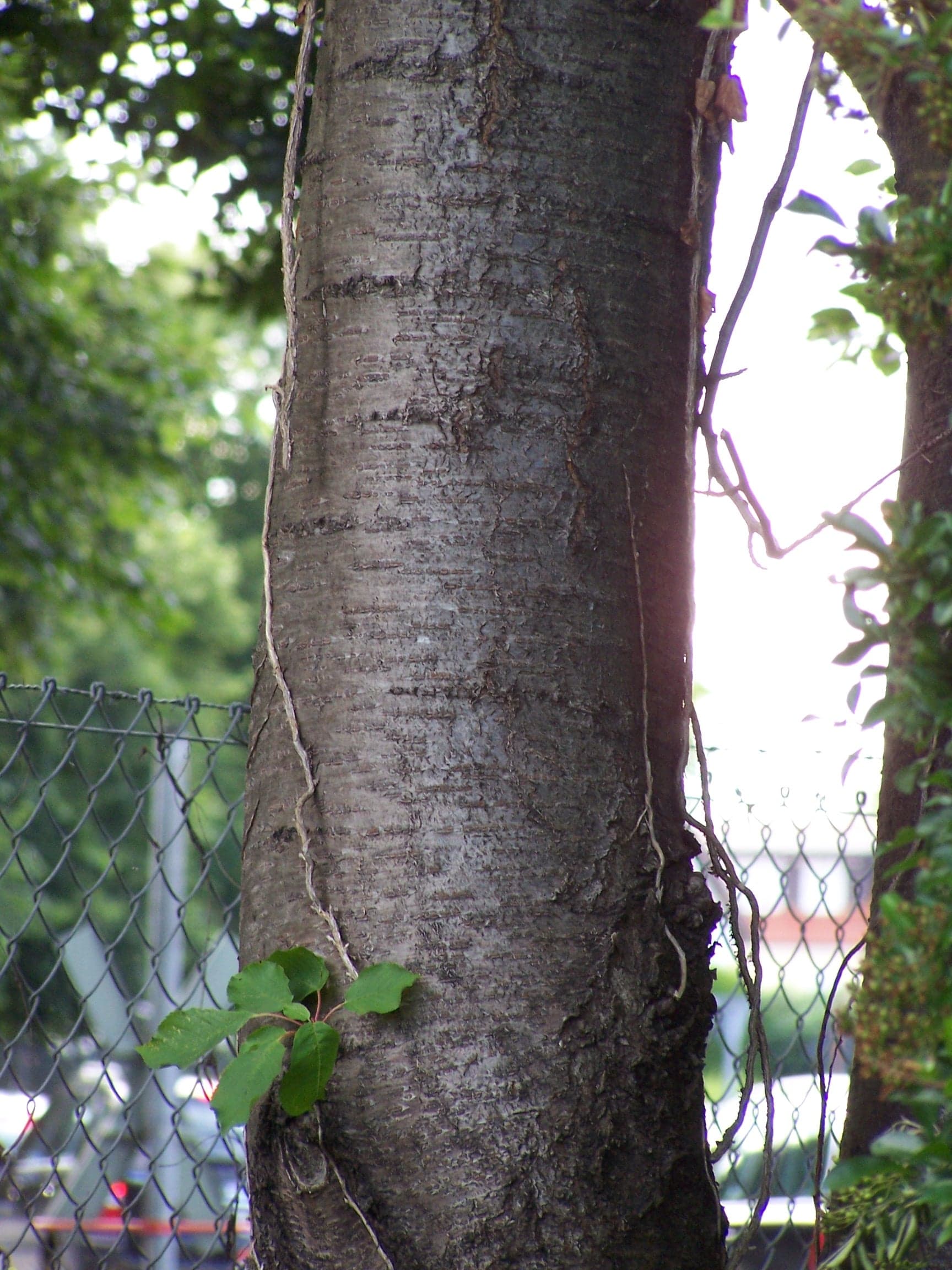
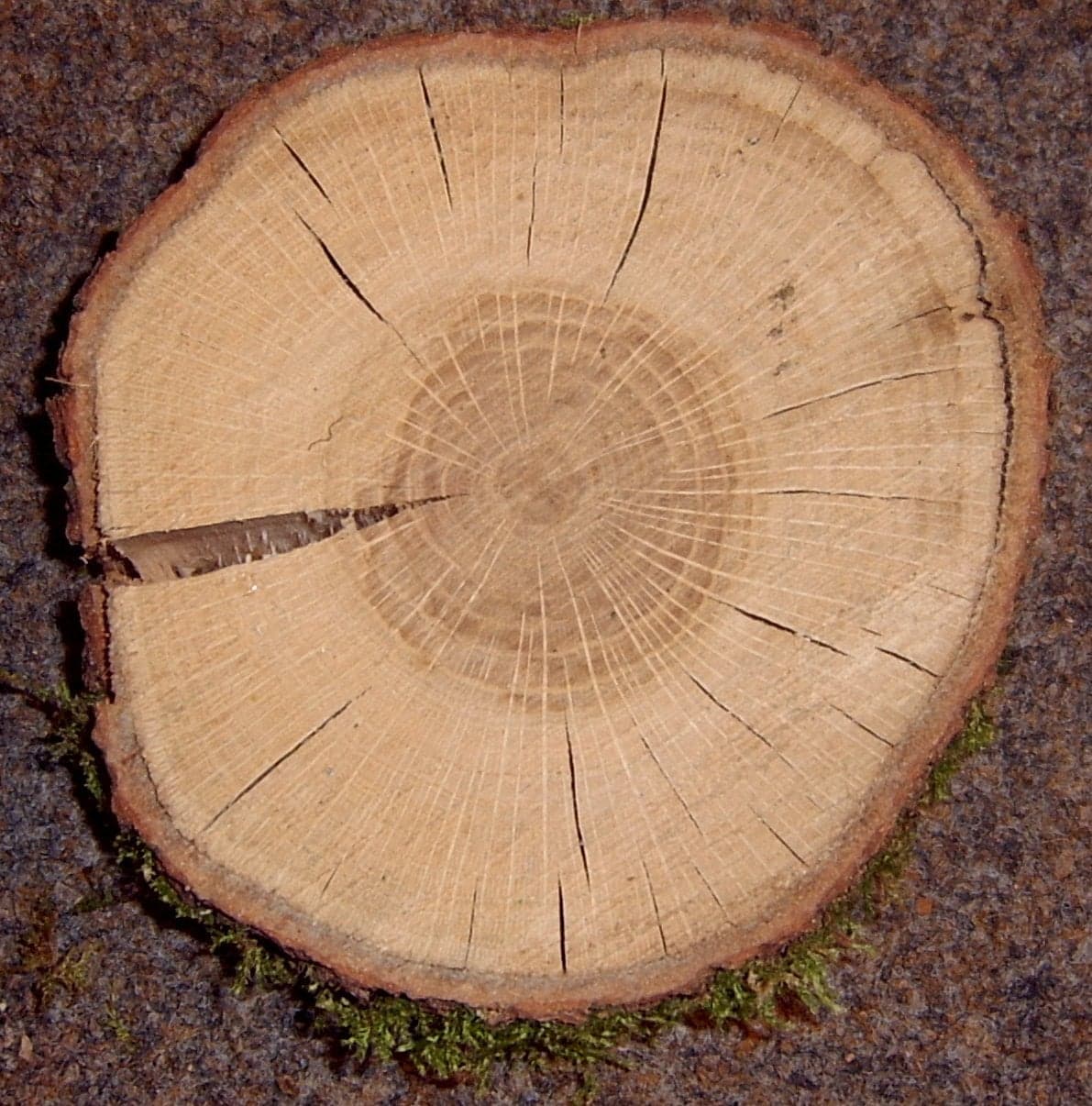
Achim Raschka (talk), via Wikimedia Commons

Atouts

  • Compatible avec les alimentsConvient aux planches, bols et surfaces en contact avec des aliments.
  • Adapté aux débutantsFacile à travailler à l’établi et assez tendre pour ménager les outils.

Attention

Native across Europe and into western Asia. Grown in mixed hardwood forests from the UK and France through Germany, Austria, Italy, and the Balkans. Most commercial stock comes from central European yards, often from orchard thinnings or managed woodlots.

  • Native European hardwood, IUCN Least Concern, no CITES listing. Often sourced from small woodlots and orchard clearance, so volumes per parcel can be modest. Decay class 3, moderately durable, means it is an interior wood; not for ground contact or unprotected exterior use. Ask for FSC or PEFC chain-of-custody where the project requires it.

  • European Cherry: Écorce
    Écorce

    Reading a cherry slab#

    Colour runs pale pinkish tan when fresh, deepening to reddish brown. Sapwood is narrow and pale cream, and it does not darken at the same rate as the heartwood, so contrast changes over time.

    The grain is fine, close and usually straight, with a satiny lustre that is characteristic of the species.

    Gum pockets are the thing to look for: small resin filled cavities that occur in all Prunus species and are more frequent in European cherry than in American. They are not structural defects and many makers consider them part of the character. Larger ones can be filled.

    At the bench#

    Cherry is one of the most pleasant woods in this catalogue to work. At 5,120 N it is moderately hard, it cuts cleanly, it turns and carves well, it glues reliably and it takes fastenings securely.

    The fine close grain holds crisp detail and sands to an excellent surface.

    The one difficulty is burning. Cherry scorches easily under a router bit or a dull saw blade, and the burn marks are dark and stubborn on a wood this pale. Sharp tooling, appropriate feed rates and light final passes avoid it.

    The finishing trap#

    Cherry blotches badly under pigment stain. The fine uneven density makes absorption patchy, and the result is a mottled surface that looks like a mistake because it is one.

    Use a dye, a gel stain that sits on the surface, or seal with a thin washcoat first. Test on an offcut every time.

    The better answer is usually to skip stain entirely. Cherry is going to arrive at a rich reddish brown by itself, and staining it to get there early tends to produce a muddier colour than patience would.

    Movement#

    Volumetric shrinkage of 11.5 percent is moderate, with tangential at 7.5 percent against radial at 4.5 percent. That differential is reasonable and cherry behaves acceptably in wide boards.

    Decay class 3 makes it moderately durable, adequate for protected exterior joinery but not for exposure.

    Where European Cherry is the right answer#

    Fine furniture, tabletops, cabinetry, turned and carved work, and interior joinery where warmth is the design intent. It is one of the most rewarding species here for a piece intended to be lived with for decades, because it genuinely improves.

    It is the wrong answer where a stable pale colour is needed, and wrong outdoors.

    Sourcing and EUDR#

    Not CITES listed and assessed as Least Concern. Common across Europe and often felled from orchards and gardens as well as forestry, so sizes are variable and provenance chains are shorter and less standardised than for a commodity species.

    Orchard cherry against forest cherry#

    Prunus avium reaches the timber market from two quite different places, and the wood differs accordingly.

    Forest grown cherry, drawn up among other trees, produces straighter trunks with fewer low branches, longer clean lengths and more uniform colour. It is the better material for matched furniture components.

    Orchard cherry, grown in the open for fruit and felled at the end of its productive life, branches low and spreads. Trunks are shorter and more irregular, knots are more frequent, and figure is more variable. It also produces more gum pockets.

    Neither is better in the abstract. For a run of matched drawer fronts, forest grown is far easier to work with. For a single characterful slab, the orchard tree usually has more to look at.

    Steaming, and whether you want it#

    Some European cherry is steamed during drying, which deepens and evens the colour toward a more uniform reddish brown and reduces the contrast with the sapwood.

    Unsteamed cherry starts paler and develops its colour naturally through light exposure, which produces a more luminous result over time but requires patience and even exposure.

    For a piece intended to be lived with, unsteamed and patient is generally the better outcome. For a commission that has to look finished on delivery, steamed stock gets there sooner.

    +

    Gum pockets, small resin filled cavities that are characteristic of Prunus species and more common in European cherry than American. They are not a structural defect and many makers regard them as part of the character. Larger ones can be filled. On a measured KORENA slab, any pocket large enough to matter appears in the defect outline.

    Can cherry be used outdoors?

    +

    Not really. At decay class 3 it is moderately durable, which is adequate for protected exterior joinery under a maintained finish but not for exposure or ground contact. It is also far too valuable a furniture timber to put outside.

    Retrait tangentielRetrait dans le sens des cernes. Les planches sur dosse et la plupart des plateaux travaillent dans ce sens.
    7.5–8.5 %
    Retrait volumiqueVariation totale de volume du bois vert au bois anhydre. Une valeur basse indique une meilleure stabilité.11.5–13.0 %
    Durabilité naturelle (EN 350)Norme européenne de résistance naturelle à la pourriture, de 1 (très durable) à 5 (périssable).Class 3 — Moderately durable

    Références

    • The Wood Database(consultée le 2026-05-09)
    • USDA FPL Wood Handbook FPL-GTR-190 (2010)(consultée le 2026-05-09)
    • Meier, E. — WOOD! Identifying and Using Hundreds of Woods Worldwide (2015)(consultée le 2026-05-09)

    En bref

    Les niveaux utilisent les mêmes plages pour toutes les essences répertoriées par KORENA, ce qui permet de les comparer directement. La valeur mesurée figure sous chaque niveau.
    DuretéRésistance aux chocs et à l’usureMi-dur

    Dureté Janka : 5 120 N

    3 % plus dur que le chêne européen

    PoidsPoids d’un plateau à souleverMoyen

    600 kg/m³

    StabilitéFaible mouvement au fil des saisonsMoyen

    12,3 % de retrait volumique

    TravailSciage, rabotage, ponçage, collageFacile

    4,0 / 5 de moyenne à l’atelier

    Usage extérieurRésistance naturelle à la pourriture, EN 350Extérieur abrité

    EN 350 classe 3

    • Sciage · Très bonQualité de la coupe et usure des lames.1 = difficile · 5 = excellent
    • Rabotage · Très bonLissage de la surface et risque d’arrachement.1 = difficile · 5 = excellent
    • Ponçage · Très bonRapidité du ponçage sans encrasser le papier.1 = difficile · 5 = excellent
    • Tournage · Très bonQualité de coupe et de finition au tour.1 = difficile · 5 = excellent
    • Sculpture · Très bonNetteté des détails obtenus à la gouge.1 = difficile · 5 = excellent
    • Collage · Très bonFiabilité des assemblages collés.1 = difficile · 5 = excellent
    • Tenue des vis / clous · Très bonTenue des vis et des clous sans fendre le bois.1 = difficile · 5 = excellent
    • Cintrage à la vapeur · BonAptitude à prendre une courbe après étuvage.1 = difficile · 5 = excellent

    Prix actuel du bois de European Cherry en Europe, par mètre cube hors TVA. Touchez un prix pour en voir le détail.

    • Grumes de premier choix aux enchèresGrumes de qualité supérieure sélectionnées et vendues sur soumission, principalement à des fabricants de placage et de meubles. Les plateaux sont débités dans des grumes de ce type.La plupart des prix se situent entre 319 € et 408 €.Calculé à partir de 55 prix dans 2 régions.Dernières données : 24 sept. 2026

    Grumes de premier choix aux enchères par pays

    • Allemagne · 408 € / m³Régions : Bavaria25 prixDernières données : 24 sept. 2026
    • Autriche · 319 € / m³Régions : Austria30 prixDernières données : 24 sept. 2026

    Pourquoi un plateau coûte-t-il plus cher ?

    Ces prix concernent le bois brut. Un plateau est la meilleure tranche d’une grume, séchée pendant au moins un an, puis contrôlée et mesurée individuellement. Seule une petite partie de chaque grume devient un plateau.

    Source : KORENA Timber Index · Dernières données : 24 sept. 2026

    Voir tous les prix régionaux
    Ne convient pas à un usage extérieur sans traitement
    Sa durabilité naturelle correspond à la classe 3 sur 5 de la norme EN 350. Gardez-le à l’intérieur ou protégez-le par une finition entretenue.

    Touchez une étiquette pour afficher les détails.