KORENA
BoisFinished piecesFournituresDépôtsJournal

Recevoir les nouveautés

Chaque plateau est unique. Une fois vendu, il est parti. Nous vous écrivons lors de la publication de nouvelles pièces : arrivages, essences et pièces adaptées à un projet.

Quelques e-mails par mois. Aucun spam, désabonnement à tout moment.

KORENA, bois massif haut de gamme

Une pièce à la fois.

Du bois massif haut de gamme vérifié, vendu pièce par pièce. Chaque plateau est photographié, mesuré et expédié depuis le dépôt partenaire avec un passeport du bois.

Boutique

  • Voir les produits
  • Archives des pièces vendues
  • Suivre une commande

Découvrir

  • Journal
  • Guides des essences
  • Glossaire
  • Comparer
  • Auteurs

Aide

  • À propos
  • Fonctionnement
  • Devenir dépôt partenaire
  • Rechercher un plateau
  • Assistance
  • Modèles de documents
  • Presse

Acheter

  • Conditions de vente
  • Droit de rétractation
  • Retours et garantie
  • Expédition et livraison

Confiance

  • Politique de confidentialité
  • Politique relative aux cookies
  • Provenance du bois et EUDR
  • Accessibilité

Mentions légales

  • Mentions légales
  • Utilisation acceptable
  • Propriété intellectuelle et contenus

© 2026 KORENA. Tous droits réservés.

Exploité par Martial Labs Ltd. (BG, EIK 207453941). KORENA est un nom commercial de Martial Labs Ltd.

Nous respectons votre vie privée

Nous utilisons des cookies essentiels au fonctionnement du site. Avec votre accord, nous utilisons aussi des cookies pour les statistiques, le contenu personnalisé et la publicité. Vous pouvez modifier votre choix à tout moment sur la page des préférences de consentement. Consultez notre politique relative aux cookies et notre politique de confidentialité.

  1. Accueil
  2. /
  3. Essences
  4. /
  5. European Ash

Fraxinus excelsior

European Ash

Pale, ring-porous hardwood with bold grain and the best steam-bending behaviour in Europe. Strong and tough, but strictly interior use.

  • Cultivé et récolté en Europe.
  • Groupe botanique. Les résineux sont des conifères, les feuillus sont des arbres à feuilles larges.
  • Famille botanique à laquelle appartient l’essence.
Être informé du prochain arrivageEssence de référence. Aucun plateau en stock pour le moment.
  • Adaptation au projet
  • En stock
  • Aspect
  • Travail
  • Mouvement
  • Prix
  • Sécurité et origine
  • Questions fréquentes
  • Données techniques

Convient-il à votre projet ?

Idéal pour

  • Steam-bent chair frames and stools
  • Dining tables and desks for interior use
  • Cabinetry doors and drawer fronts
  • Tool handles, sports equipment and shop fittings
  • Wall panelling and architectural millwork
  • Turned components and lighter-toned table legs

Aucun plateau en European Ash dans la sélection actuelle

Essences similaires en stock

Aucun plateau en European Ash pour le moment. Ces essences conviennent aux mêmes projets et sont disponibles.
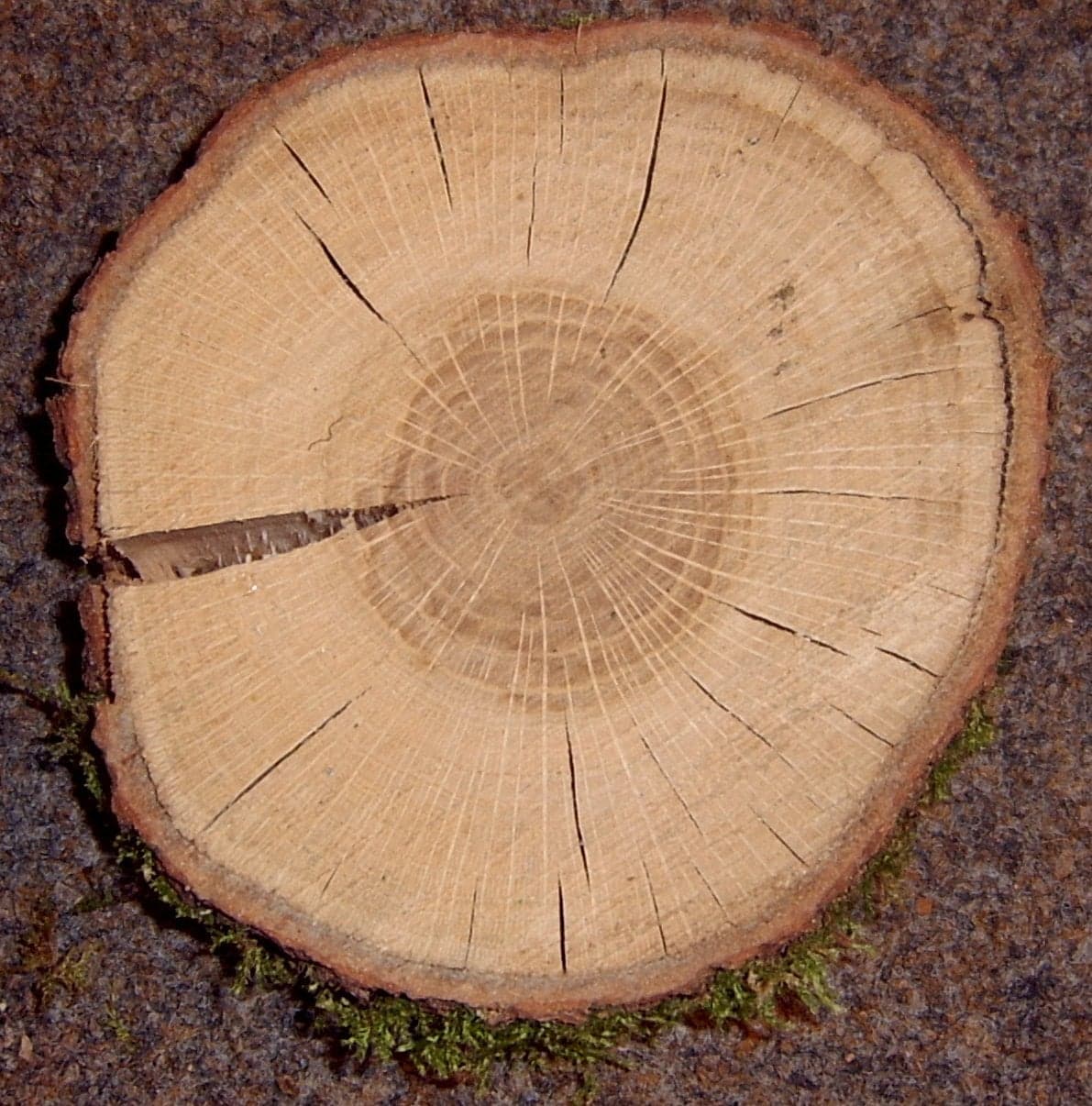

  • Fil du European Oak

    European Oak

    Quercus robur

    6 plateaux

  • Fil du European Walnut

    European Walnut

    Juglans regia

    9 plateaux

  • Fil du Saman

    Saman

    Samanea saman

    4 plateaux

Soyez informé des arrivages en European Ash

Nous vous envoyons un e-mail lorsque de nouveaux plateaux en European Ash arrivent chez KORENA. Chaque plateau est unique, mieux vaut donc être prévenu rapidement.

Quelques e-mails par mois. Aucun spam, désabonnement à tout moment.

Aspect du bois

Son aspect

A pale hardwood with a creamy-white sapwood that blends into a light brown heartwood. Grain is straight and the texture coarse and uneven, with strong contrast between earlywood and latewood pores. Growth rings read clearly across a flat-sawn face, giving ash a bold, graphic look that suits modern furniture as much as traditional joinery. A lighter, more open-grained alternative to European oak, and a far cleaner, paler option than walnut.

  • Creamy white to pale straw sapwood
  • Light brown to olive-tinged heartwood
  • Bold dark latewood lines against pale earlywood
  • Mellows to a warmer honey tone with UV exposure
  • Bleaches well for very pale, Nordic-style surfaces
  • Straight grain, coarse uneven texture.

Travail du bois

Son travail en atelier

Works well with both hand and machine tools. Glues, screws and finishes predictably. Pre-drilling is sensible near edges given the density. Ash is one of the great steam-bending species, chair frames, tool handles and sports goods have relied on it for centuries, and it holds curves reliably once set. Sharp tooling matters: the coarse texture can tear out around knots and interlocked patches if blades are dull.

Finition

Takes oils, hardwax, water-based and solvent finishes well. The open ring-porous structure benefits from grain filler if you want a glass-smooth surface, otherwise the texture stays visible and tactile. Stains evenly, but the porous earlywood drinks pigment faster than the dense latewood, which can exaggerate ring contrast. Test on offcuts before committing. Bleaches cleanly for very pale Scandinavian looks.

Séchage

Dries at a moderate rate with a moderate risk of checking and minor distortion. Tangential shrinkage is roughly 1.6 times radial, so quarter-sawn stock stays flatter in service. Acclimatise to the workshop for at least two weeks before machining, and condition again before final assembly in heated interiors.

De combien va-t-il bouger ?

Le bois gonfle et se rétracte en largeur selon que l’air devient plus humide ou plus sec. Estimez le mouvement saisonnier d’un plateau en European Ash avant de concevoir les fixations.

Débit
Lieu d’utilisation

Mouvement saisonnier attendu

environ 9,7 mm

Fixez le plateau avec des taquets ou des équerres à trous oblongs, sans colle ni vis trop serrées.

Modèle de retrait linéaire : largeur × (retrait ÷ 28 % de point de saturation des fibres) × variation saisonnière d’humidité. Utilise un retrait tangentiel de 8,5 % pour le European Ash. Il s’agit d’une estimation de conception, pas d’une garantie.

Son prix

Sécurité et origine

  • Cultivé et récolté en Europe.
  • Statut sur la Liste rouge de l’UICN : évaluation mondiale de la conservation de cette essence.
  • Ash dust is a documented respiratory and skin sensitiser. Repeated exposure can trigger asthma-like symptoms and dermatitis in sensitive individuals. Use a P2/P3 mask, dust extraction at the tool, and long sleeves when sanding or routing. The wood itself is food-contact safe once cured and finished appropriately.

Lire le guide completNotes détaillées sur la figure, l’évolution de la couleur, le travail et la stabilité.+

What European Ash actually is#

Fraxinus excelsior is the tough one. At 6,580 N on the Janka scale it is harder than European oak by a third, and it combines that hardness with an elasticity that lets it absorb impact and spring back rather than splitting.

That combination is why ash became the handle wood of Europe. Hammer and axe handles, oars, hurleys, tennis racquets, cart frames and early aircraft structures were all ash, and the reason is a property that no single number captures: shock resistance.

The dieback situation#

Ash is the only species in this catalogue carrying an elevated IUCN status. It is assessed as Near Threatened, and the cause is Hymenoscyphus fraxineus, the fungus behind ash dieback, which has spread across Europe since the 1990s and killed a very large proportion of the standing population.

For a buyer today the effect is counterintuitive. Salvage felling has pushed volumes up and prices down, so ash is currently good value and widely available. The uncertainty is in the coming decades rather than this year.

The disease affects the living tree. Sound timber cut from an affected tree is sound timber, and there is no quality penalty in buying salvage ash provided it was converted and dried properly rather than left standing dead and allowed to spalt.

Reading an ash slab

Questions des acheteurs

Questions fréquentes des acheteurs

Is ash affected by ash dieback, and does that matter for slabs?

+

Yes. Hymenoscyphus fraxineus has spread across Europe since the 1990s and the IUCN now assesses Fraxinus excelsior as Near Threatened, the only species in this catalogue with an elevated status. For buyers the practical effect is a lot of salvage felling: volumes are currently high and prices soft, but supply over the coming decades is uncertain. The disease affects the living tree, not the quality of sound timber cut from it.

Why is ash used for tool handles?

+

Shock resistance. Ash combines high hardness at 6,580 N with elasticity, so it absorbs impact and returns rather than splitting or shattering. That combination is why it has been the standard timber for hammer and axe handles, oars, hurleys and sports equipment for centuries, and why it steam bends so well.

Can ash be used outdoors?

+

No, not untreated. It is rated decay class 5, perishable, which is the lowest durability of any hardwood in this catalogue and a surprise given how tough it is mechanically. Strength and durability are unrelated properties. For exterior work choose oak, robinia or sweet chestnut.

What is olive ash?

Propriétés mécaniques

Données techniques

Valeurs de référence publiées. Lorsque les sources divergent, la plage est indiquée et la valeur courante sert aux échelles ci-dessus.

Densité (kg/m³)Masse par mètre cube à environ 12 % d’humidité. Un bois plus lourd est généralement plus dur et plus résistant.620–740 kg/m³valeur courante 680 kg/m³
Dureté Janka (N)Force nécessaire pour enfoncer à moitié une bille d’acier dans le bois. Mesure standard de la résistance à l’enfoncement.6,200–7,000 Nvaleur courante 6 580 N
MOR : module de rupture (MPa)Résistance à la flexion : charge à laquelle une poutre casse.105–130 MPa
MOE : module d’élasticité (GPa)Rigidité en flexion : fléchissement d’une étagère ou d’un plateau sous une charge.11.5–13.5 GPa
Retrait radialRetrait perpendiculaire aux cernes, du bois vert au bois anhydre. Les planches sur quartier travaillent dans ce sens.4.5–6.0 %
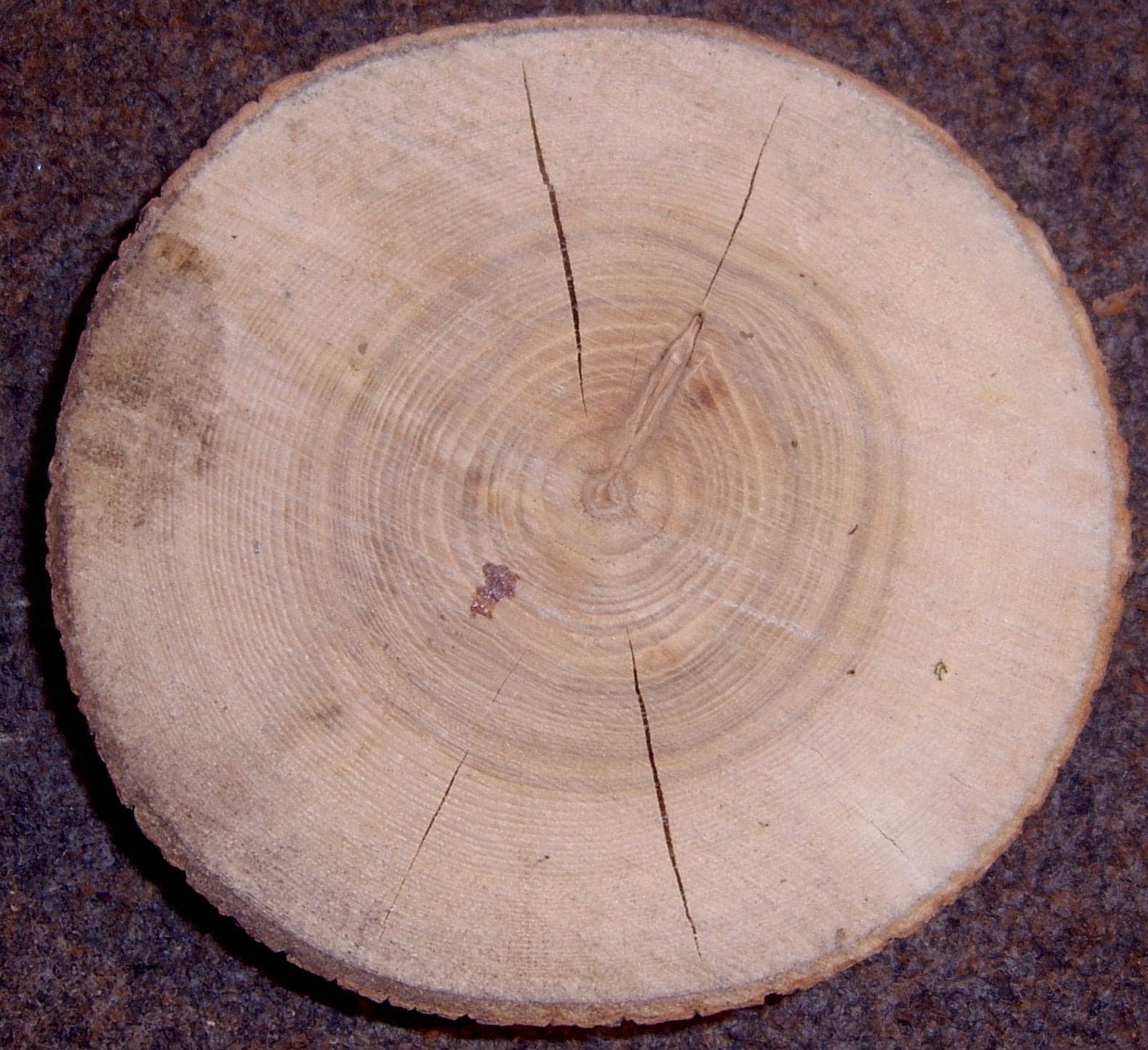
Fil du European Ash

No machine-readable author provided. Lumbar~commonswiki assumed (based on copyright claims)., via Wikimedia Commons

Atouts

  • Compatible avec les alimentsConvient aux planches, bols et surfaces en contact avec des aliments.
  • Se cintre bienNote de 5 sur 5 pour le cintrage à la vapeur. Accepte des courbes serrées.

Native across Europe from Ireland east to the Volga, north into southern Scandinavia and south into the Mediterranean uplands. Grows in mixed broadleaf forests on moist, fertile soils, often alongside oak and beech. KORENA sources from managed European forests where stand health allows responsible harvesting.

  • European Ash is reassessed as Near Threatened on the IUCN Red List because of ash dieback (Hymenoscyphus fraxineus), a fungal disease moving across Europe since the 1990s and killing a significant share of standing ash. Paradoxically this means salvage and sanitation harvests are common, and well-managed sourcing can use timber that would otherwise be lost. KORENA sources ash from forests with documented health assessments and chain-of-custody. EUDR due diligence is in preparation and becomes mandatory for large operators from 30 December 2026, and the slab passport is built to carry the legality and dieback context. No CITES listing.

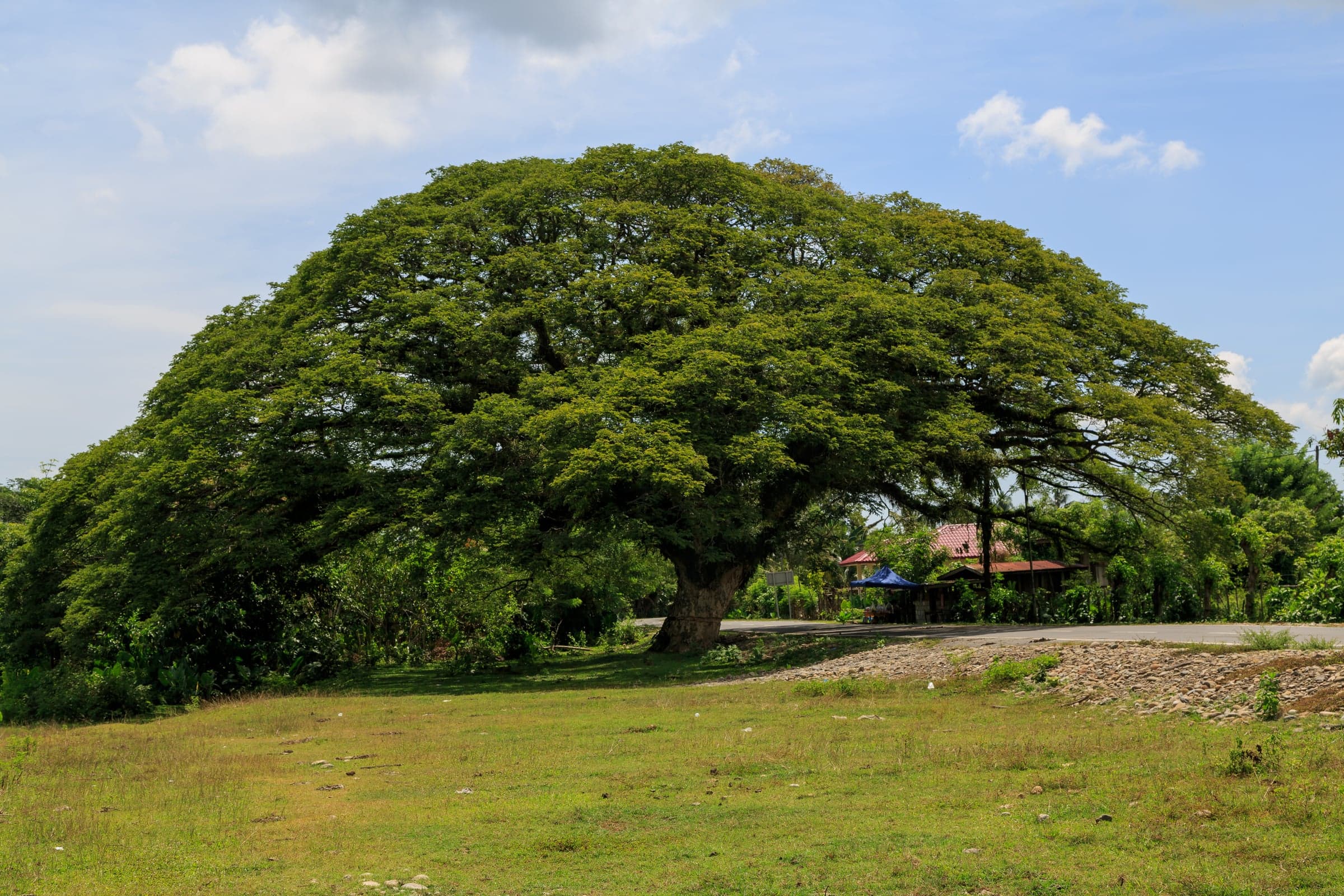
  • Arbre European Ash

    No machine-readable author provided. MPF assumed (based on copyright claims)., via Wikimedia Commons

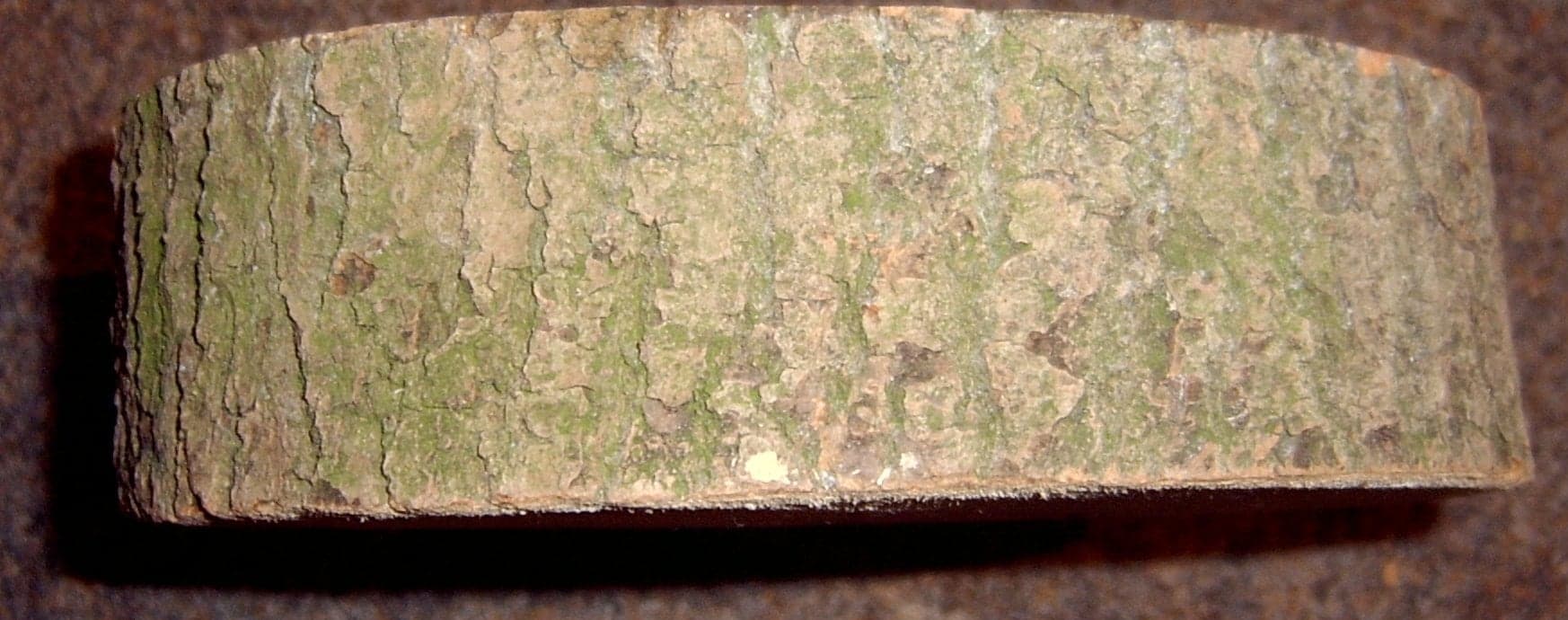
    European Ash: Écorce
    Écorce
    #

    Most ash is pale, near white to light biscuit, with a coarse ring porous texture that reads similarly to oak but without the ray fleck.

    The exception is olive ash: darker brown and olive streaked heartwood that develops in some older trees, giving dramatic contrast against the pale background. It is the same species rather than a different one, and because most ash is uniformly pale, olive ash carries a premium and is sought for tabletops.

    The grain is usually straight, which is part of why it bends and machines so predictably.

    The durability trap#

    Ash is mechanically formidable and biologically feeble. It is rated decay class 5, perishable, the lowest durability of any hardwood here.

    That surprises people, because toughness feels like it should mean longevity. It does not. Strength and decay resistance are unrelated properties, governed by different things: cell wall structure on one hand, extractive chemistry on the other. Ash has excellent structure and almost no protective extractives.

    Untreated ash outdoors will fail quickly. For exterior work, oak at decay class 2, sweet chestnut at 2, or robinia at 1 are the species in this catalogue that belong there.

    At the bench#

    Ash works cleanly with hand and machine tools and finishes well. It steam bends excellently, as its history suggests, and it glues and takes fastenings reliably.

    At 6,580 N it is hard, so tooling blunts faster than on oak and the wood asks for power in the cut. The coarse open pores need filling for a smooth surface.

    The straight grain means less tear-out than oak, which makes wide ash surfaces comparatively easy to machine flat.

    Movement#

    Volumetric shrinkage of 14.5 percent is high and the tangential to radial differential of 7.5 against 4.5 percent is wide, so flatsawn boards cup.

    Ash also has a working reputation for moving more in service than its figures predict. Whether that is the wood or the fact that ash is often used in thin sections is arguable, but the practical response is the same: acclimatise fully, let tops float on slotted fasteners, and do not fix a wide ash panel rigidly.

    Where ash is the right answer#

    Anywhere impact and flex matter. Chair frames, steam bent components, tool handles, sports equipment, and tabletops where the pale colour or the olive figure is wanted. It is currently among the best value hardwoods in Europe.

    It is the wrong answer outdoors in any form, and wrong where dimensional stability is the governing requirement.

    Sourcing and EUDR#

    Not CITES listed. Assessed as Near Threatened by the IUCN, which is worth stating plainly to buyers rather than leaving in a data table, and the reason is disease rather than over-harvesting. European supply is currently abundant through salvage felling and documentation is straightforward.

    +

    The darker streaked heartwood that develops in some older ash trees, producing brown and olive figuring against the pale background. It is the same species, not a separate one, and it is prized for tabletops because the contrast is dramatic. Most ash is uniformly pale, so olive ash commands a premium.

    How much does it move?

    +

    Volumetric shrinkage of 14.5 percent is on the high side, with tangential at 7.5 percent against radial at 4.5 percent. That is a wide differential, so flatsawn boards cup. Ash also has a reputation for moving in service more than the numbers alone suggest, so let a slab acclimatise fully and allow a top to float.

    Retrait tangentielRetrait dans le sens des cernes. Les planches sur dosse et la plupart des plateaux travaillent dans ce sens.
    7.5–9.5 %
    Retrait volumiqueVariation totale de volume du bois vert au bois anhydre. Une valeur basse indique une meilleure stabilité.14.5–16.0 %
    Durabilité naturelle (EN 350)Norme européenne de résistance naturelle à la pourriture, de 1 (très durable) à 5 (périssable).Class 5 — Perishable

    Références

    • The Wood Database(consultée le 2026-05-09)
    • USDA FPL Wood Handbook FPL-GTR-190 (2010)(consultée le 2026-05-09)
    • Meier, E. — WOOD! Identifying and Using Hundreds of Woods Worldwide (2015)(consultée le 2026-05-09)

    En bref

    Les niveaux utilisent les mêmes plages pour toutes les essences répertoriées par KORENA, ce qui permet de les comparer directement. La valeur mesurée figure sous chaque niveau.
    DuretéRésistance aux chocs et à l’usureDur

    Dureté Janka : 6 580 N

    32 % plus dur que le chêne européen

    PoidsPoids d’un plateau à souleverLourd

    680 kg/m³

    StabilitéFaible mouvement au fil des saisonsTravaille beaucoup

    15,3 % de retrait volumique

    TravailSciage, rabotage, ponçage, collageFacile

    4,0 / 5 de moyenne à l’atelier

    Usage extérieurRésistance naturelle à la pourriture, EN 350Intérieur uniquement

    EN 350 classe 5

    • Sciage · Très bonQualité de la coupe et usure des lames.1 = difficile · 5 = excellent
    • Rabotage · Très bonLissage de la surface et risque d’arrachement.1 = difficile · 5 = excellent
    • Ponçage · Très bonRapidité du ponçage sans encrasser le papier.1 = difficile · 5 = excellent
    • Tournage · Très bonQualité de coupe et de finition au tour.1 = difficile · 5 = excellent
    • Sculpture · Très bonNetteté des détails obtenus à la gouge.1 = difficile · 5 = excellent
    • Collage · Très bonFiabilité des assemblages collés.1 = difficile · 5 = excellent
    • Tenue des vis / clous · Très bonTenue des vis et des clous sans fendre le bois.1 = difficile · 5 = excellent
    • Cintrage à la vapeur · Excellente aptitudeAptitude à prendre une courbe après étuvage.1 = difficile · 5 = excellent

    Prix actuel du bois de European Ash en Europe, par mètre cube hors TVA. Touchez un prix pour en voir le détail.

    • Grumes de premier choix aux enchèresGrumes de qualité supérieure sélectionnées et vendues sur soumission, principalement à des fabricants de placage et de meubles. Les plateaux sont débités dans des grumes de ce type.La plupart des prix se situent entre 203 € et 321 €.Calculé à partir de 80 prix dans 2 régions.Dernières données : 24 sept. 2026
    • Grumes courantesGrands volumes de bois rond standard vendus par des propriétaires forestiers et des organismes publics, principalement pour la construction et l’industrie.La plupart des prix se situent entre 49 € et 264 €.Calculé à partir de 1 349 prix dans 7 régions.Dernières données : 24 sept. 2026

    Grumes de premier choix aux enchères par pays

    • Autriche · 321 € / m³Régions : Austria30 prixDernières données : 24 sept. 2026
    • Allemagne · 250 € / m³Régions : Bavaria50 prixDernières données : 24 sept. 2026

    Grumes courantes par pays

    • France · 97 € / m³Régions : Bourgogne-Franche-Comté et Grand Est / Alsace22 prixDernières données : 15 sept. 2026
    • Roumanie · 91 € / m³Régions : Banat / Crișana, Moldavia (Romania), Transylvania et Wallachia1 313 prixDernières données : 24 sept. 2026
    • Bulgarie · 86 € / m³Régions : North-West Bulgaria14 prixDernières données : 24 sept. 2026

    Pourquoi un plateau coûte-t-il plus cher ?

    Ces prix concernent le bois brut. Un plateau est la meilleure tranche d’une grume, séchée pendant au moins un an, puis contrôlée et mesurée individuellement. Seule une petite partie de chaque grume devient un plateau.

    Source : KORENA Timber Index · Dernières données : 24 sept. 2026

    Voir tous les prix régionaux
    Adapté aux débutants
    Facile à travailler à l’établi et assez tendre pour ménager les outils.

    Attention

    • Ne convient pas à un usage extérieur sans traitementSa durabilité naturelle correspond à la classe 5 sur 5 de la norme EN 350. Gardez-le à l’intérieur ou protégez-le par une finition entretenue.
    • Travaille plus que la plupart des boisLes plateaux larges nécessitent des taquets ou des fixations à trous oblongs et un espace de mouvement. Utilisez le calculateur ci-dessous.
    • Poussière irritanteUtilisez un système d’aspiration et portez un masque lors du ponçage ou de l’usinage.

    Touchez une étiquette pour afficher les détails.