Pyrus communis
European Pear
Master-grade carving and cabinet wood with a fine even texture. Slab-size pieces are rare and prized when they appear.
- Cultivé et récolté en Europe.
- Groupe botanique. Les résineux sont des conifères, les feuillus sont des arbres à feuilles larges.
- Famille botanique à laquelle appartient l’essence.
Être informé du prochain arrivageEssence de référence. Aucun plateau en stock pour le moment.
Convient-il à votre projet ?
Idéal pour
- Heirloom carving and sculpture
- Fine cabinetry and case pieces
- Marquetry and inlay
- Jewellery boxes and instrument cases
- Small statement tables and side tables
- Turned bowls and treen
Aucun plateau en European Pear dans la sélection actuelle
Essences similaires en stock
Aucun plateau en European Pear pour le moment. Ces essences conviennent aux mêmes projets et sont disponibles.
Soyez informé des arrivages en European Pear
Nous vous envoyons un e-mail lorsque de nouveaux plateaux en European Pear arrivent chez KORENA. Chaque plateau est unique, mieux vaut donc être prévenu rapidement.
Aspect du bois
Son aspect
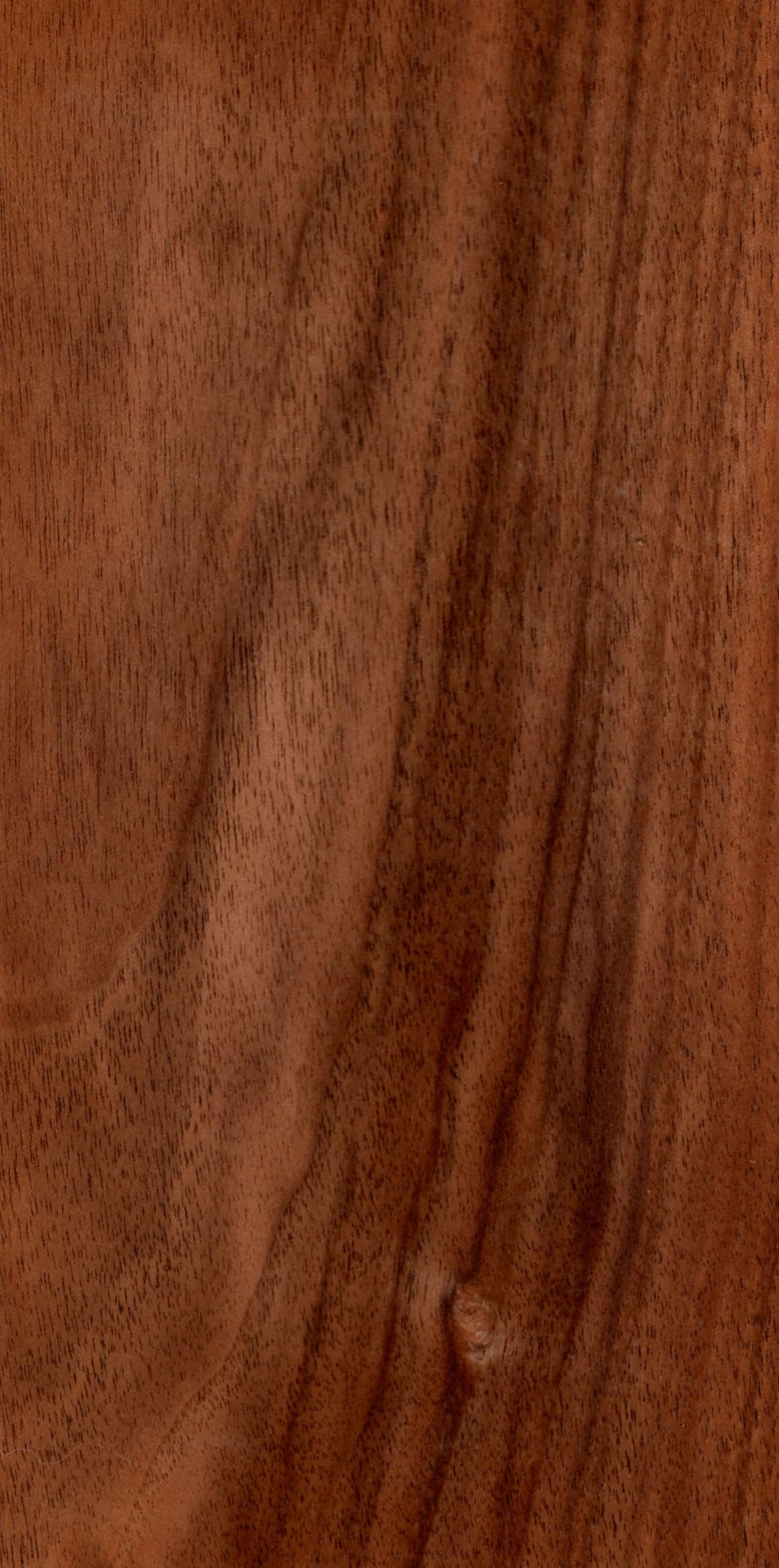
Pale pinkish-tan to warm salmon, deepening to a soft russet with age and light. Texture is dense, even, and almost poreless under the hand. Figure is quiet, gentle ribbon and the occasional fine fleck, which is exactly why carvers and marquetry workers prize it. The grain doesn't fight you, and detail holds crisply.
- Pale pinkish-tan when fresh off the saw
- Warm salmon to soft russet with age
- Steamed pear takes a uniform pinkish hue
- Stains evenly to deep black for ebonised work
- Subtle ribbon figure; rarely dramatic
- Mild UV warming, no harsh colour shift
- Very fine even texture; subtle figure.
Travail du bois
Son travail en atelier
Carves, turns, and planes superbly, this is a benchmark wood for fine work. Cuts cleanly across the grain without tearing, holds knife-edge detail, and turns to crisp profiles. Sands to a near-polished surface straight off the tool. Glues and screws well. Steam bending is moderate. The low stiffness helps it bend, but it can compress unevenly, so test on offcuts.
Finition
Sands to a glass-smooth surface, one of the cleanest finishes you can pull off any European hardwood. Takes oil, wax, and shellac evenly with no blotching. Steaming produces the uniform pinkish tone historically used to imitate ebony when stained black (the piano-key trick). For natural finishes, hard-wax oil holds the warm tone; lacquer can flatten it. Expect mild warming in UV.
Séchage
Honest tradeoff: tangential shrinkage is high (10.5–12%) against modest radial movement, so drying rate matters. Pear that's rushed will check, cup, and case-harden. Air-dry slowly under weight, then finish in a kiln on a gentle schedule. Once stable, it sits well indoors. Quartersawn or rift-sawn stock is the safer cut for wide panels.
De combien va-t-il bouger ?
Le bois gonfle et se rétracte en largeur selon que l’air devient plus humide ou plus sec. Estimez le mouvement saisonnier d’un plateau en European Pear avant de concevoir les fixations.
Mouvement saisonnier attendu
environ 12,9 mm
Important. Utilisez des taquets ou des équerres à trous oblongs, laissez du jeu aux extrémités des alèses et laissez le plateau s’acclimater avant l’assemblage.
Modèle de retrait linéaire : largeur × (retrait ÷ 28 % de point de saturation des fibres) × variation saisonnière d’humidité. Utilise un retrait tangentiel de 11,25 % pour le European Pear. Il s’agit d’une estimation de conception, pas d’une garantie.
Son prix
Sécurité et origine
- Cultivé et récolté en Europe.
- Statut sur la Liste rouge de l’UICN : évaluation mondiale de la conservation de cette essence.
Food-contact safe, pear has a long tradition as kitchen utensil and treen wood. Not a commonly reported dust sensitiser. Standard shop dust extraction is enough.
Lire le guide completNotes détaillées sur la figure, l’évolution de la couleur, le travail et la stabilité.
What European Pear actually is#
Pyrus communis is the fine detail wood of Europe. Its texture is exceptionally close, even and dense, with essentially no visible grain direction, and at 7,420 N Janka it is one of the hardest species in this catalogue.
That pairing is unusual. Most woods that hold fine detail are soft, like lime. Most woods that are hard have pronounced grain that fights the tool, like oak. Pear is both hard and directionless, so carved detail is crisp and then survives being handled.
It is the traditional wood for woodcut printing blocks, recorders and wind instrument parts, drawing instruments, rulers, set squares and fine inlay, and all of those uses depend on the same property.
The orchard problem#
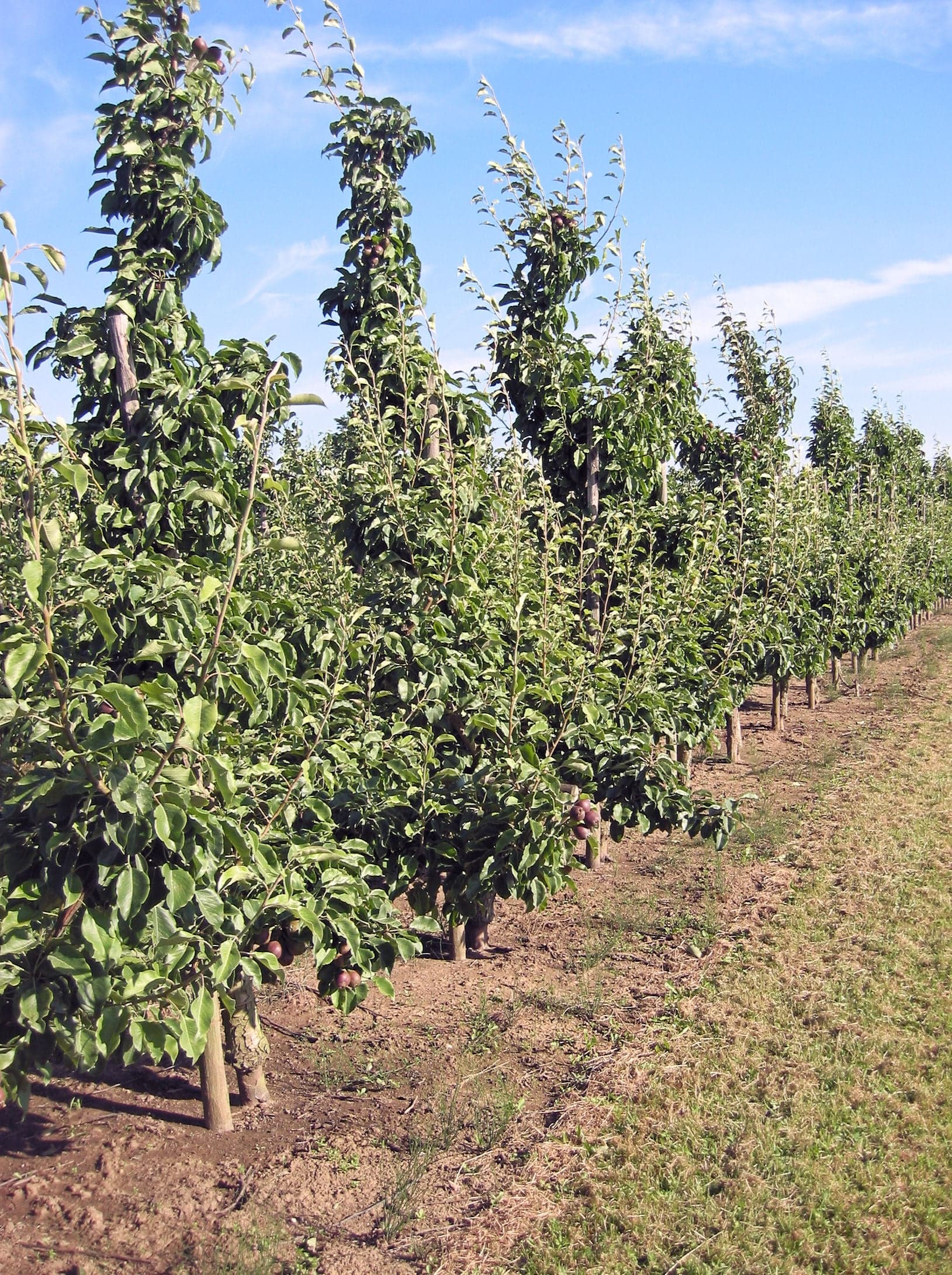
Pear is a fruit tree. It is grown for pears, and it reaches the timber market when an orchard tree comes to the end of its productive life.
The consequences are structural. Trunks are short and often irregular. Diameters are modest. Clean wide boards are genuinely scarce, and slab sized material is uncommon enough that finding it is the main constraint rather than affording it.
Expect narrow widths, short lengths, and a good deal of character.
Steamed and unsteamed
Questions des acheteurs
Questions fréquentes des acheteurs
Why is pear so highly regarded for carving and instruments?
Its texture is exceptionally fine, even and dense, with essentially no visible grain direction, so it cuts equally well in any direction and holds very crisp detail. At 7,420 N Janka it is also hard, which means carved detail survives handling. That combination of fine texture and hardness is rare and is why pear has been the traditional wood for woodcuts, recorders, rulers and instrument parts.
What is steamed pear?
Pear that has been steamed during drying, which turns the pale pinkish wood a warm rose brown and evens the colour. It is the standard European commercial treatment and the colour most people associate with the species. Unsteamed pear is paler and more variable. The change is permanent.
Why are pear boards so small?
It is an orchard tree, grown for fruit and felled at the end of its productive life rather than for timber. Trunks are short, often irregular, and rarely large. Wide clean pear is genuinely scarce and priced accordingly, and slab sized material is uncommon.
How much does it move?
Propriétés mécaniques
Données techniques
Valeurs de référence publiées. Lorsque les sources divergent, la plage est indiquée et la valeur courante sert aux échelles ci-dessus.
| Densité (kg/m³)Masse par mètre cube à environ 12 % d’humidité. Un bois plus lourd est généralement plus dur et plus résistant. | 650–740 kg/m³valeur courante 700 kg/m³ |
|---|---|
| Dureté Janka (N)Force nécessaire pour enfoncer à moitié une bille d’acier dans le bois. Mesure standard de la résistance à l’enfoncement. | 6,800–7,800 Nvaleur courante 7 420 N |
| MOR : module de rupture (MPa)Résistance à la flexion : charge à laquelle une poutre casse. | 75–90 MPa |
| MOE : module d’élasticité (GPa)Rigidité en flexion : fléchissement d’une étagère ou d’un plateau sous une charge. | 7.0–8.5 GPa |
| Retrait radialRetrait perpendiculaire aux cernes, du bois vert au bois anhydre. Les planches sur quartier travaillent dans ce sens. | 4.0–5.0 % |