Quercus petraea
The other European oak. Sold beside Quercus robur without distinction, straighter grown, and slightly the better board for long clean lengths.
Aucun plateau en Sessile Oak pour le moment. Ces essences conviennent aux mêmes projets et sont disponibles.
Nous vous envoyons un e-mail lorsque de nouveaux plateaux en Sessile Oak arrivent chez KORENA. Chaque plateau est unique, mieux vaut donc être prévenu rapidement.
Aspect du bois
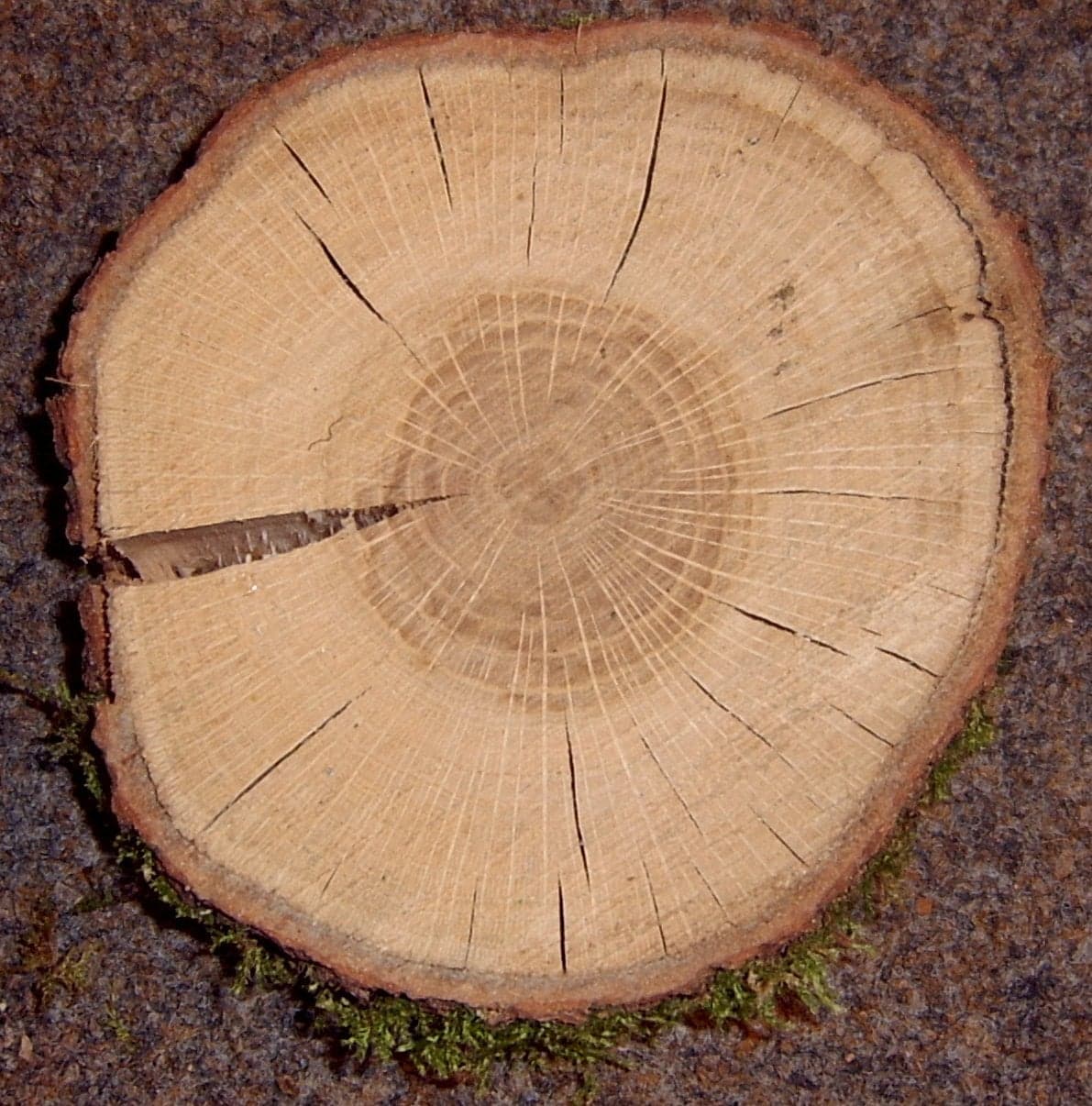
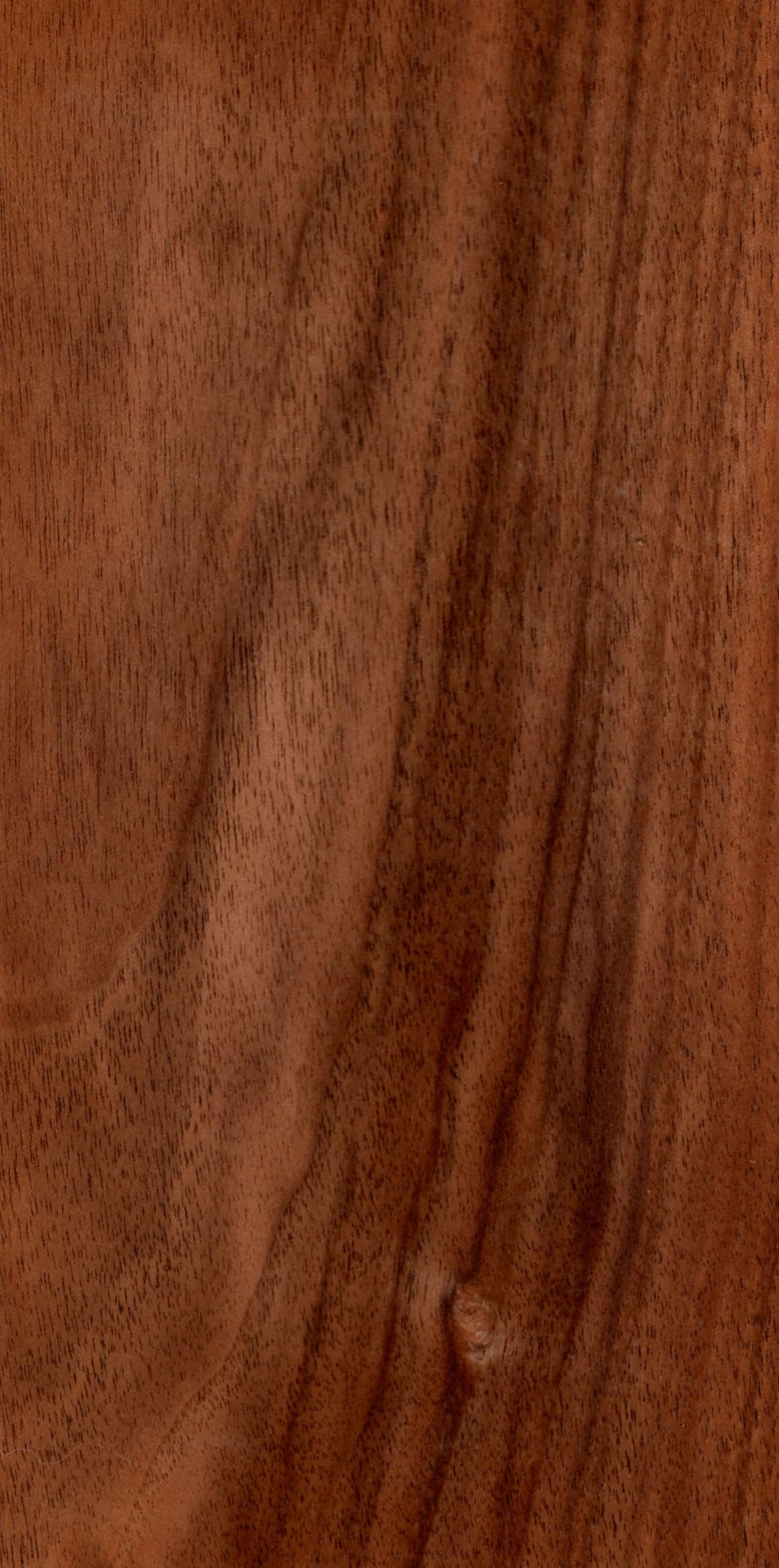
Sold as European oak alongside Quercus robur and rarely separated in the trade, but the two are not identical. Sessile oak tends to grow straighter with more regular annual rings, producing longer clean lengths and a more even, less busy figure. The ray fleck on quartersawn faces is if anything more pronounced. Colour is the same pale tan to mid brown with an olive cast against narrow cream sapwood.
Travail du bois
Easy to glue and it takes stain and finish very well. Straighter grain and more regular rings than Quercus robur mean fewer surprises on the planer and less tear-out. It blunts cutters moderately, as all oaks do, and the coarse open pores mean a grain filler is needed for a fully smooth finish. It responds well to steam bending.
Takes stain and finish very well, better than most timbers. The open pores need filling if a glass smooth surface is the goal, otherwise the texture is part of the character. Oak reacts with iron and ferrous contact leaves black stains, so use brass or stainless fittings and avoid steel wool entirely. Fuming with ammonia darkens it dramatically through reaction with the tannins.
Dries slowly and must be dried slowly. Rushed oak checks on the surface, honeycombs internally and develops severe case hardening that only reveals itself when the slab is machined or ripped. Tangential shrinkage at 9.7 percent against 4.5 percent radial is a wide ratio, so flatsawn boards cup strongly and quartersawn stock is markedly more stable. Volumetric shrinkage is around 14.2 percent.
Le bois gonfle et se rétracte en largeur selon que l’air devient plus humide ou plus sec. Estimez le mouvement saisonnier d’un plateau en Sessile Oak avant de concevoir les fixations.
Mouvement saisonnier attendu
environ 11,1 mm
Fixez le plateau avec des taquets ou des équerres à trous oblongs, sans colle ni vis trop serrées.
Modèle de retrait linéaire : largeur × (retrait ÷ 28 % de point de saturation des fibres) × variation saisonnière d’humidité. Utilise un retrait tangentiel de 9,7 % pour le Sessile Oak. Il s’agit d’une estimation de conception, pas d’une garantie.
Prix actuel du bois de Sessile Oak en Europe, par mètre cube hors TVA. Touchez un prix pour en voir le détail.
Oak is a documented sensitiser. Reactions typically include eye and skin irritation and asthma-like symptoms, and repeated exposure to oak dust is associated with elevated risk of nasal cancer, which is why extraction is not optional in a production setting. Severe individual reactions remain uncommon but the dust warrants proper handling.
Quercus petraea grows across Europe alongside Quercus robur, favouring higher ground, poorer soils and hillsides where robur takes the heavier valley soils. France, Germany, central Europe and the Balkans all supply it. Most slab stock comes from managed FSC or PEFC forests and EUDR documentation is as well established as for European oak, because in practice the two are handled together.
Not listed in the CITES Appendices, and not assessed on the IUCN Red List according to the source KORENA cites, which is why no IUCN status is shown rather than one being assumed. Supply across Europe is broad and well certified, and oak is among the simplest species to document for EUDR purposes.
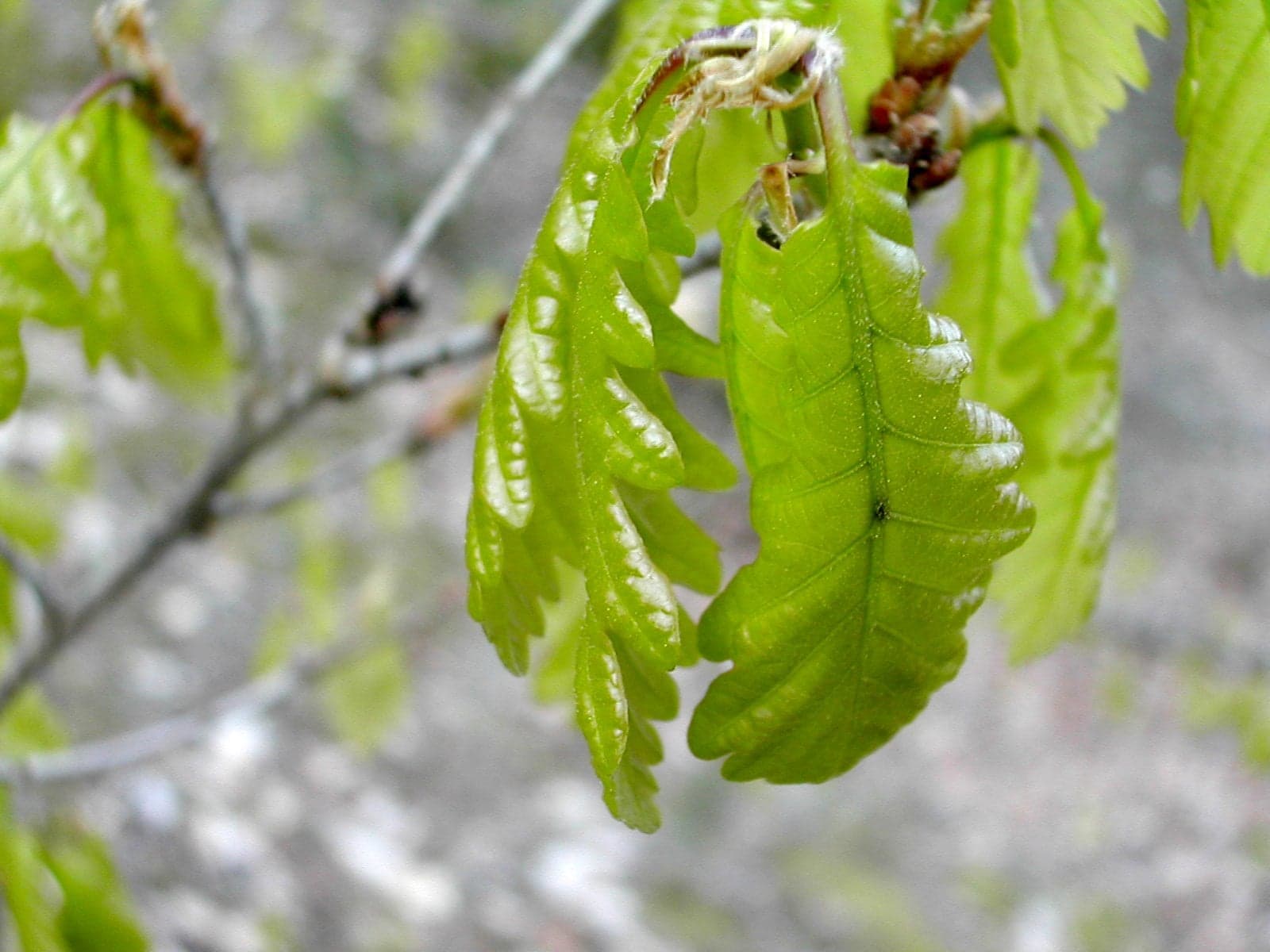
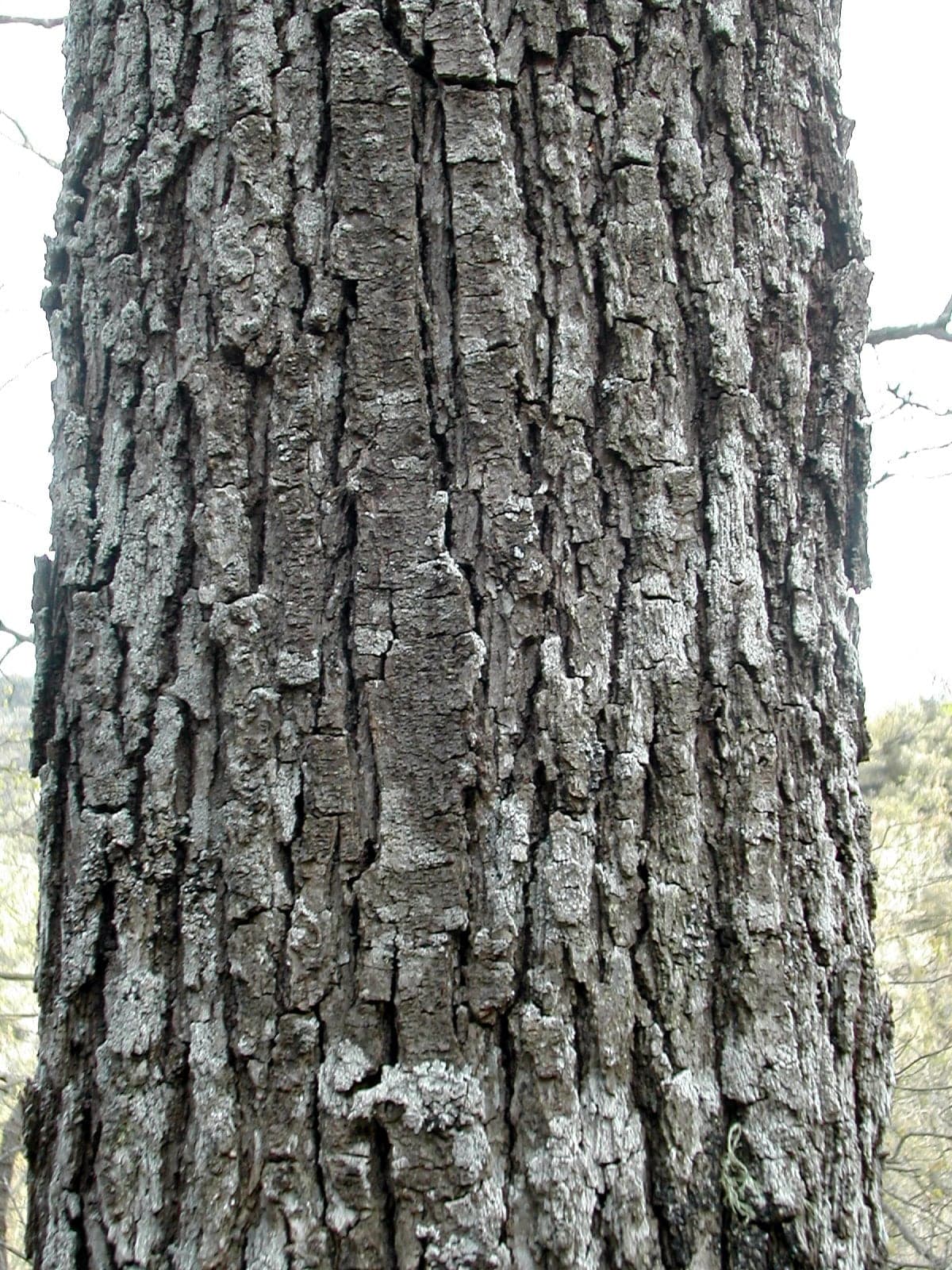
Quercus petraea is one of the two species that the European trade sells as oak. The other is Quercus robur, the pedunculate or English oak. They are separated botanically by where the acorns sit, robur on stalks and petraea on the twig, and they hybridise freely where their ranges overlap, which is most of Europe.
In the timber yard they are almost never separated. A pack labelled European oak will usually contain both. For most purposes that is harmless, because the two woods are genuinely close. There are still reasons to know which one you are looking at.
Sessile oak favours higher ground, hillsides and poorer soils, while robur takes the heavier valley ground. The growing conditions show in the timber.
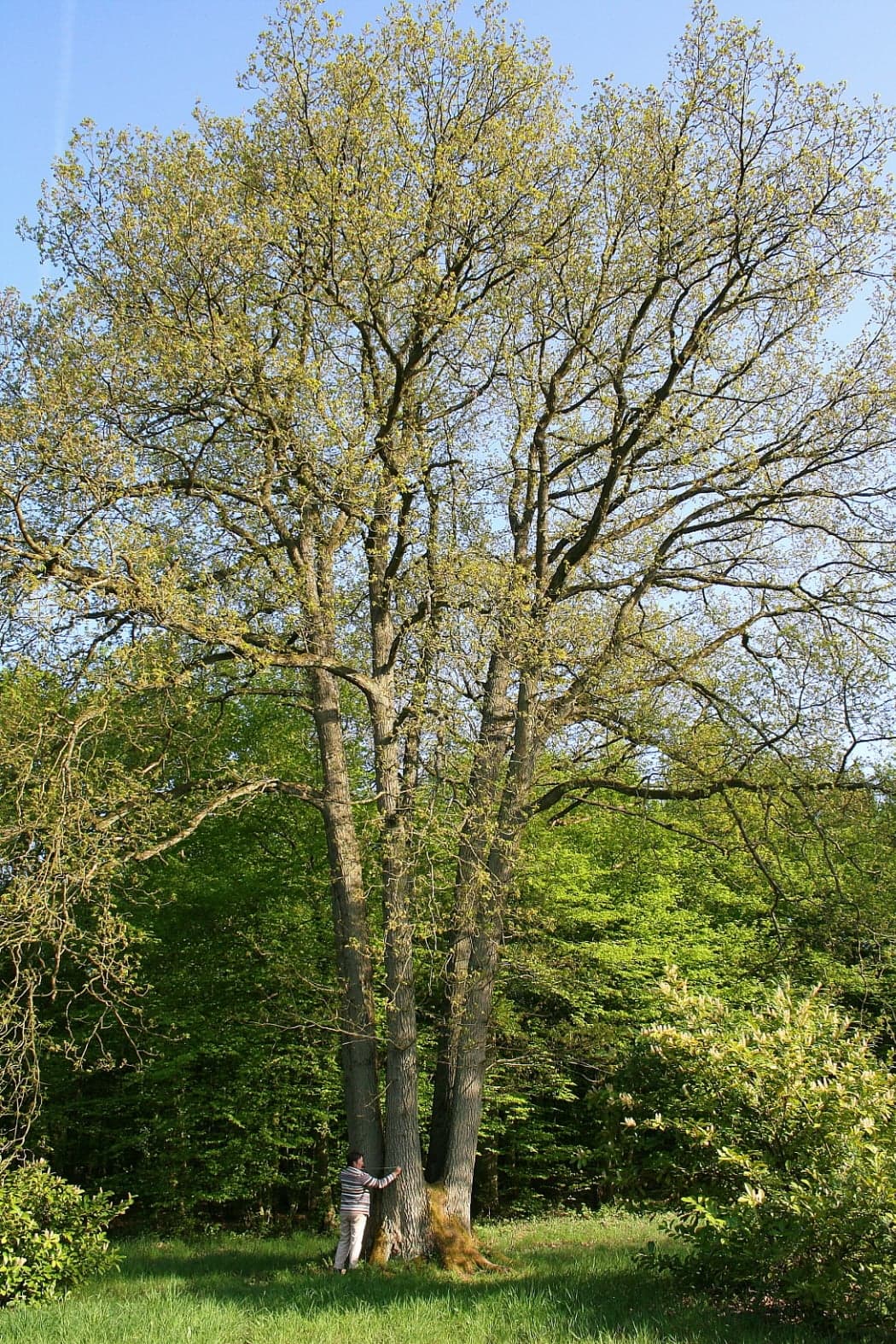
Sessile tends to grow straighter, with more regular annual rings and fewer of the large low branches that produce knots and grain disturbance in open grown robur. The practical consequence is longer clean lengths and a more even, less busy figure. For a long tabletop or a run of architectural joinery, that regularity is worth having.
The measured differences are small. Sessile runs 710 kg per cubic metre against 675 for robur, and 4,990 N Janka against 4,980. Those gaps are inside the natural variation of either species, so do not choose between them on hardness.
The ray fleck, the silvery ribbon figure that appears on quartersawn oak, is if anything stronger in sessile.
Colour runs pale tan to mid brown, often with an olive cast, against a narrow band of cream sapwood. The texture is coarse with large open pores in the earlywood, which is what gives oak its characteristic grain texture under a finish.
The single most important thing to read is the cut. On a flatsawn face you get the bold cathedral pattern. On a quartersawn face you get the ray fleck, which is the more prized figure and the more stable board. The difference in stability is not marginal, as the drying section below explains.
Look for checks radiating from the pith end, honeycomb visible on an end grain face, and any sign of case hardening. All three are drying faults and all three are common in oak that was pushed.
Oak is a pleasure to work if your tools are sharp and a fight if they are not. It blunts cutters moderately, and sessile with its straighter grain gives noticeably less tear-out than the more irregular robur.
It glues reliably, takes stain and finish better than most timbers, holds fastenings well, and steam bends excellently, which is why it has been the traditional choice for boat frames and chair backs.
The open pore structure means a grain filler is needed if you want a glass smooth surface. Most makers do not, because the texture is a large part of why oak looks like oak.
Oak is full of tannins, and tannins react with iron to form a blue black stain called iron tannate. This is not a maintenance issue, it is a same day problem.
Steel screws will bleed black rings. A damp steel clamp bar left across a wet glue-up will print a black stripe. Steel wool used to cut a finish leaves fragments that bloom into black spots weeks later. Even nails in a bench top will mark a slab resting on them.
Use brass or stainless fittings throughout, never use steel wool on oak, and remove clamps promptly. Oxalic acid will sometimes lift an established stain, but avoiding it is far easier than fixing it.
The same chemistry is useful in reverse. Fuming oak with ammonia reacts with the tannins and darkens the wood dramatically and evenly right through the surface, which is how the deep brown of Arts and Crafts oak was traditionally achieved.
Oak dries slowly and it must be allowed to. The old rule of roughly a year per 25 mm of thickness for air drying remains a reasonable guide, and slab stock at 50 mm and above needs real patience.
Rushed oak fails in three ways: surface checking, internal honeycombing that is invisible until you machine into it, and case hardening that leaves the slab full of stress so it springs or cups the moment it is ripped.
In service, the tangential to radial ratio is what governs behaviour. At 9.7 percent tangential against 4.5 percent radial, oak has one of the widest ratios in this catalogue. A wide flatsawn top will cup noticeably between a humid summer and a heated winter. Quartersawn stock moves roughly half as much across its width. If a top must stay flat, that is where the money goes.
Tabletops, architectural joinery, flooring, cabinetry and cooperage. It is the default European hardwood for good reason: hard enough to survive daily use at 4,990 N, durable enough at decay class 2 for protected exterior joinery, predictable at the bench, and well supplied.
Choose sessile specifically over robur when you need long clean lengths, a more regular figure, or a quartersawn face with strong ray fleck.
Not listed in the CITES Appendices. The source KORENA cites reports it as not assessed on the IUCN Red List, so no IUCN status is displayed rather than one being assumed on its behalf.
Supply across France, Germany, central Europe and the Balkans is broad and certification coverage is mature. Because the two European oaks are handled together commercially, the documentation path is the same well trodden one, and oak is among the most straightforward species in this catalogue to satisfy EUDR requirements on.
Questions des acheteurs
They are different species, Quercus petraea and Quercus robur, sold together as European oak and rarely separated in the trade. Sessile tends to grow straighter with more regular rings, giving longer clean lengths and a more even figure, and it favours higher ground and poorer soils. At 710 kg per cubic metre and 4,990 N Janka it is fractionally denser and harder than robur at 675 and 4,980. For most work they are interchangeable.
For oak, usually yes. Tangential shrinkage is 9.7 percent against 4.5 percent radial, a ratio of more than two to one, so a flatsawn top cups strongly across a humidity swing while a quartersawn one moves about half as much. Quartersawing also exposes the silvery ray fleck that is the signature figure of the species.
Tannins in oak react with iron to form iron tannate, a blue black stain. Any ferrous contact does it: steel screws, a damp clamp bar, steel wool, even nails in a bench top. Use brass or stainless fittings, keep steel wool away entirely, and remove clamps promptly. The stain can sometimes be lifted with oxalic acid but prevention is far easier.
Longer than almost anything else here, and the traditional rule of a year per 25 mm of thickness for air drying is still a reasonable guide. Rushed oak checks on the surface, honeycombs internally, and case hardens so that a flat looking slab springs the moment it is ripped. Every KORENA listing records the drying method and a measured moisture value, so this is checkable rather than assumed.
It is rated food safe, and oak has been used for food storage and cooperage for centuries. The practical caveat is the open pore structure, which holds moisture and residue more than a closed grain species. For a board in daily use, a dense closed grain wood such as hard maple is easier to keep clean.
Propriétés mécaniques
Valeurs de référence publiées. Lorsque les sources divergent, la plage est indiquée et la valeur courante sert aux échelles ci-dessus.
| Densité (kg/m³)Masse par mètre cube à environ 12 % d’humidité. Un bois plus lourd est généralement plus dur et plus résistant. | 710 kg/m³ |
|---|---|
| Dureté Janka (N)Force nécessaire pour enfoncer à moitié une bille d’acier dans le bois. Mesure standard de la résistance à l’enfoncement. | 4,990 N |
| MOR : module de rupture (MPa)Résistance à la flexion : charge à laquelle une poutre casse. | 97 MPa |
| MOE : module d’élasticité (GPa)Rigidité en flexion : fléchissement d’une étagère ou d’un plateau sous une charge. | 10.5 GPa |
| Retrait radialRetrait perpendiculaire aux cernes, du bois vert au bois anhydre. Les planches sur quartier travaillent dans ce sens. | 4.5 % |
| Retrait tangentielRetrait dans le sens des cernes. Les planches sur dosse et la plupart des plateaux travaillent dans ce sens. | 9.7 % |
| Retrait volumiqueVariation totale de volume du bois vert au bois anhydre. Une valeur basse indique une meilleure stabilité. | 14.2 % |
| Durabilité naturelle (EN 350)Norme européenne de résistance naturelle à la pourriture, de 1 (très durable) à 5 (périssable). | Class 2 — Durable |
Dureté Janka : 4 990 N
Dureté proche de celle du chêne européen
Touchez une étiquette pour afficher les détails.
710 kg/m³
14,2 % de retrait volumique
3,7 / 5 de moyenne à l’atelier
EN 350 classe 2
Pourquoi un plateau coûte-t-il plus cher ?
Ces prix concernent le bois brut. Un plateau est la meilleure tranche d’une grume, séchée pendant au moins un an, puis contrôlée et mesurée individuellement. Seule une petite partie de chaque grume devient un plateau.
Source : KORENA Timber Index · Dernières données : 24 sept. 2026
Voir tous les prix régionaux