KORENA
BoisFinished piecesFournituresDépôtsJournal

Recevoir les nouveautés

Chaque plateau est unique. Une fois vendu, il est parti. Nous vous écrivons lors de la publication de nouvelles pièces : arrivages, essences et pièces adaptées à un projet.

Quelques e-mails par mois. Aucun spam, désabonnement à tout moment.

KORENA, bois massif haut de gamme

Une pièce à la fois.

Du bois massif haut de gamme vérifié, vendu pièce par pièce. Chaque plateau est photographié, mesuré et expédié depuis le dépôt partenaire avec un passeport du bois.

Boutique

  • Voir les produits
  • Archives des pièces vendues
  • Suivre une commande

Découvrir

  • Journal
  • Guides des essences
  • Glossaire
  • Comparer
  • Auteurs

Aide

  • À propos
  • Fonctionnement
  • Devenir dépôt partenaire
  • Rechercher un plateau
  • Assistance
  • Modèles de documents
  • Presse

Acheter

  • Conditions de vente
  • Droit de rétractation
  • Retours et garantie
  • Expédition et livraison

Confiance

  • Politique de confidentialité
  • Politique relative aux cookies
  • Provenance du bois et EUDR
  • Accessibilité

Mentions légales

  • Mentions légales
  • Utilisation acceptable
  • Propriété intellectuelle et contenus

© 2026 KORENA. Tous droits réservés.

Exploité par Martial Labs Ltd. (BG, EIK 207453941). KORENA est un nom commercial de Martial Labs Ltd.

Nous respectons votre vie privée

Nous utilisons des cookies essentiels au fonctionnement du site. Avec votre accord, nous utilisons aussi des cookies pour les statistiques, le contenu personnalisé et la publicité. Vous pouvez modifier votre choix à tout moment sur la page des préférences de consentement. Consultez notre politique relative aux cookies et notre politique de confidentialité.

  1. Accueil
  2. /
  3. Essences
  4. /
  5. White Oak

Quercus alba

White Oak

American white oak (Quercus alba) is a closed-pore hardwood with straight grain, coarse texture, and one of the best steam-bending records of any commercial species.

  • Cultivé hors d’Europe et importé par des dépôts européens.
  • Groupe botanique. Les résineux sont des conifères, les feuillus sont des arbres à feuilles larges.
  • Famille botanique à laquelle appartient l’essence.
Être informé du prochain arrivageEssence de référence. Aucun plateau en stock pour le moment.
  • Adaptation au projet
  • En stock
  • Aspect
  • Travail
  • Mouvement
  • Prix
  • Sécurité et origine
  • Questions fréquentes
  • Données techniques

Convient-il à votre projet ?

Idéal pour

  • Kitchen islands and worktops where water resistance matters
  • Bar tops and counter tops
  • Steam-bent chair backs, rockers, and curved rails
  • Cooperage-inspired pieces and cask-stave projects
  • Quartersawn panels and doors with visible ray fleck
  • Flooring and stair treads in heavy-traffic interiors

Aucun plateau en White Oak dans la sélection actuelle

Essences similaires en stock

Aucun plateau en White Oak pour le moment. Ces essences conviennent aux mêmes projets et sont disponibles.
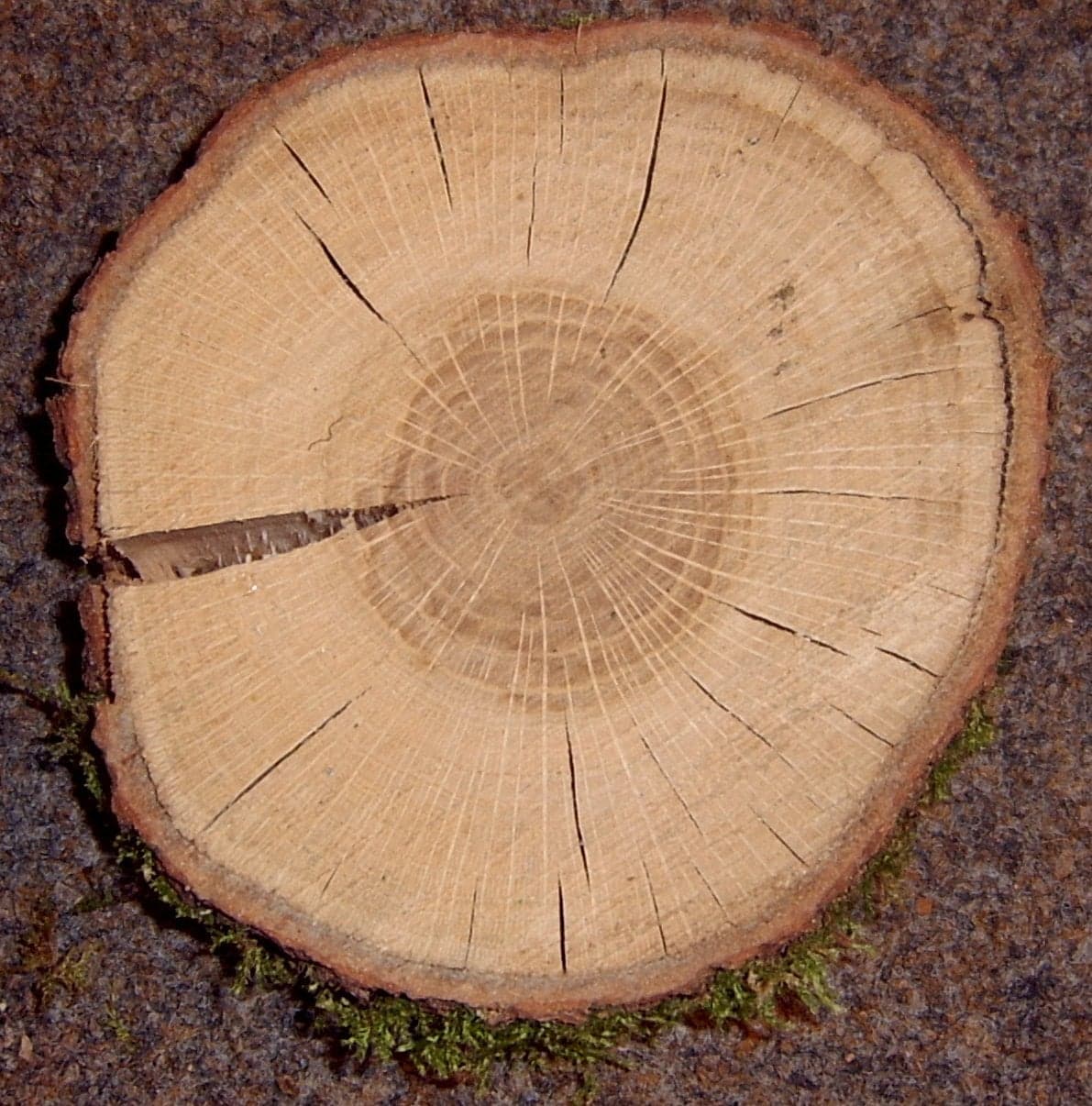
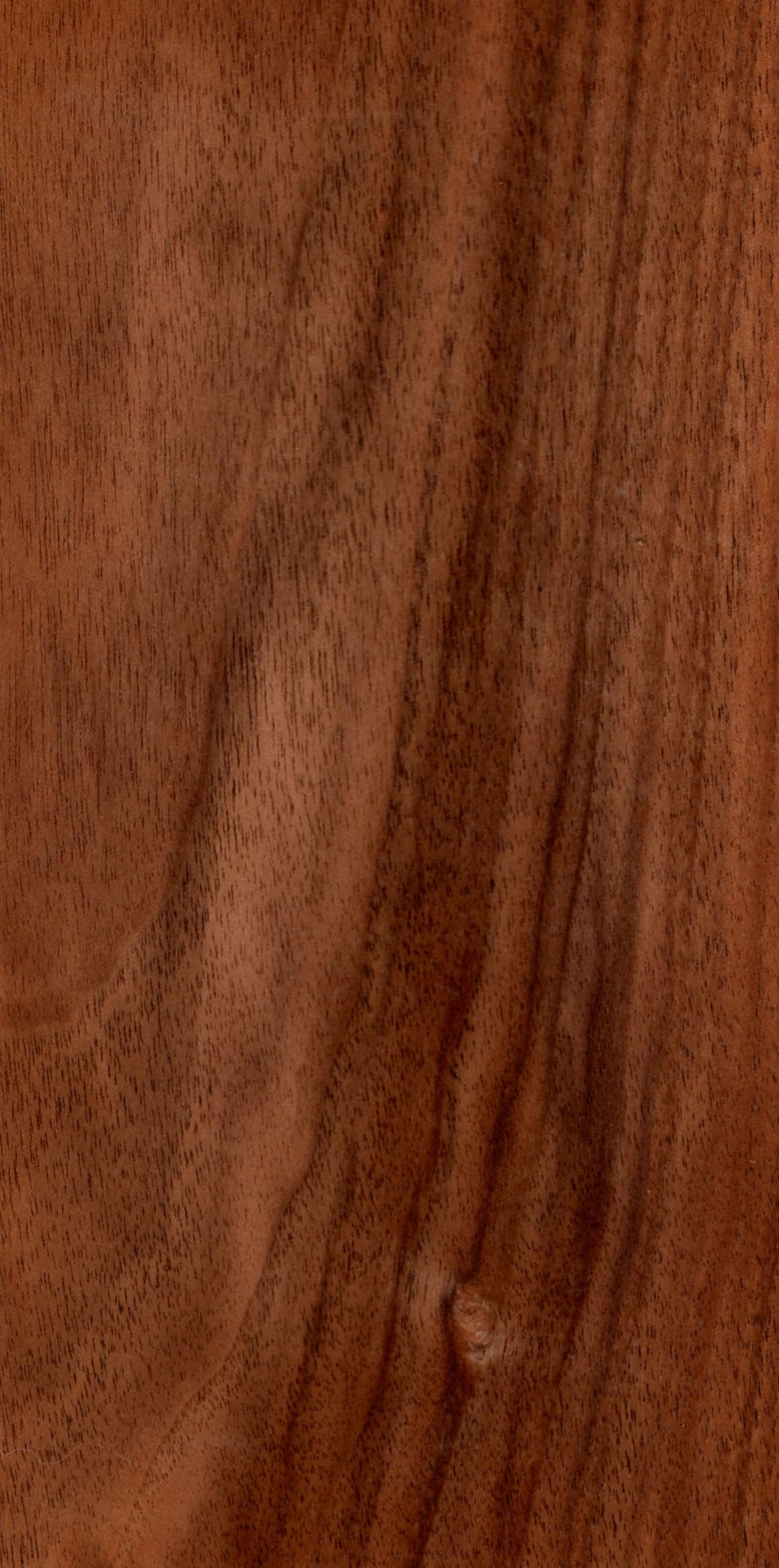
  • Fil du European Oak

    European Oak

    Quercus robur

    6 plateaux

  • Fil du European Walnut

    European Walnut

    Juglans regia

    9 plateaux

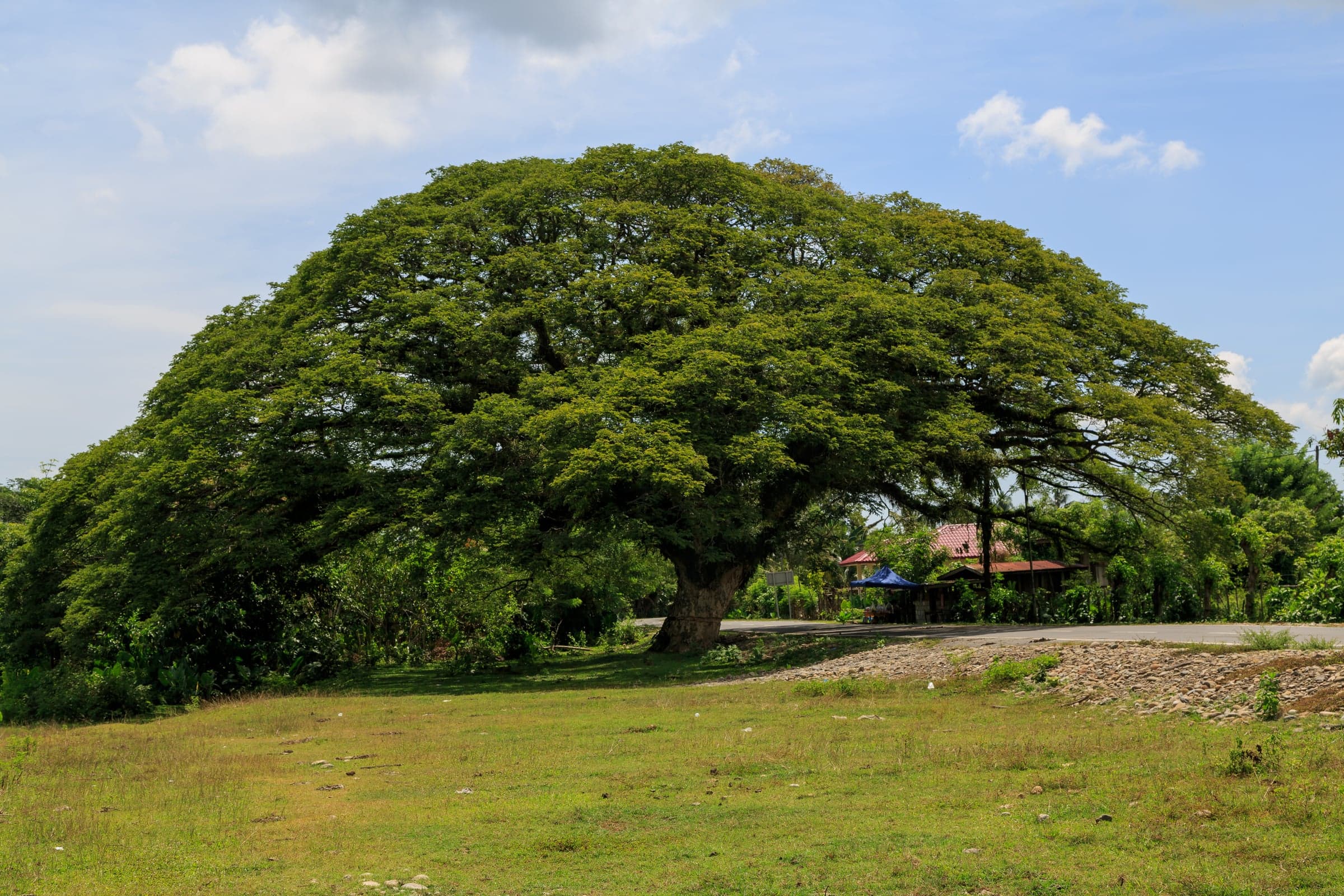
  • Fil du Saman

    Saman

    Samanea saman

    4 plateaux

Soyez informé des arrivages en White Oak

Nous vous envoyons un e-mail lorsque de nouveaux plateaux en White Oak arrivent chez KORENA. Chaque plateau est unique, mieux vaut donc être prévenu rapidement.

Quelques e-mails par mois. Aucun spam, désabonnement à tout moment.

Aspect du bois

Son aspect

Light to medium brown heartwood with an olive cast, sometimes drifting toward pale grey-brown. Sapwood is near-white and usually trimmed off furniture stock. Grain is straight with occasional irregular figure around knots. Texture is coarse but even, and the rays are unusually long, quartersawn faces show pronounced ray fleck (silver figure), a defining look in Arts and Crafts and Mission furniture. The single most useful feature is closed pores: tyloses plug the heartwood vessels, which is why white oak holds liquid and resists water ingress where European and red oak do not.

  • Heartwood: light to medium brown, often with an olive or greenish-grey cast
  • Sapwood: pale cream to near-white, sharply demarcated
  • Quartersawn faces: pronounced silver ray fleck
  • Ambers and deepens with UV and oil finishes over the first months
  • Fumes to deep chocolate-brown under ammonia; ebonises black with iron acetate
  • Straight grain, coarse uneven texture.

Travail du bois

Son travail en atelier

Machines cleanly with sharp tooling, sawing, sanding, gluing, and screwing all rate well. Planing tearout can show up around interlocked grain near knots; back off the cut and skew the blade. Pre-drill for screws near ends and edges to avoid splitting. Steam bending is where white oak earns its reputation: it is one of the most reliable bending species in the world, used historically for boat ribs, Windsor chair backs, and barrel staves. Quartersawn stock bends most predictably.

Finition

Takes oils, hardwax oils, water-based lacquers, and solvent finishes well. Reacts strongly with iron, wet steel wool, pipe clamps, or ferrous swarf will leave blue-black stains, so use stainless or brass and wipe spills fast. The same iron reaction is used deliberately for fumed and ebonised looks (ammonia fuming, iron-acetate). Tannin can bleed through pale finishes; seal first if you want a clean white or grey. Pores are tight enough that grain filling is optional for most furniture work.

Séchage

Dries slowly and is prone to honeycomb, surface checking, and ring failure if pushed. Tangential shrinkage runs roughly twice radial, so flatsawn boards cup more than quartersawn. Slabs need patient kiln schedules and good sticker discipline. Once at service moisture (8–10% for interior EU use) it is dimensionally well-behaved, but full equilibration takes weeks for thick stock.

De combien va-t-il bouger ?

Le bois gonfle et se rétracte en largeur selon que l’air devient plus humide ou plus sec. Estimez le mouvement saisonnier d’un plateau en White Oak avant de concevoir les fixations.

Débit
Lieu d’utilisation

Mouvement saisonnier attendu

environ 12,0 mm

Important. Utilisez des taquets ou des équerres à trous oblongs, laissez du jeu aux extrémités des alèses et laissez le plateau s’acclimater avant l’assemblage.

Modèle de retrait linéaire : largeur × (retrait ÷ 28 % de point de saturation des fibres) × variation saisonnière d’humidité. Utilise un retrait tangentiel de 10,5 % pour le White Oak. Il s’agit d’une estimation de conception, pas d’une garantie.

Son prix

Sécurité et origine

  • Cultivé hors d’Europe et importé par des dépôts européens.
  • Statut sur la Liste rouge de l’UICN : évaluation mondiale de la conservation de cette essence.
  • White oak dust is classified by IARC as a Group 1 carcinogen (hardwood dust, sino-nasal risk on long exposure) and can cause respiratory and skin sensitisation. Run extraction at the tool, wear an FFP3 mask for sanding, and keep the shop clean. The wood itself is food-contact safe once cured, it is the classic species for wine and whisky casks, cutting boards, and butcher blocks.

Lire le guide completNotes détaillées sur la figure, l’évolution de la couleur, le travail et la stabilité.+

What makes White Oak different#

Quercus alba looks like oak and works like oak. What separates it from red oak, and from most of this catalogue, is invisible without a lens.

In white oak the large earlywood pores are plugged with tyloses, balloon like ingrowths that grow into and seal the vessels. In red oak they are open. That one anatomical fact decides almost everything practical about the species.

Because the pores are sealed, white oak holds liquid, which is why every wine and whisky barrel is made from it and none are made from red oak. Because water cannot travel freely along the vessels, it resists decay, which is why it has been the traditional boatbuilding and exterior joinery timber of the western world.

Reading a White Oak slab#

Colour runs light to mid brown, often with an olive or greenish cast, against narrow pale sapwood. It reads slightly cooler and more grey than European oak, without the pink of red oak.

The rays are long, considerably longer than in red oak, and on a quartersawn face they produce a dramatic silvery fleck that is the most prized figure the species offers. If you are paying for quartersawn white oak, that fleck is what you are paying for.

To confirm identity, look at the end grain under a lens: pores plugged with tyloses mean white oak, open pores mean red oak. If a label and the end grain disagree, believe the end grain.

Questions des acheteurs

Questions fréquentes des acheteurs

Why is White Oak used for barrels when Red Oak is not?

+

Tyloses. In white oak the large earlywood pores are plugged with balloon like ingrowths that seal the vessels, so the wood holds liquid. In red oak they are open and it does not. That single anatomical difference is why every wine and whisky barrel is white oak, and it is also why white oak is durable outdoors and red oak is not.

How does White Oak compare with European Oak?

+

Harder and denser. White oak is 750 kg per cubic metre and 6,049 N Janka against 675 and 4,980 for Quercus robur, and it is stiffer at 11.5 GPa. It is also more dimensionally active, with volumetric shrinkage of 15.5 percent against 12.5 percent. The figure is broadly similar though white oak tends to have longer rays and a more dramatic quartersawn fleck.

Is it good for outdoor furniture?

+

It is one of the best choices in this catalogue. Decay class 2 plus tyloses blocking the pores gives genuine weather resistance, and it has been the traditional boatbuilding and exterior joinery oak for centuries. Use stainless or brass fixings, because the tannin and iron reaction is worse in wet conditions.

Does it move a lot?

Propriétés mécaniques

Données techniques

Valeurs de référence publiées. Lorsque les sources divergent, la plage est indiquée et la valeur courante sert aux échelles ci-dessus.

Densité (kg/m³)Masse par mètre cube à environ 12 % d’humidité. Un bois plus lourd est généralement plus dur et plus résistant.690–790 kg/m³valeur courante 750 kg/m³
Dureté Janka (N)Force nécessaire pour enfoncer à moitié une bille d’acier dans le bois. Mesure standard de la résistance à l’enfoncement.5,500–6,500 Nvaleur courante 6 049 N
MOR : module de rupture (MPa)Résistance à la flexion : charge à laquelle une poutre casse.100–115 MPa
MOE : module d’élasticité (GPa)Rigidité en flexion : fléchissement d’une étagère ou d’un plateau sous une charge.11.5–13.0 GPa
Retrait radialRetrait perpendiculaire aux cernes, du bois vert au bois anhydre. Les planches sur quartier travaillent dans ce sens.5.5–6.5 %
  • Cutting boards, butcher blocks, and food-contact tableware
  • Outdoor-adjacent furniture under cover (porches, orangeries)
  • Atouts

    • Durable en extérieurClasse 2 sur 5 selon EN 350 : résiste à la pourriture en extérieur sans traitement.
    • Compatible avec les alimentsConvient aux planches, bols et surfaces en contact avec des aliments.

    Native to eastern North America, not Europe. It reaches the EU through established furniture-grade import channels and is widely stocked alongside European oak. KORENA sources kiln-dried boules and slabs from US mills already supplying European workshops.

  • Quercus alba is IUCN Least Concern with no CITES listing. US hardwood supply is generally well-regulated, and EUDR still applies on import into the EU. Due diligence is in preparation and becomes mandatory for large operators from 30 December 2026; KORENA is building each slab passport to record species, provenance, and supplier documentation. Ask for FSC or PEFC chain-of-custody where the project requires it; not every US mill ships certified by default.

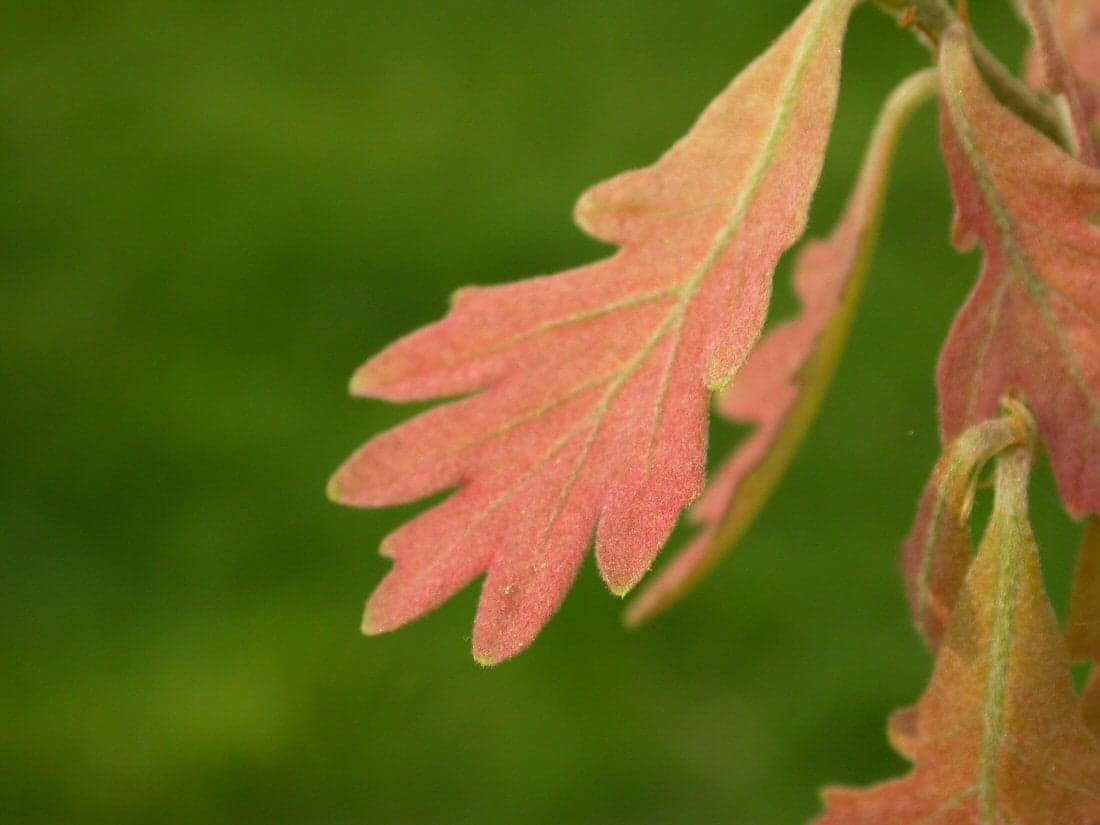
  • White Oak: Feuille
    Feuille
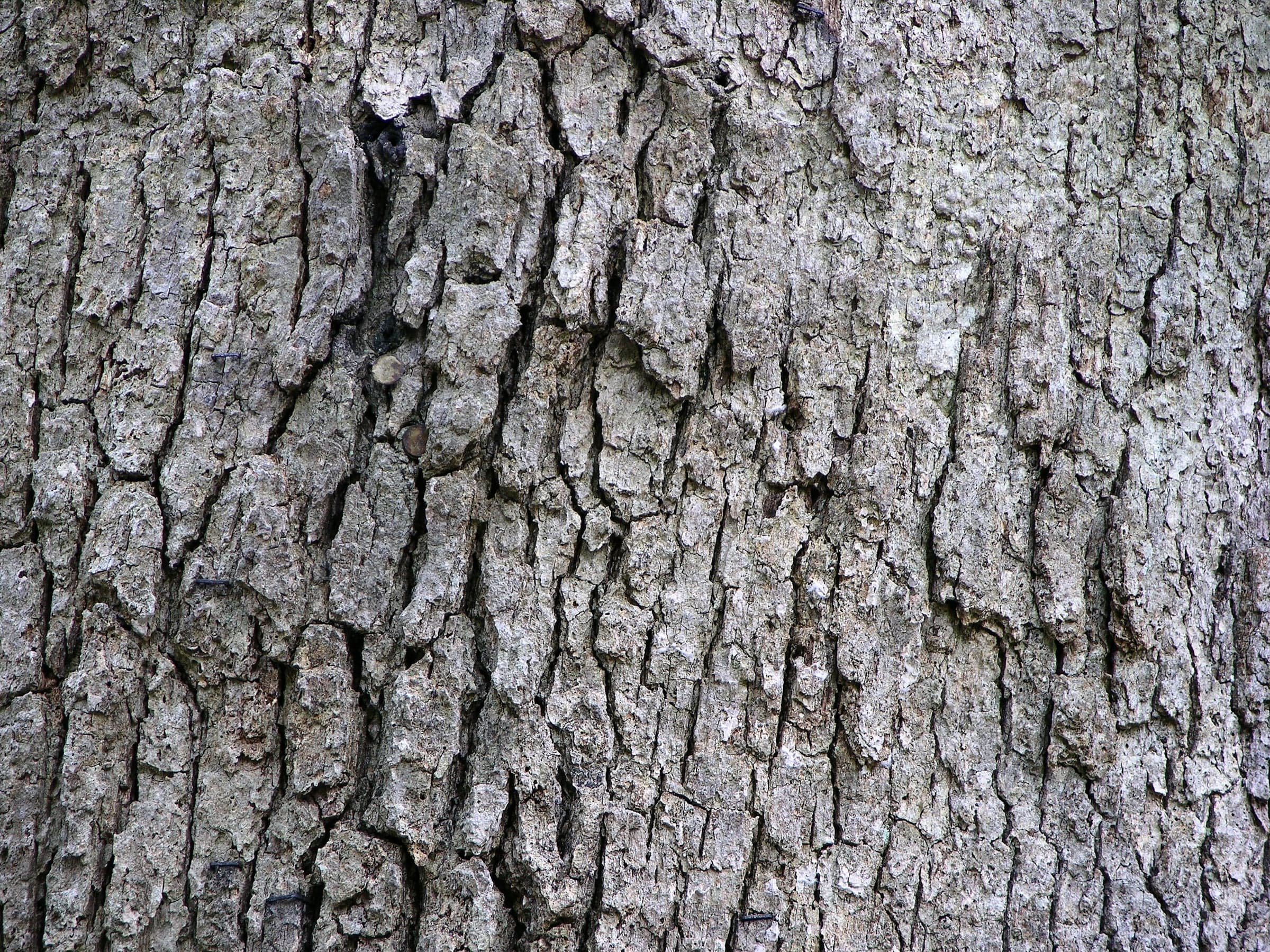
    White Oak: Écorce
    Écorce

    The movement problem#

    This is the one place white oak is harder work than European oak.

    Volumetric shrinkage of 15.5 percent is high, and the tangential to radial ratio of 10.0 against 5.5 percent is a wide differential. A wide flatsawn white oak top will cup meaningfully between seasons.

    Quartersawn stock roughly halves the across width movement and simultaneously exposes the ray fleck, which is a rare case of the more stable option also being the more beautiful one. For a wide top that must stay flat, quartersawn is the specification rather than an upgrade.

    Slabs need slow drying like all oak, and full acclimatisation in the room before final flattening.

    At the bench#

    It works well with hand and machine tools, glues reliably, takes stain and finish excellently, and steam bends very well.

    At 750 kg per cubic metre and 6,049 N Janka it is denser and harder than European oak, so it asks more of tooling and machines. Expect faster blunting and plan sharpening accordingly.

    The coarse open pores still need filling for a glass smooth surface, tyloses notwithstanding. The tyloses seal the vessels against liquid travel along the grain; they do not fill the surface texture.

    The iron reaction#

    Identical to every other oak. Tannins plus iron gives blue black staining, and it is worse in wet conditions, which matters because this is a species people actually use outdoors.

    Stainless or brass fixings throughout on any exterior white oak. Steel fixings in a garden bench will stain the wood black around every screw within a season.

    Where White Oak is the right answer#

    Exterior joinery, boatbuilding, garden furniture, cooperage, flooring, and interior work where the quartersawn ray fleck is the design intent.

    It is the wrong answer where budget is tight, since it costs more than European oak for properties that overlap heavily, and where a wide flatsawn top has to stay flat without the cost of quartersawing.

    Sourcing and EUDR#

    Not CITES listed and assessed as Least Concern. Quercus alba is native to eastern North America, so European buyers are importing unless they source European grown plantation material. As with Douglas Fir and red oak, the imported chain carries longer documentation under EUDR and higher transport carbon than an equivalent European species. Where the tyloses are not specifically required, European oak at decay class 2 covers most of the same ground with a shorter chain.

    Where quartersawn white oak actually comes from#

    Quartersawn white oak costs more than flatsawn for a simple geometric reason: you get less of it from a log.

    Flatsawing runs the saw straight through, producing the maximum yield of wide boards. Quartersawing cuts radially so the growth rings meet the face at close to ninety degrees, which is what exposes the rays and gives the stability. It produces narrower boards, more offcuts and considerably more handling.

    Rift sawing sits between the two, cutting at an intermediate angle to give straight grain without the ray fleck.

    For a slab buyer the practical point is that a genuinely quartersawn wide slab is close to a contradiction. Width and quartersawing pull against each other, because a radial cut is limited by the radius of the log. A very wide white oak slab is almost certainly flatsawn through the middle, which is where the movement is greatest.

    Reading the sapwood line#

    White oak sapwood is pale, narrow and, unlike the heartwood, has no tyloses and no durability.

    On an interior piece it is cosmetic and sound. On anything exterior, a sapwood edge is the part that will rot first, and leaving it on a garden bench undoes much of the reason for choosing white oak in the first place.

    If the slab is going outside, cut the sapwood off or accept that it is a sacrificial edge.

    +

    More than European oak. Volumetric shrinkage is 15.5 percent with tangential at 10.0 against radial at 5.5 percent, a wide differential. Flatsawn boards cup noticeably. Quartersawn white oak is markedly more stable and is the specification for anything wide that must stay flat, which is also where the ray fleck shows.

    Can I use it for a chopping board?

    +

    It is rated food safe and the tyloses that block its pores make it far more suitable than red oak, which KORENA records as not food safe. It has been used for food storage and cooperage for centuries. A dense closed grain wood such as hard maple is still easier to keep clean for a board in daily use.

    Retrait tangentielRetrait dans le sens des cernes. Les planches sur dosse et la plupart des plateaux travaillent dans ce sens.
    10.0–11.0 %
    Retrait volumiqueVariation totale de volume du bois vert au bois anhydre. Une valeur basse indique une meilleure stabilité.15.5–17.0 %
    Durabilité naturelle (EN 350)Norme européenne de résistance naturelle à la pourriture, de 1 (très durable) à 5 (périssable).Class 2 — Durable

    Références

    • The Wood Database(consultée le 2026-05-09)
    • USDA FPL Wood Handbook FPL-GTR-190 (2010)(consultée le 2026-05-09)
    • Meier, E. — WOOD! Identifying and Using Hundreds of Woods Worldwide (2015)(consultée le 2026-05-09)

    En bref

    Les niveaux utilisent les mêmes plages pour toutes les essences répertoriées par KORENA, ce qui permet de les comparer directement. La valeur mesurée figure sous chaque niveau.
    DuretéRésistance aux chocs et à l’usureDur

    Dureté Janka : 6 049 N

    21 % plus dur que le chêne européen

    PoidsPoids d’un plateau à souleverTrès lourd

    750 kg/m³

    StabilitéFaible mouvement au fil des saisonsTravaille beaucoup

    16,3 % de retrait volumique

    TravailSciage, rabotage, ponçage, collageModéré

    3,7 / 5 de moyenne à l’atelier

    Usage extérieurRésistance naturelle à la pourriture, EN 350Extérieur

    EN 350 classe 2

    • Sciage · Très bonQualité de la coupe et usure des lames.1 = difficile · 5 = excellent
    • Rabotage · BonLissage de la surface et risque d’arrachement.1 = difficile · 5 = excellent
    • Ponçage · Très bonRapidité du ponçage sans encrasser le papier.1 = difficile · 5 = excellent
    • Tournage · Très bonQualité de coupe et de finition au tour.1 = difficile · 5 = excellent
    • Sculpture · BonNetteté des détails obtenus à la gouge.1 = difficile · 5 = excellent
    • Collage · Très bonFiabilité des assemblages collés.1 = difficile · 5 = excellent
    • Tenue des vis / clous · Très bonTenue des vis et des clous sans fendre le bois.1 = difficile · 5 = excellent
    • Cintrage à la vapeur · Excellente aptitudeAptitude à prendre une courbe après étuvage.1 = difficile · 5 = excellent

    Aucune référence de marché n’est encore disponible pour le White Oak. Chaque plateau KORENA est tarifé individuellement par son dépôt partenaire.

    Se cintre bien
    Note de 5 sur 5 pour le cintrage à la vapeur. Accepte des courbes serrées.

    Attention

    • Travaille plus que la plupart des boisLes plateaux larges nécessitent des taquets ou des fixations à trous oblongs et un espace de mouvement. Utilisez le calculateur ci-dessous.
    • Poussière irritanteUtilisez un système d’aspiration et portez un masque lors du ponçage ou de l’usinage.

    Touchez une étiquette pour afficher les détails.