KORENA
BoisFinished piecesFournituresDépôtsJournal

Recevoir les nouveautés

Chaque plateau est unique. Une fois vendu, il est parti. Nous vous écrivons lors de la publication de nouvelles pièces : arrivages, essences et pièces adaptées à un projet.

Quelques e-mails par mois. Aucun spam, désabonnement à tout moment.

KORENA, bois massif haut de gamme

Une pièce à la fois.

Du bois massif haut de gamme vérifié, vendu pièce par pièce. Chaque plateau est photographié, mesuré et expédié depuis le dépôt partenaire avec un passeport du bois.

Boutique

  • Voir les produits
  • Archives des pièces vendues
  • Suivre une commande

Découvrir

  • Journal
  • Guides des essences
  • Glossaire
  • Comparer
  • Auteurs

Aide

  • À propos
  • Fonctionnement
  • Devenir dépôt partenaire
  • Rechercher un plateau
  • Assistance
  • Modèles de documents
  • Presse

Acheter

  • Conditions de vente
  • Droit de rétractation
  • Retours et garantie
  • Expédition et livraison

Confiance

  • Politique de confidentialité
  • Politique relative aux cookies
  • Provenance du bois et EUDR
  • Accessibilité

Mentions légales

  • Mentions légales
  • Utilisation acceptable
  • Propriété intellectuelle et contenus

© 2026 KORENA. Tous droits réservés.

Exploité par Martial Labs Ltd. (BG, EIK 207453941). KORENA est un nom commercial de Martial Labs Ltd.

Nous respectons votre vie privée

Nous utilisons des cookies essentiels au fonctionnement du site. Avec votre accord, nous utilisons aussi des cookies pour les statistiques, le contenu personnalisé et la publicité. Vous pouvez modifier votre choix à tout moment sur la page des préférences de consentement. Consultez notre politique relative aux cookies et notre politique de confidentialité.

  1. Accueil
  2. /
  3. Essences
  4. /
  5. Hard Maple

Acer saccharum

Hard Maple

The canonical butcher-block and kitchen-island wood. Pale, dense, food-safe, and hard-wearing. North American import, long established as a furniture-grade species through European channels.

  • Cultivé hors d’Europe et importé par des dépôts européens.
  • Groupe botanique. Les résineux sont des conifères, les feuillus sont des arbres à feuilles larges.
  • Famille botanique à laquelle appartient l’essence.
Être informé du prochain arrivageEssence de référence. Aucun plateau en stock pour le moment.
  • Adaptation au projet
  • En stock
  • Aspect
  • Travail
  • Mouvement
  • Prix
  • Sécurité et origine
  • Questions fréquentes
  • Données techniques

Convient-il à votre projet ?

Idéal pour

  • Butcher blocks, chopping boards, and kitchen islands
  • Worktops and heavy-use table tops
  • Stair treads and flooring in high-traffic rooms
  • Cabinet interiors, drawer sides, and shaker-style fronts
  • Turned bowls, handles, and tool components
  • Instrument backs, necks, and sides, especially curly or bird's-eye stock

Aucun plateau en Hard Maple dans la sélection actuelle

Essences similaires en stock

Aucun plateau en Hard Maple pour le moment. Ces essences conviennent aux mêmes projets et sont disponibles.
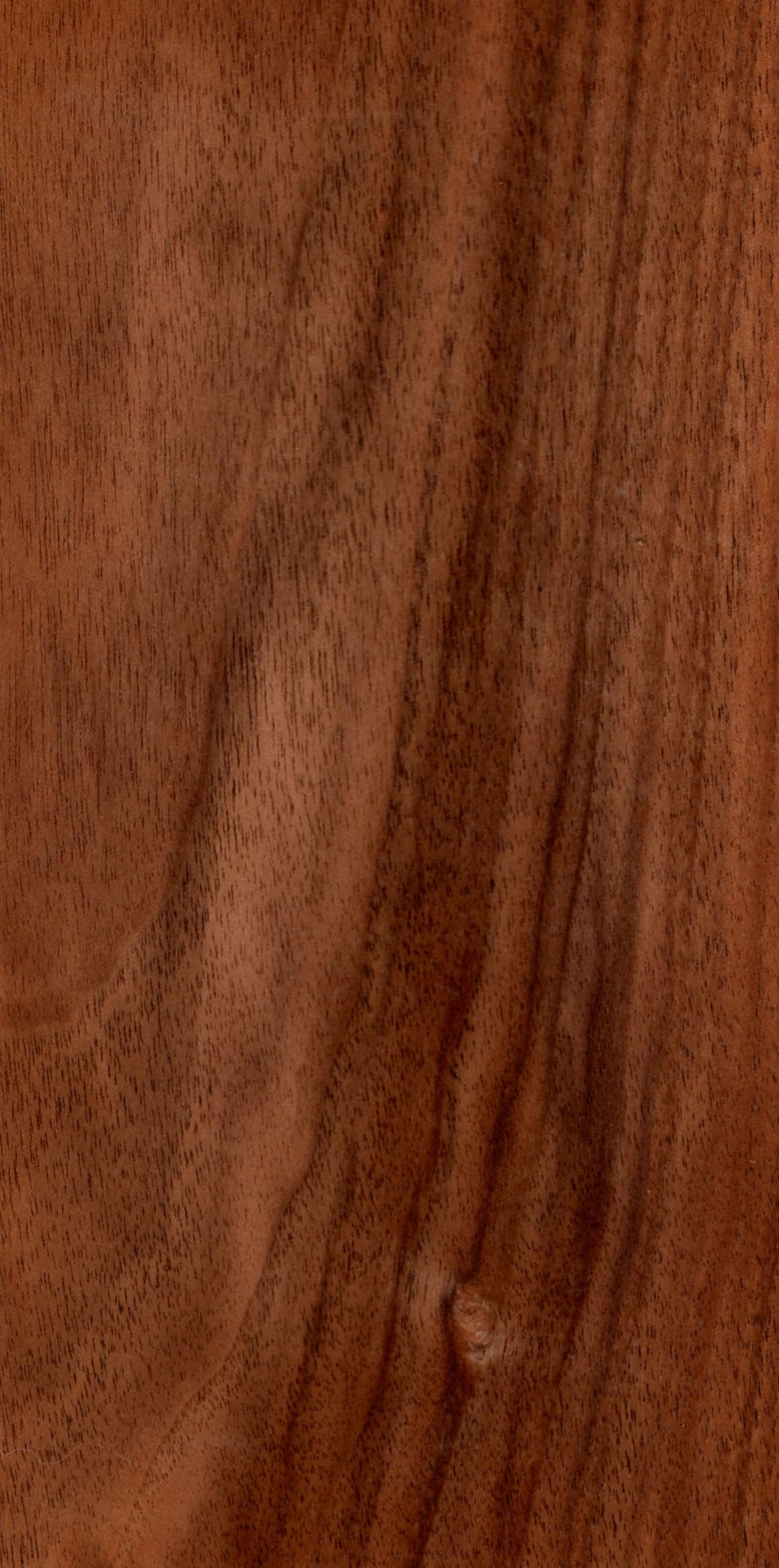
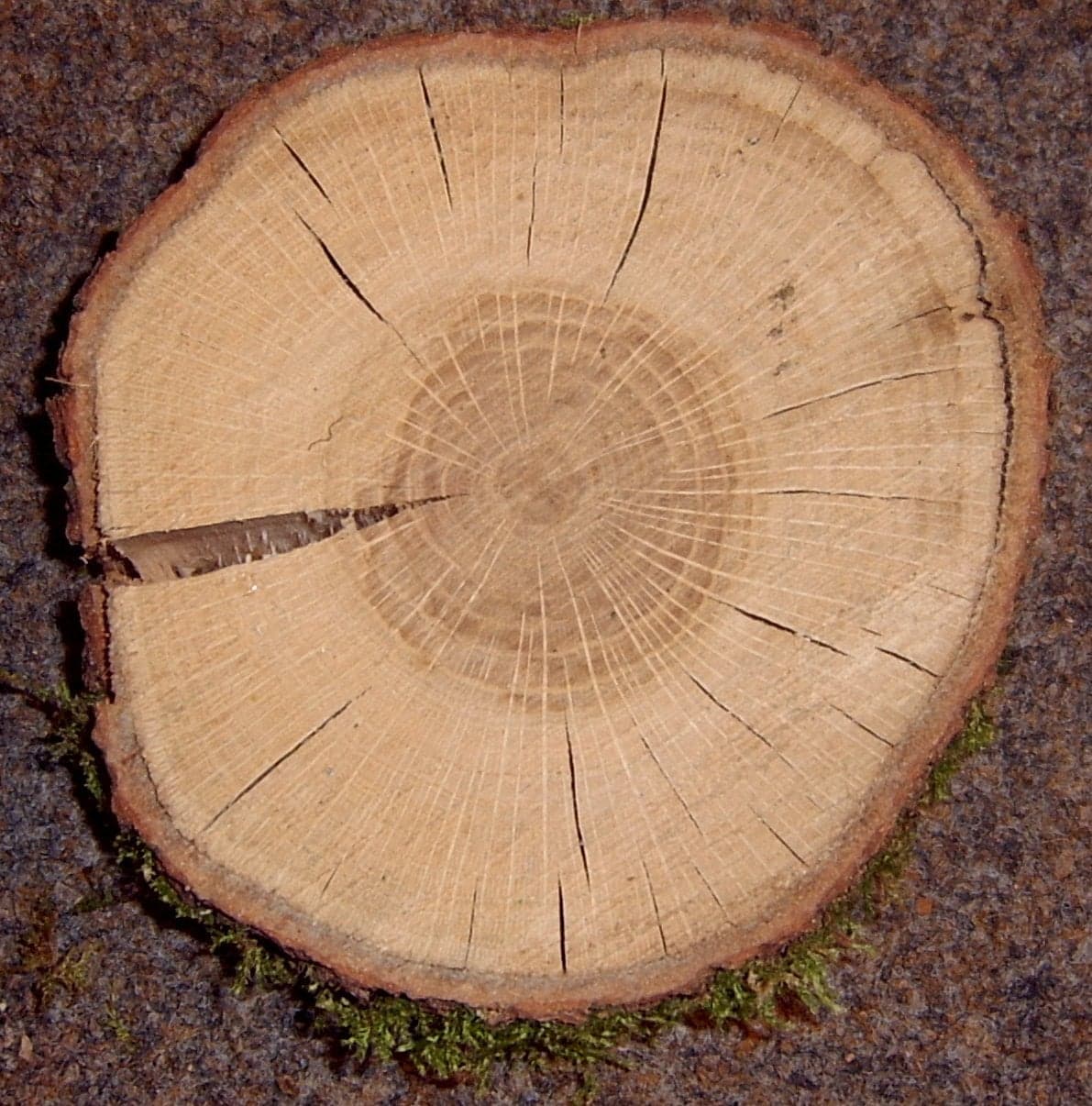
  • Fil du European Walnut

    European Walnut

    Juglans regia

    9 plateaux

  • Fil du European Oak

    European Oak

    Quercus robur

    6 plateaux

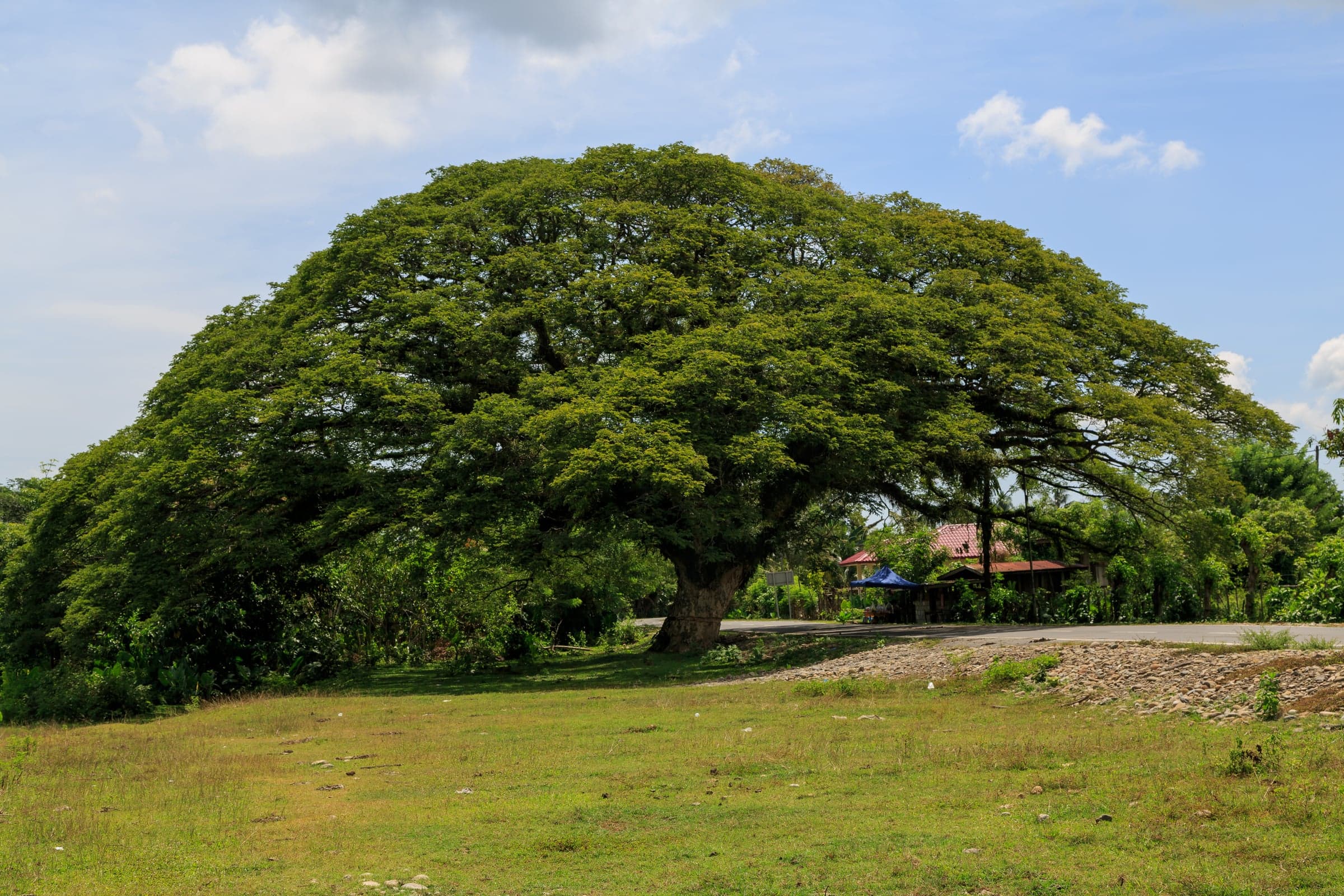
  • Fil du Saman

    Saman

    Samanea saman

    4 plateaux

Soyez informé des arrivages en Hard Maple

Nous vous envoyons un e-mail lorsque de nouveaux plateaux en Hard Maple arrivent chez KORENA. Chaque plateau est unique, mieux vaut donc être prévenu rapidement.

Quelques e-mails par mois. Aucun spam, désabonnement à tout moment.

Aspect du bois

Son aspect

Creamy white sapwood, often with a slight reddish-brown heart. Grain is usually straight and fine, with an even texture that takes detail crisply. A small share of logs throw figure: tight curl (fiddleback) or scattered bird's-eye dots, both highly sought for furniture fronts and instrument backs, including the classic Stradivari violin back. The pale surface yellows gently under UV over time.

  • Creamy white to pale off-white sapwood, the commercial face of the species
  • Light reddish or golden-brown heartwood, usually trimmed out for uniform pale stock
  • Yellows slightly and warmly under UV over months and years
  • Bird's-eye figure: scattered dark dots across a pale field
  • Curly figure: tight chatoyant ripples that shift under raking light
  • Generally straight; sometimes curly or birds-eye figure.

Travail du bois

Son travail en atelier

Hard and dense, so plan tooling accordingly. Saws and planes cleanly with sharp carbide; dull edges burn quickly, especially on router cuts and end-grain work. Turns superbly, one of the finest turning hardwoods available. Sands well once flat. Curly and bird's-eye stock is prone to tear-out under straight knives; use a high cutting angle or finish with a scraper or sander. Glues and screws reliably; pre-drill near edges. Steam-bends adequately, not as freely as Ash or Beech.

Finition

Sands to a glassy surface and finishes beautifully under clear oil, hardwax oil, or lacquer, which lets the figure read. Be honest about stain: Hard Maple is famously blotchy. The dense, tight grain absorbs pigment unevenly, so dye stains and oil stains often land patchy. If you must stain, use a pre-stain conditioner or gel stain and test on offcuts. Most makers leave it clear or lightly toned. A water-pop before finishing helps consistency on figured stock.

Séchage

Tangential shrinkage is high (roughly 9.5–10.5%) against modest radial movement, so the wood is dimensionally lively and prone to cup if rushed. Dry slowly, sticker carefully, and weigh the top of the stack. Once at EMC it stays put well in conditioned interiors. Acclimatise boards for at least a week in the shop before machining.

De combien va-t-il bouger ?

Le bois gonfle et se rétracte en largeur selon que l’air devient plus humide ou plus sec. Estimez le mouvement saisonnier d’un plateau en Hard Maple avant de concevoir les fixations.

Débit
Lieu d’utilisation

Mouvement saisonnier attendu

environ 11,4 mm

Fixez le plateau avec des taquets ou des équerres à trous oblongs, sans colle ni vis trop serrées.

Modèle de retrait linéaire : largeur × (retrait ÷ 28 % de point de saturation des fibres) × variation saisonnière d’humidité. Utilise un retrait tangentiel de 10 % pour le Hard Maple. Il s’agit d’une estimation de conception, pas d’une garantie.

Son prix

Sécurité et origine

  • Cultivé hors d’Europe et importé par des dépôts européens.
  • Statut sur la Liste rouge de l’UICN : évaluation mondiale de la conservation de cette essence.
  • Food-contact safe, this is the wood butcher blocks and chopping boards are built from, and it has no known toxicity in service. Dust is the real concern: maple dust is a documented respiratory sensitiser, and all hardwood dust is IARC Group 1. Run extraction at the source, wear a fitted P3 mask when sanding or routing, and keep the shop clean.

Lire le guide completNotes détaillées sur la figure, l’évolution de la couleur, le travail et la stabilité.+

What Hard Maple actually is#

Acer saccharum is the sugar maple, and it is the wood most kitchen and workshop surfaces should be made from.

The reasoning is specific. It is dense at 705 kg per cubic metre and hard at 6,450 N. It is closed grained, meaning no open pores for moisture and residue to lodge in. It is rated food safe. And it is essentially odourless and tasteless, so it does not transfer flavour.

No other species in this catalogue combines all four. Oak is food safe but open pored. Beech is food safe and closed grained but moves far more. Maple is the reason butchers blocks look the way they do.

Hard maple and soft maple#

This is the most common confusion in maple buying and it matters.

Hard maple is Acer saccharum specifically. Soft maple is a trade term covering several other Acer species, typically around 4,000 N Janka against hard maple's 6,450 N. They look broadly similar and are regularly conflated in listings.

For a decorative panel the difference is minor. For a chopping board, a workbench top or a floor, buying soft maple when you specified hard is a real downgrade. Check the botanical name rather than the trade name.

European Sycamore, Acer pseudoplatanus, is a third relative also sold as maple in some markets, and at 4,680 N it sits between the two.

Questions des acheteurs

Questions fréquentes des acheteurs

Why is Hard Maple the standard for chopping boards?

+

It is dense at 705 kg per cubic metre, hard at 6,450 N, closed grained with no open pores for residue to lodge in, food safe, and almost odourless and tasteless. That combination is why it is the industry standard for butchers blocks and cutting boards, and why it is preferred over oak, which is open pored.

What is the difference between hard and soft maple?

+

Hard maple is Acer saccharum, the sugar maple. Soft maple covers several other Acer species that are lighter and softer, typically around 4,000 N Janka against 6,450 N. They look similar and are frequently confused in sale listings. For a work surface the difference matters a great deal.

What causes curly and birdseye figure?

+

Curly or flame figure is a wave in the grain that produces a rippling chatoyance across the board. Birdseye is a pattern of small swirled eyes whose cause is still not fully explained. Neither is predictable from the standing tree, both occur in a small proportion of trees, and both command large premiums over plain maple.

Does maple stain well?

+

Propriétés mécaniques

Données techniques

Valeurs de référence publiées. Lorsque les sources divergent, la plage est indiquée et la valeur courante sert aux échelles ci-dessus.

Densité (kg/m³)Masse par mètre cube à environ 12 % d’humidité. Un bois plus lourd est généralement plus dur et plus résistant.640–755 kg/m³valeur courante 705 kg/m³
Dureté Janka (N)Force nécessaire pour enfoncer à moitié une bille d’acier dans le bois. Mesure standard de la résistance à l’enfoncement.6,000–7,000 Nvaleur courante 6 450 N
MOR : module de rupture (MPa)Résistance à la flexion : charge à laquelle une poutre casse.100–115 MPa
MOE : module d’élasticité (GPa)Rigidité en flexion : fléchissement d’une étagère ou d’un plateau sous une charge.11.5–13.0 GPa
Retrait radialRetrait perpendiculaire aux cernes, du bois vert au bois anhydre. Les planches sur quartier travaillent dans ce sens.4.5–5.5 %
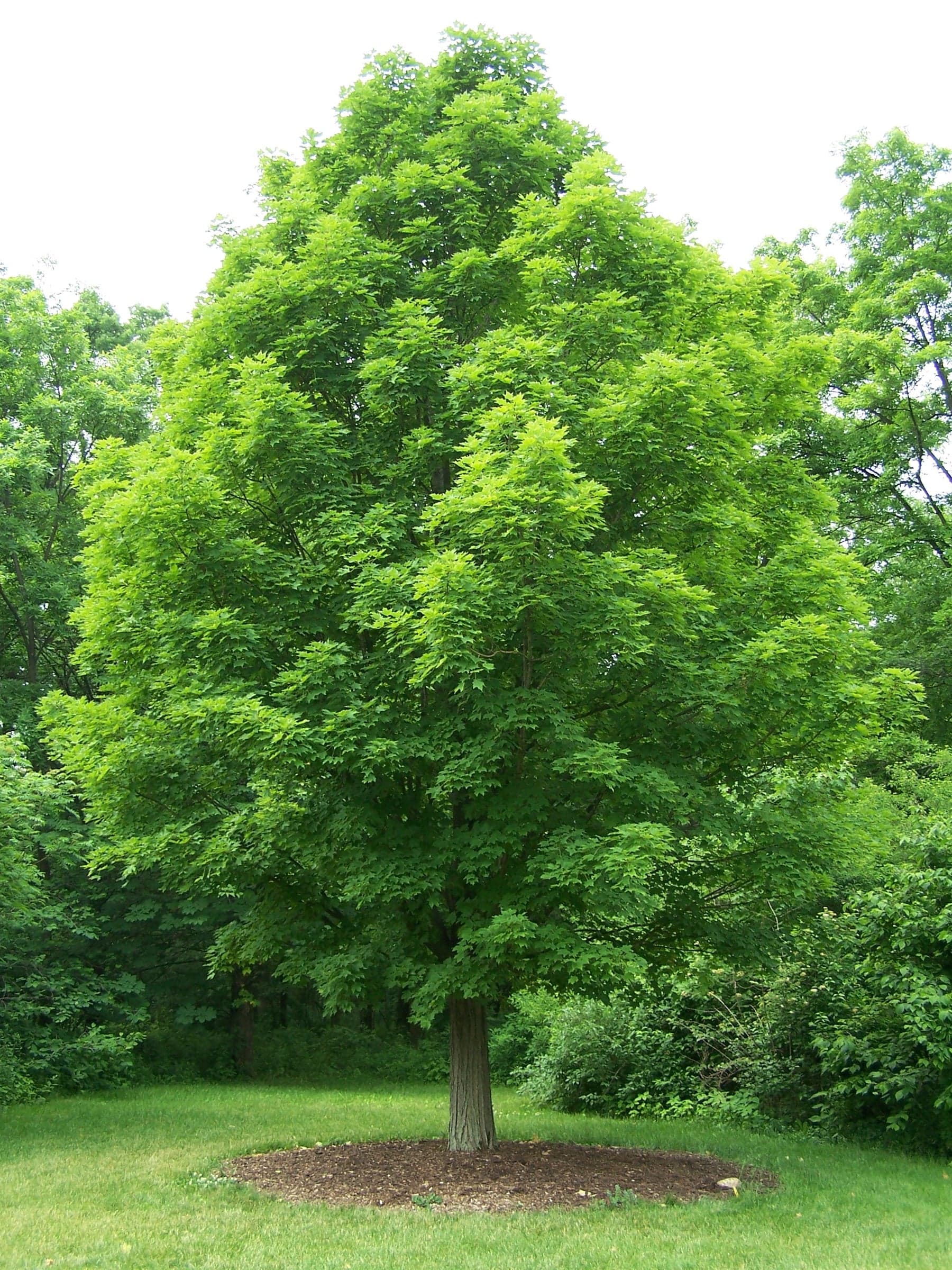
Arbre Hard Maple

Bruce Marlin, via Wikimedia Commons

  • Sports goods: bowling pins, baseball bats, gym floors
  • Atouts

    • Compatible avec les alimentsConvient aux planches, bols et surfaces en contact avec des aliments.
    • Se cintre bienNote de 4 sur 5 pour le cintrage à la vapeur. Accepte des courbes serrées.

    Attention

    Native to eastern North America, Canada and the northern United States, not to Europe. Imported as a furniture-grade hardwood with a long, well-established trade route into the EU. Sometimes sold as Sugar Maple or Rock Maple; all are Acer saccharum.

  • IUCN Least Concern, no CITES listing. Managed commercially across Canada and the northeastern US under long-standing forestry regimes. As a non-EU import it carries longer transport miles than European species and a fuller EUDR due-diligence trail through the supply chain. FSC and PEFC certified stock is widely available. Ask for it.

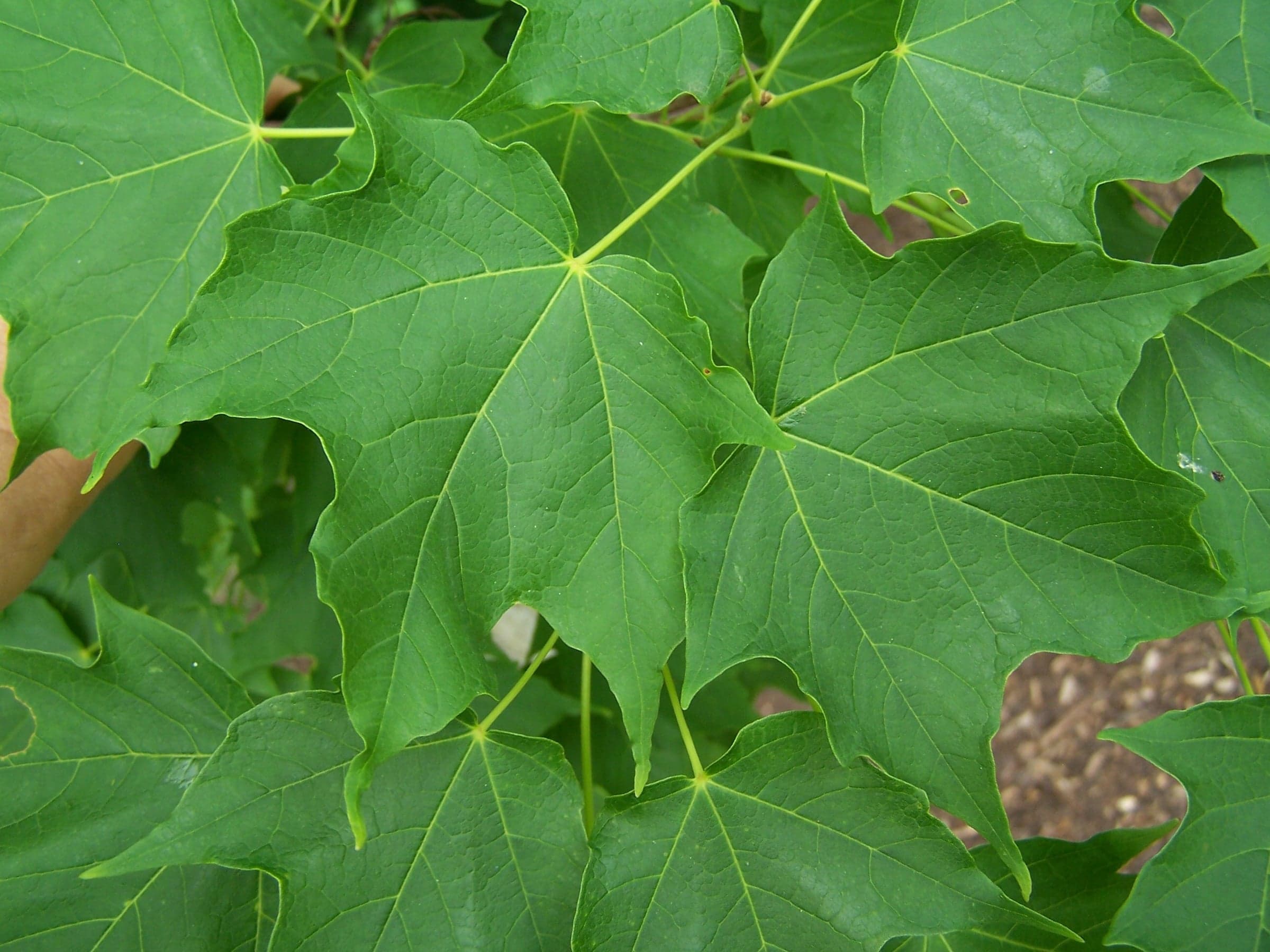
  • Hard Maple: Feuille
    Feuille
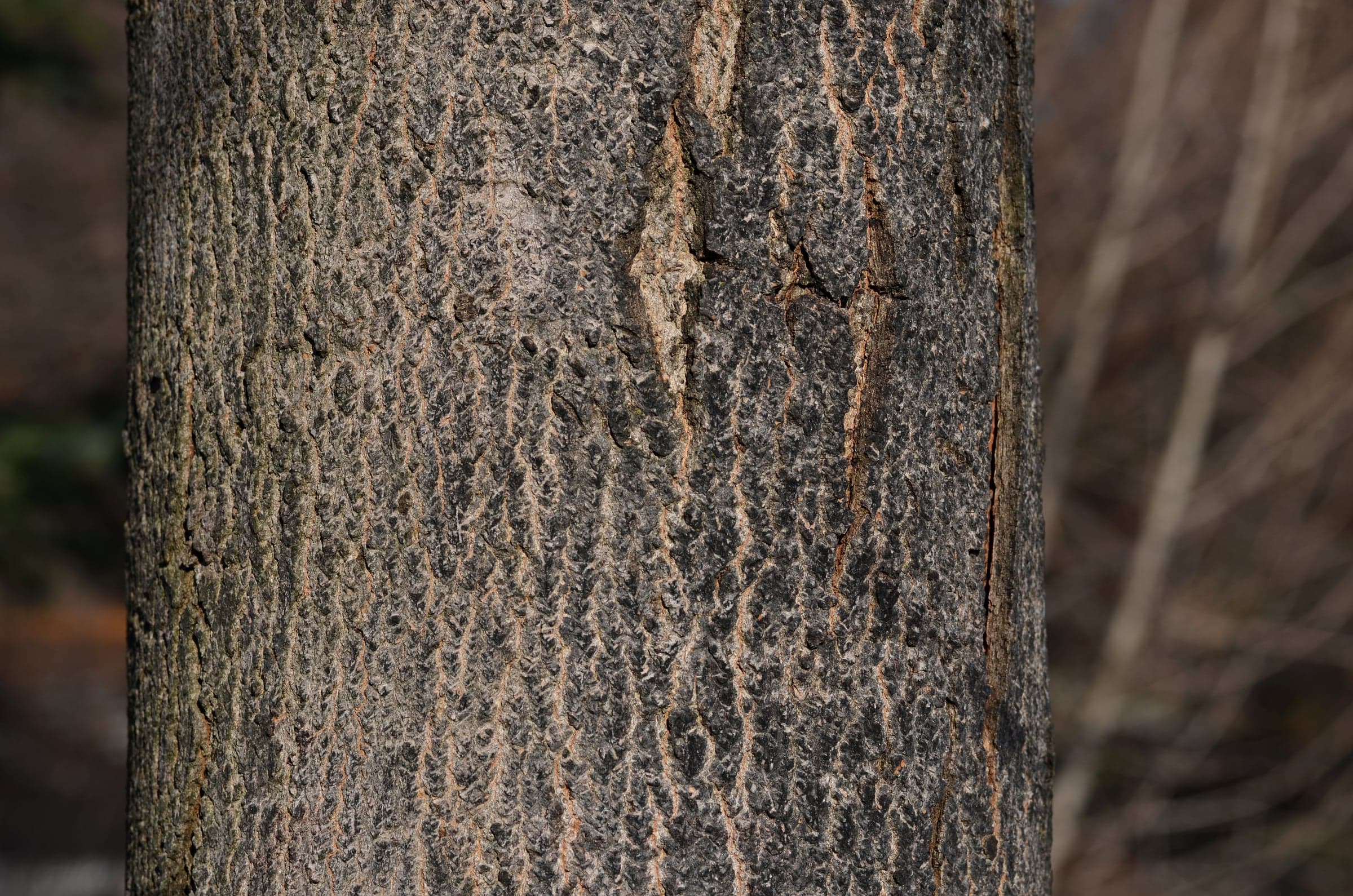
    Hard Maple: Écorce
    Écorce

    The figure premium#

    Plain hard maple is a quiet, pale, almost featureless wood. A small proportion of trees produce figure, and it is priced very differently.

    Curly or flame maple carries a wave in the grain that produces rippling chatoyance shifting with viewing angle. Birdseye maple shows a pattern of small swirled eyes across the surface, and its cause is still not fully explained.

    Neither is predictable from the standing tree, which is why figured maple is expensive: it is found rather than grown.

    The staining problem#

    Maple's main weakness is finishing. The dense closed grain that makes it hygienic makes it absorb stain unevenly, and it blotches badly, particularly on flatsawn faces and in figured stock where the grain wave changes absorption from millimetre to millimetre.

    Pigment stain on curly maple will produce a muddy, patchy result that obscures the very figure you paid for.

    Use a dye rather than a pigment stain, or a gel stain that sits on the surface, or seal first with a thin washcoat. Test on an offcut from the same board every time, because behaviour varies between boards of the same species.

    Most figured maple is best finished clear, with an oil or a water based finish, letting the chatoyance carry the surface.

    At the bench#

    It works cleanly with sharp tools and blunts them at a fair rate. It turns very well, holds crisp detail, glues reliably and takes fastenings securely with pilot holes.

    Figured stock tears out and wants light cuts, a high angle plane or a scraper.

    It sands to a very fine surface, which suits its usual clear finish.

    Movement#

    Volumetric shrinkage of 14.5 percent is on the high side, with tangential at 9.5 percent against radial at 4.5 percent, a wide differential. Flatsawn maple cups.

    For a chopping block this matters less than it sounds, because blocks are usually built as laminated end grain or edge grain constructions where movement is distributed and restrained. For a wide solid top, quartersawn is worth the cost.

    Where Hard Maple is the right answer#

    Chopping boards and butchers blocks, kitchen worktops, workbench tops, flooring, and any decorative work where curly or birdseye figure is the design.

    It is the wrong answer outdoors, being decay class 5, and wrong wherever a rich stained colour is the goal.

    Sourcing and EUDR#

    Not CITES listed and assessed as Least Concern. Native to eastern North America, so European buyers are usually importing, with the longer documentation chain that implies. Where a pale dense European alternative is acceptable, European Sycamore or beech cover similar ground with a shorter chain, though neither matches hard maple for a food surface.

    Spalted maple#

    Because maple is pale and perishable, it spalts readily, and spalted maple is a category in its own right.

    Spalting is the early stage of fungal decay. Different fungi competing within a log lay down black zone lines where their territories meet, producing fine dark tracery across a pale background. The effect is unlike any grain figure and cannot be imitated.

    The difficulty is that spalting is decay, and it does not stop by itself. Timber left too long goes soft, punky and structurally useless. Usable spalted maple is caught at a specific moment and then dried to kill the fungus.

    Buying spalted stock means checking soundness rather than just admiring the pattern. Press a fingernail into the palest zones: if it sinks easily the wood has gone too far. Punky areas can be stabilised with resin for turning but are not suitable for a work surface.

    Spalted dust also carries a higher fungal spore load than sound timber, so extraction and a mask matter more than usual.

    End grain against edge grain blocks#

    For a chopping block, the construction matters as much as the species.

    End grain blocks present the cut fibre ends upward, so a knife edge parts the fibres rather than severing them and the surface closes behind the cut. They are kinder to knives and self healing, but they absorb more moisture and need more maintenance.

    Edge grain blocks are simpler to build, more dimensionally stable and easier to keep dry, at the cost of showing knife marks sooner.

    Both work in hard maple. End grain is the traditional butchers block and the better performing surface if you will look after it.

    Poorly, and this is its main finishing weakness. The dense closed grain absorbs pigment unevenly and blotches badly, particularly on flatsawn faces and in figured stock. Use a dye, a gel stain, or a conditioner first, and always test on an offcut from the same board.

    Can it be used outdoors?

    +

    No. It is rated decay class 5, perishable, and offers no meaningful resistance to rot or insect attack. Maple is strictly interior. For exterior work choose robinia, oak or sweet chestnut.

    Retrait tangentielRetrait dans le sens des cernes. Les planches sur dosse et la plupart des plateaux travaillent dans ce sens.
    9.5–10.5 %
    Retrait volumiqueVariation totale de volume du bois vert au bois anhydre. Une valeur basse indique une meilleure stabilité.14.5–16.0 %
    Durabilité naturelle (EN 350)Norme européenne de résistance naturelle à la pourriture, de 1 (très durable) à 5 (périssable).Class 5 — Perishable

    Références

    • The Wood Database(consultée le 2026-05-09)
    • USDA FPL Wood Handbook FPL-GTR-190 (2010)(consultée le 2026-05-09)
    • Meier, E. — WOOD! Identifying and Using Hundreds of Woods Worldwide (2015)(consultée le 2026-05-09)

    En bref

    Les niveaux utilisent les mêmes plages pour toutes les essences répertoriées par KORENA, ce qui permet de les comparer directement. La valeur mesurée figure sous chaque niveau.
    DuretéRésistance aux chocs et à l’usureDur

    Dureté Janka : 6 450 N

    30 % plus dur que le chêne européen

    PoidsPoids d’un plateau à souleverLourd

    705 kg/m³

    StabilitéFaible mouvement au fil des saisonsTravaille beaucoup

    15,3 % de retrait volumique

    TravailSciage, rabotage, ponçage, collageModéré

    3,7 / 5 de moyenne à l’atelier

    Usage extérieurRésistance naturelle à la pourriture, EN 350Intérieur uniquement

    EN 350 classe 5

    • Sciage · BonQualité de la coupe et usure des lames.1 = difficile · 5 = excellent
    • Rabotage · BonLissage de la surface et risque d’arrachement.1 = difficile · 5 = excellent
    • Ponçage · Très bonRapidité du ponçage sans encrasser le papier.1 = difficile · 5 = excellent
    • Tournage · Excellente aptitudeQualité de coupe et de finition au tour.1 = difficile · 5 = excellent
    • Sculpture · BonNetteté des détails obtenus à la gouge.1 = difficile · 5 = excellent
    • Collage · Très bonFiabilité des assemblages collés.1 = difficile · 5 = excellent
    • Tenue des vis / clous · Très bonTenue des vis et des clous sans fendre le bois.1 = difficile · 5 = excellent
    • Cintrage à la vapeur · Très bonAptitude à prendre une courbe après étuvage.1 = difficile · 5 = excellent

    Aucune référence de marché n’est encore disponible pour le Hard Maple. Chaque plateau KORENA est tarifé individuellement par son dépôt partenaire.

    Ne convient pas à un usage extérieur sans traitement
    Sa durabilité naturelle correspond à la classe 5 sur 5 de la norme EN 350. Gardez-le à l’intérieur ou protégez-le par une finition entretenue.
  • Travaille plus que la plupart des boisLes plateaux larges nécessitent des taquets ou des fixations à trous oblongs et un espace de mouvement. Utilisez le calculateur ci-dessous.
  • Poussière irritanteUtilisez un système d’aspiration et portez un masque lors du ponçage ou de l’usinage.
  • Touchez une étiquette pour afficher les détails.