KORENA
ΞυλείαFinished piecesΥλικάΑποθήκεςΗμερολόγιο

Λάβετε ειδοποίηση

Κάθε τάβλα είναι μοναδική. Όταν πωληθεί, δεν υπάρχει άλλη. Σας στέλνουμε email όταν καταχωρίζονται νέα κομμάτια: νέες αφίξεις, νέα είδη και τάβλες που ταιριάζουν στην περιγραφή έργου.

Λίγα email τον μήνα. Χωρίς ανεπιθύμητα μηνύματα, απεγγραφή ανά πάσα στιγμή.

KORENA, εκλεκτή σκληρή ξυλεία

Ένα κομμάτι κάθε φορά.

Ελεγμένη εκλεκτή σκληρή ξυλεία, ένα κομμάτι κάθε φορά. Κάθε τάβλα φωτογραφίζεται, μετριέται και αποστέλλεται από τη συνεργαζόμενη αποθήκη με διαβατήριο ξυλείας.

Αγορά

  • Περιήγηση στα προϊόντα
  • Αρχείο πωλημένων
  • Παρακολούθηση παραγγελίας

Μάθετε

  • Περιοδικό
  • Οδηγοί ειδών
  • Γλωσσάρι
  • Σύγκριση
  • Συντάκτες

Βοήθεια

  • Σχετικά
  • Πώς λειτουργεί
  • Γίνετε συνεργαζόμενη αποθήκη
  • Βρείτε μια τάβλα
  • Υποστήριξη
  • Πρότυπα εγγράφων
  • Τύπος

Αγορά

  • Όροι πώλησης
  • Δικαίωμα υπαναχώρησης
  • Επιστροφές και εγγύηση
  • Αποστολή και παράδοση

Εμπιστοσύνη

  • Πολιτική απορρήτου
  • Πολιτική cookies
  • Προέλευση ξυλείας και EUDR
  • Προσβασιμότητα

Νομικά στοιχεία

  • Νομική ειδοποίηση / Στοιχεία εταιρείας
  • Αποδεκτή χρήση
  • Πνευματική ιδιοκτησία και περιεχόμενο

© 2026 KORENA. Με επιφύλαξη παντός δικαιώματος.

Τη διαχείριση έχει η Martial Labs Ltd. (BG, EIK 207453941). Η KORENA είναι εμπορική ονομασία της Martial Labs Ltd.

Σεβόμαστε το απόρρητό σας

Χρησιμοποιούμε απαραίτητα cookies για τη λειτουργία του ιστοτόπου. Με την άδειά σας θα χρησιμοποιούμε επίσης cookies για αναλύσεις, εξατομικευμένο περιεχόμενο και διαφημίσεις. Μπορείτε να αλλάξετε την επιλογή σας ανά πάσα στιγμή στη σελίδα προτιμήσεων συγκατάθεσης. Δείτε την πολιτική cookies και την πολιτική απορρήτου.

  1. Αρχική
  2. /
  3. Είδη
  4. /
  5. Aleppo Pine

Pinus halepensis

Aleppo Pine

The pine of dry Mediterranean coasts. Irregular, resinous and awkward to machine, with the lowest measured shrinkage of anything KORENA lists.

  • Καλλιεργείται και υλοτομείται στην Ευρώπη.
  • Βοτανική ομάδα. Τα μαλακά ξύλα προέρχονται από κωνοφόρα, τα σκληρά από πλατύφυλλα δέντρα.
  • Η βοτανική οικογένεια στην οποία ανήκει το είδος.
Ειδοποιήστε με όταν φτάσειΕίδος αναφοράς. Δεν υπάρχουν κομμάτια σε απόθεμα αυτήν τη στιγμή.
  • Καταλληλότητα για το έργο
  • Σε απόθεμα
  • Όψη
  • Κατεργασία
  • Κίνηση
  • Τιμή
  • Ασφάλεια και προμήθεια
  • Ερωτήσεις
  • Τεχνικά στοιχεία

Είναι κατάλληλο για το έργο σας;

Ιδανικό για

  • Rustic furniture
  • Panelling
  • Carcass work
  • Shelving
  • Decorative slabs

Πλεονεκτήματα

  • Πολύ σταθερόΜικρή εποχική κίνηση. Κατάλληλο για φαρδιές επιφάνειες και εφαρμοστές ενώσεις.

Προσέξτε

  • Η σκόνη προκαλεί ερεθισμόΧρησιμοποιείτε σύστημα αναρρόφησης και φοράτε μάσκα κατά τη λείανση ή τη μηχανική κατεργασία.

Πατήστε μια ετικέτα για λεπτομέρειες.

Δεν υπάρχει Aleppo Pine στην τρέχουσα παρτίδα

Παρόμοια είδη σε απόθεμα

Δεν υπάρχει Aleppo Pine αυτήν τη στιγμή. Αυτά τα είδη ταιριάζουν στα ίδια έργα και υπάρχουν διαθέσιμα κομμάτια.

  • Νερά European Oak

    European Oak

    Quercus robur

    6 κομμάτια

  • Νερά European Walnut

    European Walnut

    Juglans regia

    9 κομμάτια

  • Νερά Saman

    Saman

    Samanea saman

    4 κομμάτια

Ειδοποιήσεις για Aleppo Pine

Σας στέλνουμε email όταν φτάνουν στην KORENA νέες τάβλες Aleppo Pine. Κάθε κομμάτι είναι μοναδικό, γι’ αυτό η έγκαιρη ειδοποίηση έχει σημασία.

Λίγα email τον μήνα. Χωρίς ανεπιθύμητα μηνύματα, απεγγραφή ανά πάσα στιγμή.

Όψη ξυλείας

Πώς φαίνεται

Pale yellow to light brown, often with an orange tint in the heartwood, against wide pale sapwood. Growth is fast and irregular where conditions are dry, so ring width varies noticeably within a single board and the grain is frequently wavy rather than straight. Knots are common. It reads as a rougher, more variable wood than the northern pines.

  • Pale yellow to light brown with an orange tint
  • Wide and irregular growth rings reflecting drought driven growth
  • Frequently wavy grain rather than straight
  • Straight grain with irregular ring width from drought-driven growth; frequently wavy. Coarse texture, pale yellow to light brown with an orange tint against wide pale sapwood.

Κατεργασία

Κατεργασία

  • Πρίση · ΚαλήΠόσο καθαρά κόβεται και πόσο καταπονεί τις λάμες.1 = δύσκολη · 5 = εξαιρετική

Resinous and variable. The wavy and irregular grain typical of drought grown stock causes tear-out where the grain direction reverses, which it does often. Light cuts, sharp tooling and a scraper for the final surface are the practical answer. Resin loads blades and abrasives as it does in the other Mediterranean pines. It glues acceptably once surfaces are clean of resin.

Φινίρισμα

Wipe with denatured alcohol or acetone before finishing to lift surface resin. Pigment stains blotch, as in all the pines, so a dye or a clear finish is safer. Seal knots with shellac before painting. The orange tint in the heartwood deepens with light exposure.

Ξήρανση

Prone to distortion because the grain is irregular and ring width uneven, so expect more spring and bow on ripping than in a northern pine. Measured shrinkage from the cited study is comparatively low at around 8.3 percent volumetric, with radial at 3.8 and tangential at 4.8 percent, and the unusually narrow gap between those two figures suggests good dimensional behaviour once dry. Those values come from Algerian material and regional variation in this species is wide.

Πόσο θα κινηθεί;

Το ξύλο διογκώνεται και συρρικνώνεται κατά πλάτος καθώς ο αέρας γίνεται πιο υγρός ή πιο ξηρός. Υπολογίστε την εποχική κίνηση μιας επιφάνειας Aleppo Pine πριν σχεδιάσετε τις συνδέσεις.

Τομή
Πού θα τοποθετηθεί

Αναμενόμενη εποχική κίνηση

περίπου 5,4 mm

Στερεώστε την επιφάνεια με συνδέσμους ή στηρίγματα με εγκοπές, όχι με κόλλα ή σφιχτές βίδες.

Μοντέλο γραμμικής συρρίκνωσης: πλάτος × (συρρίκνωση ÷ 28 % σημείο ινοκόρου) × εποχική μεταβολή υγρασίας. Χρησιμοποιεί 4,76 % εφαπτομενική συρρίκνωση για Aleppo Pine. Πρόκειται για εκτίμηση σχεδιασμού, όχι εγγύηση.

Πόσο κοστίζει

Δεν υπάρχει ακόμη τιμή αναφοράς αγοράς για Aleppo Pine. Κάθε κομμάτι KORENA τιμολογείται ξεχωριστά από τη συνεργαζόμενη αποθήκη όπου βρίσκεται.

Ασφάλεια και προμήθεια

  • Καλλιεργείται και υλοτομείται στην Ευρώπη.
  • Working with pine has been reported to cause allergic skin reactions and asthma-like symptoms in some people. This species is resinous, so skin contact sensitisation over repeated exposure is a realistic risk. Gloves and good extraction are appropriate.

  • Pinus halepensis is the characteristic pine of the Mediterranean basin, growing from Spain and southern France across Italy, Greece and the Balkans to North Africa and the Levant. It tolerates drought and poor limestone soils better than any other pine here, which is why it dominates dry coastal landscapes and is planted heavily for erosion control.

  • Not listed in the CITES Appendices. Aleppo Pine is abundant across the Mediterranean and widely planted for erosion control on degraded land, so supply is not constrained. Fire is the dominant pressure on these forests, and large burn events regularly push salvage material into regional markets. The species is fire adapted and regenerates readily, but salvage stock should be identified as such.

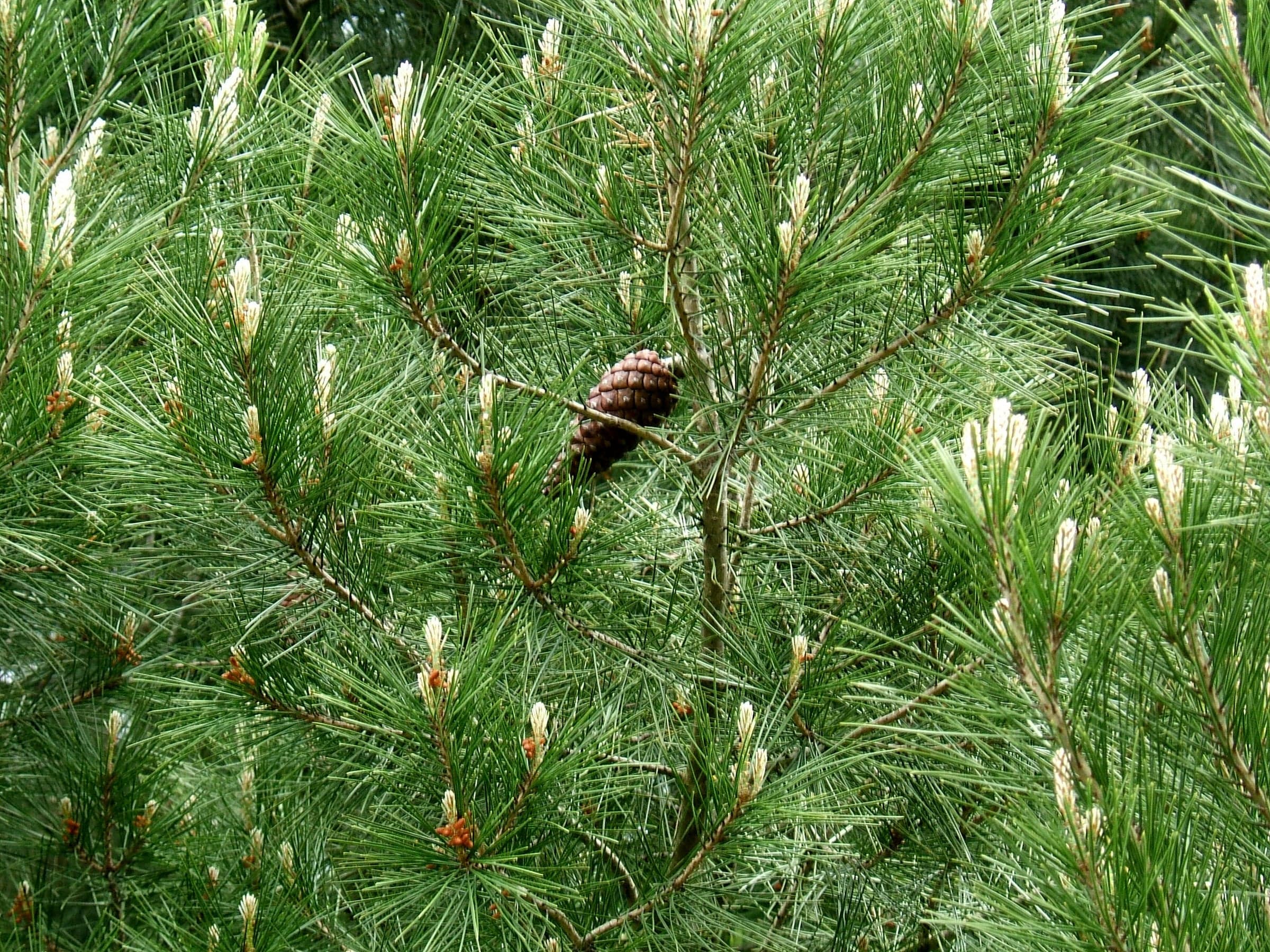
Aleppo Pine: Φύλλο
Φύλλο
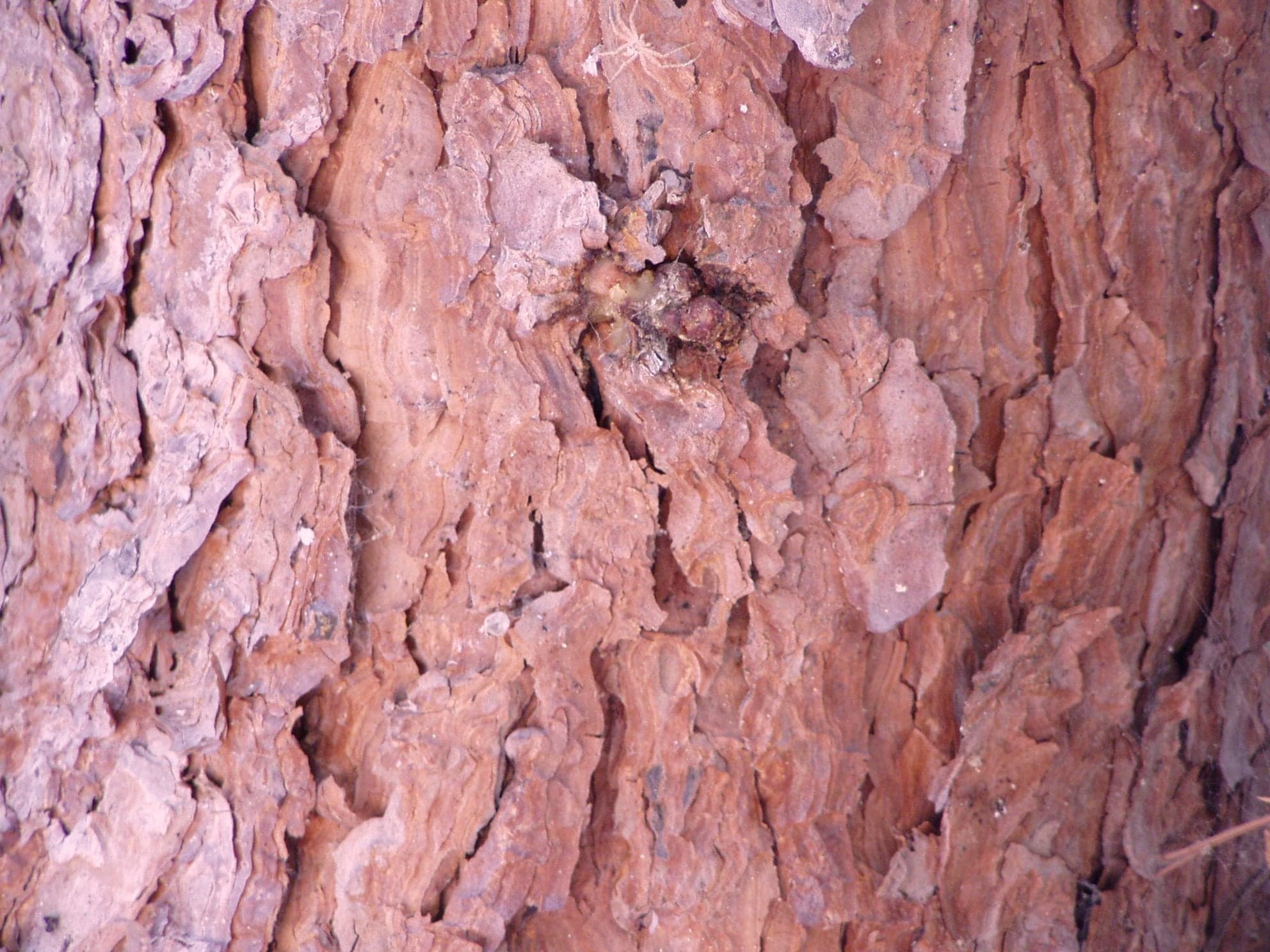
Aleppo Pine: Φλοιός
Φλοιός
Διαβάστε τον πλήρη οδηγόΑναλυτικές σημειώσεις για τα σχέδια των νερών, την αλλαγή χρώματος, την κατεργασία και τη σταθερότητα.+

What Aleppo Pine actually is#

Pinus halepensis is the pine you have seen on every dry Mediterranean hillside, from Spain and southern France across Italy, Greece and the Balkans to North Africa and the Levant. It tolerates drought and thin limestone soils better than any other pine in this catalogue, which is why it dominates degraded coastal landscapes and is planted heavily for erosion control.

That toughness in the field translates into an awkward timber. Growing under water stress produces irregular ring width, frequently wavy grain, and a lot of knots. It is a rougher and more variable wood than the northern pines, and it should be chosen for what it looks like rather than in spite of it.

What the numbers do and do not cover#

This species has partial data, and the gaps are worth explaining.

Density is listed at 540 kg per cubic metre, which sits between Maritime Pine at 500 and Scots Pine at 550. Modulus of rupture and shrinkage are also listed. All of these come from a single peer-reviewed study of Algerian material, cited on the species record.

There is no Janka hardness value and no elastic modulus. The general reference works do not publish a Janka figure for this species, and the study that measured stiffness did so under EN 310, a panel testing standard whose results are not comparable to the clear-wood values published for the other species here. Presenting 17.5 GPa next to Scots Pine at 10.08 GPa would imply a stiffness ranking that the test basis does not support, so the field is left empty rather than filled misleadingly.

There is also no durability rating, which matters practically: it means there is no sourced basis for recommending this wood outdoors.

The shrinkage figure is the interesting one#

The cited study measured volumetric shrinkage at around 8.3 percent, radial at 3.8 percent and tangential at 4.8 percent. That volumetric figure is the lowest in the entire KORENA catalogue, well below Maritime Pine at 14.4 percent.

More important than the headline number is the gap between radial and tangential. Cupping in a flatsawn board is driven by the difference between those two, and most species here run a ratio close to two to one. Aleppo Pine at 3.8 against 4.8 is far closer to one to one, which predicts unusually good behaviour across a wide flatsawn face.

Two caveats. The values come from Algerian material and this species varies widely across a very large range. And low shrinkage does not compensate for irregular grain, which causes its own distortion on drying regardless of how little the wood shrinks overall.

At the bench#

Expect tear-out. The wavy and irregular grain reverses direction within a single pass more often than in a northern pine, and a heavy cut will lift fibres wherever it does.

The working method that suits this wood is light cuts, sharp tooling, and a final surface produced with a card scraper or a high angle plane rather than by machining flat in one go. A helical cutterhead earns its cost here.

Resin loads blades and abrasives at roughly the level of Maritime Pine, which is to say constantly. Clean blades between operations and treat sandpaper as consumable. Wipe joint faces with acetone before glue-up, because resin on a jointed surface will compromise the bond.

Finishing#

Solvent wipe first, as with the other resinous Mediterranean pines: denatured alcohol or acetone, allowed to flash off, before any oil goes on. Skipping it produces patchy curing that only becomes visible after the work is finished.

Pigment stains blotch, so use a dye or leave it clear. Seal every knot with shellac before a painted finish. The orange tint in the heartwood deepens with light exposure.

Where Aleppo Pine is the right answer#

Rustic furniture, panelling, carcass work, shelving and decorative slabs where the irregular figure and knot pattern are wanted, and where the excellent flatsawn stability is useful.

It is the wrong answer for fine work, for anything requiring a calculated load path given the missing stiffness data, and for exterior use, where no durability rating exists to support the decision.

Sourcing and EUDR#

Not listed in the CITES Appendices. Supply is not constrained: the species is abundant across the Mediterranean and planted extensively on degraded land. Fire is the dominant pressure on these forests, and large burn events regularly push salvage volumes into regional markets. Aleppo Pine is fire adapted and regenerates readily, so salvage material is legitimate, but it should be identified rather than discovered. KORENA listings record the originating yard and region.
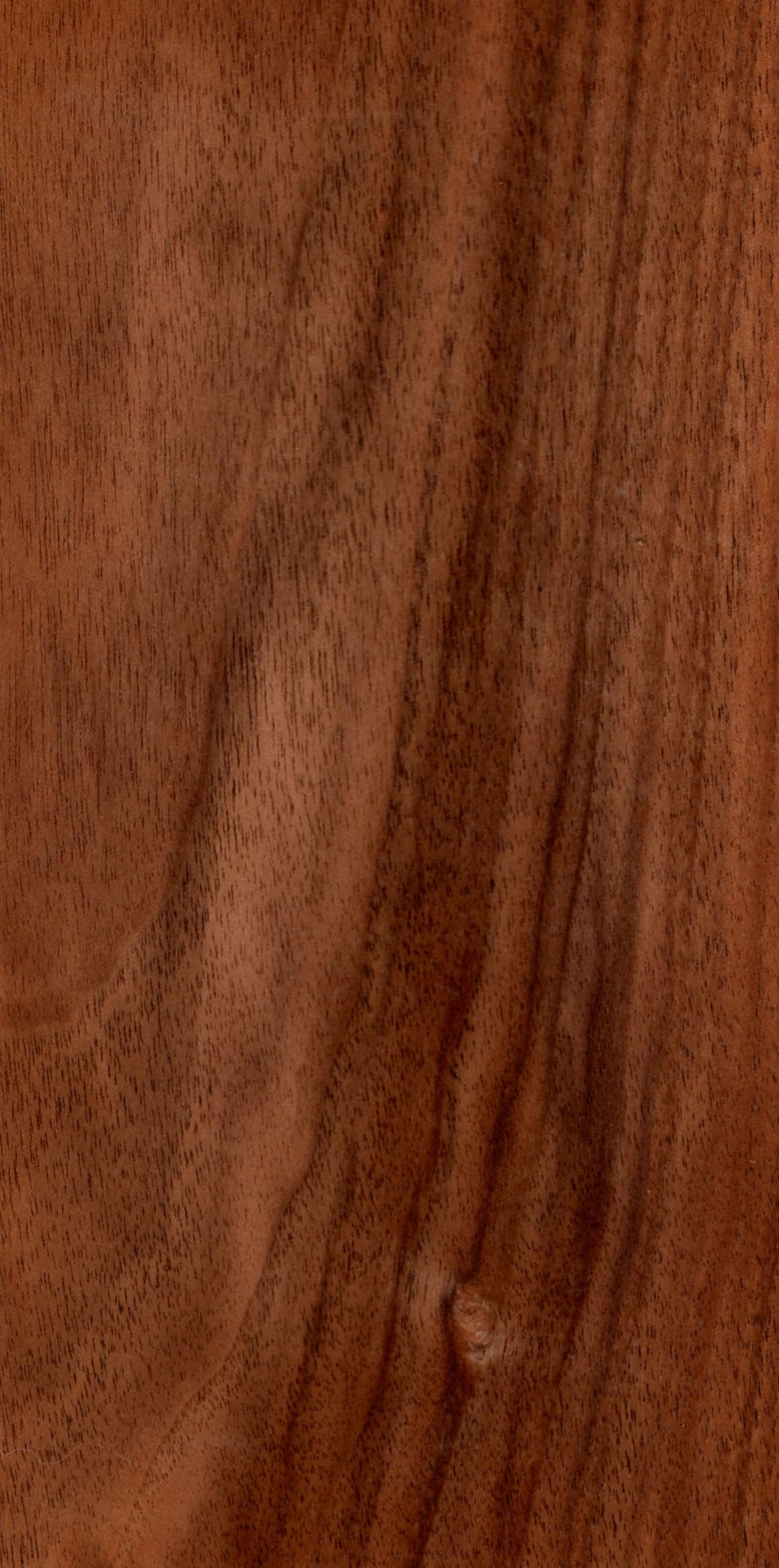
Ερωτήσεις αγοραστών

Ερωτήσεις αγοραστών

Why is there no Janka hardness listed for Aleppo Pine?

+

KORENA publishes a figure only where a cited source supports it. The general reference works do not carry a Janka value for Pinus halepensis, and the one peer-reviewed dataset available covers density, bending strength and shrinkage but not hardness. Rather than borrow a number from another Mediterranean pine, the field is left empty. Density is listed at 540 kg per cubic metre, which places it between Maritime Pine and Scots Pine.

How stable is it?

+

Better than its rough appearance suggests. The cited study measured volumetric shrinkage at around 8.3 percent, the lowest figure in this catalogue, with radial at 3.8 and tangential at 4.8 percent. That narrow gap between radial and tangential is what governs cupping, and it is unusually favourable. The caveat is that these values come from Algerian material and this species varies widely across its range.

Why does it tear out so much when I plane it?

+

Drought driven growth produces irregular ring width and frequently wavy grain, so the grain direction reverses within a single pass more often than in a northern pine. Take light cuts, keep tooling sharp, and produce the final surface with a scraper or a high angle plane rather than trying to machine it flat in one go.

Is the bending strength figure really that high?

+

The cited study reports 116.4 MPa modulus of rupture for clear wood specimens under DIN 52186, which is higher than Scots Pine at 83.3 MPa and worth treating with appropriate care. It was measured on defect free samples of Algerian material, and the same paper notes that defects reduce mechanical properties by roughly 11 to 15 percent. Real boards have knots.

Can it be used outdoors?

+

No durability rating is established for this species in the sources KORENA cites, so there is no honest basis for recommending it outdoors. Mediterranean pines generally are not durable untreated. European Larch is the species in this catalogue with a sourced durability rating suitable for exterior use.

Μηχανικές ιδιότητες

Τεχνικά στοιχεία

Δημοσιευμένες τιμές αναφοράς. Όπου οι πηγές διαφωνούν, εμφανίζεται το εύρος και η τυπική τιμή χρησιμοποιείται στις παραπάνω κλίμακες.

Πυκνότητα (kg/m³)Μάζα ανά κυβικό μέτρο σε υγρασία περίπου 12 %. Το βαρύτερο ξύλο είναι συνήθως σκληρότερο και ισχυρότερο.500–580 kg/m³τυπική τιμή 540 kg/m³
MOR: μέτρο θραύσης (MPa)Αντοχή σε κάμψη: το φορτίο στο οποίο σπάει μια δοκός.116 MPa
Ακτινική συρρίκνωσηΣυρρίκνωση εγκάρσια προς τους αυξητικούς δακτυλίους, από χλωρό έως πλήρως ξηρό ξύλο. Έτσι κινούνται οι ακτινικά πρισμένες τάβλες.3.8 %
Εφαπτομενική συρρίκνωσηΣυρρίκνωση κατά μήκος των αυξητικών δακτυλίων. Έτσι κινούνται οι εφαπτομενικά πρισμένες τάβλες και οι περισσότερες τάβλες φυσικής ακμής.4.8 %
Ογκομετρική συρρίκνωσηΣυνολική μεταβολή όγκου από χλωρό έως πλήρως ξηρό ξύλο. Η χαμηλότερη τιμή σημαίνει μεγαλύτερη σταθερότητα.8.3 %

Πηγές

  • Bourahla et al. — The physicomechanical and thermal properties of Algerian Aleppo pine (Pinus halepensis) wood, iForest 15: 106-111 (2022). Clear-wood specimens; density per NF B51-005, bending per DIN-52186, shrinkage per NF B51-006.(πρόσβαση στις 2026-08-12)

Με μια ματιά

Τα επίπεδα χρησιμοποιούν σταθερά εύρη για κάθε είδος που διαθέτει η KORENA, ώστε να συγκρίνονται άμεσα. Η μετρημένη τιμή εμφανίζεται κάτω από καθένα.
ΒάροςΠόσο βαριά είναι μια τάβλα κατά την ανύψωσηΕλαφρύ

540 kg/m³

ΣταθερότηταΠόσο λίγο κινείται με τις εποχέςΠολύ σταθερό

8,3 % ογκομετρική συρρίκνωση

ΚατεργασίαΠρίση, πλάνισμα, λείανση, κόλλησηΑπαιτητική

3,1 / 5 μέσος όρος κατεργασίας

Πλάνισμα · Καλή
Πόσο λεία επιφάνεια αφήνει και πόσο ξεφτίζει.
1 = δύσκολη · 5 = εξαιρετική
  • Λείανση · ΜέτριαΠόσο γρήγορα λειαίνεται χωρίς να φράζει το γυαλόχαρτο.1 = δύσκολη · 5 = εξαιρετική
  • Τόρνευση · ΚαλήΠώς κόβεται και φινίρεται στον τόρνο.1 = δύσκολη · 5 = εξαιρετική
  • Σκάλισμα · ΚαλήΠόσο καθαρά διατηρεί τις λεπτομέρειες κάτω από τη σμίλη.1 = δύσκολη · 5 = εξαιρετική
  • Κόλληση · Πολύ καλήΠόσο αξιόπιστα συγκρατούν οι κολλητές ενώσεις.1 = δύσκολη · 5 = εξαιρετική
  • Συγκράτηση βίδας / καρφιού · Πολύ καλήΠόσο καλά συγκρατεί βίδες και καρφιά χωρίς να σχίζεται.1 = δύσκολη · 5 = εξαιρετική
  • Κάμψη με ατμό · ΚαλήΠόσο καλά παίρνει καμπύλες μετά την κατεργασία με ατμό.1 = δύσκολη · 5 = εξαιρετική