KORENA
TräFinished piecesTillbehörPartnerlagerTräjournal

Få besked

Varje planka är unik. När den säljs är den borta. Vi skickar e-post när nya exemplar läggs ut: nya leveranser, nya träslag och brädor som matchar en projektbeskrivning.

Några e-postmeddelanden i månaden. Ingen skräppost, avregistrera dig när som helst.

KORENA, förstklassigt lövträ

Ett stycke i taget.

Verifierat förstklassigt lövträ, sålt stycke för stycke. Varje planka fotograferas, mäts och skickas från partnerlagret med ett träpass.

Handla

  • Bläddra bland produkter
  • Sålda plankor
  • Spåra beställning

Lär dig

  • Artiklar
  • Guider om träslag
  • Ordlista
  • Jämför
  • Författare

Hjälp

  • Om oss
  • Så fungerar det
  • Bli partnerlager
  • Hitta en planka
  • Kundtjänst
  • Dokumentmallar
  • För press

Köp

  • Köpvillkor
  • Ångerrätt
  • Returer och garanti
  • Frakt och leverans

Trygghet

  • Integritetspolicy
  • Kakpolicy
  • Träets ursprung och EUDR
  • Tillgänglighet

Företagsuppgifter

  • Juridisk information / Företagsuppgifter
  • Tillåten användning
  • Immateriella rättigheter och innehåll

© 2026 KORENA. Alla rättigheter förbehållna.

Drivs av Martial Labs Ltd. (BG, EIK 207453941). KORENA är ett handelsnamn som tillhör Martial Labs Ltd.

Vi respekterar din integritet

Vi använder nödvändiga kakor för att webbplatsen ska fungera. Med ditt tillstånd använder vi också kakor för analys, personanpassat innehåll och annonser. Du kan när som helst ändra dig på sidan samtyckesinställningar. Se vår kakpolicy och integritetspolicy.

  1. Hem
  2. /
  3. Träslag
  4. /
  5. Douglas Fir

Pseudotsuga menziesii

Douglas Fir

Not a fir, and the stiffest softwood KORENA lists. Bold orange ring figure, structural strength, and a splinter you do not want to ignore.

  • Odlat utanför Europa och importerat via europeiska partnerlager.
  • Botanisk grupp. Barrträ kommer från barrträd, lövträ från bredbladiga träd.
  • Den botaniska familj som träslaget tillhör.
Få besked när det kommer inReferensträslag. Inga plankor i lager just nu.
  • Passar projektet
  • I lager
  • Utseende
  • Bearbetning
  • Rörelse
  • Pris
  • Säkerhet och inköp
  • Frågor
  • Tekniska data

Passar det ditt projekt?

Passar bra för

  • Structural beams and exposed framing
  • Tabletops
  • Flooring
  • Exterior joinery
  • Shelving with long spans

Ingen Douglas Fir i det aktuella släppet

Liknande träslag i lager

Ingen Douglas Fir just nu. De här träslagen passar samma projekt och finns i lager.
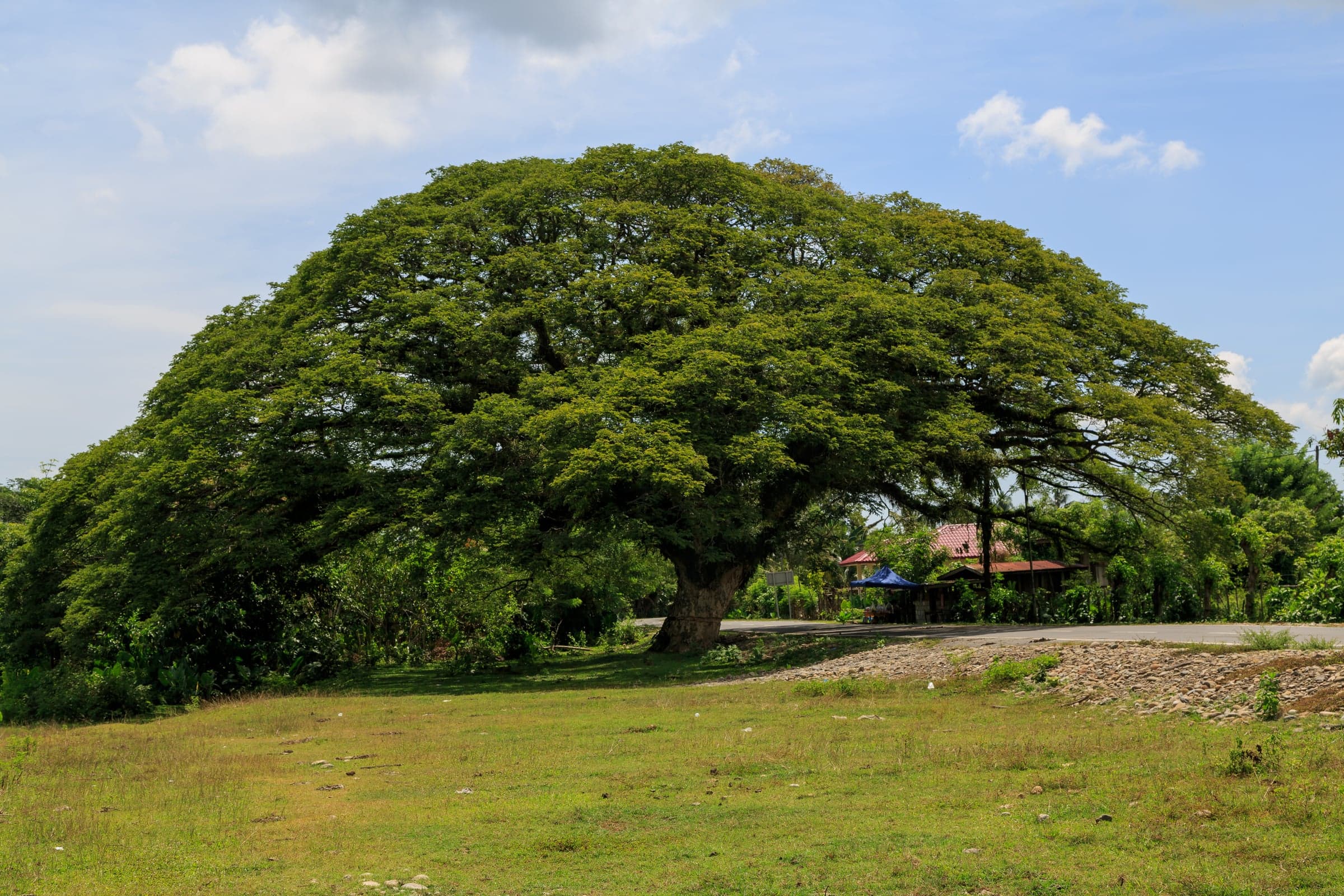
  • Ådring i Saman

    Saman

    Samanea saman

    4 exemplar

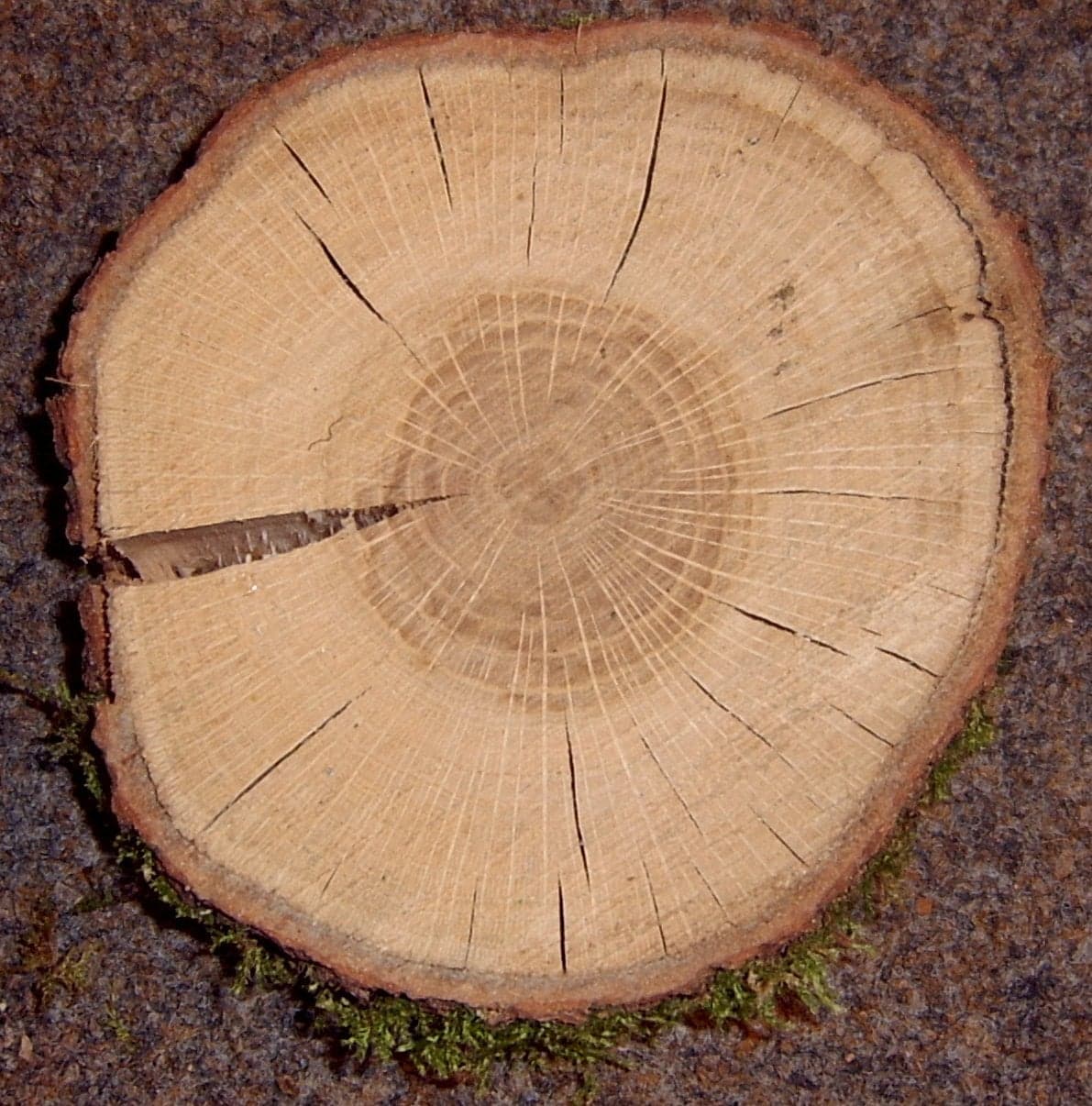
  • Ådring i European Oak

    European Oak

    Quercus robur

    6 exemplar

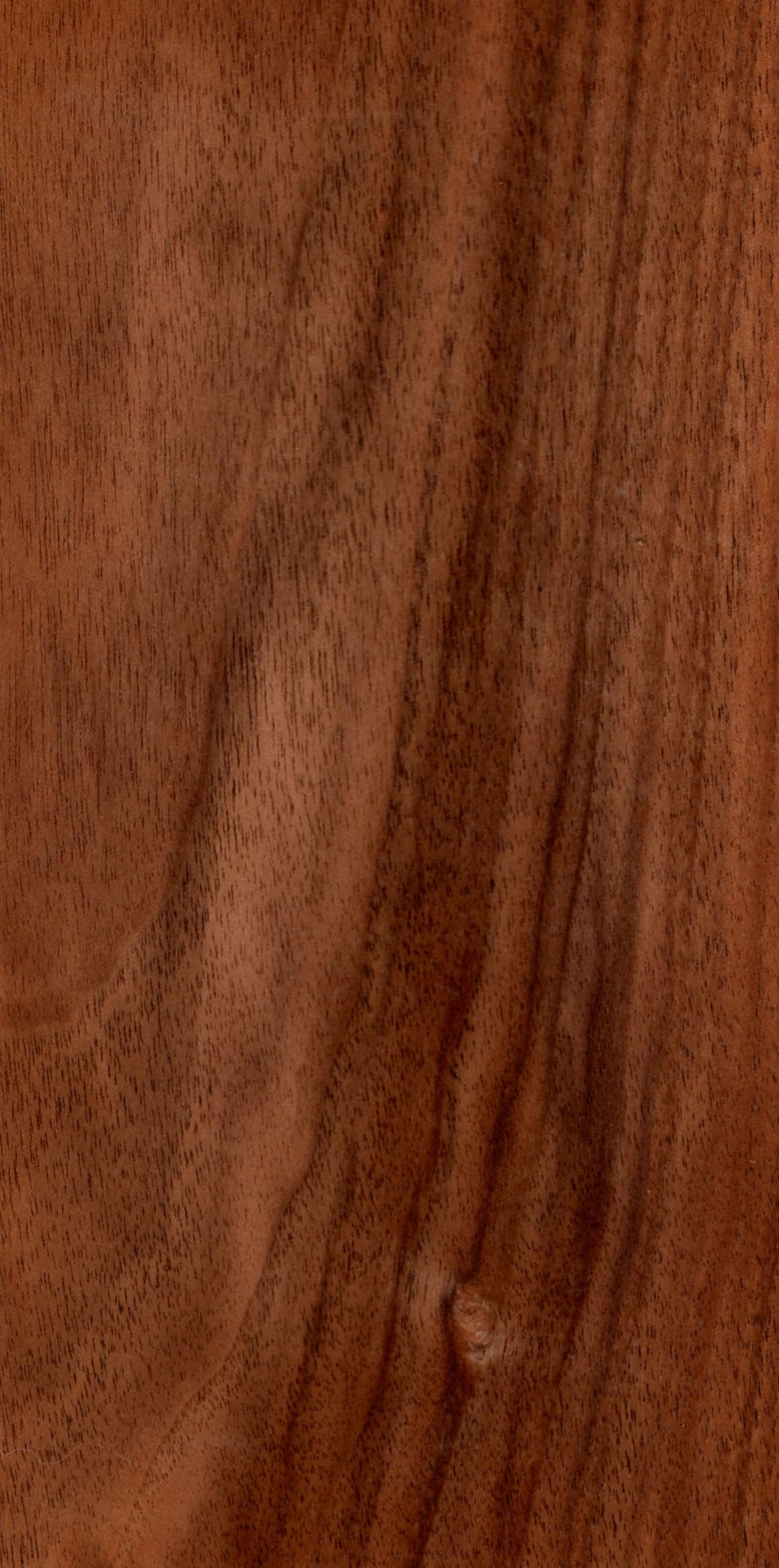
  • Ådring i European Walnut

    European Walnut

    Juglans regia

    9 exemplar

Få besked om Douglas Fir

Vi skickar e-post när nya plankor i Douglas Fir kommer till KORENA. Varje exemplar är unikt, så det är bra att få besked tidigt.

Några e-postmeddelanden i månaden. Ingen skräppost, avregistrera dig när som helst.

Träets utseende

Så ser det ut

Warm reddish tan to light brown heartwood with a distinctly orange cast, against pale sapwood. The ring figure is bold and high contrast because the latewood bands are dense and dark, giving flatsawn faces a strong flame pattern. It is one of the stiffest softwoods available, which is why it dominates structural engineered timber.

  • Reddish tan to light brown with a warm orange cast
  • Bold high contrast growth ring figure
  • Pale narrow sapwood, deepens with light exposure
  • Straight grain with bold, high-contrast growth rings from dense dark latewood. Reddish tan to light brown with a warm orange cast against pale sapwood.

Bearbetning

Så bearbetas det

Machines well but has a moderate blunting effect on cutters, noticeably more than spruce or pine. It accepts stains, glues and finishes well. The dense latewood bands are the machining challenge: they are much harder than the earlywood between them and can tear out where grain rises, leaving a ridged surface. Sharp tooling and light finishing cuts matter, and a helical head is a real advantage.

Ytbehandling

Takes oil and clear finishes well and the colour deepens attractively toward a richer red brown. Like all species with strong density contrast between earlywood and latewood, it blotches under pigment stain, so a conditioner or dye is the safer route. Its natural colour is warm enough that most makers leave it clear.

Torkning

Dries reasonably well but is prone to surface checking in thick sections if pushed, and European grown fast ring stock is more troublesome than slow grown material. Volumetric shrinkage at around 11.6 percent is the lowest in this group, which combined with a favourable tangential to radial ratio makes properly dried Douglas Fir one of the more stable softwoods in service.

Hur mycket kommer det att röra sig?

Trä sväller och krymper över bredden när luften blir fuktigare och torrare. Beräkna årstidsrörelsen hos en skiva i Douglas Fir innan du utformar infästningarna.

Sågsätt
Miljön där den ska stå

Förväntad årstidsrörelse

cirka 8,3 mm

Fäst skivan med sargar eller beslag med spår, inte med lim eller hårt åtdragna skruvar.

Linjär krympningsmodell: bredd × (krympning ÷ 28 % fibermättnad) × årstidsvariation i fuktkvot. Använder 7,3 % tangentiell krympning för Douglas Fir. Ett planeringsvärde, inte en garanti.

Vad det kostar

Säkerhet och inköp

  • Odlat utanför Europa och importerat via europeiska partnerlager.
  • Status på IUCN:s rödlista: den globala bedömningen av träslagets bevarandestatus.
  • Reported to cause skin irritation, nausea, giddiness and runny nose, along with an increased likelihood of splinters becoming infected. That last point is worth taking seriously: Douglas Fir splinters are notorious for going septic. Gloves when handling rough stock and proper extraction during machining are advisable.

Läs hela guidenFördjupning om ådring, färgförändring, bearbetning och stabilitet.+

What Douglas Fir actually is#

Pseudotsuga menziesii is not a fir. It sits in its own genus, separate from the true firs of Abies, and the name is a historical accident that never got corrected. The distinction is not pedantry. Silver Fir is the softest wood in this catalogue at 1,420 N Janka; Douglas Fir is nearly twice as hard at 2,760 N, considerably stiffer, more durable, and much harder on cutting edges. Expecting one to behave like the other leads to bad decisions.

It is native to western North America and has been planted across Europe since the nineteenth century. That matters when buying, because European plantation stock and North American old growth are the same species performing quite differently.

Reading a Douglas Fir slab#

The colour is the immediate draw: a warm reddish tan with an orange cast that deepens under light toward a richer red brown. Against the pale narrow sapwood the contrast is clean.

The ring figure is the real signature. Douglas Fir lays down dense dark latewood bands against much softer earlywood, and on a flatsawn face that produces a bold flame pattern with high contrast, closer to a ring-porous hardwood than to the quiet figure of spruce.

That same contrast is what you must read for quality. Ring spacing separates slow grown material, with a high proportion of dense latewood, from fast grown European plantation stock with wide soft earlywood bands. The slow grown board is stronger, more durable and more attractive. The fast grown one is neither wrong nor a bargain, it is simply a different material, and for structural or exterior work the difference is not cosmetic.

Köparnas frågor

Frågor som köpare ställer

Is Douglas Fir actually a fir?

+

No. Pseudotsuga menziesii is its own genus, distinct from the true firs in Abies such as Silver Fir. The name is a historical misnomer that stuck. The practical consequence is that it behaves nothing like Silver Fir: it is far stiffer, harder, more durable and considerably more difficult on cutting edges.

How stiff is it compared to other softwoods?

+

Its elastic modulus is 12.17 GPa, the highest of any softwood KORENA lists and above European Larch at 11.80 GPa. Stiffness is why it dominates structural glulam and why it is the right choice for a long shelf or an unsupported span where deflection matters more than hardness.

Can I use it outdoors?

+

It is rated moderately durable regarding decay but is susceptible to insect attack, so it sits below European Larch for exterior work. It performs well in protected exterior joinery such as windows and doors under a maintained finish. For unprotected decking or ground contact, larch is the better choice from this group.

Why do Douglas Fir splinters get infected so often?

+

Mekaniska egenskaper

Tekniska data

Publicerade referensvärden. När källorna skiljer sig åt visas intervallet och det typiska värdet används i skalorna ovan.

Densitet (kg/m³)Massa per kubikmeter vid cirka 12 % fuktkvot. Tyngre trä är oftast hårdare och starkare.510 kg/m³
Janka-hårdhet (N)Kraften som krävs för att pressa in en stålkula halvvägs i träet. Standardmåttet på motstånd mot märken.2,760 N
MOR: böjhållfasthet (MPa)Böjhållfasthet: belastningen då en balk går av.86 MPa
MOE: elasticitetsmodul (GPa)Böjstyvhet: hur mycket en hylla eller skiva böjer ned under belastning.12.2 GPa
Radiell krympningKrympning tvärs årsringarna, från rått till ugnstorrt. Kvartssågade brädor rör sig så här.4.5 %
Tangentiell krympningKrympning längs årsringarna. Plainsågade brädor och de flesta plankor rör sig så här.7.3 %
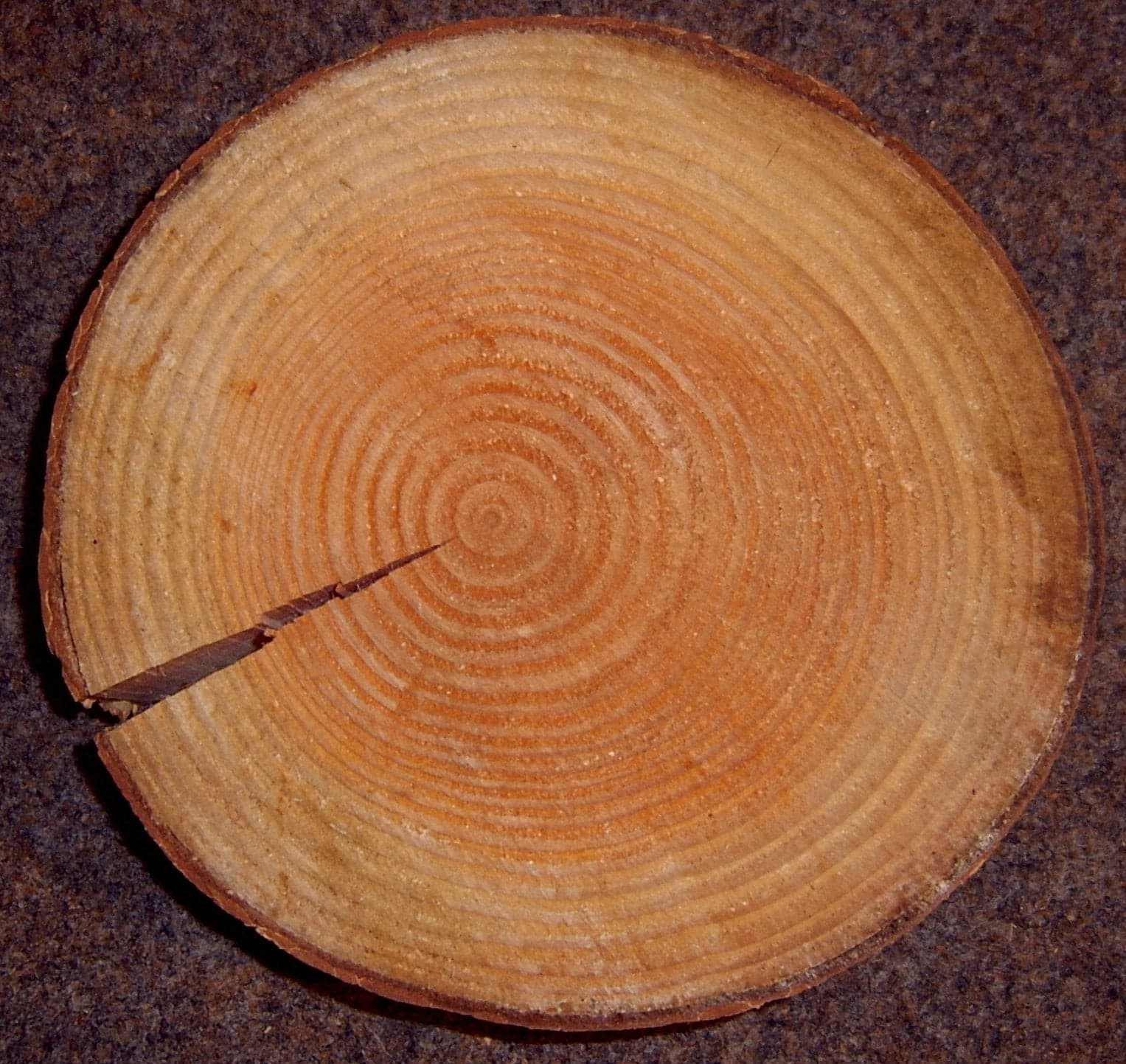
Ådring i Douglas Fir

No machine-readable author provided. Lumbar~commonswiki assumed (based on copyright claims)., via Wikimedia Commons

Pseudotsuga menziesii is native to western North America, from British Columbia to Mexico, and is not a European species. It has been planted extensively across Europe since the nineteenth century and much of the slab stock KORENA sees is European grown, which usually means faster growth and wider rings than old growth Pacific Northwest material.

  • Not listed in the CITES Appendices and assessed by the IUCN as Least Concern. It is not native to Europe, so European grown material is plantation stock rather than natural forest. Imported North American old growth carries a longer and more scrutinised supply chain under EUDR. European grown Douglas Fir is generally the simpler documentation path and the lower carbon one.

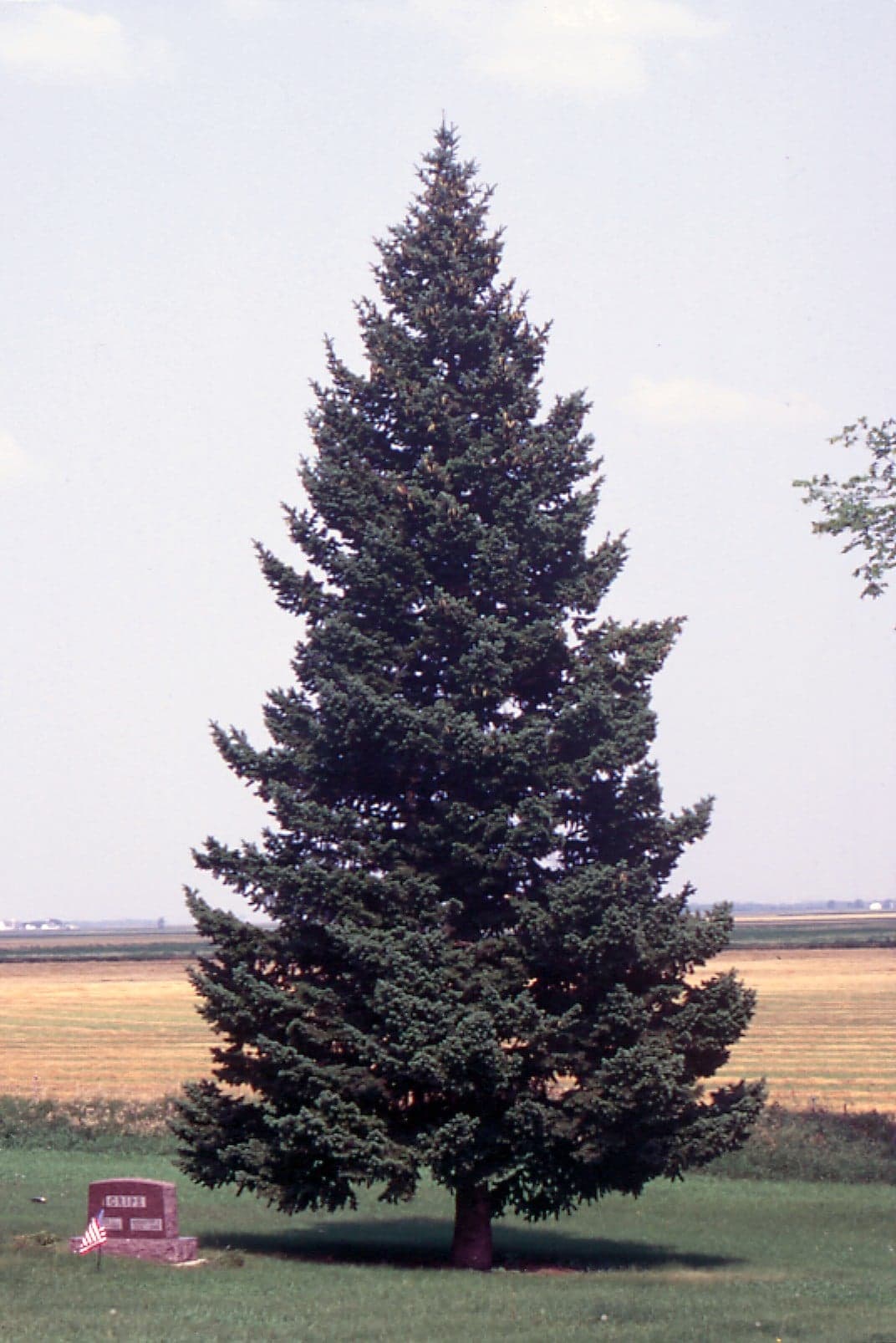
  • Träd av arten Douglas Fir

    USDA-NRCS PLANTS Database / Herman, D.E. et al. 1996. North Dakota tree handbook. USDA NRCS ND State Soil C..., via Wikimedia Commons

    At the bench#

    Douglas Fir machines well but it will dull your tooling faster than any other softwood here. Plan for sharpening more often, and accept that a marginal blade produces a markedly worse result on this species than on pine.

    The density contrast between earlywood and latewood is the specific machining challenge. Where the grain rises, a hard latewood band can tear out while the soft earlywood either side cuts cleanly, leaving a ridged or stepped surface that a scraper must fix. Light finishing cuts help. A helical cutterhead helps a great deal more, and on wide slabs it is close to essential if you want a surface that needs minimal sanding.

    Gluing and fastening are straightforward. It takes stains, glues and finishes well, and it holds screws better than the softer conifers here, though pilot holes near end grain remain sensible.

    One practical warning that is not folklore: Douglas Fir splinters carry a documented increased likelihood of becoming infected. Wear gloves handling rough sawn stock, and deal with any splinter promptly rather than leaving it to work its way out.

    Stiffness, and why it matters#

    The number that distinguishes this species is its elastic modulus, 12.17 GPa, the highest of any softwood in the KORENA catalogue and above European Larch at 11.80 GPa. Stiffness is not hardness. Hardness resists denting; stiffness resists bending.

    For a slab that must span a distance without visible sag, a long shelf, an unsupported bench top, an exposed structural beam, stiffness is the property that governs the outcome, and Douglas Fir is the correct answer in this group. It is why the species dominates structural glulam and engineered timber worldwide.

    For a dining table that must resist a dropped pan, hardness governs, and Douglas Fir at 2,760 N is still soft. Choose on the property that matches the failure you actually care about.

    Drying and movement#

    It dries reasonably but is prone to surface checking in thick sections if the schedule is pushed, and fast grown European material is more troublesome in this respect than slow grown stock.

    The payoff is stability in service. Volumetric shrinkage at around 11.6 percent is the lowest of any species in this group, and the tangential to radial ratio at 7.3 against 4.5 percent is comparatively favourable. Properly dried Douglas Fir is one of the more dimensionally reliable softwoods once it is in the room.

    Where Douglas Fir is the right answer#

    Exposed structural work, long spans, tabletops where the orange ring figure is wanted, flooring, and protected exterior joinery such as windows and doors under a maintained finish.

    It is the wrong answer for unprotected exterior work in contact with ground or standing water, where it is rated moderately durable but insect susceptible and European Larch outperforms it. It is also the wrong answer if your tooling is marginal, because this species is unforgiving of dull edges in a way pine is not.

    Sourcing and EUDR#

    Not CITES listed and assessed as Least Concern. The EUDR consideration here is different from the rest of this group because the species is not European. Imported North American old growth carries a longer supply chain with more scrutiny attached. European grown plantation material generally offers both the simpler documentation path and the lower transport carbon, at the cost of the wider rings discussed above. KORENA listings record the yard and region, so which of the two you are buying is visible on the passport rather than inferred from price.

    This is a documented characteristic of the species rather than folklore. Splinters from Douglas Fir carry an increased likelihood of becoming infected, which is why gloves when handling rough sawn stock are worth the inconvenience. Clean and treat any splinter promptly rather than leaving it.

    Is European grown different from American?

    +

    Yes, materially. European plantation Douglas Fir grows faster, producing wider rings, a lower proportion of dense latewood, and lower strength and durability than old growth Pacific Northwest stock. Both are the same species and neither is wrong, but they are not interchangeable for structural or exterior work. Ring count is the thing to look at.

    VolymkrympningTotal volymförändring från rått till ugnstorrt. Lägre värde betyder högre stabilitet.
    11.6 %
    Naturlig beständighet (EN 350)Europeisk standard för naturlig beständighet mot röta, från 1 (mycket beständigt) till 5 (inte beständigt).Class 3 — Moderately durable

    Källor

    • The Wood Database — Douglas Fir (Pseudotsuga menziesii)(hämtad 2026-08-12)
    • USDA FPL Wood Handbook FPL-GTR-190 (2010)(hämtad 2026-08-12)
    • Meier, E. — WOOD! Identifying and Using Hundreds of Woods Worldwide (2015)(hämtad 2026-08-12)

    Tänk på

    • Inte för obehandlat utomhusbrukDen naturliga beständigheten är klass 3 av 5 enligt EN 350. Använd det inomhus eller med en ytbehandling som underhålls.
    • Dammet irriterarAnvänd utsug och munskydd vid slipning och maskinbearbetning.

    Tryck på en etikett för mer information.

    I korthet

    Nivåerna använder samma fasta intervall för alla träslag som KORENA listar, så att de går att jämföra direkt. Det uppmätta värdet står under varje nivå.
    HårdhetMotstånd mot märken och slitageGanska mjukt

    Janka: 2 760 N

    45 % mjukare än europeisk ek

    ViktHur tung en planka är att lyftaLätt

    510 kg/m³

    StabilitetHur lite det rör sig med årstidernaGenomsnittligt

    11,6 % volymkrympning

    BearbetningSågning, hyvling, slipning och limningMåttligt

    3,7 / 5 i genomsnitt vid bänken

    UtomhusbrukNaturlig beständighet mot röta, EN 350Utomhus under tak

    EN 350 klass 3

    • Sågning · Mycket braHur rent det sågas och hur mycket det sliter på klingor.1 = svår · 5 = utmärkt
    • Hyvling · Mycket braHur slät yta det ger och hur lätt fibrerna rivs upp.1 = svår · 5 = utmärkt
    • Slipning · Mycket braHur snabbt det kan slipas slätt utan att slippappret sätts igen.1 = svår · 5 = utmärkt
    • Svarvning · BraHur det skär och får yta i svarven.1 = svår · 5 = utmärkt
    • Snidning · BraHur skarpa detaljer det håller under ett stämjärn.1 = svår · 5 = utmärkt
    • Limning · Mycket braHur tillförlitligt limfogarna håller.1 = svår · 5 = utmärkt
    • Fäste för skruv / spik · Mycket braHur väl det håller skruv och spik utan att spricka.1 = svår · 5 = utmärkt
    • Ångböjning · BraHur väl det kan böjas efter ångning.1 = svår · 5 = utmärkt

    Vad virke i Douglas Fir säljs för i Europa just nu, per kubikmeter före moms. Tryck på ett pris för mer information.

    • De bästa stockarna på auktionUtvalda stockar av hög kvalitet som säljs på anbudsauktioner, främst till fanér- och möbeltillverkare. Plankor sågas ur sådana stockar.De flesta priser ligger mellan 197 € och 203 €.Baserat på 50 priser från 1 region.Senaste uppgifter 24 sep. 2026
    • Vanliga stockarStora volymer vanligt rundvirke som säljs av skogsägare och statliga skogsbruk, främst till byggindustri och annan industri.De flesta priser ligger mellan 28 € och 158 €.Baserat på 6 priser från 2 regioner.Senaste uppgifter 15 sep. 2026

    Varför kostar en planka mer än detta?

    Detta är priser på råvirke. En planka är det bästa snittet ur en stock, torkat i minst ett år och därefter kontrollerat och uppmätt planka för planka. Bara en liten del av varje stock blir en planka.

    Källa: KORENA Timber Index · Senaste uppgifter 24 sep. 2026

    Se alla regionala priser