KORENA
HoutFinished piecesBenodigdhedenPartnerwervenArtikelen

Blijf op de hoogte

Elk boomstamblad is uniek. Zodra het verkocht is, is het weg. We mailen u wanneer nieuwe stukken online komen: nieuwe voorraad, nieuwe houtsoorten en planken die bij een projectomschrijving passen.

Enkele e-mails per maand. Geen spam, op elk moment afmelden.

KORENA, hoogwaardig hardhout

Eén stuk tegelijk.

Geverifieerd hoogwaardig hardhout, per stuk verkocht. Elk boomstamblad wordt gefotografeerd, gemeten en met een houtpaspoort verzonden vanaf de partnerwerf.

Winkel

  • Producten bekijken
  • Verkocht archief
  • Bestelling volgen

Ontdekken

  • Artikelen
  • Houtsoortengidsen
  • Woordenlijst
  • Vergelijken
  • Auteurs

Hulp

  • Over ons
  • Zo werkt het
  • Partnerwerf worden
  • Boomstamblad aanvragen
  • Klantenservice
  • Documentsjablonen
  • Pers

Kopen

  • Verkoopvoorwaarden
  • Herroepingsrecht
  • Retourneren en garantie
  • Verzending en bezorging

Vertrouwen

  • Privacybeleid
  • Cookiebeleid
  • Herkomst van hout en EUDR
  • Toegankelijkheid

Colofon

  • Juridische kennisgeving / colofon
  • Aanvaardbaar gebruik
  • Intellectueel eigendom en content

© 2026 KORENA. Alle rechten voorbehouden.

Uitgevoerd door Martial Labs Ltd. (BG, EIK 207453941). KORENA is een handelsnaam van Martial Labs Ltd.

We respecteren je privacy

We gebruiken essentiële cookies om de site te laten werken. Met jouw toestemming gebruiken we ook cookies voor analyse, gepersonaliseerde inhoud en advertenties. Je kunt je keuze op elk moment wijzigen op de pagina toestemmingsvoorkeuren. Bekijk ons cookiebeleid en privacybeleid.

  1. Startpagina
  2. /
  3. Houtsoorten
  4. /
  5. European Larch

Larix decidua

European Larch

The one European softwood that will sit outside untreated, and the most decorative of the group. Hardest conifer KORENA lists, at the cost of fighting resin at every stage.

  • Geteeld en geoogst in Europa.
  • Botanische groep. Naaldhout komt van coniferen en loofhout van loofbomen.
  • De botanische familie waartoe de houtsoort behoort.
Ontvang bericht zodra het binnenkomtReferentiehoutsoort. Momenteel geen stukken op voorraad.
  • Geschiktheid voor projecten
  • Op voorraad
  • Uiterlijk
  • Bewerking
  • Werking
  • Prijs
  • Veiligheid en herkomst
  • Vragen
  • Technische gegevens

Is dit geschikt voor uw project?

Zeer geschikt voor

  • Tabletops
  • Exterior cladding
  • Garden furniture
  • Flooring
  • Boat and dock work

Geen European Larch in de huidige uitgifte

Vergelijkbare houtsoorten op voorraad

Momenteel is er geen European Larch. Deze houtsoorten zijn geschikt voor dezelfde projecten en zijn wel beschikbaar.
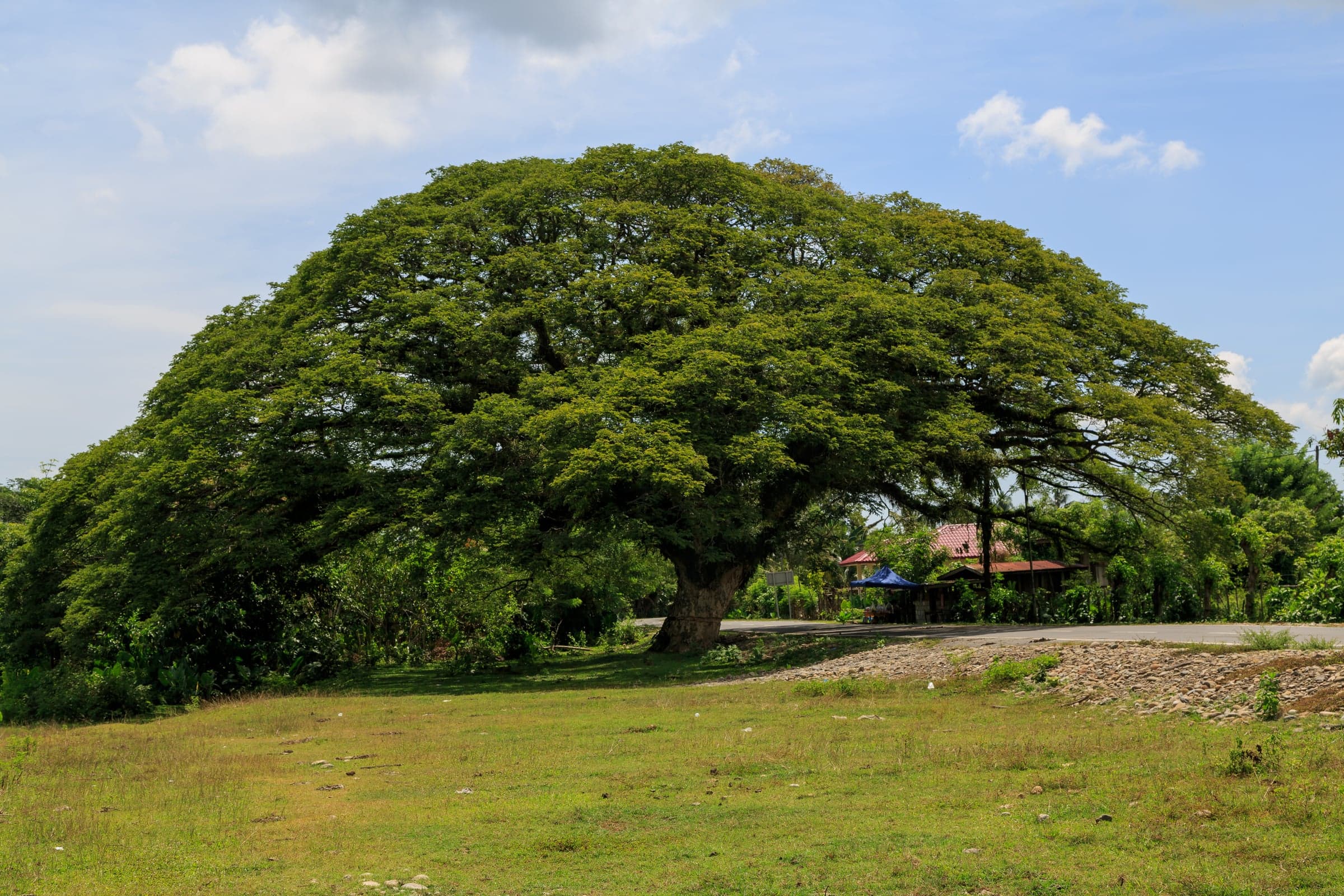
  • Nerf van Saman

    Saman

    Samanea saman

    4 stukken

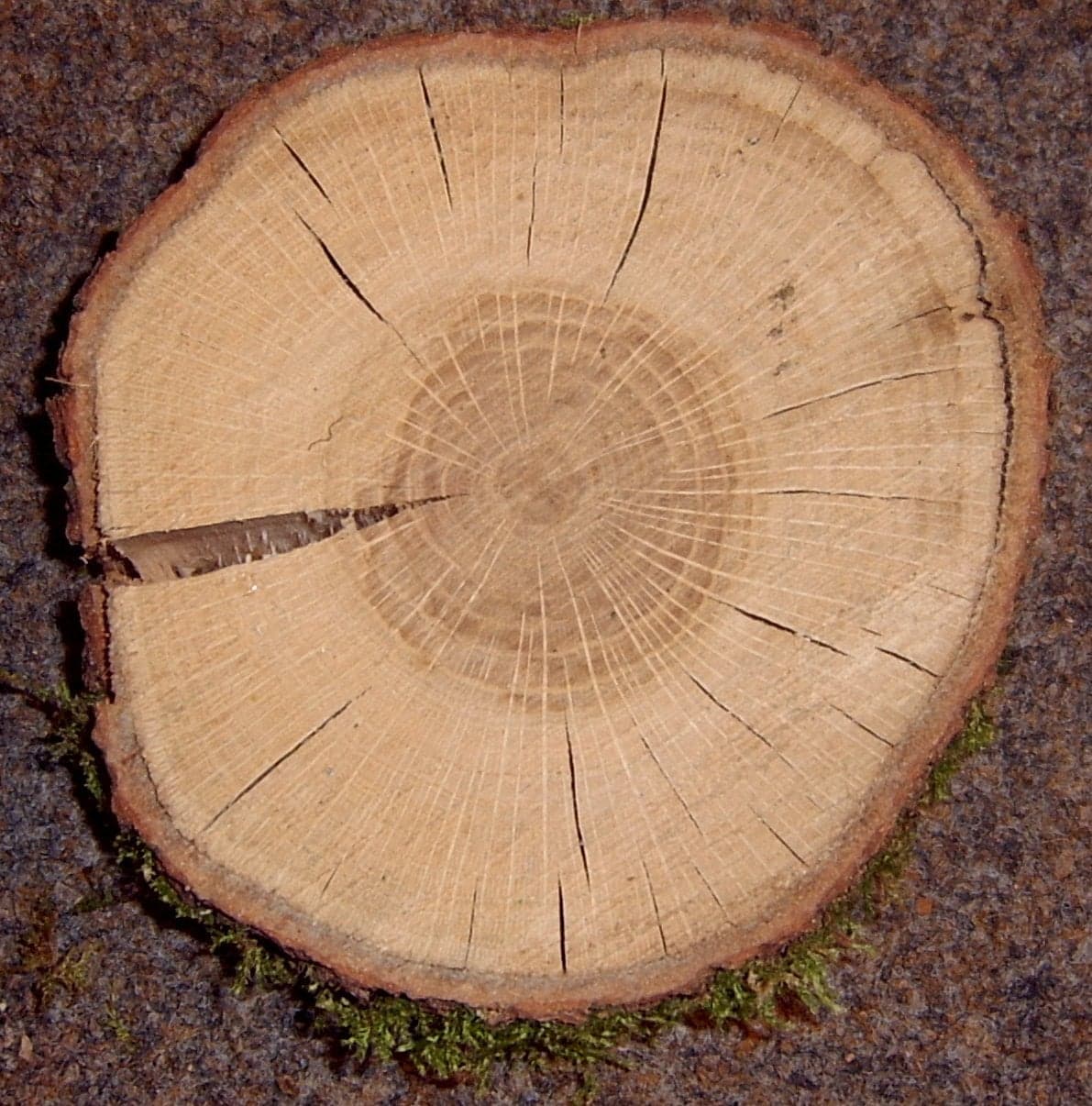
  • Nerf van European Oak

    European Oak

    Quercus robur

    6 stukken

  • Nerf van European Walnut

    European Walnut

    Juglans regia

    9 stukken

Bericht ontvangen over European Larch

We sturen u een e-mail wanneer nieuwe boomstambladen van European Larch bij KORENA binnenkomen. Elk stuk is uniek, dus tijdig bericht is belangrijk.

Enkele e-mails per maand. Geen spam, op elk moment afmelden.

Uiterlijk van het hout

Hoe het eruitziet

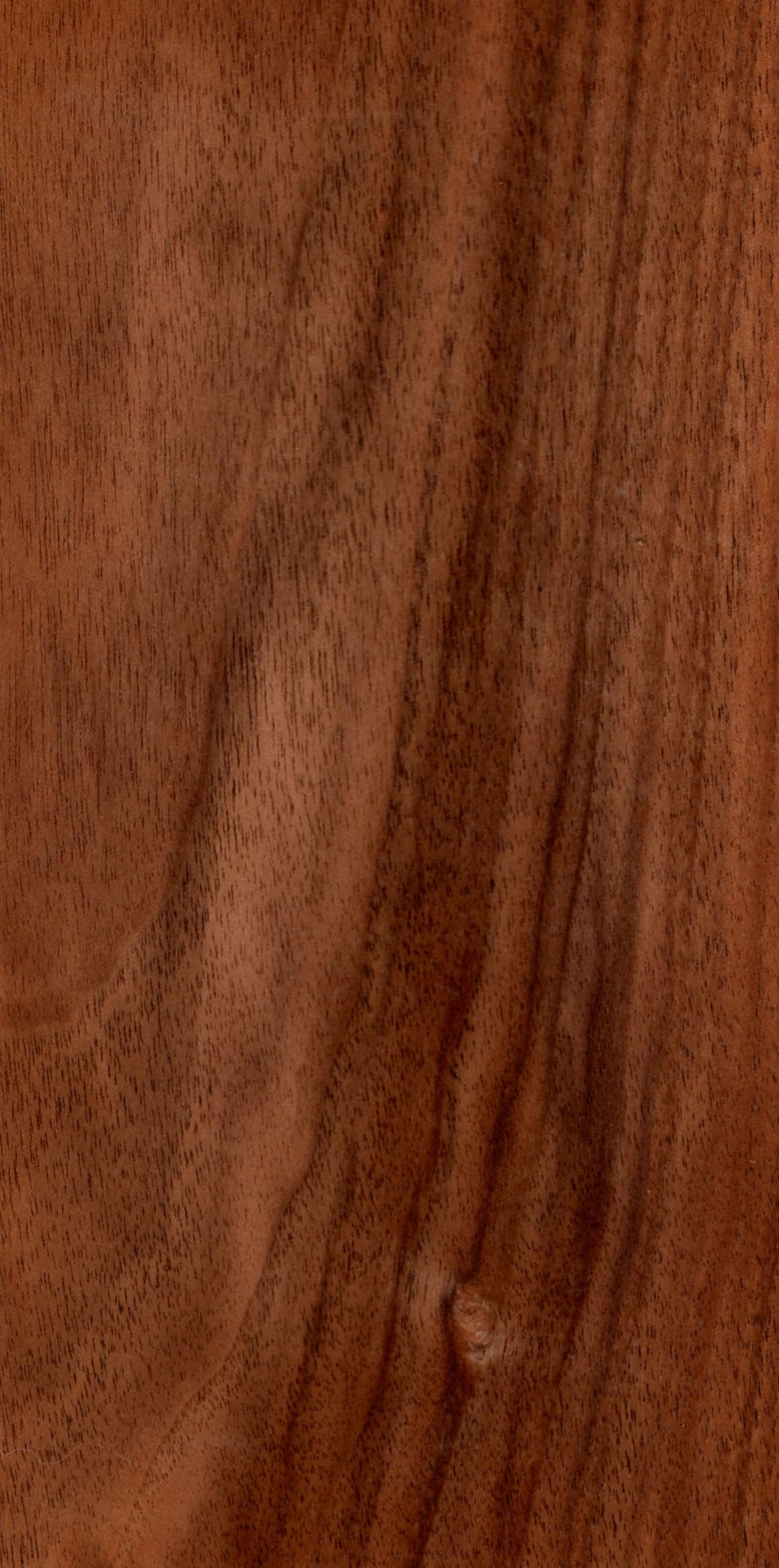
The most visually striking of the European softwoods. Heartwood runs warm honey to a deep russet brown against narrow pale sapwood, and the boundary between the two is sharp and decorative. Growth rings are strongly marked because the latewood bands are dense and dark, which gives flatsawn faces a bold cathedral figure closer to a ring-porous hardwood than to spruce.

  • Honey to russet brown heartwood, deepening with UV exposure
  • Narrow pale cream sapwood in sharp contrast
  • Strongly marked growth rings with dark dense latewood bands
  • Hard for softwood; visible growth rings.

Bewerking

Bewerking

Most hand and machine operations give good results, and larch is stiff and strong enough to feel substantial under the tool. The complication is resin. Natural resins gum up saw blades and clog abrasives, and the problem worsens as the wood warms during a cut. Keep blades clean, take breaks in long rips, and expect to clear the sole of a plane more often than usual. The dense latewood bands can also tear out where grain rises.

Afwerking

Resin is again the issue. Wipe the surface with denatured alcohol or acetone before finishing to lift surface resin, or oil finishes may stay tacky in patches. Once clean it takes oil beautifully and the colour deepens to a rich amber. For exterior work, a penetrating oil renewed annually outperforms film finishes, which crack and lift on a wood this dimensionally active outdoors.

Drogen

Slower and more troublesome than spruce or fir. Larch is prone to distortion and to surface checking if dried too fast, and the high resin content means a hot kiln schedule will drive resin to the surface where it sets sticky. Air drying followed by a low temperature kiln is the standard route for slab stock. Expect around 12.5 percent volumetric shrinkage, and note that internal stress from poor drying shows up as spring and bow once the slab is ripped.

Hoeveel zal het werken?

Hout zwelt en krimpt over de breedte wanneer de lucht vochtiger en droger wordt. Schat de seizoenswerking van een blad van European Larch voordat u de bevestigingen ontwerpt.

Zaagwijze
Waar het komt te staan

Verwachte seizoenswerking

ongeveer 9,4 mm

Bevestig het blad met bladwervels of sleufbeugels, niet met lijm of strak aangedraaide schroeven.

Lineair krimpmodel: breedte × (krimp ÷ 28 % vezelverzadiging) × seizoensverschil in vochtgehalte. Gebruikt 8,2 % tangentiële krimp voor European Larch. Dit is een planningsschatting, geen garantie.

Wat het kost

Veiligheid en herkomst

  • Geteeld en geoogst in Europa.
  • Status op de Rode Lijst van IUCN: de wereldwijde beoordeling van de beschermingsstatus van deze houtsoort.
  • Species within the Larix genus have documented cases of skin irritation, hives and skin lesions, though severe reactions remain uncommon. Resin contact is the usual trigger rather than dust alone. Gloves during handling of freshly cut stock and normal extraction during machining are appropriate.

Lees de volledige gidsUitgebreide informatie over tekening, kleurverandering, bewerking en stabiliteit.+

What European Larch actually is#

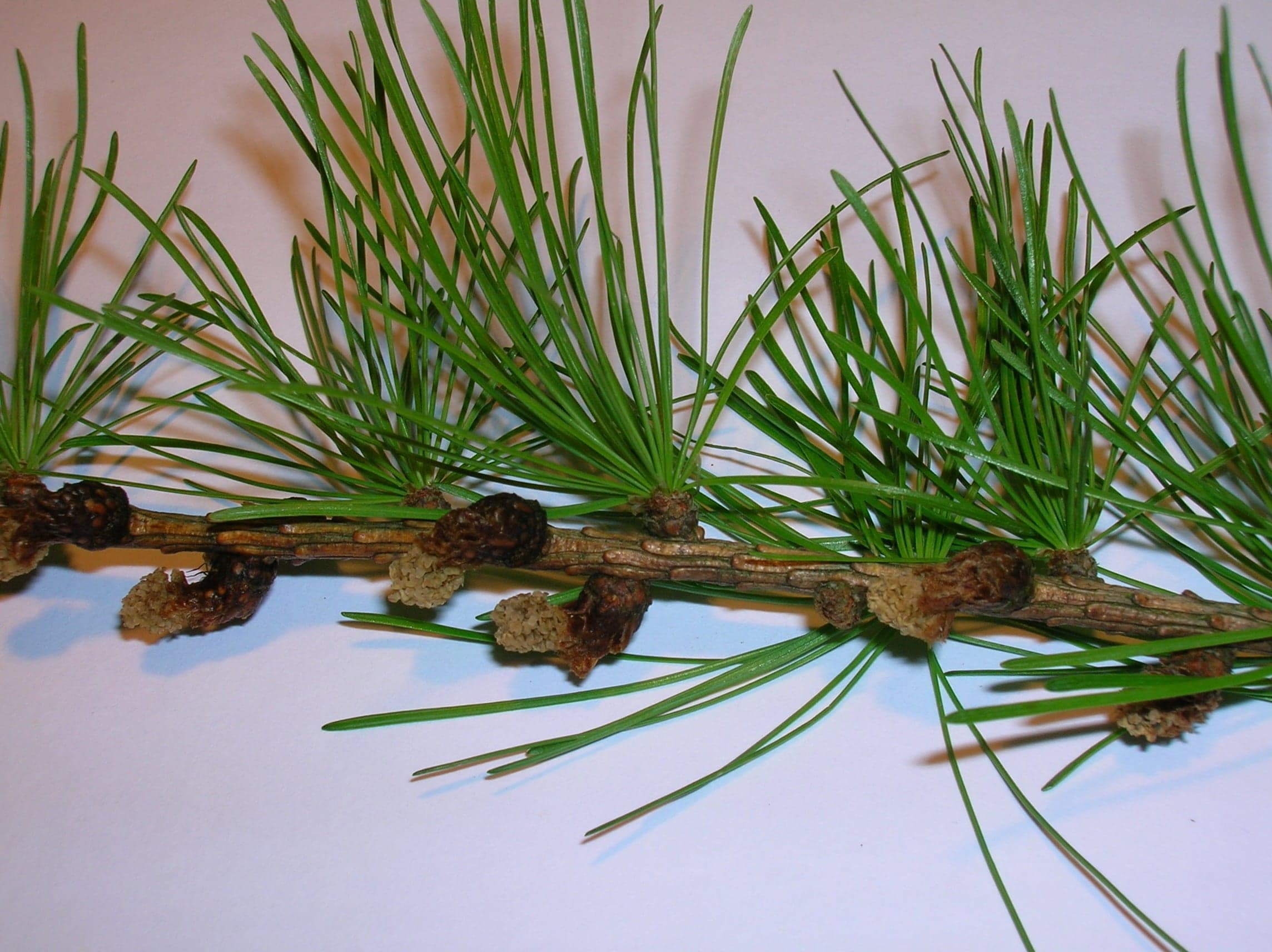
Larix decidua is the conifer that drops its needles. That deciduous habit is the visible oddity, but the useful consequence is in the timber: larch lays down dense, resin-rich latewood in a way that no spruce or fir does, and the result is a softwood that behaves in several respects like a light hardwood.

It is the hardest conifer in the KORENA catalogue at 3,290 N on the Janka scale, which puts it above every pine and fir here and roughly level with small-leaved lime. It is the only one rated durable enough to go outdoors untreated. And it is by some distance the most decorative, with a heartwood and sapwood contrast and a ring figure that reward flatsawing.

The trade-off is resin, and resin complicates every stage from ripping to finishing.

Reading a larch slab#

Two things drive the value of a larch slab: ring spacing and the heartwood to sapwood ratio.

Ring spacing is the durability signal. Slow-grown Alpine larch from high altitude puts down rings a millimetre or two apart, with a high proportion of dense dark latewood. That material is genuinely durable outdoors and considerably stiffer. Fast-grown lowland plantation larch can have rings five or six millimetres apart, much less latewood, and measurably worse durability. The two look related but do not perform alike. If the piece is going outside, ring count is the number to ask about.

Vragen van kopers

Vragen van kopers

Can European Larch be used outdoors untreated?

+

Yes, within limits. It is rated moderately durable, which is the best of the European softwoods KORENA lists and good enough for cladding, decking and garden furniture without preservative. Ground contact is a different matter and will shorten its life considerably. Slow grown Alpine stock with tight rings outperforms fast grown plantation larch noticeably.

Why do my saw blades gum up cutting larch?

+

Natural resin content, which is also what gives larch its durability. The resin softens with the heat of cutting and deposits on the blade. Clean blades with a resin solvent between operations, feed at a steady rate rather than forcing the cut, and clear plane soles regularly. It is a nuisance rather than a real obstacle.

How hard is larch compared to oak?

+

Larch is 3,290 N on the Janka scale against 4,980 N for European oak, so meaningfully softer but by a long way the hardest softwood in this catalogue. It is roughly on a par with small-leaved lime and harder than every pine and fir here. For a tabletop it is a reasonable compromise between weight and durability.

Why is my oil finish staying tacky?

Mechanische eigenschappen

Technische gegevens

Gepubliceerde referentiewaarden. Als bronnen uiteenlopen, wordt het bereik getoond en wordt de gebruikelijke waarde gebruikt voor de bovenstaande schalen.

Dichtheid (kg/m³)Massa per kubieke meter bij ongeveer 12 % vochtgehalte. Zwaarder hout is meestal harder en sterker.575 kg/m³
Janka-hardheid (N)De kracht die nodig is om een stalen kogel tot de helft in het hout te drukken. Dit is de standaardmaat voor weerstand tegen deuken.3,290 N
MOR: breukmodulus (MPa)Buigsterkte: de belasting waarbij een balk breekt.90 MPa
MOE: elasticiteitsmodulus (GPa)Buigstijfheid: hoeveel een plank of blad onder belasting doorbuigt.11.8 GPa
Radiale krimpKrimp dwars op de groeiringen, van vers tot ovendroog. Kwartiers gezaagde planken werken volgens deze waarde.4.2 %
Tangentiële krimpKrimp langs de groeiringen. Dosse gezaagde planken en de meeste boomstambladen werken volgens deze waarde.
Nerf van European Larch

No machine-readable author provided. Lumbar~commonswiki assumed (based on copyright claims)., via Wikimedia Commons

Larix decidua is native to the Alps and Carpathians and has been planted widely across northern and central Europe. Alpine grown stock from high altitude is the most prized, because slow growth produces the tight rings and high resin content that give larch its durability.

  • Not listed in the CITES Appendices and assessed by the IUCN as Least Concern. Alpine larch is slow growing and high altitude stands are managed conservatively, so genuinely tight ringed material is limited and priced accordingly. Plantation larch from lowland northern Europe grows far faster, has wider rings, and is measurably less durable. The distinction matters if the piece is going outdoors.

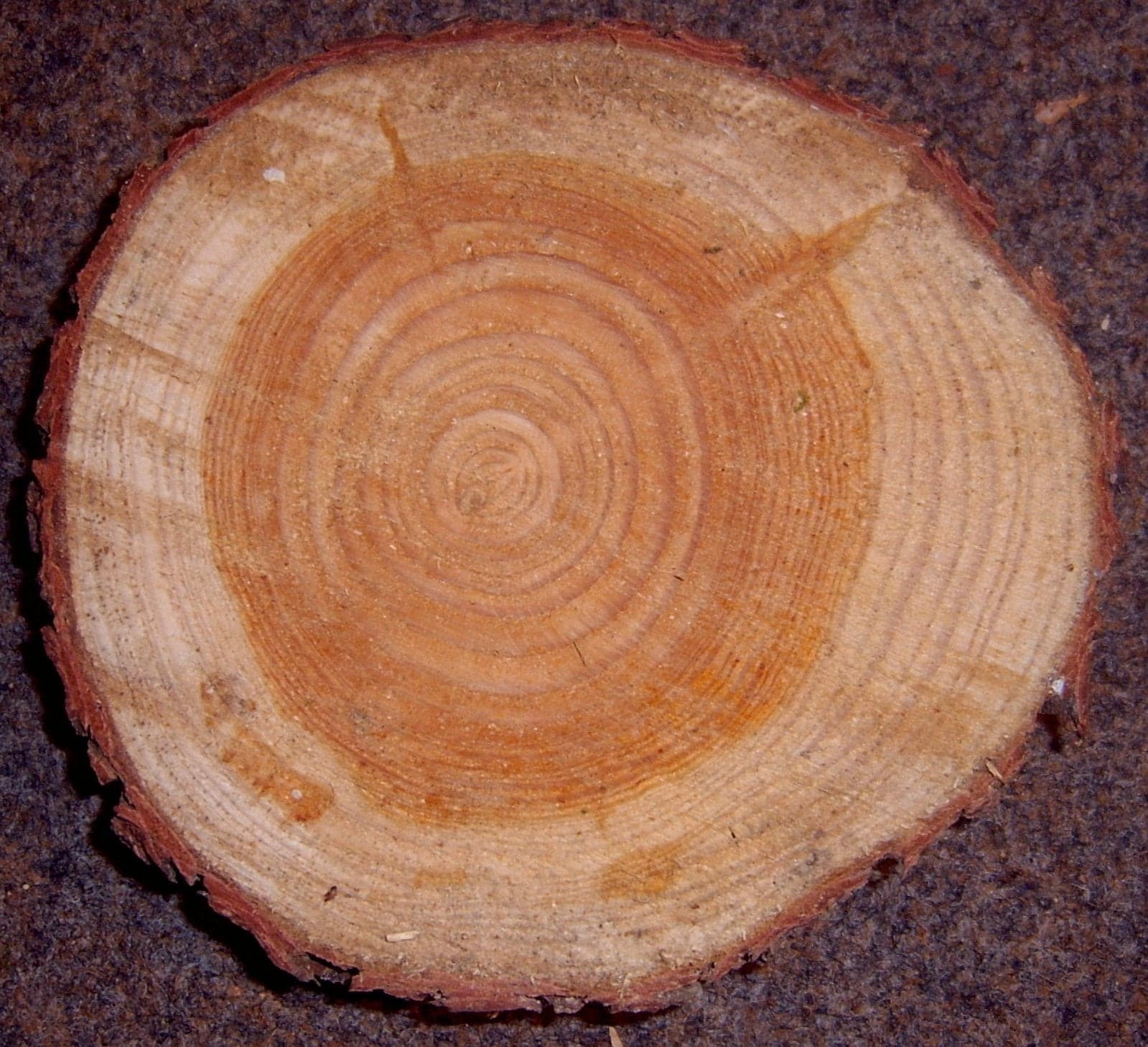
  • European Larch: Blad
    Blad
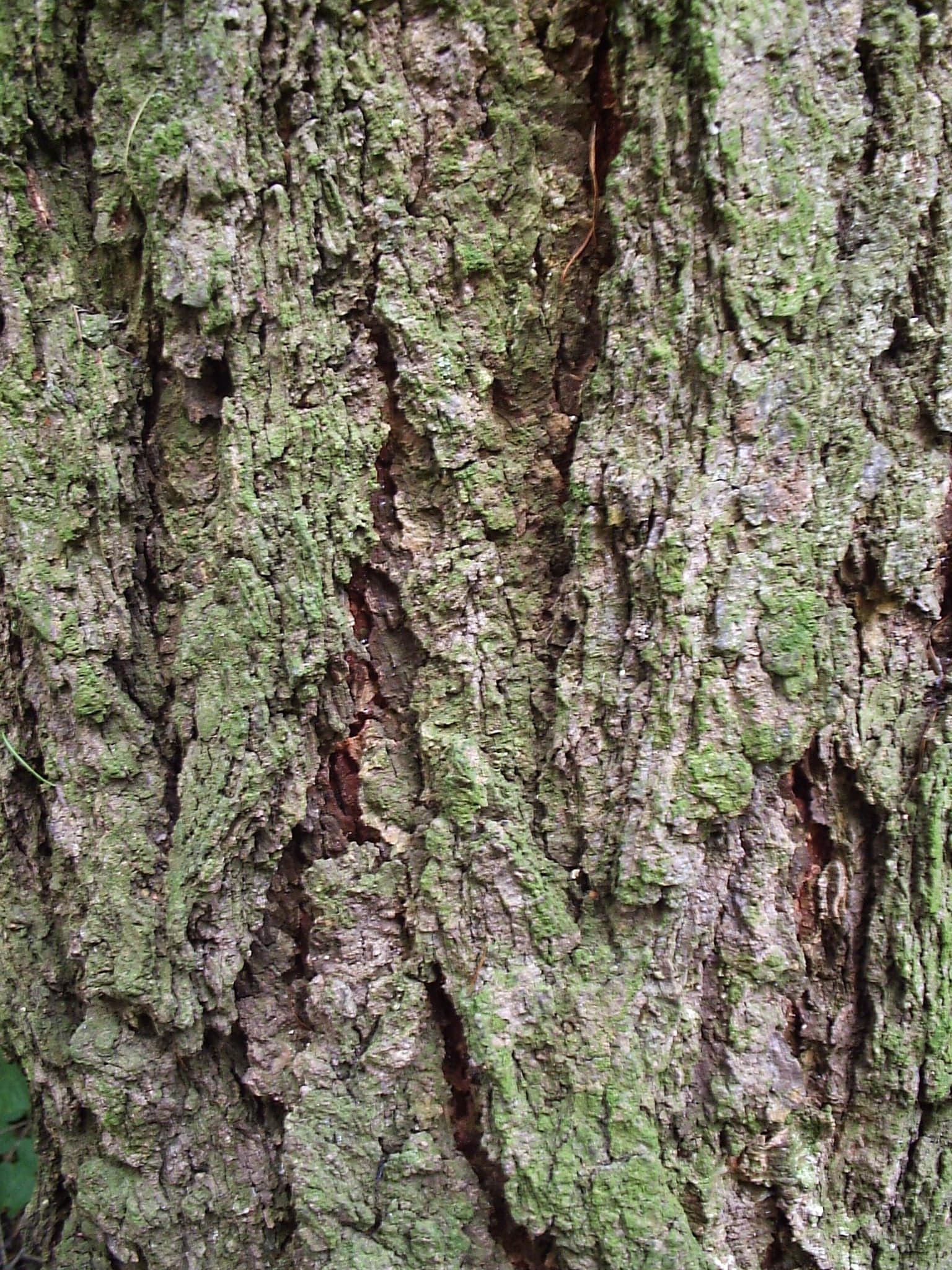
    European Larch: Schors
    Schors

    The sapwood band is narrow and pale, and where it runs along an edge it gives a strong light stripe against the russet heartwood. Some makers treat that as the feature of the board. It is worth knowing that the sapwood carries none of the heartwood durability, so on an exterior piece a sapwood edge is the part that will fail first.

    Look also for resin pockets and for shakes. Larch is more prone than spruce to ring shake, a separation along a growth ring that may not be visible on a rough surface and opens up after machining. On a measured KORENA slab, defects of that size are mapped in the outline.

    At the bench#

    Larch is satisfying to work. It is stiff, it cuts cleanly, and it has enough density to take a crisp edge and hold a sharp arris, which the softer conifers do not.

    Resin is the running battle. It softens with cutting heat and deposits on blades, in gullets and on plane soles. The practical answer is unglamorous: clean blades with a resin solvent between operations, feed steadily rather than forcing, and clear the tool more often than you would with spruce. Abrasives clog quickly and are largely consumable on this species.

    The dense latewood bands introduce the other machining issue. Where grain rises, the hard band can tear out while the soft earlywood either side cuts cleanly, leaving a stepped surface. Light cuts and a scraper handle it. A helical head planer handles it better.

    Gluing is reliable once surfaces are clean, but resin on a jointed face will compromise the bond. Wipe joint faces with acetone before glue-up on anything structural.

    Drying and movement#

    This is where larch demands the most patience. It is prone to distortion and surface checking if dried quickly, and a hot kiln schedule pulls resin to the surface where it sets sticky and interferes with finishing months later.

    Air drying under cover followed by a low temperature kiln finish is the standard route for slab stock, and it is slow. Internal stress from a rushed schedule shows up the moment a slab is ripped, as the two halves spring apart or bow. Ask the yard about the schedule.

    Volumetric shrinkage is around 12.5 percent, slightly lower than spruce, with tangential at 8.2 percent against 4.2 percent radial. Outdoors, that movement is what destroys film finishes, which is why penetrating oils renewed annually outperform varnish on exterior larch.

    Where larch is the right answer#

    Anywhere a European softwood has to face weather. Cladding, decking, garden furniture, dock and boat work: larch is the species in this group that will survive it without preservative treatment, provided you use heartwood and accept that ground contact is still a losing proposition.

    Indoors it makes a genuinely good tabletop, harder than the alternatives here and far more visually interesting. It makes good flooring for the same reasons.

    It is the wrong answer where a pale, quiet surface is wanted, where the finishing schedule cannot accommodate a solvent wipe, or where the budget assumes softwood machining speeds, because everything takes longer on this species.

    Sourcing and EUDR#

    Not CITES listed and assessed as Least Concern. The supply question is not availability but grade. Alpine high altitude stands are managed conservatively and genuinely tight ringed material is limited and priced accordingly, while fast grown plantation larch from lowland northern Europe is abundant and cheap. Both are legitimately European Larch. Only one of them will last outdoors. KORENA listings record the yard and region, so the provenance behind a given slab is visible rather than assumed.

    +

    Surface resin. Wipe the slab down with denatured alcohol or acetone and let it flash off before applying finish. Larch that has been kilned hot will have more resin drawn to the surface, so this step matters more with kiln dried than air dried stock.

    Does larch really go that orange?

    +

    It deepens substantially with light exposure. Freshly machined larch is a fairly pale honey; after a few months of indirect daylight it moves to a warm russet amber, and the contrast with the pale sapwood strengthens rather than fades. If you want the fresh-cut colour held, a UV inhibiting finish slows it, but nothing stops it entirely.

    8.2 %
    Volumetrische krimpTotale volumeverandering van vers tot ovendroog. Een lagere waarde betekent stabieler hout.12.5 %
    Natuurlijke duurzaamheid (EN 350)Europese norm voor natuurlijke weerstand tegen aantasting, van 1 (zeer duurzaam) tot 5 (niet duurzaam).Class 3 — Moderately durable

    Bronnen

    • The Wood Database — European Larch (Larix decidua)(geraadpleegd op 2026-08-12)
    • USDA FPL Wood Handbook FPL-GTR-190 (2010)(geraadpleegd op 2026-08-12)
    • Meier, E. — WOOD! Identifying and Using Hundreds of Woods Worldwide (2015)(geraadpleegd op 2026-08-12)

    Let op

    • Niet voor onbehandeld buitengebruikDe natuurlijke duurzaamheid is klasse 3 van 5 volgens EN 350. Gebruik het binnen of houd de afwerklaag buiten goed bij.
    • Irriterend stofGebruik stofafzuiging en draag een masker tijdens het schuren of machinaal bewerken.

    Tik op een label voor de details.

    In het kort

    De niveaus gebruiken vaste schalen voor elke houtsoort die KORENA aanbiedt, zodat u ze rechtstreeks kunt vergelijken. Onder elk niveau staat de gemeten waarde.
    HardheidWeerstand tegen deuken en slijtageVrij zacht

    Janka-hardheid 3.290 N

    34 % zachter dan Europese eik

    GewichtHoe zwaar een boomstamblad is om op te tillenGemiddeld

    575 kg/m³

    StabiliteitHoe weinig het hout met de seizoenen werktGemiddeld

    12,5 % volumetrische krimp

    BewerkingZagen, schaven, schuren en lijmenVeeleisend

    3,4 / 5 gemiddeld bij bewerking

    BuitengebruikNatuurlijke weerstand tegen aantasting, EN 350Overdekt buiten

    EN 350-klasse 3

    • Zagen · GoedHoe zuiver het zaagt en hoe zwaar het zaagbladen belast.1 = moeilijk · 5 = uitstekend
    • Schaven · Zeer goedHoe glad het geschaafde oppervlak wordt en hoeveel uitbreken er optreedt.1 = moeilijk · 5 = uitstekend
    • Schuren · GoedHoe snel het glad schuurt zonder het schuurpapier te verstoppen.1 = moeilijk · 5 = uitstekend
    • Draaien · Zeer goedHoe het zich op de draaibank laat snijden en afwerken.1 = moeilijk · 5 = uitstekend
    • Snijden · GoedHoe scherp details onder een guts blijven.1 = moeilijk · 5 = uitstekend
    • Lijmen · GoedHoe betrouwbaar lijmverbindingen houden.1 = moeilijk · 5 = uitstekend
    • Houvast van schroef / spijker · Zeer goedHoe goed het schroeven en spijkers vasthoudt zonder te splijten.1 = moeilijk · 5 = uitstekend
    • Stoombuigen · GoedHoe goed het na stomen in gebogen vormen kan worden gebracht.1 = moeilijk · 5 = uitstekend

    Wat hout van European Larch momenteel in Europa kost per kubieke meter, exclusief btw. Tik op een prijs voor de details.

    • Topstammen op een veilingGeselecteerde stammen van hoge kwaliteit die op inschrijvingsveilingen worden verkocht, vooral aan fineerproducenten en meubelmakers. Uit zulke stammen worden boomstambladen gezaagd.De meeste prijzen liggen tussen € 191 en € 301.Gebaseerd op 49 prijzen uit 2 regio's.Meest recente gegevens: 21 sep 2026
    • Gangbare stammenGrote hoeveelheden standaardrondhout die door boseigenaren en staatsbosbeheer worden verkocht, vooral voor de bouw en industrie.De meeste prijzen liggen tussen € 47 en € 170.Gebaseerd op 213 prijzen uit 7 regio's.Meest recente gegevens: 24 sep 2026

    Topstammen op een veiling per land

    • Oostenrijk · € 301 / m³Regio's: Austria27 prijzenMeest recente gegevens: 21 sep 2026
    • Duitsland · € 191 / m³Regio's: Bavaria22 prijzenMeest recente gegevens: 21 sep 2026

    Gangbare stammen per land

    • Italië · € 134 / m³Regio's: Trentino-Alto Adige en Veneto52 prijzenMeest recente gegevens: 30 jun 2026
    • Frankrijk · € 131 / m³Regio's: Grand Est / Alsace6 prijzenMeest recente gegevens: 15 sep 2026
    • Roemenië · € 84 / m³Regio's: Banat / Crișana, Moldavia (Romania), Transylvania en Wallachia155 prijzenMeest recente gegevens: 24 sep 2026

    Waarom kost een boomstamblad meer?

    Dit zijn prijzen voor onbewerkt hout. Een boomstamblad is de beste zaagsnede uit een stam, wordt minstens een jaar gedroogd en daarna stuk voor stuk gecontroleerd en opgemeten. Slechts een klein deel van elke stam wordt een boomstamblad.

    Bron: KORENA Timber Index · Meest recente gegevens: 24 sep 2026

    Bekijk alle regionale prijzen