Picea abies
Norway Spruce
The most abundant conifer in Europe and the lightest slab material KORENA lists. Pale, even, easy at the bench, and soft enough that you should choose it deliberately.
- Vypěstováno a vytěženo v Evropě.
- Botanická skupina. Jehličnaté dřeviny jsou nahosemenné stromy, listnaté dřeviny jsou krytosemenné stromy.
- Botanická čeleď, do které dřevina patří.
Upozornit, až dorazíReferenční dřevina. Právě není žádný kus skladem.
Stručný přehled
Úrovně používají pro všechny dřeviny v nabídce KORENA stejná pásma, takže je lze přímo porovnávat. Pod každou je uvedena naměřená hodnota.TvrdostOdolnost proti otlačení a opotřebeníMěkké
Tvrdost podle Janky 1 680 N
O 66 % měkčí než dub letní
HmotnostJak těžká je fošna při zvedáníVelmi lehké
405 kg/m³
StabilitaJak málo pracuje v průběhu ročních obdobíPrůměrné
12,9 % objemového sesychání
ZpracováníŘezání, hoblování, broušení, lepeníStředně náročné
průměr zpracování 3,7 / 5
Použití venkuPřirozená odolnost proti hnilobě, EN 350Pouze do interiéru
třída 4 podle EN 350
Hodí se pro váš projekt?
Výborné pro
- Lightweight tabletops
- Wall panelling
- Shelving
- Instrument soundboards
- Interior joinery
Pozor
- Nevhodné pro venkovní použití bez ošetřeníPřirozená trvanlivost odpovídá třídě 4 z 5 podle EN 350. Používejte dřevo v interiéru nebo s pravidelně udržovanou povrchovou úpravou.
- Dráždivý prachPři broušení nebo obrábění používejte odsávání a ochrannou masku.
Klepnutím na štítek zobrazíte podrobnosti.
V aktuální várce není Norway Spruce
Podobné dřeviny skladem
Dřevina Norway Spruce právě není skladem. Tyto dostupné dřeviny se hodí pro stejné projekty.


Upozornění na dřevinu Norway Spruce
Až na KORENA dorazí nové fošny Norway Spruce, pošleme vám e-mail. Každý kus je jedinečný, proto se včasné upozornění hodí.
Vzhled dřeva
Jak vypadá
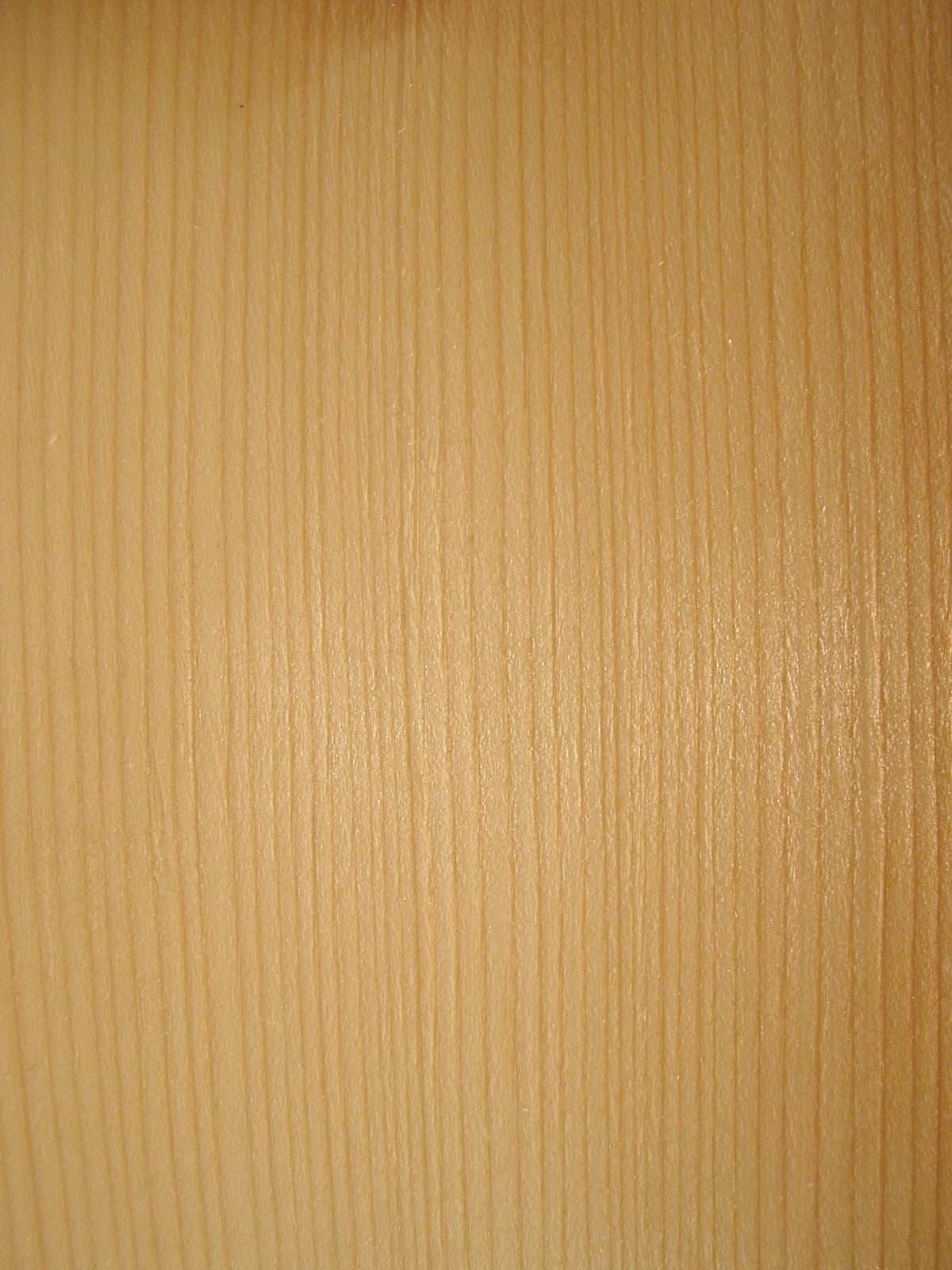
Pale cream to light yellow throughout, with almost no colour separation between heartwood and sapwood. The grain is straight and the texture fine and even. What makes a spruce slab worth looking at is rarely colour and almost always structure: tight annual rings, resin pockets that read as amber flecks, and the occasional cluster of small sound knots that a maker can either feature or cut around.
- Cream to pale yellow, darkening slightly with age and UV
- Little to no heartwood and sapwood contrast
- Resin pockets show as translucent amber marks
- Straight grain, even texture; resin canals.
Zpracování
Jak se zpracovává
- Řezání · Velmi dobráJak čistě se řeže a jak moc namáhá pilové nástroje.1 = obtížné · 5 = výborné
- Hoblování · Velmi dobráJak hladký povrch po hoblování zůstává a jak často se vytrhávají vlákna.1 = obtížné · 5 = výborné
- Broušení · Velmi dobráJak rychle se vybrousí dohladka bez zanášení brusiva.1 = obtížné · 5 = výborné
- Soustružení · DobráJak se řeže a dokončuje na soustruhu.1 = obtížné · 5 = výborné
- Řezbářství · DobráJak dobře drží ostré detaily při práci dlátem.1 = obtížné · 5 = výborné
- Lepení · Velmi dobráJak spolehlivě drží lepené spoje.1 = obtížné · 5 = výborné
- Držení šroubů / hřebíků · Velmi dobráJak dobře drží šrouby a hřebíky bez rozštípnutí.1 = obtížné · 5 = výborné
- Ohýbání párou · DobráJak dobře se po napaření ohýbá.1 = obtížné · 5 = výborné
Easy in every operation as long as you stay away from knots. Spruce is soft enough that sharp tools matter more than powerful ones: dull cutters crush the earlywood rather than slicing it, leaving a fuzzy surface that no amount of sanding fully recovers. Knots are hard, resinous and prone to tearing out, so plan cuts around them rather than through them. It glues reliably and takes screws well if you pilot near edges.
Povrchová úprava
The one genuine difficulty with spruce. Its uneven density between earlywood and latewood makes it absorb stain unevenly, so pigment stains blotch badly. Use a conditioner first, or skip stain entirely. Clear oils, hardwax oils and water-based lacquers all sit well and keep the pale colour. If you want warmth, a single coat of shellac before the topcoat evens absorption without muddying the grain.
Sušení
Dries quickly and with relatively little degrade, which is one reason it dominates European construction timber. Slab stock still needs patience: at 50 mm and above, resin pockets can bleed if the kiln schedule runs hot, and case hardening shows up as cupping once you machine the first face. Air drying followed by a gentle kiln finish gives the cleanest result. Expect movement in service to be modest, since volumetric shrinkage is around 12.9 percent.
Jak moc bude pracovat?
Dřevo se napříč šířkou rozpíná a smršťuje podle toho, jak vzduch vlhne a vysychá. Než navrhnete upevnění, odhadněte sezónní pohyb desky z dřeviny Norway Spruce.
Očekávaný sezónní pohyb
přibližně 9,4 mm
Desku upevněte úchyty nebo kováním s drážkami, ne lepidlem ani pevně dotaženými šrouby.
Lineární model sesychání: šířka × (sesychání ÷ 28 % bod nasycení vláken) × sezónní změna vlhkosti. Pro dřevinu Norway Spruce používá 8,2% tangenciálního sesychání. Jde o plánovací odhad, nikoli záruku.
Kolik stojí
Za kolik se dřevo Norway Spruce právě prodává v Evropě za metr krychlový bez DPH. Klepnutím na cenu zobrazíte podrobnosti.
- Nejlepší kulatina v aukciVybraná kulatina vysoké jakosti prodávaná v nabídkových aukcích, hlavně výrobcům dýh a nábytku. Z takové kulatiny se řežou fošny.Většina cen se pohybuje mezi 172 € a 313 €.Vychází z 50 cen z 1 regionu.Nejnovější údaje: 24. 9. 2026
- Běžná kulatinaVelké objemy standardní kulatiny prodávané vlastníky lesů a státními lesy, především pro stavebnictví a průmysl.Většina cen se pohybuje mezi 22 € a 175 €.Vychází z 9 577 cen z 12 regionů.Nejnovější údaje: 24. 9. 2026
Běžná kulatina podle zemí
- Francie · 120 € / m³Regiony: Bourgogne-Franche-Comté a Grand Est / Alsace12 cenNejnovější údaje: 15. 9. 2026
- Švédsko · 90 € / m³Regiony: Sweden Central25 cenNejnovější údaje: 30. 6. 2026
- Rumunsko · 79 € / m³Regiony: Banat / Crișana, Dobrogea, Moldavia (Romania), Transylvania a Wallachia9 302 cenNejnovější údaje: 24. 9. 2026
Proč fošna stojí více?
Toto jsou ceny surového dřeva. Fošna je nejlepší řez z kulatiny, který se suší nejméně rok a poté se každý kus samostatně kontroluje a měří. Na fošnu se promění jen malá část každého kmene.
Zdroj: KORENA Timber Index · Nejnovější údaje: 24. 9. 2026
Zobrazit všechny regionální cenyBezpečnost a původ
- Vypěstováno a vytěženo v Evropě.
- Stav v Červeném seznamu IUCN: celosvětové posouzení ohrožení této dřeviny.
Spruce dust has been reported to cause skin irritation and asthma-like respiratory effects, which puts it in the same bracket as most softwood dust. Extraction at the machine and a P2 mask during extended sanding are sensible. No specific toxicity beyond that is documented.
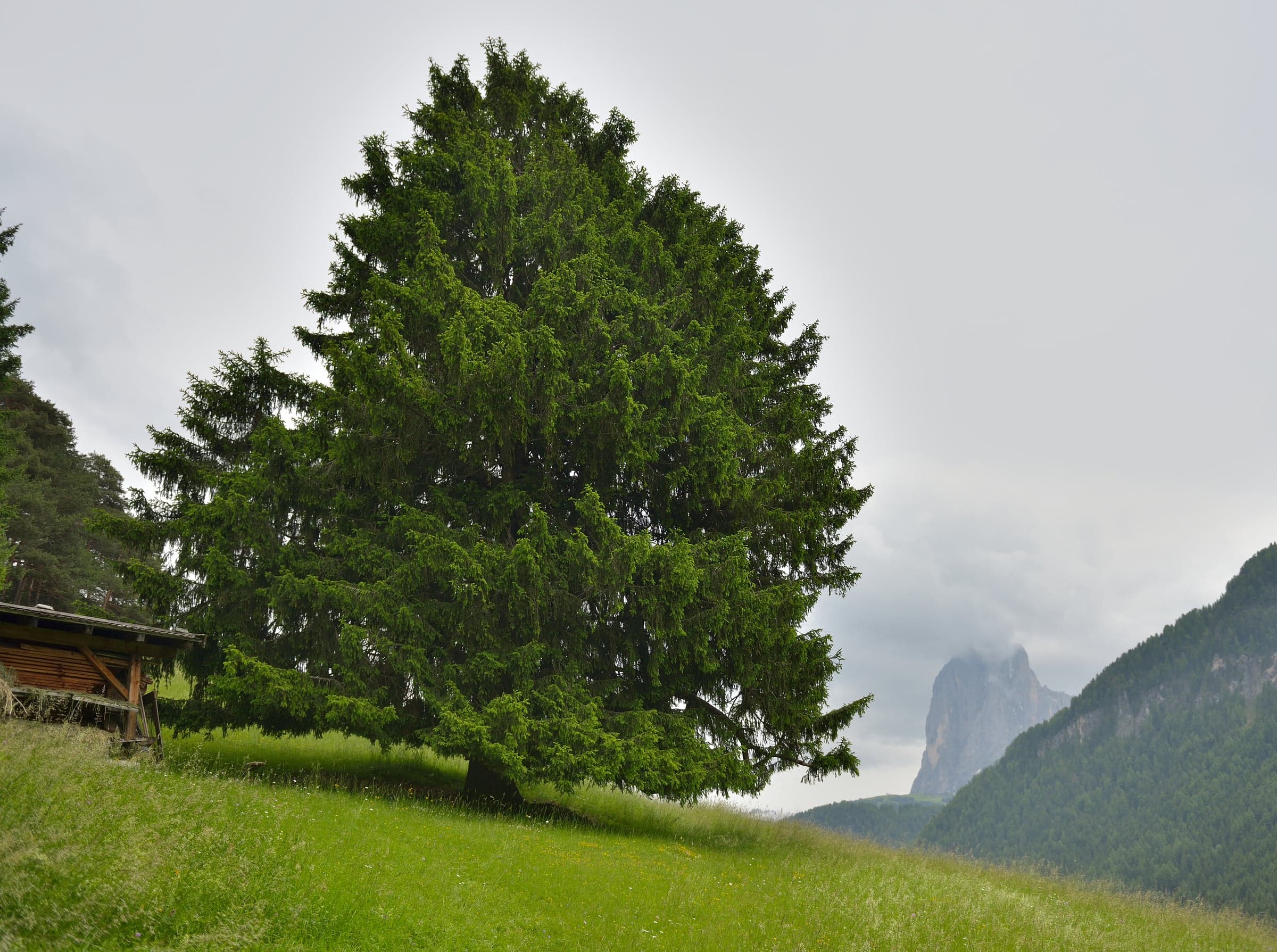
Picea abies covers the largest natural range of any European conifer, running from the Alps and Carpathians north through Scandinavia and east into Russia. Slab-grade stock reaching KORENA is nearly always from managed Alpine or Carpathian forests where FSC or PEFC certification is standard, which keeps EUDR documentation straightforward.
Not listed in the CITES Appendices and assessed by the IUCN as Least Concern. Supply across the EU is abundant and well certified, though bark beetle damage in central Europe has pushed large volumes of salvage timber into the market in recent years. Salvage stock is legitimate and often excellent value, but it should be declared as such because staining from blue fungus is common in it.
Přečíst celý průvodcePodrobné poznámky o kresbě, změně barvy, zpracování a stabilitě.
What Norway Spruce actually is#
Picea abies is the default European conifer. It covers more forest area than any other species on the continent and supplies most of the structural timber used in EU construction. That ubiquity works against it when people shop for slabs, because a wood you can buy as a stud is easy to dismiss as a wood you cannot build furniture from. The dismissal is half right. Spruce is genuinely soft, and a spruce tabletop will carry the record of everything set down on it. What the reputation misses is that spruce is also stiff for its weight, dimensionally reasonable once dried, and capable of a pale, quiet surface that no hardwood can imitate.
Reading a spruce slab#
Colour tells you very little. Spruce runs cream to pale yellow with effectively no heartwood boundary, so unlike walnut or oak you cannot judge a board by its tonal range. Structure is what matters.
Look first at ring spacing. Slow-grown Alpine spruce with rings a millimetre or two apart is denser, stiffer and considerably more stable than fast-grown lowland stock with rings five millimetres apart. The difference in service is real: the tight-ringed board stays flatter and dents less.
Look next at the knots. Spruce knots are hard, resinous, and much darker than the surrounding wood. Small sound knots are a design feature and hold fine. Large knots, and especially knot clusters near an edge, are weak points that will move independently of the board around them.
Finally, look for resin pockets and blue stain. Pockets read as amber streaks and are harmless once sealed. Blue stain is a grey-blue discolouration caused by fungus, common in salvage timber from bark beetle damage, and it does not weaken the wood. It changes the look completely, which is either the point or a problem depending on the piece.
At the bench#
Spruce rewards sharp tools and punishes dull ones more than almost anything else KORENA lists. Because the earlywood is so much softer than the latewood, a blunt cutter compresses the soft bands instead of severing them. The surface that comes off looks acceptable until finish goes on, at which point the crushed fibres swell and the whole face turns fuzzy.
Plane with a freshly honed iron and a tight mouth, take light cuts, and finish with a card scraper rather than aggressive sanding. If you must sand, stop at 180 grit. Going finer burnishes the latewood and makes the blotching problem worse.
Glue-up is straightforward. Spruce takes PVA and polyurethane adhesives reliably, and its low density means clamping pressure should be moderate. Over-clamping starves the joint by crushing the fibres either side of it.
Screws hold acceptably but not brilliantly. Pilot everything within 50 mm of an end grain edge, and prefer a coarse thread. For anything load bearing, through-bolts with washers distribute the load far better than screws into the face.
Drying and movement#
Spruce dries fast and relatively cleanly, which is exactly why it dominates commodity timber. Slabs behave differently from boards. At 50 mm and thicker, an aggressive kiln schedule drives moisture out of the surface much faster than the core can follow, and the result is case hardening: the slab looks flat until you machine one face, then cups as the internal stress releases.
The safest route for slab stock is air drying under cover to roughly 20 percent, then a slow kiln finish to bring it to 8 to 10 percent for interior use. Ask the yard which schedule was used. On KORENA listings the drying method and measured moisture are recorded on the passport, so you are not guessing.
In service, expect meaningful seasonal movement. Tangential shrinkage is around 8.2 percent against 3.9 percent radial, so a wide flatsawn top will want to cup toward the bark face as humidity drops. Quartersawn stock moves roughly half as much across its width and is worth seeking out for anything that must stay flat.
Where spruce is the right answer#
Spruce earns its place when weight matters, when the budget will not carry oak, or when the design wants a pale surface that stays pale. A three metre bench top in oak is a two person lift; in spruce one person can move it. Wall panelling in spruce reflects light in a way that darker species cannot. And for anything that will be painted, spending on a hardwood is money burnt.
It is the wrong answer for a heavily used dining surface, for anything outdoors without treatment, and for a piece where a rich stained colour is the goal.
Sourcing and EUDR#
Supply is abundant and certification is the norm across Alpine and Carpathian sources, which makes the due diligence path short. One current wrinkle is worth knowing: bark beetle outbreaks across central Europe have pushed large volumes of salvage timber into the market. Salvage stock is entirely legitimate, often good value, and frequently carries blue stain. It should be declared rather than discovered, and any KORENA listing that is salvage says so.
Otázky kupujících
Na co se kupující ptají
Is Norway Spruce hard enough for a dining table?
It sits at 1,680 N on the Janka scale, which is soft for a tabletop that will see daily use. It works if you accept dents as part of the character, or if the top is protected by a hardwax oil that is easy to refresh. For a surface that must stay unmarked, European oak at 4,980 N or ash are better matched.
Why does my spruce slab look blotchy after staining?
Spruce has a large density difference between the pale earlywood and the darker latewood, so pigment lodges unevenly. Apply a wood conditioner or a thin shellac washcoat before staining, or leave it unstained and use a clear oil. Testing on an offcut from the same slab is the only reliable check, because blotching varies board to board.
What are the amber marks in the surface?
Resin pockets, which are normal in spruce and not a defect in the structural sense. They can weep slightly if the slab is warmed by sunlight or underfloor heating. Sealing with shellac before the topcoat locks them down. On a measured KORENA slab any pocket large enough to matter is mapped in the defect outline.
Is spruce suitable for outdoor use?
Not without treatment. The heartwood is rated slightly resistant to non-resistant to decay, so untreated spruce outdoors will fail within a few seasons. European larch or Douglas fir are the better choices from this group when moisture exposure is part of the brief.
How much will a spruce tabletop move through the year?
Volumetric shrinkage is around 12.9 percent with tangential movement roughly twice radial, so a wide flatsawn top will change noticeably between a humid summer and a heated winter. Allow the top to float on slotted fasteners rather than fixing it rigidly, and let the slab acclimatise in the room for two weeks before final flattening.
Mechanické vlastnosti
Technické údaje
Zveřejněné referenční hodnoty. Pokud se zdroje rozcházejí, uvádíme rozpětí a pro výše uvedené stupnice používáme typickou hodnotu.
| Hustota (kg/m³)Hmotnost jednoho metru krychlového při vlhkosti přibližně 12 %. Těžší dřevo bývá tvrdší a pevnější. | 405 kg/m³ |
|---|---|
| Tvrdost podle Janky (N)Síla potřebná k zatlačení ocelové kuličky do poloviny jejího průměru. Standardní měřítko odolnosti proti otlačení. | 1,680 N |
| MOR: modul pevnosti v ohybu (MPa)Pevnost v ohybu: zatížení, při kterém se nosník zlomí. | 63 MPa |
| MOE: modul pružnosti (GPa)Tuhost v ohybu: nakolik se police nebo deska pod zatížením prohne. | 9.7 GPa |
| Radiální sesycháníSesychání napříč letokruhy od čerstvého stavu po vysušení v sušárně. Takto pracují radiálně řezané fošny. | 3.9 % |
| Tangenciální sesycháníSesychání podél letokruhů. Takto pracují tangenciálně řezané fošny a většina fošen s přírodní hranou. | 8.2 % |
| Objemové sesycháníCelková změna objemu od čerstvého stavu po vysušení v sušárně. Nižší hodnota znamená větší stabilitu. | 12.9 % |
| Přirozená trvanlivost (EN 350)Evropská norma přirozené odolnosti proti hnilobě od 1 (velmi trvanlivé) do 5 (netrvanlivé). | Class 4 — Slightly durable |
Zdroje
- The Wood Database — Norway Spruce (Picea abies)(citováno 2026-08-12)
- USDA FPL Wood Handbook FPL-GTR-190 (2010)(citováno 2026-08-12)
- Meier, E. — WOOD! Identifying and Using Hundreds of Woods Worldwide (2015)(citováno 2026-08-12)