Larix decidua
European Larch
The one European softwood that will sit outside untreated, and the most decorative of the group. Hardest conifer KORENA lists, at the cost of fighting resin at every stage.
- Dyrket og fældet i Europa.
- Botanisk gruppe. Nåletræ kommer fra nåletræer, løvtræ fra bredbladede træer.
- Den botaniske familie, som træarten tilhører.
Få besked, når den kommerReferencetræart. Ingen planker på lager lige nu.
Passer det til dit projekt?
Velegnet til
- Tabletops
- Exterior cladding
- Garden furniture
- Flooring
- Boat and dock work
Ingen European Larch i det aktuelle parti
Lignende træarter på lager
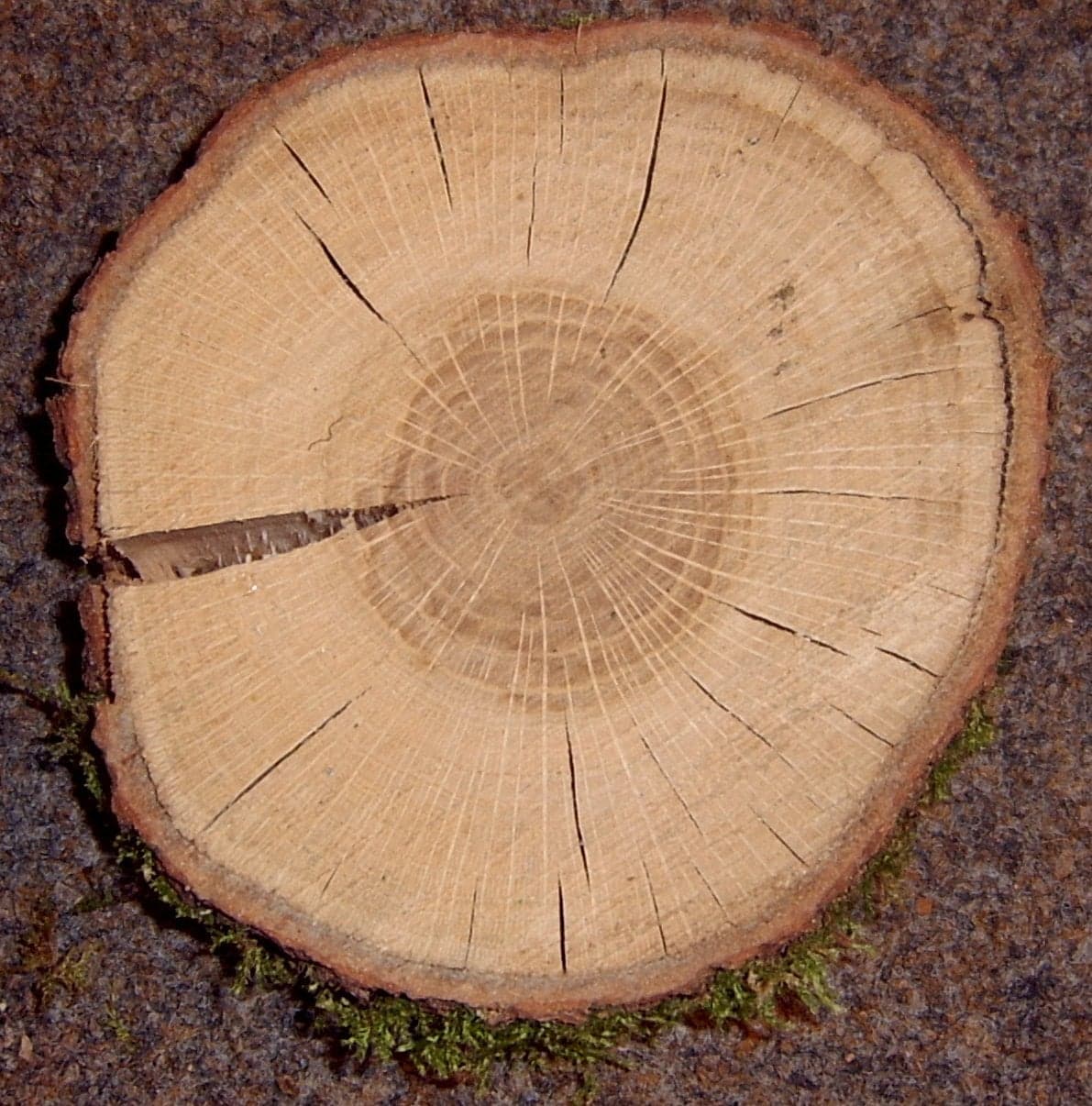
Ingen European Larch lige nu. Disse træarter egner sig til de samme projekter og findes på lager.


Få besked om European Larch
Vi sender dig en e-mail, når nye planker i European Larch kommer til KORENA. Hver planke er unik, så det betaler sig at få besked tidligt.
Træets udseende
Sådan ser det ud
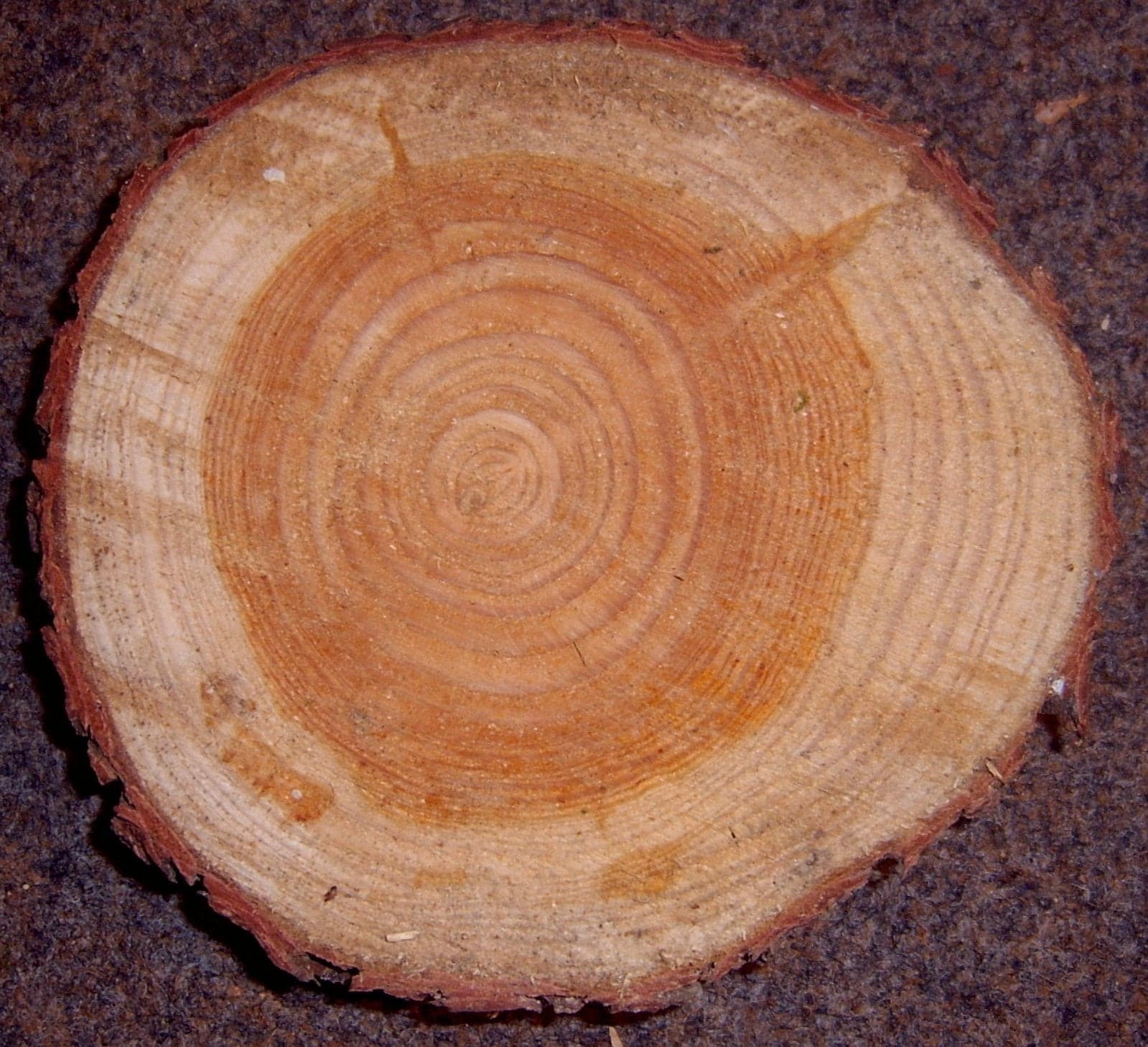
The most visually striking of the European softwoods. Heartwood runs warm honey to a deep russet brown against narrow pale sapwood, and the boundary between the two is sharp and decorative. Growth rings are strongly marked because the latewood bands are dense and dark, which gives flatsawn faces a bold cathedral figure closer to a ring-porous hardwood than to spruce.
- Honey to russet brown heartwood, deepening with UV exposure
- Narrow pale cream sapwood in sharp contrast
- Strongly marked growth rings with dark dense latewood bands
- Hard for softwood; visible growth rings.
Bearbejdning
Bearbejdning
Most hand and machine operations give good results, and larch is stiff and strong enough to feel substantial under the tool. The complication is resin. Natural resins gum up saw blades and clog abrasives, and the problem worsens as the wood warms during a cut. Keep blades clean, take breaks in long rips, and expect to clear the sole of a plane more often than usual. The dense latewood bands can also tear out where grain rises.
Overfladebehandling
Resin is again the issue. Wipe the surface with denatured alcohol or acetone before finishing to lift surface resin, or oil finishes may stay tacky in patches. Once clean it takes oil beautifully and the colour deepens to a rich amber. For exterior work, a penetrating oil renewed annually outperforms film finishes, which crack and lift on a wood this dimensionally active outdoors.
Tørring
Slower and more troublesome than spruce or fir. Larch is prone to distortion and to surface checking if dried too fast, and the high resin content means a hot kiln schedule will drive resin to the surface where it sets sticky. Air drying followed by a low temperature kiln is the standard route for slab stock. Expect around 12.5 percent volumetric shrinkage, and note that internal stress from poor drying shows up as spring and bow once the slab is ripped.
Hvor meget bevæger det sig?
Træ udvider og trækker sig sammen på tværs af bredden, når luften bliver fugtigere og tørrere. Beregn den forventede sæsonbevægelse i en bordplade af European Larch, før du udformer beslagene.
Forventet sæsonbevægelse
ca. 9,4 mm
Fastgør bordpladen med sargklodser eller beslag med langhuller, ikke med lim eller stramme skruer.
Lineær svindmodel: bredde × (svind ÷ 28 % fibermætning) × sæsonudsving i fugtighed. Bruger 8,2 % tangentialt svind for European Larch. Et planlægningsskøn, ikke en garanti.
Hvad det koster
Sikkerhed og indkøb
- Dyrket og fældet i Europa.
- Status på IUCNs rødliste: den globale bevaringsvurdering for denne træart.
Species within the Larix genus have documented cases of skin irritation, hives and skin lesions, though severe reactions remain uncommon. Resin contact is the usual trigger rather than dust alone. Gloves during handling of freshly cut stock and normal extraction during machining are appropriate.
Læs hele guidenDybdegående noter om tegning, farveændring, bearbejdning og stabilitet.
What European Larch actually is#
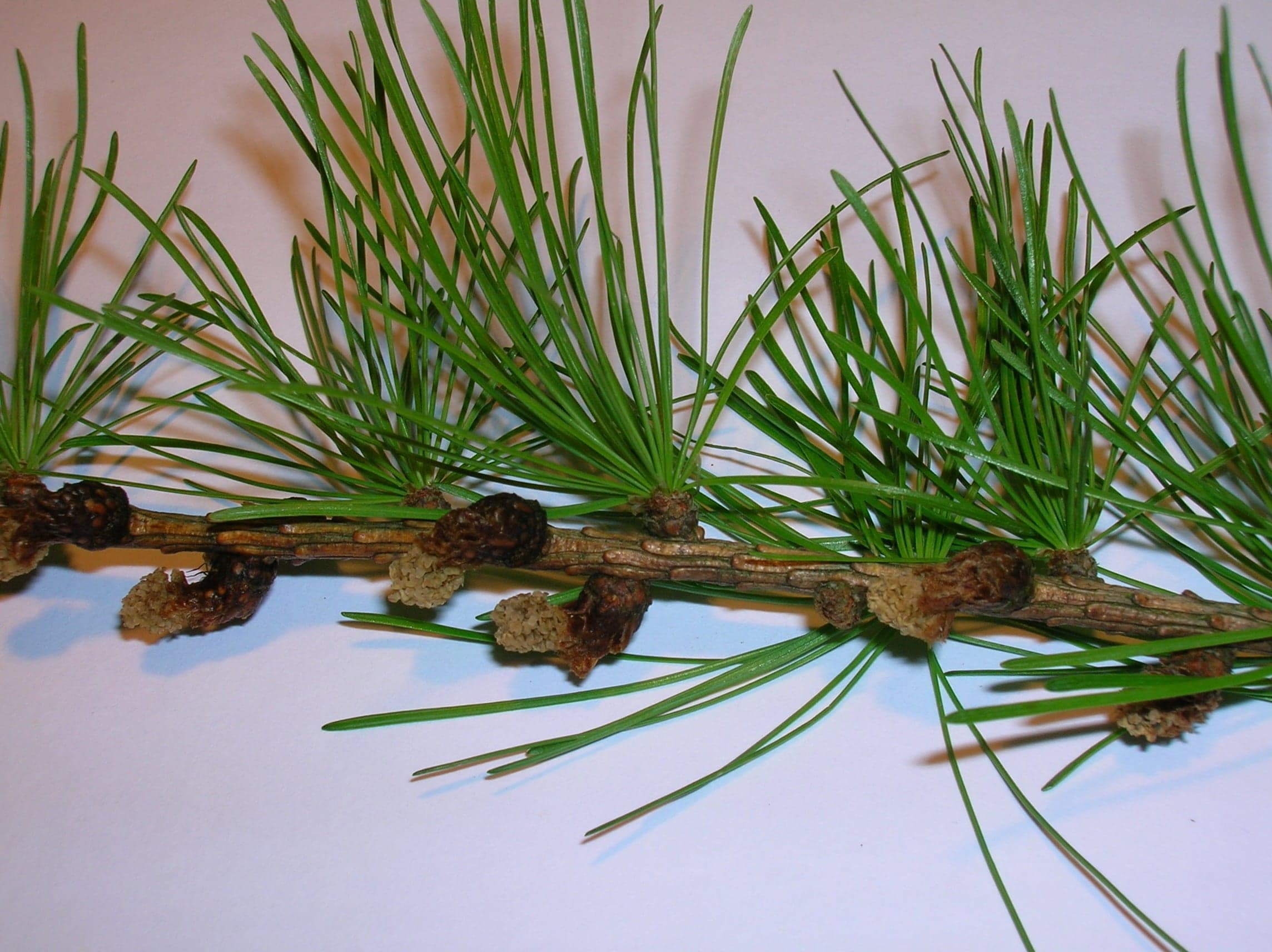
Larix decidua is the conifer that drops its needles. That deciduous habit is the visible oddity, but the useful consequence is in the timber: larch lays down dense, resin-rich latewood in a way that no spruce or fir does, and the result is a softwood that behaves in several respects like a light hardwood.
It is the hardest conifer in the KORENA catalogue at 3,290 N on the Janka scale, which puts it above every pine and fir here and roughly level with small-leaved lime. It is the only one rated durable enough to go outdoors untreated. And it is by some distance the most decorative, with a heartwood and sapwood contrast and a ring figure that reward flatsawing.
The trade-off is resin, and resin complicates every stage from ripping to finishing.
Reading a larch slab#
Two things drive the value of a larch slab: ring spacing and the heartwood to sapwood ratio.
Ring spacing is the durability signal. Slow-grown Alpine larch from high altitude puts down rings a millimetre or two apart, with a high proportion of dense dark latewood. That material is genuinely durable outdoors and considerably stiffer. Fast-grown lowland plantation larch can have rings five or six millimetres apart, much less latewood, and measurably worse durability. The two look related but do not perform alike. If the piece is going outside, ring count is the number to ask about.
Spørgsmål fra købere
Det spørger købere om
Can European Larch be used outdoors untreated?
Yes, within limits. It is rated moderately durable, which is the best of the European softwoods KORENA lists and good enough for cladding, decking and garden furniture without preservative. Ground contact is a different matter and will shorten its life considerably. Slow grown Alpine stock with tight rings outperforms fast grown plantation larch noticeably.
Why do my saw blades gum up cutting larch?
Natural resin content, which is also what gives larch its durability. The resin softens with the heat of cutting and deposits on the blade. Clean blades with a resin solvent between operations, feed at a steady rate rather than forcing the cut, and clear plane soles regularly. It is a nuisance rather than a real obstacle.
How hard is larch compared to oak?
Larch is 3,290 N on the Janka scale against 4,980 N for European oak, so meaningfully softer but by a long way the hardest softwood in this catalogue. It is roughly on a par with small-leaved lime and harder than every pine and fir here. For a tabletop it is a reasonable compromise between weight and durability.
Why is my oil finish staying tacky?
Mekaniske egenskaber
Tekniske data
Offentliggjorte referenceværdier. Når kilderne er uenige, vises intervallet, og den typiske værdi bruges til skalaerne ovenfor.
| Massefylde (kg/m³)Masse pr. kubikmeter ved ca. 12 % fugtighed. Tungere træ er normalt hårdere og stærkere. | 575 kg/m³ |
|---|---|
| Janka-hårdhed (N)Den kraft, der skal til for at presse en stålkugle halvt ind i træet. Standardmålet for modstand mod trykmærker. | 3,290 N |
| MOR: brudmodul (MPa)Bøjningsstyrke: den belastning, hvor en bjælke brækker. | 90 MPa |
| MOE: elasticitetsmodul (GPa)Bøjningsstivhed: hvor meget en hylde eller bordplade bøjer ned under belastning. | 11.8 GPa |
| Radialt svindSvind på tværs af årringene fra frisk til ovntørt træ. Kvartskårne brædder bevæger sig på denne måde. | 4.2 % |
| Tangentialt svindSvind langs årringene. Plansavede brædder og de fleste planker bevæger sig på denne måde. | 8.2 % |