KORENA
TræFinished piecesTilbehørPartnerlagreArtikler

Få besked

Hver planke er unik. Når den er solgt, er den væk. Vi sender dig en mail, når nye stykker kommer til salg: nye leverancer, nye træarter og planker, der passer til en projektbeskrivelse.

Et par mails om måneden. Ingen spam, og du kan altid afmelde dig.

KORENA, førsteklasses løvtræ

Ét emne ad gangen.

Verificeret førsteklasses løvtræ, solgt emne for emne. Hver planke fotograferes, måles og sendes fra partnerlageret med et træpas.

Butik

  • Se produkter
  • Solgte planker
  • Spor ordre

Viden

  • Artikler
  • Guider til træsorter
  • Ordliste
  • Sammenlign
  • Forfattere

Hjælp

  • Om os
  • Sådan fungerer det
  • Bliv partnerlager
  • Find en planke
  • Kundeservice
  • Dokumentskabeloner
  • Presse

Køb

  • Salgsbetingelser
  • Fortrydelsesret
  • Returnering og garanti
  • Forsendelse og levering

Tryghed

  • Privatlivspolitik
  • Cookiepolitik
  • Træets oprindelse og EUDR
  • Tilgængelighed

Virksomhedsoplysninger

  • Juridiske oplysninger
  • Acceptabel brug
  • Immaterielle rettigheder og indhold

© 2026 KORENA. Alle rettigheder forbeholdes.

Drives af Martial Labs Ltd. (BG, EIK 207453941). KORENA er et handelsnavn tilhørende Martial Labs Ltd.

Vi respekterer dit privatliv

Vi bruger nødvendige cookies, så hjemmesiden fungerer. Med din tilladelse bruger vi også cookies til analyse, personligt tilpasset indhold og annoncer. Du kan til enhver tid ændre dit valg på siden med samtykkeindstillinger. Se vores cookiepolitik og privatlivspolitik.

  1. Forside
  2. /
  3. Træarter
  4. /
  5. Scots Pine

Pinus sylvestris

Scots Pine

The most widely distributed pine on earth and the most forgiving wood in this catalogue to build with. Soft, knotty, and it ambers into something far better than it starts as.

  • Dyrket og fældet i Europa.
  • Botanisk gruppe. Nåletræ kommer fra nåletræer, løvtræ fra bredbladede træer.
  • Den botaniske familie, som træarten tilhører.
Få besked, når den kommerReferencetræart. Ingen planker på lager lige nu.
  • Egnethed til projektet
  • På lager
  • Udseende
  • Bearbejdning
  • Bevægelse
  • Pris
  • Sikkerhed og indkøb
  • Spørgsmål
  • Tekniske data

Passer det til dit projekt?

Velegnet til

  • Farmhouse tables
  • Painted and waxed furniture
  • Flooring
  • Panelling
  • Carcass and shelving work

Ingen Scots Pine i det aktuelle parti

Lignende træarter på lager

Ingen Scots Pine lige nu. Disse træarter egner sig til de samme projekter og findes på lager.
  • Åretegning i Saman

    Saman

    Samanea saman

    4 planker

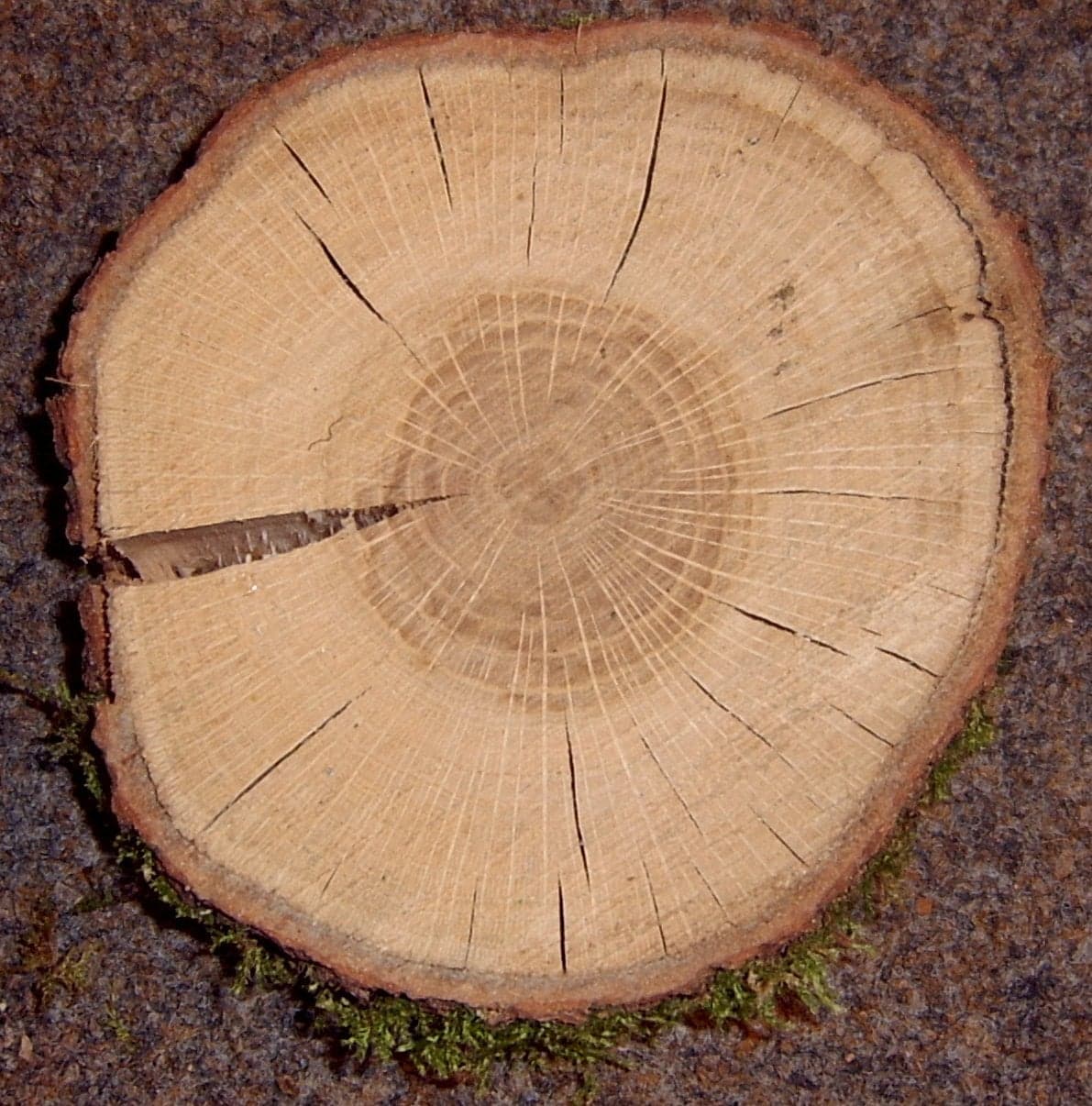
  • Åretegning i European Oak

    European Oak

    Quercus robur

    6 planker

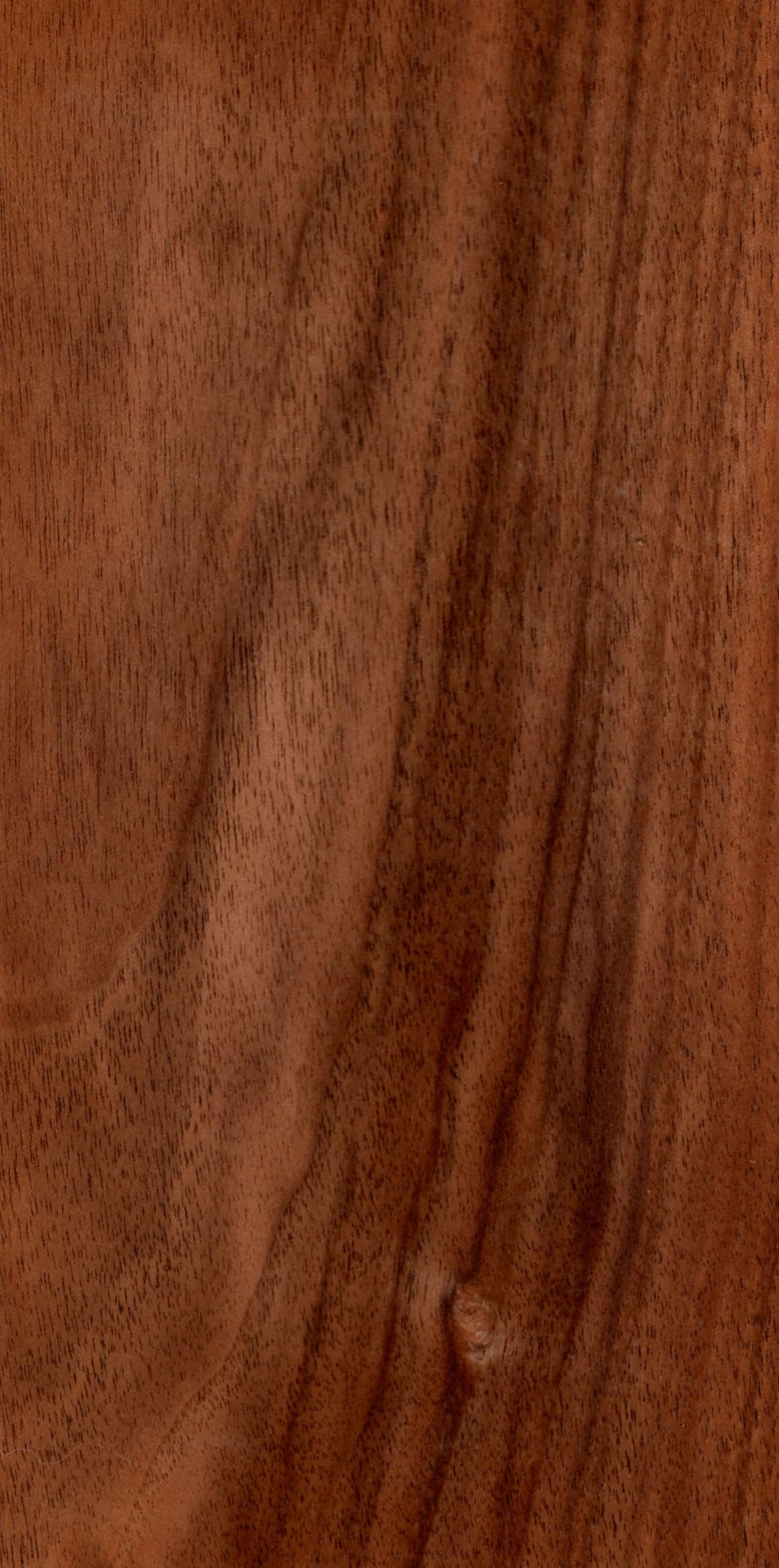
  • Åretegning i European Walnut

    European Walnut

    Juglans regia

    9 planker

Få besked om Scots Pine

Vi sender dig en e-mail, når nye planker i Scots Pine kommer til KORENA. Hver planke er unik, så det betaler sig at få besked tidligt.

Et par mails om måneden. Ingen spam, og du kan altid afmelde dig.

Træets udseende

Sådan ser det ud

Pale yellow to light reddish brown heartwood that darkens considerably with age and light, against a wide band of near white sapwood. The ring figure is pronounced and the knots are a defining feature rather than an incidental one, since Scots Pine is naturally knotty and much of its character in furniture comes from that. Older slow grown stock develops a deep amber colour that is the reason antique pine looks nothing like new pine.

  • Pale yellow to light reddish brown heartwood
  • Wide near white sapwood band
  • Darkens markedly with age and UV toward deep amber
  • Generally straight; moderate resin.

Bearbejdning

Bearbejdning

Easy with both hand and machine tools and it glues and finishes well, which together make it one of the most forgiving woods to build in. Resin is present but less troublesome than in larch or maritime pine. Knots are the real machining consideration: they are hard, often loose, and can tear or spit out under a planer. Around large knots, take light cuts and consider hand work.

Overfladebehandling

Takes finish well and takes wax exceptionally, which is the traditional treatment and still the best one for the look most people want from pine. Pigment stains blotch on pine as they do on spruce, so use a conditioner or choose a dye. Resin around knots should be sealed with shellac before painting or it will bleed through the film. The natural ambering with age is substantial and generally considered the point.

Tørring

Dries fairly quickly and easily with a low tendency to distort, one of its practical virtues. Blue stain from fungus develops fast in warm damp conditions on freshly felled logs and unseasoned boards, so stock that has sat before processing may carry grey blue discolouration through the sapwood. It does not weaken the wood. Volumetric shrinkage is around 13.6 percent, on the higher side for this group.

Hvor meget bevæger det sig?

Træ udvider og trækker sig sammen på tværs af bredden, når luften bliver fugtigere og tørrere. Beregn den forventede sæsonbevægelse i en bordplade af Scots Pine, før du udformer beslagene.

Opskæring
Hvor den skal stå

Forventet sæsonbevægelse

ca. 9,5 mm

Fastgør bordpladen med sargklodser eller beslag med langhuller, ikke med lim eller stramme skruer.

Lineær svindmodel: bredde × (svind ÷ 28 % fibermætning) × sæsonudsving i fugtighed. Bruger 8,3 % tangentialt svind for Scots Pine. Et planlægningsskøn, ikke en garanti.

Hvad det koster

Sikkerhed og indkøb

  • Dyrket og fældet i Europa.
  • Status på IUCNs rødliste: den globale bevaringsvurdering for denne træart.
  • Working with pine has been reported to cause allergic skin reactions and asthma-like symptoms in some people. Resin contact sensitises some individuals over time. Normal extraction, a P2 mask for extended sanding, and gloves when handling resinous stock are appropriate.

Læs hele guidenDybdegående noter om tegning, farveændring, bearbejdning og stabilitet.+

What Scots Pine actually is#

Pinus sylvestris has the largest natural range of any pine species anywhere, stretching from the west of Scotland and the Iberian mountains across the whole of Eurasia to the Pacific coast. It is sold under several names that confuse buyers comparing quotes: redwood in the British trade, deal in older usage, and simply pine almost everywhere. They are the same species.

Its ubiquity has the same effect on its reputation as spruce suffers from. This is the wood of construction studs and cheap furniture, and that association hides the fact that Scots Pine is one of the most pleasant woods to build in that exists, and that it ages into a colour no finish can imitate.

Reading a Scots Pine slab#

Fresh Scots Pine is pale, a light yellow heartwood against a wide near-white sapwood band. What you are actually buying is what that will become. The species ambers dramatically under light and time, moving to a deep honey brown over years and decades. Stripped antique pine holds a colour that new pine stained to match will never quite reach, because the change is oxidation and resin migration through the whole thickness rather than pigment on the surface.

Knots are the second thing to read, and on this species they are not a defect to be tolerated so much as the material's defining texture. Scots Pine is naturally knotty. The question is whether the knots on a given slab are sound and tight, or loose and ringed with checking. Sound knots are a feature. Loose knots will eventually fall out and need filling or plugging.

Spørgsmål fra købere

Det spørger købere om

Why does old pine furniture look so different from new pine?

+

Scots Pine ambers dramatically with age and light exposure. A freshly machined board is pale yellow; the same board after decades of daylight and wax is a deep honey brown. That colour is not a stain, it is oxidation and resin change through the wood, which is why stripped antique pine keeps its colour while new pine stained to match does not age the same way.

Is Scots Pine hard enough for flooring?

+

At 2,420 N Janka it is soft for a floor and will dent, which is precisely the look traditional pine flooring has. It has been used for floors across northern Europe for centuries on that understanding. If dents are unacceptable, oak or ash are the right answer; if a floor that records its use is wanted, pine does it honestly.

What causes the grey blue staining in the sapwood?

+

Blue stain fungus, which colonises freshly felled pine in warm damp conditions. It discolours the sapwood without weakening it structurally. Some makers avoid it and some feature it. It is a cosmetic grade issue, and any KORENA listing showing it will show it in the slab photography rather than describing it away.

Mekaniske egenskaber

Tekniske data

Offentliggjorte referenceværdier. Når kilderne er uenige, vises intervallet, og den typiske værdi bruges til skalaerne ovenfor.

Massefylde (kg/m³)Masse pr. kubikmeter ved ca. 12 % fugtighed. Tungere træ er normalt hårdere og stærkere.550 kg/m³
Janka-hårdhed (N)Den kraft, der skal til for at presse en stålkugle halvt ind i træet. Standardmålet for modstand mod trykmærker.2,420 N
MOR: brudmodul (MPa)Bøjningsstyrke: den belastning, hvor en bjælke brækker.83 MPa
MOE: elasticitetsmodul (GPa)Bøjningsstivhed: hvor meget en hylde eller bordplade bøjer ned under belastning.10.1 GPa
Radialt svindSvind på tværs af årringene fra frisk til ovntørt træ. Kvartskårne brædder bevæger sig på denne måde.5.2 %
Tangentialt svindSvind langs årringene. Plansavede brædder og de fleste planker bevæger sig på denne måde.8.3 %
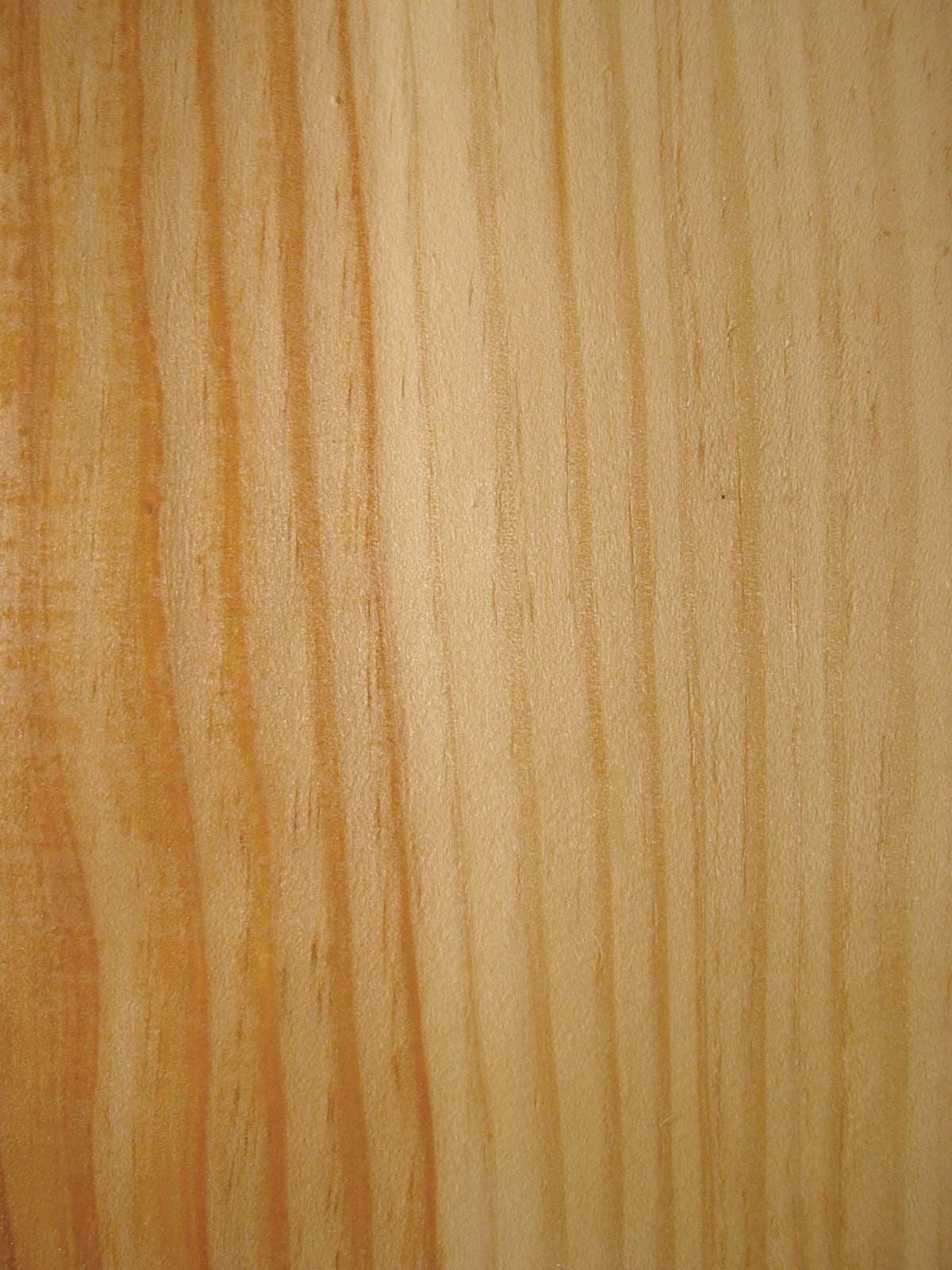
Åretegning i Scots Pine

Wikimedia Commons contributor, via Wikimedia Commons

Pinus sylvestris has the widest natural range of any pine on earth, running from Scotland and Iberia across Eurasia to the Pacific. European slab stock comes mostly from Scandinavia, the Baltics and Poland, where certified managed forestry is the norm and EUDR documentation is well established.

  • Not listed in the CITES Appendices and assessed by the IUCN as Least Concern. It is among the most abundant and best certified timbers in Europe, with mature FSC and PEFC supply chains through Scandinavia and the Baltics. Of all the species KORENA lists, this is one of the simplest to document for EUDR purposes.

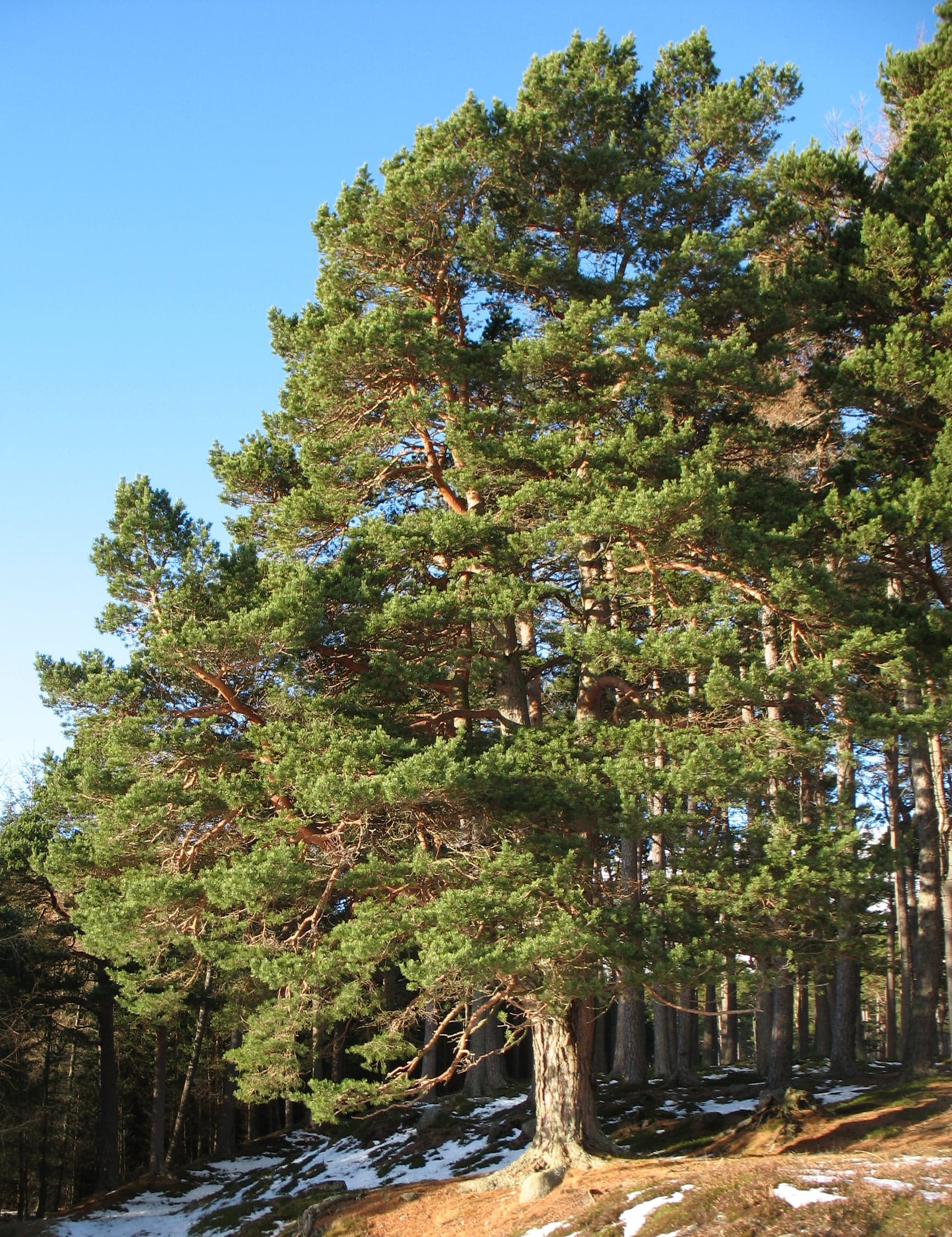
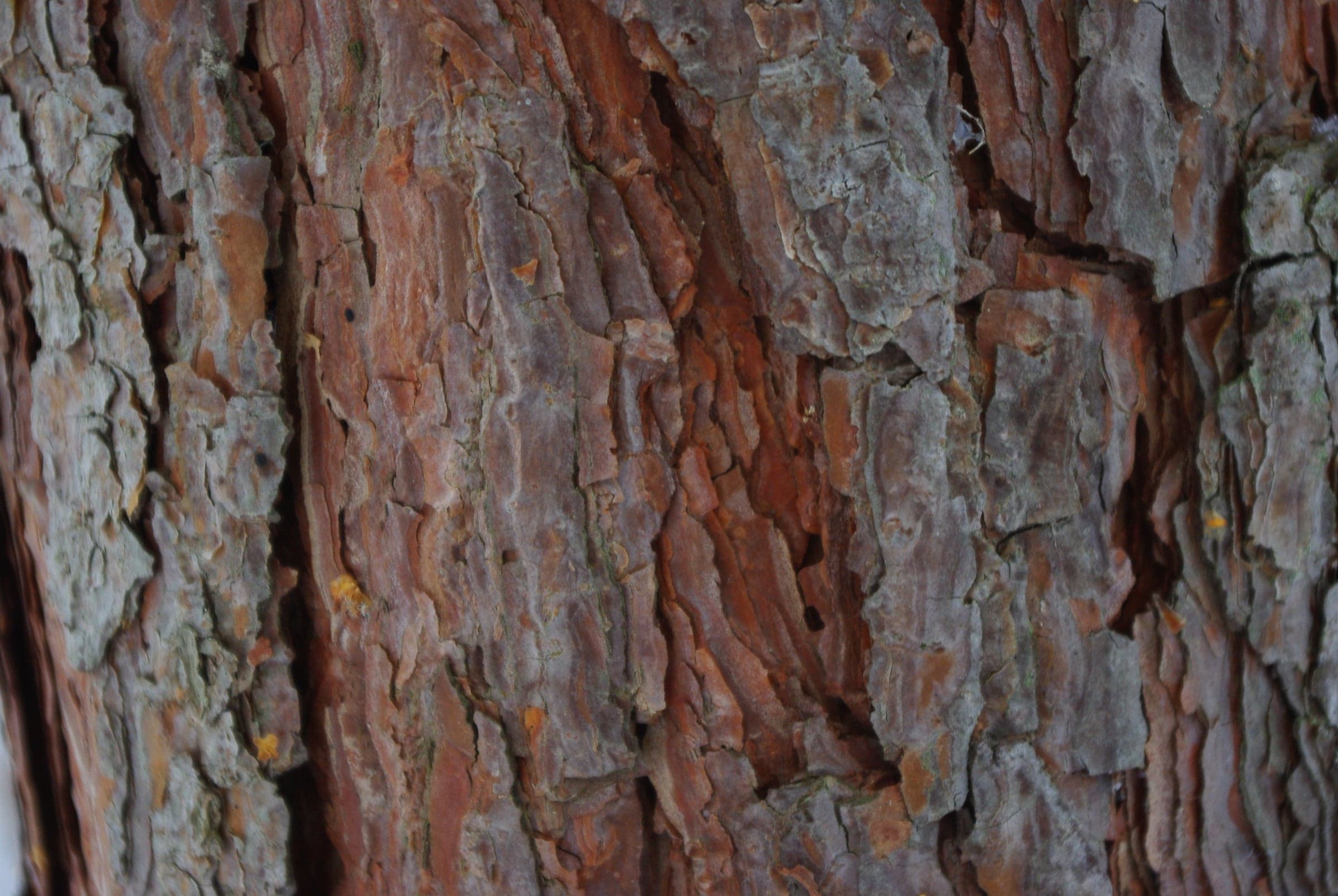
  • Scots Pine-træ

    Hello, I am Bruce on Flickr, via Wikimedia Commons

    Scots Pine: Træbark
    Træbark

    Ring spacing separates slow-grown northern stock, which is denser, more stable and considerably more attractive, from fast-grown material with wide soft bands. Baltic and Scandinavian slabs from higher latitudes tend toward the former.

    Blue stain shows as a grey-blue cast through the sapwood. It is a fungus that colonises freshly felled logs in warm damp conditions and it does not weaken the wood. Whether it is a flaw or a feature depends entirely on the piece.

    At the bench#

    This is the easiest wood in the catalogue to work. It cuts cleanly with hand and machine tools, it glues reliably, it takes fastenings well for a softwood, and it finishes without argument. For a first slab project, or for a maker working without a well equipped shop, it removes most of the ways a build can go wrong.

    The knots are where care is needed. They are much harder than the surrounding wood, frequently contain resin, and can tear out or spit under a planer knife. Take light cuts approaching a large knot, and be prepared to finish that area by hand or with a scraper. A helical cutterhead makes a substantial difference on knotty stock.

    Resin is present but far less troublesome than in larch or maritime pine. Blades will need occasional cleaning rather than constant attention.

    For gluing, ordinary PVA at moderate clamping pressure is sufficient. Avoid crushing the fibres by over-clamping, which starves the joint.

    Drying and movement#

    Scots Pine dries quickly and easily with a low tendency to distort, which is another reason it dominates commodity production. Slab stock in thick sections still benefits from air drying to around 20 percent followed by a controlled kiln finish.

    Volumetric shrinkage at roughly 13.6 percent is on the higher side for this group, with tangential movement at 8.3 percent against 5.2 percent radial. The ratio between the two is better than spruce or fir, which means flatsawn pine cups less aggressively than flatsawn spruce of the same width. It still moves, and a wide top should float rather than be fixed rigidly.

    Finishing, and the one trap#

    Pine takes wax exceptionally well, and wax over bare or lightly oiled pine is the traditional treatment that produces the look most people actually want from this wood. It also takes oils and modern hardwax finishes without difficulty.

    Pigment stains blotch, for the same reason they blotch on spruce: the density difference between earlywood and latewood makes absorption uneven. A conditioner or a dye rather than a pigment stain solves it.

    The trap is paint. Resin in and around knots stays mobile for years and will migrate straight through most primers, appearing as brown rings on a white surface months after the job looked finished. Seal every knot with shellac before priming. This is old advice and it is still the correct advice, because shellac remains the best barrier available for resin bleed.

    Where Scots Pine is the right answer#

    Farmhouse tables, painted and waxed furniture, panelling, carcass work, shelving, and traditional flooring where dents are understood as part of the character rather than a failure. It is the right answer whenever the budget is real, the shop is modest, or the piece is meant to look better in twenty years than it does on day one.

    It is the wrong answer for a surface that must stay unmarked, for exterior use without treatment, and for anything where a stained colour needs to stay exactly as applied.

    Sourcing and EUDR#

    Not CITES listed and assessed as Least Concern. Scots Pine has some of the most mature certified supply chains of any timber in Europe, with well established FSC and PEFC coverage through Scandinavia, the Baltics and Poland. Of everything in the KORENA catalogue, this is among the most straightforward species to document to EUDR standard, which is worth weighing if the paperwork burden on a project matters as much as the material.

    How do I stop resin bleeding through paint around knots?

    +

    Seal the knots with shellac before priming. Resin in and around knots stays mobile and will migrate through most primers and paints, showing as brown rings months later. Shellac is the traditional barrier for exactly this reason and it still works better than modern alternatives.

    Is Scots Pine the same as redwood or deal?

    +

    Yes. Redwood is the British trade name for Pinus sylvestris, and deal is an older term for pine boards of a particular size that came to be used loosely for the species. All three names refer to the same wood, which causes regular confusion when buyers compare quotes.

    Volumetrisk svindSamlet volumenændring fra frisk til ovntørt træ. En lavere værdi betyder større stabilitet.
    13.6 %
    Naturlig holdbarhed (EN 350)Europæisk standard for naturlig modstandsdygtighed mod råd, fra 1 (meget holdbar) til 5 (ikke holdbar).Class 4 — Slightly durable

    Kilder

    • The Wood Database — Scots Pine (Pinus sylvestris)(tilgået 2026-08-12)
    • USDA FPL Wood Handbook FPL-GTR-190 (2010)(tilgået 2026-08-12)
    • Meier, E. — WOOD! Identifying and Using Hundreds of Woods Worldwide (2015)(tilgået 2026-08-12)

    Styrker

    • Godt for begyndereLet at arbejde med ved høvlebænken og ikke så hårdt, at det slider værktøjet voldsomt.

    Vær opmærksom

    • Ikke til ubehandlet udendørs brugDen naturlige holdbarhed er EN 350-klasse 4 af 5. Brug træet indendørs eller under en vedligeholdt overfladebehandling.
    • Bevæger sig mere end de flesteBrede bordplader kræver sargklodser eller beslag med langhuller og plads til bevægelse. Brug bevægelsesberegneren nedenfor.
    • Støvet irritererBrug udsugning og maske under slibning og bearbejdning.

    Tryk på en etiket for detaljer.

    Kort fortalt

    Niveauerne bruger faste intervaller for alle træarter hos KORENA, så de kan sammenlignes direkte. Den målte værdi står under hvert niveau.
    HårdhedModstand mod trykmærker og slidBlødt

    Janka-hårdhed 2.420 N

    51 % blødere end europæisk eg

    VægtHvor tung en planke er at løfteMellem

    550 kg/m³

    StabilitetHvor lidt det bevæger sig med årstiderneLivligt

    13,6 % volumetrisk svind

    BearbejdningSavning, høvling, slibning og limningLet

    4,0 / 5 i gennemsnit ved høvlebænken

    Udendørs brugNaturlig modstandsdygtighed mod råd, EN 350Kun indendørs

    EN 350-klasse 4

    • Savning · Meget godHvor rent det skærer, og hvor hårdt det er ved savklinger.1 = vanskelig · 5 = fremragende
    • Høvling · Meget godHvor glat en overflade det giver, og hvor meget det flosser.1 = vanskelig · 5 = fremragende
    • Slibning · Meget godHvor hurtigt det kan slibes glat uden at tilstoppe sandpapiret.1 = vanskelig · 5 = fremragende
    • Drejning · Meget godHvordan det skærer og efterbehandles på drejebænken.1 = vanskelig · 5 = fremragende
    • Udskæring · GodHvor skarpt det holder detaljer under et stemmejern.1 = vanskelig · 5 = fremragende
    • Limning · FremragendeHvor pålideligt limsamlinger holder.1 = vanskelig · 5 = fremragende
    • Fastholdelse af skruer/søm · Meget godHvor godt det holder skruer og søm uden at flække.1 = vanskelig · 5 = fremragende
    • Dampbøjning · GodHvor godt det tager form efter dampning.1 = vanskelig · 5 = fremragende

    Det koster Scots Pine-tømmer i Europa lige nu pr. kubikmeter før moms. Tryk på en pris for at se detaljerne.

    • Bedste kævler på auktionUdvalgte kævler af høj kvalitet solgt på tilbudsauktioner, hovedsageligt til finer- og møbelproducenter. Planker skæres af kævler som disse.De fleste priser ligger mellem 108 € og 163 €.Baseret på 71 priser fra 2 regioner.Seneste data 21. sep. 2026
    • Almindelige kævlerStore mængder almindeligt rundtræ solgt af skovejere og statsskovbrug, hovedsageligt til byggeri og industri.De fleste priser ligger mellem 41 € og 125 €.Baseret på 78 priser fra 8 regioner.Seneste data 21. sep. 2026

    Bedste kævler på auktion efter land

    • Tyskland · 153 € / m³Regioner: Bavaria44 priserSeneste data 21. sep. 2026
    • Østrig · 108 € / m³Regioner: Austria27 priserSeneste data 21. sep. 2026

    Almindelige kævler efter land

    • Bulgarien · 91 € / m³Regioner: North-West Bulgaria24 priserSeneste data 24. aug. 2026
    • Sverige · 71 € / m³Regioner: Sweden Central25 priserSeneste data 30. jun. 2026
    • Frankrig · 58 € / m³Regioner: Bourgogne-Franche-Comté og Grand Est / Alsace8 priserSeneste data 15. jun. 2026

    Hvorfor koster en planke mere end dette?

    Dette er priser på råt tømmer. En planke er det bedste snit af en kævle, tørret i et år eller mere og derefter kontrolleret og målt styk for styk. Kun en lille del af hver kævle bliver til en planke.

    Kilde: KORENA Timber Index · Seneste data 21. sep. 2026

    Se alle regionale priser
    Finland53 €
    Finland · 53 € / m³
    Regioner: Southern Finland (Etelä-Suomi)
    3 priser
    Seneste data 21. sep. 2026
  • Norge · 51 € / m³Regioner: Norway (national)3 priserSeneste data 21. sep. 2026
  • Rumænien · 44 € / m³Regioner: Moldavia (Romania) og Transylvania15 priserSeneste data 14. sep. 2026