KORENA
MaderaFinished piecesMaterialesAlmacenesRevista

Recibe avisos

Cada tabla es única. Cuando se vende, ya no vuelve. Te avisamos cuando se publican nuevas piezas: nuevas llegadas, especies y tablas adecuadas para un proyecto.

Unos pocos correos al mes. Sin spam; puedes darte de baja cuando quieras.

KORENA, madera noble de primera calidad

Una pieza cada vez.

Madera noble de primera calidad verificada, vendida pieza a pieza. Cada tabla se fotografía, se mide y se envía desde el almacén asociado con un pasaporte de la madera.

Comprar

  • Ver productos
  • Archivo de piezas vendidas
  • Seguir pedido

Aprender

  • Revista
  • Guías de especies
  • Glosario
  • Comparar
  • Autores

Ayuda

  • Quiénes somos
  • Cómo funciona
  • Hazte almacén asociado
  • Solicitar una tabla
  • Asistencia
  • Plantillas de documentos
  • Prensa

Comprar

  • Condiciones de venta
  • Derecho de desistimiento
  • Devoluciones y garantía
  • Envío y entrega

Confianza

  • Política de privacidad
  • Política de cookies
  • Procedencia de la madera y EUDR
  • Accesibilidad

Aviso legal

  • Aviso legal
  • Uso aceptable
  • Propiedad intelectual y contenido

© 2026 KORENA. Todos los derechos reservados.

Gestionado por Martial Labs Ltd. (BG, EIK 207453941). KORENA es un nombre comercial de Martial Labs Ltd.

Respetamos tu privacidad

Usamos cookies esenciales para que el sitio funcione. Con tu permiso, también usaríamos cookies para análisis, contenido personalizado y publicidad. Puedes cambiar de opinión en cualquier momento en la página de preferencias de consentimiento. Consulta nuestra política de cookies y nuestra política de privacidad.

  1. Inicio
  2. /
  3. Especies
  4. /
  5. Aleppo Pine

Pinus halepensis

Aleppo Pine

The pine of dry Mediterranean coasts. Irregular, resinous and awkward to machine, with the lowest measured shrinkage of anything KORENA lists.

  • Cultivada y aprovechada en Europa.
  • Grupo botánico. Las maderas blandas proceden de coníferas y las duras, de árboles frondosos.
  • Familia botánica a la que pertenece la especie.
Avísame cuando llegueEspecie de referencia. Ahora mismo no hay piezas en stock.
  • Adecuación al proyecto
  • En stock
  • Aspecto
  • Cómo trabajarla
  • Movimiento
  • Precio
  • Seguridad y abastecimiento
  • Preguntas
  • Datos técnicos

¿Es adecuada para tu proyecto?

Ideal para

  • Rustic furniture
  • Panelling
  • Carcass work
  • Shelving
  • Decorative slabs

Ventajas

  • Muy establePoco movimiento estacional. Adecuada para tableros anchos y uniones ajustadas.

Ten en cuenta

  • El polvo es irritanteUsa extracción y mascarilla al lijar o mecanizar.

Pulsa una etiqueta para ver los detalles.

No hay Aleppo Pine en la selección actual

Especies similares en stock

Ahora mismo no hay Aleppo Pine. Estas especies sirven para los mismos proyectos y tienen piezas disponibles.

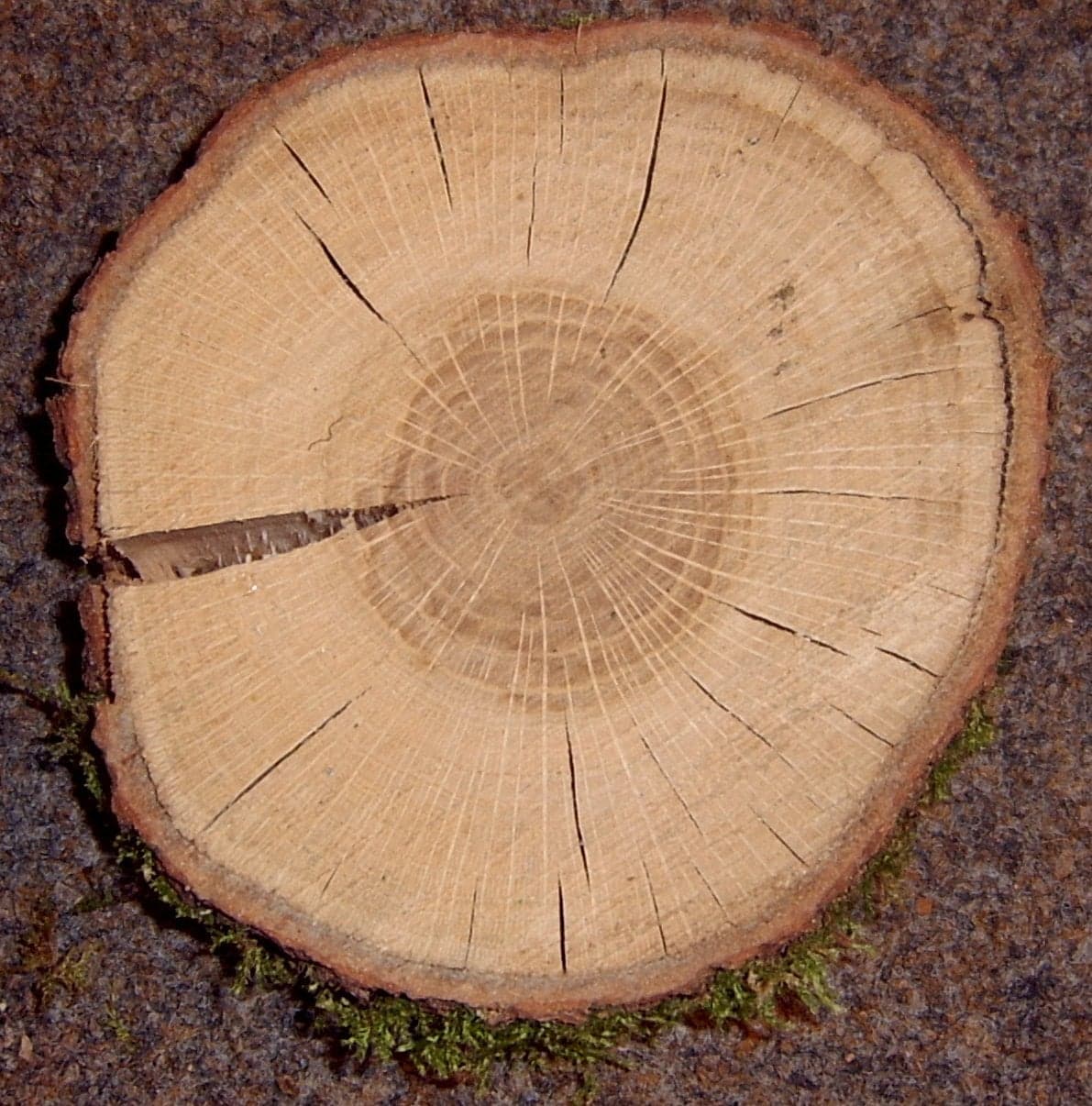
  • Veta de European Oak

    European Oak

    Quercus robur

    6 piezas

  • Veta de European Walnut

    European Walnut

    Juglans regia

    9 piezas

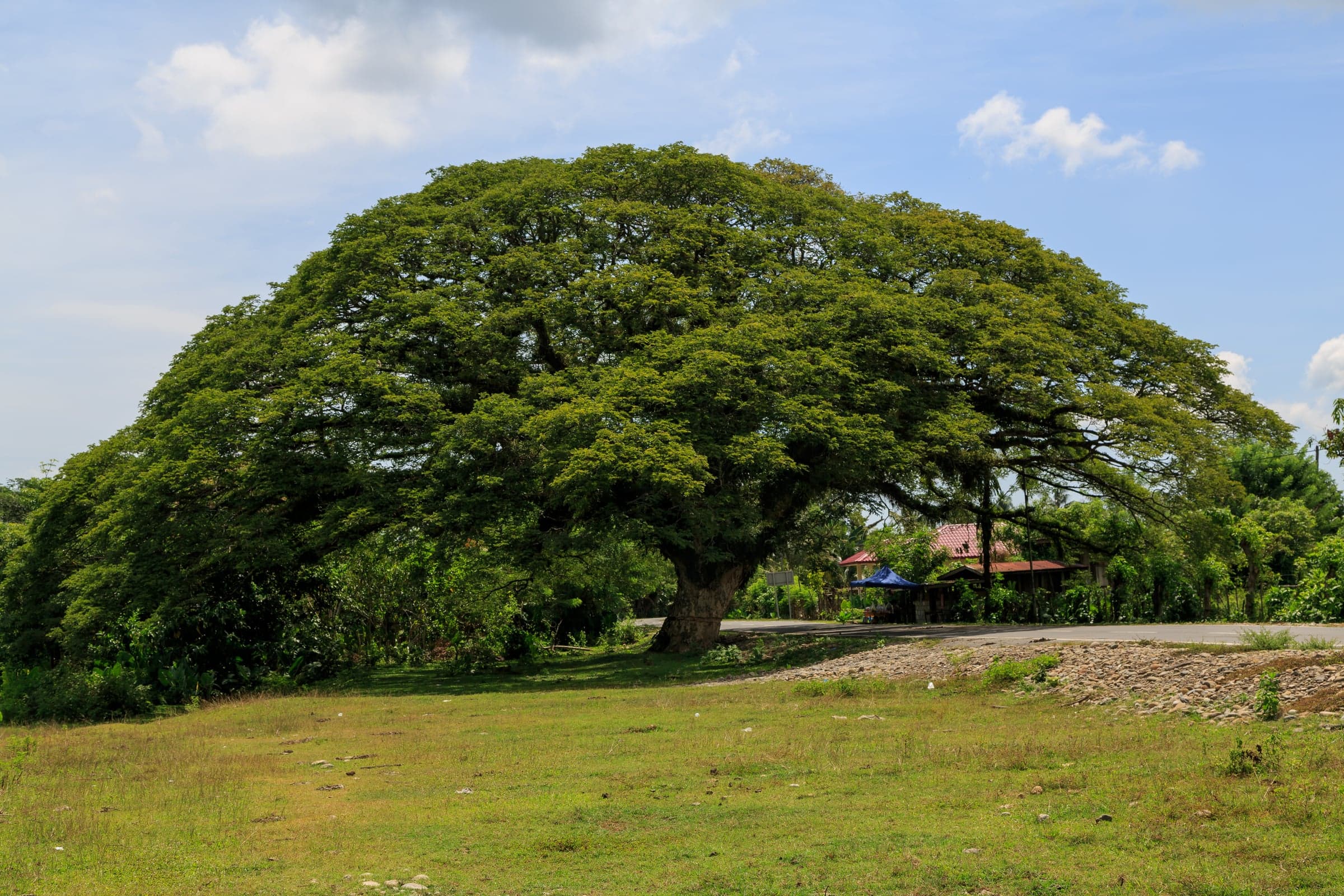
  • Veta de Saman

    Saman

    Samanea saman

    4 piezas

Recibe avisos sobre Aleppo Pine

Te enviamos un correo cuando lleguen a KORENA nuevas tablas de Aleppo Pine. Cada pieza es única, por lo que conviene enterarse pronto.

Unos pocos correos al mes. Sin spam; puedes darte de baja cuando quieras.

Aspecto de la madera

Qué aspecto tiene

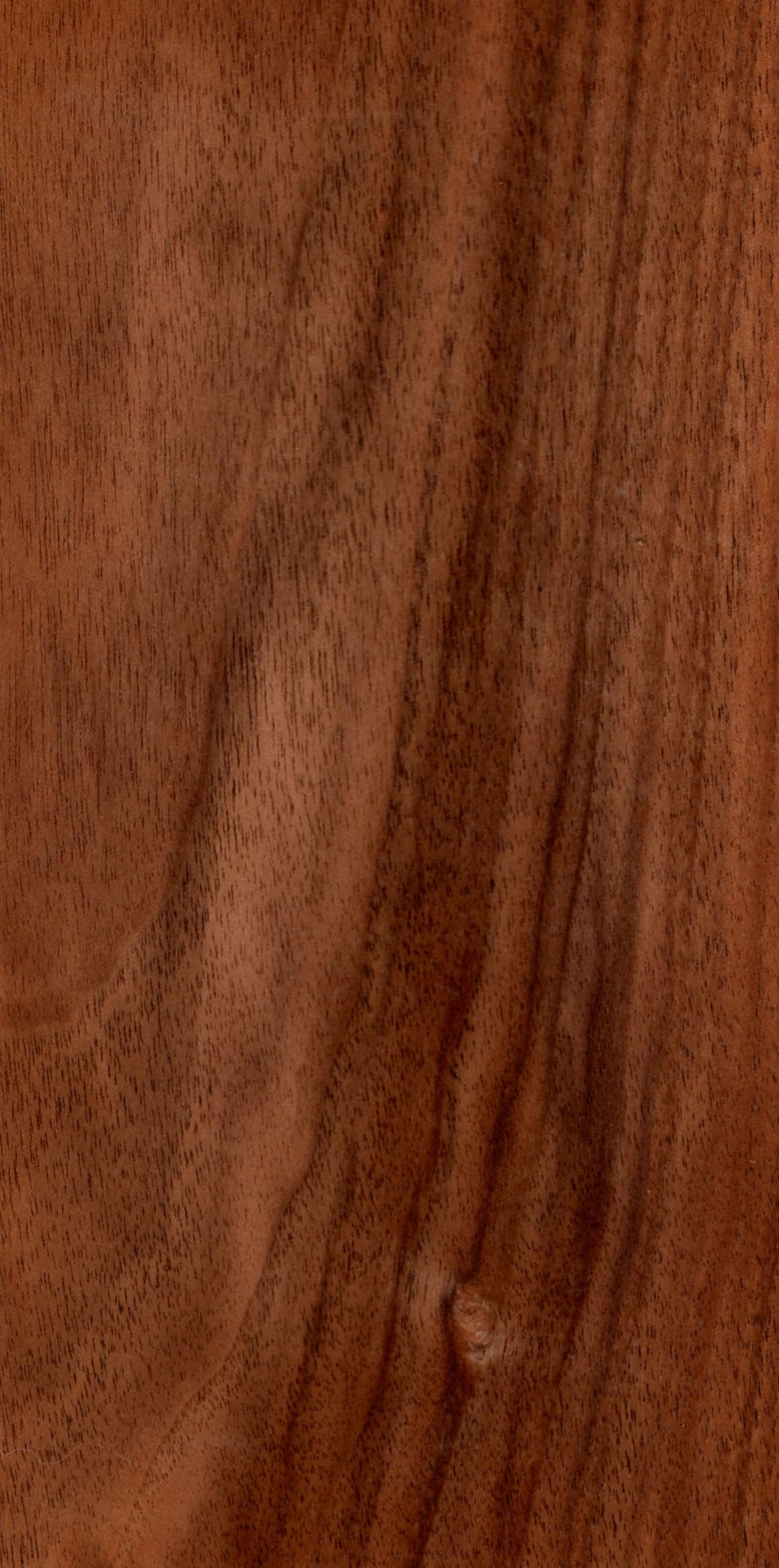
Pale yellow to light brown, often with an orange tint in the heartwood, against wide pale sapwood. Growth is fast and irregular where conditions are dry, so ring width varies noticeably within a single board and the grain is frequently wavy rather than straight. Knots are common. It reads as a rougher, more variable wood than the northern pines.

  • Pale yellow to light brown with an orange tint
  • Wide and irregular growth rings reflecting drought driven growth
  • Frequently wavy grain rather than straight
  • Straight grain with irregular ring width from drought-driven growth; frequently wavy. Coarse texture, pale yellow to light brown with an orange tint against wide pale sapwood.

Cómo trabajarla

Cómo trabajarla

  • Aserrado · BuenaLa limpieza del corte y el desgaste que causa en las hojas.1 = difícil · 5 = excelente

Resinous and variable. The wavy and irregular grain typical of drought grown stock causes tear-out where the grain direction reverses, which it does often. Light cuts, sharp tooling and a scraper for the final surface are the practical answer. Resin loads blades and abrasives as it does in the other Mediterranean pines. It glues acceptably once surfaces are clean of resin.

Acabado

Wipe with denatured alcohol or acetone before finishing to lift surface resin. Pigment stains blotch, as in all the pines, so a dye or a clear finish is safer. Seal knots with shellac before painting. The orange tint in the heartwood deepens with light exposure.

Secado

Prone to distortion because the grain is irregular and ring width uneven, so expect more spring and bow on ripping than in a northern pine. Measured shrinkage from the cited study is comparatively low at around 8.3 percent volumetric, with radial at 3.8 and tangential at 4.8 percent, and the unusually narrow gap between those two figures suggests good dimensional behaviour once dry. Those values come from Algerian material and regional variation in this species is wide.

¿Cuánto se moverá?

La madera se hincha y se contrae a lo ancho cuando el aire gana o pierde humedad. Calcula el movimiento estacional de un tablero de Aleppo Pine antes de diseñar las fijaciones.

Corte
Dónde estará

Movimiento estacional previsto

unos 5,4 mm

Fija el tablero con lengüetas o soportes ranurados, no con cola ni tornillos apretados.

Modelo de contracción lineal: ancho × (contracción ÷ 28 % de saturación de la fibra) × variación estacional de humedad. Usa una contracción tangencial del 4,76 % para Aleppo Pine. Es una estimación para planificar, no una garantía.

Cuánto cuesta

Aún no hay una referencia de mercado para Aleppo Pine. Cada pieza de KORENA recibe un precio individual de su almacén asociado.

Seguridad y abastecimiento

  • Cultivada y aprovechada en Europa.
  • Working with pine has been reported to cause allergic skin reactions and asthma-like symptoms in some people. This species is resinous, so skin contact sensitisation over repeated exposure is a realistic risk. Gloves and good extraction are appropriate.

  • Pinus halepensis is the characteristic pine of the Mediterranean basin, growing from Spain and southern France across Italy, Greece and the Balkans to North Africa and the Levant. It tolerates drought and poor limestone soils better than any other pine here, which is why it dominates dry coastal landscapes and is planted heavily for erosion control.

  • Not listed in the CITES Appendices. Aleppo Pine is abundant across the Mediterranean and widely planted for erosion control on degraded land, so supply is not constrained. Fire is the dominant pressure on these forests, and large burn events regularly push salvage material into regional markets. The species is fire adapted and regenerates readily, but salvage stock should be identified as such.

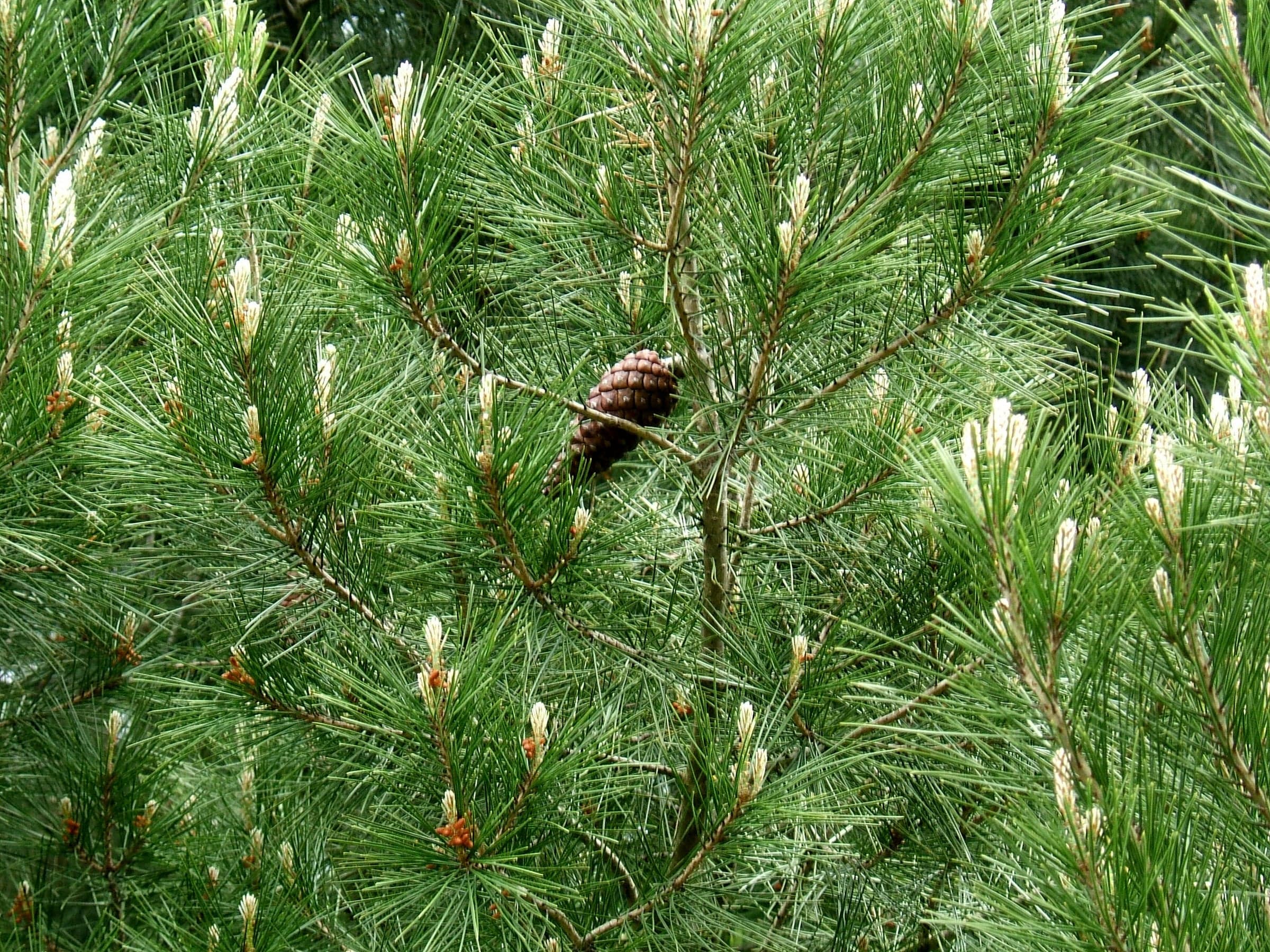
Aleppo Pine: Hoja
Hoja
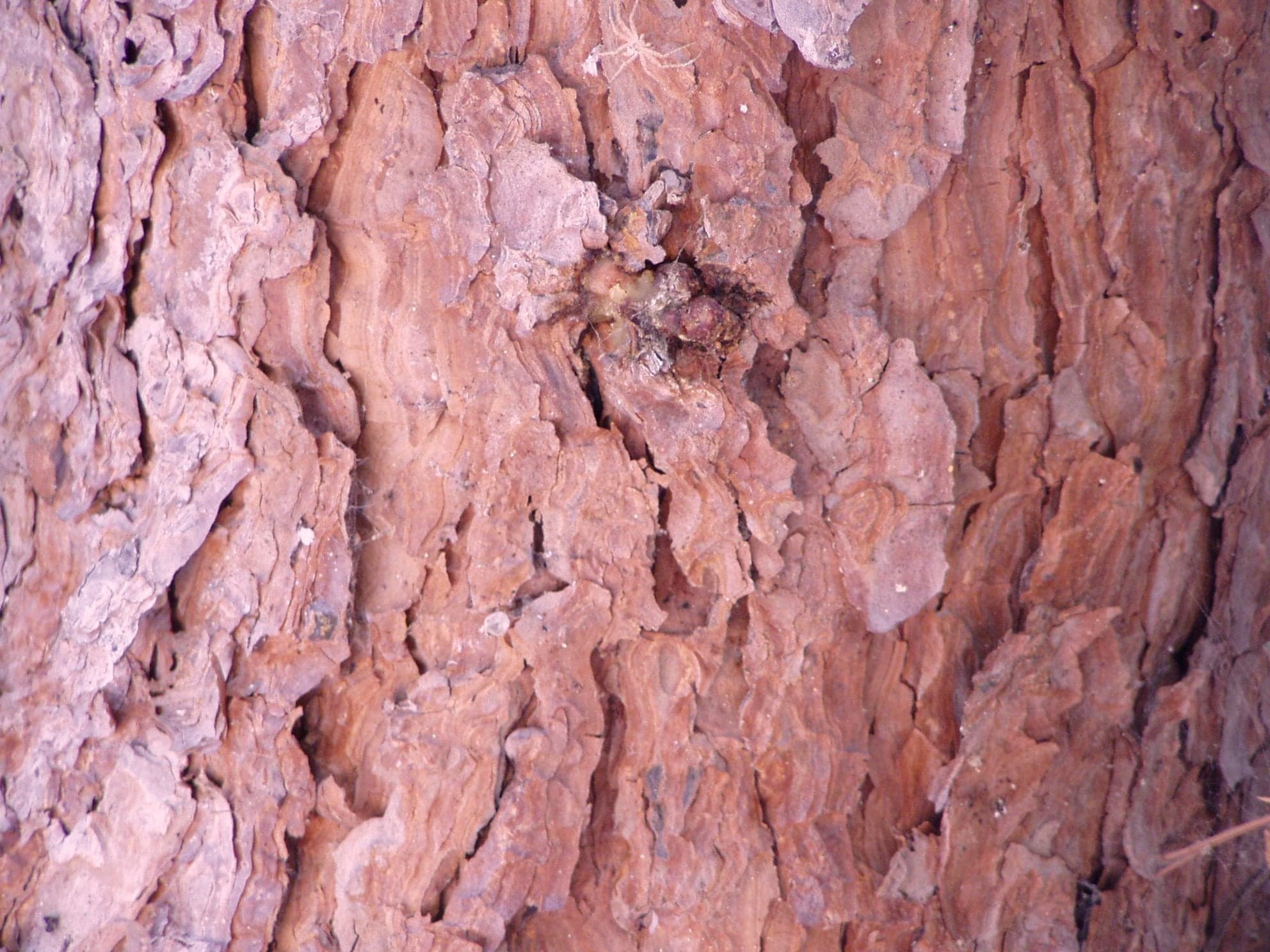
Aleppo Pine: Corteza
Corteza
Leer la guía completaNotas detalladas sobre el dibujo, el cambio de color, el trabajo y la estabilidad.+

What Aleppo Pine actually is#

Pinus halepensis is the pine you have seen on every dry Mediterranean hillside, from Spain and southern France across Italy, Greece and the Balkans to North Africa and the Levant. It tolerates drought and thin limestone soils better than any other pine in this catalogue, which is why it dominates degraded coastal landscapes and is planted heavily for erosion control.

That toughness in the field translates into an awkward timber. Growing under water stress produces irregular ring width, frequently wavy grain, and a lot of knots. It is a rougher and more variable wood than the northern pines, and it should be chosen for what it looks like rather than in spite of it.

What the numbers do and do not cover#

This species has partial data, and the gaps are worth explaining.

Density is listed at 540 kg per cubic metre, which sits between Maritime Pine at 500 and Scots Pine at 550. Modulus of rupture and shrinkage are also listed. All of these come from a single peer-reviewed study of Algerian material, cited on the species record.

There is no Janka hardness value and no elastic modulus. The general reference works do not publish a Janka figure for this species, and the study that measured stiffness did so under EN 310, a panel testing standard whose results are not comparable to the clear-wood values published for the other species here. Presenting 17.5 GPa next to Scots Pine at 10.08 GPa would imply a stiffness ranking that the test basis does not support, so the field is left empty rather than filled misleadingly.

There is also no durability rating, which matters practically: it means there is no sourced basis for recommending this wood outdoors.

The shrinkage figure is the interesting one#

The cited study measured volumetric shrinkage at around 8.3 percent, radial at 3.8 percent and tangential at 4.8 percent. That volumetric figure is the lowest in the entire KORENA catalogue, well below Maritime Pine at 14.4 percent.

More important than the headline number is the gap between radial and tangential. Cupping in a flatsawn board is driven by the difference between those two, and most species here run a ratio close to two to one. Aleppo Pine at 3.8 against 4.8 is far closer to one to one, which predicts unusually good behaviour across a wide flatsawn face.

Two caveats. The values come from Algerian material and this species varies widely across a very large range. And low shrinkage does not compensate for irregular grain, which causes its own distortion on drying regardless of how little the wood shrinks overall.

At the bench#

Expect tear-out. The wavy and irregular grain reverses direction within a single pass more often than in a northern pine, and a heavy cut will lift fibres wherever it does.

The working method that suits this wood is light cuts, sharp tooling, and a final surface produced with a card scraper or a high angle plane rather than by machining flat in one go. A helical cutterhead earns its cost here.

Resin loads blades and abrasives at roughly the level of Maritime Pine, which is to say constantly. Clean blades between operations and treat sandpaper as consumable. Wipe joint faces with acetone before glue-up, because resin on a jointed surface will compromise the bond.

Finishing#

Solvent wipe first, as with the other resinous Mediterranean pines: denatured alcohol or acetone, allowed to flash off, before any oil goes on. Skipping it produces patchy curing that only becomes visible after the work is finished.

Pigment stains blotch, so use a dye or leave it clear. Seal every knot with shellac before a painted finish. The orange tint in the heartwood deepens with light exposure.

Where Aleppo Pine is the right answer#

Rustic furniture, panelling, carcass work, shelving and decorative slabs where the irregular figure and knot pattern are wanted, and where the excellent flatsawn stability is useful.

It is the wrong answer for fine work, for anything requiring a calculated load path given the missing stiffness data, and for exterior use, where no durability rating exists to support the decision.

Sourcing and EUDR#

Not listed in the CITES Appendices. Supply is not constrained: the species is abundant across the Mediterranean and planted extensively on degraded land. Fire is the dominant pressure on these forests, and large burn events regularly push salvage volumes into regional markets. Aleppo Pine is fire adapted and regenerates readily, so salvage material is legitimate, but it should be identified rather than discovered. KORENA listings record the originating yard and region.
Preguntas de compradores

Preguntas de compradores

Why is there no Janka hardness listed for Aleppo Pine?

+

KORENA publishes a figure only where a cited source supports it. The general reference works do not carry a Janka value for Pinus halepensis, and the one peer-reviewed dataset available covers density, bending strength and shrinkage but not hardness. Rather than borrow a number from another Mediterranean pine, the field is left empty. Density is listed at 540 kg per cubic metre, which places it between Maritime Pine and Scots Pine.

How stable is it?

+

Better than its rough appearance suggests. The cited study measured volumetric shrinkage at around 8.3 percent, the lowest figure in this catalogue, with radial at 3.8 and tangential at 4.8 percent. That narrow gap between radial and tangential is what governs cupping, and it is unusually favourable. The caveat is that these values come from Algerian material and this species varies widely across its range.

Why does it tear out so much when I plane it?

+

Drought driven growth produces irregular ring width and frequently wavy grain, so the grain direction reverses within a single pass more often than in a northern pine. Take light cuts, keep tooling sharp, and produce the final surface with a scraper or a high angle plane rather than trying to machine it flat in one go.

Is the bending strength figure really that high?

+

The cited study reports 116.4 MPa modulus of rupture for clear wood specimens under DIN 52186, which is higher than Scots Pine at 83.3 MPa and worth treating with appropriate care. It was measured on defect free samples of Algerian material, and the same paper notes that defects reduce mechanical properties by roughly 11 to 15 percent. Real boards have knots.

Can it be used outdoors?

+

No durability rating is established for this species in the sources KORENA cites, so there is no honest basis for recommending it outdoors. Mediterranean pines generally are not durable untreated. European Larch is the species in this catalogue with a sourced durability rating suitable for exterior use.

Propiedades mecánicas

Datos técnicos

Valores de referencia publicados. Cuando las fuentes discrepan, se muestra el intervalo y se usa el valor habitual en las escalas anteriores.

Densidad (kg/m³)Masa por metro cúbico con aproximadamente un 12 % de humedad. La madera más pesada suele ser más dura y resistente.500–580 kg/m³habitual: 540 kg/m³
MOR: módulo de rotura (MPa)Resistencia a la flexión: la carga a la que se rompe una viga.116 MPa
Contracción radialContracción perpendicular a los anillos de crecimiento, desde verde hasta completamente seca. Es la que afecta a las tablas aserradas radialmente.3.8 %
Contracción tangencialContracción paralela a los anillos de crecimiento. Es la que afecta a las tablas de aserrado tangencial y a la mayoría de las tablas.4.8 %
Contracción volumétricaCambio total de volumen desde verde hasta completamente seca. Un valor menor indica más estabilidad.8.3 %

Fuentes

  • Bourahla et al. — The physicomechanical and thermal properties of Algerian Aleppo pine (Pinus halepensis) wood, iForest 15: 106-111 (2022). Clear-wood specimens; density per NF B51-005, bending per DIN-52186, shrinkage per NF B51-006.(consultada el 2026-08-12)

De un vistazo

Los niveles usan intervalos fijos para todas las especies que ofrece KORENA, por lo que se pueden comparar directamente. Debajo de cada uno aparece el valor medido.
PesoCuánto pesa una tabla al levantarlaLigera

540 kg/m³

EstabilidadCuánto se reduce su movimiento estacionalMuy estable

8,3 % de contracción volumétrica

TrabajoAserrado, cepillado, lijado y encoladoExigente

3,1 / 5 de media en el banco

Cepillado · Buena
La suavidad de la superficie que deja y cuánto se desgarra la fibra.
1 = difícil · 5 = excelente
  • Lijado · AceptableLa rapidez con la que queda lisa sin atascar el papel.1 = difícil · 5 = excelente
  • Torneado · BuenaCómo se corta y se acaba en el torno.1 = difícil · 5 = excelente
  • Tallado · BuenaLa nitidez con la que conserva los detalles al trabajarla con gubia.1 = difícil · 5 = excelente
  • Encolado · Muy buenaLa fiabilidad de las uniones encoladas.1 = difícil · 5 = excelente
  • Sujeción de tornillos / clavos · Muy buenaCómo sujeta tornillos y clavos sin rajarse.1 = difícil · 5 = excelente
  • Curvado al vapor · BuenaCómo admite las curvas después de aplicar vapor.1 = difícil · 5 = excelente