KORENA
MaderaFinished piecesMaterialesAlmacenesRevista

Recibe avisos

Cada tabla es única. Cuando se vende, ya no vuelve. Te avisamos cuando se publican nuevas piezas: nuevas llegadas, especies y tablas adecuadas para un proyecto.

Unos pocos correos al mes. Sin spam; puedes darte de baja cuando quieras.

KORENA, madera noble de primera calidad

Una pieza cada vez.

Madera noble de primera calidad verificada, vendida pieza a pieza. Cada tabla se fotografía, se mide y se envía desde el almacén asociado con un pasaporte de la madera.

Comprar

  • Ver productos
  • Archivo de piezas vendidas
  • Seguir pedido

Aprender

  • Revista
  • Guías de especies
  • Glosario
  • Comparar
  • Autores

Ayuda

  • Quiénes somos
  • Cómo funciona
  • Hazte almacén asociado
  • Solicitar una tabla
  • Asistencia
  • Plantillas de documentos
  • Prensa

Comprar

  • Condiciones de venta
  • Derecho de desistimiento
  • Devoluciones y garantía
  • Envío y entrega

Confianza

  • Política de privacidad
  • Política de cookies
  • Procedencia de la madera y EUDR
  • Accesibilidad

Aviso legal

  • Aviso legal
  • Uso aceptable
  • Propiedad intelectual y contenido

© 2026 KORENA. Todos los derechos reservados.

Gestionado por Martial Labs Ltd. (BG, EIK 207453941). KORENA es un nombre comercial de Martial Labs Ltd.

Respetamos tu privacidad

Usamos cookies esenciales para que el sitio funcione. Con tu permiso, también usaríamos cookies para análisis, contenido personalizado y publicidad. Puedes cambiar de opinión en cualquier momento en la página de preferencias de consentimiento. Consulta nuestra política de cookies y nuestra política de privacidad.

  1. Inicio
  2. /
  3. Especies
  4. /
  5. European Yew

Taxus baccata

European Yew

Rare, culturally significant, and exceptionally durable. Dramatic orange-red heartwood against cream sapwood, and the wood of the English longbow.

  • Cultivada y aprovechada en Europa.
  • Grupo botánico. Las maderas blandas proceden de coníferas y las duras, de árboles frondosos.
  • Familia botánica a la que pertenece la especie.
Avísame cuando llegueEspecie de referencia. Ahora mismo no hay piezas en stock.
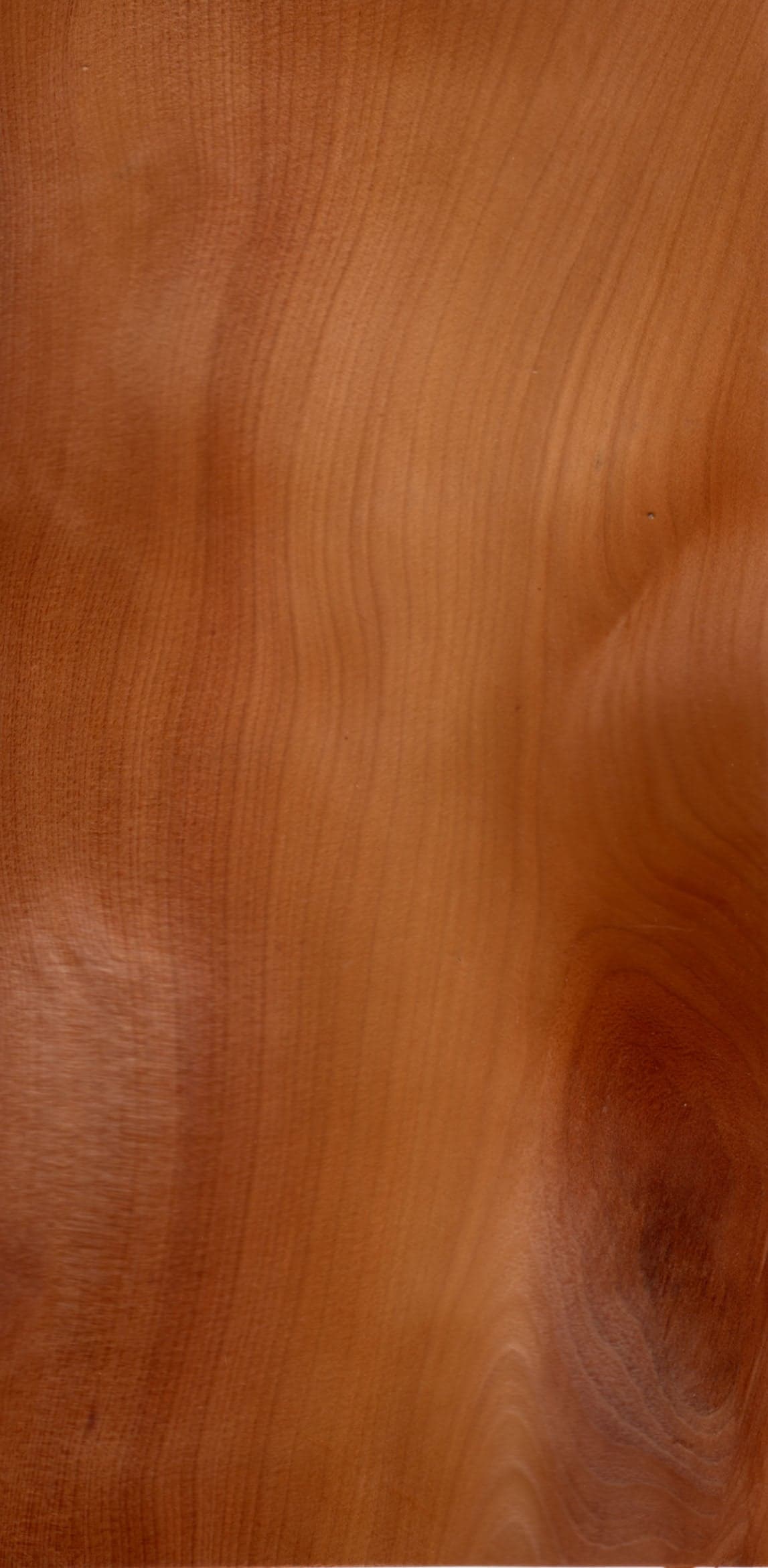
Veta de European Yew
  • Adecuación al proyecto
  • En stock
  • Aspecto
  • Cómo trabajarla
  • Movimiento
  • Precio
  • Seguridad y abastecimiento
  • Preguntas
  • Datos técnicos

¿Es adecuada para tu proyecto?

Ideal para

  • Turned bowls, vessels, and spindles (a traditional turner's wood)
  • Longbows and traditional archery stock
  • Decorative wall panels and feature surfaces
  • Cabinet accents, drawer fronts, and inlay
  • Small statement furniture, side tables, stools, lamp bases
  • Carved and sculptural pieces

No hay European Yew en la selección actual

Especies similares en stock

Ahora mismo no hay European Yew. Estas especies sirven para los mismos proyectos y tienen piezas disponibles.
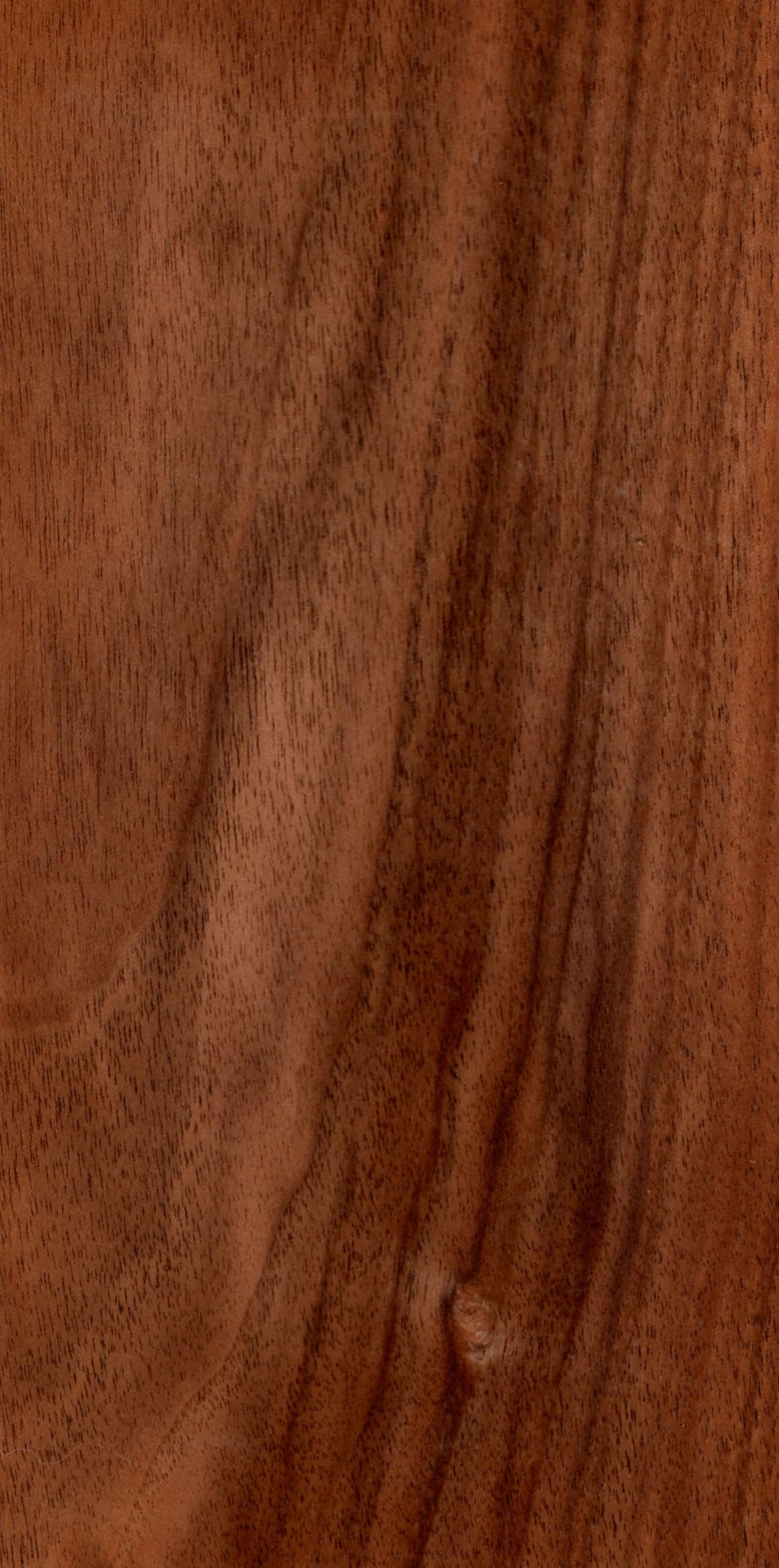
  • Veta de European Walnut

    European Walnut

    Juglans regia

    9 piezas

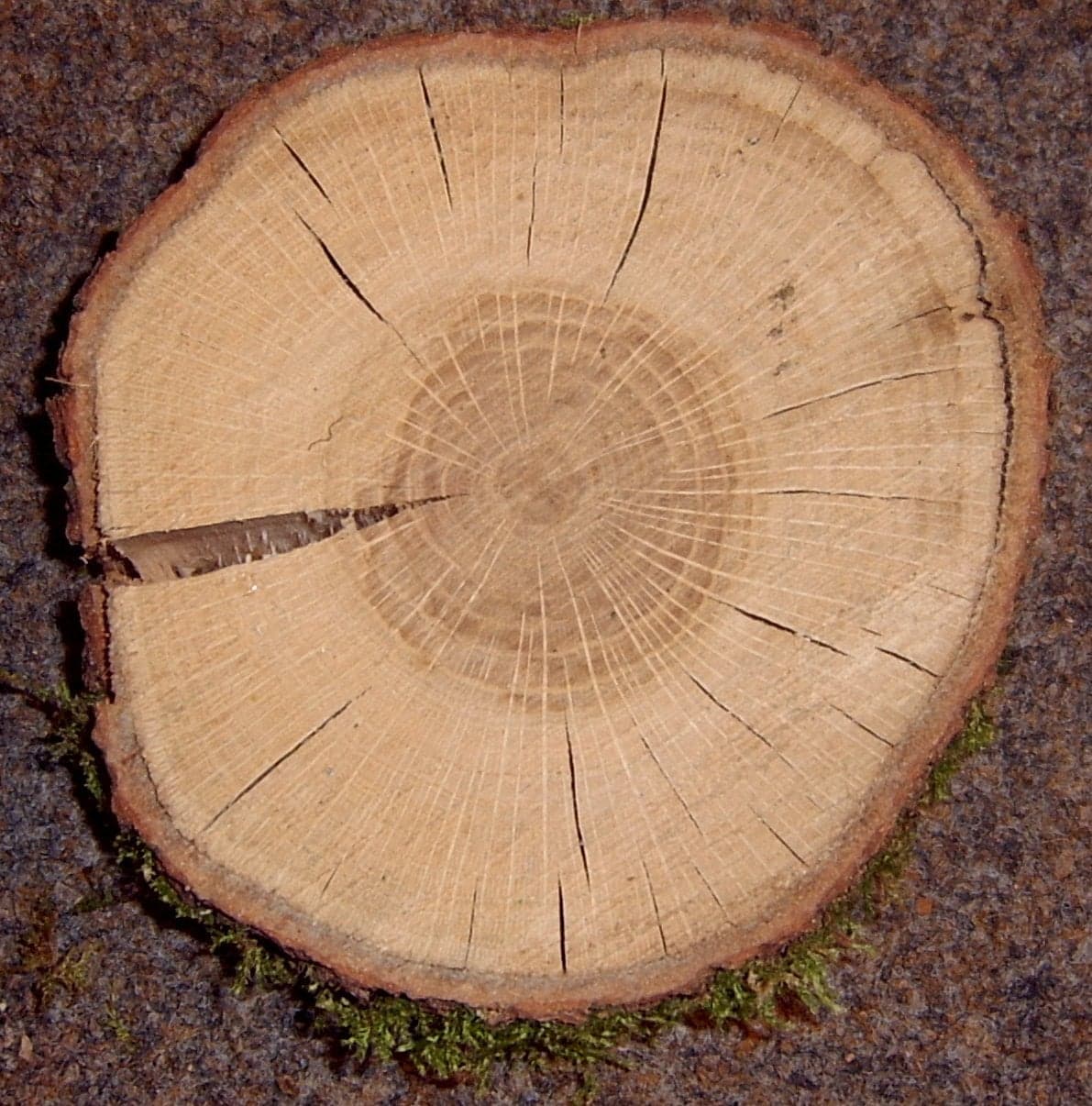
  • Veta de European Oak

    European Oak

    Quercus robur

    6 piezas

  • Veta de Saman

    Saman

    Samanea saman

    4 piezas

Recibe avisos sobre European Yew

Te enviamos un correo cuando lleguen a KORENA nuevas tablas de European Yew. Cada pieza es única, por lo que conviene enterarse pronto.

Unos pocos correos al mes. Sin spam; puedes darte de baja cuando quieras.

Aspecto de la madera

Qué aspecto tiene

Sharp two-tone contrast: warm orange-red to honey-brown heartwood beside pale cream sapwood. Grain is generally straight but often irregular around frequent pin knots and burl figure. Texture is fine and even, with a natural lustre that deepens under oil. Boards are typically narrow and full of incident, sweeping sapwood lines, knot clusters, and occasional burl pockets are the norm, not the exception.

  • Heartwood: warm orange-red to honey-brown, ambering over time
  • Sapwood: pale cream to near-white, sharply defined against the heart
  • Frequent pin knots and burl figure, often clustered
  • Natural lustre that deepens under oil and wax
  • Strong two-tone contrast that softens but never disappears with age
  • Generally straight, often irregular; fine even texture.

Cómo trabajarla

Cómo trabajarla

Turns superbly, one of the great turning woods, prized for centuries. Saws and sands cleanly. Planing is the catch: interlocked grain around knots tears easily, so take light passes with a sharp, high-angle iron or scrape. Holds detail well in carving. Glues and screws without fuss. Steam-bends well, which is why it became the longbow wood.

Acabado

Takes oil and wax beautifully, a thin oil coat ignites the orange-red heartwood without muddying the cream sapwood. Sands to a near-polished surface straight off the belt. Watch for resin pockets that can bleed under film finishes; seal first with shellac if you plan to lacquer. The colour darkens and ambers over time; UV-stable topcoats slow the shift but won't stop it.

Secado

Dries slowly but with very little movement once stable, shrinkage is among the lowest of any European species. End-checks and surface checks are the main risks during initial drying; slabs from fallen trees often arrive with existing checks that should be stabilised before milling final thickness.

¿Cuánto se moverá?

La madera se hincha y se contrae a lo ancho cuando el aire gana o pierde humedad. Calcula el movimiento estacional de un tablero de European Yew antes de diseñar las fijaciones.

Corte
Dónde estará

Movimiento estacional previsto

unos 6,1 mm

Fija el tablero con lengüetas o soportes ranurados, no con cola ni tornillos apretados.

Modelo de contracción lineal: ancho × (contracción ÷ 28 % de saturación de la fibra) × variación estacional de humedad. Usa una contracción tangencial del 5,3 % para European Yew. Es una estimación para planificar, no una garantía.

Cuánto cuesta

Seguridad y abastecimiento

  • Cultivada y aprovechada en Europa.
  • Estado en la Lista Roja de la UICN: evaluación mundial de conservación de esta especie.
  • Yew is toxic. Taxine alkaloids are present throughout the tree, needles, bark, and seeds are dangerous, and the wood itself is a documented sensitiser. Heavy dust exposure has been linked to cardiac and CNS effects. Wear a fitted respirator, run extraction, and keep offcuts away from animals and children. NOT food-safe. Do not use for cutting boards, chopping blocks, utensils, serving boards, or any surface in contact with food or drink. Treat it as a decorative and structural wood only.

Leer la guía completaNotas detalladas sobre el dibujo, el cambio de color, el trabajo y la estabilidad.+

What European Yew actually is#

Taxus baccata is a conifer that behaves like nothing else. At 6,760 N Janka it is harder than oak, ash or hard maple. At decay class 1 it is the most durable species in this catalogue alongside robinia. And it carries a colour that no other European timber approaches: vivid orange-red to purple-brown heartwood against narrow cream sapwood.

KORENA lists it as a hardwood on the basis of how it works and performs, though botanically it is a softwood. Treating it as a softwood at the bench would give you entirely the wrong expectations.

It is also poisonous, which governs a good deal of how it should be handled.

The toxicity, which is not a footnote#

Almost every part of the yew tree contains taxine alkaloids, which are cardiotoxic. The dust is a documented irritant and sensitiser, and the wood is recorded here as not food safe.

The practical rules are simple and worth following without exception. Run extraction and wear a mask when machining. Never use yew for chopping boards, food contact surfaces, drinking vessels or utensils. Keep shavings and offcuts away from animals, for which yew ingestion is frequently fatal, and never put them in bedding, mulch or compost.

None of this makes yew unsafe to own or to use in furniture. Finished, sealed yew is not a hazard. The risk is in the dust and the offcuts.

Preguntas de compradores

Preguntas de compradores

Is yew poisonous to work with?

+

Yes, and this needs taking seriously. Almost every part of the tree contains taxine alkaloids, which are cardiotoxic. The dust is a documented irritant and sensitiser, and yew is recorded here as not food safe. Run extraction, wear a mask, never use it for food contact or drinking vessels, and keep shavings away from animals, for which yew is often fatal.

Why is yew so expensive?

+

Slow growth, small sizes and high wastage. Yew grows very slowly, trunks are often hollow or fluted rather than round, and the proportion of clean usable timber from a log is low. Add high demand from turners and furniture makers for its colour and figure, and prices stay well above other European species.

How durable is it really?

+

Decay class 1, very durable, the highest rating in this catalogue alongside robinia. Yew heartwood is exceptionally resistant to rot and insect attack, which is why yew fence posts and structures survive for generations and why it was used for water pipes and boat parts.

Is it a softwood or a hardwood?

+

Botanically yew is a conifer and therefore a softwood, but it behaves nothing like one. At 6,760 N Janka it is harder than oak, ash or maple, and it is denser and more durable than most hardwoods here. KORENA classifies it as hardwood in the catalogue on the basis of how it works and performs rather than its botany.

Propiedades mecánicas

Datos técnicos

Valores de referencia publicados. Cuando las fuentes discrepan, se muestra el intervalo y se usa el valor habitual en las escalas anteriores.

Densidad (kg/m³)Masa por metro cúbico con aproximadamente un 12 % de humedad. La madera más pesada suele ser más dura y resistente.580–720 kg/m³habitual: 675 kg/m³
Dureza Janka (N)Fuerza necesaria para hundir una bola de acero hasta la mitad en la madera. Es la medida estándar de resistencia a las abolladuras.6,300–7,100 Nhabitual: 6760 N
MOR: módulo de rotura (MPa)Resistencia a la flexión: la carga a la que se rompe una viga.90–115 MPa
MOE: módulo de elasticidad (GPa)Rigidez a la flexión: cuánto se comba un estante o tablero bajo carga.9.5–11.0 GPa
Contracción radialContracción perpendicular a los anillos de crecimiento, desde verde hasta completamente seca. Es la que afecta a las tablas aserradas radialmente.3.0–4.0 %

Achim Raschka (talk), via Wikimedia Commons

  • Veneers and book-matched panels
  • Ventajas

    • Duradera en exterioresClase 1 de 5 según EN 350: resiste la pudrición al aire libre sin tratamiento.
    • Muy establePoco movimiento estacional. Adecuada para tableros anchos y uniones ajustadas.

    Native across Europe, but standing yew is scarce. Ancient churchyard and estate yews are protected; commercial slabs come almost entirely from felled or fallen estate trees. Expect small, character-heavy boards rather than long clean stock.

  • IUCN Least Concern and not CITES-listed, but slow-grown and culturally protected across much of Europe. Most marketplace yew is salvage from estate fellings, storm-fall, or managed thinning of younger plantation stock. Ask about provenance, a clean DDS matters more here than with faster-growing species.

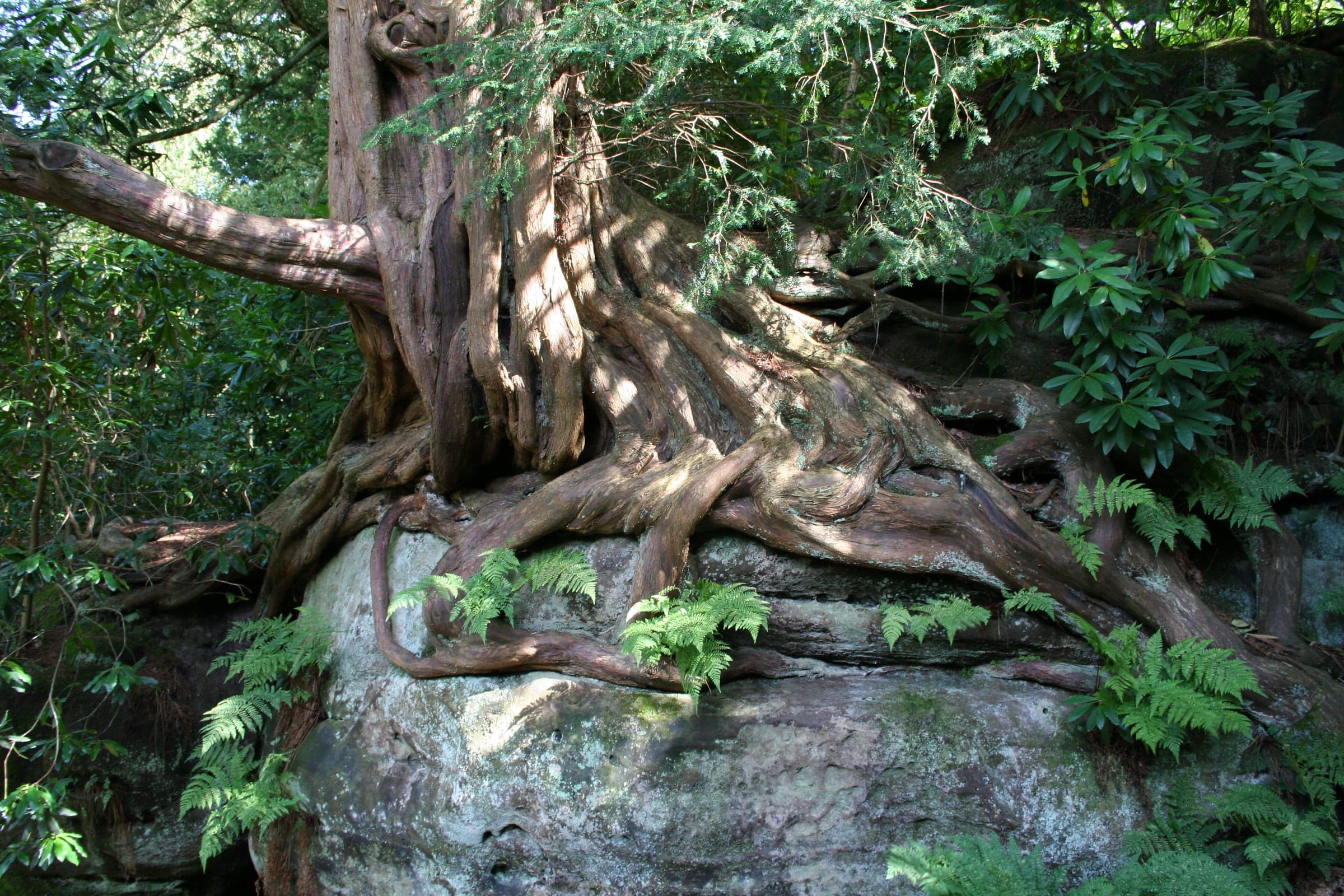
  • Árbol de European Yew

    Marco Schmidt [1], via Wikimedia Commons

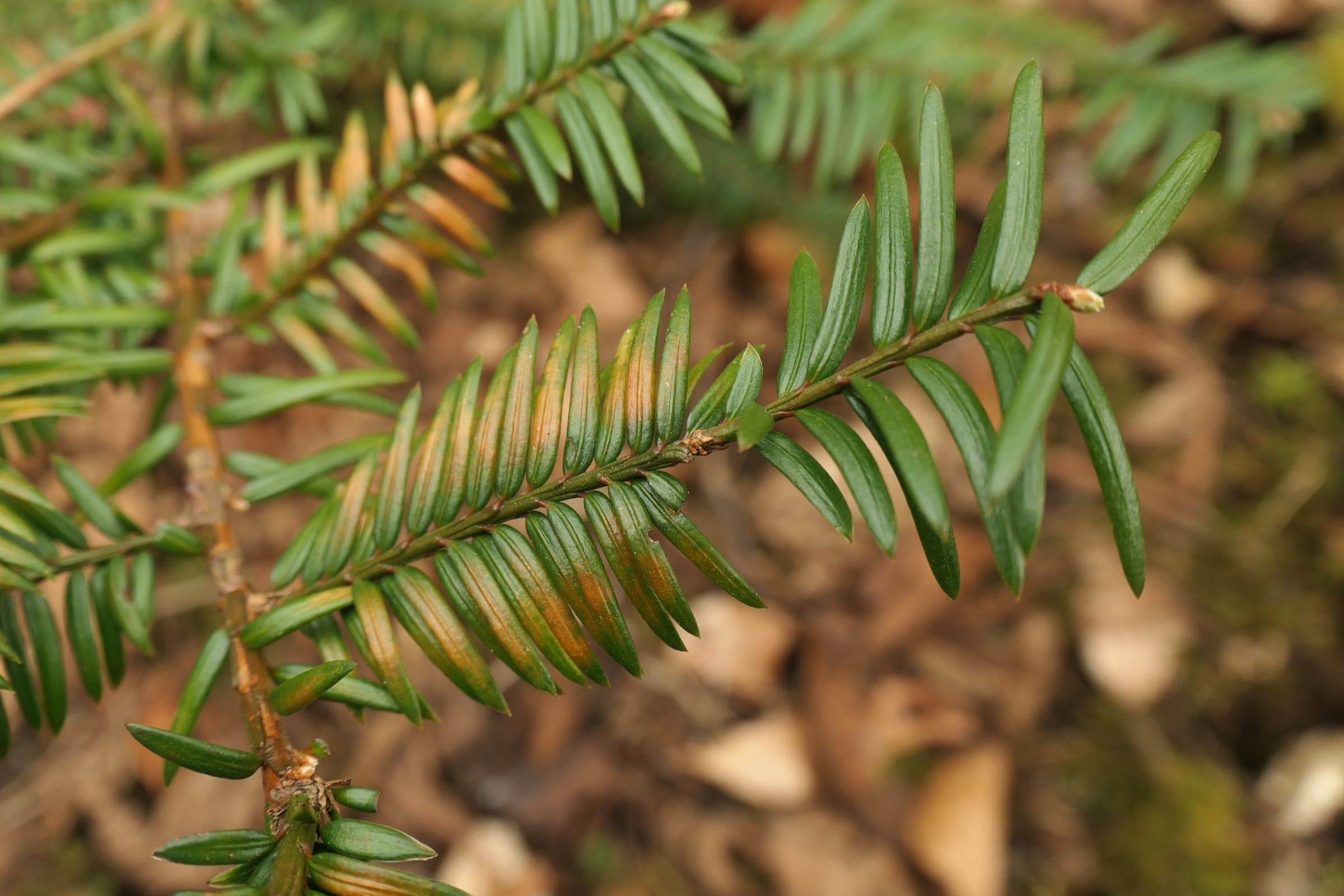
    European Yew: Hoja
    Hoja
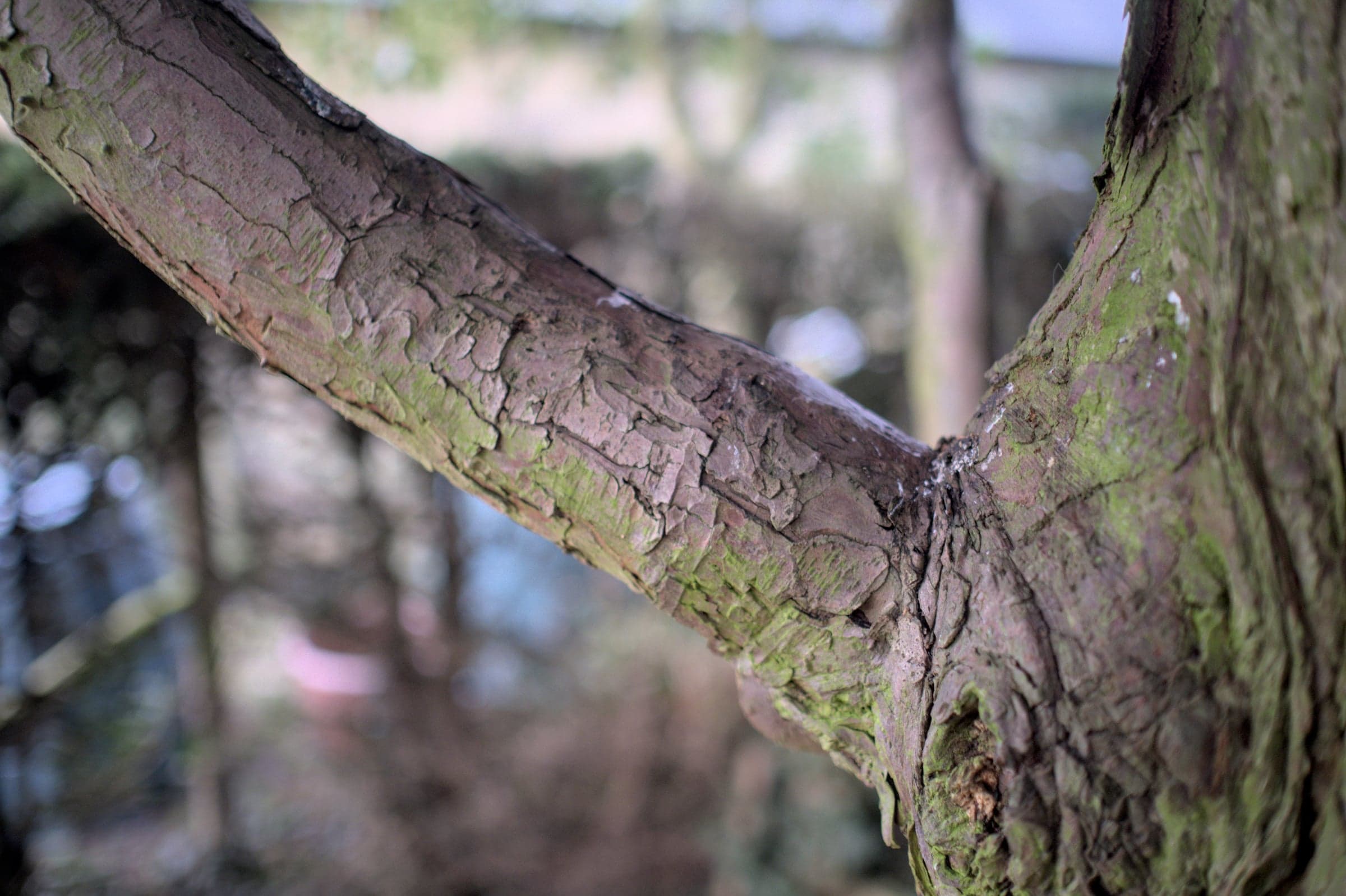
    European Yew: Corteza
    Corteza

    Reading a yew slab#

    The contrast is the point. Heartwood runs orange-red through to purple-brown, sometimes almost violet when freshly cut, against sapwood that is nearly white. On a live edge slab that pale band is usually left in place, and it is the defining feature.

    Yew is rarely plain. Expect frequent knots, wavy and interlocked grain, and pippy or burr sections. Trunks are often hollow or deeply fluted rather than round, so boards are irregular and wide clean lengths are genuinely scarce.

    That irregularity is most of the appeal and most of the price.

    At the bench#

    Yew works well for its hardness but the grain will fight you. Knots are frequent and hard, wavy grain reverses direction, and burr sections tear out readily.

    Light cuts, very sharp tooling, and a scraper or high angle plane for the final surface. On burr and pippy material, hand finishing is normal.

    It turns superbly, which is why yew is a favourite among bowl turners, and it takes a fine polished surface directly from the tool. It glues and finishes well, and oil finishes intensify the orange dramatically.

    The colour deepens and mellows with light exposure toward a richer red brown.

    Stability#

    Volumetric shrinkage of 7.8 percent is the second lowest in this catalogue after Saman, with tangential at 4.8 percent against radial at 3.0 percent. Both the total and the differential are low.

    That means yew is dimensionally very well behaved, which combined with its durability explains why it survives in structures and objects for centuries. Drying is slow given the density and irregular form, but the dried wood is stable.

    Where European Yew is the right answer#

    Turned work above all, plus fine furniture, decorative slabs, veneer and any piece where the colour carries the design. Its durability and stability also suit exterior work where the cost is justified, and it was historically used for gate posts, water pipes and boat parts.

    The longbow association is real: yew's combination of compressive strength in the heartwood and tensile strength in the sapwood is what made the English longbow work, with the two layers doing different jobs.

    It is the wrong answer for food contact, for large matched volumes, and for anyone unwilling to manage the dust properly.

    Sourcing and EUDR#

    Not CITES listed and assessed as Least Concern, though slow growth and small sizes mean supply is limited and much of it comes from garden, churchyard and estate felling rather than forestry. Provenance documentation deserves attention here, and KORENA records the yard and region on every listing.

    The sapwood, and why it stays#

    On almost every species in this catalogue, sapwood is the part you cut off. On yew it is usually the part you keep.

    Yew sapwood is narrow, near white, and sits in sharp contrast against orange-red heartwood. On a turned bowl or a slab edge that pale band is the single most striking feature the wood offers, and removing it removes most of the visual reason for choosing yew.

    It is also structurally interesting. Yew sapwood is elastic and strong in tension while the heartwood is strong in compression, and the English longbow exploited exactly that: the bow was cut so the sapwood formed the back and the heartwood the belly, giving a natural composite that no single layer could match.

    The one caution is durability. The decay class 1 rating applies to the heartwood. Yew sapwood is not durable, so on any exterior piece it is a sacrificial edge rather than a protected one.

    Hollow trunks and what they mean for slabs#

    Mature yew very commonly grows hollow, and old trees are often little more than a shell of living wood around an open centre.

    For the tree this is normal and not a sign of ill health. For the timber buyer it means yields are low, boards are irregular, and a wide clean yew slab is genuinely rare.

    It also means much yew comes to market in short, wide, irregular pieces rather than long boards, which suits turning, boxes and small slabs better than furniture in long lengths.

    What makes the figure so distinctive?

    +

    The sharp contrast between narrow cream sapwood and vivid orange-red to purple-brown heartwood, combined with frequent knots, wavy grain and pippy or burr sections. Yew is rarely plain. That irregularity is part of the appeal and part of why clean straight lengths are so scarce.

    Contracción tangencialContracción paralela a los anillos de crecimiento. Es la que afecta a las tablas de aserrado tangencial y a la mayoría de las tablas.
    4.8–5.8 %
    Contracción volumétricaCambio total de volumen desde verde hasta completamente seca. Un valor menor indica más estabilidad.7.8–8.8 %
    Durabilidad natural (EN 350)Norma europea de resistencia natural a la pudrición, de 1 (muy duradera) a 5 (perecedera).Class 1 — Very durable

    Fuentes

    • The Wood Database(consultada el 2026-05-09)
    • USDA FPL Wood Handbook FPL-GTR-190 (2010)(consultada el 2026-05-09)
    • Meier, E. — WOOD! Identifying and Using Hundreds of Woods Worldwide (2015)(consultada el 2026-05-09)

    De un vistazo

    Los niveles usan intervalos fijos para todas las especies que ofrece KORENA, por lo que se pueden comparar directamente. Debajo de cada uno aparece el valor medido.
    DurezaResistencia a abolladuras y desgasteDura

    Dureza Janka: 6760 N

    Un 36 % más dura que el roble europeo

    PesoCuánto pesa una tabla al levantarlaPesada

    675 kg/m³

    EstabilidadCuánto se reduce su movimiento estacionalMuy estable

    8,3 % de contracción volumétrica

    TrabajoAserrado, cepillado, lijado y encoladoFácil

    4,0 / 5 de media en el banco

    Uso exteriorResistencia natural a la pudrición, EN 350Exterior, larga duración

    Clase 1 según EN 350

    • Aserrado · Muy buenaLa limpieza del corte y el desgaste que causa en las hojas.1 = difícil · 5 = excelente
    • Cepillado · BuenaLa suavidad de la superficie que deja y cuánto se desgarra la fibra.1 = difícil · 5 = excelente
    • Lijado · Muy buenaLa rapidez con la que queda lisa sin atascar el papel.1 = difícil · 5 = excelente
    • Torneado · ExcelenteCómo se corta y se acaba en el torno.1 = difícil · 5 = excelente
    • Tallado · Muy buenaLa nitidez con la que conserva los detalles al trabajarla con gubia.1 = difícil · 5 = excelente
    • Encolado · Muy buenaLa fiabilidad de las uniones encoladas.1 = difícil · 5 = excelente
    • Sujeción de tornillos / clavos · Muy buenaCómo sujeta tornillos y clavos sin rajarse.1 = difícil · 5 = excelente
    • Curvado al vapor · Muy buenaCómo admite las curvas después de aplicar vapor.1 = difícil · 5 = excelente

    Aún no hay una referencia de mercado para European Yew. Cada pieza de KORENA recibe un precio individual de su almacén asociado.

    Se curva bien
    Valoración de 4 sobre 5 para el curvado al vapor. Admite curvas cerradas.
  • Apta para principiantesFácil de trabajar en el banco y no tan dura como para castigar las herramientas.
  • Ten en cuenta

    • El polvo es irritanteUsa extracción y mascarilla al lijar o mecanizar.
    • No apta para contacto alimentarioElige otra especie para tablas de cortar y utensilios de servir.

    Pulsa una etiqueta para ver los detalles.