KORENA
MaderaFinished piecesMaterialesAlmacenesRevista

Recibe avisos

Cada tabla es única. Cuando se vende, ya no vuelve. Te avisamos cuando se publican nuevas piezas: nuevas llegadas, especies y tablas adecuadas para un proyecto.

Unos pocos correos al mes. Sin spam; puedes darte de baja cuando quieras.

KORENA, madera noble de primera calidad

Una pieza cada vez.

Madera noble de primera calidad verificada, vendida pieza a pieza. Cada tabla se fotografía, se mide y se envía desde el almacén asociado con un pasaporte de la madera.

Comprar

  • Ver productos
  • Archivo de piezas vendidas
  • Seguir pedido

Aprender

  • Revista
  • Guías de especies
  • Glosario
  • Comparar
  • Autores

Ayuda

  • Quiénes somos
  • Cómo funciona
  • Hazte almacén asociado
  • Solicitar una tabla
  • Asistencia
  • Plantillas de documentos
  • Prensa

Comprar

  • Condiciones de venta
  • Derecho de desistimiento
  • Devoluciones y garantía
  • Envío y entrega

Confianza

  • Política de privacidad
  • Política de cookies
  • Procedencia de la madera y EUDR
  • Accesibilidad

Aviso legal

  • Aviso legal
  • Uso aceptable
  • Propiedad intelectual y contenido

© 2026 KORENA. Todos los derechos reservados.

Gestionado por Martial Labs Ltd. (BG, EIK 207453941). KORENA es un nombre comercial de Martial Labs Ltd.

Respetamos tu privacidad

Usamos cookies esenciales para que el sitio funcione. Con tu permiso, también usaríamos cookies para análisis, contenido personalizado y publicidad. Puedes cambiar de opinión en cualquier momento en la página de preferencias de consentimiento. Consulta nuestra política de cookies y nuestra política de privacidad.

  1. Inicio
  2. /
  3. Especies
  4. /
  5. London Plane

Platanus × acerifolia

London Plane

Quartersawn London Plane reveals lacewood: large medullary rays catch the light in dense, scaly flecks. The slab's signature, and its whole reason for being on this list.

  • Cultivada y aprovechada en Europa.
  • Grupo botánico. Las maderas blandas proceden de coníferas y las duras, de árboles frondosos.
  • Familia botánica a la que pertenece la especie.
Avísame cuando llegueEspecie de referencia. Ahora mismo no hay piezas en stock.
  • Adecuación al proyecto
  • En stock
  • Aspecto
  • Cómo trabajarla
  • Movimiento
  • Precio
  • Seguridad y abastecimiento
  • Preguntas
  • Datos técnicos

¿Es adecuada para tu proyecto?

Ideal para

  • Quartersawn tabletops where the lacewood figure is the feature
  • Cabinet door panels and drawer fronts
  • Wall panelling and feature joinery
  • Turned bowls and hollow forms
  • Serving boards and kitchen pieces (interior, finished)
  • Veneer-look solid furniture

No hay London Plane en la selección actual

Especies similares en stock

Ahora mismo no hay London Plane. Estas especies sirven para los mismos proyectos y tienen piezas disponibles.
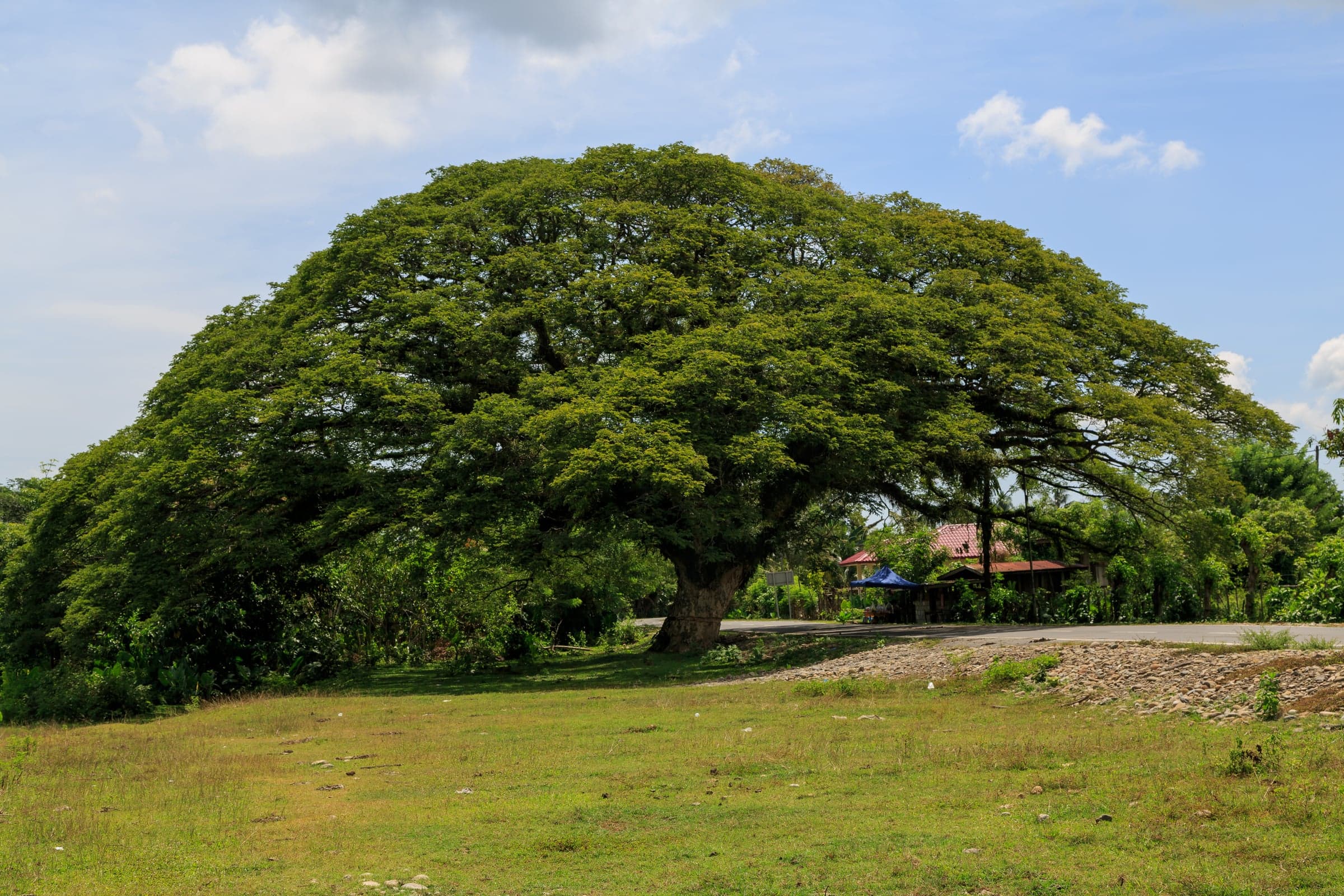
  • Veta de Saman

    Saman

    Samanea saman

    4 piezas

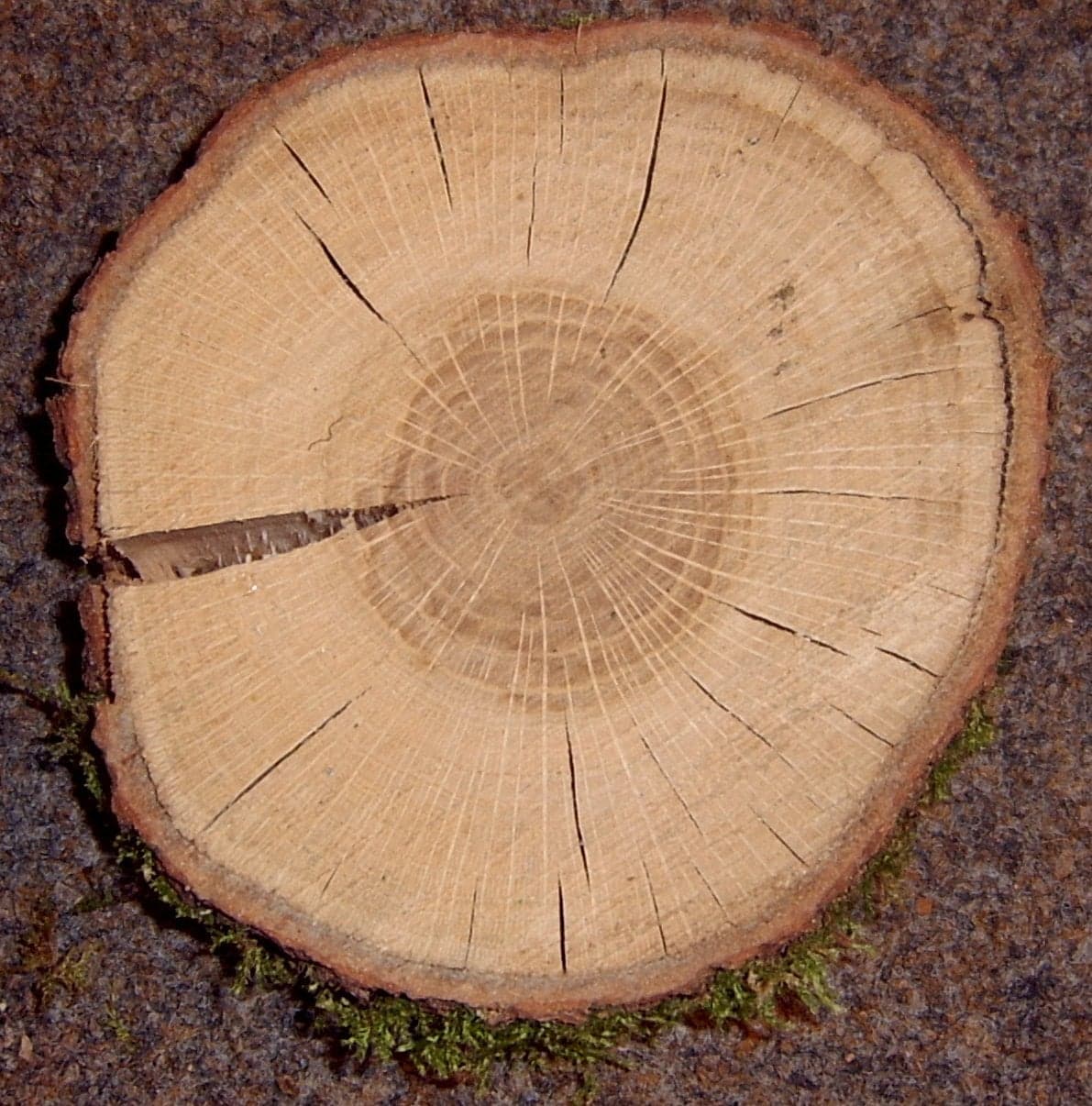
  • Veta de European Oak

    European Oak

    Quercus robur

    6 piezas

  • Veta de European Walnut

    European Walnut

    Juglans regia

    9 piezas

Recibe avisos sobre London Plane

Te enviamos un correo cuando lleguen a KORENA nuevas tablas de London Plane. Cada pieza es única, por lo que conviene enterarse pronto.

Unos pocos correos al mes. Sin spam; puedes darte de baja cuando quieras.

Aspecto de la madera

Qué aspecto tiene

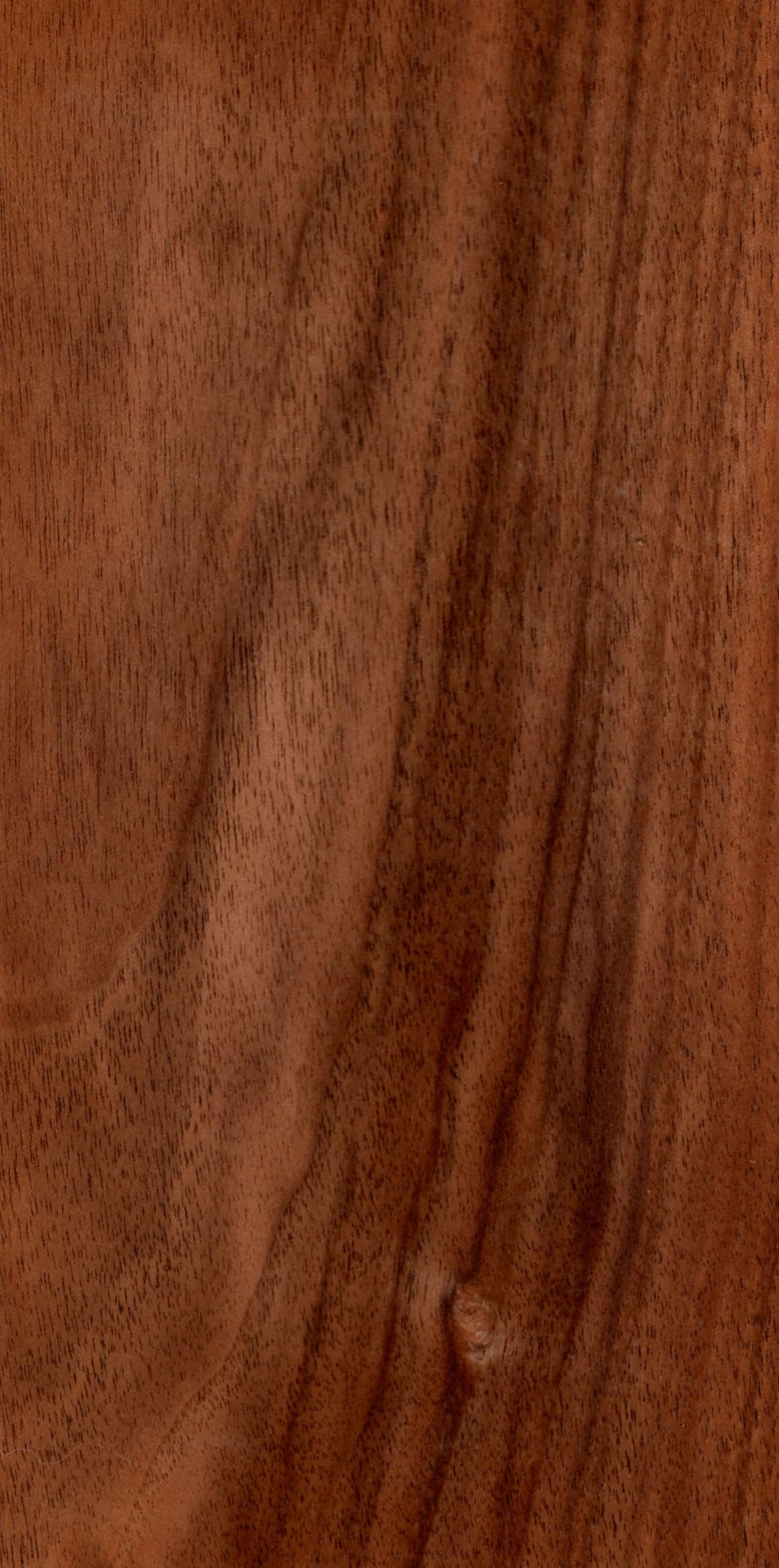
Straight grain, fine-to-medium texture, pinkish-brown heartwood that warms with age. Flatsawn faces are quiet and clean. Quartersawn is where it earns its name in the trade, lacewood, with broad ray flecks that read almost like snakeskin under finish. Two faces of the same board can look like two different woods.

  • Heartwood pinkish-brown to light reddish-tan
  • Sapwood pale cream, often left in for contrast
  • Quartersawn rays appear as darker flecks against the background
  • Warms and deepens under oil; ambers slightly with age
  • Flatsawn and quartersawn faces of one board can look like different species
  • Straight; lacewood figure on quartersawn faces.

Cómo trabajarla

Cómo trabajarla

Saws, sands, turns, and carves well. Planing is the one to watch: the medullary rays that make quartersawn faces beautiful also tear out under dull blades. Sharp tools, light cuts, and a finish scraper or 220-grit pass to clean up. Glues and screws without drama.

Acabado

Takes oil and hardwax oil cleanly. The lacewood figure deepens dramatically under any clear finish. Test on an offcut before committing, because the contrast jumps. Stains can muddy the rays; we'd avoid them. Sand to 180–220 and stop.

Secado

Tangential shrinkage is high (around 10%) and roughly twice the radial figure, so cup and distortion are real risks. Dries best slowly, well-stickered, with weight on top. Once stable it holds shape indoors, but it's not a wood to rush through a kiln.

¿Cuánto se moverá?

La madera se hincha y se contrae a lo ancho cuando el aire gana o pierde humedad. Calcula el movimiento estacional de un tablero de London Plane antes de diseñar las fijaciones.

Corte
Dónde estará

Movimiento estacional previsto

unos 11,7 mm

Fija el tablero con lengüetas o soportes ranurados, no con cola ni tornillos apretados.

Modelo de contracción lineal: ancho × (contracción ÷ 28 % de saturación de la fibra) × variación estacional de humedad. Usa una contracción tangencial del 10,25 % para London Plane. Es una estimación para planificar, no una garantía.

Cuánto cuesta

Seguridad y abastecimiento

  • Cultivada y aprovechada en Europa.
  • Estado en la Lista Roja de la UICN: evaluación mundial de conservación de esta especie.
  • Not commonly flagged as a dust irritant or sensitiser. Standard shop dust extraction is enough. Food-contact safe once finished, fine for boards and serving pieces.

Leer la guía completaNotas detalladas sobre el dibujo, el cambio de color, el trabajo y la estabilidad.+

What London Plane actually is#

Platanus x acerifolia is bought for one thing: lacewood.

The species has exceptionally large rays, the ribbons of cells that run radially through a trunk. In most timbers the rays are small enough to be barely visible, and in oak they show as the familiar silvery fleck on quartersawn faces. In London Plane they are so large that a quartersawn face is covered in a dense, regular flecked pattern across the entire surface.

That figure is called lacewood, and it exists only on the quarter. A flatsawn London Plane board is comparatively plain, a light reddish brown with modest figure. The same log cut differently is one of the most distinctive decorative surfaces in European timber.

If you are buying this species, you are buying quartersawn stock, and if you are offered flatsawn plane at a lacewood price, the cut is the thing to check.

The naming confusion#

Three species get called sycamore in different places and they are not related.

London Plane is Platanus x acerifolia, a hybrid plane. American sycamore is Platanus occidentalis, its close relative and also a source of lacewood. European Sycamore is Acer pseudoplatanus, a maple, and has nothing to do with either.

They look different, work differently and cost differently. Buy on the botanical name.

Preguntas de compradores

Preguntas de compradores

What is lacewood?

+

Lacewood is quartersawn London Plane. The species has exceptionally large rays, and cutting on the quarter exposes them as a dense flecked pattern across the whole surface that looks like lace. It is one of the most distinctive figures available from any European species, and it exists only on the quartersawn face. Flatsawn plane is comparatively plain.

Is London Plane the same as sycamore?

+

No, and the naming is a mess. London Plane is Platanus x acerifolia, a plane tree. American sycamore is Platanus occidentalis, its close relative. European Sycamore is Acer pseudoplatanus, a maple, and unrelated to both. All three are sometimes called sycamore somewhere. Check the botanical name.

How stable is it?

+

Not very. Volumetric shrinkage of 15.0 percent is high and tangential shrinkage of 9.5 percent against radial at 5.5 percent is a wide differential, so flatsawn boards cup. Since the reason to buy this species is the quartersawn lacewood figure, and quartersawn stock is much more stable, the figure and the stability come together.

Can it be used outdoors?

+

Propiedades mecánicas

Datos técnicos

Valores de referencia publicados. Cuando las fuentes discrepan, se muestra el intervalo y se usa el valor habitual en las escalas anteriores.

Densidad (kg/m³)Masa por metro cúbico con aproximadamente un 12 % de humedad. La madera más pesada suele ser más dura y resistente.500–620 kg/m³habitual: 560 kg/m³
Dureza Janka (N)Fuerza necesaria para hundir una bola de acero hasta la mitad en la madera. Es la medida estándar de resistencia a las abolladuras.3,800–4,600 Nhabitual: 4180 N
MOR: módulo de rotura (MPa)Resistencia a la flexión: la carga a la que se rompe una viga.70–80 MPa
MOE: módulo de elasticidad (GPa)Rigidez a la flexión: cuánto se comba un estante o tablero bajo carga.8.0–10.0 GPa
Contracción radialContracción perpendicular a los anillos de crecimiento, desde verde hasta completamente seca. Es la que afecta a las tablas aserradas radialmente.5.5–6.5 %
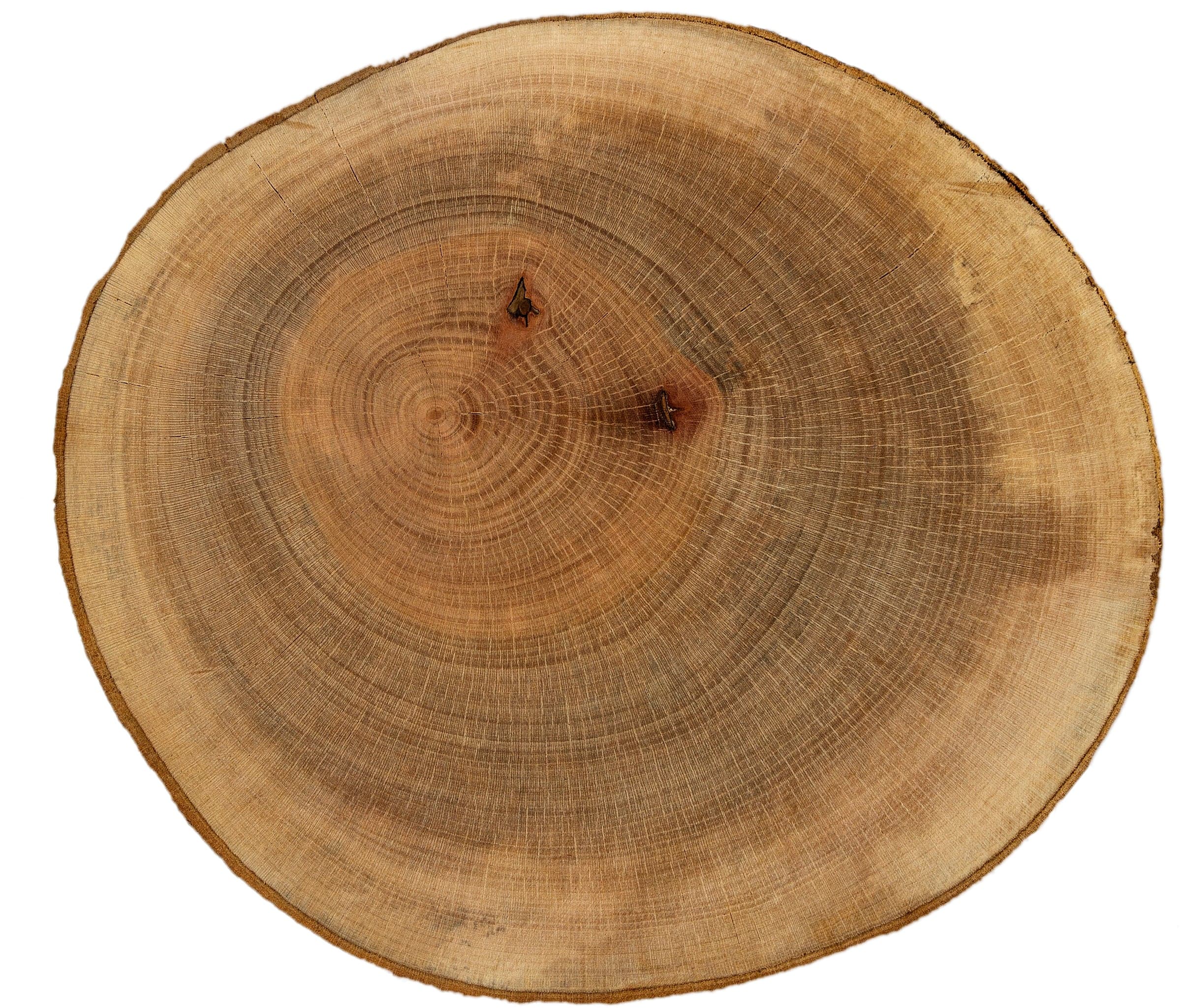
Veta de London Plane

Roger Culos, via Wikimedia Commons

Ventajas

  • Apta para alimentosAdecuada para tablas, cuencos y superficies que entran en contacto con alimentos.
  • Se curva bienValoración de 4 sobre 5 para el curvado al vapor. Admite curvas cerradas.

Ten en cuenta

Platanus × acerifolia is the hybrid planted along avenues and squares across Europe, Paris, Milan, Sofia, every London street. KORENA sources it from urban forestry: trees removed for safety, age, or development, then milled rather than chipped. The provenance is local, traceable, and tells a story buyers respond to.

  • Decay class 5 (perishable), interior use only; it won't last outdoors. The hybrid is not IUCN-evaluated and carries no CITES listing. Sourcing is the strong story here: urban trees that would otherwise be chipped, given a second life as furniture. EUDR due diligence is in preparation and becomes mandatory for large operators from 30 December 2026, and the passport behind each slab QR is built to carry its provenance.

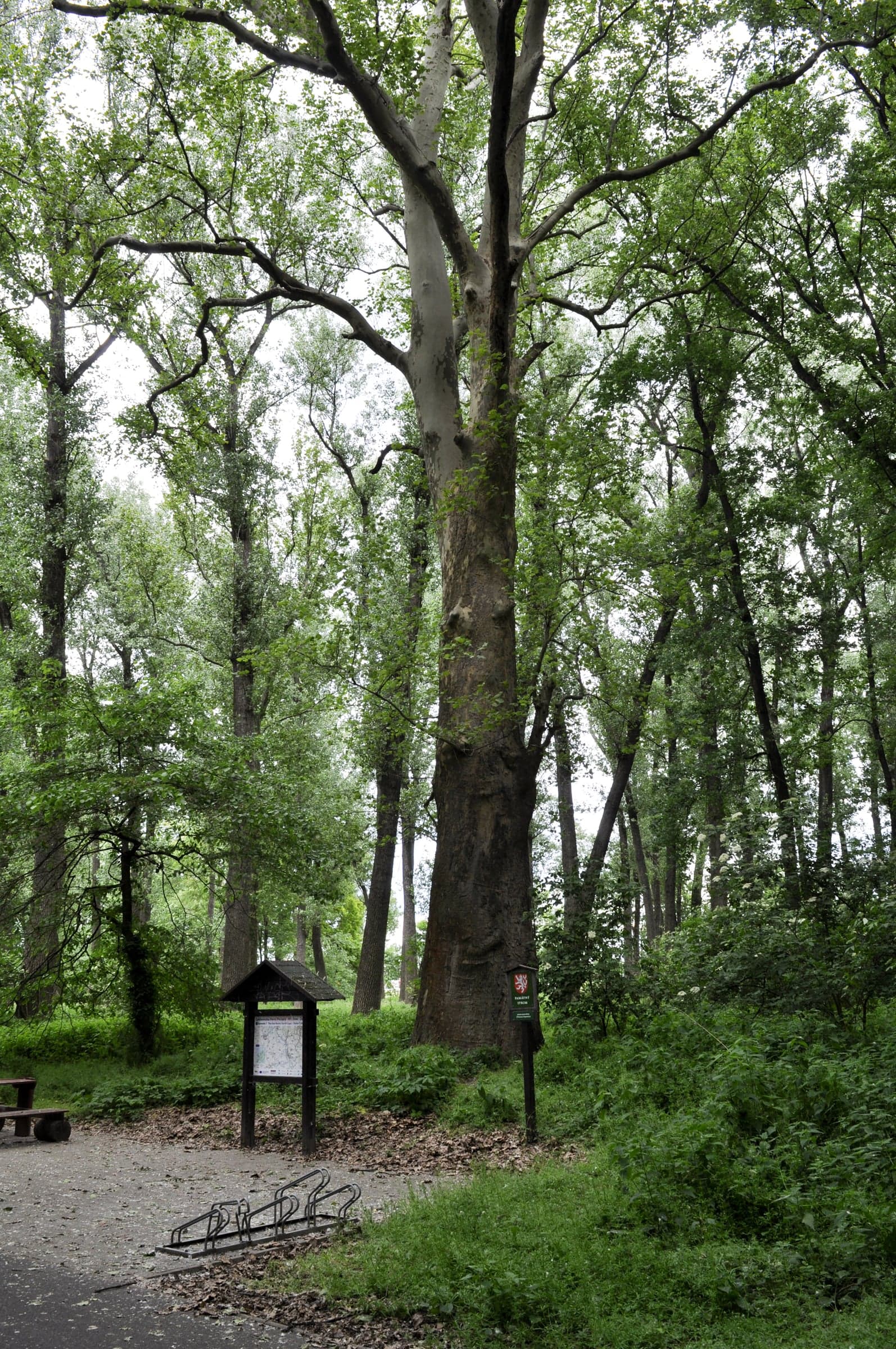
  • Árbol de London Plane

    Jirka Dl, via Wikimedia Commons

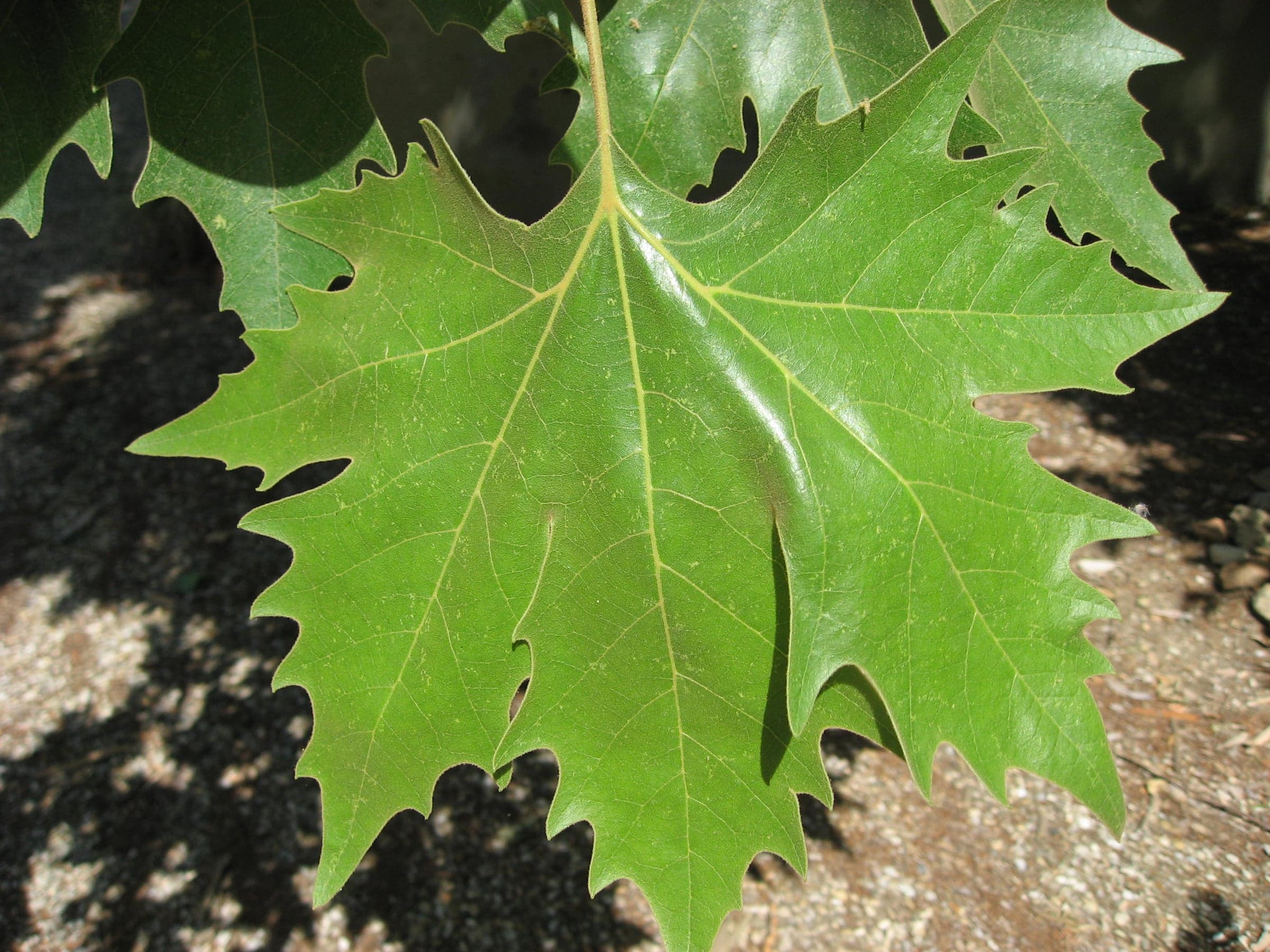
    London Plane: Hoja
    Hoja
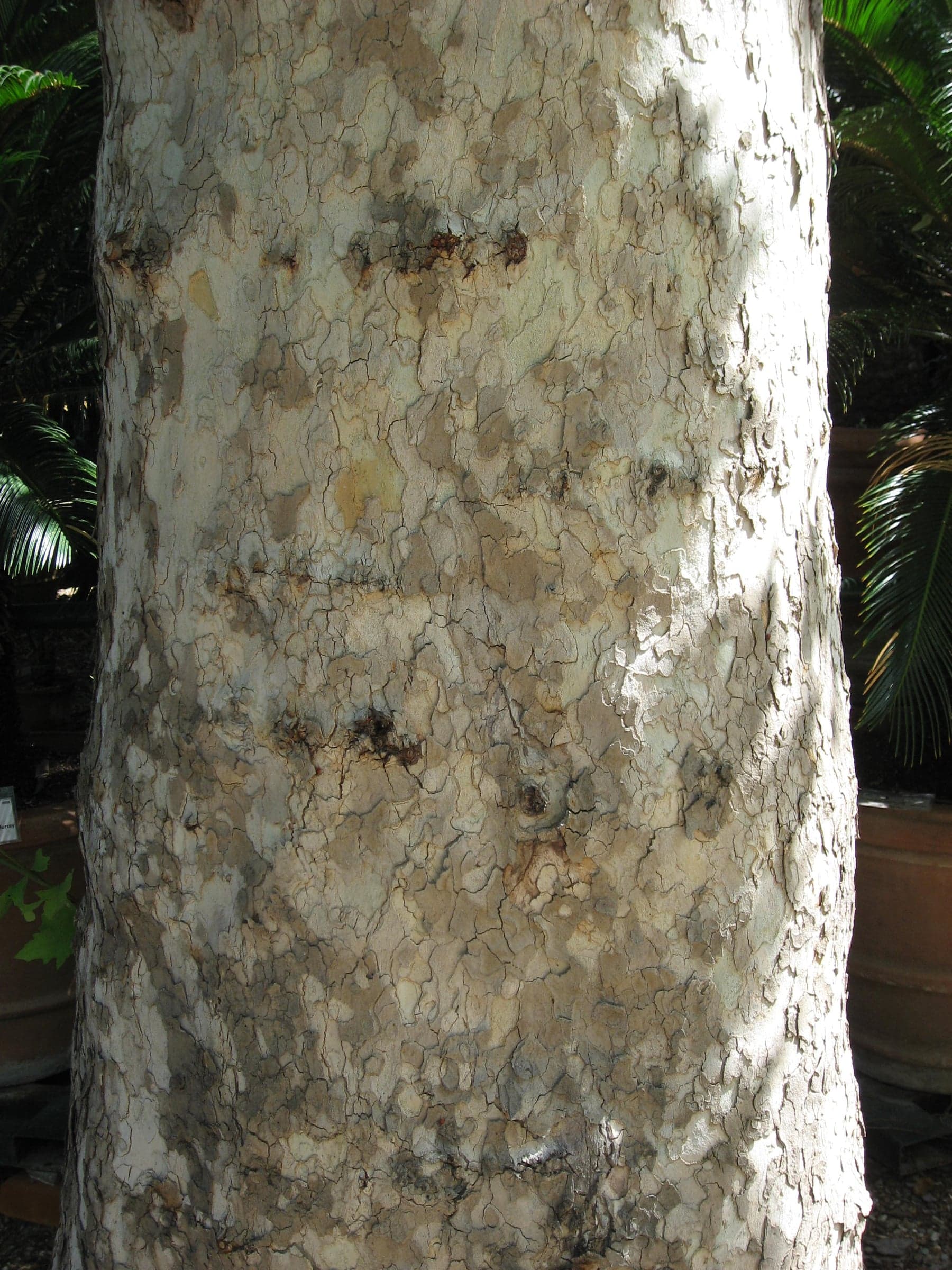
    London Plane: Corteza
    Corteza

    Urban timber#

    London Plane is the classic European street tree, planted through the nineteenth and twentieth centuries for its tolerance of air pollution and its willingness to be pruned hard.

    Almost all timber reaching the market comes from municipal felling rather than forestry, which shapes what is available. Sizes can be generous, because street trees grow large. But the wood frequently carries inclusions, bark pockets and irregular grain from decades of pruning wounds, and metal is a genuine risk in urban timber.

    That last point matters practically: a nail or a cable fragment embedded in an urban log will destroy a bandsaw blade. Reputable yards scan for metal, and it is worth asking.

    The stability problem, which resolves itself#

    Volumetric shrinkage of 15.0 percent is high, and the tangential to radial differential of 9.5 against 5.5 percent is wide. Flatsawn London Plane cups noticeably.

    This turns out to matter less than it might, because the reason to buy the species is the quartersawn figure, and quartersawn stock is substantially more stable across its width. The figure and the stability arrive together.

    It also dries with a tendency to distort and is susceptible to fungal staining if not dried promptly, so stock that sat before conversion may carry grey discolouration.

    At the bench#

    At 4,180 N it is moderately soft and easy on tooling.

    The large rays are the machining consideration. On a quartersawn face they can lift or flake under a heavy cut, taking chunks out of the very figure you are working to expose. Light cuts, sharp tooling and a scraper for the final surface.

    It glues and finishes well and turns reasonably. It sands to a good surface, though care is needed not to round over the ray flecks.

    Finishing#

    Lacewood looks best under a clear finish that lets the ray contrast do the work. An oil finish deepens the reddish brown background and increases the contrast with the pale flecks.

    Stain tends to muddy the figure, since the rays and the background absorb differently and the effect is to reduce rather than enhance the pattern.

    Where London Plane is the right answer#

    Decorative panels, veneer, cabinet fronts, box work, turned pieces and any application where quartersawn lacewood figure is the design. It is a feature timber rather than a structural one.

    It is the wrong answer outdoors at decay class 5, for anything structural, and for a wide flatsawn surface that must stay flat.

    Sourcing and EUDR#

    Not CITES listed and reported as Not Evaluated by the IUCN. Because supply comes largely from urban municipal felling rather than forestry, chains are short and local but non-standardised. KORENA records the yard and region on every listing.

    No. It is rated decay class 5, perishable, with poor insect resistance. London Plane is an interior decorative timber only.

    Where does the timber come from?

    +

    Largely from urban felling. London Plane is the classic city street tree across Europe, planted for its tolerance of pollution and hard pruning, and most timber reaching the market comes from municipal removals rather than forestry. Sizes can be large but the wood often contains inclusions and irregularities from pruning wounds.

    Contracción tangencialContracción paralela a los anillos de crecimiento. Es la que afecta a las tablas de aserrado tangencial y a la mayoría de las tablas.
    9.5–11.0 %
    Contracción volumétricaCambio total de volumen desde verde hasta completamente seca. Un valor menor indica más estabilidad.15.0–17.0 %
    Durabilidad natural (EN 350)Norma europea de resistencia natural a la pudrición, de 1 (muy duradera) a 5 (perecedera).Class 5 — Perishable

    Fuentes

    • The Wood Database(consultada el 2026-05-09)
    • USDA FPL Wood Handbook FPL-GTR-190 (2010)(consultada el 2026-05-09)
    • Meier, E. — WOOD! Identifying and Using Hundreds of Woods Worldwide (2015)(consultada el 2026-05-09)

    De un vistazo

    Los niveles usan intervalos fijos para todas las especies que ofrece KORENA, por lo que se pueden comparar directamente. Debajo de cada uno aparece el valor medido.
    DurezaResistencia a abolladuras y desgasteSemidura

    Dureza Janka: 4180 N

    Un 16 % más blanda que el roble europeo

    PesoCuánto pesa una tabla al levantarlaMedia

    560 kg/m³

    EstabilidadCuánto se reduce su movimiento estacionalMucho movimiento

    16,0 % de contracción volumétrica

    TrabajoAserrado, cepillado, lijado y encoladoModerada

    3,9 / 5 de media en el banco

    Uso exteriorResistencia natural a la pudrición, EN 350Solo interior

    Clase 5 según EN 350

    • Aserrado · Muy buenaLa limpieza del corte y el desgaste que causa en las hojas.1 = difícil · 5 = excelente
    • Cepillado · BuenaLa suavidad de la superficie que deja y cuánto se desgarra la fibra.1 = difícil · 5 = excelente
    • Lijado · Muy buenaLa rapidez con la que queda lisa sin atascar el papel.1 = difícil · 5 = excelente
    • Torneado · Muy buenaCómo se corta y se acaba en el torno.1 = difícil · 5 = excelente
    • Tallado · Muy buenaLa nitidez con la que conserva los detalles al trabajarla con gubia.1 = difícil · 5 = excelente
    • Encolado · Muy buenaLa fiabilidad de las uniones encoladas.1 = difícil · 5 = excelente
    • Sujeción de tornillos / clavos · Muy buenaCómo sujeta tornillos y clavos sin rajarse.1 = difícil · 5 = excelente
    • Curvado al vapor · Muy buenaCómo admite las curvas después de aplicar vapor.1 = difícil · 5 = excelente

    Aún no hay una referencia de mercado para London Plane. Cada pieza de KORENA recibe un precio individual de su almacén asociado.

    No apta para exteriores sin tratar
    Su durabilidad natural es de clase 5 de 5 según EN 350. Mantenla en interiores o protégela con un acabado bien conservado.
  • Se mueve más que la mayoríaLos tableros anchos necesitan lengüetas o fijaciones ranuradas y espacio para moverse. Usa la calculadora de movimiento que aparece abajo.
  • Pulsa una etiqueta para ver los detalles.