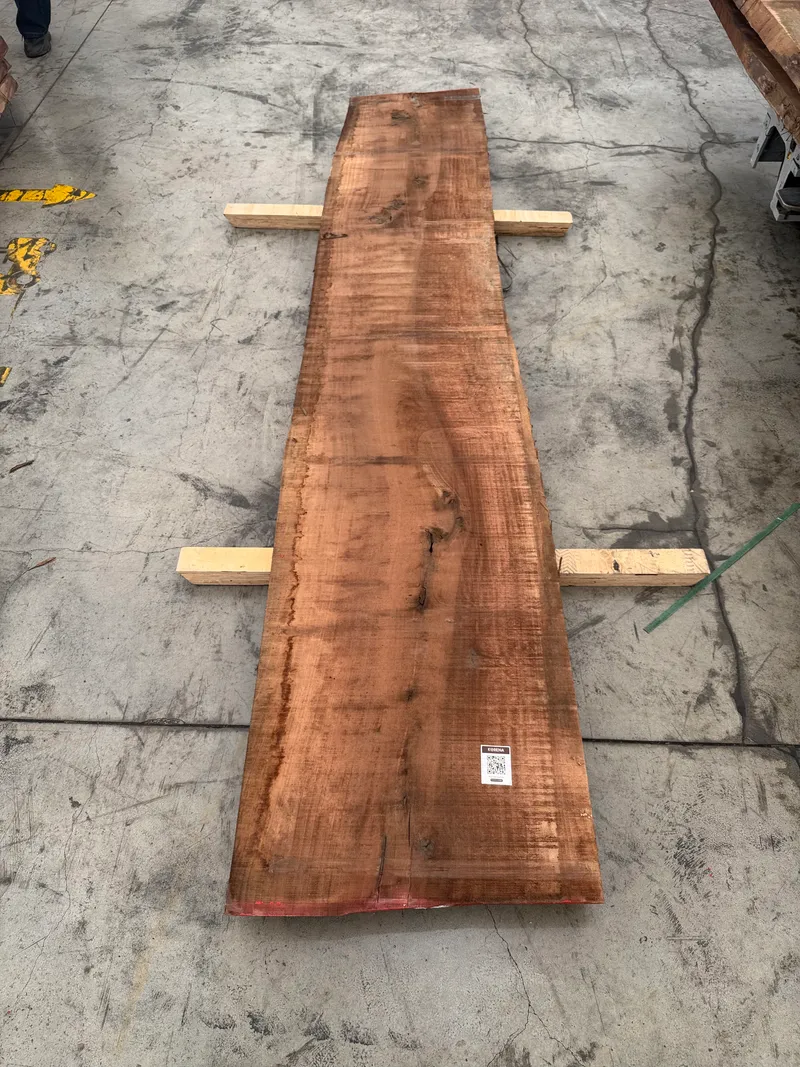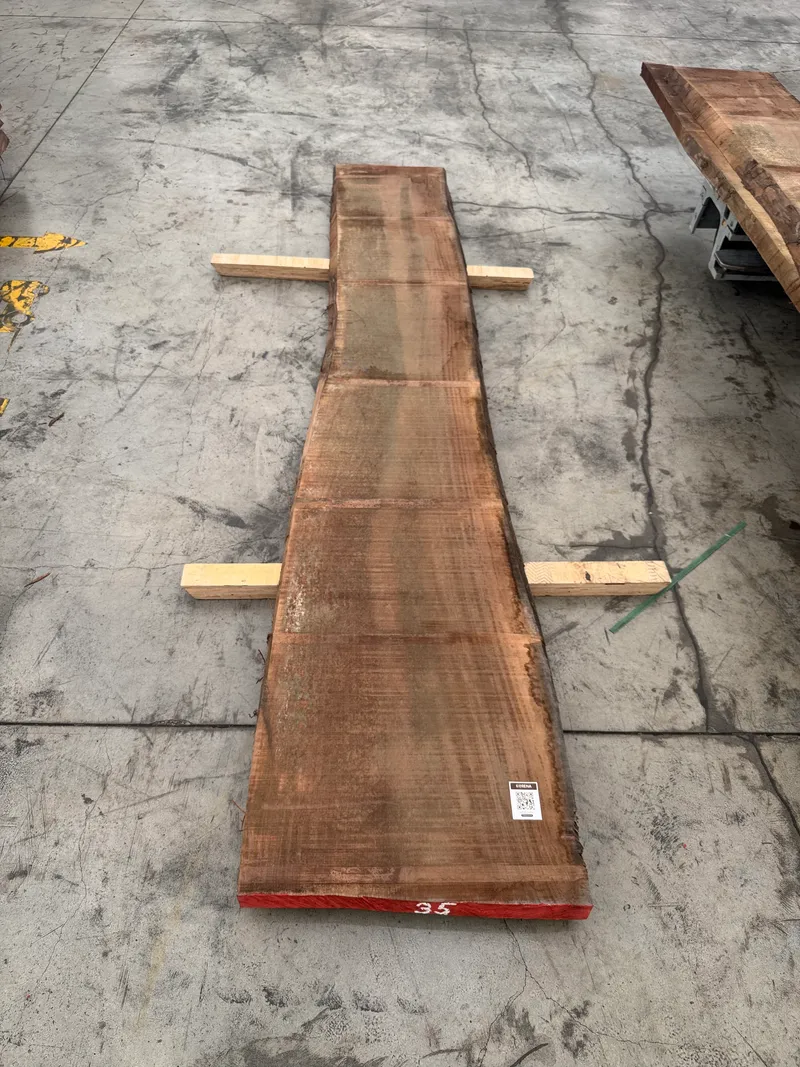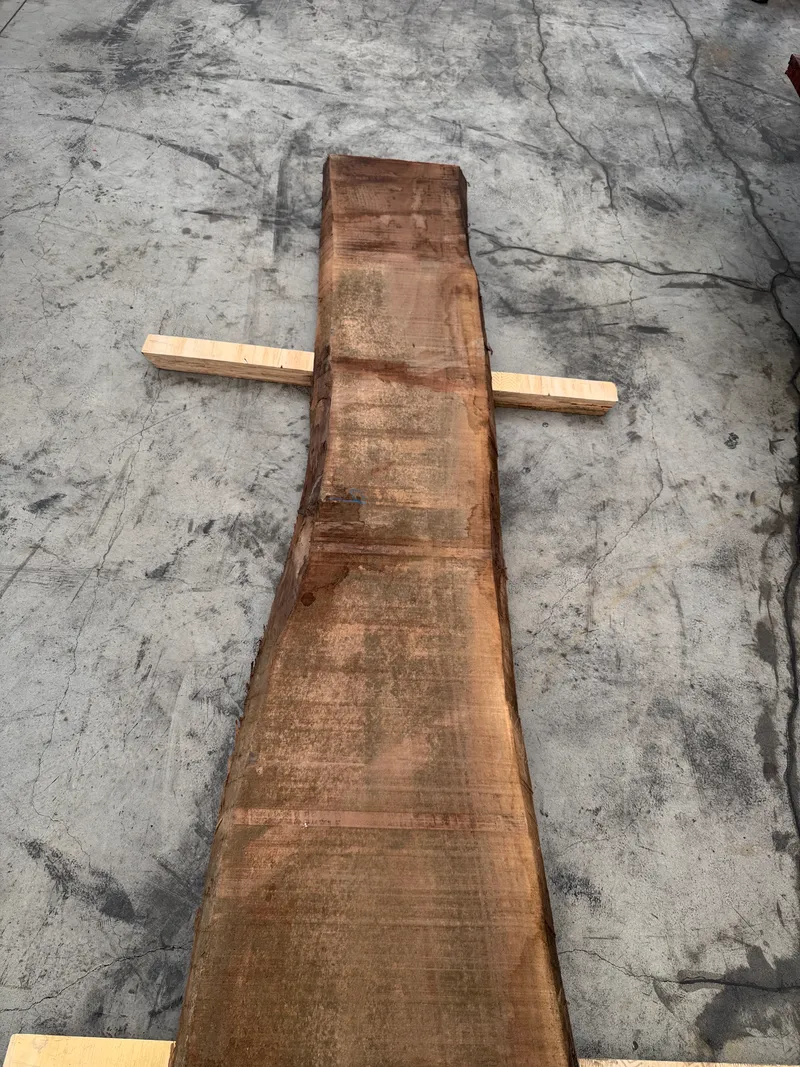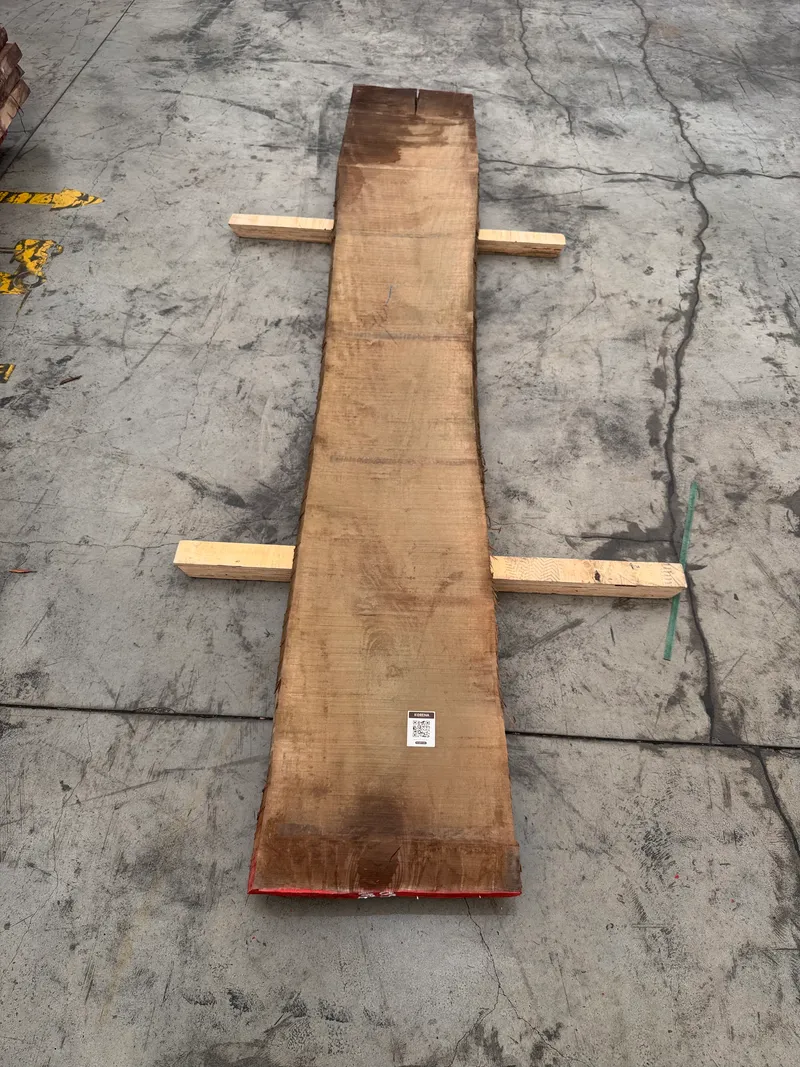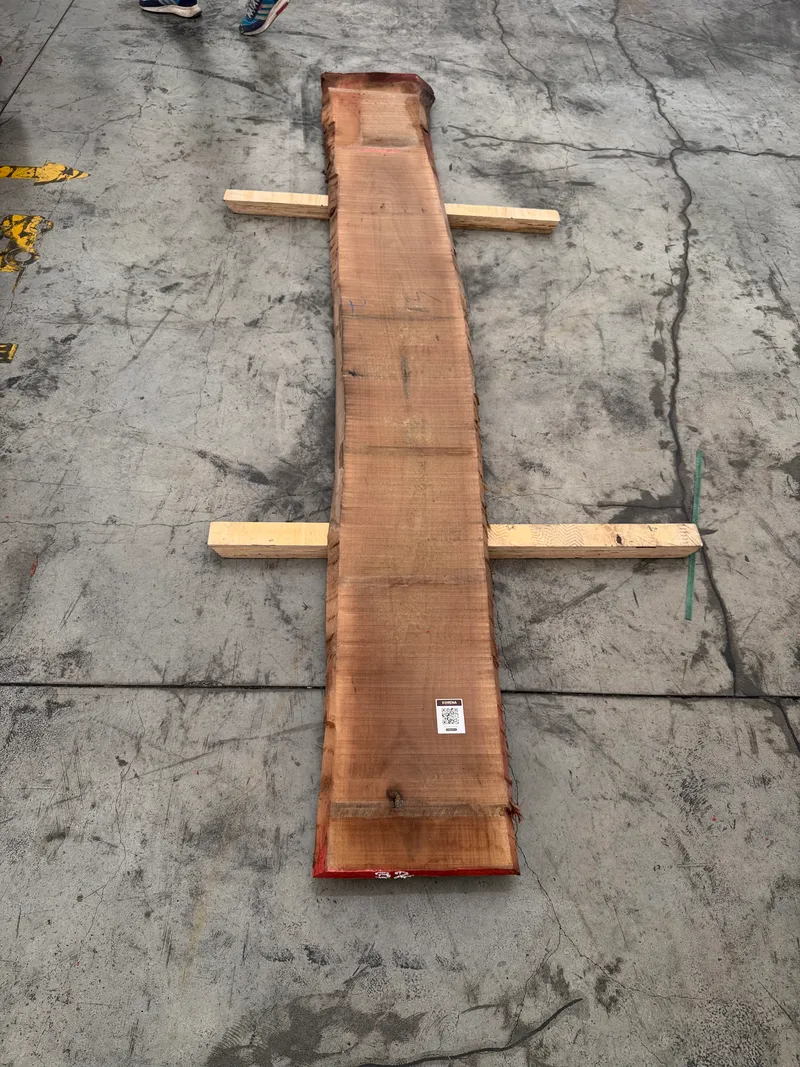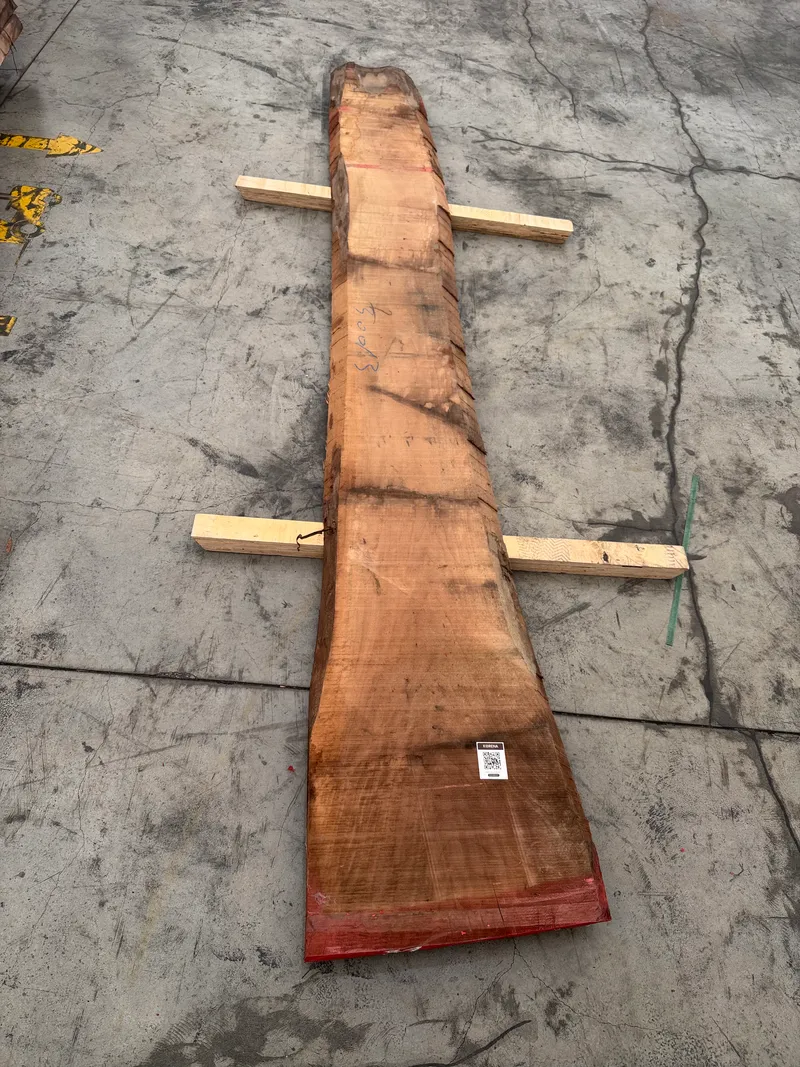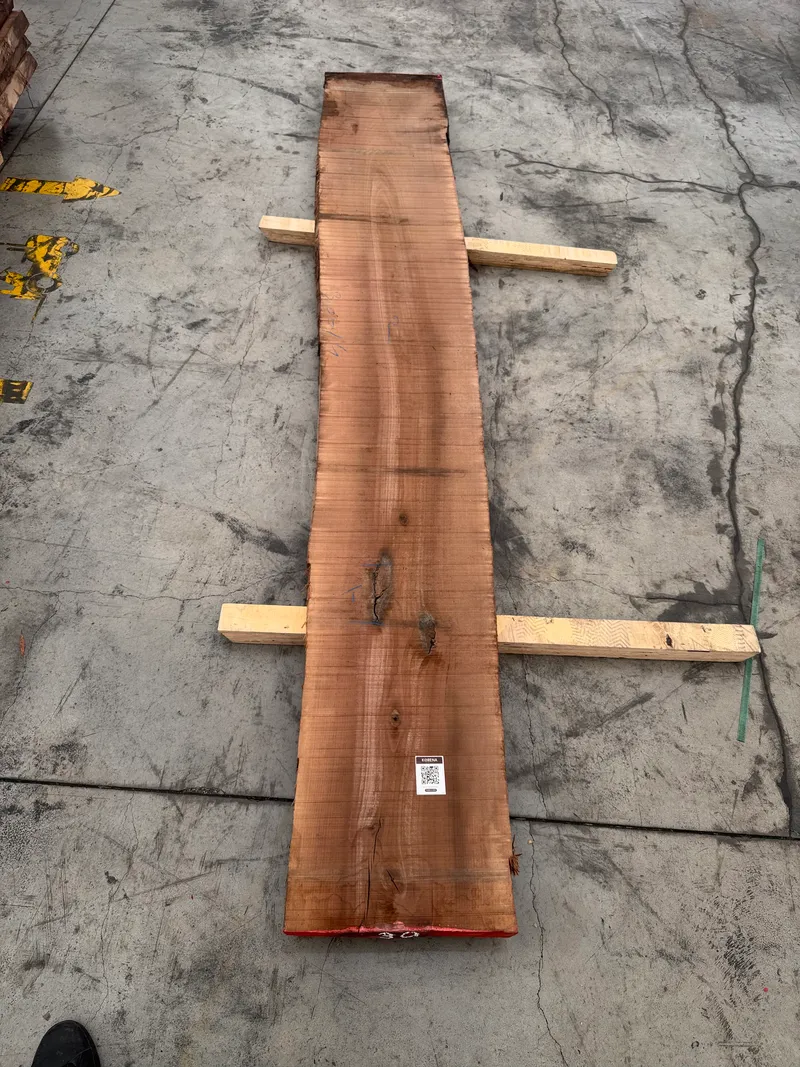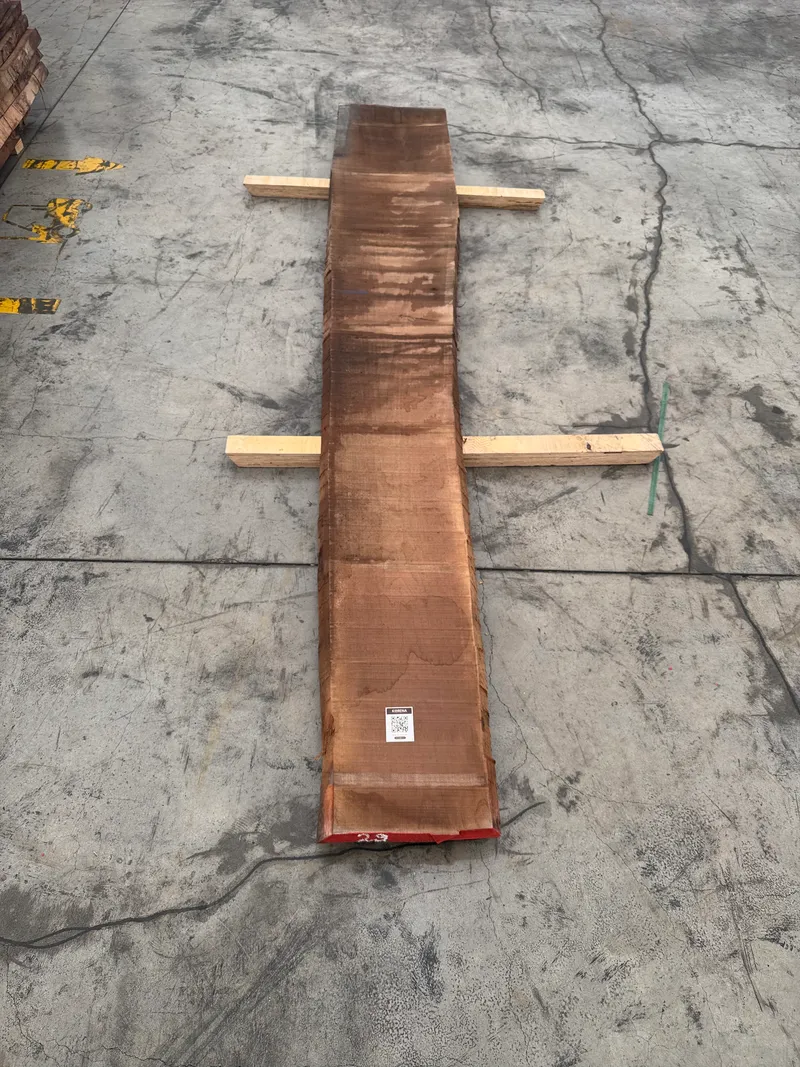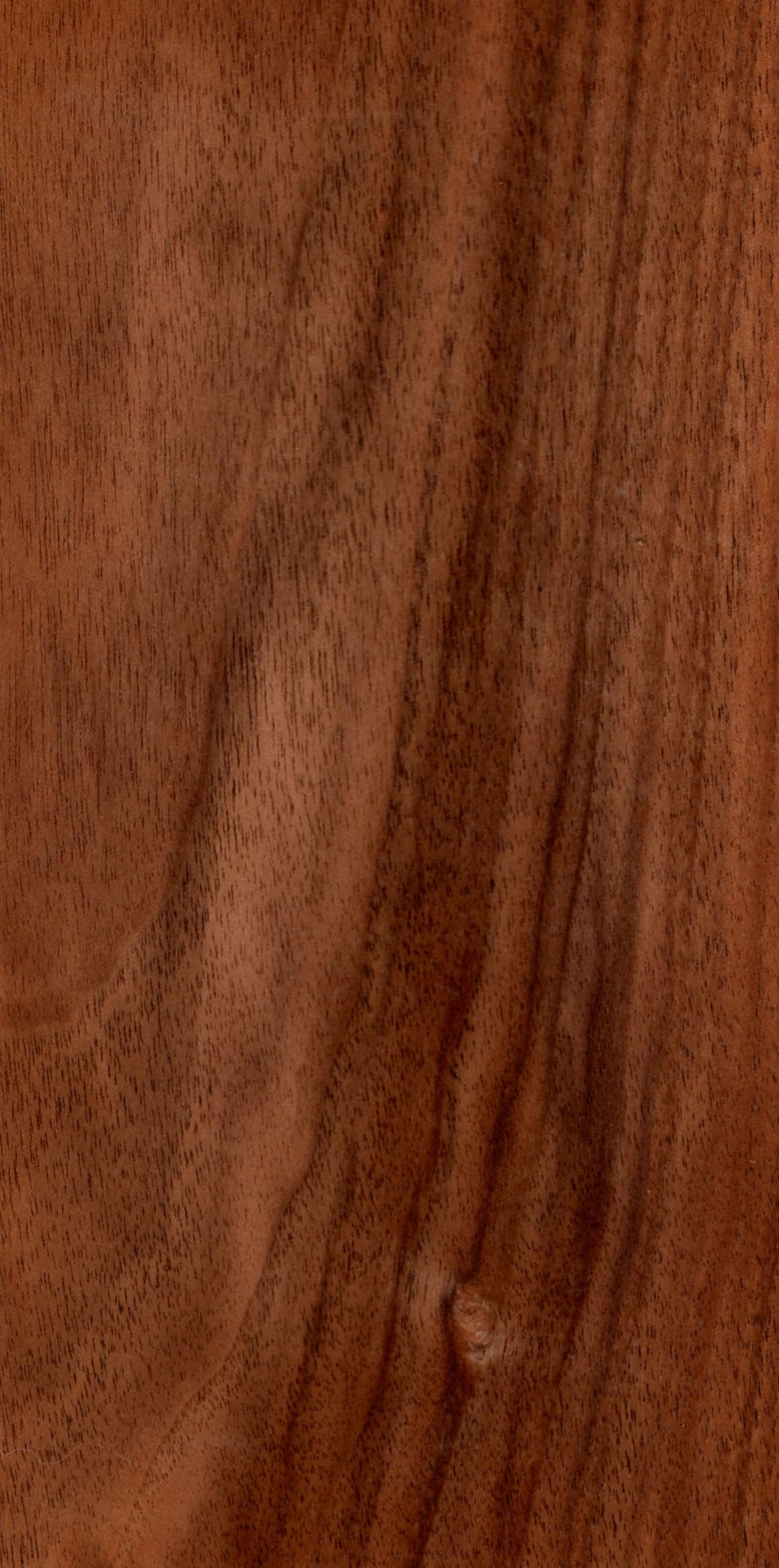
Juglans regia
Warm chocolate-brown hardwood with straight to wavy grain. Works cleanly, finishes beautifully, and reads as the maker's wood across European studios.
Puidu välimus
Grain runs mostly straight, with wavy or curly figure where branches and crotches meet. Texture is coarse and uneven, and at around 640 kg/m³ it feels solid in the hand without being heavy on the bench.
Töötlemine
Saws, planes, sands, and turns at 4/5, a cooperative wood on hand and machine tools. Wavy or curly sections want sharp irons and a light cut to avoid tear-out; steam-bending is workable but middling at 3/5.
Takes oils, hardwax, and shellac without fuss, a thinned oil coat deepens the brown and lifts any figure. Sands to a fine surface; avoid heavy stain, the natural colour does the work.
Dries at a moderate rate with a tendency to check and honeycomb if pushed. Most EU yards air-dry then finish in the kiln; ask for moisture content and any sticker stain before you commit.
Puit paisub ja kahaneb laiuses, kui õhk muutub niiskemaks või kuivemaks. Hinnake puiduliigist European Walnut lauaplaadi hooajalist liikumist enne kinnituste kavandamist.
Eeldatav hooajaline liikumine
umbes 6,3 mm
Kinnitage lauaplaat klotside või piluklambritega, mitte liimi ega pingul kruvidega.
Lineaarse kahanemise mudel: laius × (kahanemine ÷ 28% kiu küllastuspunkt) × niiskusesisalduse hooajaline muutus. Kasutab puiduliigi European Walnut puhul 7,75% tangentsiaalne kahanemist. Planeerimishinnang, mitte tagatis.
Puiduliigi European Walnut praegune müügihind Euroopas kuupmeetri kohta enne käibemaksu. Üksikasjade nägemiseks puudutage hinda.
Dust contains juglone and can irritate skin and airways. Wear a mask and run extraction; finished surfaces are food-contact safe.
Juglans regia grows across central and southern Europe, France, Italy, the Balkans, and into Anatolia. EU yards source it from managed orchards and woodland thinnings, with French and Italian stock the most common at trade.
Native to Europe, IUCN Least Concern, and not CITES-listed. Supply is steady from orchard thinnings and managed woodland, though wide single-board slabs in the 80 cm+ range move fast.
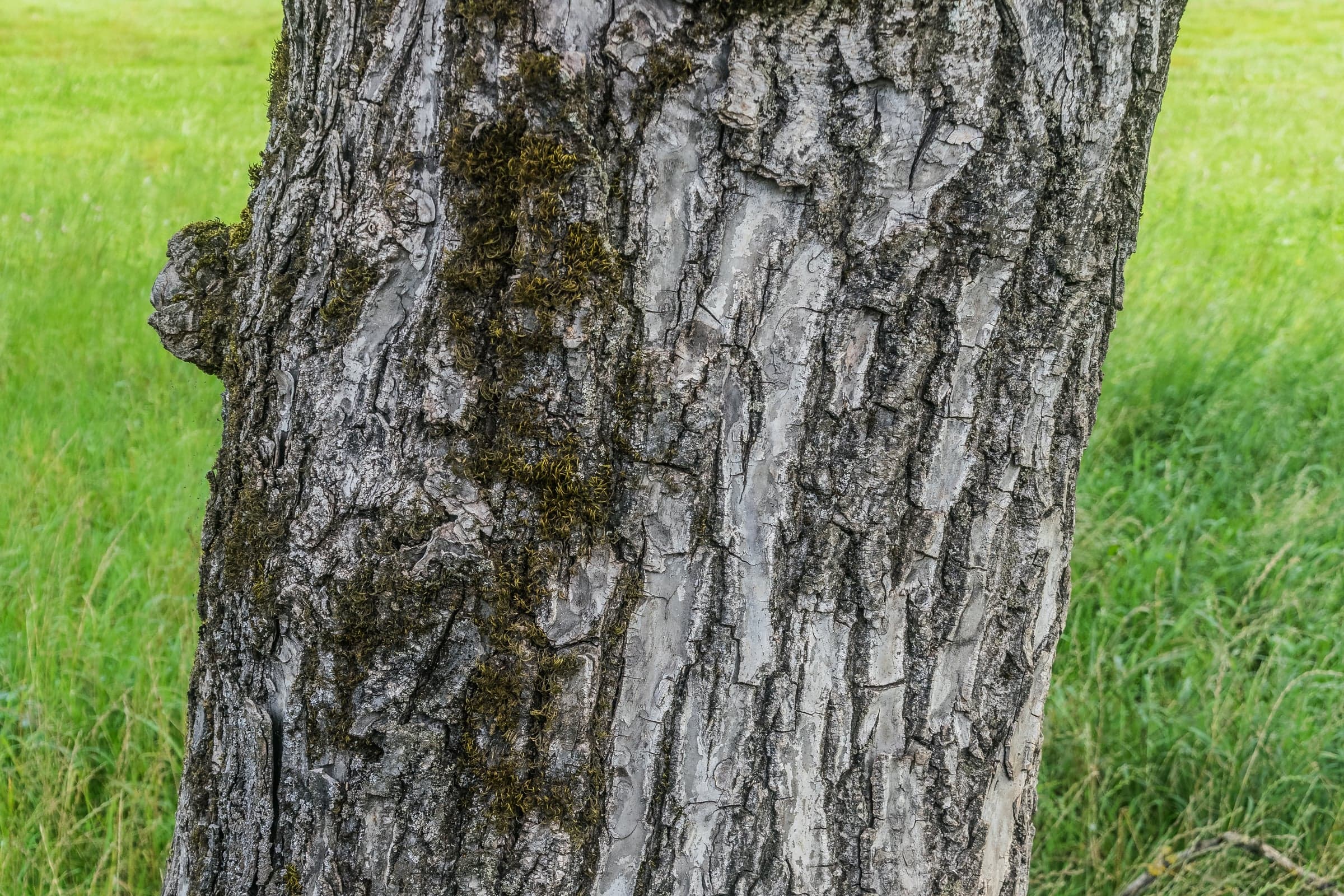
Juglans regia is the premium furniture timber of Europe and has been for four centuries. It combines a colour and figure nothing else here matches with genuinely good working properties and better than average stability, and it is expensive because all three are true at once.
It is grown as much for nuts as for wood. A great deal of slab stock comes from orchard and garden trees felled at the end of their productive life rather than from managed forestry, which is why widths and lengths are irregular and why provenance varies more than for a plantation species.
Colour runs grey brown to mid brown, warmer and lighter than American black walnut, with pronounced streaking and marbling. Sapwood is pale cream and sharply demarcated, and on a live edge slab it is usually left in place as a feature.
Figure is where the value concentrates. Crotch sections, where a trunk divides, produce feather and flame patterns. Stump and root material gives burl. Curly and quilted grain occurs. A plain walnut board and a figured one from the same tree can differ in price by a factor of five.
Look for the streaking pattern, the sapwood line, and any check running from a crotch, which is where drying stress concentrates.
Almost every wood in this catalogue darkens with light. Walnut is the significant exception: it lightens.
Fresh machined walnut carries purple and grey notes that mellow over months and years toward a warmer, lighter honey brown. The dramatic contrast between dark heartwood and pale sapwood softens as the heartwood lightens.
This catches buyers out regularly. If you choose a slab for the deep, almost purple brown it shows on the day it was surfaced, you are choosing a colour that will not persist. A UV inhibiting finish slows the change but does not stop it.
Walnut is a pleasure. At 5,410 N it is hard enough to be substantial without punishing tooling, it machines cleanly, turns well, carves well, glues reliably and takes finish beautifully.
Figured stock is the exception. Crotch and burl grain tears out under a planer, and the answer is light cuts, sharp tooling and a scraper or high angle plane for the final surface. On material this expensive that patience is cheap.
It takes oil finishes particularly well, and a thinned oil coat deepens the brown and lifts the chatoyance in figured sections more effectively than a film finish.
Walnut contains juglone, and the species is a documented sensitiser. Skin and respiratory irritation are reported, and repeated exposure sensitises some people over time. Extraction and a mask matter more here than with most species.
Juglone is also allelopathic, toxic to many plants. Walnut shavings and sawdust should not go into garden mulch or compost, and they should never be used as animal bedding, particularly for horses, where walnut shavings are associated with laminitis.
Volumetric shrinkage of 11.0 percent is among the lower figures in this catalogue, with tangential at 7.0 percent against radial at 4.5 percent.
That is a comparatively narrow differential, and it means walnut behaves better in a wide flatsawn top than oak, ash or beech would. Combined with its appearance, that stability is a large part of why walnut is the premium choice rather than merely the prettiest one.
Decay class 3 makes it moderately durable, which is adequate for protected exterior joinery but not for exposure.
Fine furniture, tabletops, cabinetry, turned and carved work, gunstocks, and any piece where appearance carries the design. It is the species in this catalogue that most rewards a live edge treatment, because the sapwood contrast and the figure are the point.
It is the wrong answer where budget is the constraint and where a large volume of matched material is needed, since consistency across many boards is hard to achieve.
Not CITES listed and assessed as Least Concern. Supply is genuine but limited, and because much of it comes from orchard and garden felling rather than forestry, the chain behind a given slab is shorter and less standardised than for a commodity species. KORENA records the partner yard and region on every listing, which on this species is worth reading.
Ostjate küsimused
Colour and figure. European walnut, Juglans regia, is lighter and warmer, running grey brown to mid brown with pronounced streaking and marbling. American black walnut, Juglans nigra, is darker and more uniformly chocolate. European is slightly harder at 5,410 N against 4,490 N but slightly less stiff. Most makers choose on appearance, and European walnut is the more variable and figured of the two.
Yes, and it moves in the opposite direction to most woods. Where oak and cherry darken with light, walnut lightens and mellows, losing some of the purple and grey notes toward a warmer honey brown. A UV inhibiting finish slows it. Buying walnut on the strength of its freshly machined colour is a common mistake.
Walnut contains juglone and is a documented sensitiser, with skin and respiratory irritation reported. Extraction and a mask matter here more than with most species. Juglone is also toxic to some plants, so walnut shavings should not go into garden mulch or animal bedding, particularly for horses.
Slow growth, limited size and high demand. Juglans regia is grown as much for nuts as for timber, trees are often felled from orchards and gardens rather than forestry, and clean wide boards are genuinely scarce. Figured material from crotches, stumps and burls commands multiples of plain stock.
Good. Volumetric shrinkage of 11.0 percent is among the lower figures in this catalogue, with tangential at 7.0 percent against radial at 4.5 percent. That relative stability, combined with its appearance, is a large part of why walnut is the premium furniture timber of Europe.
Mehaanilised omadused
Avaldatud võrdlusväärtused. Kui allikad erinevad, kuvatakse vahemik ja ülalolevatel skaaladel kasutatakse tüüpilist väärtust.
| Tihedus (kg/m³)Mass kuupmeetri kohta umbes 12% niiskusesisalduse juures. Raskem puit on tavaliselt kõvem ja tugevam. | 590–680 kg/m³tüüpiline 640 kg/m³ |
|---|---|
| Janka kõvadus (N)Jõud, mis on vajalik teraskuuli pooleldi puitu surumiseks. Standardne mõlgikindluse mõõt. | 4,900–5,800 Ntüüpiline 5410 N |
| MOR: paindetugevus (MPa)Paindetugevus: koormus, mille juures tala murdub. | 100–130 MPa |
| MOE: elastsusmoodul (GPa)Paindejäikus: kui palju riiul või lauaplaat koormuse all läbi paindub. | 9.0–12.0 GPa |
| Radiaalne kahanemineKahanemine risti kasvurõngastega toorest kuni täiesti kuivani. Nii liigub radiaalselt saetud saematerjal. | 4.5–5.5 % |
| Tangentsiaalne kahanemineKahanemine piki kasvurõngaid. Nii liiguvad tangentsiaalselt saetud lauad ja enamik planke. | 7.0–8.5 % |
| Mahuline kahanemineMahu kogumuutus toorest kuni täiesti kuivani. Väiksem väärtus tähendab suuremat stabiilsust. | 11.0–13.0 % |
| Loomulik vastupidavus (EN 350)Euroopa standard loomuliku mädanikukindluse kohta, 1 (väga vastupidav) kuni 5 (kergesti riknev). | Class 3 — Moderately durable |
Saadame teile kirja, kui uued puiduliigi European Walnut plangud KORENAsse jõuavad. Iga tükk on ainulaadne, seega on varajasest teatest kasu.
Janka kõvadus 5410 N
9% kõvem kui tamm
Üksikasjade nägemiseks puudutage silti.
640 kg/m³
Mahuline kahanemine 12,0%
Töötlemise keskmine 4,0/5
EN 350 klass 3
Miks maksab plank sellest rohkem?
Need on toorpuidu hinnad. Plank on palgi parim lõige, mida kuivatatakse vähemalt aasta ning kontrollitakse ja mõõdetakse seejärel tükkhaaval. Igast palgist saab planguks vaid väike osa.
Allikas: KORENA puiduindeks · Uusimad andmed 25. sept 2026
Vaata kõiki piirkondlikke hindu