KORENA
PuuFinished piecesTarvikkeetKumppanivarastotJulkaisut

Tilaa ilmoitukset

Jokainen lankku on ainutlaatuinen. Kun se myydään, sitä ei enää ole. Lähetämme sähköpostia, kun uusia kappaleita listataan: uudet saapumiset, uudet puulajit ja projektikuvaukseen sopivat lankut.

Muutama sähköposti kuukaudessa. Ei roskapostia, voit perua milloin tahansa.

KORENA, korkealaatuinen lehtipuu

Kappale kerrallaan.

Tarkastettua korkealaatuista lehtipuuta kappale kerrallaan. Jokainen lankku valokuvataan, mitataan ja toimitetaan kumppanivarastosta puupassin kanssa.

Kauppa

  • Selaa tuotteita
  • Myytyjen arkisto
  • Seuraa tilausta

Opi

  • Julkaisut
  • Puulajioppaat
  • Sanasto
  • Vertaa
  • Kirjoittajat

Ohjeet

  • Tietoa meistä
  • Näin se toimii
  • Ryhdy kumppanivarastoksi
  • Pyydä lankun hankintaa
  • Tuki
  • Asiakirjamallit
  • Lehdistö

Osta

  • Myyntiehdot
  • Peruuttamisoikeus
  • Palautukset ja takuu
  • Toimitus

Luottamus

  • Tietosuojakäytäntö
  • Evästekäytäntö
  • Puun alkuperä ja EUDR
  • Saavutettavuus

Yritystiedot

  • Oikeudellinen ilmoitus / yritystiedot
  • Hyväksyttävä käyttö
  • Immateriaalioikeudet ja sisältö

© 2026 KORENA. Kaikki oikeudet pidätetään.

Ylläpitäjä Martial Labs Ltd. (BG, EIK 207453941). KORENA on Martial Labs Ltd:n kauppanimi.

Kunnioitamme yksityisyyttäsi

Käytämme välttämättömiä evästeitä, jotta sivusto toimii. Luvallasi käyttäisimme evästeitä myös analytiikkaan, yksilölliseen sisältöön ja mainontaan. Voit muuttaa valintaasi milloin tahansa suostumusasetusten sivulla. Tutustu evästekäytäntöömme ja tietosuojakäytäntöömme.

  1. Etusivu
  2. /
  3. Puulajit
  4. /
  5. Black Locust / Robinia

Robinia pseudoacacia

Black Locust / Robinia

Class 1 durability from a tree that grows in Europe. One of the only EU-native options that survives outdoors untreated, and a credible domestic answer to tropical exotics like teak.

  • Kasvatettu ja korjattu Euroopassa.
  • Kasvitieteellinen ryhmä. Havupuut ovat paljassiemenisiä ja lehtipuut koppisiemenisiä puita.
  • Kasvitieteellinen heimo, johon puulaji kuuluu.
Tilaa ilmoitus sen saapuessaViitepuulaji. Ei kappaleita varastossa juuri nyt.
  • Sopivuus projektiin
  • Varastossa
  • Ulkonäkö
  • Työstäminen
  • Eläminen
  • Hinta
  • Turvallisuus ja hankinta
  • Kysymykset
  • Tekniset tiedot

Sopiiko se projektiisi?

Sopii hyvin

  • Outdoor benches and garden furniture that need to survive without preservative treatment
  • Thresholds, sills, and entry pieces that take weather and wear
  • Fence posts and landscape elements designed as visible objects, not buried hardware
  • High-wear interior tops, kitchen islands, workshop benches, retail counters
  • Tool handles and turned forms where toughness matters
  • Steam-bent components, chair backs, hoops, curved frames

Puulajia Black Locust / Robinia ei ole nykyisessä erässä

Samankaltaisia puulajeja varastossa

Puulajia Black Locust / Robinia ei ole juuri nyt. Nämä puulajit sopivat samoihin projekteihin, ja niitä on saatavilla.
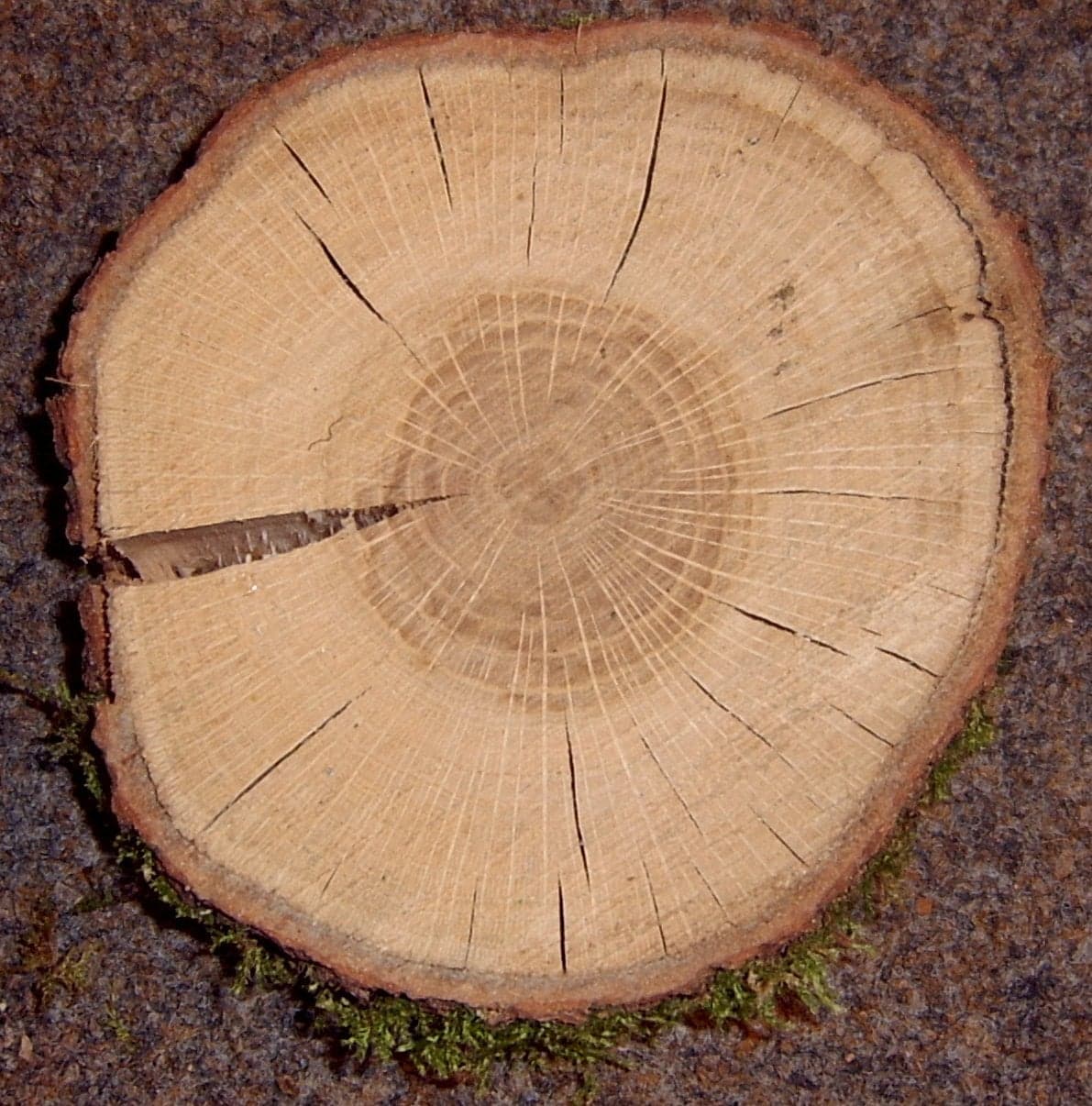
  • Puulajin European Oak syykuvio

    European Oak

    Quercus robur

    6 kappaletta

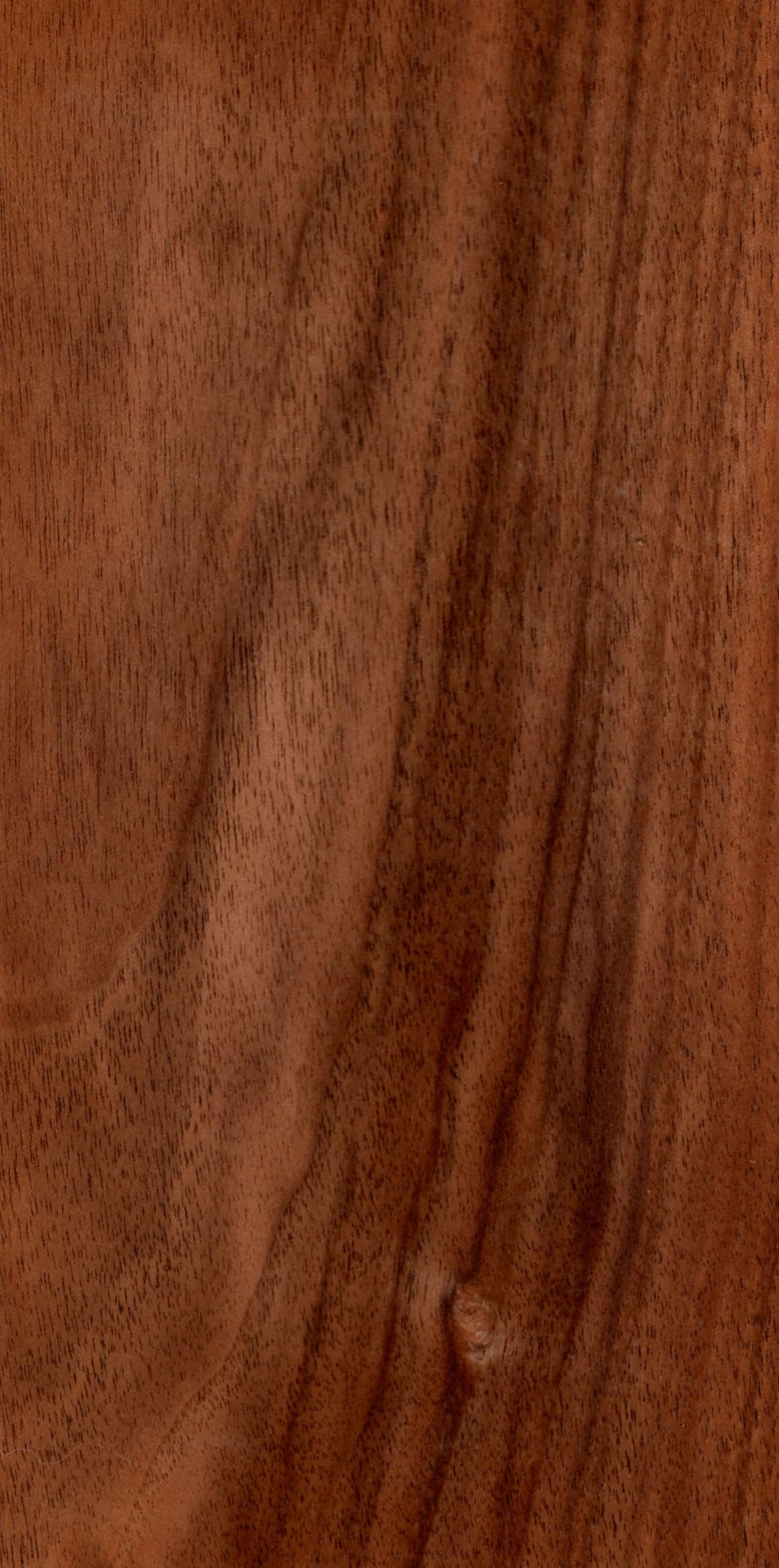
  • Puulajin European Walnut syykuvio

    European Walnut

    Juglans regia

    9 kappaletta

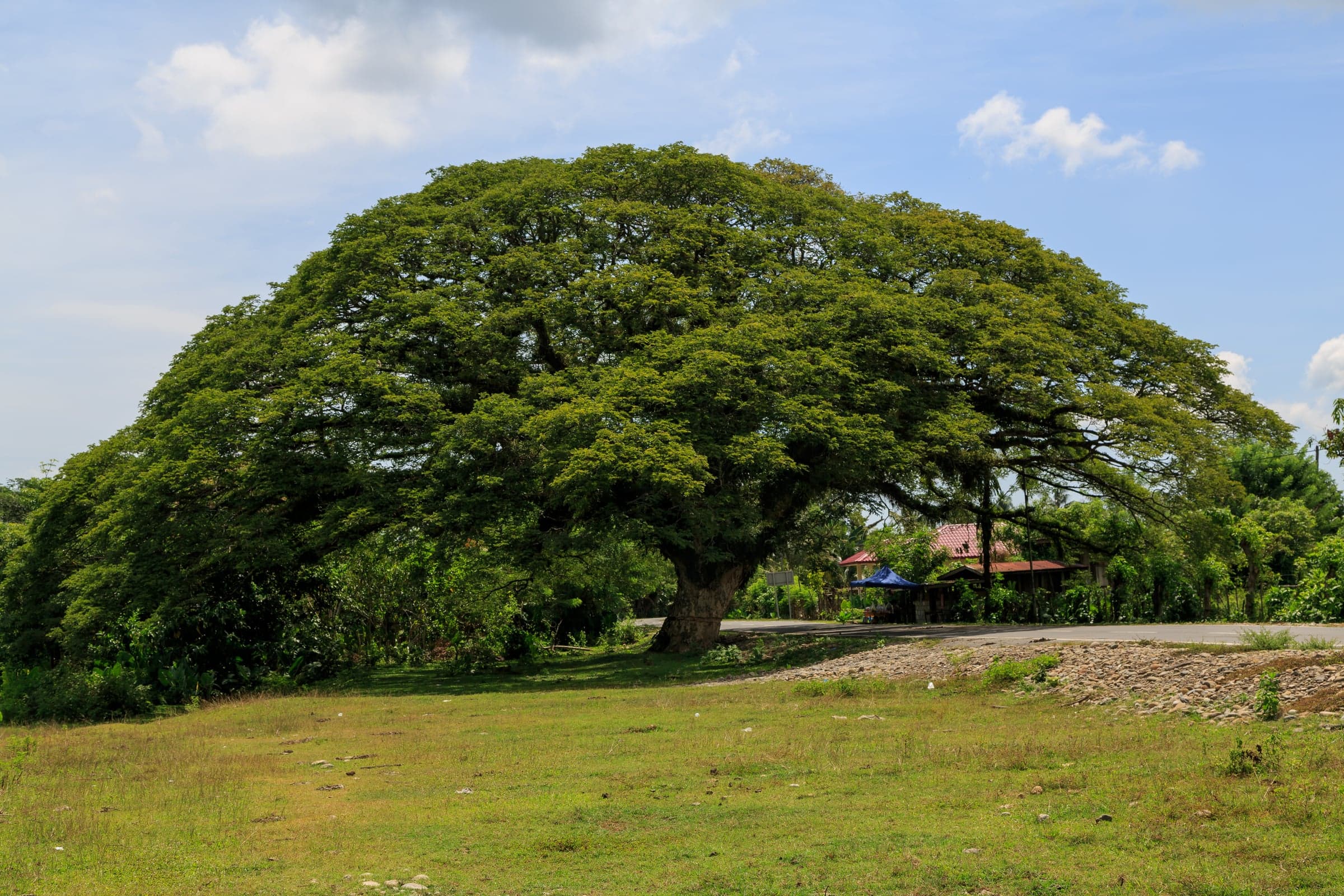
  • Puulajin Saman syykuvio

    Saman

    Samanea saman

    4 kappaletta

Tilaa ilmoitus puulajista Black Locust / Robinia

Lähetämme sähköpostia, kun KORENAan saapuu uusia Black Locust / Robinia-lankkuja. Jokainen kappale on ainutlaatuinen, joten ennakkotiedosta on hyötyä.

Muutama sähköposti kuukaudessa. Ei roskapostia, voit perua milloin tahansa.

Puun ulkonäkö

Miltä se näyttää

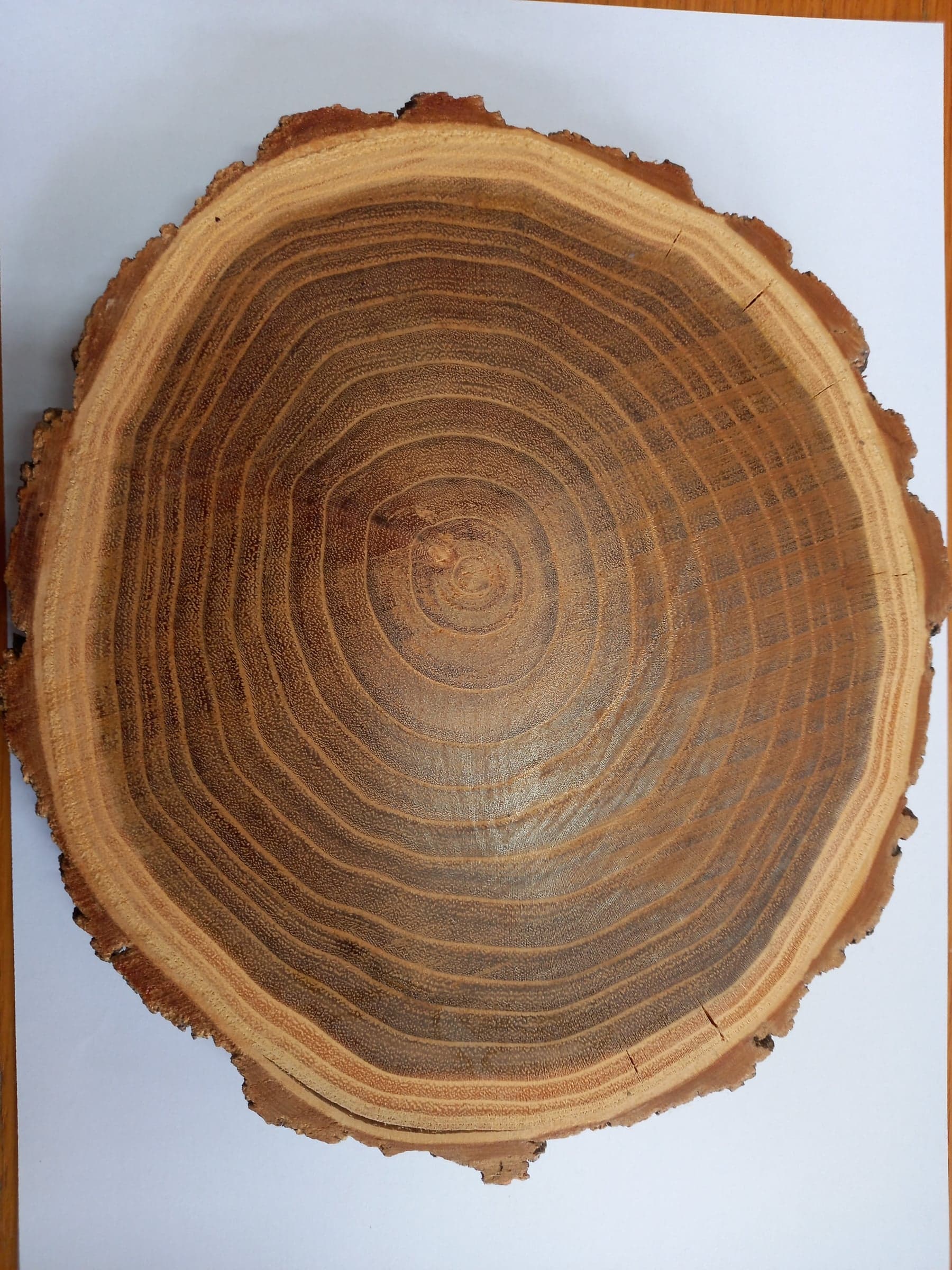
Straight grain, coarse open texture, and a heartwood that lands somewhere between olive-yellow and greenish-gold when freshly cut. UV does the work over the next few months, the green calms down and the wood warms into a deep amber. Sapwood is narrow and pale yellow. The contrast between the two reads cleanly on wide slabs.

  • Olive-yellow to greenish-gold heartwood when freshly milled
  • Warms to a deep amber over weeks of light exposure
  • Narrow pale yellow sapwood, cleanly demarcated from the heartwood
  • Coarse open pores read clearly under oil finishes
  • Straight grain, coarse texture; very durable.

Työstäminen

Työstäminen

Honest warning, this is a hard, tough wood and it will blunt edges. Carbide tooling is sensible, and HSS needs frequent sharpening. Sawing, planing, and sanding all sit around average difficulty for the effort, but tool wear is well above average. It glues and screws cleanly once you pre-drill, and it turns nicely. The standout is steam-bending. Robinia is one of the best European species for it, on a par with white oak.

Viimeistely

Takes oils and hardwax oils well; the open pores welcome them. The early colour shift is dramatic, so finish a test piece and leave it in daylight for a fortnight before committing, what you see on the bench is not what the client will see in a month. UV-blocking finishes slow the amber drift if a greener tone is wanted. Sanding to 180 is usually enough; finer grits can burnish the surface and fight oil uptake.

Kuivaus

Dries slowly and benefits from patience. Surprisingly stable for its hardness once acclimatised, radial movement around 4–5% and tangential 6.5–8% are modest for a 770 kg/m³ wood. Stack with care, weight the top, and expect some end-checking if rushed. Kiln schedules should be conservative.

Kuinka paljon se elää?

Puu turpoaa ja kutistuu leveyssuunnassa ilman kosteuden muuttuessa. Arvioi Black Locust / Robinia-tason vuodenaikaiseläminen ennen kiinnikkeiden suunnittelua.

Sahaustapa
Käyttöympäristö

Odotettu vuodenaikaiseläminen

noin 8,3 mm

Kiinnitä taso kiinnityspaloilla tai urallisilla kiinnikkeillä, älä liimalla tai tiukoilla ruuveilla.

Lineaarinen kutistumismalli: leveys × (kutistuminen ÷ 28 %:n puunsyiden kyllästymispiste) × kosteuden vuodenaikaisvaihtelu. Puulajin Black Locust / Robinia tangentin suuntaista kutistumisena käytetään arvoa 7,25 %. Tämä on suunnitteluarvio, ei takuu.

Mitä se maksaa

Turvallisuus ja hankinta

  • Kasvatettu ja korjattu Euroopassa.
  • IUCN:n punaisen listan luokitus: puulajin maailmanlaajuinen uhanalaisuusarvio.
  • Not recommended for direct food contact. The bark, leaves, and seeds carry toxic compounds, and while the heartwood is considered the safer part of the tree, we would not specify it for cutting boards or utensils. The dust is a known irritant and sensitiser, some woodworkers report nausea from prolonged exposure. Run dust extraction and a fitted respirator, not just a paper mask.

Lue koko opasTarkemmat tiedot kuviosta, värin muutoksesta, työstämisestä ja vakaudesta.+

What Robinia actually is#

Robinia pseudoacacia, black locust, is the strongest and most durable timber in this catalogue, and it grows across Europe like a weed.

The numbers are not close. At 7,560 N Janka it is the hardest measured species here. Its modulus of rupture of 130 MPa and elastic modulus of 14.0 GPa are the highest measured figures in the catalogue. And it is rated decay class 1, very durable, matched only by yew.

That combination, tropical grade durability from a fast growing European species, is unusual enough to be worth stating plainly: robinia does what teak and ipe do, without a tropical supply chain.

Why it is not more widely used#

Three reasons, none of them about performance.

It is hard to convert. At this density and hardness it blunts tooling fast and asks a great deal of machines, and small sawmills often decline it.

It grows badly for timber. Robinia is prone to twisting, forking and spiral grain, so long straight clean lengths are scarce even where the tree is abundant. Most of what is cut ends up as fence posts and stakes, applications where its durability is used and its form does not matter.

It has an image problem. In much of Europe it is regarded as an invasive nuisance rather than a timber species, which keeps demand and therefore processing infrastructure low.

Ostajien kysymykset

Ostajien kysymykset

Is Robinia really as durable as tropical hardwood?

+

Yes, and that is its main argument. It is rated decay class 1, very durable, the highest rating in this catalogue alongside yew, and it performs comparably to teak or ipe in ground contact. Because it grows fast across Europe it offers tropical grade durability without a tropical supply chain, which is a rare combination under EUDR.

How hard is it?

+

At 7,560 N Janka it is the hardest measured wood in this catalogue, above hornbeam at 7,260 N and half again as hard as European oak. Its modulus of rupture of 130 MPa and stiffness of 14.0 GPa are also the highest measured figures here. It is a genuinely formidable timber.

Is it toxic?

+

The bark, leaves and seeds are toxic, containing robin and robinin, and the wood is recorded here as not food safe. Dust is irritant. Do not use it for chopping boards, food contact surfaces or anything a child might chew, and run extraction when machining.

Why is it treated as invasive in some countries?

+

Robinia is native to North America and was introduced to Europe in the seventeenth century. It spreads readily by root suckers and fixes nitrogen, altering soil chemistry, and several European countries list it as invasive. That is an ecological concern about planting rather than a restriction on timber, and harvesting established stands is generally viewed favourably.

Mekaaniset ominaisuudet

Tekniset tiedot

Julkaistut viitearvot. Jos lähteet eroavat toisistaan, vaihteluväli näytetään ja yllä olevissa asteikoissa käytetään tyypillistä arvoa.

Tiheys (kg/m³)Kuutiometrin massa noin 12 %:n kosteudessa. Painavampi puu on yleensä kovempaa ja vahvempaa.700–830 kg/m³tyypillinen 770 kg/m³
Janka-kovuus (N)Voima, joka tarvitaan teräskuulan painamiseen puoliksi puuhun. Vakiintunut lommonkestävyyden mitta.7,000–8,200 Ntyypillinen 7 560 N
MOR: taivutuslujuus (MPa)Taivutuslujuus: kuorma, jolla palkki murtuu.130–150 MPa
MOE: kimmomoduuli (GPa)Taivutusjäykkyys: kuinka paljon hylly tai taso taipuu kuormitettuna.14.0–16.0 GPa
Säteensuuntainen kutistuminenKutistuminen kasvurenkaiden poikki tuoreesta uunikuivaksi. Neljännessahatut laudat elävät näin.4.0–5.0 %
Tangentin suuntainen kutistuminen
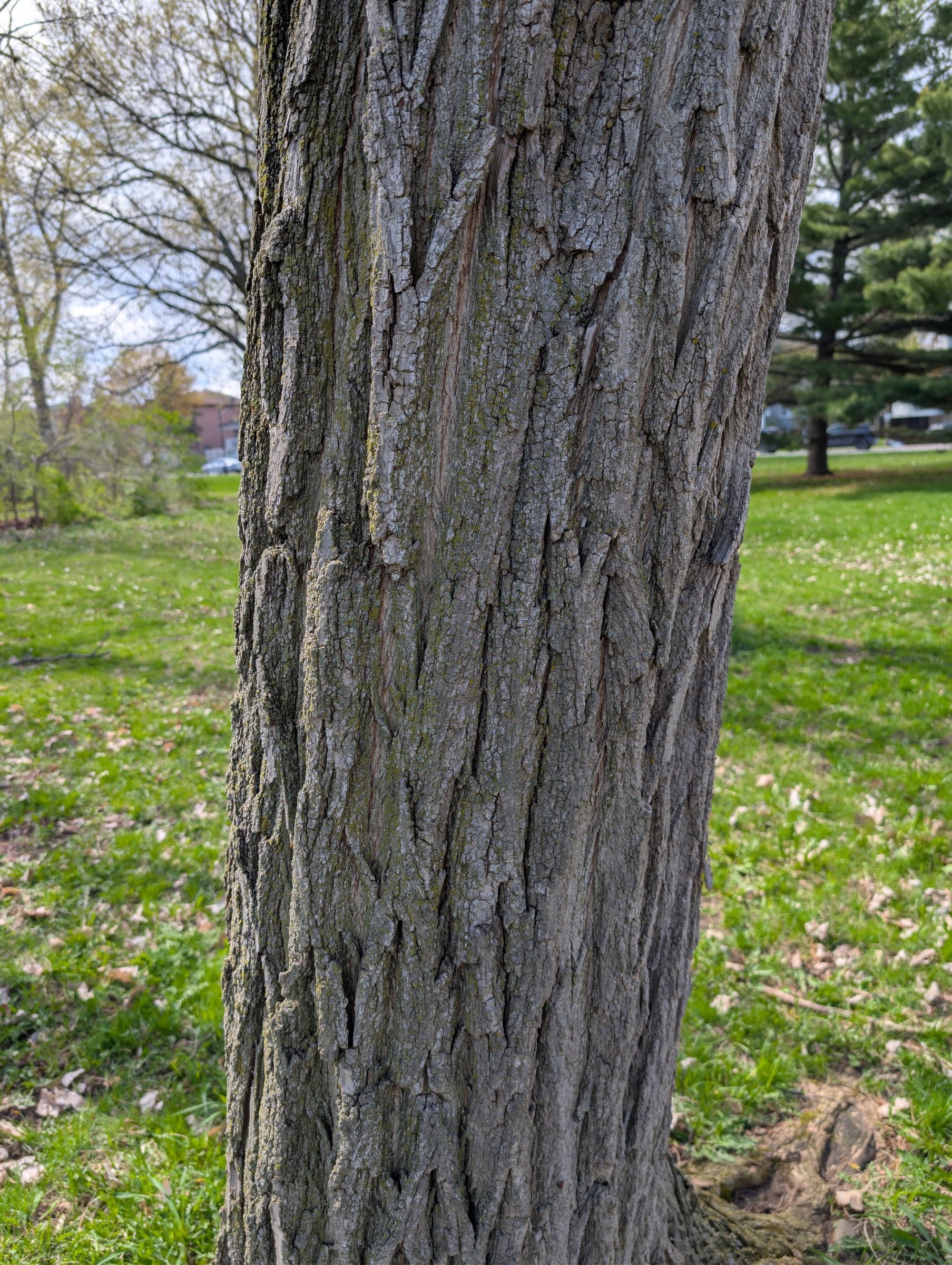
Puulajin Black Locust / Robinia syykuvio

Dexys-2019, via Wikimedia Commons

Vahvuudet

  • Kestää ulkonaEN 350 -luokka 1/5: kestää lahoa ulkona ilman käsittelyä.
  • Erittäin vakaaVähäinen vuodenaikaiseläminen. Sopii leveisiin tasoihin ja tiukkoihin liitoksiin.

Originally North American, but naturalised and commercially grown across central and eastern Europe for over two centuries. Hungary, Romania, Bulgaria, and Slovakia all have working forestry programmes around it. For sourcing and EUDR purposes we treat it as European stock, the supply chain sits inside the EU and the paperwork follows.

  • IUCN Least Concern, no CITES listing. Grown commercially across central and eastern EU, often on marginal land where slower-growing natives struggle. Class 1 durability means outdoor pieces last decades without preservative chemistry, which is its own sustainability argument. EUDR-wise, the supply chain is short and EU-internal, provenance is straightforward to document.

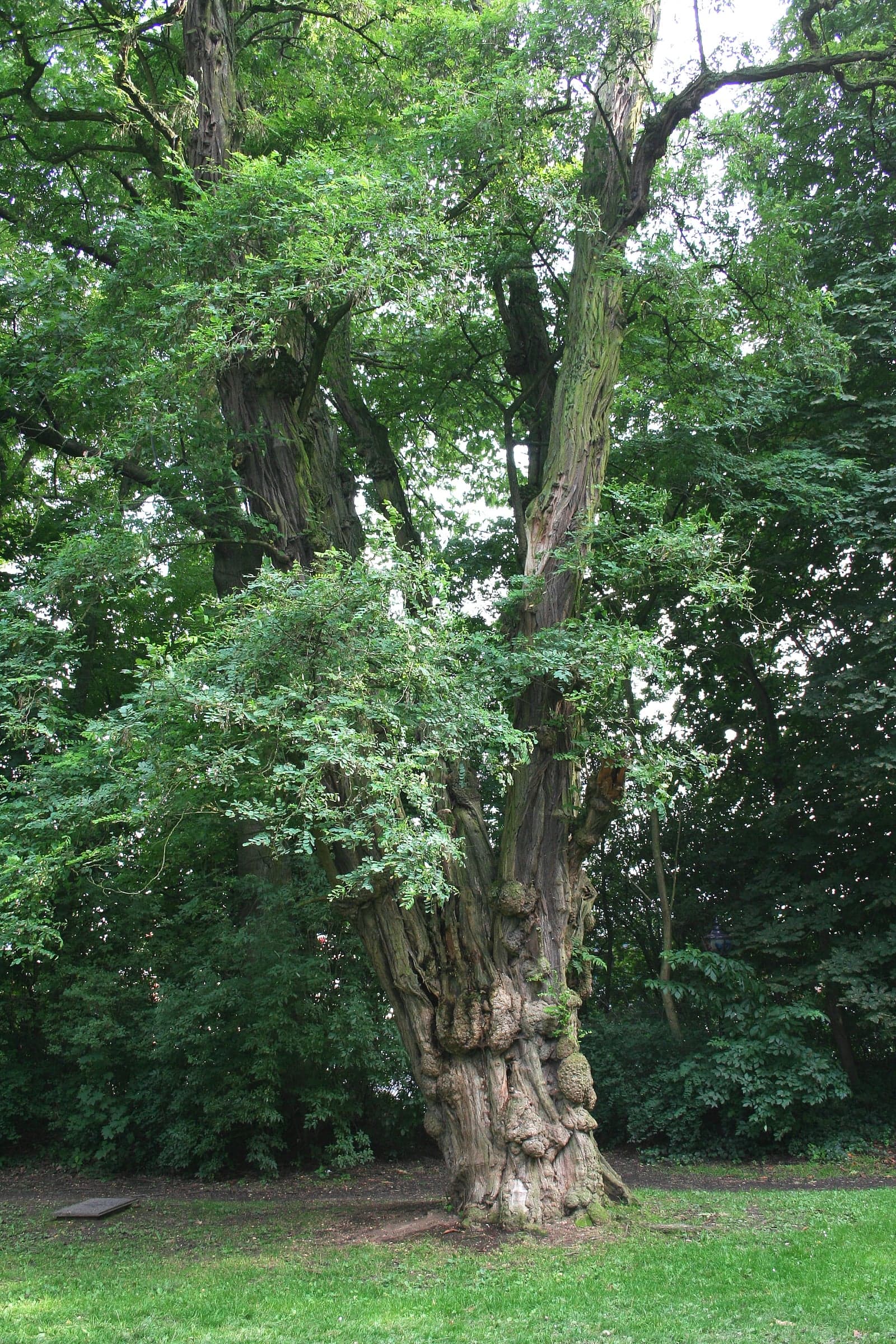
  • Black Locust / Robinia-puu

    Jean-Pol GRANDMONT, via Wikimedia Commons

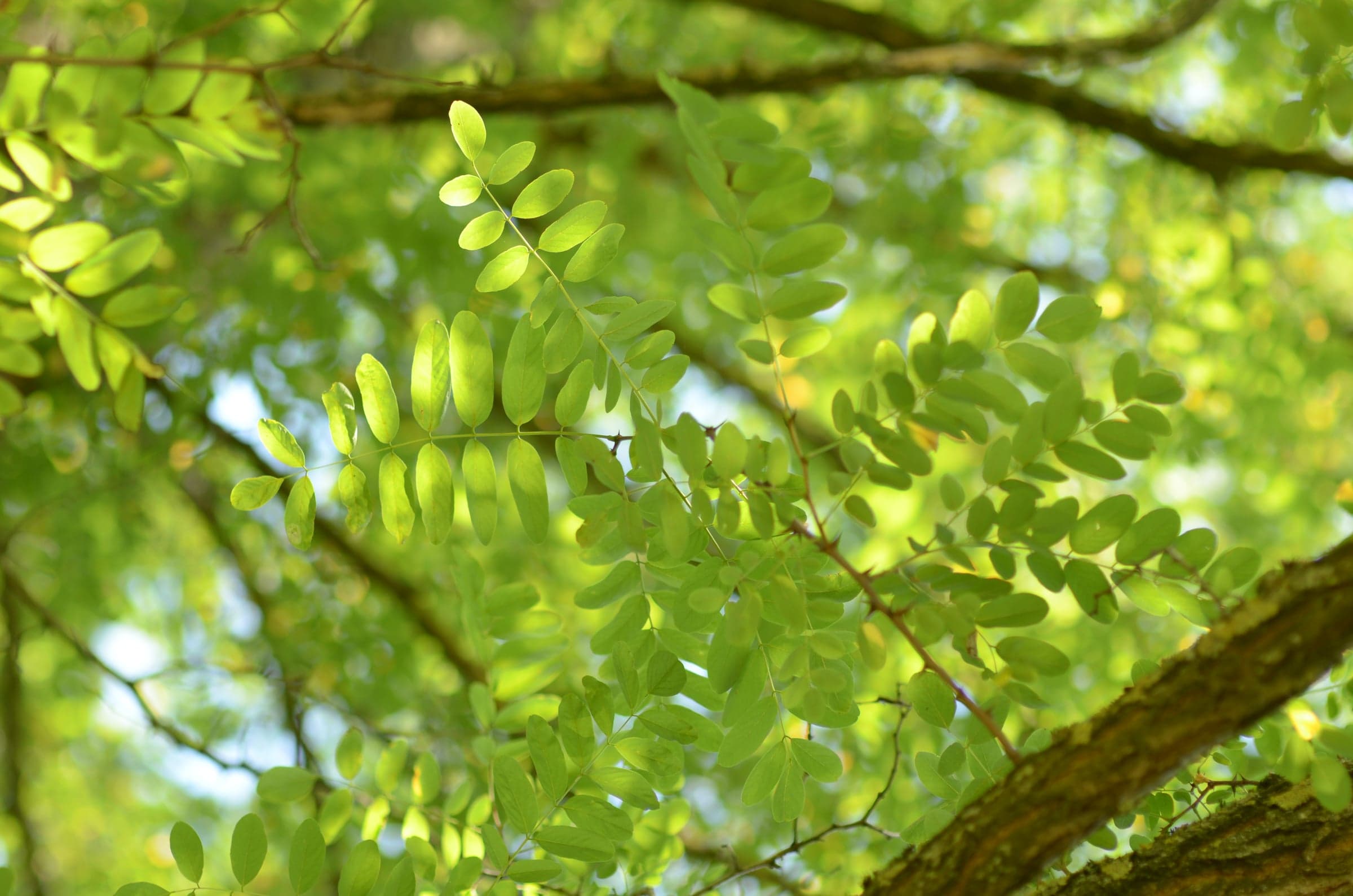
    Black Locust / Robinia: Lehti
    Lehti
    Black Locust / Robinia: Kaarna
    Kaarna

    For slab work, the form problem is the main constraint. Wide clean robinia is genuinely uncommon.

    Reading a robinia slab#

    Heartwood runs greenish yellow when fresh, darkening to a warm golden brown and eventually a russet with light exposure. Sapwood is narrow and pale. The wood has a natural lustre and fluoresces under UV, which is a quick identification test.

    Grain is often wavy or interlocked, and the ring porous structure gives a bold figure not unlike ash or oak.

    Check carefully for spiral grain and twist along the length. It is the characteristic fault of the species and it will show itself after machining if it was not visible before.

    At the bench#

    Expect to work for it. At 7,560 N with frequently interlocked grain, robinia blunts cutters faster than anything else here and tears out where the grain reverses.

    Sharp tooling is not advice, it is the requirement. Light cuts, a high angle plane or a scraper for the final surface, and carbide rather than steel where you have the choice. A helical cutterhead makes a substantial difference.

    It turns nicely and it steam bends excellently, one of the best European species for it. Combined with its durability, that makes it a strong candidate for exterior curved work where oak is the conventional choice but does not last as long.

    It glues and screws well, though pilot holes are essential at this density.

    Toxicity#

    The bark, leaves and seeds are toxic, containing robin and robinin. The wood is recorded in this catalogue as not food safe and the dust is irritant.

    Do not use robinia for chopping boards, food contact surfaces, or anything a child might mouth. Run extraction when machining.

    Stability#

    Volumetric shrinkage of 10.0 percent is among the lowest in this catalogue, with tangential at 6.5 percent against radial at 4.0 percent. That is both a low total and a narrow differential, which means robinia is dimensionally well behaved once dry, unusual for a wood this dense.

    Drying it is another matter: the density and frequent spiral grain make it slow and prone to distortion.

    The invasive question#

    Robinia is native to North America and was introduced to Europe in the seventeenth century. It spreads readily by root suckers and fixes nitrogen, altering soil chemistry, and several European countries list it as invasive.

    That is an ecological concern about planting, not a restriction on timber. Harvesting established stands is generally viewed favourably, and using the wood is not in tension with the conservation position.

    Where Robinia is the right answer#

    Outdoor furniture, decking, garden structures, boat components, fence posts, and any exterior application where a European species with tropical grade durability is wanted. Also steam bent exterior work.

    It is the wrong answer for food contact, for large matched volumes, and where your tooling is not up to it.

    Sourcing and EUDR#

    Not CITES listed and assessed as Least Concern. Abundant across central and southeastern Europe, particularly Hungary, which has the largest managed robinia resource in the world. Supply is straightforward and documentation is simple.

    Can it be steam bent?

    +

    It is one of the best European species for it. Combined with its durability that makes it a strong choice for exterior curved work such as boat parts and garden structures, where oak would be the conventional answer but robinia lasts longer.

    Kutistuminen kasvurenkaiden suuntaisesti. Läpisahatut laudat ja useimmat lankut elävät näin.
    6.5–8.0 %
    TilavuuskutistuminenTilavuuden kokonaismuutos tuoreesta uunikuivaksi. Pienempi arvo tarkoittaa vakaampaa puuta.10.0–12.0 %
    Luontainen kestävyys (EN 350)Eurooppalainen luontaisen lahonkestävyyden standardi, jossa 1 tarkoittaa erittäin kestävää ja 5 helposti lahoavaa.Class 1 — Very durable

    Lähteet

    • The Wood Database(luettu 2026-05-09)
    • USDA FPL Wood Handbook FPL-GTR-190 (2010)(luettu 2026-05-09)
    • Meier, E. — WOOD! Identifying and Using Hundreds of Woods Worldwide (2015)(luettu 2026-05-09)

    Yhdellä silmäyksellä

    Tasot perustuvat samoihin rajoihin kaikilla KORENAn puulajeilla, joten niitä voi verrata suoraan. Mitattu arvo näkyy kunkin tason alla.
    KovuusLommojen ja kulumisen kestoErittäin kova

    Janka-kovuus 7 560 N

    52 % kovempi kuin euroopantammi

    PainoKuinka raskas lankku on nostaaErittäin painava

    770 kg/m³

    VakausKuinka vähän puu elää vuodenaikojen mukaanVakaa

    11,0 % tilavuuskutistuminen

    TyöstettävyysSahaus, höyläys, hionta ja liimausVaativa

    3,4 / 5 työstettävyyden keskiarvo

    UlkokäyttöLuontainen lahonkestävyys, EN 350Pitkäikäinen ulkona

    EN 350 -luokka 1

    • Sahaus · HyväKuinka siististi se leikkautuu ja kuinka paljon se kuluttaa teriä.1 = vaikea · 5 = erinomainen
    • Höyläys · HyväKuinka sileäksi pinta höyläytyy ja kuinka helposti puu repeilee.1 = vaikea · 5 = erinomainen
    • Hionta · HyväKuinka nopeasti pinta hioutuu sileäksi tukkimatta hiomapaperia.1 = vaikea · 5 = erinomainen
    • Sorvaus · Erittäin hyväKuinka se leikkautuu ja viimeistyy sorvissa.1 = vaikea · 5 = erinomainen
    • Kaiverrus · HyväKuinka terävinä yksityiskohdat säilyvät kourutaltalla työstettäessä.1 = vaikea · 5 = erinomainen
    • Liimaus · Erittäin hyväKuinka luotettavasti liimaliitokset pitävät.1 = vaikea · 5 = erinomainen
    • Ruuvien ja naulojen pito · Erittäin hyväKuinka hyvin ruuvit ja naulat pysyvät halkaisematta puuta.1 = vaikea · 5 = erinomainen
    • Höyrytaivutus · ErinomainenKuinka hyvin se taipuu höyrytyksen jälkeen.1 = vaikea · 5 = erinomainen

    Puutavaran Black Locust / Robinia nykyiset myyntihinnat eri puolilla Eurooppaa kuutiometriä kohti ennen ALV:tä. Avaa tiedot napauttamalla hintaa.

    • Parhaat tukit huutokaupassaValikoidut korkealaatuiset tukit, jotka myydään tarjoushuutokaupoissa pääasiassa viilun ja huonekalujen valmistajille. Tällaisista tukeista sahataan lankkuja.Useimmat hinnat ovat välillä 143 €–143 €.Perustuu 25 hintaan 1 alueelta.Uusimmat tiedot 24.9.2026
    • Tavanomaiset tukitMetsänomistajien ja valtion metsätalouden suurina erinä myymä tavallinen raakapuu, joka käytetään pääasiassa rakentamiseen ja teollisuuteen.Useimmat hinnat ovat välillä 11 €–61 €.Perustuu 17 hintaan 1 alueelta.Uusimmat tiedot 24.9.2026

    Miksi lankku maksaa tätä enemmän?

    Nämä ovat raakapuun hintoja. Lankku on tukin paras sahauspala. Sitä kuivataan vähintään vuoden ajan, minkä jälkeen jokainen kappale tarkastetaan ja mitataan. Vain pieni osa kustakin tukista päätyy lankuksi.

    Lähde: KORENA Timber Index · Uusimmat tiedot 24.9.2026

    Katso kaikki alueelliset hinnat
    Taipuu hyvin
    Höyrytaivutuksen arvosana 5/5. Taipuu tiukoille kaarille.

    Huomioi

    • Pöly ärsyttääKäytä pölynpoistoa ja hengityssuojainta hioessa tai koneistaessa.
    • Ei elintarvikekosketukseenValitse leikkuulaudoille ja tarjoiluastioille toinen puulaji.
    • Kuluttaa teriäErittäin kova ja tiheä. Pidä terät terävinä ja poraa esireikä jokaiselle ruuville.

    Avaa tiedot napauttamalla merkintää.