KORENA
DrvoFinished piecesMaterijalSkladištaČasopis

Primajte obavijesti

Svaka je masivna ploča jedinstvena. Kad se proda, više je nema. Šaljemo vam e-poruku kada se objave novi komadi: novi dolasci, nove vrste i daske koje odgovaraju opisu projekta.

Nekoliko poruka mjesečno. Bez neželjene pošte, odjavite se kada želite.

KORENA, vrhunsko tvrdo drvo

Komad po komad.

Provjereno vrhunsko tvrdo drvo, komad po komad. Svaka se daska fotografira, mjeri i šalje iz partnerskog skladišta s putovnicom drva.

Trgovina

  • Pregledaj proizvode
  • Arhiva prodanih dasaka
  • Prati narudžbu

Saznajte više

  • Časopis
  • Vodiči kroz vrste
  • Pojmovnik
  • Usporedba
  • Autori

Pomoć

  • O nama
  • Kako funkcionira
  • Postanite partnersko skladište
  • Pronađite dasku
  • Podrška
  • Predlošci dokumenata
  • Mediji

Kupnja

  • Uvjeti prodaje
  • Pravo na odustajanje
  • Povrati i jamstvo
  • Otprema i dostava

Povjerenje

  • Pravila privatnosti
  • Pravila o kolačićima
  • Podrijetlo drva i EUDR
  • Pristupačnost

Impresum

  • Pravna obavijest / Impresum
  • Prihvatljiva upotreba
  • Intelektualno vlasništvo i sadržaj

© 2026 KORENA. Sva prava pridržana.

Stranicom upravlja Martial Labs Ltd. (BG, EIK 207453941). KORENA je trgovački naziv društva Martial Labs Ltd.

Poštujemo vašu privatnost

Upotrebljavamo nužne kolačiće kako bi stranica radila. Uz vaše dopuštenje upotrebljavali bismo i kolačiće za analitiku, prilagođeni sadržaj i oglase. Svoj izbor možete bilo kada promijeniti na stranici postavki privole. Pročitajte naša pravila o kolačićima i pravila privatnosti.

  1. Početna
  2. /
  3. Vrste
  4. /
  5. Black Cherry

Prunus serotina

Black Cherry

The cabinet-maker's favourite. Easy to machine, ages beautifully into a deep reddish-brown.

  • Uzgaja se izvan Europe i uvozi preko europskih partnerskih skladišta.
  • Botanička skupina. Meko drvo potječe od četinjača, a tvrdo od listača.
  • Botanička porodica kojoj vrsta pripada.
Obavijestite me kada stigneReferentna vrsta. Trenutačno nema komada na zalihi.
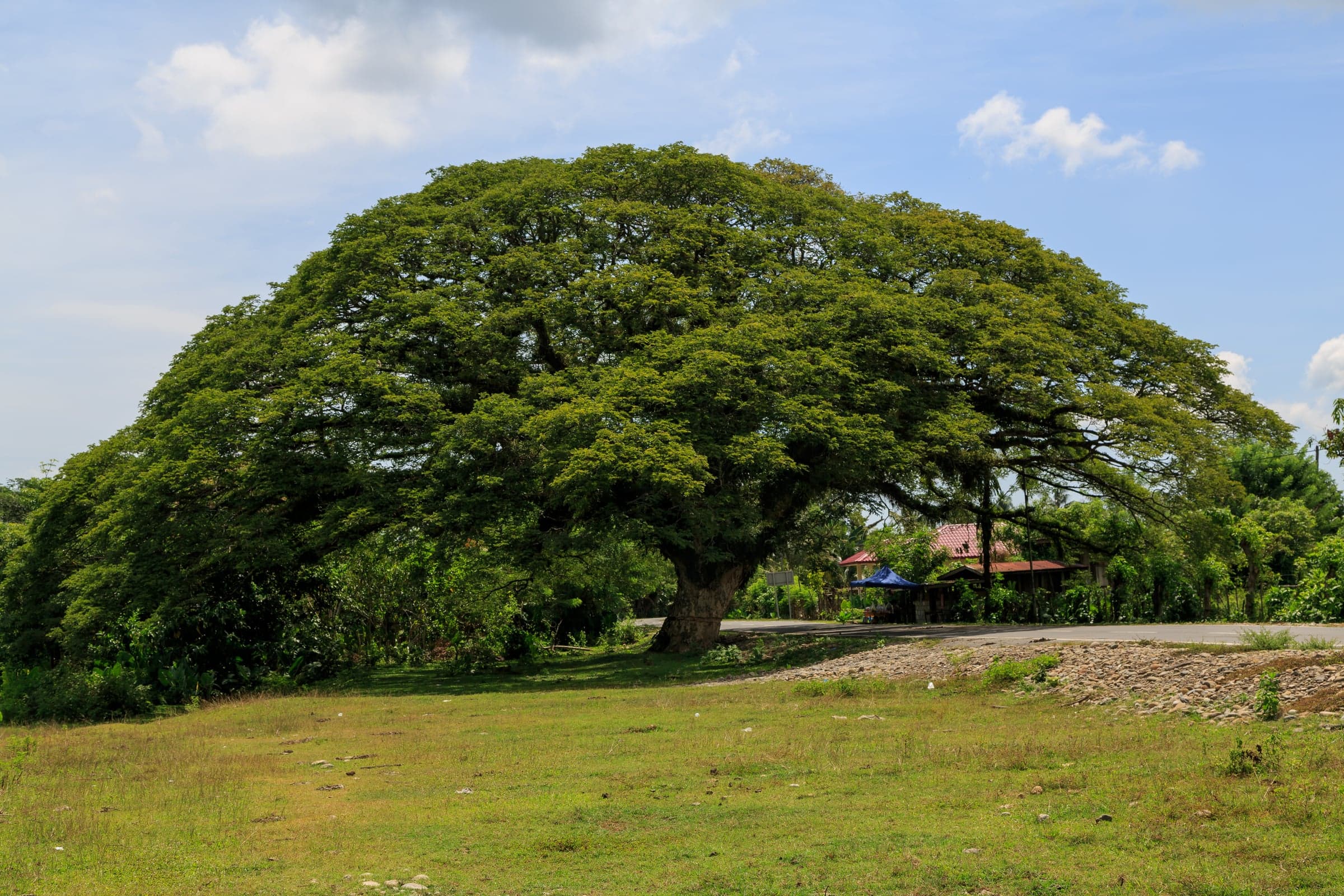
Stablo vrste Black Cherry
  • Prikladnost za projekt
  • Na zalihi
  • Izgled
  • Obrada
  • Pomicanje
  • Cijena
  • Sigurnost i nabava
  • Pitanja
  • Tehnički podaci

Odgovara li vašem projektu?

Izvrsno za

  • Kitchen and dining tables
  • Cabinet doors and fronts
  • Chairs and benches
  • Wall panelling and built-ins
  • Turned bowls and small objects
  • Interior joinery

Nema vrste Black Cherry u trenutačnoj ponudi

Slične vrste na zalihi

Vrsta Black Cherry trenutačno nije dostupna. Ove vrste odgovaraju istim projektima i imaju dostupne komade.
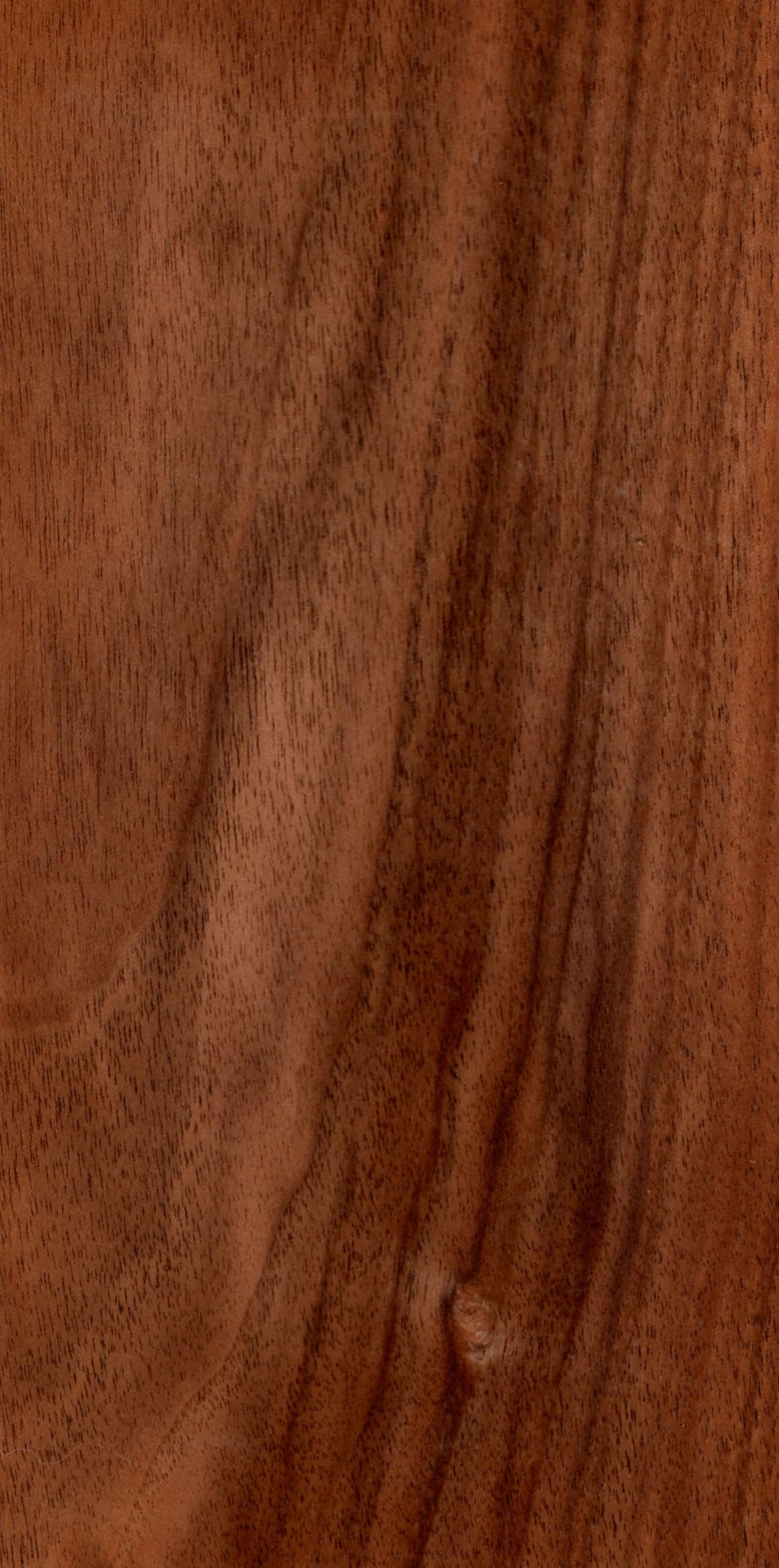
  • Tekstura vrste European Walnut

    European Walnut

    Juglans regia

    9 komada

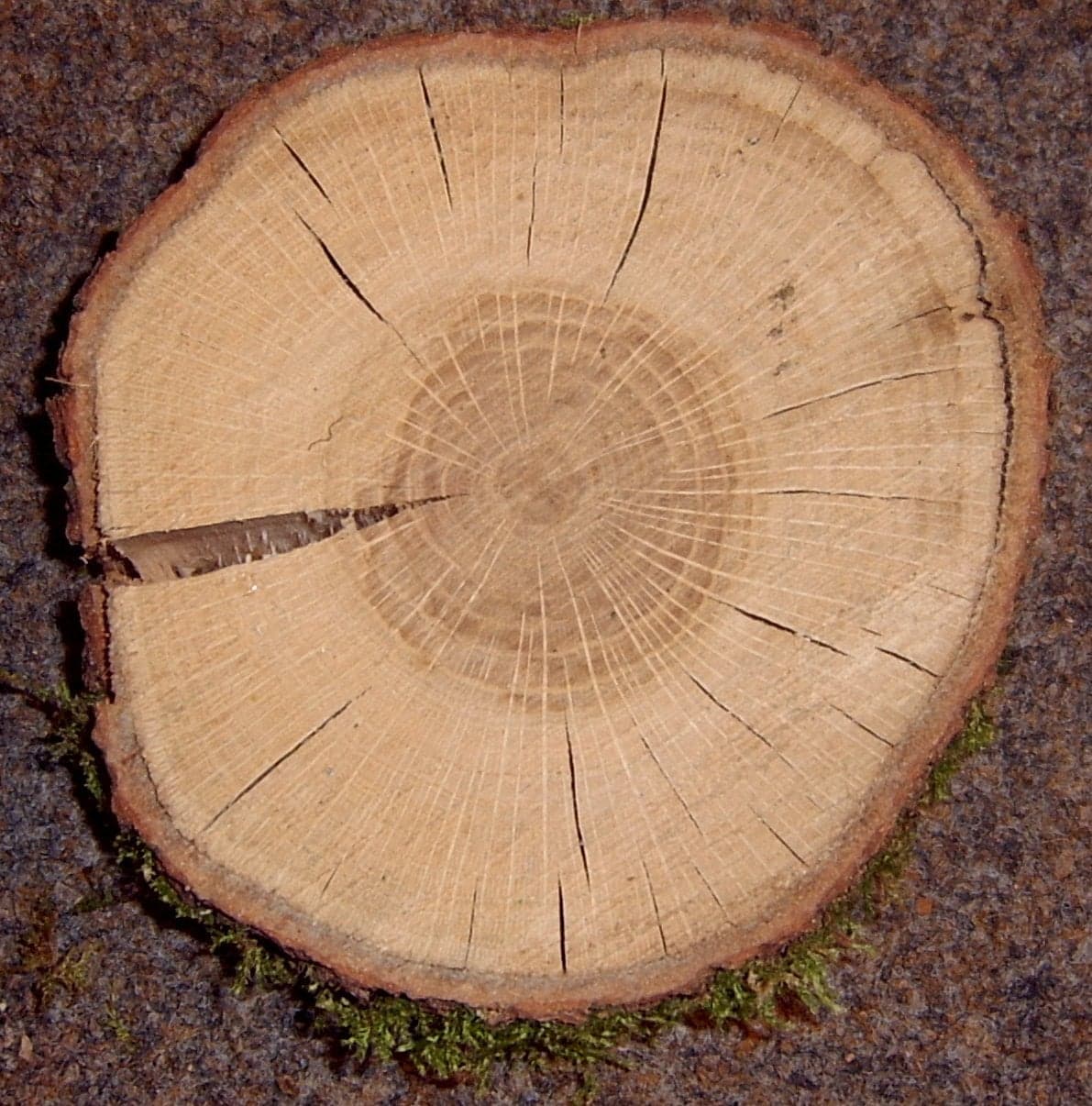
  • Tekstura vrste European Oak

    European Oak

    Quercus robur

    6 komada

  • Tekstura vrste Saman

    Saman

    Samanea saman

    4 komada

Primajte obavijesti o vrsti Black Cherry

Poslat ćemo vam poruku e-pošte kada nove daske vrste Black Cherry stignu u KORENA ponudu. Svaki je komad jedinstven pa je rana obavijest važna.

Nekoliko poruka mjesečno. Bez neželjene pošte, odjavite se kada želite.

Izgled drva

Kako izgleda

Fine, mostly straight grain with a smooth, even texture. Plain-sawn boards show a soft, flowing figure; quarter-sawn faces are calmer. Small gum pockets and pin knots are common and accepted as part of the look. Fresh-cut wood is pinkish-tan and lighter than buyers expect.

  • Fresh-cut: pinkish-tan to pale salmon, lighter than most buyers expect
  • After a few weeks of light: shifts to warm amber
  • After 6–12 months: deep reddish-brown, the classic cherry tone
  • Sapwood stays pale cream and does not darken at the same rate
  • Light exposure is uneven, anything covered (rugs, books, lamps) leaves a lighter ghost on the surface for months
  • Fine straight grain, smooth texture; warms with age.

Obrada

Obrada

One of the most forgiving hardwoods to machine. Saws, planes and sands beautifully with sharp tooling. Turns and carves well. Glues and screws without drama, though it's softer than European cherry so pre-drill near edges. Steam-bending is workable but not a strength.

Završna obrada

Sands to a glassy surface with little effort. Takes oils, hard-wax oils, shellac and waterborne finishes cleanly. Stains can blotch on flat-sawn faces. Use a washcoat or gel stain if you're matching a tone. Most makers skip stain entirely and let the wood do the work, because it darkens on its own.

Sušenje

Dries at a moderate rate with a mild tendency to warp and surface-check if pushed. Tangential shrinkage (6.5–8.0%) is roughly twice radial, so flat-sawn wide stock moves more than quarter-sawn. Sticker carefully and let kiln-dried slabs acclimatise in the workshop before flattening.

Koliko će se pomicati?

Drvo bubri i skuplja se po širini kako zrak postaje vlažniji i suši. Procijenite sezonsko pomicanje plohe od vrste Black Cherry prije projektiranja pričvrsnica.

Rez
Gdje će se nalaziti

Očekivano sezonsko pomicanje

oko 8,3 mm

Plohu pričvrstite pričvrsnicama ili nosačima s utorima, a ne ljepilom ili čvrsto zategnutim vijcima.

Model linearnog skupljanja: širina × (skupljanje ÷ 28 % zasićenosti vlakana) × sezonska promjena vlažnosti. Za vrstu Black Cherry rabi se 7,25 % tangencijalnog skupljanja. Ovo je procjena za planiranje, ne jamstvo.

Koliko košta

Sigurnost i nabava

  • Uzgaja se izvan Europe i uvozi preko europskih partnerskih skladišta.
  • Status na Crvenom popisu IUCN-a: globalna procjena očuvanosti ove vrste.
  • Food-contact safe once finished, which is why it's a long-standing choice for kitchen and dining work. Cherry dust is a known irritant and some woodworkers develop sensitisation over time. Run extraction and wear a mask when sanding.

Pročitajte cijeli vodičDetaljne bilješke o šari, promjeni boje, obradi i stabilnosti.+

What Black Cherry actually is#

Prunus serotina is the American counterpart to European cherry, and it is the more practical of the two for large work.

Both species darken dramatically, both have the same satiny fine grain, and both are excellent to work. The difference is supply. Black cherry is grown as a forestry species across eastern North America, so it arrives in larger, straighter, more consistent sizes. European cherry is often salvaged from orchards and gardens, and matched wide boards are correspondingly harder to find.

If a project needs several wide boards that look like each other, black cherry is the easier answer.

The darkening#

This is the defining property of both cherries and it needs planning for.

Fresh black cherry is pale pinkish tan. Within six months of light exposure it has moved most of the way to a rich reddish brown, and it continues deepening more slowly for years.

Three consequences follow. Do not choose stock on its current colour, because it is a stage rather than a result. Do not leave objects sitting on a new cherry surface, because uneven exposure prints permanently lighter patches that take months to even out. And do not expect a UV inhibiting finish to hold the pale fresh colour, because it slows the change without preventing it.

The stability advantage

Pitanja kupaca

Pitanja kupaca

Does Black Cherry darken like European Cherry?

+

Yes, dramatically and in the same way. Fresh stock is pale pinkish tan and deepens to a rich reddish brown within a year of light exposure, with most of the change in the first six months. Uneven light exposure leaves permanent lighter patches under anything left in place, so let a new piece darken evenly before placing objects on it.

How does it compare with European Cherry?

+

Softer at 4,226 N against 5,120 N and slightly less dense at 560 against 600 kg per cubic metre. The main practical difference is supply: black cherry is grown as a forestry species in eastern North America and comes in larger, straighter, more consistent sizes, so matched wide boards are much easier to source than in European cherry.

Why does it burn so easily?

+

Cherry scorches readily under routers and dull blades, and the marks are dark and obvious on pale wood. Its fine close grain and moderate density concentrate heat at the cutting edge. Sharp tooling, correct feed rates and light final passes prevent it. Burns must be cut or scraped out rather than sanded, which usually just polishes them in.

Is it stable enough for a wide tabletop?

Mehanička svojstva

Tehnički podaci

Objavljene referentne vrijednosti. Kada se izvori ne slažu, prikazuje se raspon, a uobičajena vrijednost rabi se za gornje ljestvice.

Gustoća (kg/m³)Masa po kubičnom metru pri približno 12 % vlažnosti. Teže drvo obično je tvrđe i čvršće.500–620 kg/m³uobičajeno 560 kg/m³
Tvrdoća prema Janki (N)Sila potrebna da se čelična kuglica utisne do polovice u drvo. Standardna mjera otpornosti na udubljenja.3,800–4,500 Nuobičajeno 4.226 N
MOR: modul loma (MPa)Čvrstoća na savijanje: opterećenje pri kojem greda puca.80–95 MPa
MOE: modul elastičnosti (GPa)Krutost na savijanje: koliko se polica ili ploha progiba pod opterećenjem.9.5–11.0 GPa
Radijalno skupljanjeSkupljanje preko godova, od sirovog do potpuno suhog drva. Tako se pomiču radijalno rezane daske.3.5–4.5 %
Tangencijalno skupljanje

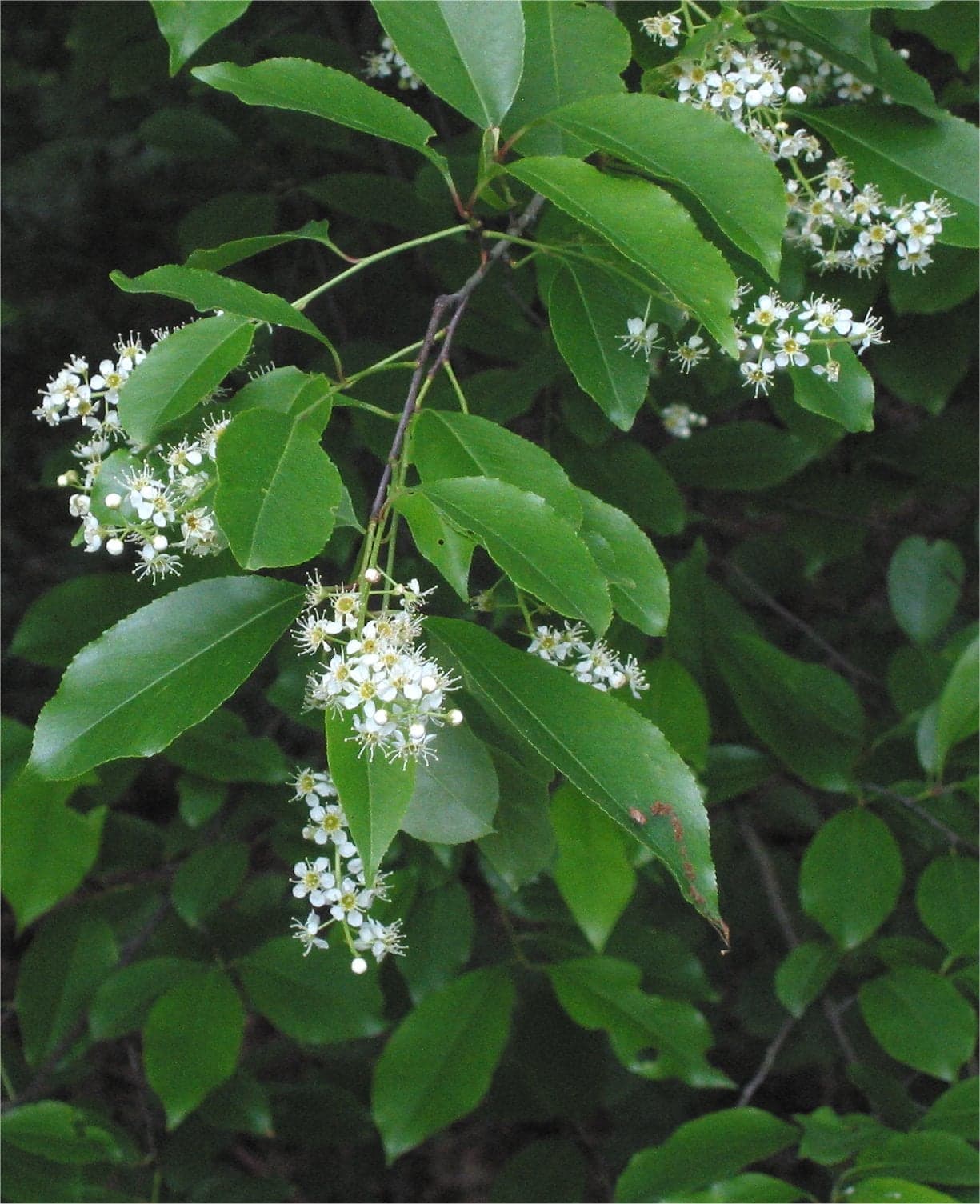
Wikimedia Commons contributor, via Wikimedia Commons

Native to eastern North America, not Europe. Imported in volume into EU furniture-grade channels for decades, where it sits alongside European cherry as a familiar, well-stocked hardwood.

  • IUCN Least Concern, no CITES listing. Supply from US hardwood forests is well-established and FSC-certified stock is widely available. As a North American import it carries shipping miles a European species doesn't, worth weighing if low-carbon sourcing matters to your client.

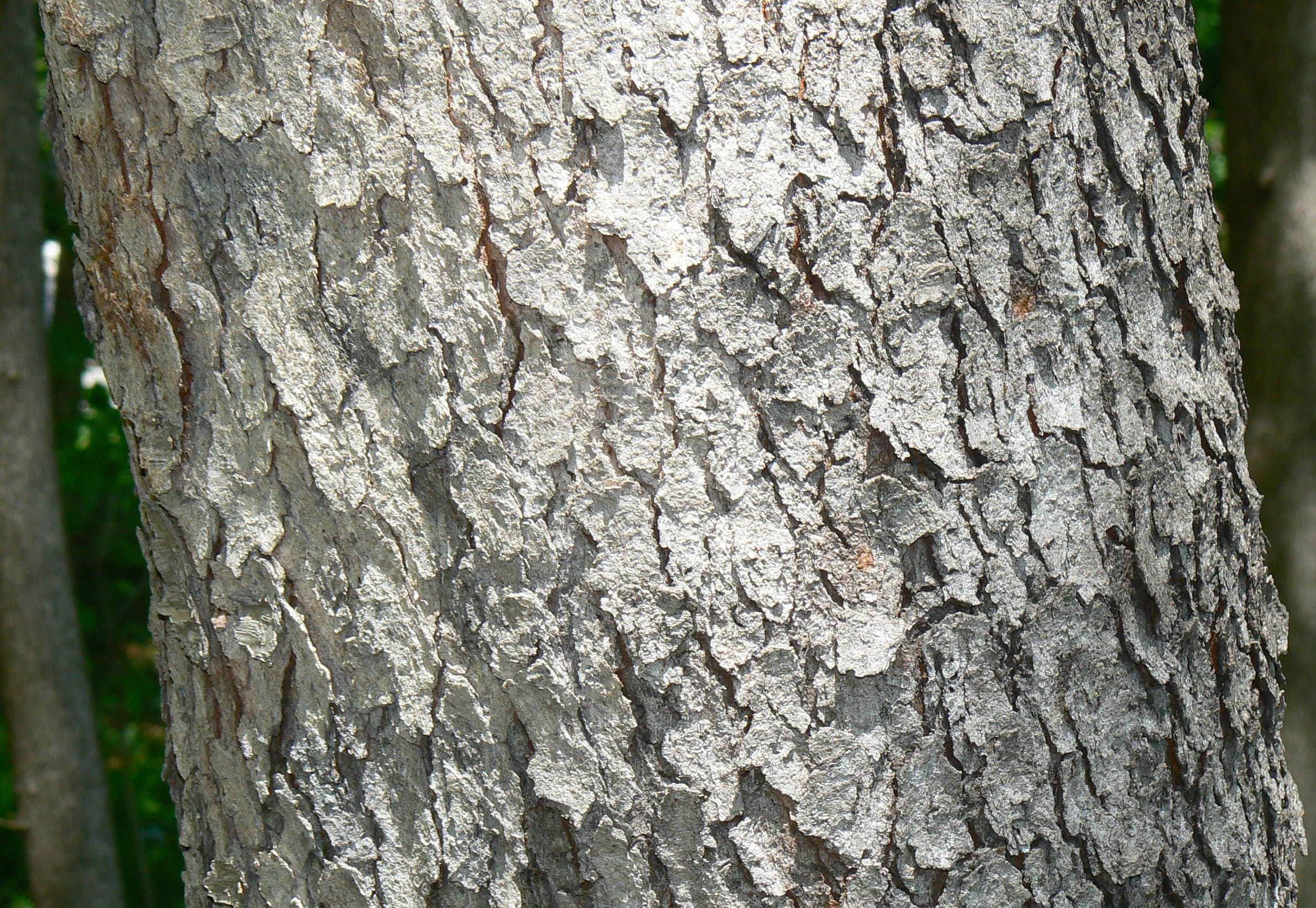
  • Black Cherry: Kora
    Kora
    #

    Black cherry is one of the better behaved woods in this catalogue dimensionally.

    Volumetric shrinkage of 11.0 percent is low, and more importantly the tangential to radial differential of 6.5 against 3.5 percent is narrow. Cupping in a flatsawn board is driven by that differential, so a wide flatsawn cherry top stays flatter than the equivalent in oak, ash, beech or maple.

    Combine that with the species' availability in wide boards and it becomes a strong candidate for a large solid tabletop, which is exactly what many buyers want a slab for.

    At the bench#

    Cherry is a pleasure to work. At 4,226 N it is moderately soft, easy on tooling, and it machines cleanly, turns and carves well, glues reliably and sands to an excellent surface.

    The one real difficulty is burning. Cherry scorches under routers and dull blades more readily than most species, and on pale wood the marks are dark and obvious.

    Worse, burns cannot be sanded out easily. Sanding tends to polish the scorched fibres rather than remove them. The mark has to be cut or scraped away, which on a finished surface means removing more material than you wanted to.

    Sharp tooling, correct feed rates, and light final passes are the prevention, and they are worth the discipline.

    Finishing#

    Black cherry blotches under pigment stain exactly as European cherry does. Use a dye, a gel stain, or a washcoat first, and test on an offcut.

    The better approach in most cases is no stain at all. The wood will reach a rich reddish brown on its own, and staining to accelerate that usually produces a muddier and less luminous colour than waiting would.

    Gum pockets occur, though less frequently than in European cherry. They are characteristic rather than defective.

    Where Black Cherry is the right answer#

    Wide solid tabletops, fine furniture, cabinetry, turned work, and interior joinery. It is among the best combinations in this catalogue of good looks, easy working, wide availability and genuine dimensional stability.

    It is the wrong answer where a pale colour must be maintained, and wrong outdoors beyond protected joinery.

    Sourcing and EUDR#

    Not CITES listed and assessed as Least Concern. Native to eastern North America, so European buyers are usually importing, with the longer documentation chain and higher transport carbon that implies. Where a European alternative is acceptable, Prunus avium covers the same appearance with a shorter chain, at the cost of harder-to-match sizes.

    Gum pockets and pith flecks#

    Two features turn up in almost every cherry board and neither is a fault.

    Gum pockets are small resin filled cavities, usually a few millimetres long, appearing as dark flecks or short streaks. They are characteristic of Prunus species. Small ones are simply part of the surface; larger ones can be filled with epoxy or a matching filler if they will catch on a work surface.

    Pith flecks are short irregular streaks caused by insect larvae tunnelling in the growing tree, later grown over. They read as fine darker lines and are purely cosmetic.

    Both are more common in orchard grown material than in forest grown, and both are among the reasons cherry is graded on appearance rather than strength.

    Matching cherry across a project#

    Because cherry darkens so fast and so far, matching boards is a moving target.

    Two boards that look different when freshly machined often converge as they darken, because the darkening tends to compress the range. Two boards that match on the bench may diverge if one is a different age or was stored in light.

    The practical approach for a multi board top is to lay the boards out, leave them exposed to daylight together for a week, and then decide the arrangement. A week of exposure reveals more about how they will look together than any amount of inspection on day one.

    +

    Yes, unusually so. Volumetric shrinkage of 11.0 percent is among the lower figures in this catalogue and the tangential to radial differential of 6.5 against 3.5 percent is narrow. Combined with its availability in wide boards, that makes black cherry one of the better choices here for a large solid top.

    Can it be used outdoors?

    +

    Not for exposure. At decay class 3 it is moderately durable, which suits protected exterior joinery under a maintained finish but not weather or ground contact.

    Skupljanje duž godova. Tako se pomiču tangencijalno rezane daske i većina širokih dasaka.
    6.5–8.0 %
    Volumno skupljanjeUkupna promjena volumena od sirovog do potpuno suhog drva. Niža vrijednost znači veću stabilnost.11.0–12.5 %
    Prirodna trajnost (EN 350)Europska norma za prirodnu otpornost na propadanje, od 1 (vrlo trajno) do 5 (netrajno).Class 3 — Moderately durable

    Izvori

    • The Wood Database(pristupljeno 2026-05-09)
    • USDA FPL Wood Handbook FPL-GTR-190 (2010)(pristupljeno 2026-05-09)
    • Meier, E. — WOOD! Identifying and Using Hundreds of Woods Worldwide (2015)(pristupljeno 2026-05-09)

    Prednosti

    • Sigurno za hranuPrikladno za daske, zdjele i površine koje dodiruju hranu.
    • Prikladno za početnikeJednostavno za obradu i nije toliko tvrdo da brzo troši alat.

    Obratite pozornost

    • Nije za nezaštićenu uporabu na otvorenomPrirodna trajnost odgovara razredu 3 od 5 prema EN 350. Držite je u zatvorenom ili pod održavanom završnom obradom.
    • Prašina nadražujeUključite odsis i nosite masku tijekom brušenja ili strojne obrade.

    Dodirnite oznaku za pojedinosti.

    Ukratko

    Razine rabe jednake raspone za sve vrste koje KORENA navodi pa se mogu izravno uspoređivati. Izmjerena vrijednost nalazi se ispod svake razine.
    TvrdoćaOtpornost na udubljenja i trošenjeSrednje tvrdo

    Tvrdoća po Janki 4.226 N

    15 % mekše od europskog hrasta

    MasaKoliko je daska teška za podizanjeSrednje

    560 kg/m³

    StabilnostKoliko se malo pomiče kroz godišnja dobaProsječno

    11,8 % volumnog skupljanja

    ObradaPiljenje, blanjanje, brušenje, lijepljenjeVrlo lako

    4,4 / 5 prosjek obrade

    Uporaba na otvorenomPrirodna otpornost na propadanje, EN 350Natkriveno na otvorenom

    EN 350 razred 3

    • Piljenje · IzvrsnoKoliko se čisto reže i koliko troši oštrice.1 = teško · 5 = izvrsno
    • Blanjanje · IzvrsnoKoliko glatku površinu ostavlja i koliko se vlakna čupaju.1 = teško · 5 = izvrsno
    • Brušenje · IzvrsnoKoliko se brzo može glatko izbrusiti bez začepljenja brusnog papira.1 = teško · 5 = izvrsno
    • Tokarenje · Vrlo dobroKako se reže i obrađuje na tokarilici.1 = teško · 5 = izvrsno
    • Rezbarenje · Vrlo dobroKoliko oštro zadržava detalje pod dlijetom.1 = teško · 5 = izvrsno
    • Lijepljenje · Vrlo dobroKoliko pouzdano drže lijepljeni spojevi.1 = teško · 5 = izvrsno
    • Držanje vijaka / čavala · Vrlo dobroKoliko dobro drži vijke i čavle bez pucanja.1 = teško · 5 = izvrsno
    • Savijanje parom · DobroKoliko dobro prima krivulje nakon parenja.1 = teško · 5 = izvrsno

    Još nema tržišne reference za vrstu Black Cherry. Svaki KORENA komad zasebno cijeni njegovo partnersko skladište.