Larix decidua
European Larch
The one European softwood that will sit outside untreated, and the most decorative of the group. Hardest conifer KORENA lists, at the cost of fighting resin at every stage.
- Uzgaja se i siječe u Europi.
- Botanička skupina. Meko drvo potječe od četinjača, a tvrdo od listača.
- Botanička porodica kojoj vrsta pripada.
Obavijestite me kada stigneReferentna vrsta. Trenutačno nema komada na zalihi.
Odgovara li vašem projektu?
Izvrsno za
- Tabletops
- Exterior cladding
- Garden furniture
- Flooring
- Boat and dock work
Nema vrste European Larch u trenutačnoj ponudi
Slične vrste na zalihi
Vrsta European Larch trenutačno nije dostupna. Ove vrste odgovaraju istim projektima i imaju dostupne komade.
Primajte obavijesti o vrsti European Larch
Poslat ćemo vam poruku e-pošte kada nove daske vrste European Larch stignu u KORENA ponudu. Svaki je komad jedinstven pa je rana obavijest važna.
Izgled drva
Kako izgleda
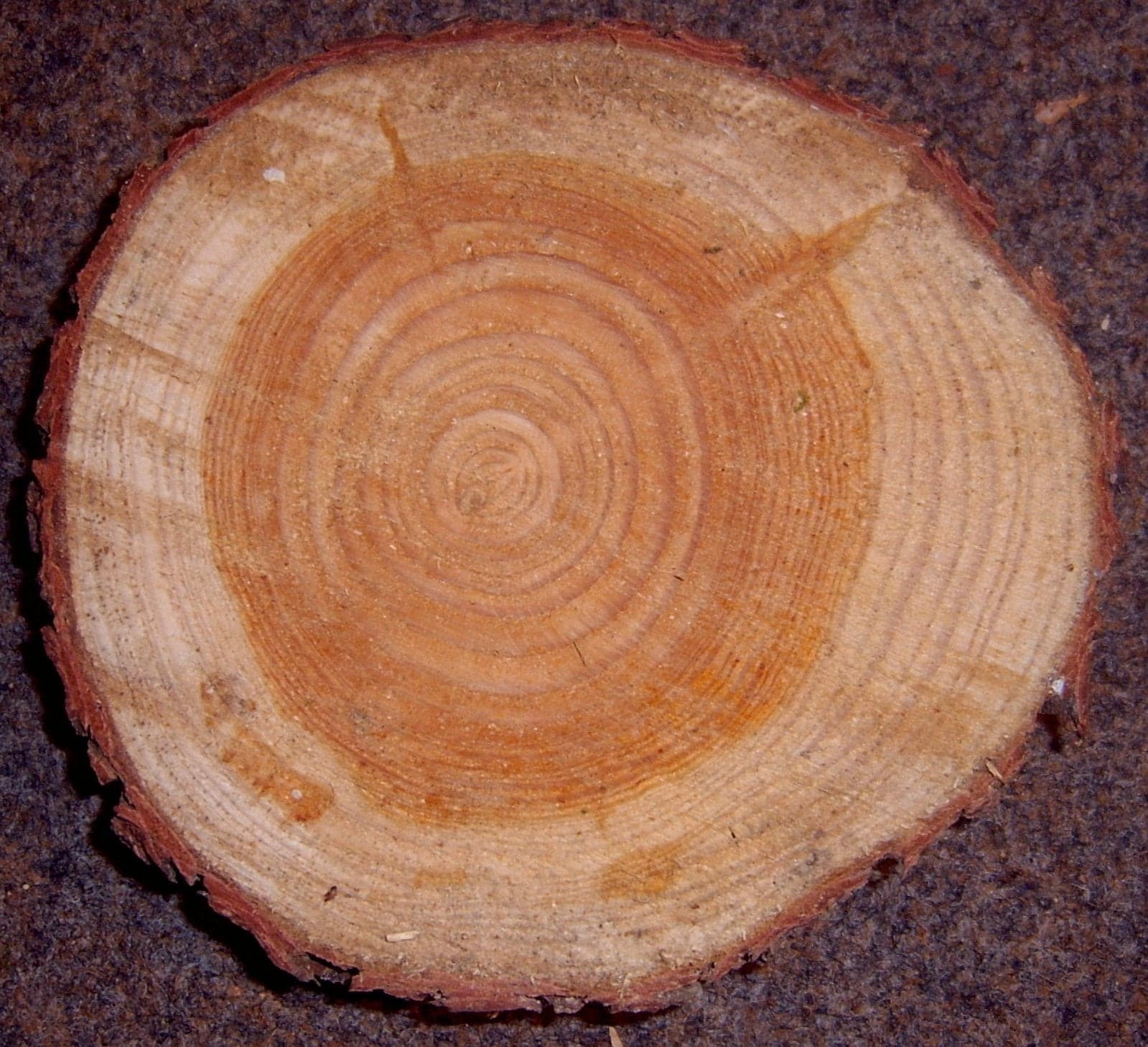
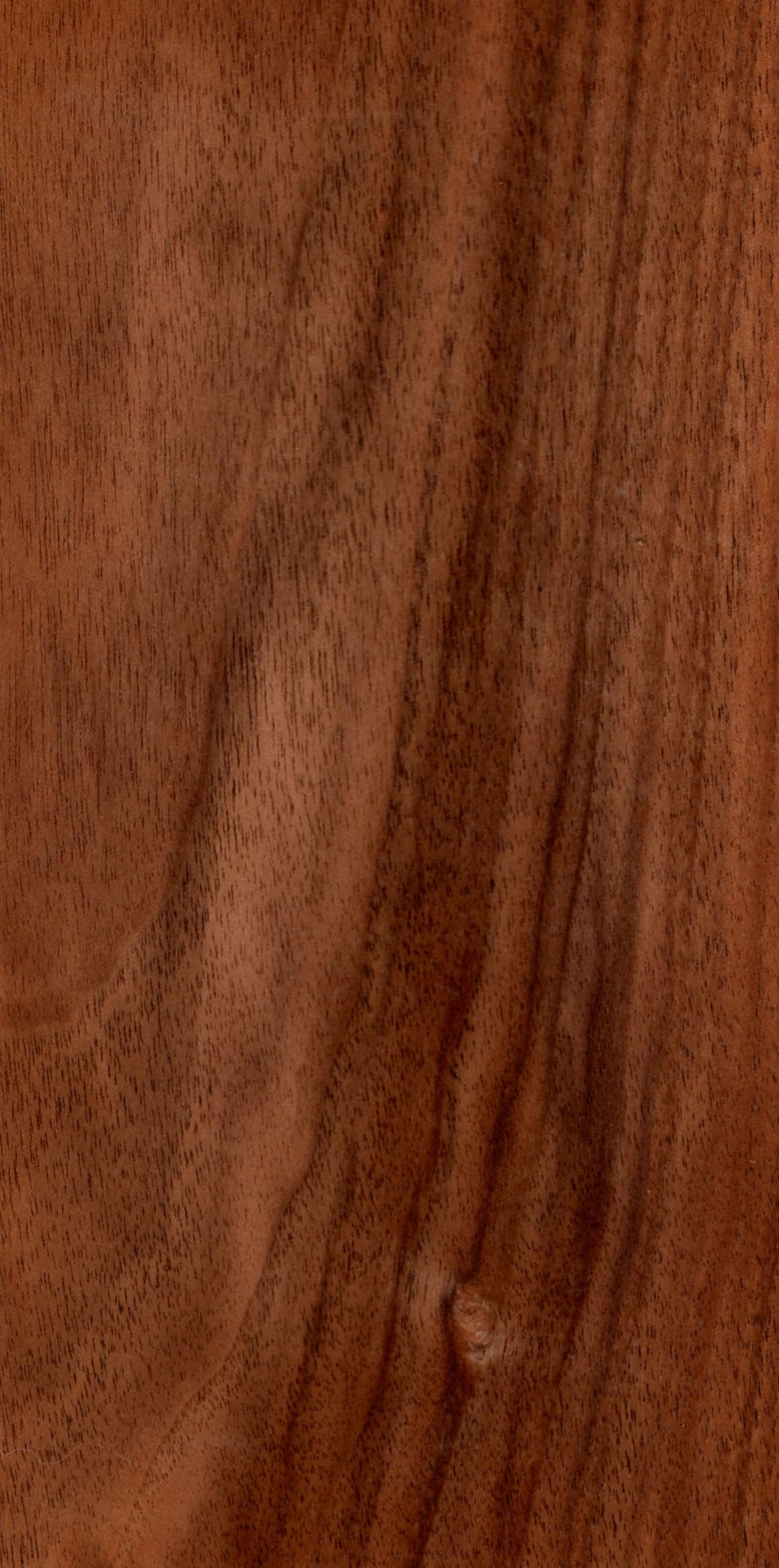
The most visually striking of the European softwoods. Heartwood runs warm honey to a deep russet brown against narrow pale sapwood, and the boundary between the two is sharp and decorative. Growth rings are strongly marked because the latewood bands are dense and dark, which gives flatsawn faces a bold cathedral figure closer to a ring-porous hardwood than to spruce.
- Honey to russet brown heartwood, deepening with UV exposure
- Narrow pale cream sapwood in sharp contrast
- Strongly marked growth rings with dark dense latewood bands
- Hard for softwood; visible growth rings.
Obrada
Obrada
Most hand and machine operations give good results, and larch is stiff and strong enough to feel substantial under the tool. The complication is resin. Natural resins gum up saw blades and clog abrasives, and the problem worsens as the wood warms during a cut. Keep blades clean, take breaks in long rips, and expect to clear the sole of a plane more often than usual. The dense latewood bands can also tear out where grain rises.
Završna obrada
Resin is again the issue. Wipe the surface with denatured alcohol or acetone before finishing to lift surface resin, or oil finishes may stay tacky in patches. Once clean it takes oil beautifully and the colour deepens to a rich amber. For exterior work, a penetrating oil renewed annually outperforms film finishes, which crack and lift on a wood this dimensionally active outdoors.
Sušenje
Slower and more troublesome than spruce or fir. Larch is prone to distortion and to surface checking if dried too fast, and the high resin content means a hot kiln schedule will drive resin to the surface where it sets sticky. Air drying followed by a low temperature kiln is the standard route for slab stock. Expect around 12.5 percent volumetric shrinkage, and note that internal stress from poor drying shows up as spring and bow once the slab is ripped.
Koliko će se pomicati?
Drvo bubri i skuplja se po širini kako zrak postaje vlažniji i suši. Procijenite sezonsko pomicanje plohe od vrste European Larch prije projektiranja pričvrsnica.
Očekivano sezonsko pomicanje
oko 9,4 mm
Plohu pričvrstite pričvrsnicama ili nosačima s utorima, a ne ljepilom ili čvrsto zategnutim vijcima.
Model linearnog skupljanja: širina × (skupljanje ÷ 28 % zasićenosti vlakana) × sezonska promjena vlažnosti. Za vrstu European Larch rabi se 8,2 % tangencijalnog skupljanja. Ovo je procjena za planiranje, ne jamstvo.
Koliko košta
Sigurnost i nabava
- Uzgaja se i siječe u Europi.
- Status na Crvenom popisu IUCN-a: globalna procjena očuvanosti ove vrste.
Species within the Larix genus have documented cases of skin irritation, hives and skin lesions, though severe reactions remain uncommon. Resin contact is the usual trigger rather than dust alone. Gloves during handling of freshly cut stock and normal extraction during machining are appropriate.
Pročitajte cijeli vodičDetaljne bilješke o šari, promjeni boje, obradi i stabilnosti.
What European Larch actually is#
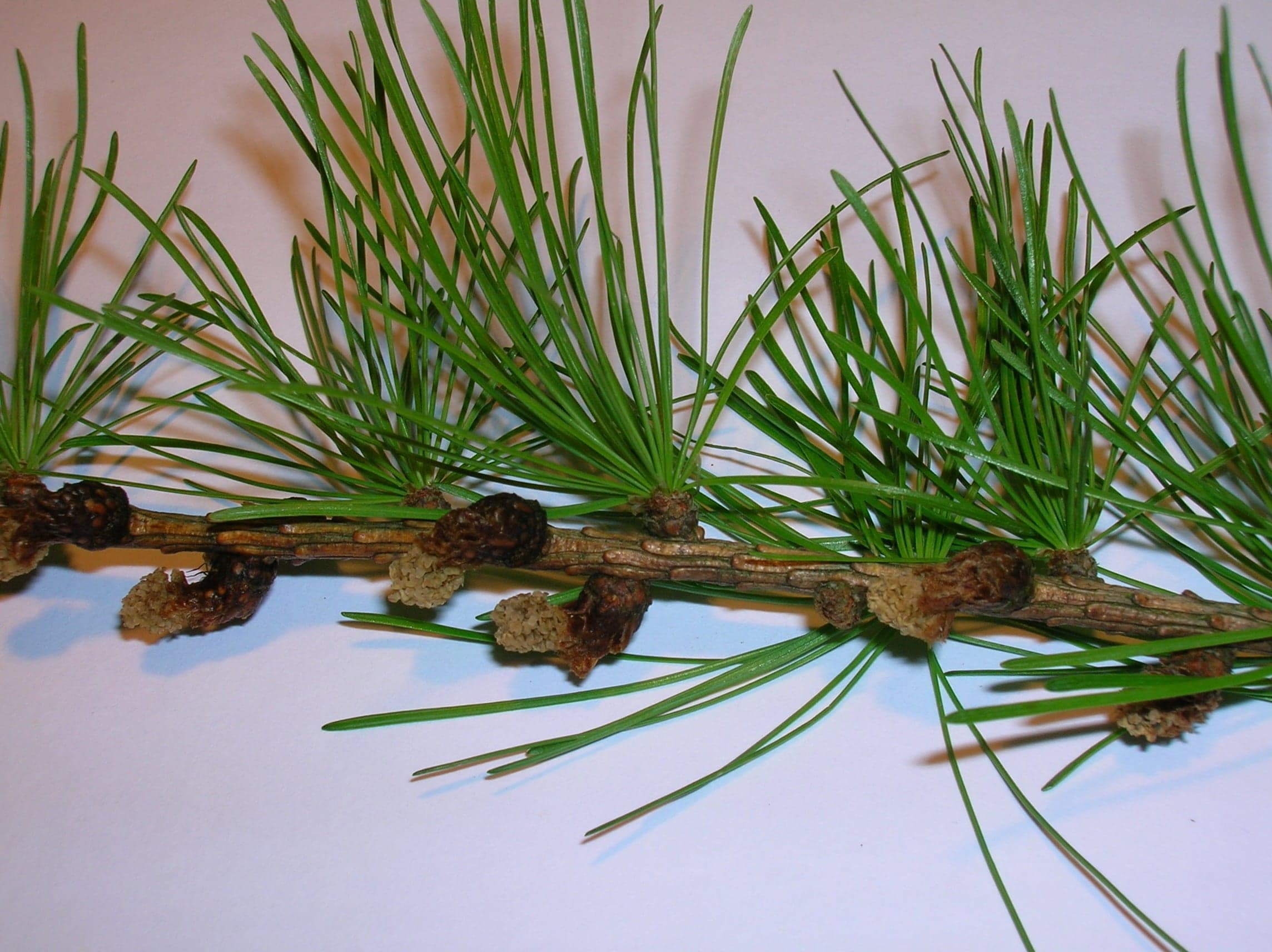
Larix decidua is the conifer that drops its needles. That deciduous habit is the visible oddity, but the useful consequence is in the timber: larch lays down dense, resin-rich latewood in a way that no spruce or fir does, and the result is a softwood that behaves in several respects like a light hardwood.
It is the hardest conifer in the KORENA catalogue at 3,290 N on the Janka scale, which puts it above every pine and fir here and roughly level with small-leaved lime. It is the only one rated durable enough to go outdoors untreated. And it is by some distance the most decorative, with a heartwood and sapwood contrast and a ring figure that reward flatsawing.
The trade-off is resin, and resin complicates every stage from ripping to finishing.
Reading a larch slab#
Two things drive the value of a larch slab: ring spacing and the heartwood to sapwood ratio.
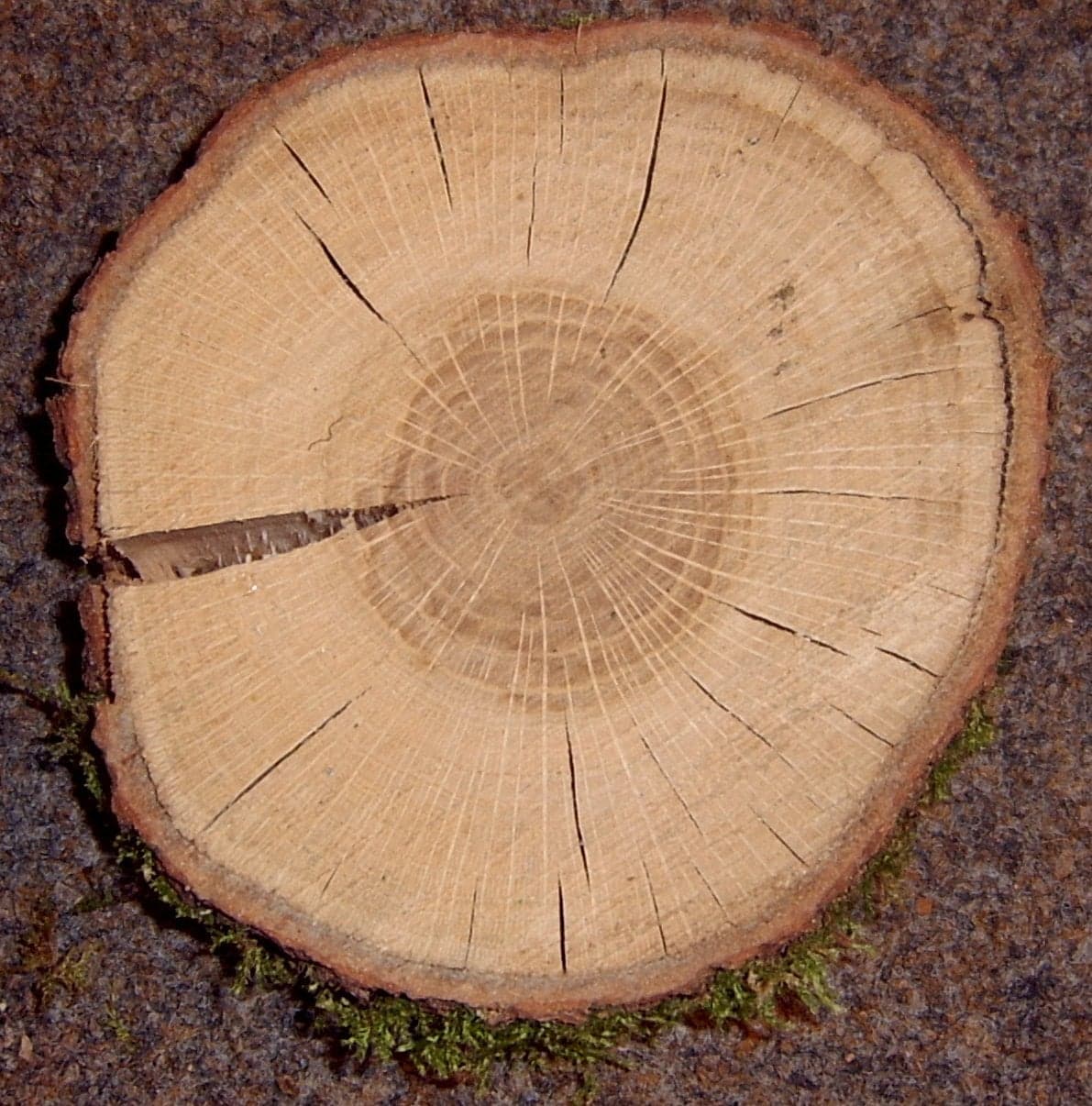
Ring spacing is the durability signal. Slow-grown Alpine larch from high altitude puts down rings a millimetre or two apart, with a high proportion of dense dark latewood. That material is genuinely durable outdoors and considerably stiffer. Fast-grown lowland plantation larch can have rings five or six millimetres apart, much less latewood, and measurably worse durability. The two look related but do not perform alike. If the piece is going outside, ring count is the number to ask about.
Pitanja kupaca
Pitanja kupaca
Can European Larch be used outdoors untreated?
Yes, within limits. It is rated moderately durable, which is the best of the European softwoods KORENA lists and good enough for cladding, decking and garden furniture without preservative. Ground contact is a different matter and will shorten its life considerably. Slow grown Alpine stock with tight rings outperforms fast grown plantation larch noticeably.
Why do my saw blades gum up cutting larch?
Natural resin content, which is also what gives larch its durability. The resin softens with the heat of cutting and deposits on the blade. Clean blades with a resin solvent between operations, feed at a steady rate rather than forcing the cut, and clear plane soles regularly. It is a nuisance rather than a real obstacle.
How hard is larch compared to oak?
Larch is 3,290 N on the Janka scale against 4,980 N for European oak, so meaningfully softer but by a long way the hardest softwood in this catalogue. It is roughly on a par with small-leaved lime and harder than every pine and fir here. For a tabletop it is a reasonable compromise between weight and durability.
Why is my oil finish staying tacky?
Mehanička svojstva
Tehnički podaci
Objavljene referentne vrijednosti. Kada se izvori ne slažu, prikazuje se raspon, a uobičajena vrijednost rabi se za gornje ljestvice.
| Gustoća (kg/m³)Masa po kubičnom metru pri približno 12 % vlažnosti. Teže drvo obično je tvrđe i čvršće. | 575 kg/m³ |
|---|---|
| Tvrdoća prema Janki (N)Sila potrebna da se čelična kuglica utisne do polovice u drvo. Standardna mjera otpornosti na udubljenja. | 3,290 N |
| MOR: modul loma (MPa)Čvrstoća na savijanje: opterećenje pri kojem greda puca. | 90 MPa |
| MOE: modul elastičnosti (GPa)Krutost na savijanje: koliko se polica ili ploha progiba pod opterećenjem. | 11.8 GPa |
| Radijalno skupljanjeSkupljanje preko godova, od sirovog do potpuno suhog drva. Tako se pomiču radijalno rezane daske. | 4.2 % |
| Tangencijalno skupljanjeSkupljanje duž godova. Tako se pomiču tangencijalno rezane daske i većina širokih dasaka. | 8.2 % |