KORENA
LegnoFinished piecesMaterialiDepositiDiario

Ricevi un avviso

Ogni tavola è unica. Quando viene venduta, non torna. Ti inviamo un’email quando pubblichiamo nuovi pezzi, specie e tavole adatte a un progetto.

Poche email al mese. Niente spam, puoi annullare in qualsiasi momento.

KORENA, legno duro di pregio

Un pezzo alla volta.

Legno duro di pregio verificato, venduto pezzo per pezzo. Ogni tavola viene fotografata, misurata e spedita dal deposito partner con un passaporto del legno.

Negozio

  • Sfoglia i prodotti
  • Archivio delle vendute
  • Traccia l’ordine

Scopri

  • Diario
  • Guide alle specie
  • Glossario
  • Confronta
  • Autori

Aiuto

  • Chi siamo
  • Come funziona
  • Diventa deposito partner
  • Trova una tavola
  • Assistenza
  • Modelli di documenti
  • Stampa

Acquisto

  • Condizioni di vendita
  • Diritto di recesso
  • Resi e garanzia
  • Spedizione e consegna

Fiducia

  • Informativa sulla privacy
  • Informativa sui cookie
  • Provenienza del legno ed EUDR
  • Accessibilità

Note legali

  • Note legali / Imprint
  • Uso accettabile
  • Proprietà intellettuale e contenuti

© 2026 KORENA. Tutti i diritti riservati.

Gestito da Martial Labs Ltd. (BG, EIK 207453941). KORENA è un nome commerciale di Martial Labs Ltd.

Rispettiamo la tua privacy

Usiamo cookie essenziali per il funzionamento del sito. Con il tuo consenso useremo anche cookie per analisi, contenuti personalizzati e pubblicità. Puoi cambiare idea in qualsiasi momento nella pagina delle preferenze di consenso. Consulta l’informativa sui cookie e l’informativa sulla privacy.

  1. Pagina iniziale
  2. /
  3. Specie
  4. /
  5. Claro Walnut

Juglans hindsii

Claro Walnut

California's figured walnut, and the wildest figure in the walnut family. Graft unions between English walnut and Hinds rootstock produce violet, gold and marbled patterns no other walnut can match.

  • Coltivato fuori dall’Europa e importato tramite depositi europei.
  • Gruppo botanico. Le conifere hanno foglie aghiformi, le latifoglie hanno foglie larghe.
  • La famiglia botanica a cui appartiene la specie.
Avvisami quando arrivaSpecie di riferimento. Al momento non ci sono pezzi disponibili.
  • Adatto al progetto
  • Disponibilità
  • Aspetto
  • Lavorazione
  • Movimento
  • Prezzo
  • Sicurezza e provenienza
  • Domande
  • Dati tecnici

È adatto al tuo progetto?

Ideale per

  • Heirloom dining tables
  • Statement live-edge slabs
  • Executive desks
  • Gun stocks
  • High-end cabinetry feature panels

Nessun pezzo di Claro Walnut nel lancio attuale

Specie simili disponibili

Al momento non è disponibile Claro Walnut. Queste specie sono adatte agli stessi progetti e hanno pezzi disponibili.
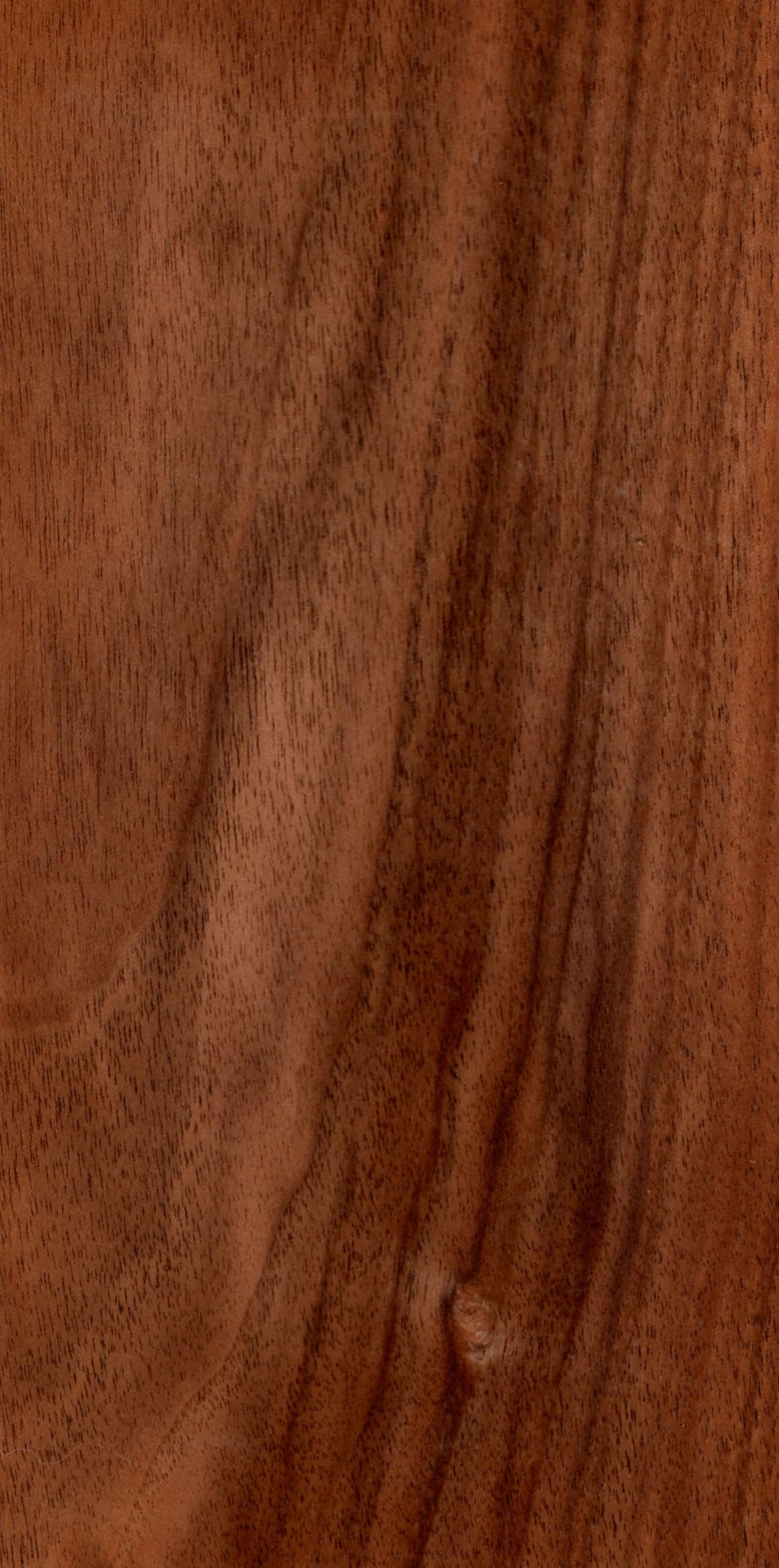

  • Venatura di European Walnut

    European Walnut

    Juglans regia

    9 pezzi

  • Venatura di European Oak

    European Oak

    Quercus robur

    6 pezzi

  • Venatura di Saman

    Saman

    Samanea saman

    4 pezzi

Ricevi avvisi per Claro Walnut

Ti inviamo un’email quando arrivano nuove tavole di Claro Walnut su KORENA. Ogni pezzo è unico, quindi conviene saperlo in anticipo.

Poche email al mese. Niente spam, puoi annullare in qualsiasi momento.

Aspetto del legno

Che aspetto ha

Heartwood ranges from chocolate brown to purple-grey, often streaked with violet, gold and reddish tones. Sapwood is pale cream and usually contrasts sharply. Figure is the headline: fiddleback, marbled, feathered crotch, and dense burl clusters are common in graft-figured boards. Grain is typically straight in clear sections but wild around figure. Medium texture, satin natural lustre.

  • Chocolate-brown to purple-grey heartwood
  • Violet, gold and reddish streaking
  • Pale cream sapwood with sharp contrast
  • Fiddleback, marbled and crotch figure common
  • Often heavily figured; prized for slabs.

Lavorazione

Come si lavora

Works well by hand and machine across sawing, planing, sanding, turning and carving. Glues and screws without drama. Wild grain around figure and burl tears out easily, back off feed rates, use sharp tooling, and finish-sand rather than hand-plane figured zones. Steam-bending is moderate at best; not the wood for tight curves. Note: published laboratory data for Claro is limited. No reliable MOR or MOE figures exist. For structural calculations, treat mechanical properties as broadly comparable to Black Walnut (Juglans nigra) and design with that proxy in mind.

Finitura

Takes oil, hardwax and lacquer cleanly. Oil finishes deepen the violet and gold tones and lift the chatoyance in fiddleback areas, worth a sample board before committing. Sand to 180–220 grit; going finer can close the surface and dull the figure. Open pores will show under high-build finishes, so grain-fill if a glass-flat surface is required.

Essiccazione

Dries at a moderate rate. Shrinkage is moderate (radial 4.0–4.7%, tangential 6.0–7.0%, volumetric 10.2–11.2%) with a tangential-to-radial ratio around 1.5, manageable, but figured and crotch sections can check or honeycomb if pushed. Slow kiln schedules and weighted stickering are standard for slab stock. Acclimatise indoors for several weeks before machining.

Quanto si muoverà?

Il legno si gonfia e si ritira in larghezza al variare dell’umidità dell’aria. Stima il movimento stagionale di un piano in Claro Walnut prima di progettare i fissaggi.

Taglio
Ambiente di destinazione

Movimento stagionale previsto

circa 7,4 mm

Fissa il piano con nottolini o staffe asolate, non con colla o viti serrate.

Modello di ritiro lineare: larghezza × (ritiro ÷ 28 % di saturazione delle fibre) × variazione stagionale dell’umidità. Usa un ritiro tangenziale del 6,5 % per Claro Walnut. È una stima di progetto, non una garanzia.

Quanto costa

Sicurezza e provenienza

  • Coltivato fuori dall’Europa e importato tramite depositi europei.
  • Stato nella Lista rossa IUCN: la valutazione globale dello stato di conservazione di questa specie.
  • Walnut dust contains juglone and is a known respiratory and skin sensitiser. Use extraction at the source, wear an FFP3 mask when sanding, and keep offcuts away from horses and dogs, juglone is toxic to both. Cured finished surfaces are food-contact safe.

Leggi la guida completaNote approfondite su marezzatura, variazione del colore, lavorazione e stabilità.+

What Claro Walnut actually is#

Juglans hindsii is the northern California black walnut, and it produces the most dramatic figure in the walnut family. Its reputation rests on something that is not really a property of the species at all.

Claro is widely used as rootstock for English walnut, Juglans regia, in Californian orchards. Where the two species are grafted together, the grain at the union becomes violently disrupted, producing marbled patterning in violet, gold, orange and near black that neither species shows on its own.

Slabs cut through or near that graft union carry figure no other walnut can match, and they are priced accordingly. Plain Claro away from the union is a good walnut; graft figured Claro is a different proposition entirely.

The missing numbers#

Density at 640 kg per cubic metre and Janka hardness at 5,030 N are sourced and displayed on the species record. Modulus of rupture and elastic modulus are not shown, and that is deliberate.

Published laboratory data for Claro is limited, and no reliable MOR or MOE figures appear in the references KORENA cites. Borrowing values from Juglans nigra or Juglans regia and presenting them as Claro would produce a page that looks complete and specifies a wood that was never tested.

The practical consequence: do not use Claro where a calculated load path depends on assumed stiffness or bending strength. For a tabletop, a cabinet or a decorative slab, which is what this species is actually for, the missing figures do not constrain the decision.

Domande degli acquirenti

Domande degli acquirenti

What makes Claro Walnut figure so dramatic?

+

Much of it comes from graft unions. Claro is widely used as rootstock for English walnut orchards, and where the two species join, the grain becomes violently disrupted, producing marbled violet, gold and dark brown patterning that neither species shows alone. Slabs cut through that union carry figure no other walnut can match.

Why are no MOR or MOE figures listed?

+

Published laboratory data for Claro is limited and no reliable modulus of rupture or elastic modulus values exist in the references KORENA cites. Rather than borrow figures from Juglans nigra or regia and label them Claro, those fields are left empty. Density at 640 kg per cubic metre and Janka at 5,030 N are sourced and shown.

How does it compare with Black Walnut?

+

Claro is harder at 5,030 N against 4,490 N and considerably more variable in colour, running from pale gold through orange brown to near black, often within a single slab. Black walnut is more uniformly chocolate. Claro is bought for figure and colour variation; black walnut for consistency.

Is walnut dust a hazard?

+

Proprietà meccaniche

Dati tecnici

Valori di riferimento pubblicati. Quando le fonti non concordano, viene mostrato l’intervallo e il valore tipico è usato per le scale sopra.

Densità (kg/m³)Massa per metro cubo con circa il 12 % di umidità. In genere, un legno più pesante è anche più duro e resistente.600–680 kg/m³valore tipico 640 kg/m³
Durezza Janka (N)Forza necessaria per spingere una sfera d’acciaio fino a metà nel legno. È la misura standard della resistenza alle ammaccature.4,700–5,400 Nvalore tipico 5030 N
Ritiro radialeRitiro trasversale agli anelli di crescita, dal legno verde a quello anidro. È il movimento delle tavole a taglio radiale.4.0–4.7 %
Ritiro tangenzialeRitiro lungo gli anelli di crescita. È il movimento delle tavole a taglio tangenziale e della maggior parte delle tavole KORENA.6.0–7.0 %
Ritiro volumetricoVariazione totale del volume dal legno verde a quello anidro. Un valore più basso indica maggiore stabilità.10.2–11.2 %
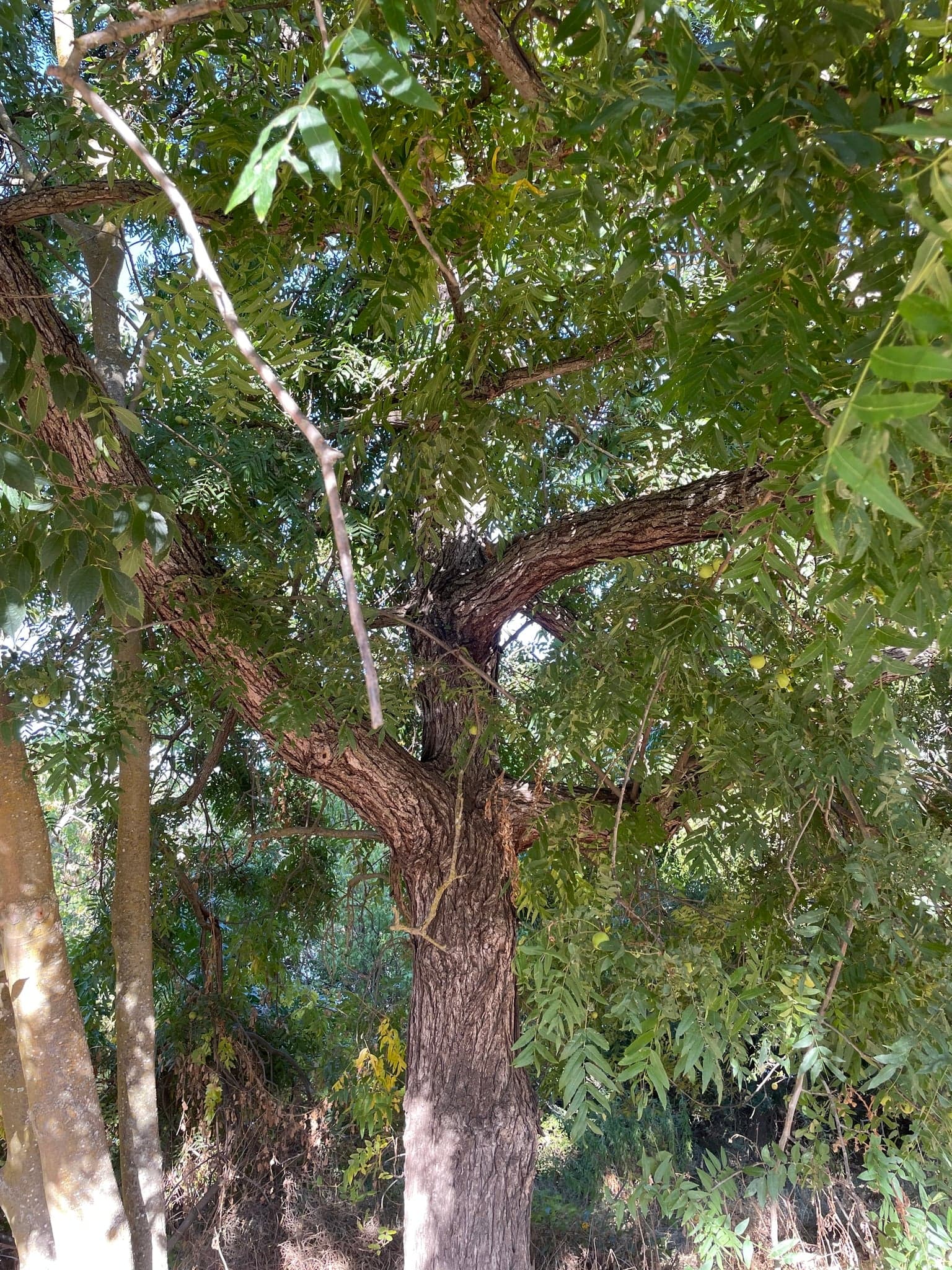
Albero di Claro Walnut

antrozousamelia, via Wikimedia Commons

Native to Northern California, not Europe. Claro reaches EU yards as imported tablestock and slabs, usually cut from orchard trees where Juglans regia was grafted onto Juglans hindsii rootstock for nut production. The graft union, root crown and crotch sections carry the figure that makes this wood sought after. Stocks in Europe are limited and lot-driven, what arrives is what was milled.

  • IUCN Least Concern, no CITES listing. EN 350 durability class 2 (durable) in heartwood; sapwood is not durable and is not rated for ground contact. Most Claro on the European market comes from Californian orchard culls and salvage rather than forest harvest, which suits the figured-tablestock trade. EUDR due diligence is in preparation and becomes mandatory for large operators from 30 December 2026, and KORENA is building each slab passport to carry origin, species, and supplier provenance.

  • Reading a Claro slab#

    Colour variation is the signature. A single slab can run from pale gold through orange and red brown to near black, often with sharp transitions rather than gradual ones.

    Sapwood is pale cream and usually left in place on a live edge slab.

    Look specifically for the graft line if the slab was cut from a grafted tree. It shows as a zone of chaotic, swirling grain, sometimes with a visible colour boundary, and it is the most valuable part of the board.

    Because Claro is an orchard tree, expect irregular form, frequent inclusions and character. Clean straight plain material exists but is not what the species is sought for.

    At the bench#

    At 5,030 N it is harder than black walnut and moderately demanding on tooling, though nothing like robinia or hornbeam.

    Figured and graft material tears out badly. The grain in a graft zone has no consistent direction at all, so no planing orientation works. Light cuts, very sharp tooling, and a scraper or high angle plane for the final surface. On material this valuable, hand finishing is the sensible default.

    Voids, bark inclusions and checks are common in graft and crotch sections, and epoxy filling is a normal part of finishing this species rather than a repair.

    It glues and finishes well, and oil finishes deepen the colour and lift the chatoyance in figured zones considerably.

    The juglone issue#

    Claro is a walnut and carries the same juglone content as its relatives. It is a documented sensitiser, with skin and respiratory irritation reported, and some woodworkers sensitise over repeated exposure.

    Run extraction and wear a mask. Shavings are toxic to many plants, must not go into mulch or compost, and must never be used as animal bedding, particularly for horses.

    Fading#

    Claro lightens with light exposure, as all walnuts do.

    The effect is more consequential here than in a uniform walnut, because Claro's appeal is its colour range. As the darkest zones lighten, the contrast across the slab softens. The figure remains; the drama moderates.

    Plan for the piece the slab becomes.

    Stability#

    Volumetric shrinkage of 10.2 percent is low for this catalogue, with tangential at 6.0 percent against radial at 4.0 percent, a narrow differential. Claro is dimensionally well behaved, which matters because it is usually used in wide single slab form.

    Decay class 2 makes it durable, though it is far too valuable to use outdoors.

    Where Claro Walnut is the right answer#

    Live edge tabletops, decorative slabs, cabinet fronts, turned work and any piece where figure and colour carry the design entirely.

    It is the wrong answer where consistency across boards is needed, where a full engineering specification is required, and where the budget is not built around a feature timber.

    Sourcing and EUDR#

    Not CITES listed and assessed as Least Concern. Native to northern California, so European buyers are importing, with a longer documentation chain and higher transport carbon. Supply comes largely from orchard removal rather than forestry. Where a European alternative is acceptable, figured Juglans regia offers comparable drama with a much shorter chain.

    Yes. Walnut contains juglone and is a documented sensitiser, with skin and respiratory irritation reported. Run extraction and wear a mask. Shavings are toxic to many plants and must never be used as animal bedding, particularly for horses.

    Does it fade like other walnuts?

    +

    Yes. Like Juglans regia and nigra it lightens with light exposure rather than darkening, mellowing toward a warmer, lighter brown and softening the contrast between the darkest and lightest zones. A UV inhibiting finish slows it without stopping it.

    Durabilità naturale (EN 350)Norma europea per la resistenza naturale al deterioramento, da 1 (molto durevole) a 5 (non durevole).
    Class 2 — Durable

    Fonti

    • The Wood Database(consultata il 2026-05-09)
    • USDA FPL Wood Handbook FPL-GTR-190 (2010)(consultata il 2026-05-09)
    • Meier, E. — WOOD! Identifying and Using Hundreds of Woods Worldwide (2015)(consultata il 2026-05-09)

    Punti di forza

    • Durevole all’esternoClasse EN 350 2 su 5: resiste al deterioramento all’esterno senza trattamento.
    • Adatto agli alimentiAdatto a taglieri, ciotole e superfici a contatto con gli alimenti.
    • Molto stabileMovimento stagionale ridotto. Adatto a piani larghi e giunzioni precise.
    • Adatto ai principiantiFacile da lavorare al banco e non così duro da mettere a dura prova gli utensili.

    Attenzione

    • Polvere irritanteUsa l’aspirazione e indossa una maschera durante la levigatura o la lavorazione.

    Tocca un’etichetta per i dettagli.

    In breve

    I livelli usano fasce fisse per tutte le specie elencate da KORENA, quindi sono direttamente confrontabili. Sotto ciascuno è indicato il valore misurato.
    DurezzaResistenza ad ammaccature e usuraMediamente duro

    Durezza Janka: 5030 N

    Durezza simile alla quercia europea

    PesoQuanto è pesante una tavola da sollevareMedio

    640 kg/m³

    StabilitàQuanto poco si muove con le stagioniStabile

    Ritiro volumetrico 10,7 %

    LavorazioneSegatura, piallatura, levigatura e incollaggioFacile

    4,0 / 5 media di lavorazione

    Uso esternoResistenza naturale al deterioramento, EN 350Esterno

    Classe EN 350 2

    • Segatura · Molto buonaQuanto è netto il taglio e quanto usura le lame.1 = difficile · 5 = eccellente
    • Piallatura · Molto buonaQuanto è liscia la superficie ottenuta e quanto tende a strappare le fibre.1 = difficile · 5 = eccellente
    • Levigatura · Molto buonaQuanto rapidamente si leviga senza intasare la carta abrasiva.1 = difficile · 5 = eccellente
    • Tornitura · Molto buonaCome si taglia e si rifinisce al tornio.1 = difficile · 5 = eccellente
    • Intaglio · Molto buonaQuanto nitidamente conserva i dettagli sotto la sgorbia.1 = difficile · 5 = eccellente
    • Incollaggio · Molto buonaQuanto sono affidabili le giunzioni incollate.1 = difficile · 5 = eccellente
    • Tenuta di viti / chiodi · Molto buonaQuanto trattiene viti e chiodi senza spaccarsi.1 = difficile · 5 = eccellente
    • Curvatura a vapore · BuonaQuanto bene assume una curvatura dopo il trattamento a vapore.1 = difficile · 5 = eccellente

    Non esiste ancora un riferimento di mercato per Claro Walnut. Ogni pezzo KORENA ha un prezzo individuale stabilito dal deposito partner.