Quercus alba
American white oak (Quercus alba) is a closed-pore hardwood with straight grain, coarse texture, and one of the best steam-bending records of any commercial species.
Al momento non è disponibile White Oak. Queste specie sono adatte agli stessi progetti e hanno pezzi disponibili.
Ti inviamo un’email quando arrivano nuove tavole di White Oak su KORENA. Ogni pezzo è unico, quindi conviene saperlo in anticipo.
Aspetto del legno
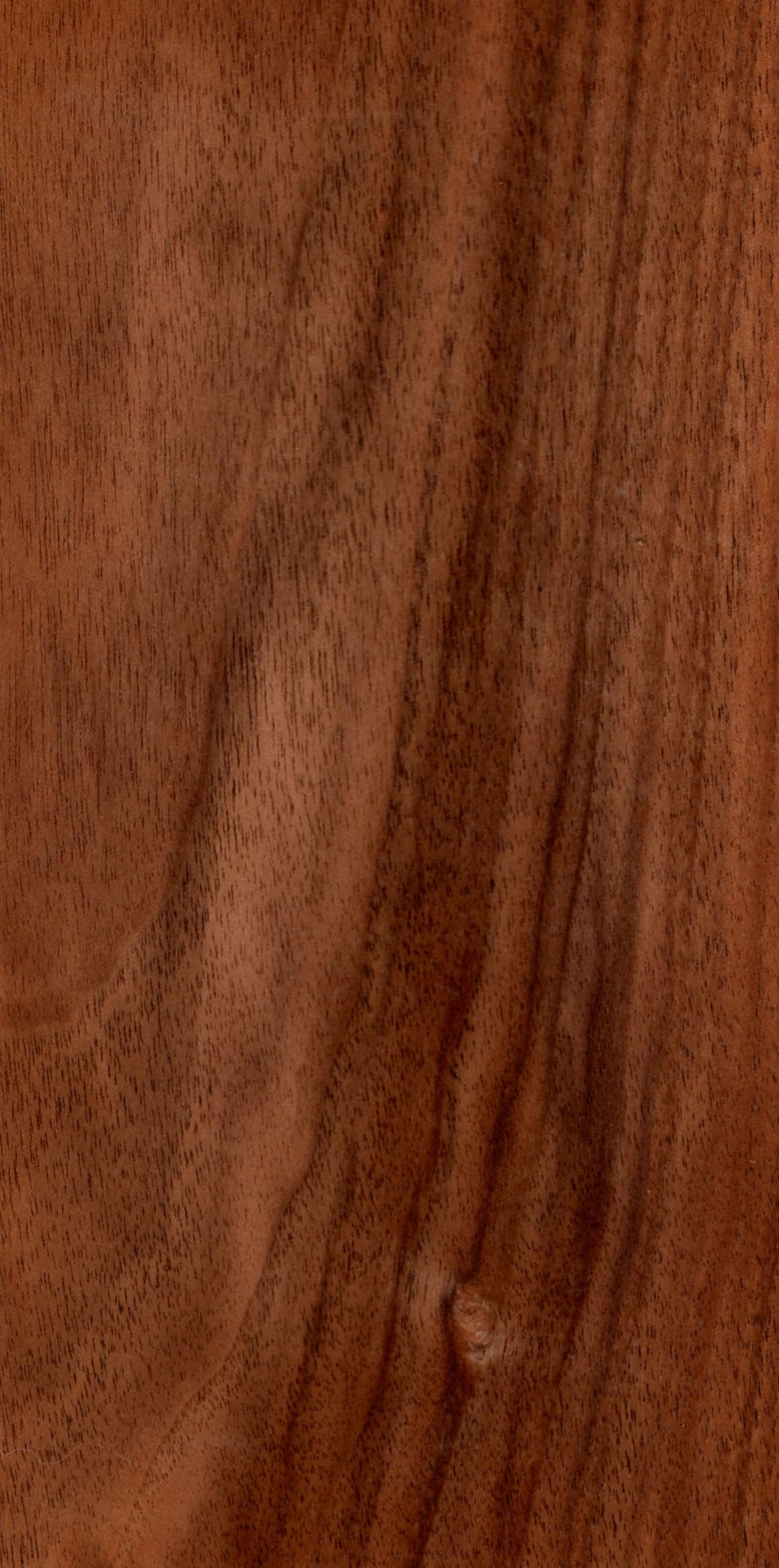
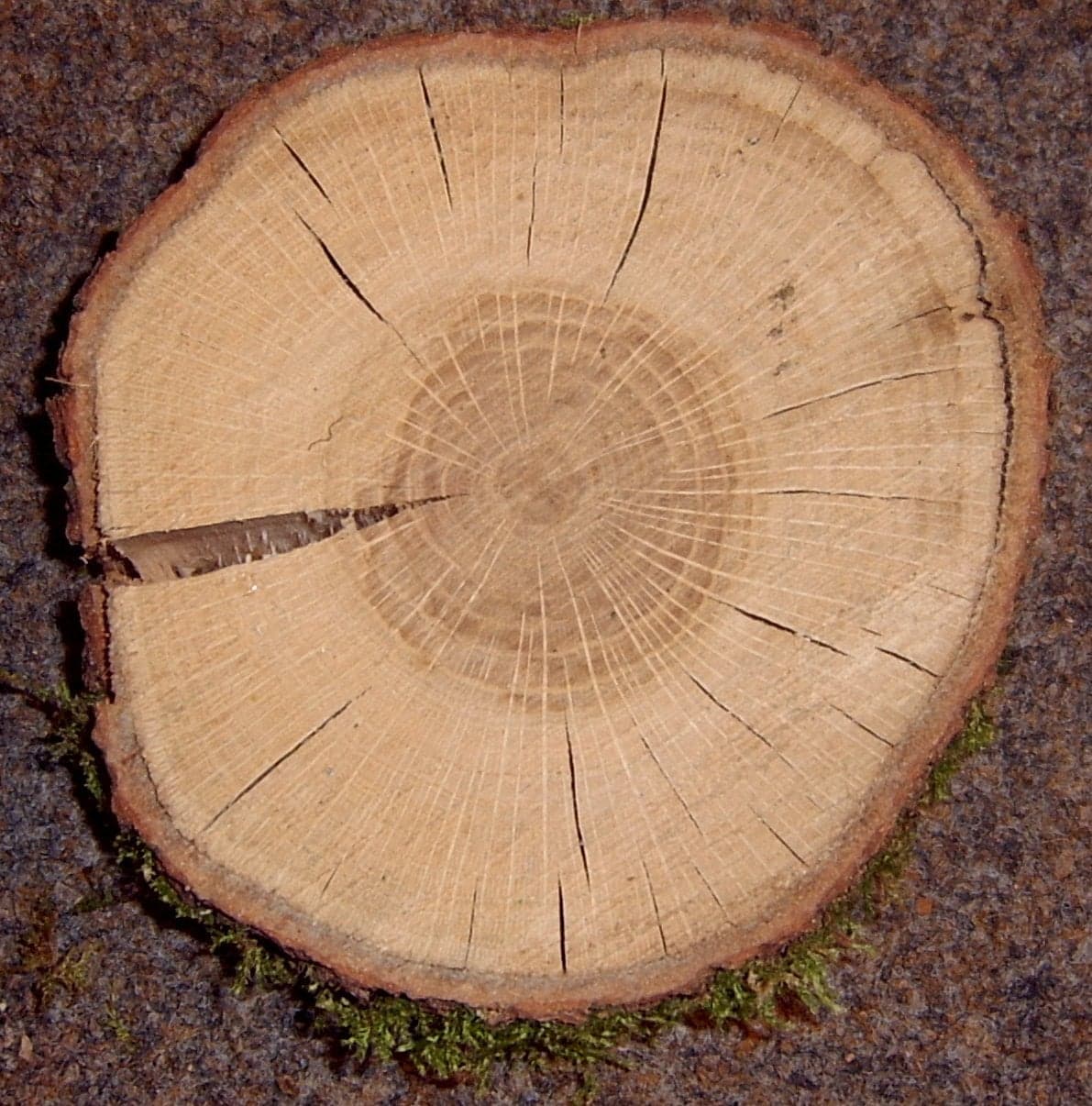
Light to medium brown heartwood with an olive cast, sometimes drifting toward pale grey-brown. Sapwood is near-white and usually trimmed off furniture stock. Grain is straight with occasional irregular figure around knots. Texture is coarse but even, and the rays are unusually long, quartersawn faces show pronounced ray fleck (silver figure), a defining look in Arts and Crafts and Mission furniture. The single most useful feature is closed pores: tyloses plug the heartwood vessels, which is why white oak holds liquid and resists water ingress where European and red oak do not.
Lavorazione
Machines cleanly with sharp tooling, sawing, sanding, gluing, and screwing all rate well. Planing tearout can show up around interlocked grain near knots; back off the cut and skew the blade. Pre-drill for screws near ends and edges to avoid splitting. Steam bending is where white oak earns its reputation: it is one of the most reliable bending species in the world, used historically for boat ribs, Windsor chair backs, and barrel staves. Quartersawn stock bends most predictably.
Takes oils, hardwax oils, water-based lacquers, and solvent finishes well. Reacts strongly with iron, wet steel wool, pipe clamps, or ferrous swarf will leave blue-black stains, so use stainless or brass and wipe spills fast. The same iron reaction is used deliberately for fumed and ebonised looks (ammonia fuming, iron-acetate). Tannin can bleed through pale finishes; seal first if you want a clean white or grey. Pores are tight enough that grain filling is optional for most furniture work.
Dries slowly and is prone to honeycomb, surface checking, and ring failure if pushed. Tangential shrinkage runs roughly twice radial, so flatsawn boards cup more than quartersawn. Slabs need patient kiln schedules and good sticker discipline. Once at service moisture (8–10% for interior EU use) it is dimensionally well-behaved, but full equilibration takes weeks for thick stock.
Il legno si gonfia e si ritira in larghezza al variare dell’umidità dell’aria. Stima il movimento stagionale di un piano in White Oak prima di progettare i fissaggi.
Movimento stagionale previsto
circa 12,0 mm
Elevato. Usa nottolini o staffe asolate, lascia gioco alle estremità di eventuali traverse e fai acclimatare la tavola prima del montaggio.
Modello di ritiro lineare: larghezza × (ritiro ÷ 28 % di saturazione delle fibre) × variazione stagionale dell’umidità. Usa un ritiro tangenziale del 10,5 % per White Oak. È una stima di progetto, non una garanzia.
Non esiste ancora un riferimento di mercato per White Oak. Ogni pezzo KORENA ha un prezzo individuale stabilito dal deposito partner.
White oak dust is classified by IARC as a Group 1 carcinogen (hardwood dust, sino-nasal risk on long exposure) and can cause respiratory and skin sensitisation. Run extraction at the tool, wear an FFP3 mask for sanding, and keep the shop clean. The wood itself is food-contact safe once cured, it is the classic species for wine and whisky casks, cutting boards, and butcher blocks.
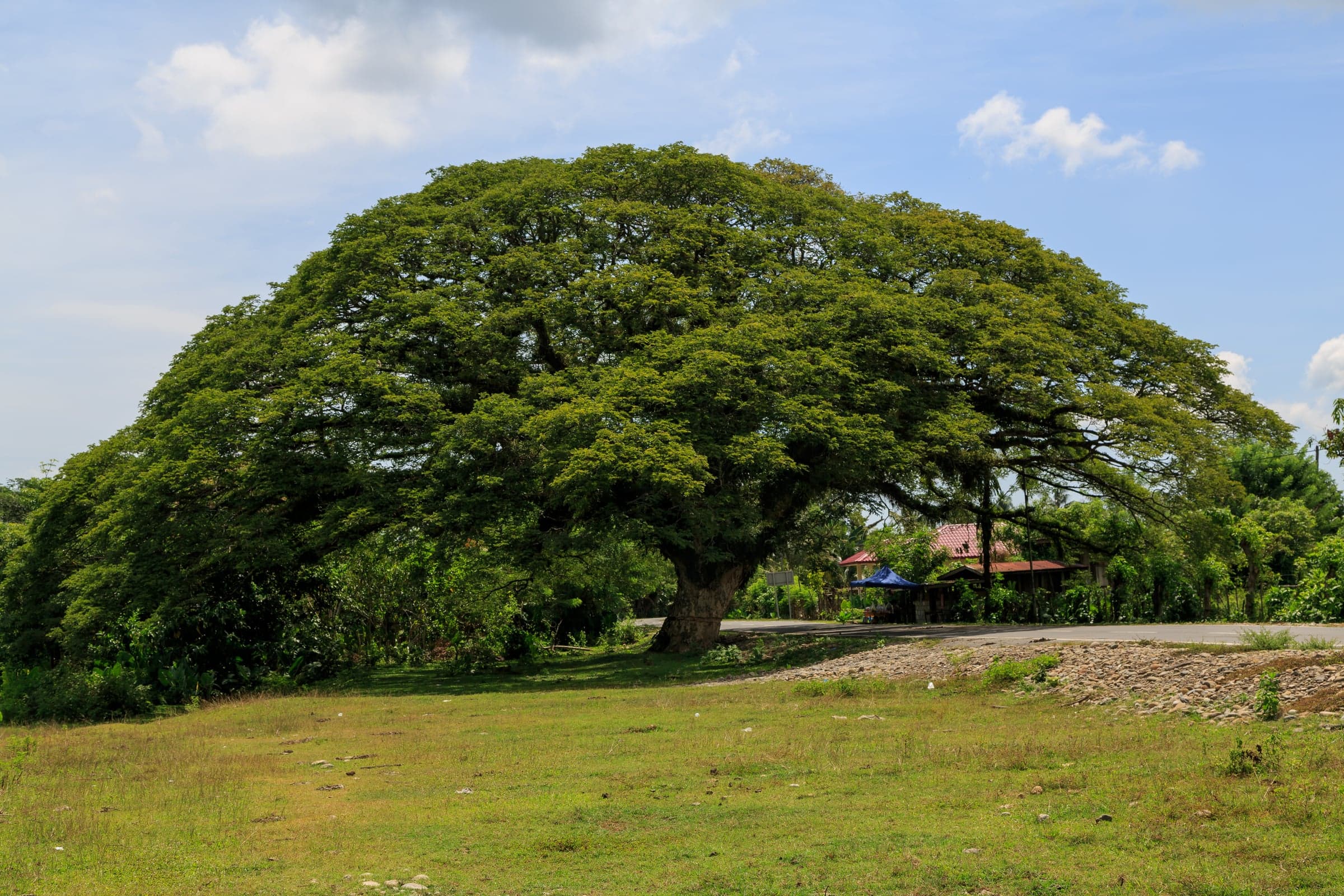
Native to eastern North America, not Europe. It reaches the EU through established furniture-grade import channels and is widely stocked alongside European oak. KORENA sources kiln-dried boules and slabs from US mills already supplying European workshops.
Quercus alba is IUCN Least Concern with no CITES listing. US hardwood supply is generally well-regulated, and EUDR still applies on import into the EU. Due diligence is in preparation and becomes mandatory for large operators from 30 December 2026; KORENA is building each slab passport to record species, provenance, and supplier documentation. Ask for FSC or PEFC chain-of-custody where the project requires it; not every US mill ships certified by default.


Quercus alba looks like oak and works like oak. What separates it from red oak, and from most of this catalogue, is invisible without a lens.
In white oak the large earlywood pores are plugged with tyloses, balloon like ingrowths that grow into and seal the vessels. In red oak they are open. That one anatomical fact decides almost everything practical about the species.
Because the pores are sealed, white oak holds liquid, which is why every wine and whisky barrel is made from it and none are made from red oak. Because water cannot travel freely along the vessels, it resists decay, which is why it has been the traditional boatbuilding and exterior joinery timber of the western world.
Colour runs light to mid brown, often with an olive or greenish cast, against narrow pale sapwood. It reads slightly cooler and more grey than European oak, without the pink of red oak.
The rays are long, considerably longer than in red oak, and on a quartersawn face they produce a dramatic silvery fleck that is the most prized figure the species offers. If you are paying for quartersawn white oak, that fleck is what you are paying for.
To confirm identity, look at the end grain under a lens: pores plugged with tyloses mean white oak, open pores mean red oak. If a label and the end grain disagree, believe the end grain.
This is the one place white oak is harder work than European oak.
Volumetric shrinkage of 15.5 percent is high, and the tangential to radial ratio of 10.0 against 5.5 percent is a wide differential. A wide flatsawn white oak top will cup meaningfully between seasons.
Quartersawn stock roughly halves the across width movement and simultaneously exposes the ray fleck, which is a rare case of the more stable option also being the more beautiful one. For a wide top that must stay flat, quartersawn is the specification rather than an upgrade.
Slabs need slow drying like all oak, and full acclimatisation in the room before final flattening.
It works well with hand and machine tools, glues reliably, takes stain and finish excellently, and steam bends very well.
At 750 kg per cubic metre and 6,049 N Janka it is denser and harder than European oak, so it asks more of tooling and machines. Expect faster blunting and plan sharpening accordingly.
The coarse open pores still need filling for a glass smooth surface, tyloses notwithstanding. The tyloses seal the vessels against liquid travel along the grain; they do not fill the surface texture.
Identical to every other oak. Tannins plus iron gives blue black staining, and it is worse in wet conditions, which matters because this is a species people actually use outdoors.
Stainless or brass fixings throughout on any exterior white oak. Steel fixings in a garden bench will stain the wood black around every screw within a season.
Exterior joinery, boatbuilding, garden furniture, cooperage, flooring, and interior work where the quartersawn ray fleck is the design intent.
It is the wrong answer where budget is tight, since it costs more than European oak for properties that overlap heavily, and where a wide flatsawn top has to stay flat without the cost of quartersawing.
Not CITES listed and assessed as Least Concern. Quercus alba is native to eastern North America, so European buyers are importing unless they source European grown plantation material. As with Douglas Fir and red oak, the imported chain carries longer documentation under EUDR and higher transport carbon than an equivalent European species. Where the tyloses are not specifically required, European oak at decay class 2 covers most of the same ground with a shorter chain.
Quartersawn white oak costs more than flatsawn for a simple geometric reason: you get less of it from a log.
Flatsawing runs the saw straight through, producing the maximum yield of wide boards. Quartersawing cuts radially so the growth rings meet the face at close to ninety degrees, which is what exposes the rays and gives the stability. It produces narrower boards, more offcuts and considerably more handling.
Rift sawing sits between the two, cutting at an intermediate angle to give straight grain without the ray fleck.
For a slab buyer the practical point is that a genuinely quartersawn wide slab is close to a contradiction. Width and quartersawing pull against each other, because a radial cut is limited by the radius of the log. A very wide white oak slab is almost certainly flatsawn through the middle, which is where the movement is greatest.
White oak sapwood is pale, narrow and, unlike the heartwood, has no tyloses and no durability.
On an interior piece it is cosmetic and sound. On anything exterior, a sapwood edge is the part that will rot first, and leaving it on a garden bench undoes much of the reason for choosing white oak in the first place.
If the slab is going outside, cut the sapwood off or accept that it is a sacrificial edge.
Domande degli acquirenti
Tyloses. In white oak the large earlywood pores are plugged with balloon like ingrowths that seal the vessels, so the wood holds liquid. In red oak they are open and it does not. That single anatomical difference is why every wine and whisky barrel is white oak, and it is also why white oak is durable outdoors and red oak is not.
Harder and denser. White oak is 750 kg per cubic metre and 6,049 N Janka against 675 and 4,980 for Quercus robur, and it is stiffer at 11.5 GPa. It is also more dimensionally active, with volumetric shrinkage of 15.5 percent against 12.5 percent. The figure is broadly similar though white oak tends to have longer rays and a more dramatic quartersawn fleck.
It is one of the best choices in this catalogue. Decay class 2 plus tyloses blocking the pores gives genuine weather resistance, and it has been the traditional boatbuilding and exterior joinery oak for centuries. Use stainless or brass fixings, because the tannin and iron reaction is worse in wet conditions.
More than European oak. Volumetric shrinkage is 15.5 percent with tangential at 10.0 against radial at 5.5 percent, a wide differential. Flatsawn boards cup noticeably. Quartersawn white oak is markedly more stable and is the specification for anything wide that must stay flat, which is also where the ray fleck shows.
It is rated food safe and the tyloses that block its pores make it far more suitable than red oak, which KORENA records as not food safe. It has been used for food storage and cooperage for centuries. A dense closed grain wood such as hard maple is still easier to keep clean for a board in daily use.
Proprietà meccaniche
Valori di riferimento pubblicati. Quando le fonti non concordano, viene mostrato l’intervallo e il valore tipico è usato per le scale sopra.
| Densità (kg/m³)Massa per metro cubo con circa il 12 % di umidità. In genere, un legno più pesante è anche più duro e resistente. | 690–790 kg/m³valore tipico 750 kg/m³ |
|---|---|
| Durezza Janka (N)Forza necessaria per spingere una sfera d’acciaio fino a metà nel legno. È la misura standard della resistenza alle ammaccature. | 5,500–6,500 Nvalore tipico 6049 N |
| MOR: modulo di rottura (MPa)Resistenza alla flessione: il carico al quale una trave si rompe. | 100–115 MPa |
| MOE: modulo elastico (GPa)Rigidità alla flessione: quanto si incurva una mensola o un piano sotto carico. | 11.5–13.0 GPa |
| Ritiro radialeRitiro trasversale agli anelli di crescita, dal legno verde a quello anidro. È il movimento delle tavole a taglio radiale. | 5.5–6.5 % |
| Ritiro tangenzialeRitiro lungo gli anelli di crescita. È il movimento delle tavole a taglio tangenziale e della maggior parte delle tavole KORENA. | 10.0–11.0 % |
| Ritiro volumetricoVariazione totale del volume dal legno verde a quello anidro. Un valore più basso indica maggiore stabilità. | 15.5–17.0 % |
| Durabilità naturale (EN 350)Norma europea per la resistenza naturale al deterioramento, da 1 (molto durevole) a 5 (non durevole). | Class 2 — Durable |
Durezza Janka: 6049 N
21 % più duro della quercia europea
750 kg/m³
Ritiro volumetrico 16,3 %
3,7 / 5 media di lavorazione
Classe EN 350 2
Tocca un’etichetta per i dettagli.