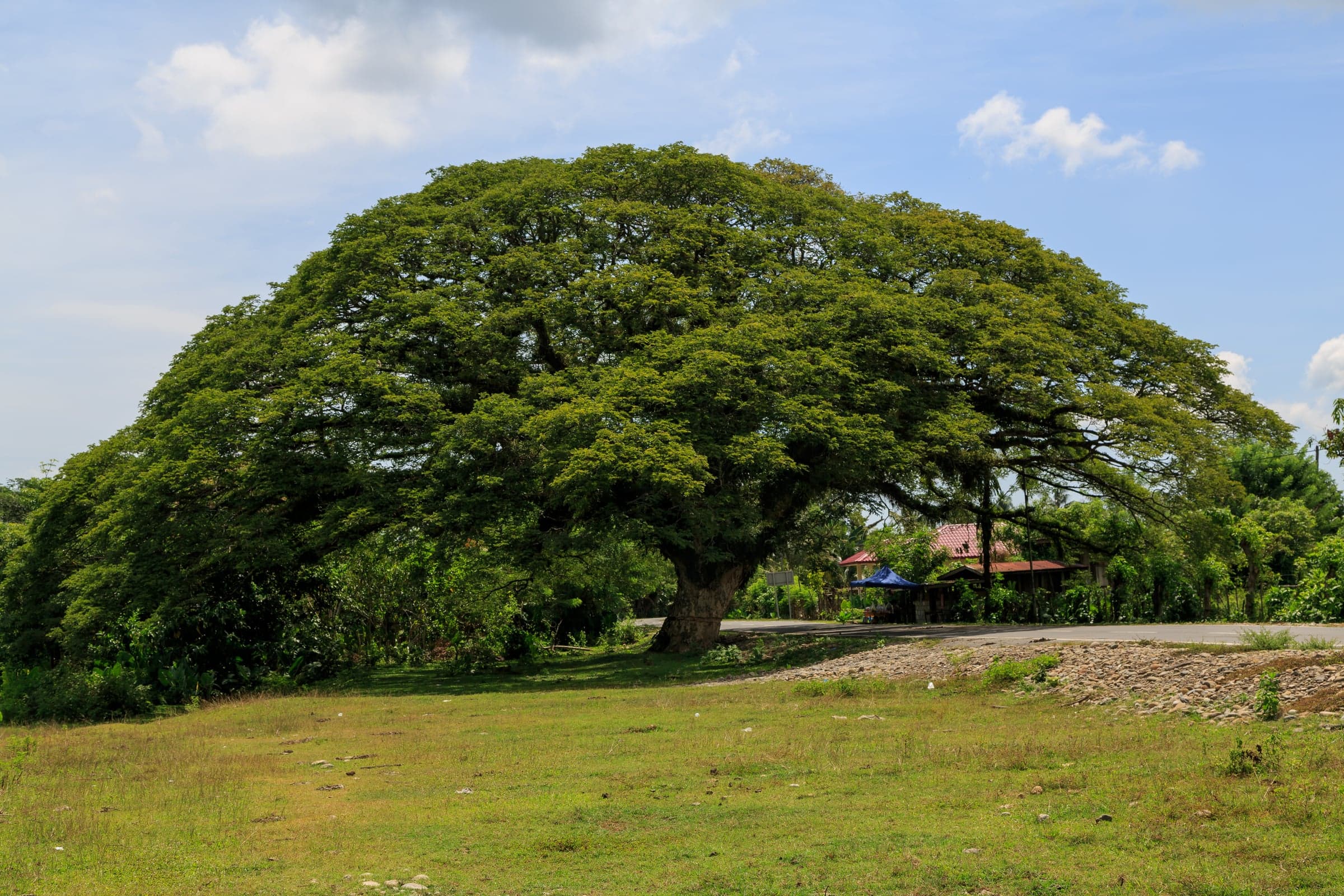
Samanea saman
Едноделни дървени плочи с ширина метър, които остават равни, защото се движат с по-малко от половината от дъба. Единственият тропически вид в каталога на KORENA.
Вид на дървесината
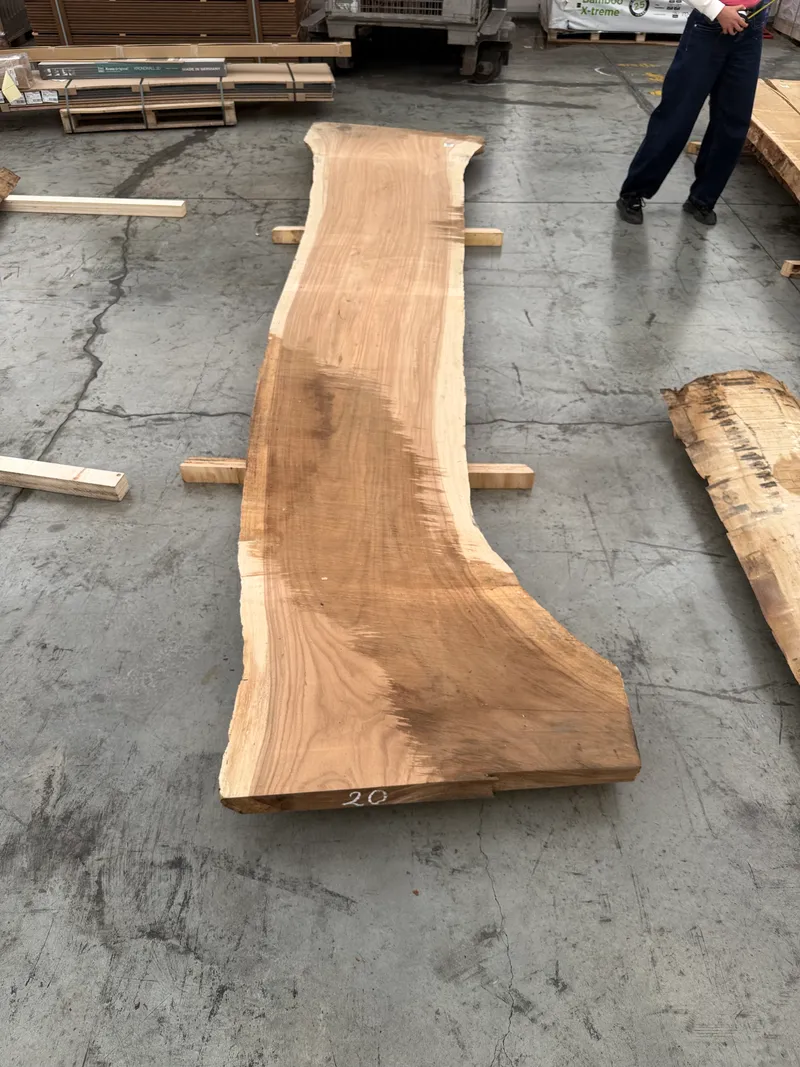
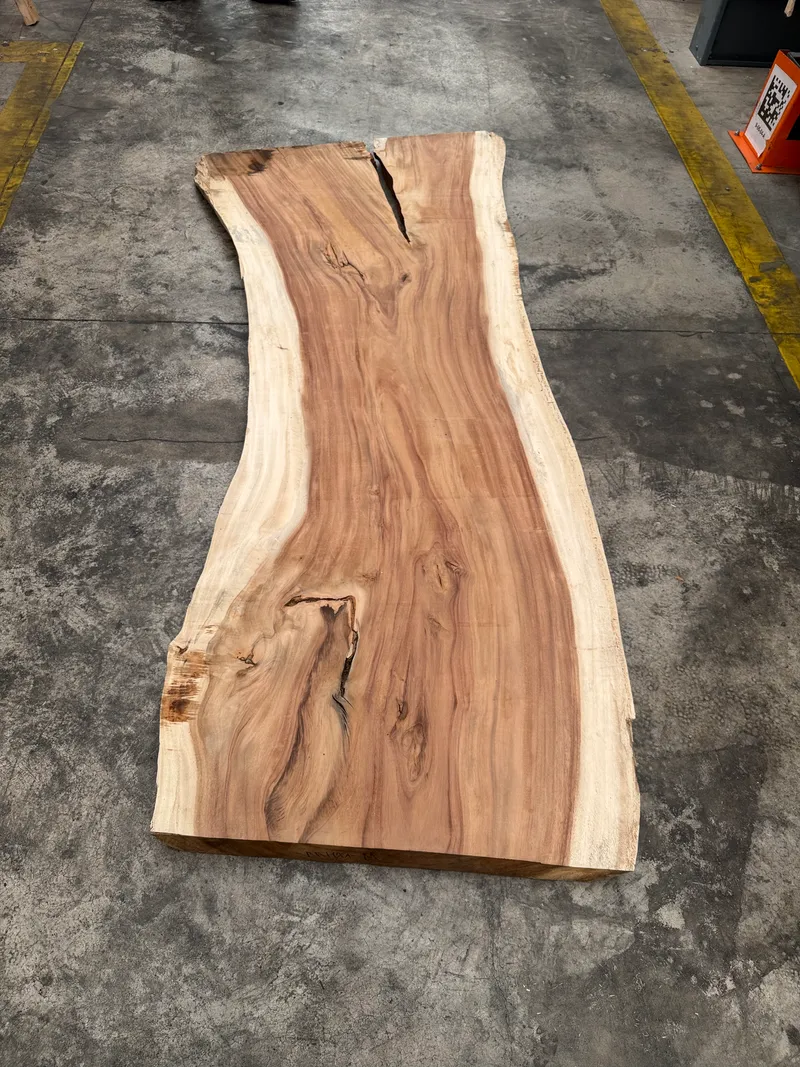
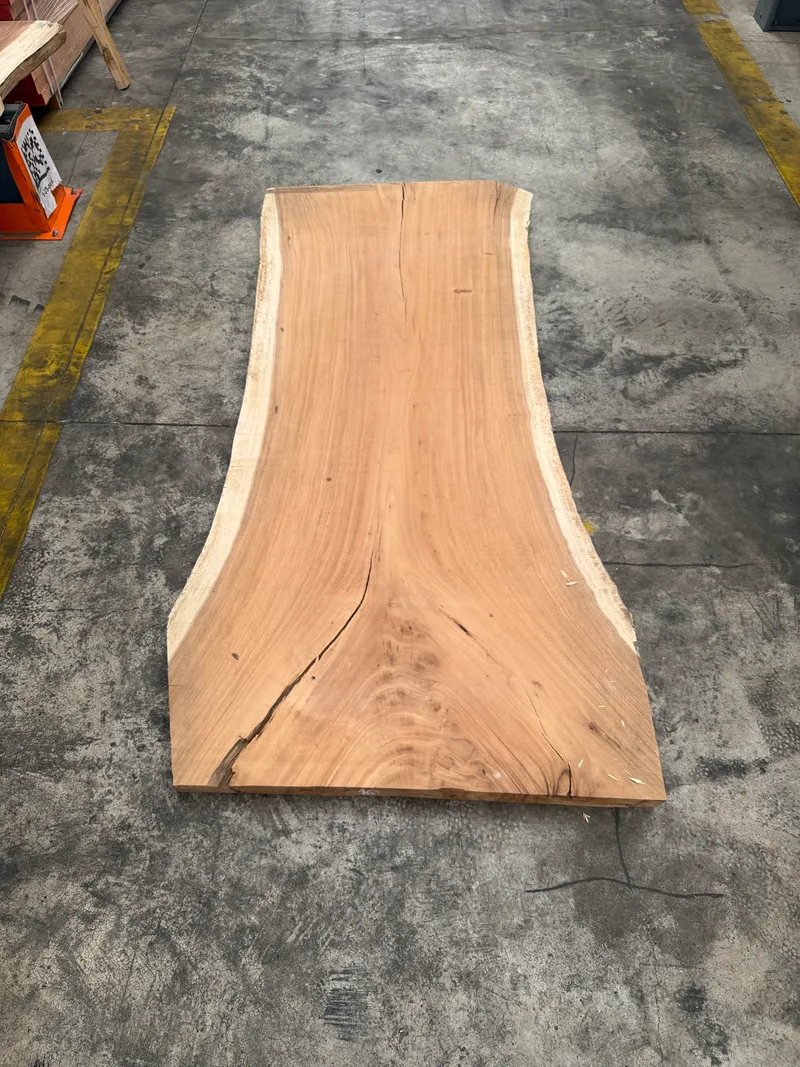
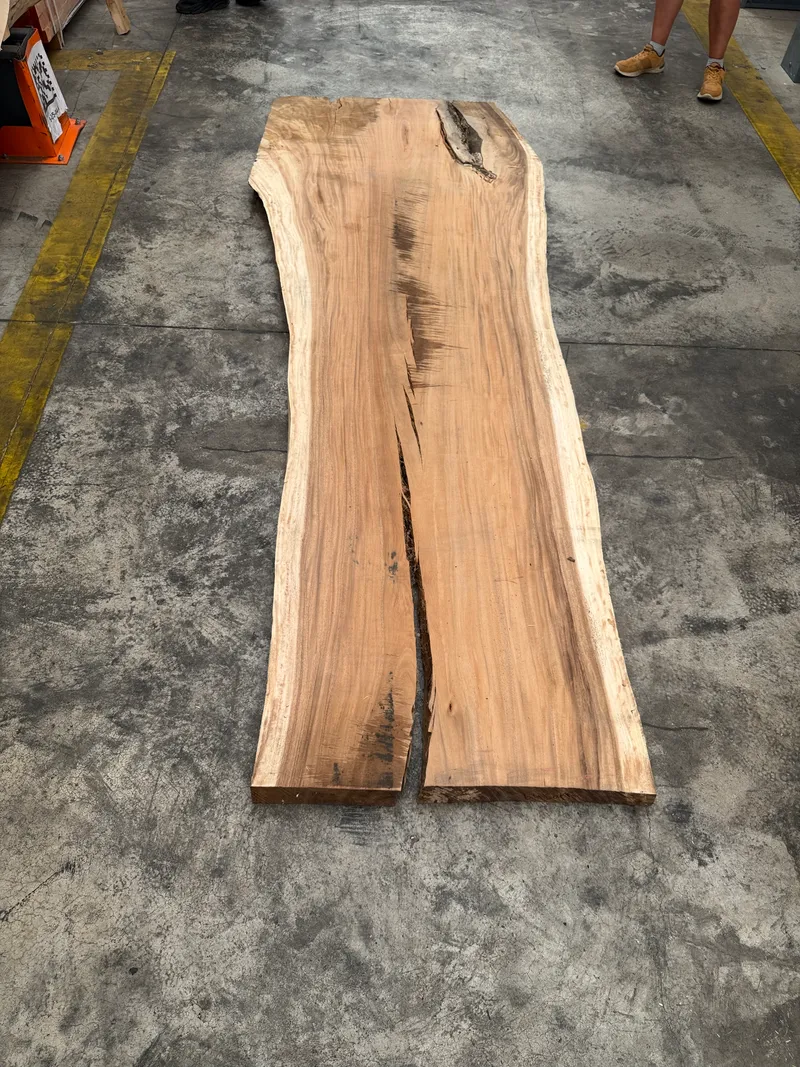
The reason people buy it is width. Saman grows a broad spreading crown on a short massive trunk, so it yields single piece slabs at widths European species cannot approach, frequently over a metre. Colour is dramatic: pale yellow sapwood against heartwood running golden brown to dark chocolate, often with darker streaking, and the boundary between the two is usually left in the finished piece as the defining feature.
Работа с него
Works well overall and it turns exceptionally, rated 5 of 5 in this catalogue. The complication is interlocked grain, which is common in the species and causes tear-out on planed surfaces where the grain direction reverses. Light cuts, sharp tooling and a high angle plane or scraper for the final surface are the practical answer. It glues and finishes well and takes fastenings securely.
Takes oil finishes beautifully and the interlocked grain produces strong chatoyance under oil, so the surface shifts with viewing angle. The heartwood darkens further with light exposure. The sapwood stays pale and the contrast strengthens rather than fades. Because slabs are wide and often carry natural edges and voids, epoxy fills are common and it accepts them well.
The standout property. Volumetric shrinkage of 5.5 to 6.5 percent is by a wide margin the lowest of any species KORENA lists, less than half that of European oak, and radial and tangential figures of 2.2 to 3.0 and 3.2 to 4.0 percent are exceptionally close together. That narrow differential is what governs cupping, and it is why a metre wide Saman slab stays flat where the same width in oak would not. Slabs of this size still need slow drying and full acclimatisation.
Дървесината набъбва и се свива по ширина, когато въздухът става по-влажен и по-сух. Преценете сезонното движение на плот от Саман, преди да проектирате крепежа.
Очаквано сезонно движение
около 6,0 mm
Закрепете плота със скоби или прорезни ъгълници, не с лепило или стегнати винтове.
Линеен модел на свиване: ширина × (свиване ÷ 28 % точка на насищане на влакната) × сезонна промяна на влажността. Използва 3,6 % тангенциално свиване за Саман. Ориентировъчна оценка, не гаранция.
Все още няма пазарна референция за Саман. Всяка бройка в KORENA се оценява поотделно от партньорския склад.
Reported to cause skin and respiratory irritation in some people. Standard extraction and a P2 mask during extended machining are appropriate.
Samanea saman is native to Central and northern South America and has been planted throughout the tropics as a shade tree, which is where most timber now originates. Commercial slab supply reaches Europe largely from Southeast Asia, particularly Indonesia and Thailand, where the tree is grown on plantations and along roadsides rather than harvested from primary forest. It is the only non-European species in this catalogue and the only one where EUDR due diligence involves an import chain.
Not listed in the CITES Appendices and reported as Not Evaluated by the IUCN. This is the only species in this catalogue requiring an import due diligence chain under EUDR rather than intra-EU documentation, so the paperwork burden is genuinely higher. Most commercial material comes from planted shade and roadside trees rather than primary forest, which is favourable, but that has to be evidenced rather than assumed. Every KORENA Saman slab carries the yard, region and supporting documentation on its passport.
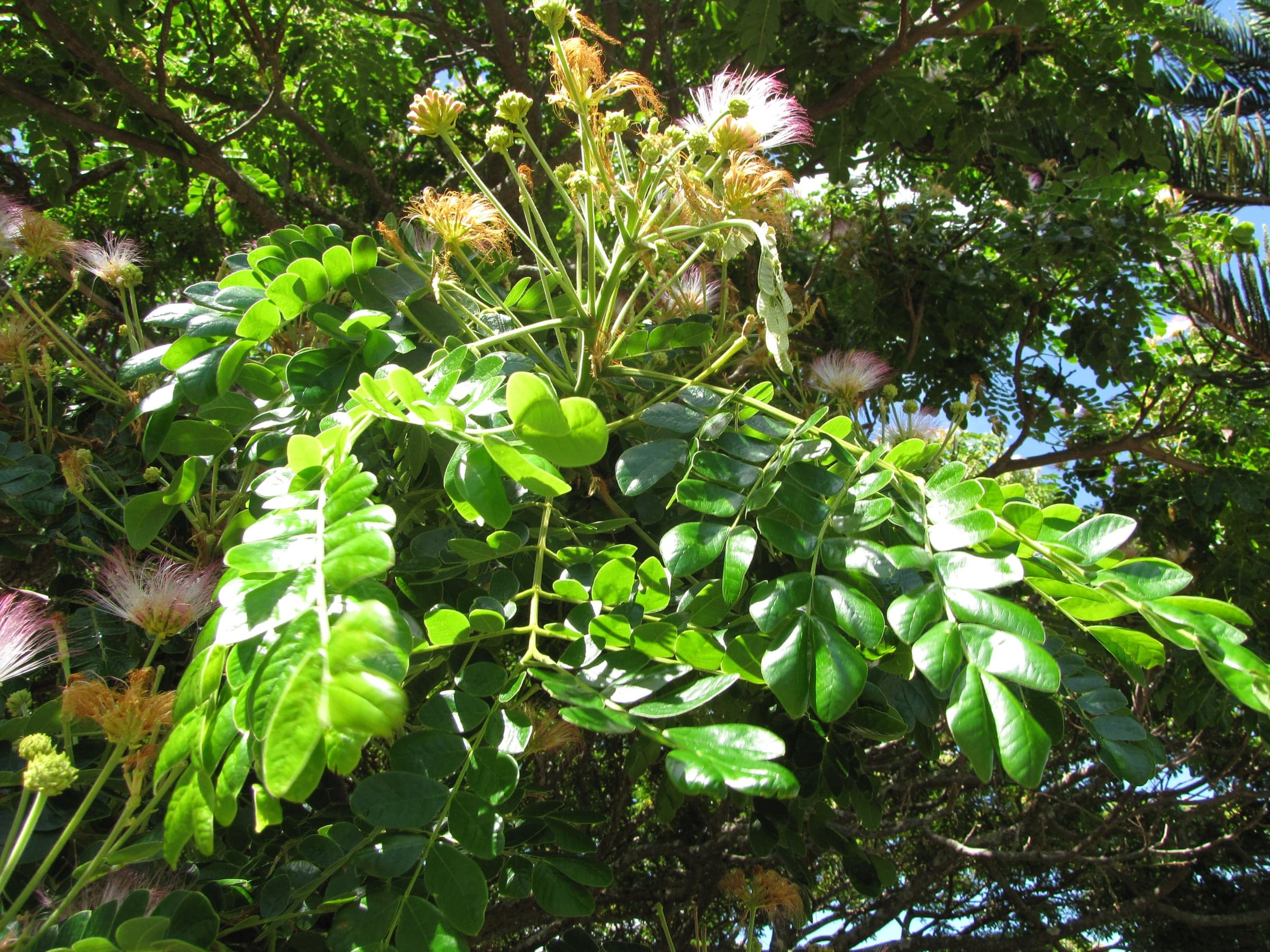
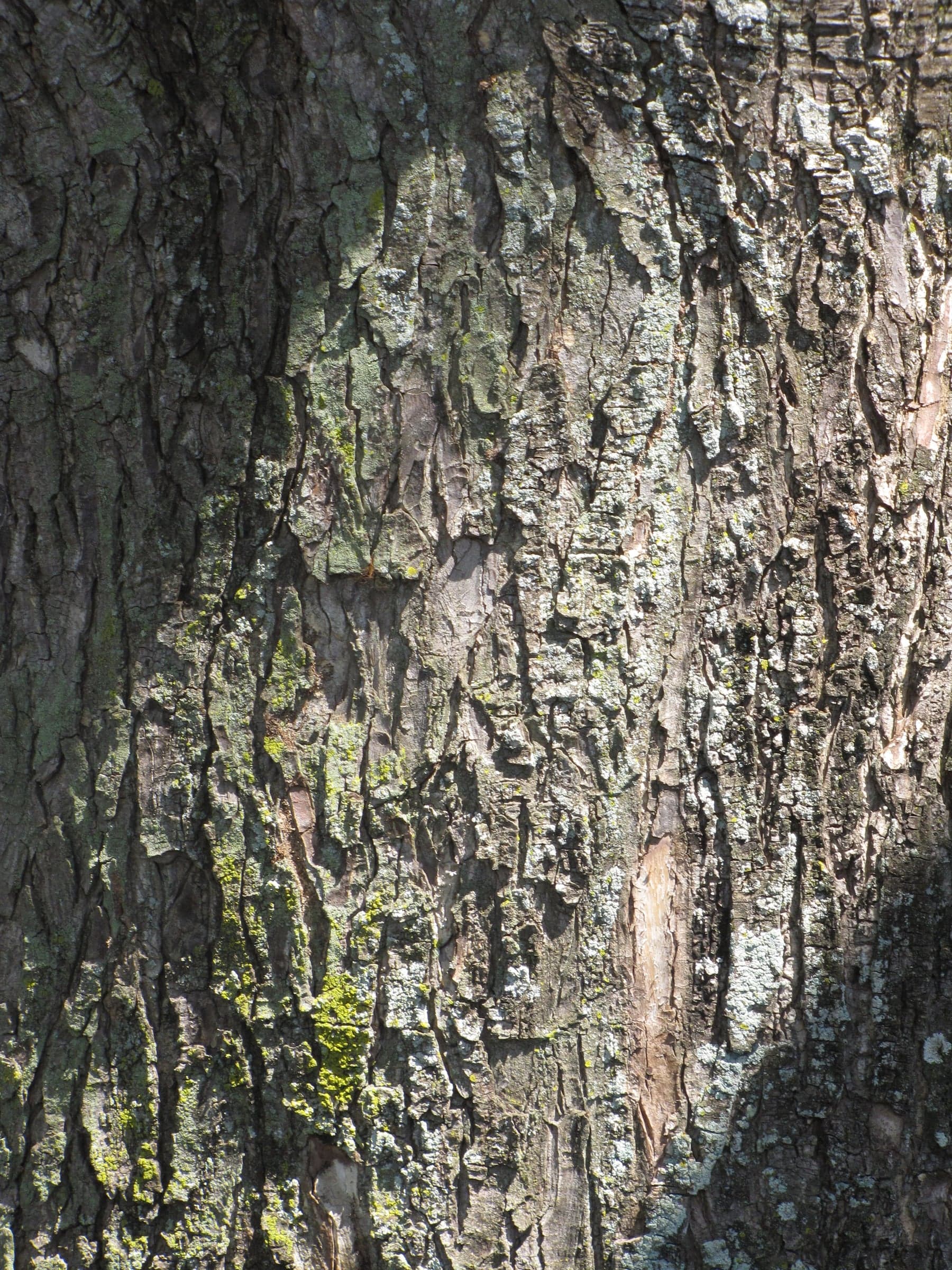
Samanea saman е местен за Централна и северна Южна Америка и е засаждан в целия тропически пояс като дърво за сянка. Именно от тази история на засаждане идва почти целият търговски дървен материал днес и това има значение както за доставките, така и за документацията.
Познат е с дълъг списък от имена, сред които monkeypod и rain tree, и е единственият неевропейски вид в този каталог.
Хората го купуват най-вече заради едно качество и то не е външният вид.
Saman развива широка разперена корона върху къс масивен ствол. Резултатът са едноделни плочи с ширини, до които европейските видове не могат да се доближат, често над един метър.
Много видове дават широки плочи. Това, което прави Saman необичаен, е че такава широка плоча остава равна.
Обемното му свиване от 5,5 до 6,5 процента е най-ниското от всички видове в този каталог с голяма разлика, по-малко от половината от 14,2 процента при зимния дъб. По-важна от общата стойност е разликата. Радиалното свиване е 2,2 до 3,0 процента, а тангенциалното 3,2 до 4,0 процента, което е изключително близко.
Изкривяването на плоскости от рязане по ширина се определя от разликата между радиалното и тангенциалното движение. При дъба съотношението е по-добро от две към едно, поради което широка дъбова плоскост от такъв срез иска да се изкриви. При Saman то е близо едно към едно.
Именно тази комбинация — изключителна ширина и минимална диференциална подвижност — прави възможен метър широк плот за трапезна маса от Saman, докато същото от дъб е сериозно предизвикателство.
Цветът е впечатляващ. Ядровата дървесина е от златистокафява до тъмночоколадова, често с по-тъмни ивици, на фона на бледожълта беловина. Границата е отчетлива.
Повечето майстори оставят беловината на място. При широка плоча тази бледа ивица по единия ръб срещу тъмната ядрова дървесина е определящият визуален белег на вида и премахването ѝ обикновено премахва и причината плочата да бъде избрана.
Рисунката често е вълнообразна или преплетена, което създава силен чатойанс под масло, така че повърхността променя вида си, когато минавате покрай нея.
Тъй като плочите са големи, естествените ръбове, кухините и включванията на кора са чести, а запълванията с епоксид са нормална част от довършването на този вид, а не ремонт.
Като цяло се обработва добре и се стругова изключително добре — най-високата оценка за струговане в този каталог. Лепи се, довършва се и държи крепеж без затруднения.
Единствената истинска трудност е преплетеният фладер. Посоката на влакната се обръща между годишните слоеве, така че ход, който реже чисто през една ивица, в следващата върви срещу фладерa и повдига влакна. Това не е знак за лош материал, а характерна особеност на вида.
Решението са леки срезове, остри инструменти и оформяне на крайната повърхност с ренде с голям ъгъл или стъргало, вместо да се опитвате да изравните широка лицева страна машинно с едно преминаване. При плочи с такъв размер практичният подход често е шейна с фреза или широка лентовa шлайфмашина, последвани от ръчна обработка.
При 4 010 N по Janka той е под европейския дъб с 4 980 N и над всяка иглолистна дървесина в този каталог. Това е напълно достатъчна твърдост за плот за хранене, плот или бар, особено предвид колко малко се движи.
За повърхност, която е изложена на напитки и ежедневна употреба, твърдо покритие или поддържано масло си заслужава. Ядровата дървесина потъмнява допълнително под светлина, докато беловината остава светла, така че контрастът се засилва с годините вместо да избледнява.
Това е единственият вид в каталога, за който е необходима верига за дължима грижа при внос, а не вътрешно-ЕС документация, и това е наистина по-голяма административна тежест.
Благоприятната страна на картината е реална: по-голямата част от търговския Saman идва от засадени сенчести дървета, насаждения край пътища и плантации, а не от първична гора. Търговските доставки към Европа минават главно през Югоизточна Азия, особено Индонезия и Тайланд, където дървото е широко установено.
Но благоприятно като цяло не е доказателство в конкретния случай. По EUDR задължението е да се докаже произходът на конкретния материал, а не да се твърди, че видът обикновено е наред. Именно това носи паспортът на плоча KORENA Saman: двора, региона и подкрепящата документация за тази конкретна бройка.
Ако доставчикът не може да представи тази верига за тропически вид, разликата в цената не е изгодна оферта, а неприценен риск.
На първо място — широки едноделни плотове, както и плотове за плот и бар, седалки за пейки, струговани купи и декоративни панели. Навсякъде, където изискването е за ширина, която нито един европейски вид няма да даде в едно парче, и където тази ширина трябва да остане равна.
Това е грешният избор там, където е нужен изцяло европейски снабдителен път и където допълнителната документация за внос не си заслужава ширината.
Не е включен в приложенията на CITES и е посочен като Not Evaluated от IUCN, което означава, че не е извършена официална оценка, а не че видът е оценен и е установено, че е сигурен.
Въпроси от купувачи
Its shrinkage figures are the lowest in this catalogue by a wide margin. Volumetric shrinkage is 5.5 to 6.5 percent against 14.2 percent for sessile oak, and more importantly the radial and tangential figures are very close together at 2.2 to 3.0 and 3.2 to 4.0 percent. Cupping is driven by the difference between those two, so a narrow differential means a wide flatsawn slab stays flat where oak of the same width would not.
Frequently over a metre in a single piece, which is the main reason the species is sought out. The tree grows a broad spreading crown on a short massive trunk, so it yields widths no European species can match without jointing. Each KORENA listing carries the measured outline and true dimensions of that specific slab rather than a nominal size.
At 4,010 N Janka it is moderately hard, below European oak at 4,980 N but above every softwood here. For a bar or counter it performs well, particularly given the dimensional stability, though a hard finish or a maintained oil is worth having on a surface that sees drinks and wear.
It is the one species in this catalogue that requires an import due diligence chain rather than intra-EU documentation, so the requirement is genuinely more demanding. Most commercial Saman comes from planted shade and roadside trees rather than primary forest, which is favourable, but it has to be evidenced. Every KORENA Saman slab carries its yard, region and supporting documentation on the passport.
Interlocked grain, which is common in this species. The grain direction reverses between growth layers, so a cut that works with the grain in one band works against it in the next. Take light cuts, keep tooling sharp, and produce the final surface with a high angle plane or a card scraper rather than machining it flat in one pass.
Механични свойства
Публикувани референтни стойности. Когато източниците се различават, е показан диапазонът, а типичната стойност се използва за нивата по-горе.
| Плътност (kg/m³)Маса на кубичен метър при около 12 % влажност. По-тежката дървесина обикновено е по-твърда и по-здрава. | 520–660 kg/m³типично 600 kg/m³ |
|---|---|
| Janka твърдост (N)Сила, нужна за вкарване на стоманено топче до половината в дървесината. Стандартната мярка за устойчивост на вдлъбване. | 3,600–4,400 Nтипично 4010 N |
| MOR: модул на разрушаване (MPa)Якост на огъване: товарът, при който гредата се чупи. | 55–68 MPa |
| MOE: модул на еластичност (GPa)Коравина на огъване: колко провисва рафт или плот под товар. | 8.0–10.0 GPa |
| Радиално свиванеСвиване напречно на годишните пръстени, от сурово до абсолютно сухо. Радиалните дъски се движат толкова. | 2.2–3.0 % |
| Тангенциално свиванеСвиване по посока на годишните пръстени. Тангенциалните дъски и повечето масиви се движат толкова. | 3.2–4.0 % |
| Обемно свиванеОбща промяна на обема от сурово до абсолютно сухо. По-ниско означава по-стабилно. | 5.5–6.5 % |
| Естествена трайност (EN 350)Европейски стандарт за естествена устойчивост на гниене, от 1 (много трайна) до 5 (нетрайна). | Class 3 — Moderately durable |
Изпращаме ви имейл, когато нови масиви от Саман постъпят в KORENA. Всяко парче е уникално, затова ранното известие има значение.
Твърдост по Janka 4010 N
19 % по-мека от европейския дъб
Докоснете етикет за подробности.
600 kg/m³
6,0 % обемно свиване
4,0 / 5 средно при обработка
EN 350 клас 3