KORENA
DřevoFinished piecesPotřebySkladyMagazín

Nechte se upozornit

Každá fošna je jediná svého druhu. Jakmile se prodá, další není. O nově zveřejněných kusech vám napíšeme: čerstvé přírůstky, nové dřeviny a prkna odpovídající zadání projektu.

Několik e-mailů měsíčně. Žádný spam, odhlásit se můžete kdykoli.

KORENA, prémiové tvrdé dřevo

Jeden kus za druhým.

Ověřené prémiové tvrdé dřevo, kus po kuse. Každá fošna je vyfotografována, změřena a odeslána z partnerského skladu s pasem dřeva.

Obchod

  • Procházet výrobky
  • Archiv prodaných fošen
  • Sledovat objednávku

Informace

  • Magazín
  • Průvodce druhy dřeva
  • Slovníček
  • Porovnání
  • Autoři

Pomoc

  • O nás
  • Jak to funguje
  • Staňte se partnerským skladem
  • Poptat fošnu
  • Podpora
  • Vzory dokumentů
  • Pro média

Nákup

  • Obchodní podmínky
  • Právo na odstoupení
  • Vrácení zboží a záruka
  • Doprava a doručení

Důvěra

  • Zásady ochrany osobních údajů
  • Zásady používání souborů cookie
  • Původ dřeva a EUDR
  • Přístupnost

Právní údaje

  • Právní oznámení / identifikační údaje
  • Přijatelné použití
  • Duševní vlastnictví a obsah

© 2026 KORENA. Všechna práva vyhrazena.

Provozuje Martial Labs Ltd. (BG, EIK 207453941). KORENA je obchodní označení společnosti Martial Labs Ltd.

Respektujeme vaše soukromí

Nezbytné soubory cookie používáme pro správné fungování webu. S vaším souhlasem bychom používali také soubory cookie pro analytiku, personalizovaný obsah a reklamy. Své rozhodnutí můžete kdykoli změnit na stránce nastavení souhlasu. Přečtěte si naše zásady používání souborů cookie a zásady ochrany osobních údajů.

  1. Domů
  2. /
  3. Dřeviny
  4. /
  5. Black Locust / Robinia

Robinia pseudoacacia

Black Locust / Robinia

Class 1 durability from a tree that grows in Europe. One of the only EU-native options that survives outdoors untreated, and a credible domestic answer to tropical exotics like teak.

  • Vypěstováno a vytěženo v Evropě.
  • Botanická skupina. Jehličnaté dřeviny jsou nahosemenné stromy, listnaté dřeviny jsou krytosemenné stromy.
  • Botanická čeleď, do které dřevina patří.
Upozornit, až dorazíReferenční dřevina. Právě není žádný kus skladem.
  • Vhodnost pro projekt
  • Skladem
  • Vzhled
  • Zpracování
  • Pohyb dřeva
  • Cena
  • Bezpečnost a původ
  • Otázky
  • Technické údaje

Hodí se pro váš projekt?

Výborné pro

  • Outdoor benches and garden furniture that need to survive without preservative treatment
  • Thresholds, sills, and entry pieces that take weather and wear
  • Fence posts and landscape elements designed as visible objects, not buried hardware
  • High-wear interior tops, kitchen islands, workshop benches, retail counters
  • Tool handles and turned forms where toughness matters
  • Steam-bent components, chair backs, hoops, curved frames

V aktuální várce není Black Locust / Robinia

Podobné dřeviny skladem

Dřevina Black Locust / Robinia právě není skladem. Tyto dostupné dřeviny se hodí pro stejné projekty.
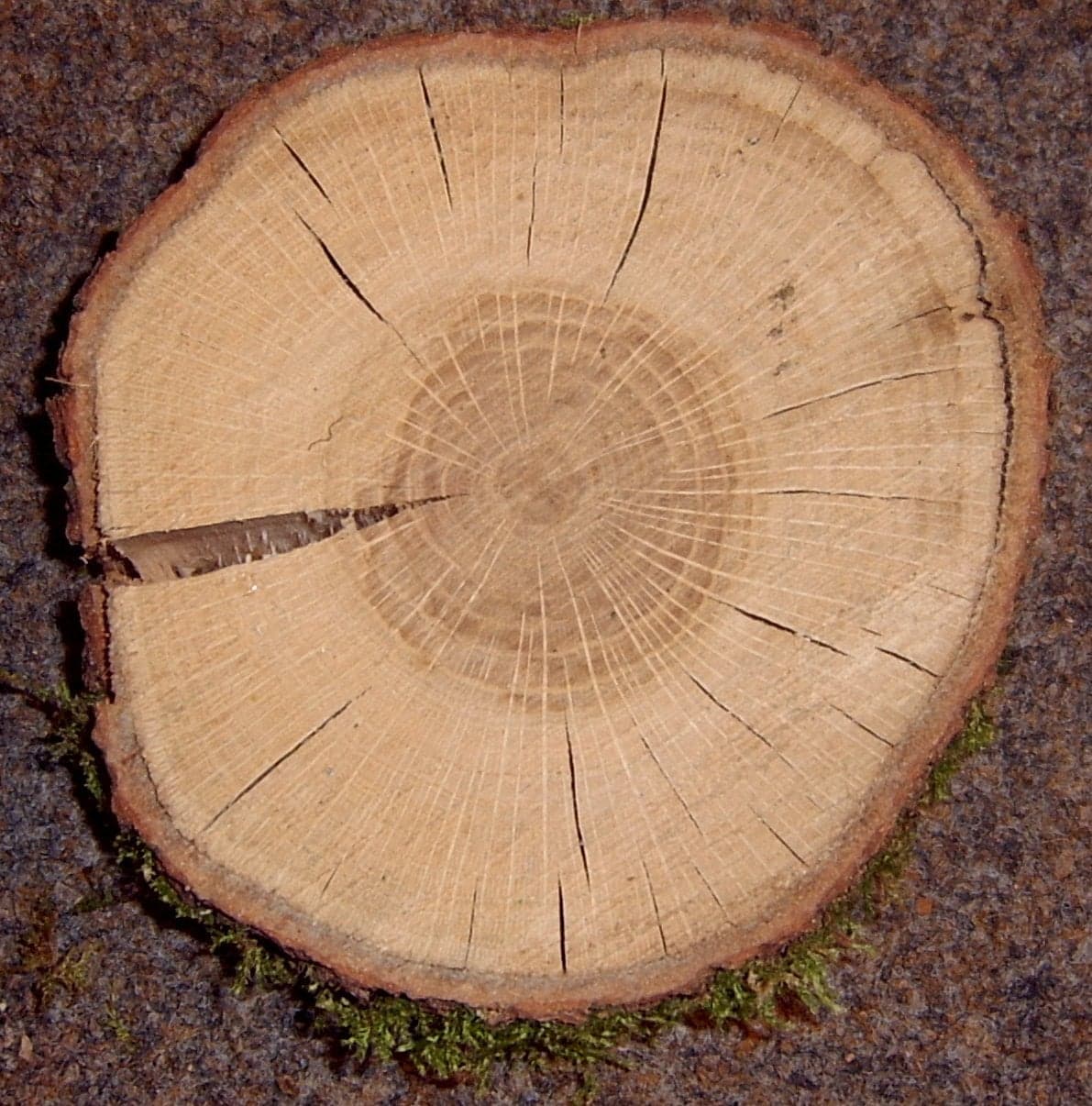
  • Kresba dřeva European Oak

    European Oak

    Quercus robur

    6 kusů

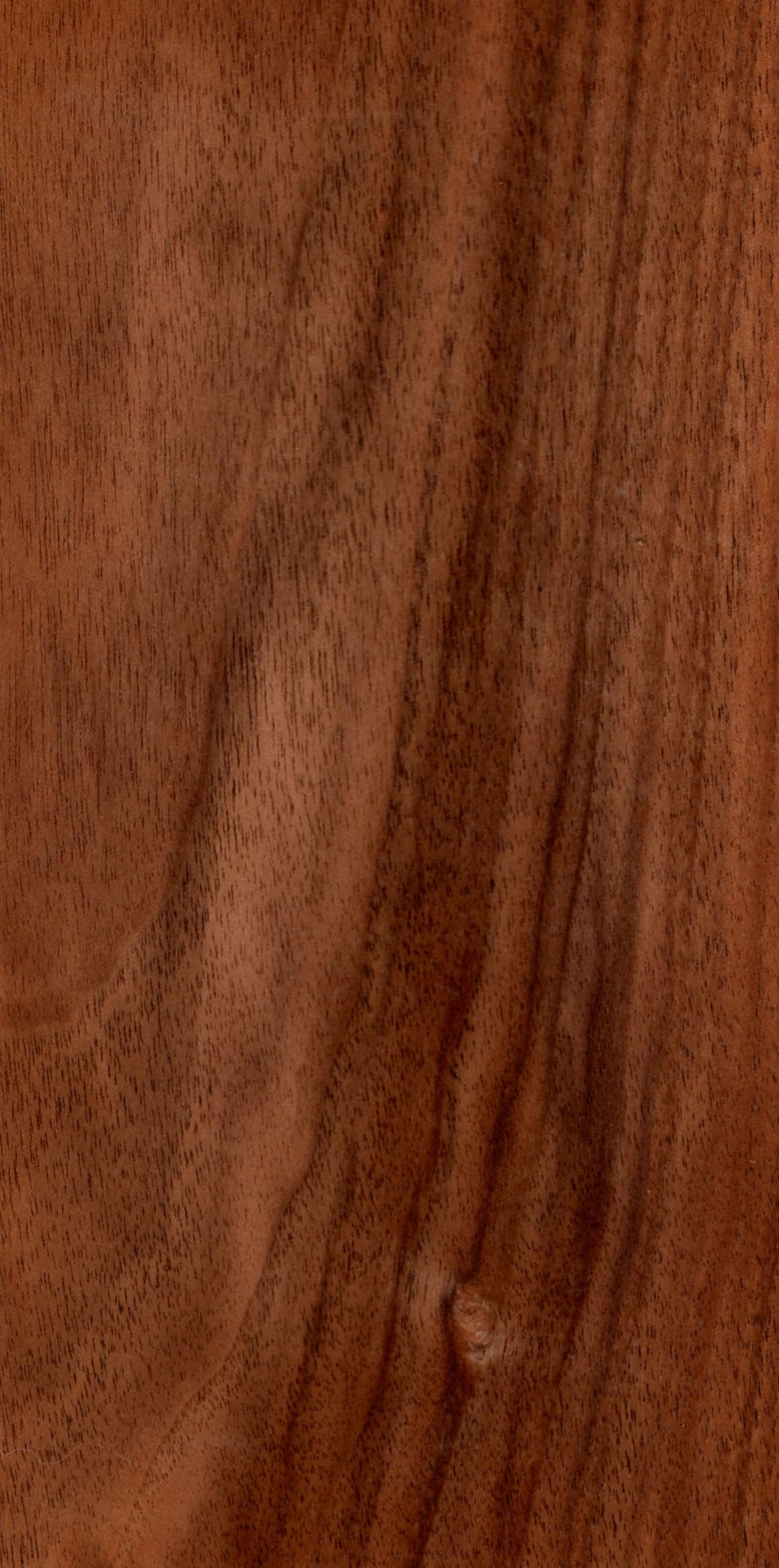
  • Kresba dřeva European Walnut

    European Walnut

    Juglans regia

    9 kusů

  • Kresba dřeva Saman

    Saman

    Samanea saman

    4 kusy

Upozornění na dřevinu Black Locust / Robinia

Až na KORENA dorazí nové fošny Black Locust / Robinia, pošleme vám e-mail. Každý kus je jedinečný, proto se včasné upozornění hodí.

Několik e-mailů měsíčně. Žádný spam, odhlásit se můžete kdykoli.

Vzhled dřeva

Jak vypadá

Straight grain, coarse open texture, and a heartwood that lands somewhere between olive-yellow and greenish-gold when freshly cut. UV does the work over the next few months, the green calms down and the wood warms into a deep amber. Sapwood is narrow and pale yellow. The contrast between the two reads cleanly on wide slabs.

  • Olive-yellow to greenish-gold heartwood when freshly milled
  • Warms to a deep amber over weeks of light exposure
  • Narrow pale yellow sapwood, cleanly demarcated from the heartwood
  • Coarse open pores read clearly under oil finishes
  • Straight grain, coarse texture; very durable.

Zpracování

Jak se zpracovává

Honest warning, this is a hard, tough wood and it will blunt edges. Carbide tooling is sensible, and HSS needs frequent sharpening. Sawing, planing, and sanding all sit around average difficulty for the effort, but tool wear is well above average. It glues and screws cleanly once you pre-drill, and it turns nicely. The standout is steam-bending. Robinia is one of the best European species for it, on a par with white oak.

Povrchová úprava

Takes oils and hardwax oils well; the open pores welcome them. The early colour shift is dramatic, so finish a test piece and leave it in daylight for a fortnight before committing, what you see on the bench is not what the client will see in a month. UV-blocking finishes slow the amber drift if a greener tone is wanted. Sanding to 180 is usually enough; finer grits can burnish the surface and fight oil uptake.

Sušení

Dries slowly and benefits from patience. Surprisingly stable for its hardness once acclimatised, radial movement around 4–5% and tangential 6.5–8% are modest for a 770 kg/m³ wood. Stack with care, weight the top, and expect some end-checking if rushed. Kiln schedules should be conservative.

Jak moc bude pracovat?

Dřevo se napříč šířkou rozpíná a smršťuje podle toho, jak vzduch vlhne a vysychá. Než navrhnete upevnění, odhadněte sezónní pohyb desky z dřeviny Black Locust / Robinia.

Řez
Kde bude výrobek umístěn

Očekávaný sezónní pohyb

přibližně 8,3 mm

Desku upevněte úchyty nebo kováním s drážkami, ne lepidlem ani pevně dotaženými šrouby.

Lineární model sesychání: šířka × (sesychání ÷ 28 % bod nasycení vláken) × sezónní změna vlhkosti. Pro dřevinu Black Locust / Robinia používá 7,25% tangenciálního sesychání. Jde o plánovací odhad, nikoli záruku.

Kolik stojí

Bezpečnost a původ

  • Vypěstováno a vytěženo v Evropě.
  • Stav v Červeném seznamu IUCN: celosvětové posouzení ohrožení této dřeviny.
  • Not recommended for direct food contact. The bark, leaves, and seeds carry toxic compounds, and while the heartwood is considered the safer part of the tree, we would not specify it for cutting boards or utensils. The dust is a known irritant and sensitiser, some woodworkers report nausea from prolonged exposure. Run dust extraction and a fitted respirator, not just a paper mask.

Přečíst celý průvodcePodrobné poznámky o kresbě, změně barvy, zpracování a stabilitě.+

What Robinia actually is#

Robinia pseudoacacia, black locust, is the strongest and most durable timber in this catalogue, and it grows across Europe like a weed.

The numbers are not close. At 7,560 N Janka it is the hardest measured species here. Its modulus of rupture of 130 MPa and elastic modulus of 14.0 GPa are the highest measured figures in the catalogue. And it is rated decay class 1, very durable, matched only by yew.

That combination, tropical grade durability from a fast growing European species, is unusual enough to be worth stating plainly: robinia does what teak and ipe do, without a tropical supply chain.

Why it is not more widely used#

Three reasons, none of them about performance.

It is hard to convert. At this density and hardness it blunts tooling fast and asks a great deal of machines, and small sawmills often decline it.

It grows badly for timber. Robinia is prone to twisting, forking and spiral grain, so long straight clean lengths are scarce even where the tree is abundant. Most of what is cut ends up as fence posts and stakes, applications where its durability is used and its form does not matter.

It has an image problem. In much of Europe it is regarded as an invasive nuisance rather than a timber species, which keeps demand and therefore processing infrastructure low.

Otázky kupujících

Na co se kupující ptají

Is Robinia really as durable as tropical hardwood?

+

Yes, and that is its main argument. It is rated decay class 1, very durable, the highest rating in this catalogue alongside yew, and it performs comparably to teak or ipe in ground contact. Because it grows fast across Europe it offers tropical grade durability without a tropical supply chain, which is a rare combination under EUDR.

How hard is it?

+

At 7,560 N Janka it is the hardest measured wood in this catalogue, above hornbeam at 7,260 N and half again as hard as European oak. Its modulus of rupture of 130 MPa and stiffness of 14.0 GPa are also the highest measured figures here. It is a genuinely formidable timber.

Is it toxic?

+

The bark, leaves and seeds are toxic, containing robin and robinin, and the wood is recorded here as not food safe. Dust is irritant. Do not use it for chopping boards, food contact surfaces or anything a child might chew, and run extraction when machining.

Why is it treated as invasive in some countries?

+

Robinia is native to North America and was introduced to Europe in the seventeenth century. It spreads readily by root suckers and fixes nitrogen, altering soil chemistry, and several European countries list it as invasive. That is an ecological concern about planting rather than a restriction on timber, and harvesting established stands is generally viewed favourably.

Mechanické vlastnosti

Technické údaje

Zveřejněné referenční hodnoty. Pokud se zdroje rozcházejí, uvádíme rozpětí a pro výše uvedené stupnice používáme typickou hodnotu.

Hustota (kg/m³)Hmotnost jednoho metru krychlového při vlhkosti přibližně 12 %. Těžší dřevo bývá tvrdší a pevnější.700–830 kg/m³typicky 770 kg/m³
Tvrdost podle Janky (N)Síla potřebná k zatlačení ocelové kuličky do poloviny jejího průměru. Standardní měřítko odolnosti proti otlačení.7,000–8,200 Ntypicky 7 560 N
MOR: modul pevnosti v ohybu (MPa)Pevnost v ohybu: zatížení, při kterém se nosník zlomí.130–150 MPa
MOE: modul pružnosti (GPa)Tuhost v ohybu: nakolik se police nebo deska pod zatížením prohne.14.0–16.0 GPa
Radiální sesycháníSesychání napříč letokruhy od čerstvého stavu po vysušení v sušárně. Takto pracují radiálně řezané fošny.4.0–5.0 %
Tangenciální sesychání
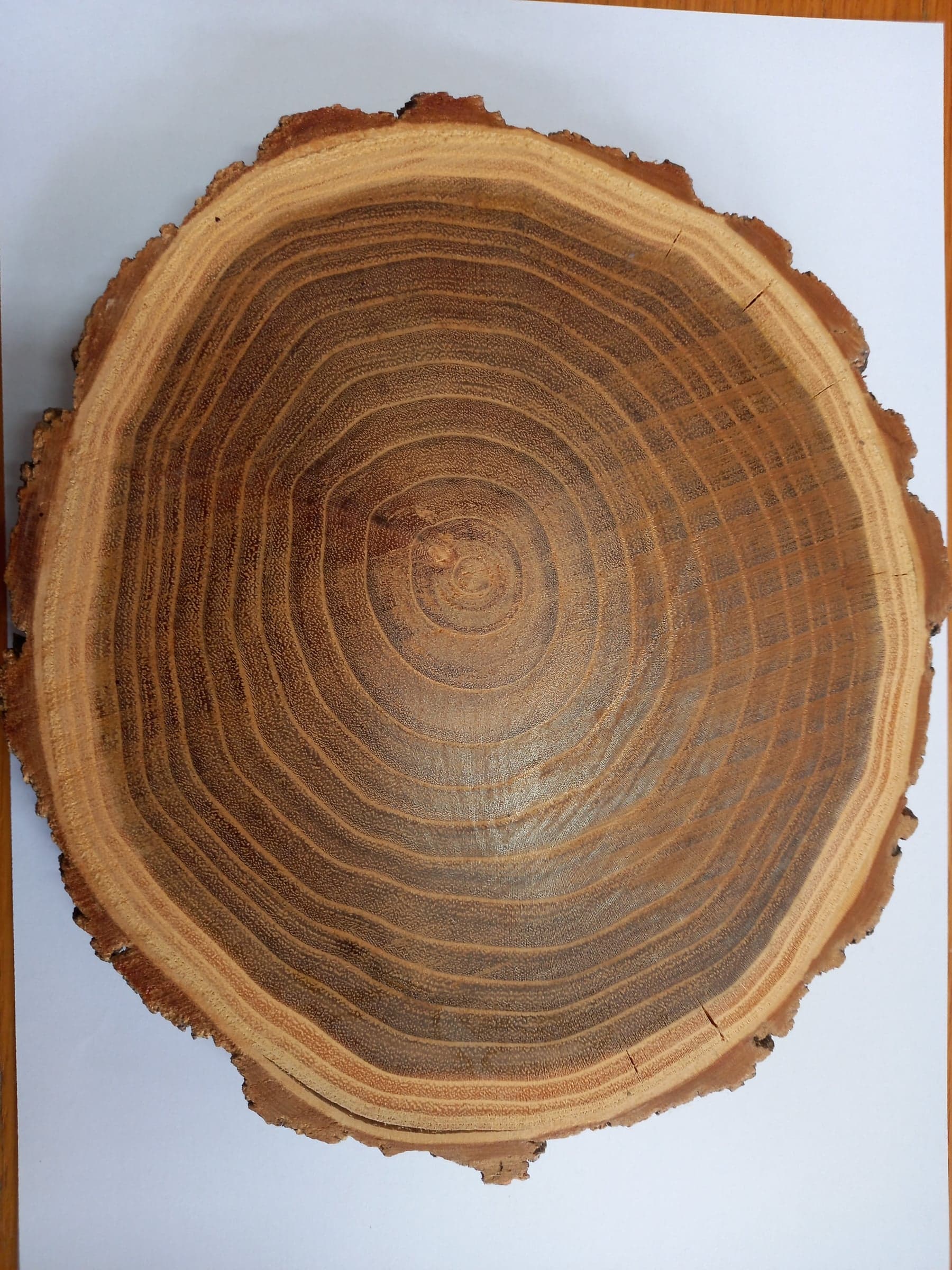
Kresba dřeva Black Locust / Robinia

Dexys-2019, via Wikimedia Commons

Přednosti

  • Odolné venkuTřída 1 z 5 podle EN 350: venku odolává hnilobě bez ošetření.
  • Velmi stabilníMalý sezónní pohyb. Hodí se pro široké desky a přesné spoje.

Originally North American, but naturalised and commercially grown across central and eastern Europe for over two centuries. Hungary, Romania, Bulgaria, and Slovakia all have working forestry programmes around it. For sourcing and EUDR purposes we treat it as European stock, the supply chain sits inside the EU and the paperwork follows.

  • IUCN Least Concern, no CITES listing. Grown commercially across central and eastern EU, often on marginal land where slower-growing natives struggle. Class 1 durability means outdoor pieces last decades without preservative chemistry, which is its own sustainability argument. EUDR-wise, the supply chain is short and EU-internal, provenance is straightforward to document.

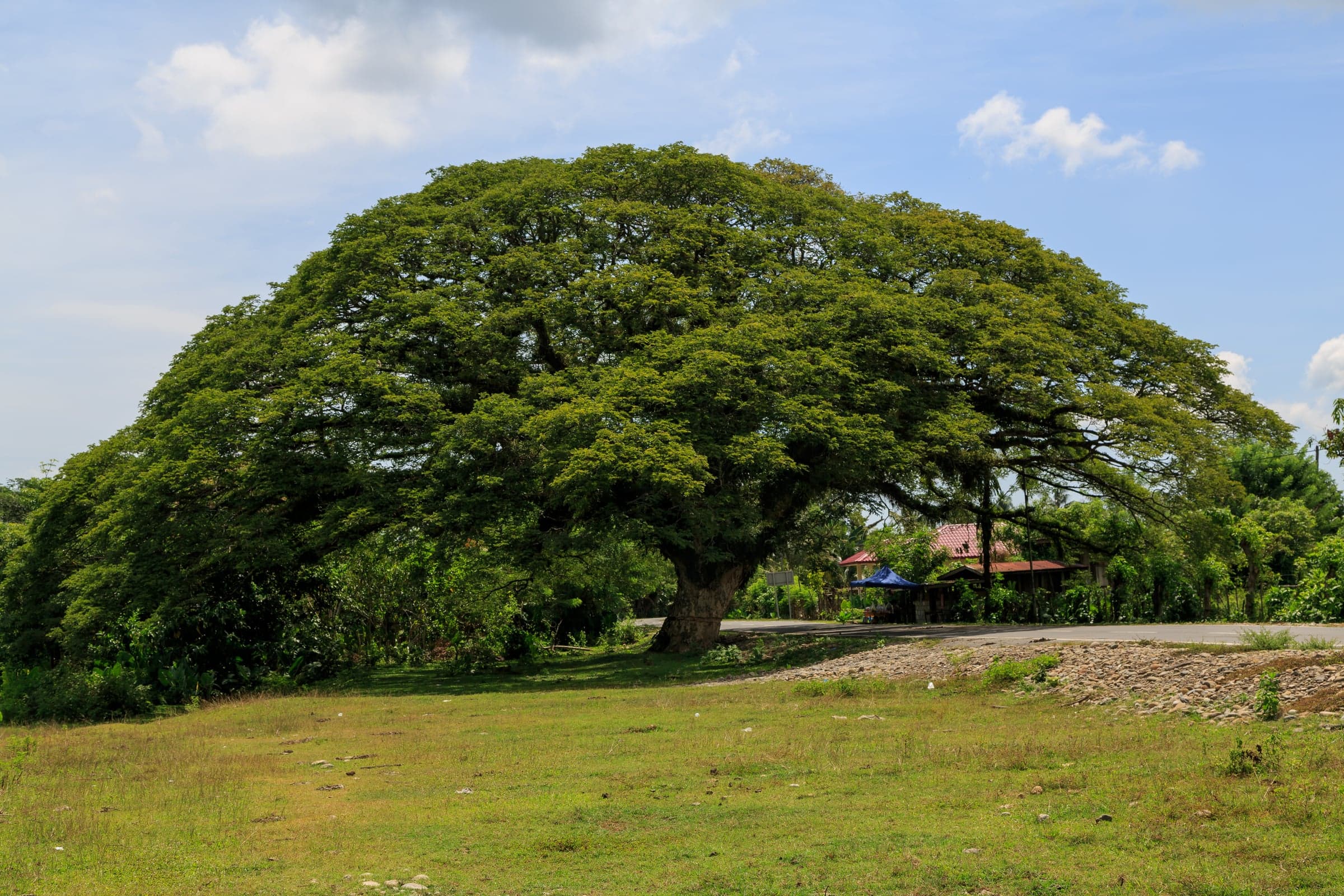
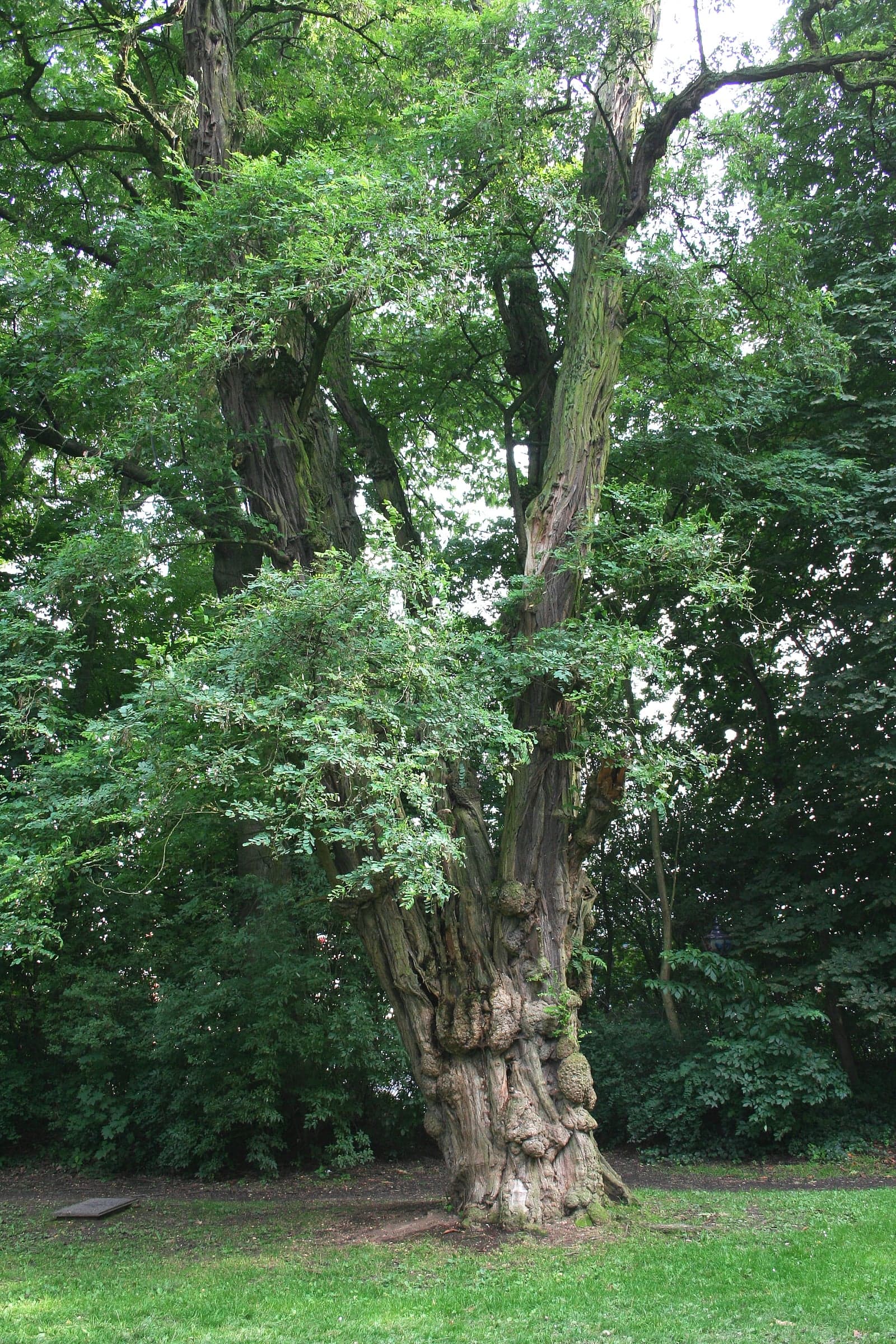
  • Strom Black Locust / Robinia

    Jean-Pol GRANDMONT, via Wikimedia Commons

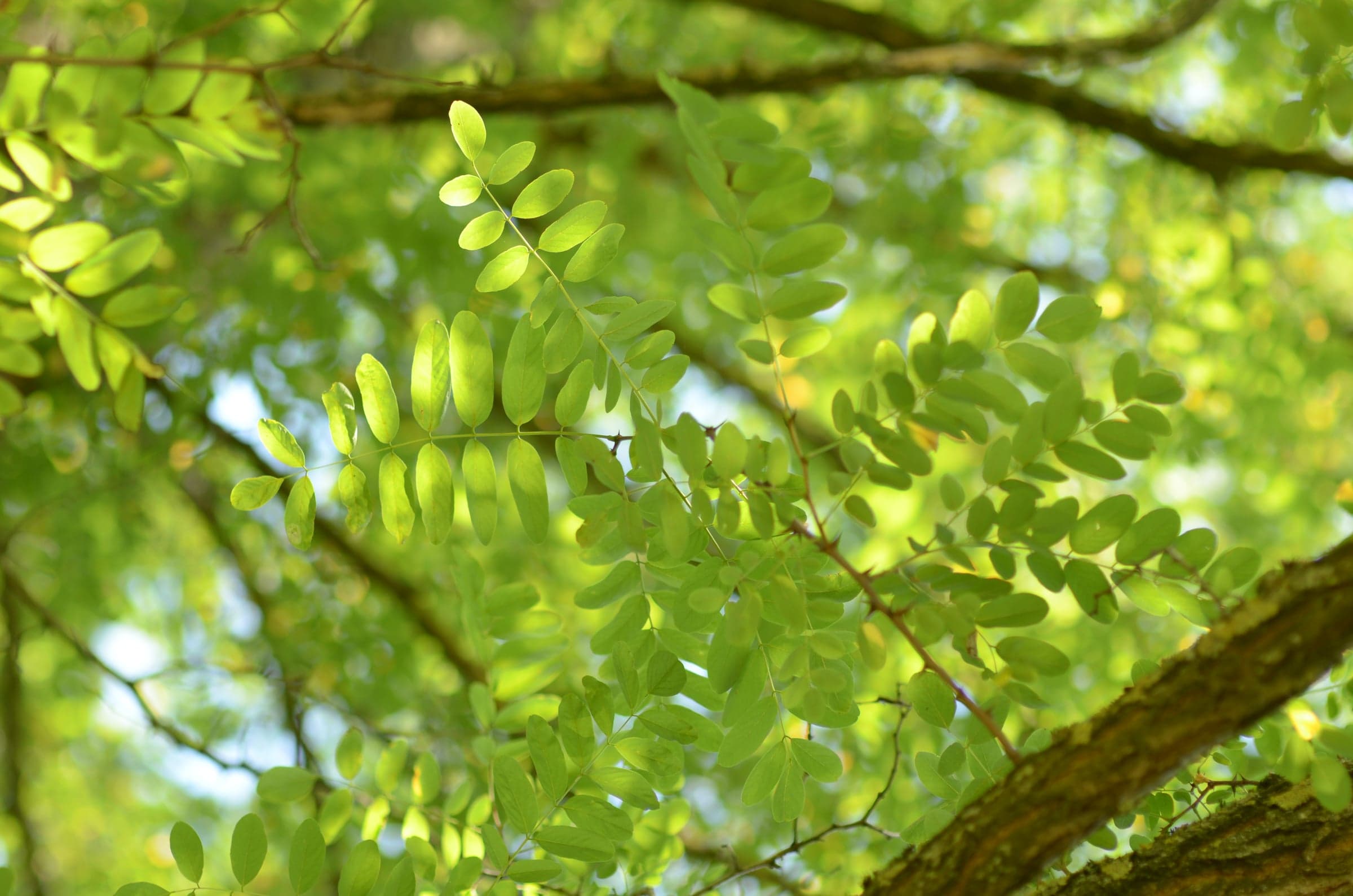
    Black Locust / Robinia: List
    List
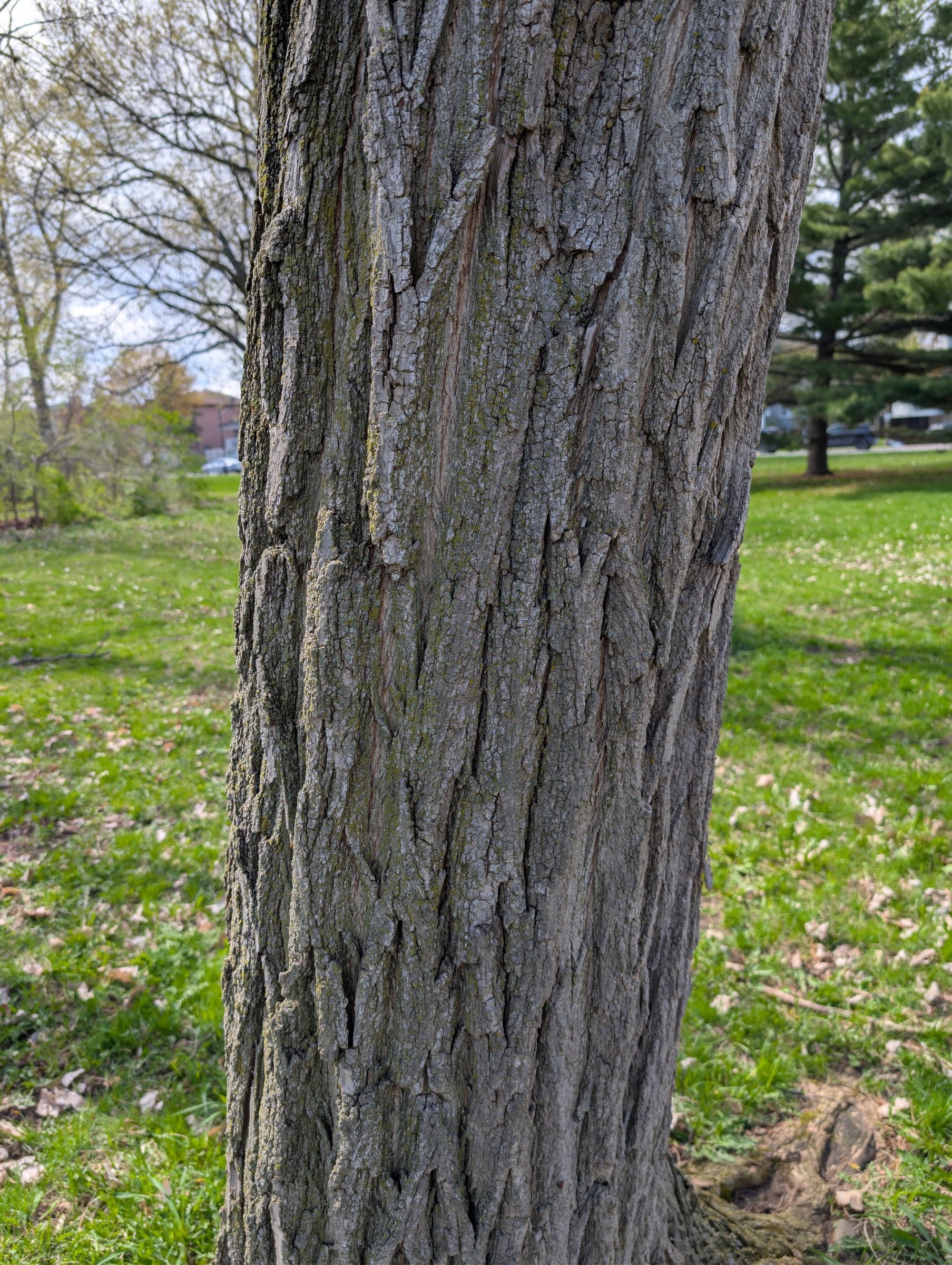
    Black Locust / Robinia: Kůra
    Kůra

    For slab work, the form problem is the main constraint. Wide clean robinia is genuinely uncommon.

    Reading a robinia slab#

    Heartwood runs greenish yellow when fresh, darkening to a warm golden brown and eventually a russet with light exposure. Sapwood is narrow and pale. The wood has a natural lustre and fluoresces under UV, which is a quick identification test.

    Grain is often wavy or interlocked, and the ring porous structure gives a bold figure not unlike ash or oak.

    Check carefully for spiral grain and twist along the length. It is the characteristic fault of the species and it will show itself after machining if it was not visible before.

    At the bench#

    Expect to work for it. At 7,560 N with frequently interlocked grain, robinia blunts cutters faster than anything else here and tears out where the grain reverses.

    Sharp tooling is not advice, it is the requirement. Light cuts, a high angle plane or a scraper for the final surface, and carbide rather than steel where you have the choice. A helical cutterhead makes a substantial difference.

    It turns nicely and it steam bends excellently, one of the best European species for it. Combined with its durability, that makes it a strong candidate for exterior curved work where oak is the conventional choice but does not last as long.

    It glues and screws well, though pilot holes are essential at this density.

    Toxicity#

    The bark, leaves and seeds are toxic, containing robin and robinin. The wood is recorded in this catalogue as not food safe and the dust is irritant.

    Do not use robinia for chopping boards, food contact surfaces, or anything a child might mouth. Run extraction when machining.

    Stability#

    Volumetric shrinkage of 10.0 percent is among the lowest in this catalogue, with tangential at 6.5 percent against radial at 4.0 percent. That is both a low total and a narrow differential, which means robinia is dimensionally well behaved once dry, unusual for a wood this dense.

    Drying it is another matter: the density and frequent spiral grain make it slow and prone to distortion.

    The invasive question#

    Robinia is native to North America and was introduced to Europe in the seventeenth century. It spreads readily by root suckers and fixes nitrogen, altering soil chemistry, and several European countries list it as invasive.

    That is an ecological concern about planting, not a restriction on timber. Harvesting established stands is generally viewed favourably, and using the wood is not in tension with the conservation position.

    Where Robinia is the right answer#

    Outdoor furniture, decking, garden structures, boat components, fence posts, and any exterior application where a European species with tropical grade durability is wanted. Also steam bent exterior work.

    It is the wrong answer for food contact, for large matched volumes, and where your tooling is not up to it.

    Sourcing and EUDR#

    Not CITES listed and assessed as Least Concern. Abundant across central and southeastern Europe, particularly Hungary, which has the largest managed robinia resource in the world. Supply is straightforward and documentation is simple.

    Can it be steam bent?

    +

    It is one of the best European species for it. Combined with its durability that makes it a strong choice for exterior curved work such as boat parts and garden structures, where oak would be the conventional answer but robinia lasts longer.

    Sesychání podél letokruhů. Takto pracují tangenciálně řezané fošny a většina fošen s přírodní hranou.
    6.5–8.0 %
    Objemové sesycháníCelková změna objemu od čerstvého stavu po vysušení v sušárně. Nižší hodnota znamená větší stabilitu.10.0–12.0 %
    Přirozená trvanlivost (EN 350)Evropská norma přirozené odolnosti proti hnilobě od 1 (velmi trvanlivé) do 5 (netrvanlivé).Class 1 — Very durable

    Zdroje

    • The Wood Database(citováno 2026-05-09)
    • USDA FPL Wood Handbook FPL-GTR-190 (2010)(citováno 2026-05-09)
    • Meier, E. — WOOD! Identifying and Using Hundreds of Woods Worldwide (2015)(citováno 2026-05-09)

    Stručný přehled

    Úrovně používají pro všechny dřeviny v nabídce KORENA stejná pásma, takže je lze přímo porovnávat. Pod každou je uvedena naměřená hodnota.
    TvrdostOdolnost proti otlačení a opotřebeníVelmi tvrdé

    Tvrdost podle Janky 7 560 N

    O 52 % tvrdší než dub letní

    HmotnostJak těžká je fošna při zvedáníVelmi těžké

    770 kg/m³

    StabilitaJak málo pracuje v průběhu ročních obdobíStabilní

    11,0 % objemového sesychání

    ZpracováníŘezání, hoblování, broušení, lepeníNáročné

    průměr zpracování 3,4 / 5

    Použití venkuPřirozená odolnost proti hnilobě, EN 350Do exteriéru, dlouhá životnost

    třída 1 podle EN 350

    • Řezání · DobráJak čistě se řeže a jak moc namáhá pilové nástroje.1 = obtížné · 5 = výborné
    • Hoblování · DobráJak hladký povrch po hoblování zůstává a jak často se vytrhávají vlákna.1 = obtížné · 5 = výborné
    • Broušení · DobráJak rychle se vybrousí dohladka bez zanášení brusiva.1 = obtížné · 5 = výborné
    • Soustružení · Velmi dobráJak se řeže a dokončuje na soustruhu.1 = obtížné · 5 = výborné
    • Řezbářství · DobráJak dobře drží ostré detaily při práci dlátem.1 = obtížné · 5 = výborné
    • Lepení · Velmi dobráJak spolehlivě drží lepené spoje.1 = obtížné · 5 = výborné
    • Držení šroubů / hřebíků · Velmi dobráJak dobře drží šrouby a hřebíky bez rozštípnutí.1 = obtížné · 5 = výborné
    • Ohýbání párou · VýbornáJak dobře se po napaření ohýbá.1 = obtížné · 5 = výborné

    Za kolik se dřevo Black Locust / Robinia právě prodává v Evropě za metr krychlový bez DPH. Klepnutím na cenu zobrazíte podrobnosti.

    • Nejlepší kulatina v aukciVybraná kulatina vysoké jakosti prodávaná v nabídkových aukcích, hlavně výrobcům dýh a nábytku. Z takové kulatiny se řežou fošny.Většina cen se pohybuje mezi 143 € a 143 €.Vychází z 25 cen z 1 regionu.Nejnovější údaje: 24. 9. 2026
    • Běžná kulatinaVelké objemy standardní kulatiny prodávané vlastníky lesů a státními lesy, především pro stavebnictví a průmysl.Většina cen se pohybuje mezi 11 € a 61 €.Vychází z 17 cen z 1 regionu.Nejnovější údaje: 24. 9. 2026

    Proč fošna stojí více?

    Toto jsou ceny surového dřeva. Fošna je nejlepší řez z kulatiny, který se suší nejméně rok a poté se každý kus samostatně kontroluje a měří. Na fošnu se promění jen malá část každého kmene.

    Zdroj: KORENA Timber Index · Nejnovější údaje: 24. 9. 2026

    Zobrazit všechny regionální ceny
    Dobře se ohýbá
    Pro ohýbání párou má hodnocení 5 z 5. Lze z něj vytvořit i malé poloměry.

    Pozor

    • Dráždivý prachPři broušení nebo obrábění používejte odsávání a ochrannou masku.
    • Dřevo není vhodné pro styk s potravinamiNa prkénka a servírovací nádobí zvolte jinou dřevinu.
    • Rychle tupí ostříJe velmi tvrdé a husté. Nástroje udržujte ostré a pro každý šroub předvrtejte otvor.

    Klepnutím na štítek zobrazíte podrobnosti.