KORENA
MaderaFinished piecesMaterialesAlmacenesRevista

Recibe avisos

Cada tabla es única. Cuando se vende, ya no vuelve. Te avisamos cuando se publican nuevas piezas: nuevas llegadas, especies y tablas adecuadas para un proyecto.

Unos pocos correos al mes. Sin spam; puedes darte de baja cuando quieras.

KORENA, madera noble de primera calidad

Una pieza cada vez.

Madera noble de primera calidad verificada, vendida pieza a pieza. Cada tabla se fotografía, se mide y se envía desde el almacén asociado con un pasaporte de la madera.

Comprar

  • Ver productos
  • Archivo de piezas vendidas
  • Seguir pedido

Aprender

  • Revista
  • Guías de especies
  • Glosario
  • Comparar
  • Autores

Ayuda

  • Quiénes somos
  • Cómo funciona
  • Hazte almacén asociado
  • Solicitar una tabla
  • Asistencia
  • Plantillas de documentos
  • Prensa

Comprar

  • Condiciones de venta
  • Derecho de desistimiento
  • Devoluciones y garantía
  • Envío y entrega

Confianza

  • Política de privacidad
  • Política de cookies
  • Procedencia de la madera y EUDR
  • Accesibilidad

Aviso legal

  • Aviso legal
  • Uso aceptable
  • Propiedad intelectual y contenido

© 2026 KORENA. Todos los derechos reservados.

Gestionado por Martial Labs Ltd. (BG, EIK 207453941). KORENA es un nombre comercial de Martial Labs Ltd.

Respetamos tu privacidad

Usamos cookies esenciales para que el sitio funcione. Con tu permiso, también usaríamos cookies para análisis, contenido personalizado y publicidad. Puedes cambiar de opinión en cualquier momento en la página de preferencias de consentimiento. Consulta nuestra política de cookies y nuestra política de privacidad.

  1. Inicio
  2. /
  3. Especies
  4. /
  5. Black Locust / Robinia

Robinia pseudoacacia

Black Locust / Robinia

Class 1 durability from a tree that grows in Europe. One of the only EU-native options that survives outdoors untreated, and a credible domestic answer to tropical exotics like teak.

  • Cultivada y aprovechada en Europa.
  • Grupo botánico. Las maderas blandas proceden de coníferas y las duras, de árboles frondosos.
  • Familia botánica a la que pertenece la especie.
Avísame cuando llegueEspecie de referencia. Ahora mismo no hay piezas en stock.
  • Adecuación al proyecto
  • En stock
  • Aspecto
  • Cómo trabajarla
  • Movimiento
  • Precio
  • Seguridad y abastecimiento
  • Preguntas
  • Datos técnicos

¿Es adecuada para tu proyecto?

Ideal para

  • Outdoor benches and garden furniture that need to survive without preservative treatment
  • Thresholds, sills, and entry pieces that take weather and wear
  • Fence posts and landscape elements designed as visible objects, not buried hardware
  • High-wear interior tops, kitchen islands, workshop benches, retail counters
  • Tool handles and turned forms where toughness matters
  • Steam-bent components, chair backs, hoops, curved frames

No hay Black Locust / Robinia en la selección actual

Especies similares en stock

Ahora mismo no hay Black Locust / Robinia. Estas especies sirven para los mismos proyectos y tienen piezas disponibles.
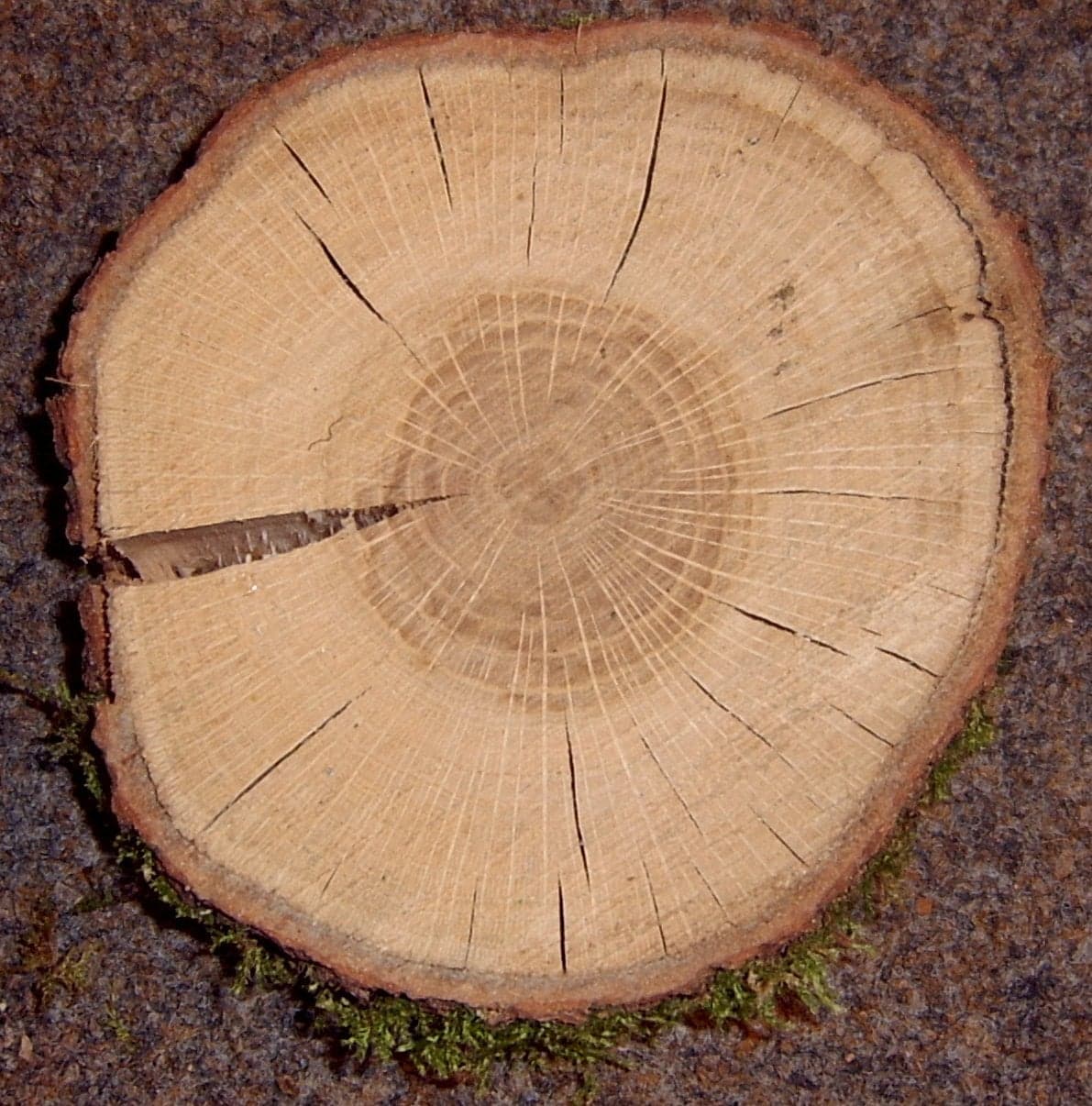
  • Veta de European Oak

    European Oak

    Quercus robur

    6 piezas

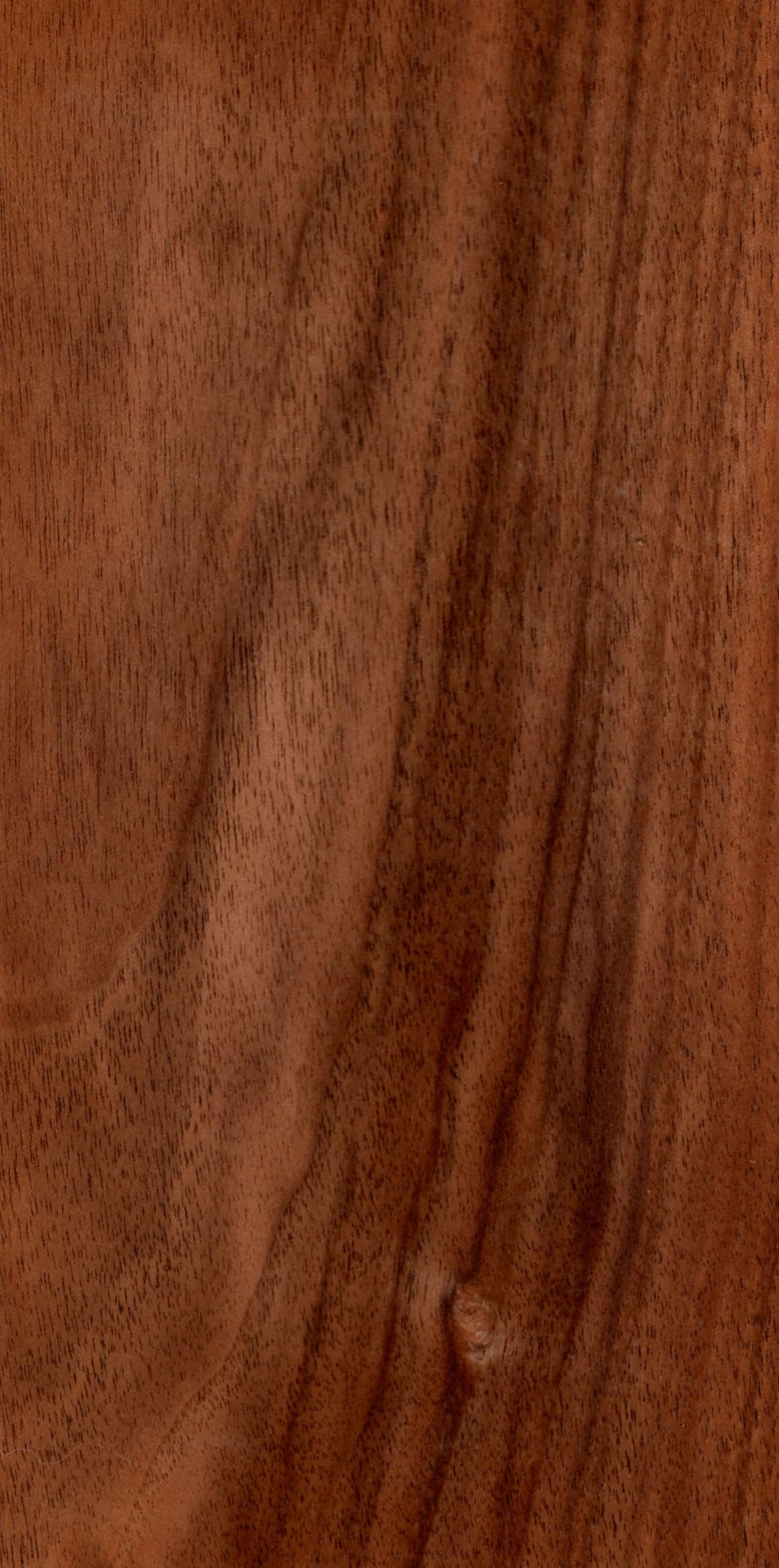
  • Veta de European Walnut

    European Walnut

    Juglans regia

    9 piezas

  • Veta de Saman

    Saman

    Samanea saman

    4 piezas

Recibe avisos sobre Black Locust / Robinia

Te enviamos un correo cuando lleguen a KORENA nuevas tablas de Black Locust / Robinia. Cada pieza es única, por lo que conviene enterarse pronto.

Unos pocos correos al mes. Sin spam; puedes darte de baja cuando quieras.

Aspecto de la madera

Qué aspecto tiene

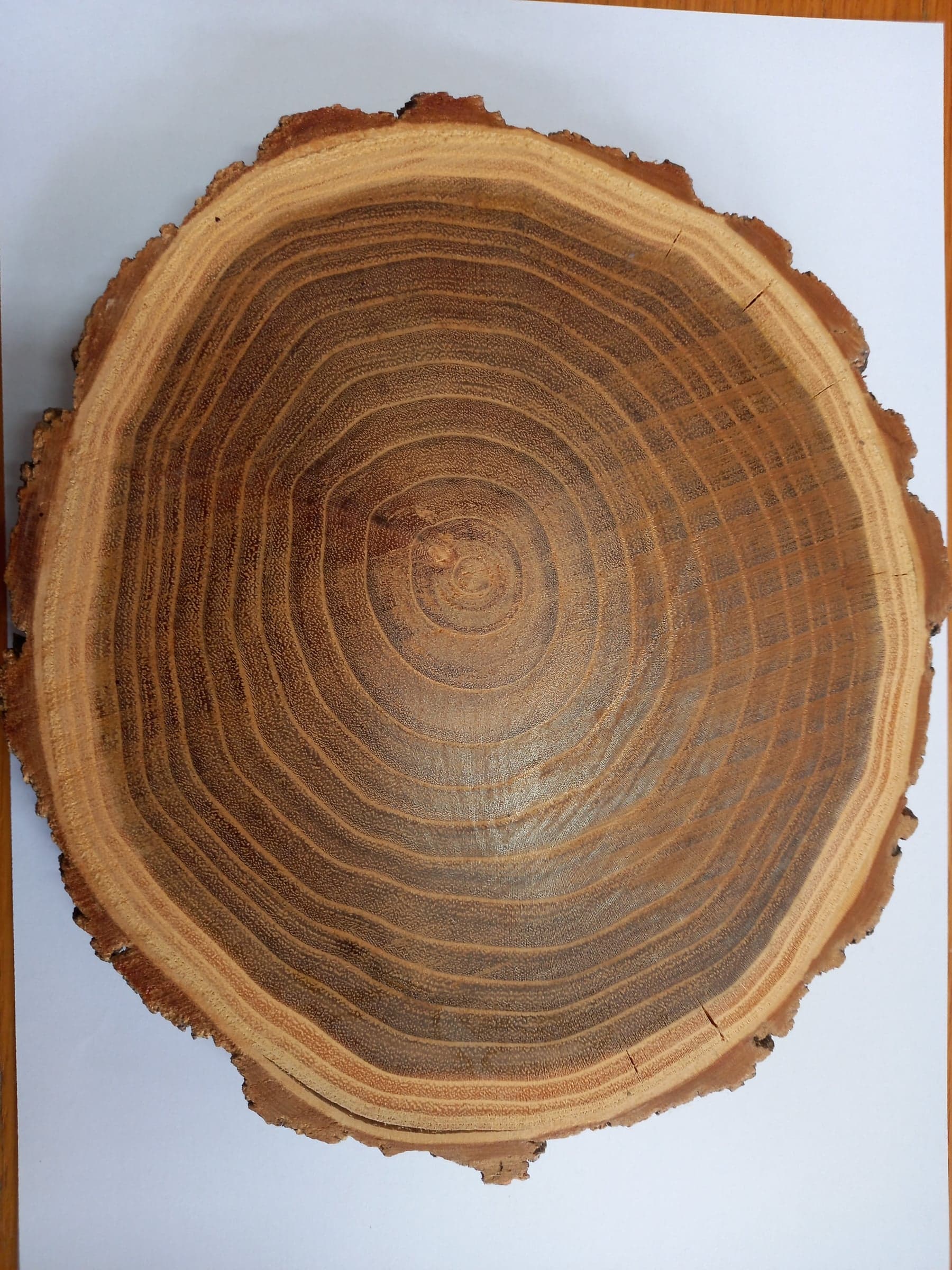
Straight grain, coarse open texture, and a heartwood that lands somewhere between olive-yellow and greenish-gold when freshly cut. UV does the work over the next few months, the green calms down and the wood warms into a deep amber. Sapwood is narrow and pale yellow. The contrast between the two reads cleanly on wide slabs.

  • Olive-yellow to greenish-gold heartwood when freshly milled
  • Warms to a deep amber over weeks of light exposure
  • Narrow pale yellow sapwood, cleanly demarcated from the heartwood
  • Coarse open pores read clearly under oil finishes
  • Straight grain, coarse texture; very durable.

Cómo trabajarla

Cómo trabajarla

Honest warning, this is a hard, tough wood and it will blunt edges. Carbide tooling is sensible, and HSS needs frequent sharpening. Sawing, planing, and sanding all sit around average difficulty for the effort, but tool wear is well above average. It glues and screws cleanly once you pre-drill, and it turns nicely. The standout is steam-bending. Robinia is one of the best European species for it, on a par with white oak.

Acabado

Takes oils and hardwax oils well; the open pores welcome them. The early colour shift is dramatic, so finish a test piece and leave it in daylight for a fortnight before committing, what you see on the bench is not what the client will see in a month. UV-blocking finishes slow the amber drift if a greener tone is wanted. Sanding to 180 is usually enough; finer grits can burnish the surface and fight oil uptake.

Secado

Dries slowly and benefits from patience. Surprisingly stable for its hardness once acclimatised, radial movement around 4–5% and tangential 6.5–8% are modest for a 770 kg/m³ wood. Stack with care, weight the top, and expect some end-checking if rushed. Kiln schedules should be conservative.

¿Cuánto se moverá?

La madera se hincha y se contrae a lo ancho cuando el aire gana o pierde humedad. Calcula el movimiento estacional de un tablero de Black Locust / Robinia antes de diseñar las fijaciones.

Corte
Dónde estará

Movimiento estacional previsto

unos 8,3 mm

Fija el tablero con lengüetas o soportes ranurados, no con cola ni tornillos apretados.

Modelo de contracción lineal: ancho × (contracción ÷ 28 % de saturación de la fibra) × variación estacional de humedad. Usa una contracción tangencial del 7,25 % para Black Locust / Robinia. Es una estimación para planificar, no una garantía.

Cuánto cuesta

Seguridad y abastecimiento

  • Cultivada y aprovechada en Europa.
  • Estado en la Lista Roja de la UICN: evaluación mundial de conservación de esta especie.
  • Not recommended for direct food contact. The bark, leaves, and seeds carry toxic compounds, and while the heartwood is considered the safer part of the tree, we would not specify it for cutting boards or utensils. The dust is a known irritant and sensitiser, some woodworkers report nausea from prolonged exposure. Run dust extraction and a fitted respirator, not just a paper mask.

Leer la guía completaNotas detalladas sobre el dibujo, el cambio de color, el trabajo y la estabilidad.+

What Robinia actually is#

Robinia pseudoacacia, black locust, is the strongest and most durable timber in this catalogue, and it grows across Europe like a weed.

The numbers are not close. At 7,560 N Janka it is the hardest measured species here. Its modulus of rupture of 130 MPa and elastic modulus of 14.0 GPa are the highest measured figures in the catalogue. And it is rated decay class 1, very durable, matched only by yew.

That combination, tropical grade durability from a fast growing European species, is unusual enough to be worth stating plainly: robinia does what teak and ipe do, without a tropical supply chain.

Why it is not more widely used#

Three reasons, none of them about performance.

It is hard to convert. At this density and hardness it blunts tooling fast and asks a great deal of machines, and small sawmills often decline it.

It grows badly for timber. Robinia is prone to twisting, forking and spiral grain, so long straight clean lengths are scarce even where the tree is abundant. Most of what is cut ends up as fence posts and stakes, applications where its durability is used and its form does not matter.

It has an image problem. In much of Europe it is regarded as an invasive nuisance rather than a timber species, which keeps demand and therefore processing infrastructure low.

Preguntas de compradores

Preguntas de compradores

Is Robinia really as durable as tropical hardwood?

+

Yes, and that is its main argument. It is rated decay class 1, very durable, the highest rating in this catalogue alongside yew, and it performs comparably to teak or ipe in ground contact. Because it grows fast across Europe it offers tropical grade durability without a tropical supply chain, which is a rare combination under EUDR.

How hard is it?

+

At 7,560 N Janka it is the hardest measured wood in this catalogue, above hornbeam at 7,260 N and half again as hard as European oak. Its modulus of rupture of 130 MPa and stiffness of 14.0 GPa are also the highest measured figures here. It is a genuinely formidable timber.

Is it toxic?

+

The bark, leaves and seeds are toxic, containing robin and robinin, and the wood is recorded here as not food safe. Dust is irritant. Do not use it for chopping boards, food contact surfaces or anything a child might chew, and run extraction when machining.

Why is it treated as invasive in some countries?

+

Robinia is native to North America and was introduced to Europe in the seventeenth century. It spreads readily by root suckers and fixes nitrogen, altering soil chemistry, and several European countries list it as invasive. That is an ecological concern about planting rather than a restriction on timber, and harvesting established stands is generally viewed favourably.

Propiedades mecánicas

Datos técnicos

Valores de referencia publicados. Cuando las fuentes discrepan, se muestra el intervalo y se usa el valor habitual en las escalas anteriores.

Densidad (kg/m³)Masa por metro cúbico con aproximadamente un 12 % de humedad. La madera más pesada suele ser más dura y resistente.700–830 kg/m³habitual: 770 kg/m³
Dureza Janka (N)Fuerza necesaria para hundir una bola de acero hasta la mitad en la madera. Es la medida estándar de resistencia a las abolladuras.7,000–8,200 Nhabitual: 7560 N
MOR: módulo de rotura (MPa)Resistencia a la flexión: la carga a la que se rompe una viga.130–150 MPa
MOE: módulo de elasticidad (GPa)Rigidez a la flexión: cuánto se comba un estante o tablero bajo carga.14.0–16.0 GPa
Contracción radialContracción perpendicular a los anillos de crecimiento, desde verde hasta completamente seca. Es la que afecta a las tablas aserradas radialmente.4.0–5.0 %
Veta de Black Locust / Robinia

Dexys-2019, via Wikimedia Commons

Ventajas

  • Duradera en exterioresClase 1 de 5 según EN 350: resiste la pudrición al aire libre sin tratamiento.
  • Muy establePoco movimiento estacional. Adecuada para tableros anchos y uniones ajustadas.

Originally North American, but naturalised and commercially grown across central and eastern Europe for over two centuries. Hungary, Romania, Bulgaria, and Slovakia all have working forestry programmes around it. For sourcing and EUDR purposes we treat it as European stock, the supply chain sits inside the EU and the paperwork follows.

  • IUCN Least Concern, no CITES listing. Grown commercially across central and eastern EU, often on marginal land where slower-growing natives struggle. Class 1 durability means outdoor pieces last decades without preservative chemistry, which is its own sustainability argument. EUDR-wise, the supply chain is short and EU-internal, provenance is straightforward to document.

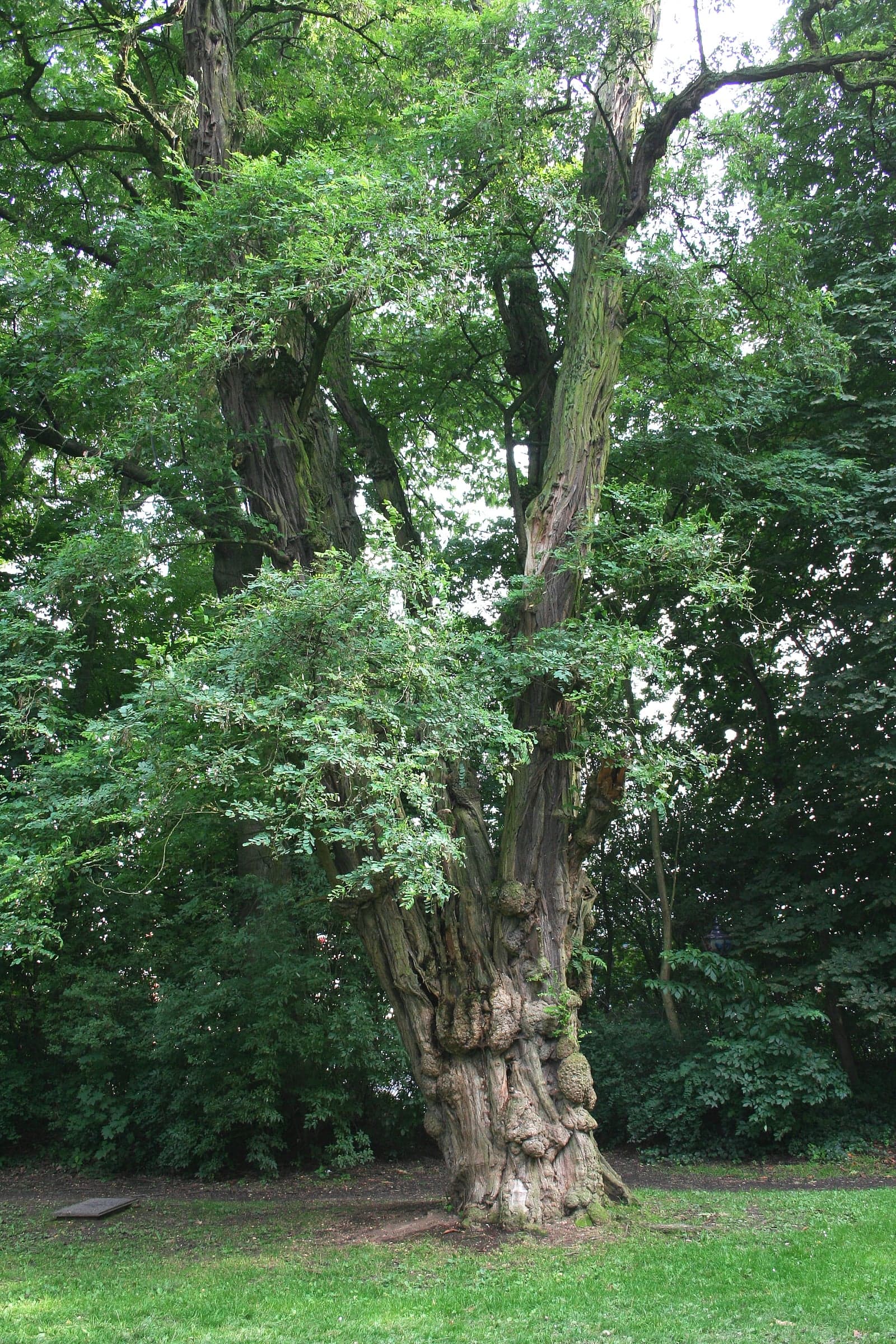
  • Árbol de Black Locust / Robinia

    Jean-Pol GRANDMONT, via Wikimedia Commons

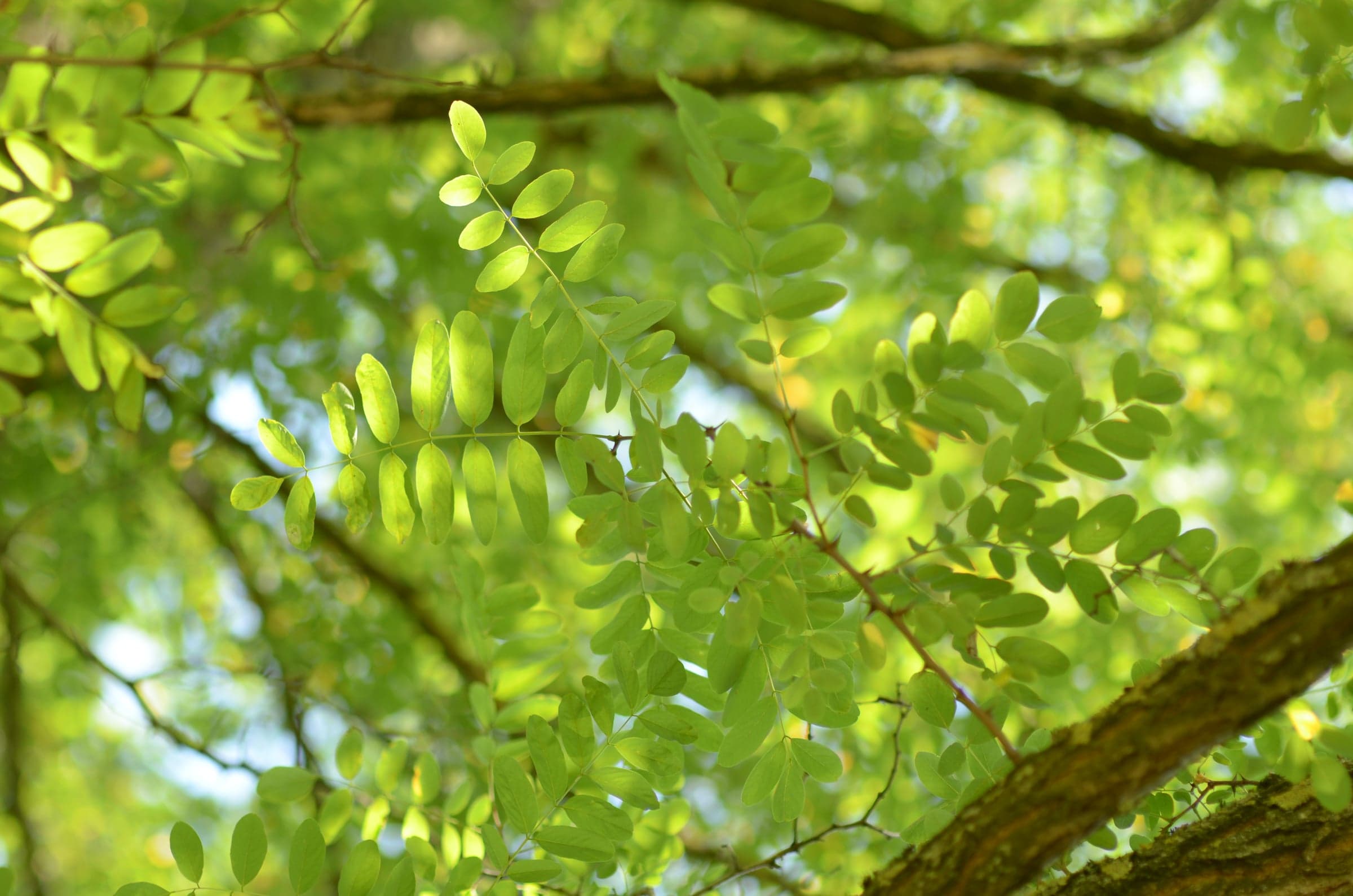
    Black Locust / Robinia: Hoja
    Hoja
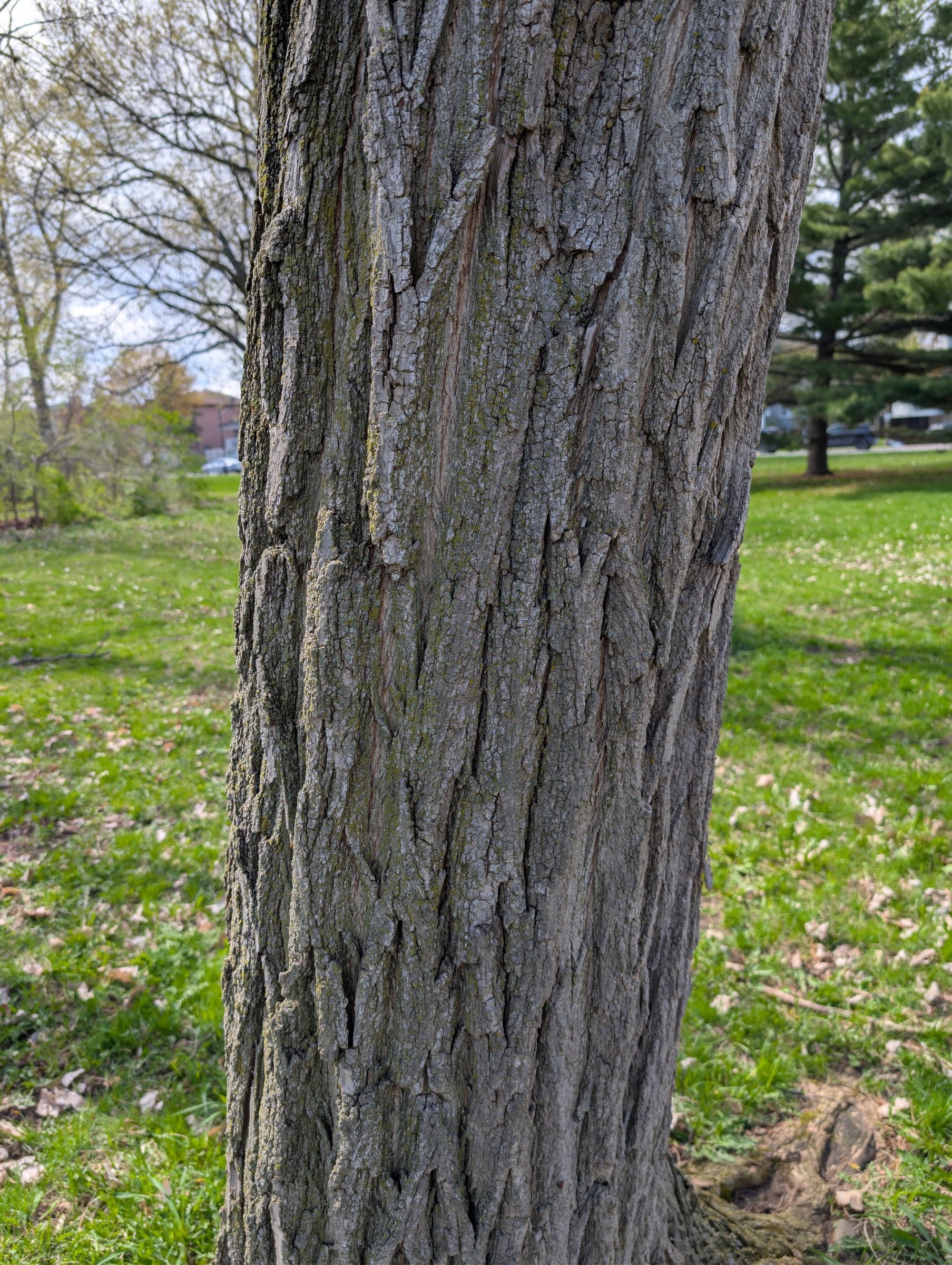
    Black Locust / Robinia: Corteza
    Corteza

    For slab work, the form problem is the main constraint. Wide clean robinia is genuinely uncommon.

    Reading a robinia slab#

    Heartwood runs greenish yellow when fresh, darkening to a warm golden brown and eventually a russet with light exposure. Sapwood is narrow and pale. The wood has a natural lustre and fluoresces under UV, which is a quick identification test.

    Grain is often wavy or interlocked, and the ring porous structure gives a bold figure not unlike ash or oak.

    Check carefully for spiral grain and twist along the length. It is the characteristic fault of the species and it will show itself after machining if it was not visible before.

    At the bench#

    Expect to work for it. At 7,560 N with frequently interlocked grain, robinia blunts cutters faster than anything else here and tears out where the grain reverses.

    Sharp tooling is not advice, it is the requirement. Light cuts, a high angle plane or a scraper for the final surface, and carbide rather than steel where you have the choice. A helical cutterhead makes a substantial difference.

    It turns nicely and it steam bends excellently, one of the best European species for it. Combined with its durability, that makes it a strong candidate for exterior curved work where oak is the conventional choice but does not last as long.

    It glues and screws well, though pilot holes are essential at this density.

    Toxicity#

    The bark, leaves and seeds are toxic, containing robin and robinin. The wood is recorded in this catalogue as not food safe and the dust is irritant.

    Do not use robinia for chopping boards, food contact surfaces, or anything a child might mouth. Run extraction when machining.

    Stability#

    Volumetric shrinkage of 10.0 percent is among the lowest in this catalogue, with tangential at 6.5 percent against radial at 4.0 percent. That is both a low total and a narrow differential, which means robinia is dimensionally well behaved once dry, unusual for a wood this dense.

    Drying it is another matter: the density and frequent spiral grain make it slow and prone to distortion.

    The invasive question#

    Robinia is native to North America and was introduced to Europe in the seventeenth century. It spreads readily by root suckers and fixes nitrogen, altering soil chemistry, and several European countries list it as invasive.

    That is an ecological concern about planting, not a restriction on timber. Harvesting established stands is generally viewed favourably, and using the wood is not in tension with the conservation position.

    Where Robinia is the right answer#

    Outdoor furniture, decking, garden structures, boat components, fence posts, and any exterior application where a European species with tropical grade durability is wanted. Also steam bent exterior work.

    It is the wrong answer for food contact, for large matched volumes, and where your tooling is not up to it.

    Sourcing and EUDR#

    Not CITES listed and assessed as Least Concern. Abundant across central and southeastern Europe, particularly Hungary, which has the largest managed robinia resource in the world. Supply is straightforward and documentation is simple.

    Can it be steam bent?

    +

    It is one of the best European species for it. Combined with its durability that makes it a strong choice for exterior curved work such as boat parts and garden structures, where oak would be the conventional answer but robinia lasts longer.

    Contracción tangencialContracción paralela a los anillos de crecimiento. Es la que afecta a las tablas de aserrado tangencial y a la mayoría de las tablas.
    6.5–8.0 %
    Contracción volumétricaCambio total de volumen desde verde hasta completamente seca. Un valor menor indica más estabilidad.10.0–12.0 %
    Durabilidad natural (EN 350)Norma europea de resistencia natural a la pudrición, de 1 (muy duradera) a 5 (perecedera).Class 1 — Very durable

    Fuentes

    • The Wood Database(consultada el 2026-05-09)
    • USDA FPL Wood Handbook FPL-GTR-190 (2010)(consultada el 2026-05-09)
    • Meier, E. — WOOD! Identifying and Using Hundreds of Woods Worldwide (2015)(consultada el 2026-05-09)

    De un vistazo

    Los niveles usan intervalos fijos para todas las especies que ofrece KORENA, por lo que se pueden comparar directamente. Debajo de cada uno aparece el valor medido.
    DurezaResistencia a abolladuras y desgasteMuy dura

    Dureza Janka: 7560 N

    Un 52 % más dura que el roble europeo

    PesoCuánto pesa una tabla al levantarlaMuy pesada

    770 kg/m³

    EstabilidadCuánto se reduce su movimiento estacionalEstable

    11,0 % de contracción volumétrica

    TrabajoAserrado, cepillado, lijado y encoladoExigente

    3,4 / 5 de media en el banco

    Uso exteriorResistencia natural a la pudrición, EN 350Exterior, larga duración

    Clase 1 según EN 350

    • Aserrado · BuenaLa limpieza del corte y el desgaste que causa en las hojas.1 = difícil · 5 = excelente
    • Cepillado · BuenaLa suavidad de la superficie que deja y cuánto se desgarra la fibra.1 = difícil · 5 = excelente
    • Lijado · BuenaLa rapidez con la que queda lisa sin atascar el papel.1 = difícil · 5 = excelente
    • Torneado · Muy buenaCómo se corta y se acaba en el torno.1 = difícil · 5 = excelente
    • Tallado · BuenaLa nitidez con la que conserva los detalles al trabajarla con gubia.1 = difícil · 5 = excelente
    • Encolado · Muy buenaLa fiabilidad de las uniones encoladas.1 = difícil · 5 = excelente
    • Sujeción de tornillos / clavos · Muy buenaCómo sujeta tornillos y clavos sin rajarse.1 = difícil · 5 = excelente
    • Curvado al vapor · ExcelenteCómo admite las curvas después de aplicar vapor.1 = difícil · 5 = excelente

    Precio actual de venta de la madera de Black Locust / Robinia en Europa, por metro cúbico antes del IVA. Pulsa cualquier precio para ver los detalles.

    • Troncos selectos en subastaTroncos seleccionados de alta calidad vendidos en subastas mediante ofertas, principalmente a fabricantes de chapa y muebles. De troncos así se cortan las tablas.La mayoría de los precios están entre 143 € y 143 €.Basado en 25 precios de 1 región.Últimos datos: 24 sept 2026
    • Troncos corrientesGrandes volúmenes de madera en rollo estándar vendidos por propietarios forestales y organismos forestales estatales, principalmente para la construcción y la industria.La mayoría de los precios están entre 11 € y 61 €.Basado en 17 precios de 1 región.Últimos datos: 24 sept 2026

    ¿Por qué cuesta más una tabla?

    Estos son precios de madera en bruto. Una tabla es el mejor corte de un tronco, secado durante un año o más y después revisado y medido pieza por pieza. Solo una pequeña parte de cada tronco se convierte en tabla.

    Fuente: Índice de la madera de KORENA · Últimos datos: 24 sept 2026

    Ver todos los precios regionales
    Se curva bien
    Valoración de 5 sobre 5 para el curvado al vapor. Admite curvas cerradas.

    Ten en cuenta

    • El polvo es irritanteUsa extracción y mascarilla al lijar o mecanizar.
    • No apta para contacto alimentarioElige otra especie para tablas de cortar y utensilios de servir.
    • Desgasta los filosEs muy dura y densa. Mantén las herramientas afiladas y perfora un orificio guía para cada tornillo.

    Pulsa una etiqueta para ver los detalles.