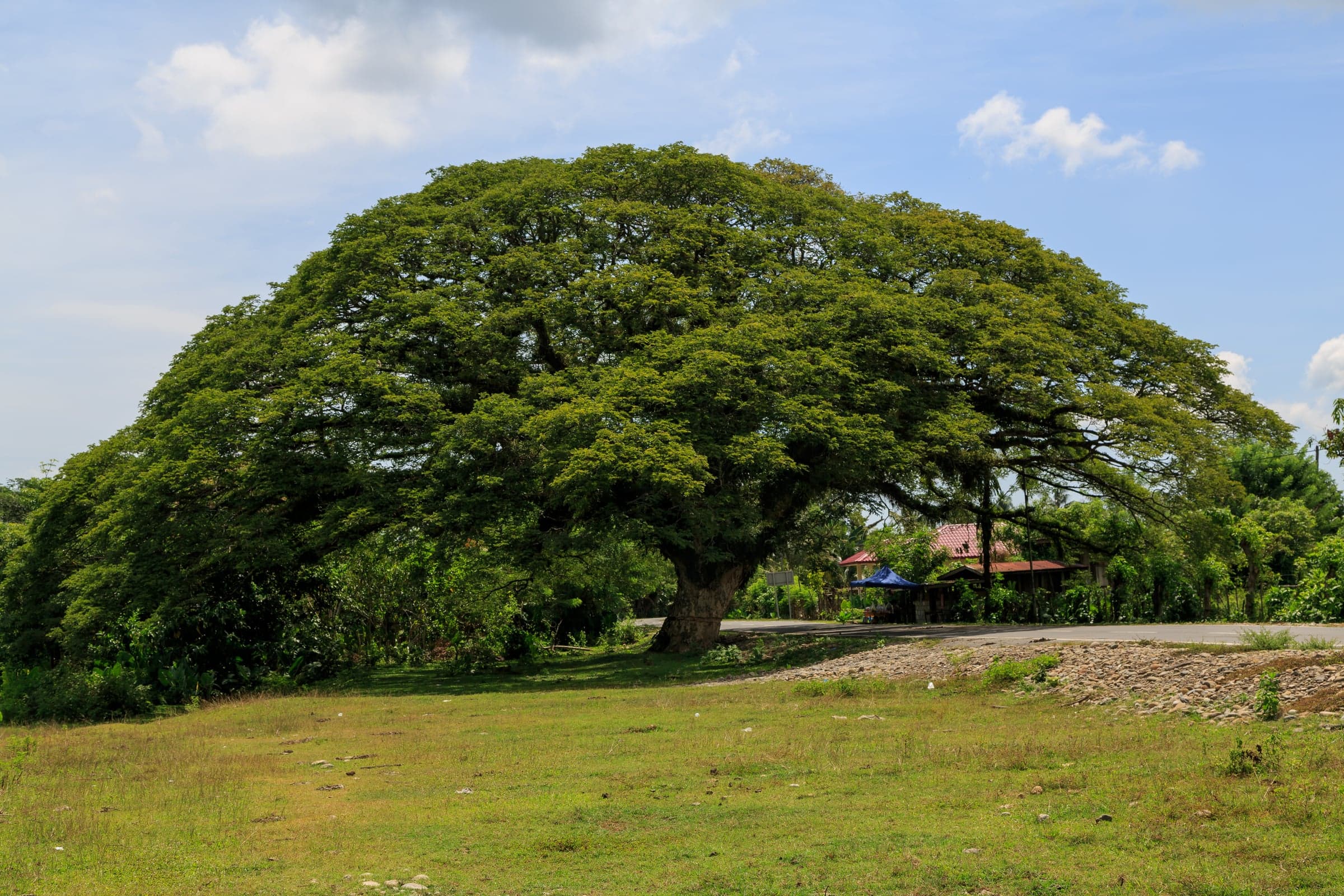
Samanea saman
Metre wide single piece slabs that stay flat, because it moves less than half as much as oak. The one tropical species KORENA lists.
Koksnes izskats
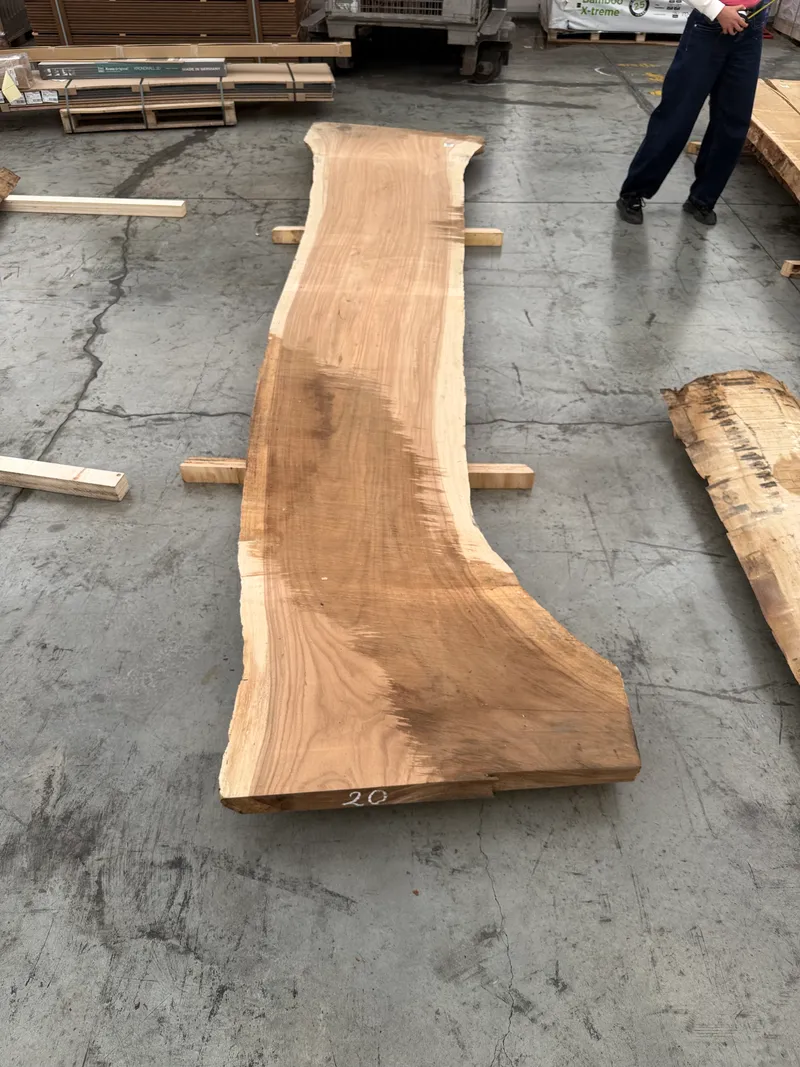
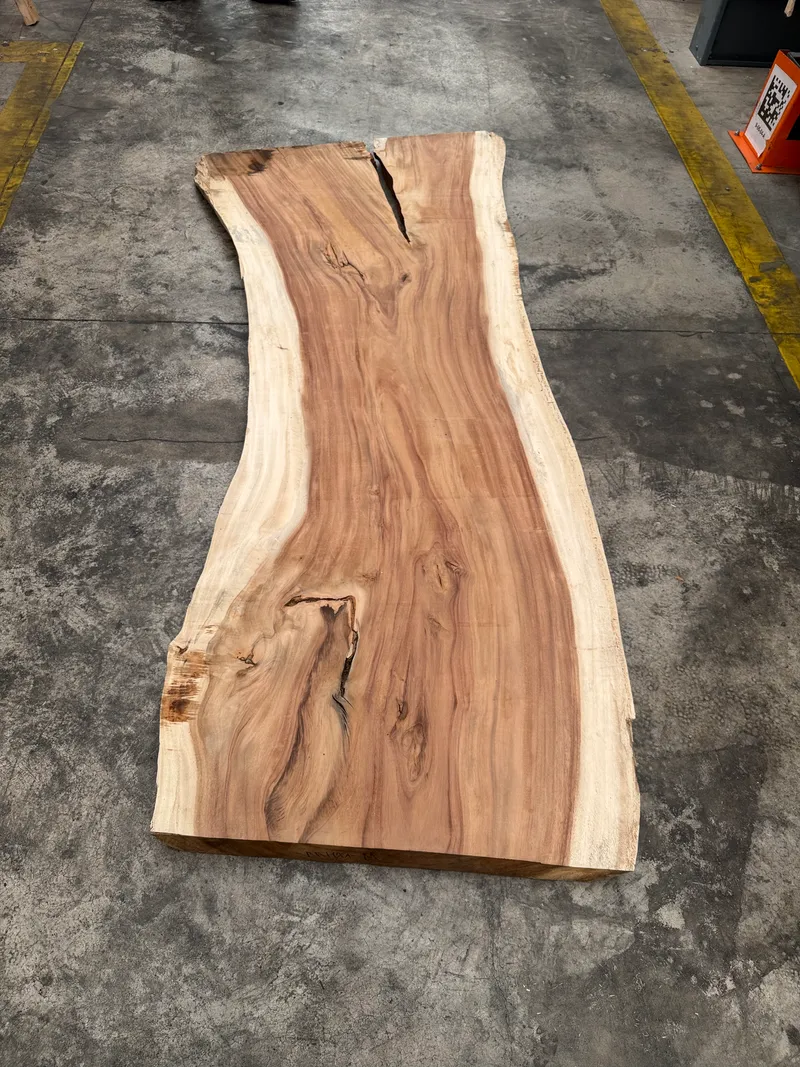
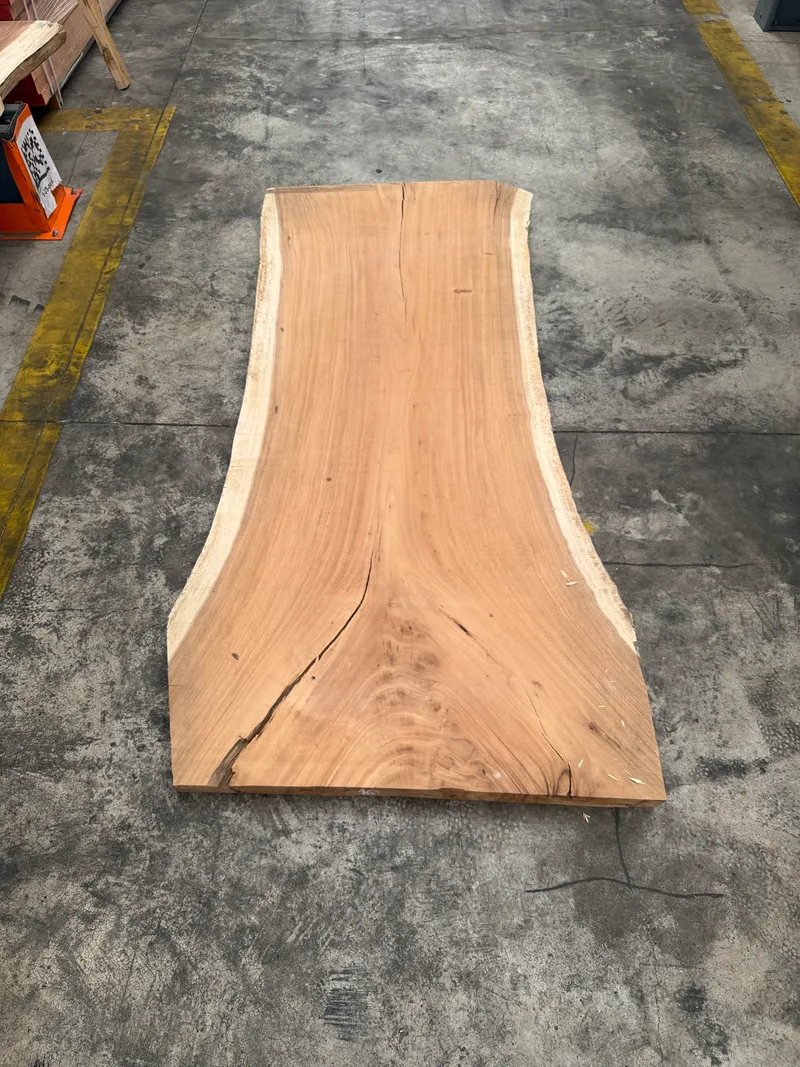
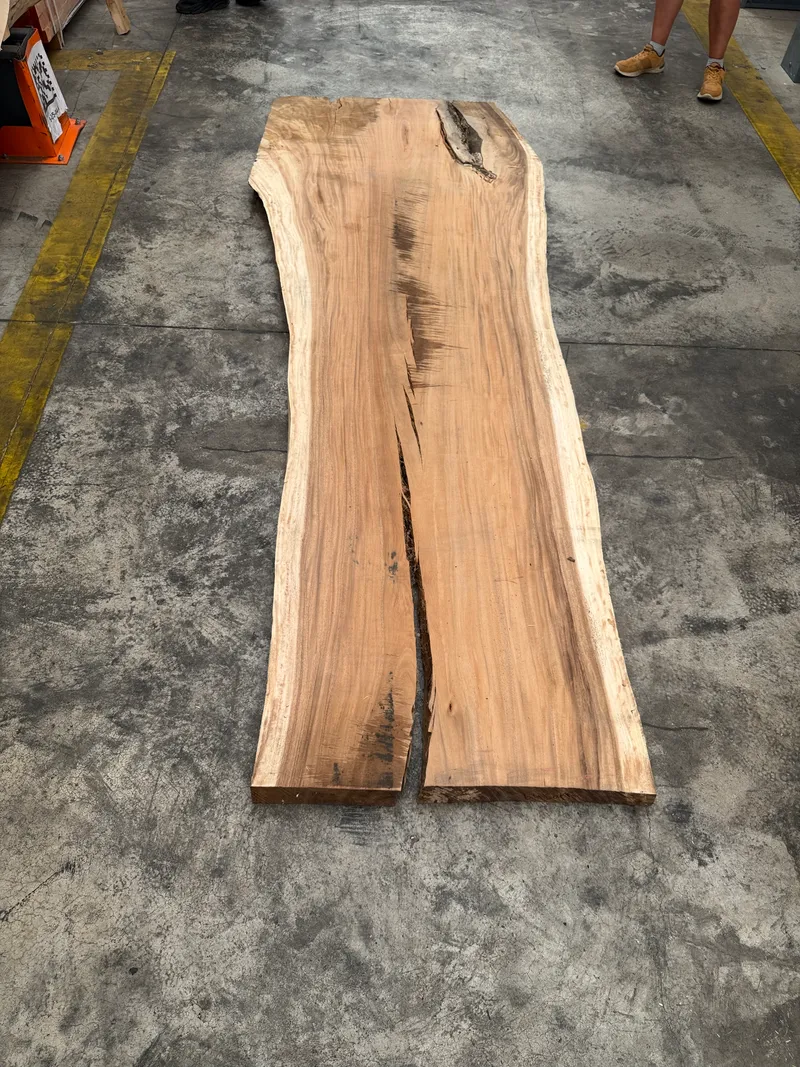
The reason people buy it is width. Saman grows a broad spreading crown on a short massive trunk, so it yields single piece slabs at widths European species cannot approach, frequently over a metre. Colour is dramatic: pale yellow sapwood against heartwood running golden brown to dark chocolate, often with darker streaking, and the boundary between the two is usually left in the finished piece as the defining feature.
Apstrāde
Works well overall and it turns exceptionally, rated 5 of 5 in this catalogue. The complication is interlocked grain, which is common in the species and causes tear-out on planed surfaces where the grain direction reverses. Light cuts, sharp tooling and a high angle plane or scraper for the final surface are the practical answer. It glues and finishes well and takes fastenings securely.
Takes oil finishes beautifully and the interlocked grain produces strong chatoyance under oil, so the surface shifts with viewing angle. The heartwood darkens further with light exposure. The sapwood stays pale and the contrast strengthens rather than fades. Because slabs are wide and often carry natural edges and voids, epoxy fills are common and it accepts them well.
The standout property. Volumetric shrinkage of 5.5 to 6.5 percent is by a wide margin the lowest of any species KORENA lists, less than half that of European oak, and radial and tangential figures of 2.2 to 3.0 and 3.2 to 4.0 percent are exceptionally close together. That narrow differential is what governs cupping, and it is why a metre wide Saman slab stays flat where the same width in oak would not. Slabs of this size still need slow drying and full acclimatisation.
Mainoties gaisa mitrumam, koksne šķērsām platumam uzbriest un saraujas. Pirms stiprinājumu projektēšanas novērtējiet Saman galda virsmas sezonālo koka kustību.
Paredzamā sezonālā koka kustība
aptuveni 6,0 mm
Stipriniet galda virsmu ar stiprinājumiem vai kronšteiniem rievās, nevis ar līmi vai cieši pievilktām skrūvēm.
Lineārā rukuma modelis: platums × (rukums ÷ 28% šķiedras piesātinājums) × sezonālā mitruma svārstība. Saman izmanto 3,6% tangenciālais rukumu. Plānošanas aplēse, nevis garantija.
Saman tirgus atsauces cenas vēl nav. Katra KORENA gabala cenu individuāli nosaka partnera noliktava.
Reported to cause skin and respiratory irritation in some people. Standard extraction and a P2 mask during extended machining are appropriate.
Samanea saman is native to Central and northern South America and has been planted throughout the tropics as a shade tree, which is where most timber now originates. Commercial slab supply reaches Europe largely from Southeast Asia, particularly Indonesia and Thailand, where the tree is grown on plantations and along roadsides rather than harvested from primary forest. It is the only non-European species in this catalogue and the only one where EUDR due diligence involves an import chain.
Not listed in the CITES Appendices and reported as Not Evaluated by the IUCN. This is the only species in this catalogue requiring an import due diligence chain under EUDR rather than intra-EU documentation, so the paperwork burden is genuinely higher. Most commercial material comes from planted shade and roadside trees rather than primary forest, which is favourable, but that has to be evidenced rather than assumed. Every KORENA Saman slab carries the yard, region and supporting documentation on its passport.
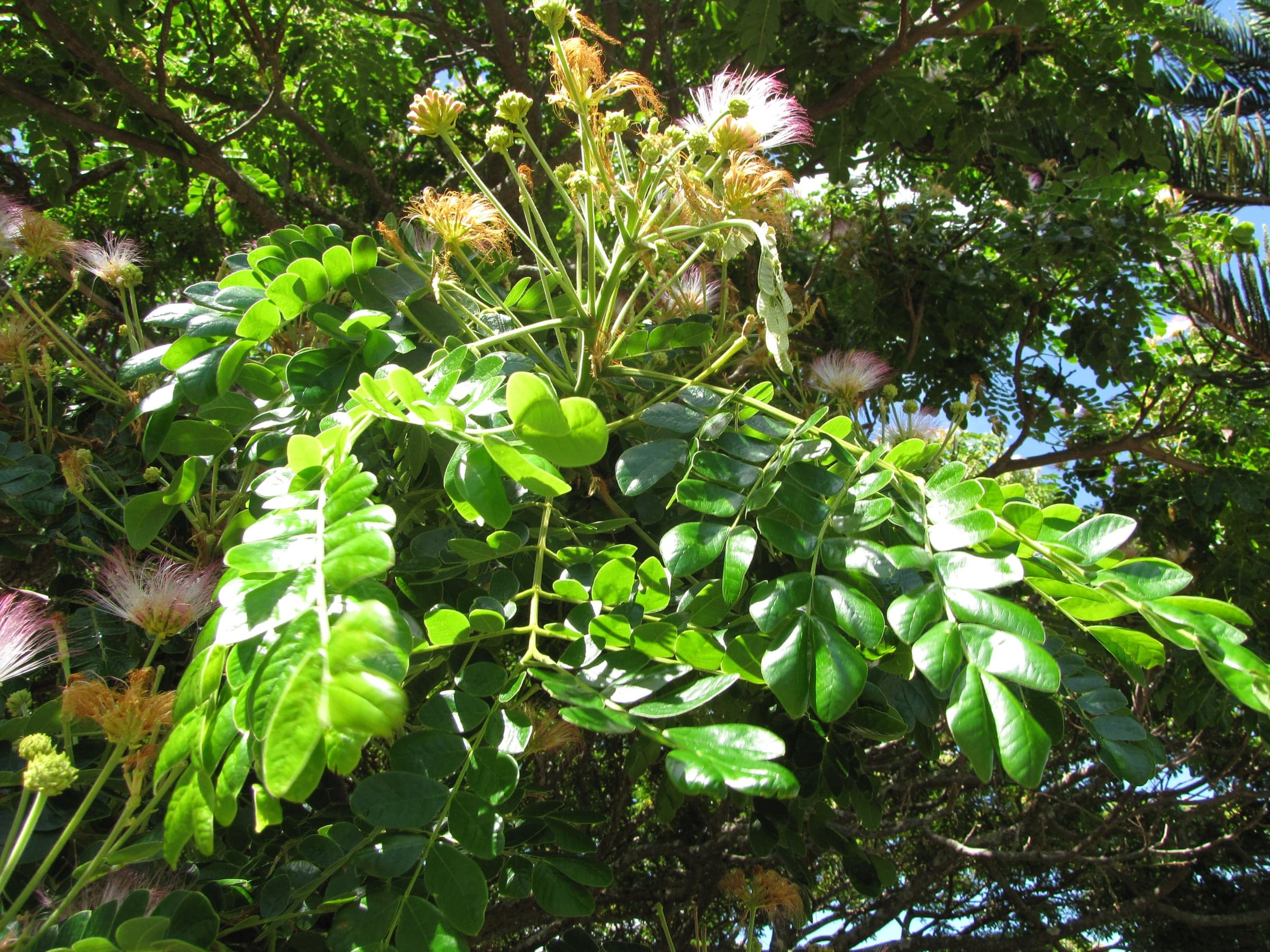
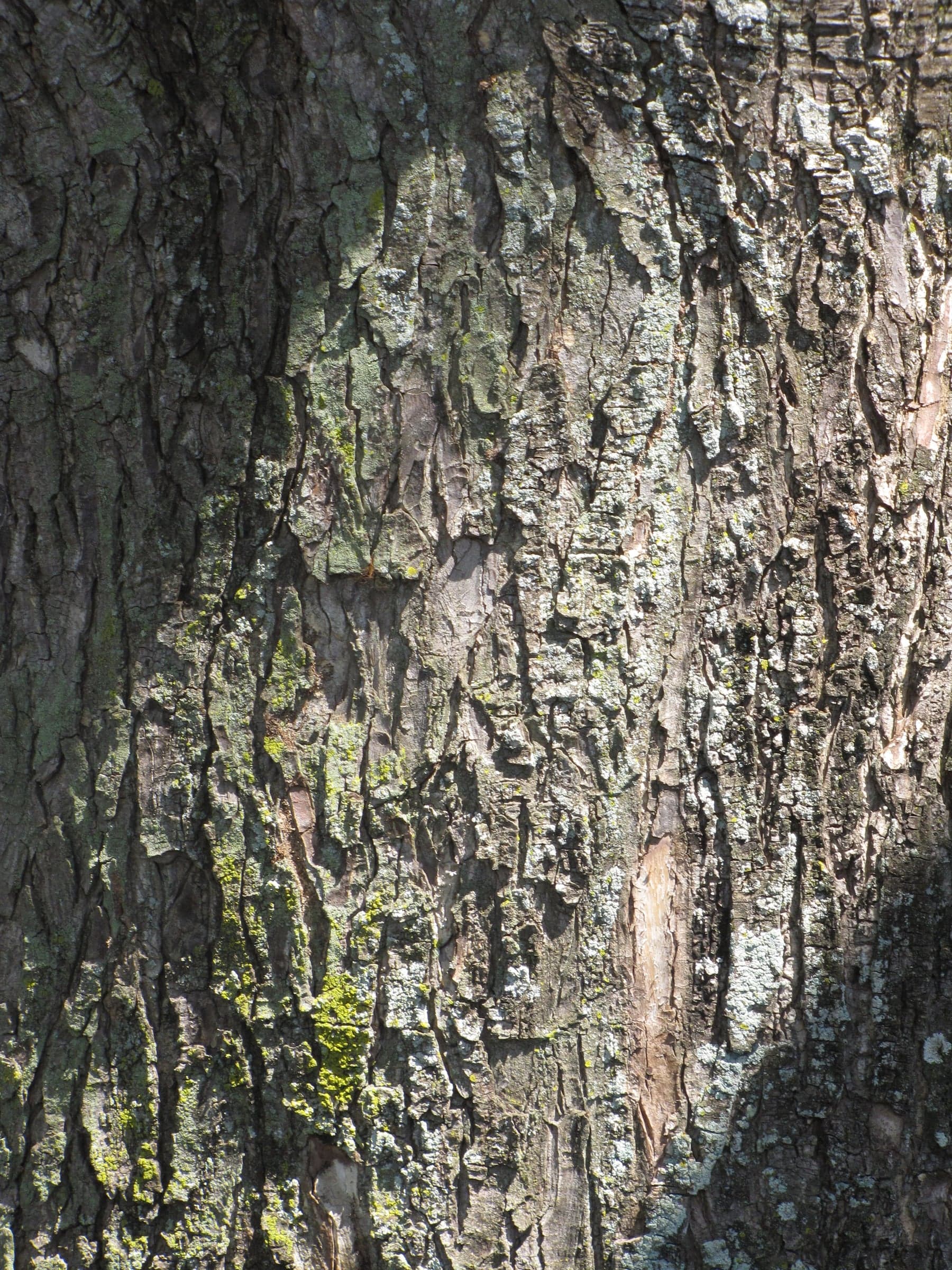
Samanea saman is native to Central and northern South America and has been planted throughout the tropics as a shade tree. That planting history is where almost all commercial timber now comes from, and it matters for both supply and documentation.
It is known by a long list of names, monkeypod and rain tree among them, and it is the only non-European species in this catalogue.
People buy it for one property above all others, and it is not appearance.
Saman grows a broad spreading crown on a short massive trunk. The result is single piece slabs at widths European species cannot approach, frequently over a metre.
Plenty of species produce wide slabs. What makes Saman unusual is that a slab that wide stays flat.
Its volumetric shrinkage of 5.5 to 6.5 percent is the lowest of any species in this catalogue by a wide margin, less than half the 14.2 percent of sessile oak. More important than the total is the differential. Radial shrinkage runs 2.2 to 3.0 percent and tangential 3.2 to 4.0 percent, which is exceptionally close together.
Cupping in a flatsawn board is driven by the gap between radial and tangential movement. Oak runs a ratio better than two to one, which is why a wide flatsawn oak top wants to curl. Saman runs close to one to one.
That combination, extreme width and minimal differential movement, is why a metre wide Saman dining top is a realistic proposition and a metre wide oak one is a fight.
The colour is dramatic. Heartwood runs golden brown to dark chocolate, frequently with darker streaking, against a pale yellow sapwood band. The boundary is sharp.
Most makers leave the sapwood in place. On a wide slab that pale band running along one edge against dark heartwood is the defining visual feature of the species, and removing it usually removes the reason the slab was chosen.
Figure is often wavy or interlocked, producing strong chatoyance under oil so the surface shifts as you move past it.
Because slabs are large, natural edges, voids and bark inclusions are common, and epoxy fills are a normal part of finishing this species rather than a repair.
It works well overall and it turns exceptionally, the highest turning rating in this catalogue. It glues, finishes and holds fastenings without difficulty.
The one real difficulty is interlocked grain. The grain direction reverses between growth layers, so a pass that cuts cleanly through one band runs against the grain in the next and lifts fibre. This is not a sign of poor stock, it is characteristic of the species.
The answer is light cuts, sharp tooling, and producing the final surface with a high angle plane or a card scraper rather than trying to machine a wide face flat in one operation. On slabs this size a router sled or a wide belt sander is often the practical route, followed by hand work.
At 4,010 N Janka it sits below European oak at 4,980 N and above every softwood in this catalogue. That is comfortably hard enough for a dining top, a counter or a bar, particularly given how little it moves.
For a surface that sees drinks and daily wear, a hard finish or a maintained oil is worth having. The heartwood darkens further with light exposure while the sapwood stays pale, so the contrast strengthens over the years rather than fading.
This is the only species in the catalogue that requires an import due diligence chain rather than intra-EU documentation, and that is a genuinely higher paperwork burden.
The favourable part of the picture is real: most commercial Saman comes from planted shade trees, roadside plantings and plantations rather than from primary forest. Commercial supply into Europe runs largely through Southeast Asia, particularly Indonesia and Thailand, where the tree is widely established.
But favourable in general is not evidence in particular. Under EUDR the obligation is to demonstrate the origin of the specific material, not to argue that the species is usually fine. That is what the passport on a KORENA Saman slab carries: the yard, the region and the supporting documentation for that piece.
If a supplier cannot produce that chain for a tropical species, the price difference is not a bargain, it is unpriced risk.
Wide single slab tabletops above all, plus counter and bar tops, bench seating, turned bowls and decorative panels. Anywhere the brief calls for a width no European species will give in one piece, and where that width has to stay flat.
It is the wrong answer where a fully European supply chain is a requirement of the project, and where the additional import documentation is not worth the width.
Not listed in the CITES Appendices and reported as Not Evaluated by the IUCN, meaning no formal assessment has been carried out rather than that the species has been assessed and found secure.
Pircēju jautājumi
Its shrinkage figures are the lowest in this catalogue by a wide margin. Volumetric shrinkage is 5.5 to 6.5 percent against 14.2 percent for sessile oak, and more importantly the radial and tangential figures are very close together at 2.2 to 3.0 and 3.2 to 4.0 percent. Cupping is driven by the difference between those two, so a narrow differential means a wide flatsawn slab stays flat where oak of the same width would not.
Frequently over a metre in a single piece, which is the main reason the species is sought out. The tree grows a broad spreading crown on a short massive trunk, so it yields widths no European species can match without jointing. Each KORENA listing carries the measured outline and true dimensions of that specific slab rather than a nominal size.
At 4,010 N Janka it is moderately hard, below European oak at 4,980 N but above every softwood here. For a bar or counter it performs well, particularly given the dimensional stability, though a hard finish or a maintained oil is worth having on a surface that sees drinks and wear.
It is the one species in this catalogue that requires an import due diligence chain rather than intra-EU documentation, so the requirement is genuinely more demanding. Most commercial Saman comes from planted shade and roadside trees rather than primary forest, which is favourable, but it has to be evidenced. Every KORENA Saman slab carries its yard, region and supporting documentation on the passport.
Interlocked grain, which is common in this species. The grain direction reverses between growth layers, so a cut that works with the grain in one band works against it in the next. Take light cuts, keep tooling sharp, and produce the final surface with a high angle plane or a card scraper rather than machining it flat in one pass.
Mehāniskās īpašības
Publicētas atsauces vērtības. Ja avoti atšķiras, parādīts diapazons, bet iepriekšējās skalās izmantota tipiskā vērtība.
| Blīvums (kg/m³)Svars uz kubikmetru pie aptuveni 12% mitruma. Smagāka koksne parasti ir cietāka un stiprāka. | 520–660 kg/m³tipiskā vērtība 600 kg/m³ |
|---|---|
| Janka cietība (N)Spēks, kas vajadzīgs, lai tērauda lodīti līdz pusei iespiestu koksnē. Standarta iespiedumu pretestības mērs. | 3,600–4,400 Ntipiskā vērtība 4010 N |
| MOR: lieces stiprība (MPa)Lieces stiprība: slodze, pie kuras sija lūst. | 55–68 MPa |
| MOE: elastības modulis (GPa)Lieces stingrība: cik daudz plaukts vai galda virsma izliecas zem slodzes. | 8.0–10.0 GPa |
| Radiālais rukumsRukums šķērsām augšanas gredzeniem no svaigi zāģēta līdz absolūti sausam stāvoklim. Šādi kustas radiāla griezuma dēļi. | 2.2–3.0 % |
| Tangenciālais rukumsRukums gar augšanas gredzeniem. Šādi kustas tangenciāla griezuma dēļi un vairums dēļu. | 3.2–4.0 % |
| Tilpuma rukumsKopējā tilpuma maiņa no svaigi zāģēta līdz absolūti sausam stāvoklim. Mazāka vērtība nozīmē labāku izmēru stabilitāti. | 5.5–6.5 % |
| Dabiskā izturība (EN 350)Eiropas standarts dabiskajai izturībai pret trupi no 1 (ļoti izturīga) līdz 5 (neizturīga). | Class 3 — Moderately durable |
Mēs nosūtīsim e-pasta ziņojumu, kad KORENA būs pieejami jauni Saman dēļi. Katrs gabals ir vienreizējs eksemplārs, tāpēc ir vērts uzzināt laikus.
Janka cietība 4010 N
Par 19% mīkstāka nekā Eiropas ozols
Pieskarieties apzīmējumam, lai skatītu sīkāk.
600 kg/m³
Tilpuma rukums 6,0%
Vidējais apstrādes vērtējums 4,0 / 5
EN 350 klase 3