Larix decidua
The one European softwood that will sit outside untreated, and the most decorative of the group. Hardest conifer KORENA lists, at the cost of fighting resin at every stage.
Dotknij etykiety, aby zobaczyć szczegóły.
Obecnie nie ma drewna European Larch. Te gatunki nadają się do podobnych projektów i są dostępne.
Wyślemy Ci wiadomość, gdy w KORENA pojawią się nowe deski European Larch. Każda sztuka jest niepowtarzalna, więc warto wiedzieć wcześniej.
Wygląd drewna
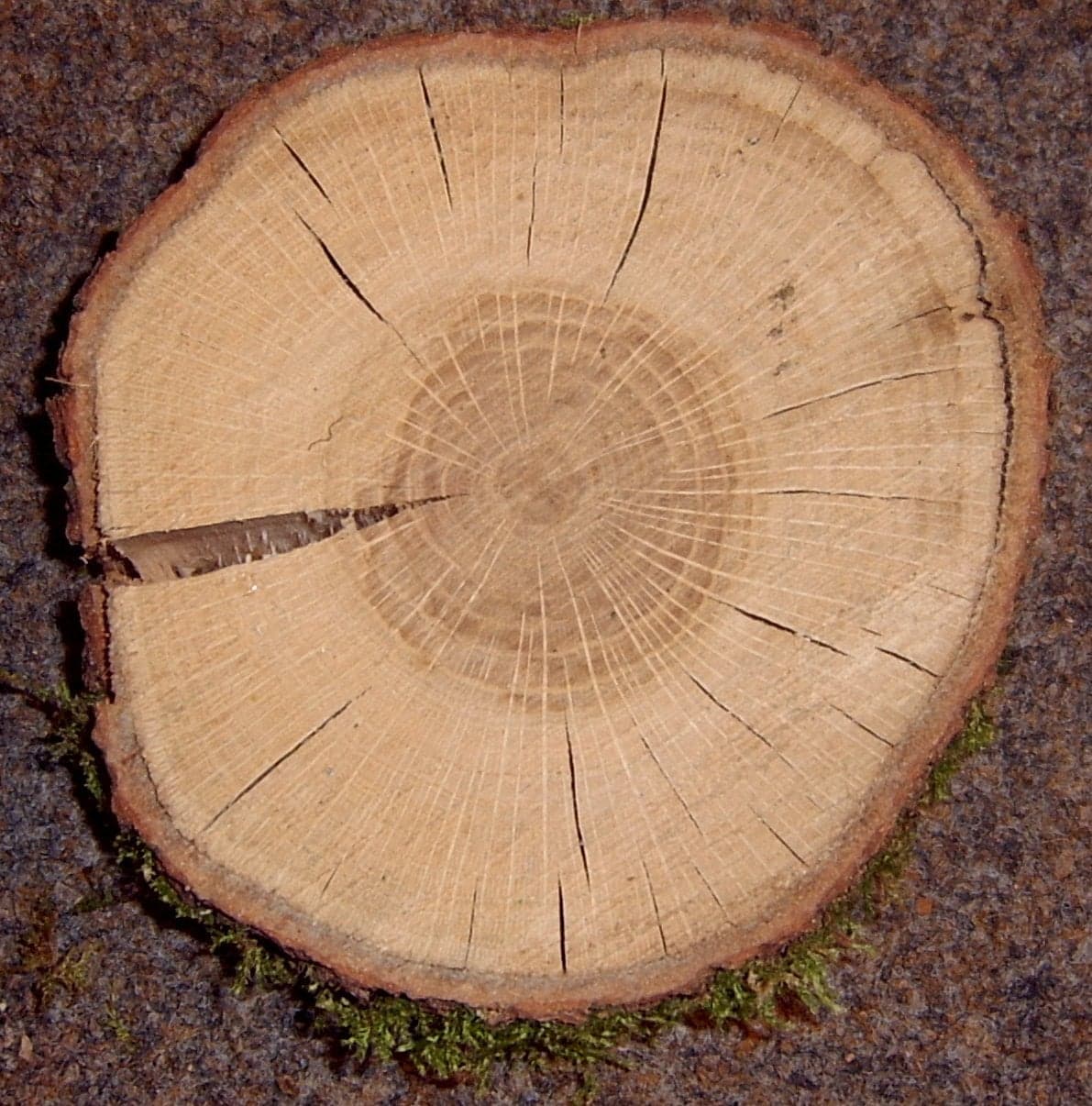
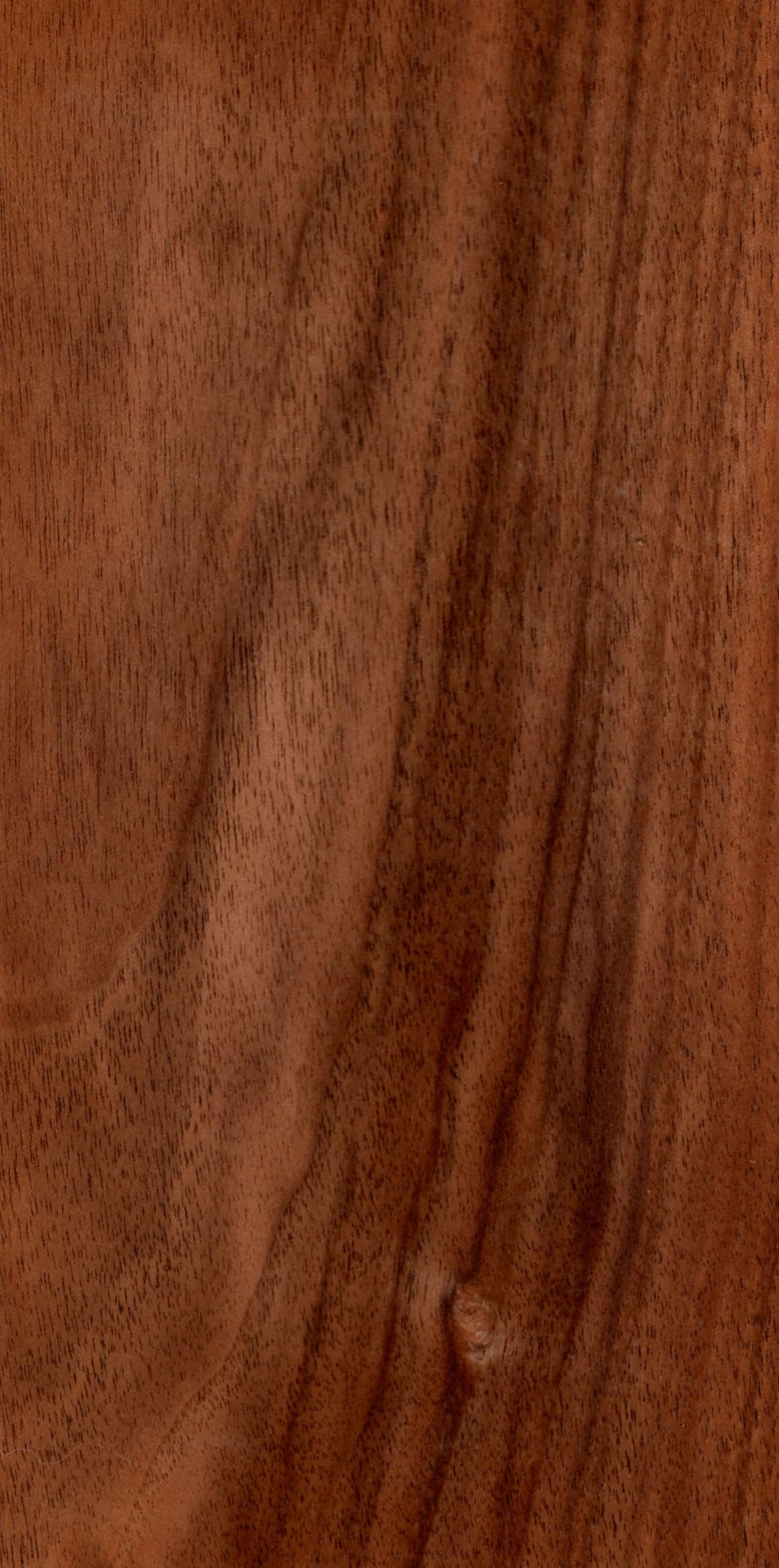
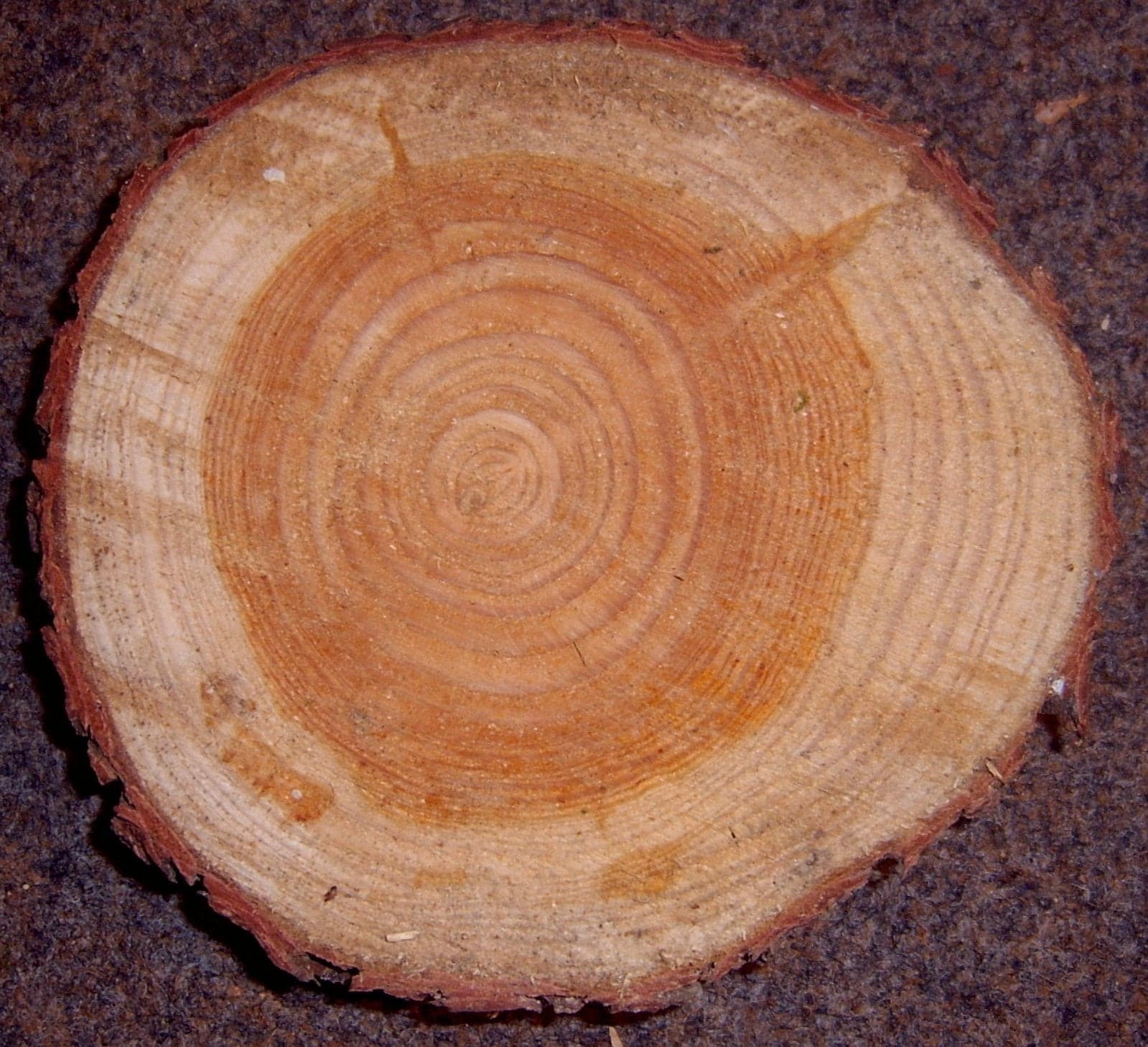
The most visually striking of the European softwoods. Heartwood runs warm honey to a deep russet brown against narrow pale sapwood, and the boundary between the two is sharp and decorative. Growth rings are strongly marked because the latewood bands are dense and dark, which gives flatsawn faces a bold cathedral figure closer to a ring-porous hardwood than to spruce.
Obróbka
Most hand and machine operations give good results, and larch is stiff and strong enough to feel substantial under the tool. The complication is resin. Natural resins gum up saw blades and clog abrasives, and the problem worsens as the wood warms during a cut. Keep blades clean, take breaks in long rips, and expect to clear the sole of a plane more often than usual. The dense latewood bands can also tear out where grain rises.
Resin is again the issue. Wipe the surface with denatured alcohol or acetone before finishing to lift surface resin, or oil finishes may stay tacky in patches. Once clean it takes oil beautifully and the colour deepens to a rich amber. For exterior work, a penetrating oil renewed annually outperforms film finishes, which crack and lift on a wood this dimensionally active outdoors.
Slower and more troublesome than spruce or fir. Larch is prone to distortion and to surface checking if dried too fast, and the high resin content means a hot kiln schedule will drive resin to the surface where it sets sticky. Air drying followed by a low temperature kiln is the standard route for slab stock. Expect around 12.5 percent volumetric shrinkage, and note that internal stress from poor drying shows up as spring and bow once the slab is ripped.
Drewno pęcznieje i kurczy się w poprzek szerokości, gdy powietrze staje się wilgotniejsze lub suchsze. Przed zaprojektowaniem mocowań oszacuj sezonową pracę blatu z drewna European Larch.
Przewidywana sezonowa praca
około 9,4 mm
Przymocuj blat łącznikami lub wspornikami w podłużnych otworach, bez kleju i mocno dokręconych wkrętów.
Liniowy model skurczu: szerokość × (skurcz ÷ 28 % punktu nasycenia włókien) × sezonowa zmiana wilgotności. Dla gatunku European Larch używa skurczu stycznego wynoszącego 8,2 %. To wartość do planowania, a nie gwarancja.
Bieżące ceny drewna European Larch w całej Europie za metr sześcienny bez VAT. Dotknij dowolnej ceny, aby zobaczyć szczegóły.
Species within the Larix genus have documented cases of skin irritation, hives and skin lesions, though severe reactions remain uncommon. Resin contact is the usual trigger rather than dust alone. Gloves during handling of freshly cut stock and normal extraction during machining are appropriate.
Larix decidua is native to the Alps and Carpathians and has been planted widely across northern and central Europe. Alpine grown stock from high altitude is the most prized, because slow growth produces the tight rings and high resin content that give larch its durability.
Not listed in the CITES Appendices and assessed by the IUCN as Least Concern. Alpine larch is slow growing and high altitude stands are managed conservatively, so genuinely tight ringed material is limited and priced accordingly. Plantation larch from lowland northern Europe grows far faster, has wider rings, and is measurably less durable. The distinction matters if the piece is going outdoors.
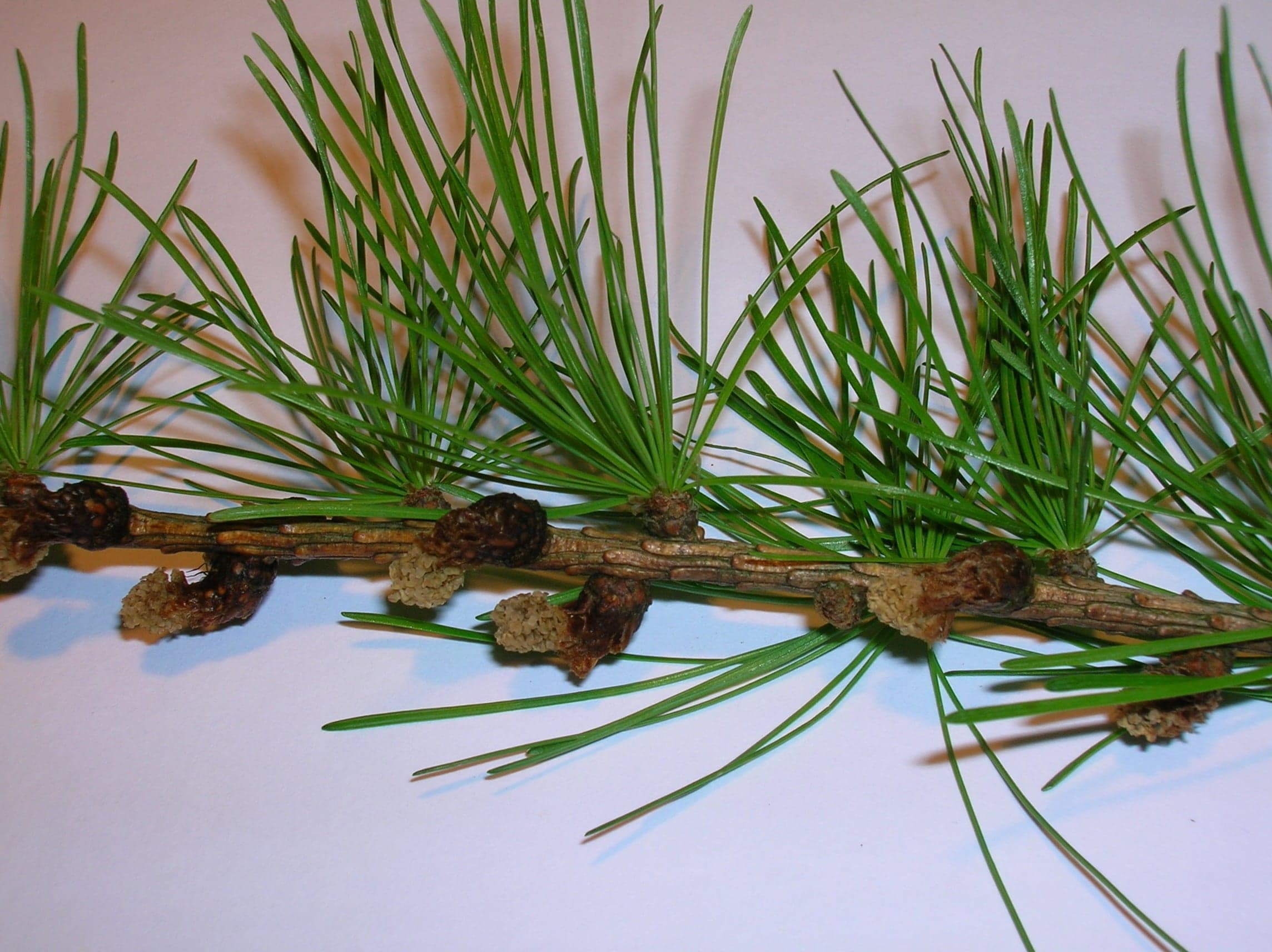
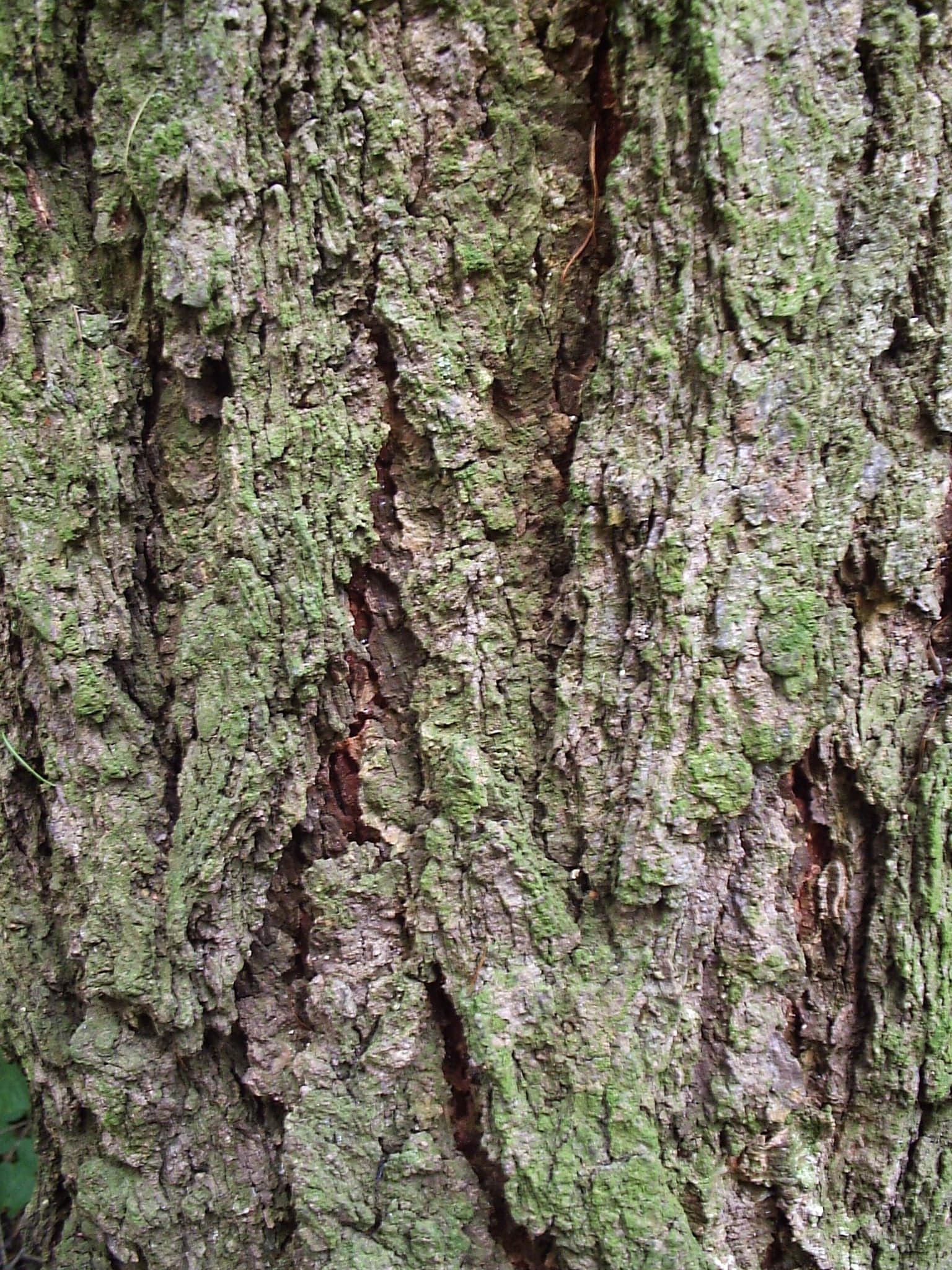
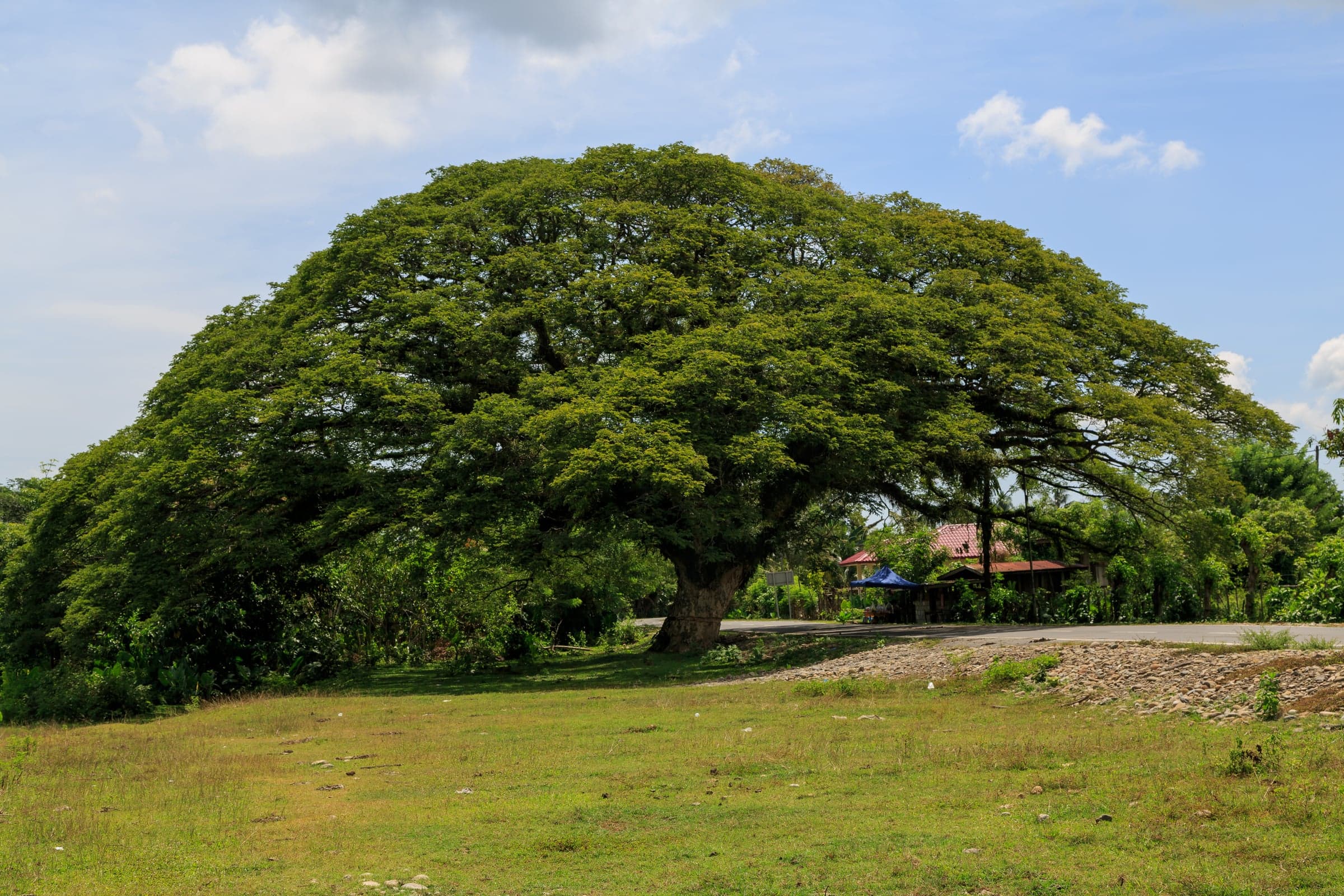
Larix decidua is the conifer that drops its needles. That deciduous habit is the visible oddity, but the useful consequence is in the timber: larch lays down dense, resin-rich latewood in a way that no spruce or fir does, and the result is a softwood that behaves in several respects like a light hardwood.
It is the hardest conifer in the KORENA catalogue at 3,290 N on the Janka scale, which puts it above every pine and fir here and roughly level with small-leaved lime. It is the only one rated durable enough to go outdoors untreated. And it is by some distance the most decorative, with a heartwood and sapwood contrast and a ring figure that reward flatsawing.
The trade-off is resin, and resin complicates every stage from ripping to finishing.
Two things drive the value of a larch slab: ring spacing and the heartwood to sapwood ratio.
Ring spacing is the durability signal. Slow-grown Alpine larch from high altitude puts down rings a millimetre or two apart, with a high proportion of dense dark latewood. That material is genuinely durable outdoors and considerably stiffer. Fast-grown lowland plantation larch can have rings five or six millimetres apart, much less latewood, and measurably worse durability. The two look related but do not perform alike. If the piece is going outside, ring count is the number to ask about.
The sapwood band is narrow and pale, and where it runs along an edge it gives a strong light stripe against the russet heartwood. Some makers treat that as the feature of the board. It is worth knowing that the sapwood carries none of the heartwood durability, so on an exterior piece a sapwood edge is the part that will fail first.
Look also for resin pockets and for shakes. Larch is more prone than spruce to ring shake, a separation along a growth ring that may not be visible on a rough surface and opens up after machining. On a measured KORENA slab, defects of that size are mapped in the outline.
Larch is satisfying to work. It is stiff, it cuts cleanly, and it has enough density to take a crisp edge and hold a sharp arris, which the softer conifers do not.
Resin is the running battle. It softens with cutting heat and deposits on blades, in gullets and on plane soles. The practical answer is unglamorous: clean blades with a resin solvent between operations, feed steadily rather than forcing, and clear the tool more often than you would with spruce. Abrasives clog quickly and are largely consumable on this species.
The dense latewood bands introduce the other machining issue. Where grain rises, the hard band can tear out while the soft earlywood either side cuts cleanly, leaving a stepped surface. Light cuts and a scraper handle it. A helical head planer handles it better.
Gluing is reliable once surfaces are clean, but resin on a jointed face will compromise the bond. Wipe joint faces with acetone before glue-up on anything structural.
This is where larch demands the most patience. It is prone to distortion and surface checking if dried quickly, and a hot kiln schedule pulls resin to the surface where it sets sticky and interferes with finishing months later.
Air drying under cover followed by a low temperature kiln finish is the standard route for slab stock, and it is slow. Internal stress from a rushed schedule shows up the moment a slab is ripped, as the two halves spring apart or bow. Ask the yard about the schedule.
Volumetric shrinkage is around 12.5 percent, slightly lower than spruce, with tangential at 8.2 percent against 4.2 percent radial. Outdoors, that movement is what destroys film finishes, which is why penetrating oils renewed annually outperform varnish on exterior larch.
Anywhere a European softwood has to face weather. Cladding, decking, garden furniture, dock and boat work: larch is the species in this group that will survive it without preservative treatment, provided you use heartwood and accept that ground contact is still a losing proposition.
Indoors it makes a genuinely good tabletop, harder than the alternatives here and far more visually interesting. It makes good flooring for the same reasons.
It is the wrong answer where a pale, quiet surface is wanted, where the finishing schedule cannot accommodate a solvent wipe, or where the budget assumes softwood machining speeds, because everything takes longer on this species.
Not CITES listed and assessed as Least Concern. The supply question is not availability but grade. Alpine high altitude stands are managed conservatively and genuinely tight ringed material is limited and priced accordingly, while fast grown plantation larch from lowland northern Europe is abundant and cheap. Both are legitimately European Larch. Only one of them will last outdoors. KORENA listings record the yard and region, so the provenance behind a given slab is visible rather than assumed.
Pytania kupujących
Yes, within limits. It is rated moderately durable, which is the best of the European softwoods KORENA lists and good enough for cladding, decking and garden furniture without preservative. Ground contact is a different matter and will shorten its life considerably. Slow grown Alpine stock with tight rings outperforms fast grown plantation larch noticeably.
Natural resin content, which is also what gives larch its durability. The resin softens with the heat of cutting and deposits on the blade. Clean blades with a resin solvent between operations, feed at a steady rate rather than forcing the cut, and clear plane soles regularly. It is a nuisance rather than a real obstacle.
Larch is 3,290 N on the Janka scale against 4,980 N for European oak, so meaningfully softer but by a long way the hardest softwood in this catalogue. It is roughly on a par with small-leaved lime and harder than every pine and fir here. For a tabletop it is a reasonable compromise between weight and durability.
Surface resin. Wipe the slab down with denatured alcohol or acetone and let it flash off before applying finish. Larch that has been kilned hot will have more resin drawn to the surface, so this step matters more with kiln dried than air dried stock.
It deepens substantially with light exposure. Freshly machined larch is a fairly pale honey; after a few months of indirect daylight it moves to a warm russet amber, and the contrast with the pale sapwood strengthens rather than fades. If you want the fresh-cut colour held, a UV inhibiting finish slows it, but nothing stops it entirely.
Właściwości mechaniczne
Opublikowane wartości referencyjne. Gdy źródła się różnią, podajemy zakres, a w powyższych skalach stosujemy wartość typową.
| Gęstość (kg/m³)Masa metra sześciennego przy wilgotności około 12 %. Cięższe drewno jest zwykle twardsze i mocniejsze. | 575 kg/m³ |
|---|---|
| Twardość Janki (N)Siła potrzebna do wciśnięcia stalowej kulki do połowy w drewno. Standardowa miara odporności na wgniecenia. | 3,290 N |
| MOR: wytrzymałość na zginanie (MPa)Wytrzymałość na zginanie: obciążenie, przy którym belka pęka. | 90 MPa |
| MOE: moduł sprężystości (GPa)Sztywność przy zginaniu: stopień ugięcia półki lub blatu pod obciążeniem. | 11.8 GPa |
| Skurcz promieniowySkurcz w poprzek słojów, od drewna mokrego do całkowicie suchego. W tym kierunku pracują deski przetarte promieniowo. | 4.2 % |
| Skurcz stycznySkurcz wzdłuż słojów. W tym kierunku pracują deski przetarte stycznie i większość desek KORENA. | 8.2 % |
| Skurcz objętościowyCałkowita zmiana objętości od drewna mokrego do całkowicie suchego. Niższa wartość oznacza większą stabilność. | 12.5 % |
| Naturalna trwałość (EN 350)Europejska norma naturalnej odporności na rozkład, od 1 (bardzo trwałe) do 5 (nietrwałe). | Class 3 — Moderately durable |
Twardość Janki: 3290 N
O 34 % miększe od dębu europejskiego
575 kg/m³
12,5 % skurczu objętościowego
3,4 / 5, średnia ocena obróbki
Klasa 3 według EN 350
Dlaczego deska kosztuje więcej?
To ceny surowego drewna. Deska jest najlepszym wycinkiem kłody, suszonym przez co najmniej rok, a następnie sprawdzanym i mierzonym sztuka po sztuce. Tylko niewielka część każdej kłody staje się deską.
Źródło: KORENA Timber Index · Najnowsze dane: 24 wrz 2026
Zobacz wszystkie ceny regionalne